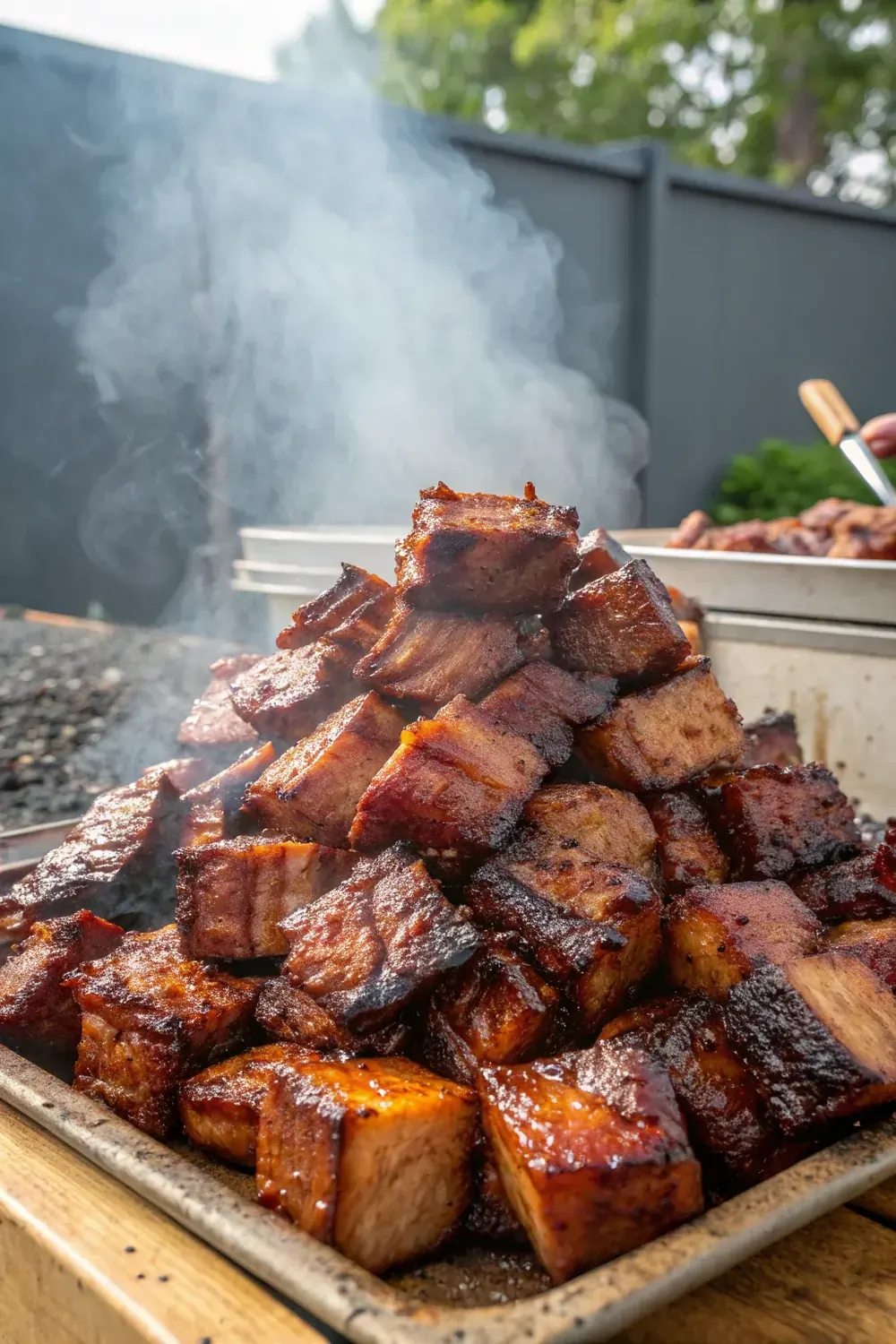
Texas BBQ
Smoked Pork Belly Burnt Ends
Chef Mia's smoked pork belly burnt ends: cubed pork belly smoked at 250F, braised in butter and brown sugar, then glazed into sticky meat candy. My exact steps.
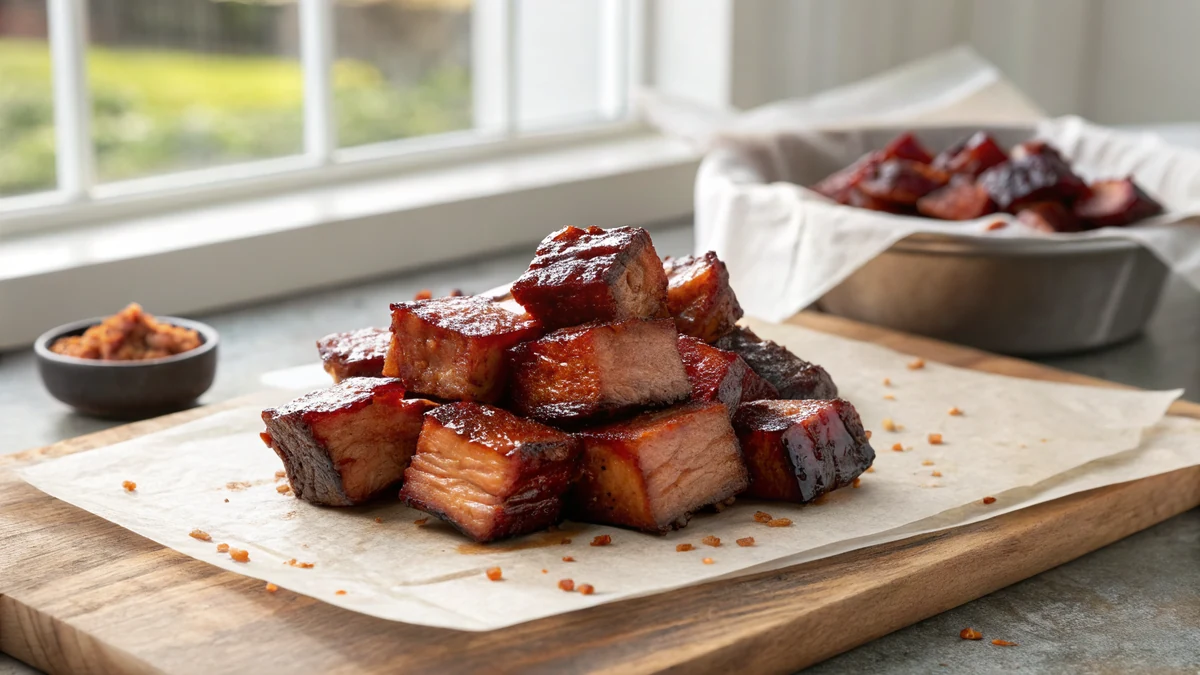
Quick answer: To make smoked pork belly burnt ends, cut a slab of skinless pork belly into 1.5 inch cubes, coat them in a sweet barbecue rub, and smoke them at 250F for about 3 hours until they hit 195F internal and carry a deep mahogany bark. Move the cubes into a foil pan, toss them with butter, brown sugar, honey, and barbecue sauce, cover tightly, and smoke 1.5 to 2 more hours until they probe tender at 200 to 205F. Uncover, fold the cubes in the thickened glaze, and smoke 15 to 30 minutes more so the sauce sets into a sticky lacquer. These are pork belly burnt ends, not brisket burnt ends, which come from the fatty point of a smoked brisket and take far longer.
Pork belly burnt ends are the reason my smoker gets fired up on a lazy Saturday when I do not have a full day to babysit a brisket. People call them meat candy, and that is not marketing. They are little cubes of pork belly with a peppery bark on the outside and a soft, rich, almost custardy center, all wrapped in a sticky sweet glaze that gets on your fingers and stays there. I have made these for backyard parties, for football Sundays, and just for me and a cold drink on the porch, and the pan never makes it to leftovers.
Let me be clear about what these are, because the name confuses people. Classic burnt ends come from the fatty point of a smoked brisket, trimmed off and cooked down a second time. Those take the better part of a day. Pork belly burnt ends are a shortcut a lot of Texas pitmasters fell in love with, because raw pork belly is sold in neat slabs, it is cheaper than brisket, and the whole cook fits in an afternoon. You get the same candied, bark-edged, fall-apart bite in about five hours instead of fourteen. That trade is why I make the pork version far more often.
What Pork Belly Burnt Ends Actually Are
Pork belly burnt ends are cubes of raw pork belly that get smoked, braised, and glazed into sweet, sticky, bark-edged bites. The name is borrowed from brisket burnt ends, the original, which are made from the fatty point of a finished brisket. Somewhere along the way pitmasters realized you could chase that same candied texture much faster by starting with pork belly, the same cut that becomes bacon, and the pork version took on a life of its own at Texas cookouts and competition tables.
The appeal is the contrast in every cube. The outside carries a firm, peppery, smoke-darkened bark, while the inside goes soft and rich as the fat renders and the collagen melts. Coat all of that in a butter and brown sugar glaze and you get something that genuinely eats like candy, which is why nobody can stop at one. They land somewhere between an appetizer, a main, and a dessert, and at my house they rarely survive long enough to be any of those formally.
If you want the beef original, I cover it in my Texas BBQ burnt ends recipe, which starts from a smoked brisket point and runs much longer. This page is the pork shortcut, and honestly it is the one I reach for nine times out of ten when I just want a pan of meat candy without committing a whole day to the smoker.
Pork Belly Burnt Ends vs Brisket Burnt Ends
The two share a finish but start from completely different places. Brisket burnt ends come from the point muscle of a packer brisket, so you have to smoke a whole brisket first, then cube and re-cook the point, which is a 12 to 16 hour affair. Pork belly burnt ends start from a raw slab you cube right away, so the entire cook is about 5 hours start to finish. That is the practical reason the pork version is so popular for weekend cooks.
Flavor and texture differ too. Pork belly is fattier and richer than brisket point, so pork burnt ends are softer, more unctuous, and lean sweeter, which is why a sweet rub and glaze suit them. Brisket burnt ends are beefier and a touch firmer with a deeper savory note. Neither is better, they are just different treats. If you are feeding a crowd that loves bacon, the pork version wins them over instantly because that is essentially what it tastes like, dressed up in barbecue clothes.
Cost is the last piece. A slab of pork belly is far cheaper than a whole packer brisket, and you are not paying for a long cook's worth of fuel either. For a budget-friendly, high-impact dish that makes people think you worked all day, pork belly burnt ends are hard to beat.
Choosing and Prepping the Pork Belly
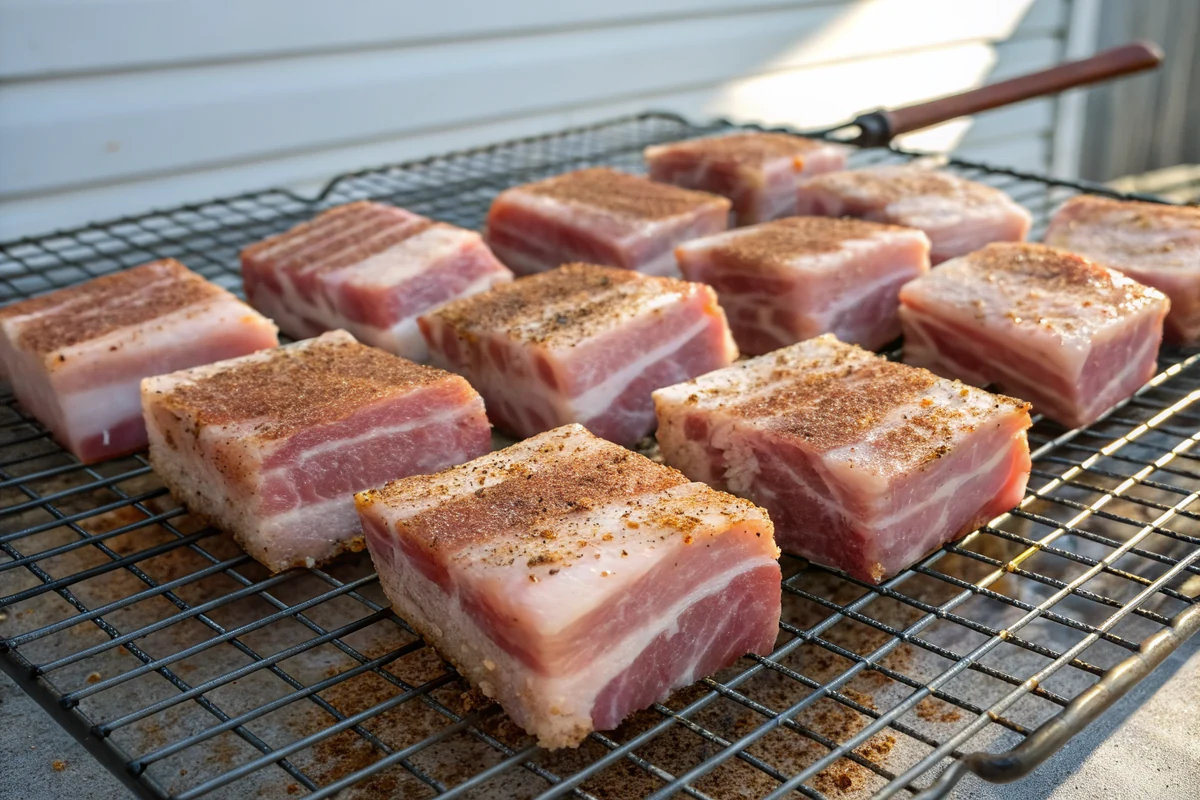
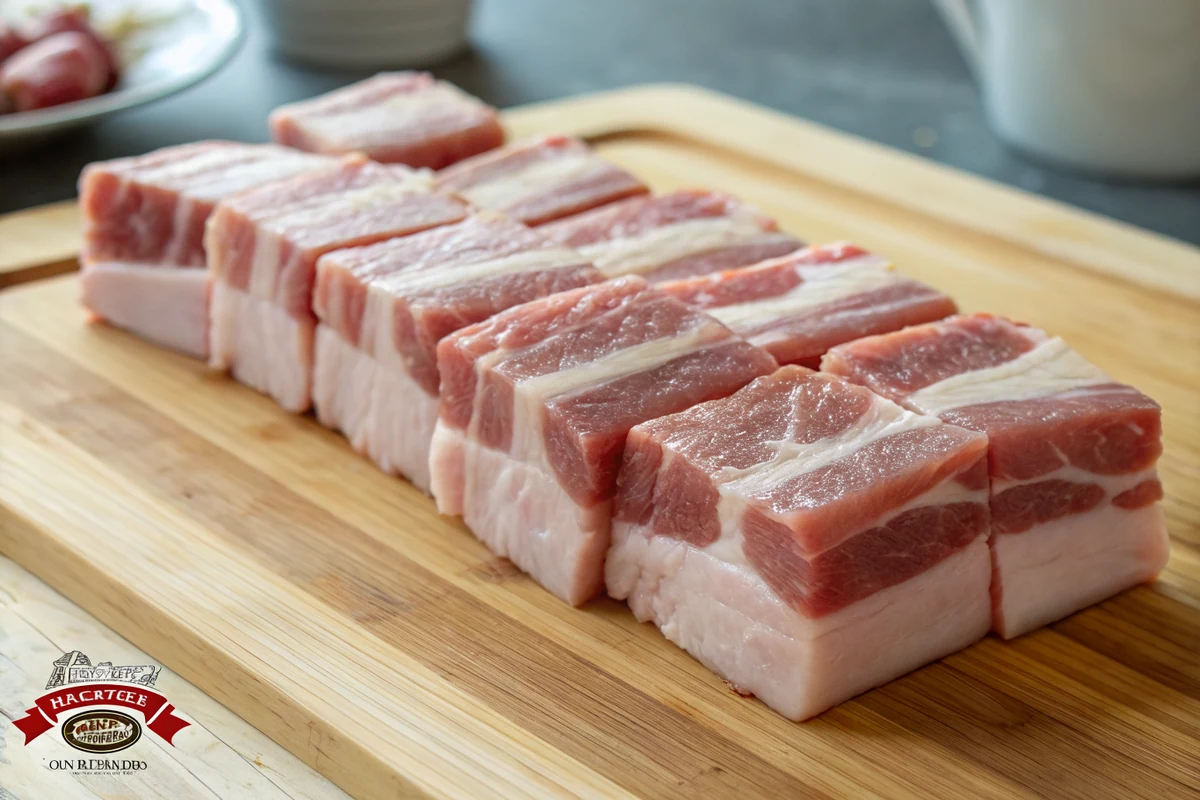
Buy a slab of fresh, skinless pork belly with a good balance of meat and fat, ideally with visible streaks running through it like a thick-cut bacon. Most butchers and a lot of warehouse stores carry it, and Asian and Hispanic markets almost always do, often at the best price. A 3 pound slab feeds a crowd as an appetizer or four to six people as a main, and the recipe scales up cleanly if you need more.
If the slab still has skin on it, you have to remove it, because skin will not render into bark and turns rubbery on the smoker. Slide a sharp knife under a corner, get a grip on the flap, and work the blade along just under the skin, taking as little fat as possible. It is easier when the belly is cold. Some butchers will skin it for you if you ask, which saves you the chore entirely.
Cut the slab into even cubes about an inch and a half on a side. This is the single most important prep step, because uneven cubes are the most common cause of a disappointing pan, with small pieces drying out while big ones stay tough. Take your time and aim for uniformity. A little size variation is fine, but try to keep them close so the whole pan finishes together.
The Rub: Sweet With a Little Heat
Pork belly is rich and a touch sweet on its own, so it loves a rub that leans sweet with enough salt and pepper to anchor it and a whisper of heat to keep it from being one-note. My standard mix is brown sugar, kosher salt, coarse black pepper, smoked paprika, garlic and onion powder, and a little cayenne. The sugar helps the bark caramelize and sets up the candied finish, while the pepper and cayenne keep it from tipping into dessert territory.
Use a thin smear of yellow mustard as a binder before the rub. It does not add flavor you can taste once it cooks, it just gives the rub something to grip so the bark forms evenly. If you do not have mustard, a light drizzle of oil or hot sauce works the same way. Toss the cubes until every face is coated, because each cube becomes its own little package of bark and you want seasoning all the way around.
Let the seasoned cubes sit 20 to 30 minutes before they hit the smoke. As they rest, the salt and sugar pull a little moisture to the surface and the rub turns tacky, which helps it stay put and helps smoke adhere. This is also the perfect window to get your smoker stable at 250F so the cubes go on a clean, ready fire.
Setting Up Your Smoker
Any smoker works for pork belly burnt ends, whether you run an offset, a pellet grill, a kamado, or a bullet smoker. The target is a steady 250F with clean smoke. I lean on fruit and nut woods here, cherry and apple for color and a mellow sweetness, or pecan for a rounder nutty smoke. Post oak is the Texas default and works fine, just go a little lighter since pork takes smoke readily and you do not want it bitter.
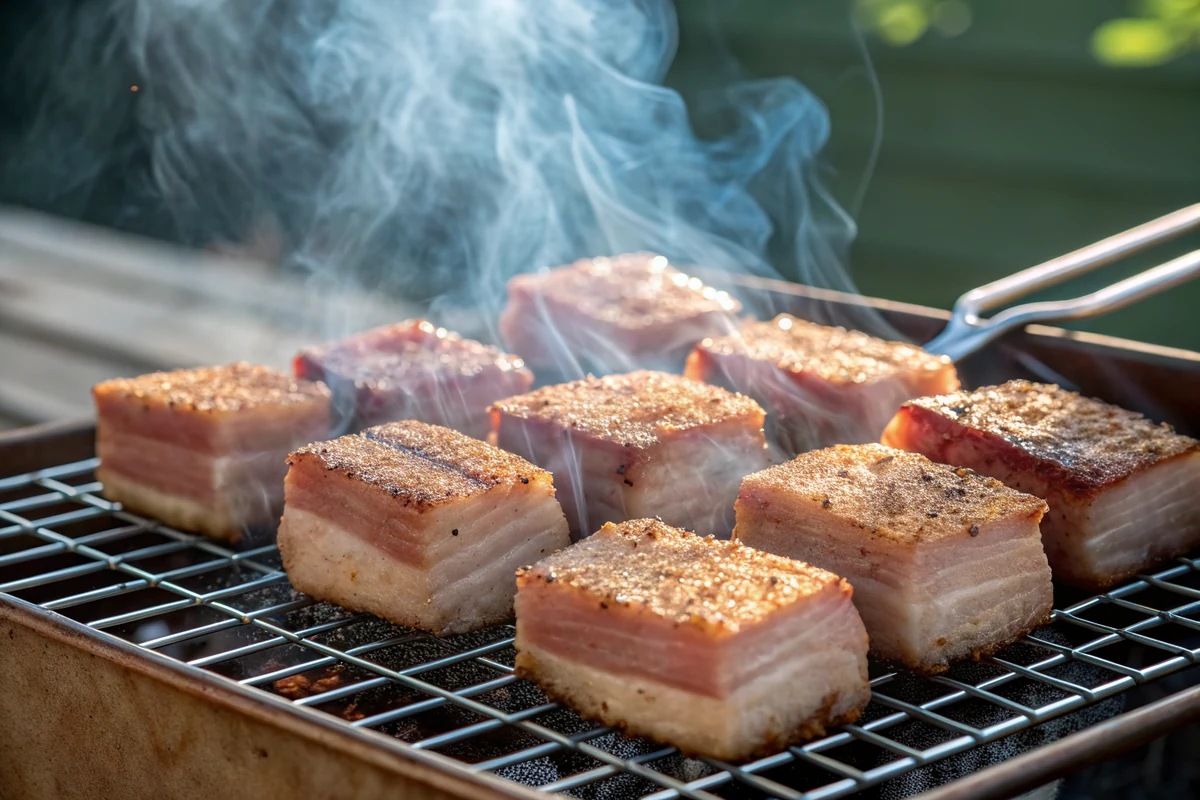
Keep a water pan in the chamber. It steadies the temperature against swings and adds humidity, which helps the bark set without drying the surface too fast. Watch your smoke color above all, thin and blue or nearly invisible is what you want. Thick, billowing white or gray smoke means the fire is starving for air, and it deposits a harsh, sooty flavor that no glaze can fix. If you need a pairing for your wood, my BBQ wood pairing tool gives a tested match for pork.
The Three Stages: Smoke, Braise, Glaze
Great pork belly burnt ends are built in three distinct stages, and understanding why each exists is what separates a good pan from a great one. Stage one is the open smoke, about 3 hours at 250F until the cubes reach 195F and wear a real bark. This stage develops the crust and the smoke flavor, the structural backbone of the whole dish. Skip or shortchange it and you get soft, pale, saucy pork with no character.
Stage two is the covered braise. The cubes go into a foil pan with butter, brown sugar, honey, and some barbecue sauce, then get sealed under foil and cooked another 1.5 to 2 hours until they probe tender at 200 to 205F. This is the transformation stage, where the trapped steam and fat melt the last stubborn collagen and the pork goes from firm to spoon-soft. It is also where the glaze starts building in the bottom of the pan.
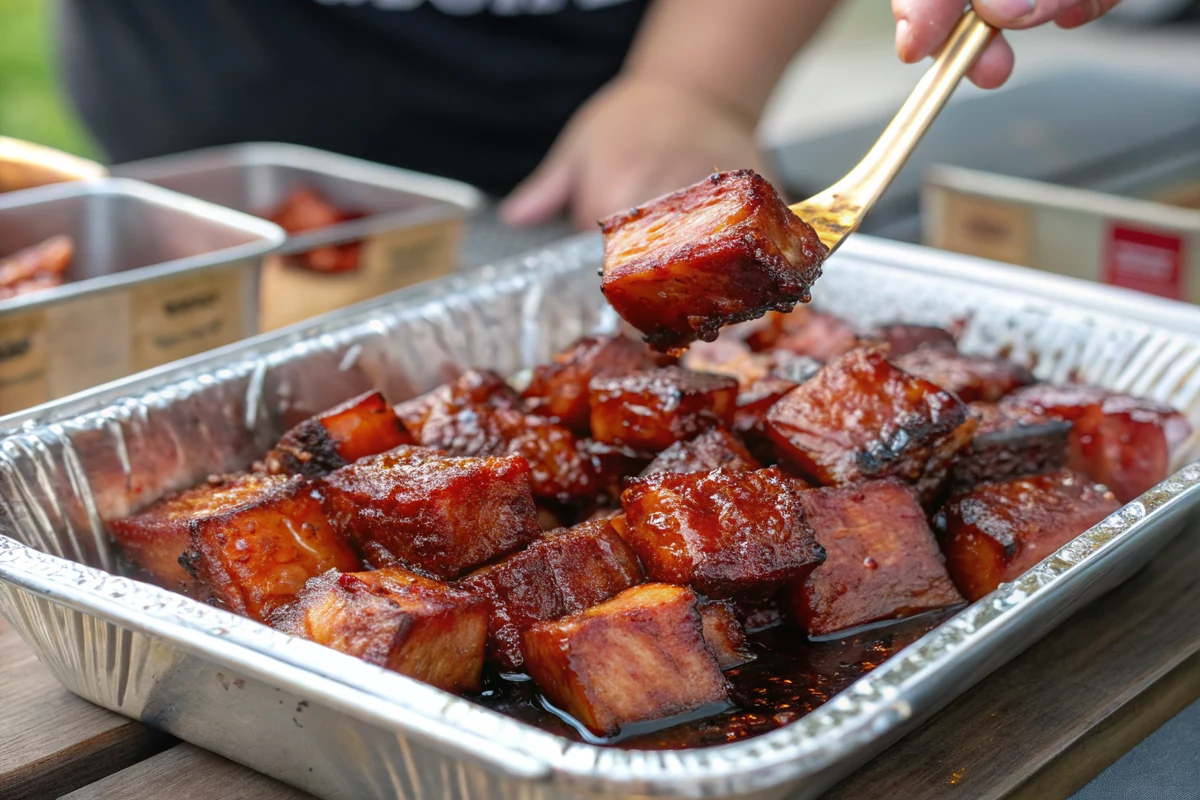
Stage three is the glaze set. You uncover the pan, fold the cubes in the now-thick sauce, and smoke them 15 to 30 minutes more so the glaze tightens into a sticky lacquer that clings to the bark. This final open stage drives off excess moisture and caramelizes the sugars into that signature candied sheen. Three stages, three jobs, and each one matters.
Internal Temperature and Doneness
Pork belly burnt ends are done by feel as much as by number. The smoke stage targets 195F, where the bark is set and the cubes are firm. The covered braise pushes them to 200 to 205F, which is the tender zone where the collagen has rendered and the fat has gone soft. But temperature alone can lie on a piece this fatty, so I always confirm with a probe or a toothpick, which should slide into a cube with almost no resistance, like going into warm butter.
If a cube still feels firm or springy at temperature, it simply needs more time covered. Pork belly is loaded with connective tissue and fat that has to break down, and that happens on its own schedule, not the clock's. Give it another 20 or 30 minutes and check again. The reward for patience is the melt-in-your-mouth texture that defines the dish, so do not pull them early just because the timer says so.
A good instant-read thermometer is worth its weight here, and I lean on the same probing instinct I use for any low-and-slow cut. If you smoke a lot of big cuts, you will recognize this as the same probe-tender finish I chase on beef, the way I describe in my smoked beef ribs. Temperature gets you close, the toothpick tells you the truth.
Glaze Variations and Heat Levels
The base glaze of butter, brown sugar, honey, and barbecue sauce is endlessly adaptable, so treat it as a starting point. For a spicy-sweet version, stir a spoonful of hot sauce or a diced jalapeno into the braise, or lean on a chipotle barbecue sauce. For a sticky Kansas City lean, use a thick tomato-molasses sauce and an extra drizzle of honey. For something brighter, a splash of apple cider vinegar or a little pineapple juice cuts the richness and keeps the sweetness in check.
If you like a little crunch and pop, a sprinkle of flaky salt or a dusting of extra rub right at the end, after the glaze sets, adds a savory edge that keeps the candy from getting cloying. I almost always finish mine with a few cracks of black pepper, because that contrast against the sweet glaze is exactly what makes you reach for another. A bottle of good Texas BBQ sauce is the easiest way to control the flavor from the start.
Whatever direction you take, keep the balance in mind. These are rich, sweet, and fatty by nature, so a little acid or heat woven through the glaze is what keeps a whole pan eating well rather than feeling heavy after three bites. Taste the glaze in the pan before the final set and adjust, because that is your last easy chance to steer it.
Make-Ahead, Storage, and Reheating
Pork belly burnt ends are best fresh off the smoker, when the bark still has a little chew and the centers are soft and warm, but they store and reheat better than you might expect. Refrigerate leftovers in an airtight container for up to four days. The glaze firms up cold and the fat sets, so they need gentle reheating to come back to life rather than a cold-from-the-fridge bite.
To reheat, the oven is your friend. Spread the cubes in a covered dish with a splash of barbecue sauce or a little water, and warm them at 300F until heated through, about 15 to 20 minutes, stirring once. The cover traps steam so they do not dry out, and the low heat softens the fat and glaze again. A quick uncovered minute at the end re-tacks the glaze. Avoid blasting them in the microwave at full power, which turns the fat greasy and the bark soft.
You can also freeze cooked burnt ends for up to three months. Cool them completely, freeze in a single layer, then bag them with the air pressed out. Thaw overnight in the fridge and reheat as above. They make a fantastic topping for loaded nachos, baked potatoes, or mac and cheese later in the week, so I sometimes make a double batch on purpose just to bank some.
What to Serve With Pork Belly Burnt Ends
Because burnt ends are rich, sweet, and fatty, the best sides are the ones that push back with acid, crunch, or starch. A sharp, vinegary coleslaw is my go-to, cutting straight through the richness. Pickles, raw onion, and white bread, the classic Central Texas plate, work the same way and let the candy shine without competing. A pan of beans underneath turns a tray of burnt ends into a real meal.
For a full spread, I round them out with the usual barbecue lineup. A scoop of BBQ baked beans catches the glaze beautifully, and the smoke and sugar in the burnt ends echo right into the pot. Cornbread, potato salad, or grilled corn all earn their place too. If you are building a bigger board, these slot in perfectly alongside the rest of a cook from my Texas BBQ sides guide.
Drink-wise, the sweetness loves contrast. A crisp lager, an unsweet iced tea, or a tart limeade all reset the palate between bites. If you are serving these as a party appetizer, set them out with toothpicks and a bowl of extra sauce and stand back, because in my experience a pan of pork belly burnt ends is the first thing to vanish at any cookout.
Since the burnt ends only tie up part of the pit, I usually run something alongside them. If you want exact timing for the rest of the cook, my answer-first guides have you covered: how long to smoke ribs at 275F, how long to smoke sausage, how long to smoke pork tenderloin, how long to smoke prime rib, and how long to smoke corn on the cob all give the time and temperature up front.
My Hill Country Kitchen Notes
After making these more times than I can count, a few small habits make the biggest difference. Cube evenly, season generously, and respect the three stages, especially the covered braise, which is where the tenderness lives. The single most common mistake I see is people rushing the braise because the cubes already look done after the smoke. They look done, but they are not tender yet, and tenderness is the whole point.
Do not skimp on the bark stage either. It is tempting to sauce early, but the open smoke is what gives these structure and keeps them from becoming sweet mush. Let the bark set properly before anything wet touches the cubes, and you will get that satisfying contrast of firm, peppery crust against the soft center that makes burnt ends special.
Last thing: make more than you think you need. I have never once had leftovers when I planned for exact portions, because people graze on these endlessly and circle back for more. A pan of pork belly burnt ends is pure backyard joy, the kind of dish that makes a cook look like a hero for what is honestly a pretty simple afternoon at the smoker. Fire it up and find out for yourself.
Smoked Pork Belly Burnt Ends Recipe
Ingredients
- For the burnt ends:
- 3 lb skinless pork belly, cut into 1.5 inch cubes
- 2 tablespoons yellow mustard, as a binder
- For the rub:
- 3 tablespoons light brown sugar, packed
- 1 tablespoon kosher salt
- 1 tablespoon coarse black pepper
- 2 teaspoons smoked paprika
- 1 teaspoon garlic powder
- 1 teaspoon onion powder
- 1/2 teaspoon cayenne, or to taste
- For the braise and glaze:
- 4 tablespoons unsalted butter, cut into pats
- 1/3 cup light brown sugar
- 1/4 cup honey
- 3/4 cup barbecue sauce, plus more for serving
- 2 tablespoons apple cider vinegar, optional, to cut the sweetness
Instructions
- Trim and cube the pork belly. Start with a skinless slab of pork belly. If yours still has the skin on, slide a sharp knife under one corner and peel it back, removing as little fat as you can. Cut the slab into even cubes about 1.5 inches on a side. Even sizing matters more than people think, because mismatched cubes finish at different times, leaving some dry while others are still tough. Aim for uniform pieces and you will get a uniform pan.
- Season with the rub. Smear the cubes lightly with yellow mustard, which is just a tacky binder and cooks away to nothing. Mix the brown sugar, salt, pepper, paprika, garlic and onion powders, and cayenne in a bowl, then toss the cubes until every face is coated. Pork belly is rich and forgiving, so do not be shy with the rub. Let the seasoned cubes sit 20 to 30 minutes while the smoker comes up to temperature so the surface gets tacky.
- Set up the smoker at 250F. Bring your smoker to a steady 250F with a fruit or medium wood. Cherry, apple, or pecan all suit pork beautifully, giving color and a mild sweet smoke that does not bully the meat. Post oak works too if that is what you burn. Keep a water pan in the chamber to steady the temperature and the humidity. A clean, thin blue smoke is what you want, never thick white billows, which leave an acrid taste.
- Smoke the cubes to set the bark. Arrange the cubes fat side up and spaced apart on a wire rack so smoke circles every side. Smoke them at 250F for about 3 hours, until they reach 195F internal and wear a deep mahogany bark. Do not crowd them and do not flip them constantly. You are building bark in this stage, the seasoned crust that gives burnt ends their backbone, so resist the urge to fuss. They will look done now, but the magic is still ahead.
- Braise in butter and brown sugar. Transfer the cubes into a disposable foil pan in a single layer. Scatter the pats of butter over the top, sprinkle on the brown sugar, drizzle the honey, and pour over about half the barbecue sauce. Toss gently to coat. Cover the pan tightly with foil and return it to the smoker. This covered braise is what turns chewy pork into spoon-tender candy, melting the last of the connective tissue while the sugar and butter build the glaze underneath.
- Cook covered until probe tender. Keep the covered pan at 250F for 1.5 to 2 hours, until the cubes probe tender at 200 to 205F internal and a toothpick slides into a cube with almost no resistance. Temperature is a guide here, but tenderness is the real test, so probe a few different cubes. Pork belly has a lot of fat and collagen that needs time to surrender, and rushing this stage is the number one reason burnt ends come out tough instead of luscious.
- Glaze and set the lacquer. Uncover the pan and gently fold the cubes in the buttery, sugary sauce that has pooled in the bottom. Stir in the rest of the barbecue sauce and the cider vinegar if you want to cut the sweetness. Leave the pan uncovered and smoke 15 to 30 more minutes, until the glaze thickens and clings to the cubes in a sticky lacquer. You want it to coat the back of a spoon and cling to the bark, not run like thin sauce.
- Rest briefly and serve. Pull the pan and let the burnt ends rest 10 minutes, which lets the glaze tighten and the juices settle so they do not scald anyone reaching in. Serve them straight from the pan with toothpicks, piled on white bread, or over a scoop of beans. They are at their best warm and fresh, when the bark still has a little chew and the centers are soft. Set out extra sauce for the people who want more.
Frequently Asked Questions
What are pork belly burnt ends?
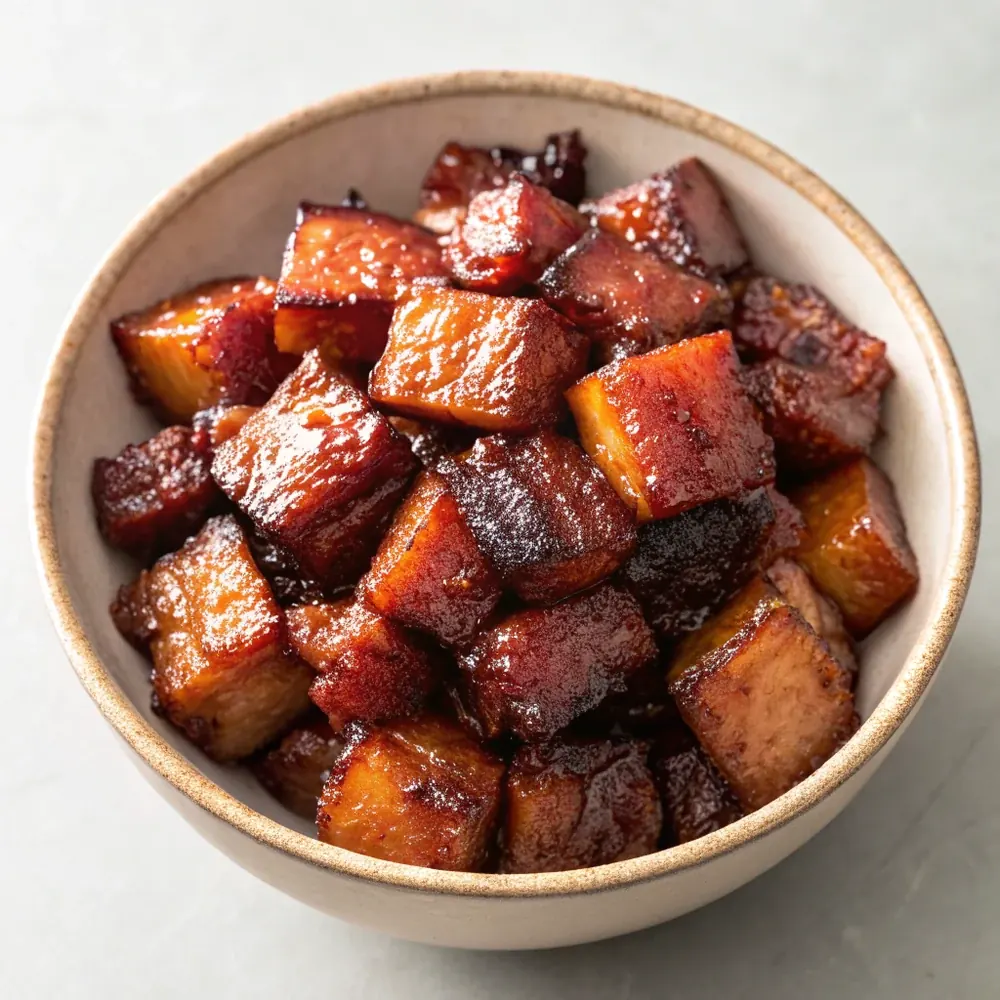
Pork belly burnt ends are cubes of skinless pork belly that are smoked until they form a bark, then braised in butter, brown sugar, and barbecue sauce and glazed until sticky and tender. They are nicknamed meat candy for their sweet, rich, candied bite. The name comes from brisket burnt ends, but the pork version starts from a raw belly slab and cooks in about 5 hours instead of the 12 to 16 a brisket takes, which is why it is so popular for weekend cooks.
How long does it take to smoke pork belly burnt ends?
Plan on about 5 hours total at 250F. That breaks into roughly 3 hours of open smoke to set the bark and bring the cubes to 195F, then 1.5 to 2 hours covered in the braise until they probe tender at 200 to 205F, and a final 15 to 30 minutes uncovered to set the glaze. Times vary with the size of your cubes and how steady your smoker holds, so cook to tenderness rather than strictly to the clock.
What temperature do you smoke pork belly burnt ends at?
Smoke them at a steady 250F the whole way through. That temperature is hot enough to render the abundant fat and build bark in a reasonable time, but gentle enough that the cubes do not dry out or scorch before the inside turns tender. The cubes are done when they reach 200 to 205F internal and a toothpick slides in with almost no resistance. Hold your smoker as steady as you can and use a water pan to buffer the swings.
Do I need to remove the skin from the pork belly?
Yes. Pork belly skin will not render into bark on the smoker and turns tough and rubbery, so remove it before cubing. Many butchers sell pork belly already skinless, or will skin it for you on request. If yours has skin, slide a sharp knife under a corner and work it off, taking as little of the fat layer as you can. The fat is what makes these rich and tender, so you want to keep nearly all of it.
Why are my pork belly burnt ends tough?
Almost always it means they were pulled before the collagen and fat fully rendered. Pork belly needs to reach 200 to 205F internal and probe tender, like a toothpick going into warm butter, and that takes time in the covered braise stage. If a cube still feels firm, it simply needs more time covered, another 20 to 30 minutes, then check again. Rushing the braise because the cubes look done after the smoke is the most common cause of tough burnt ends.
Can I make pork belly burnt ends in the oven?
You can get close in the oven, though you lose the smoke flavor. Roast the cubed, seasoned belly on a rack at 250F for about 3 hours until browned, then braise covered in a baking dish with the butter, sugar, and sauce until tender, and finish uncovered to set the glaze. Adding a little smoked paprika or a few drops of liquid smoke to the rub helps mimic the smoker. For real burnt ends, though, the smoke is worth the effort.
What sides go with pork belly burnt ends?
Because they are rich and sweet, lean on sides that bring acid, crunch, or starch to balance them. A sharp vinegary coleslaw, pickles, and raw onion all cut the richness, while baked beans, cornbread, potato salad, or grilled corn round out a barbecue plate. White bread is traditional and lets the candy shine. For drinks, a crisp lager or unsweet iced tea resets the palate between bites better than anything sweet.