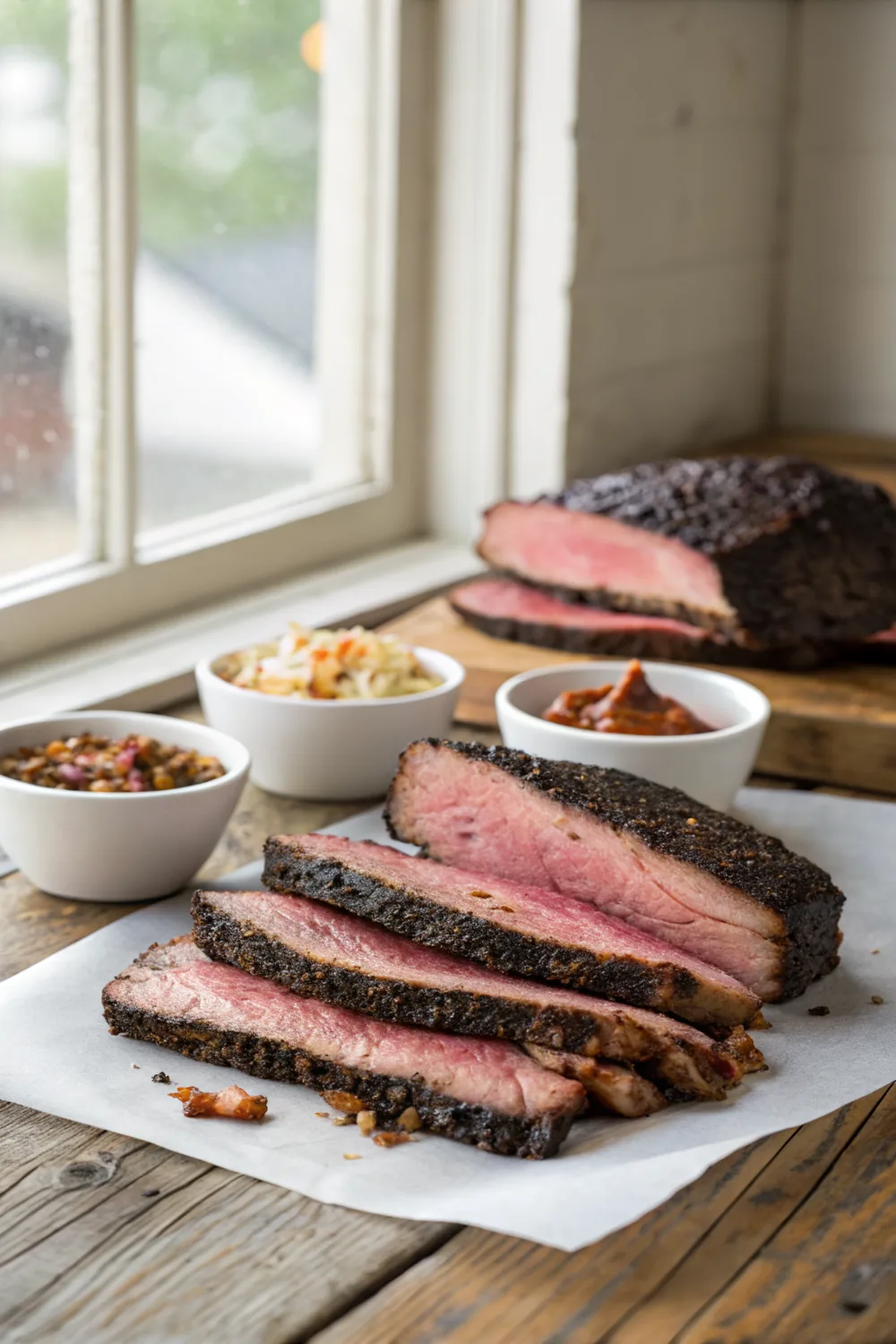
BBQ kitchen
How Much Brisket Per Person
Brisket is the most expensive mistake you can make in barbecue portion planning, in both directions. Buy too little and you are the host slicing thinner and thinner while the line watches; buy too much and you have spent serious money on meat you did not need. I have planned brisket for family dinners and hundred-plate church barbecues, and the math that follows is the math I actually use.
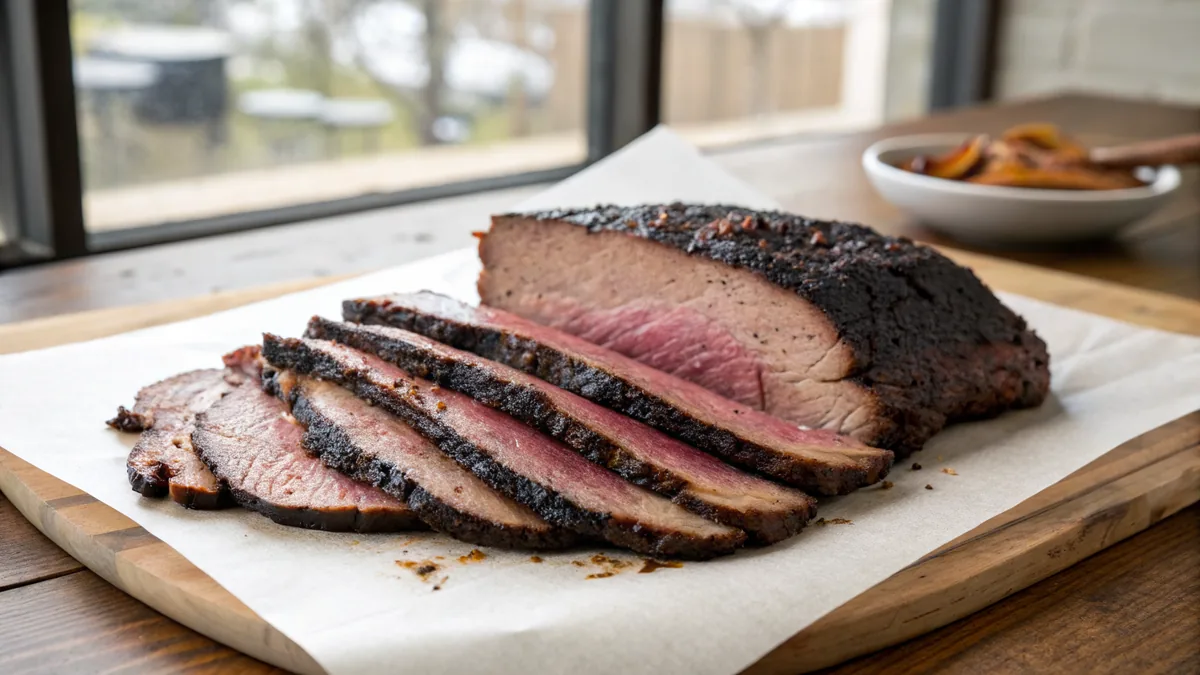
The short answer: plan on about half a pound of cooked brisket per adult when it is the main meat. A whole packer brisket loses roughly 40 to 50 percent of its raw weight to trimming, rendered fat, and the long smoke, so buying one pound of raw brisket per person lands you right on target. For 10 guests that is a 10 to 11 pound packer; for 25, two packers; for 50, four; for 100, eight. Sandwiches need less, about a third of a pound cooked each, and multi-meat spreads less still.
The Base Number: Half a Pound Cooked
Brisket portions run heavier than pulled pork portions, and it is worth understanding why before you argue with the number. A plate of brisket is usually the whole show: two or three thick slices of flat, maybe a chunk of point, and the sides. People do not pick at brisket. Half a pound of cooked meat per adult is the figure Texas caterers plan around for a dinner where brisket is the centerpiece, and it has held true at every scale I have cooked.
The number flexes down in predictable situations. At lunch, or for an older crowd, or when the brisket shares the table with sausage and chicken, a third of a pound cooked per person is plenty. It flexes up for teenagers, ranch hands, and any event where the words all you can eat have been spoken aloud. But start at half a pound cooked and adjust from there, not the other way around.
Children under twelve count as half an adult for brisket math, and the very polite fiction that guests will fill up on sides is worth exactly one extra plate per twenty people. Plan the meat honestly and let the sides be abundance rather than insurance. My guide to Texas BBQ sides covers what belongs next to the meat.
The 40 to 50 Percent Rule: Raw Weight Is a Lie
Here is where brisket punishes the unprepared. The 13 pound packer in your shopping cart is not 13 pounds of dinner. You will trim off one to two pounds of hard fat before it ever sees smoke. Over the next 10 to 14 hours, rendered fat and evaporated moisture take their share. What comes off the pit and onto the cutting board is 40 to 50 percent lighter than what you bought. A 13 pound packer yields 6.5 to 7.5 pounds of sliceable meat.
So the working formula is simple: figure your cooked weight at half a pound per person, then double it to get the raw weight to buy. One pound raw per guest. It feels like too much meat in the cart, and it is exactly right. Doing the math on raw weight is the single most common reason hosts run short, and with brisket there is no quick fix at hour eleven.
Yield varies a little with the brisket and the cook. A well-marbled prime packer renders more fat but also carries more meat; a lean select loses less to rendering and more to dryness. Trimming style matters too, and if you are new to the trim, my Texas brisket recipe walks through exactly what comes off and what stays. Whatever the variables, 50 percent yield is the planning number that never embarrasses you.
Brisket by Group Size: 10, 25, 50, 100
Here is the chart I keep taped inside a kitchen cabinet, built on half a pound cooked per person and the doubling rule. The packer counts assume average 12 to 13 pound whole briskets, which is what most markets and warehouse stores carry.
| Guests | Cooked brisket needed | Raw brisket to buy | Whole packers |
|---|---|---|---|
| 10 | 5 lb | 10-11 lb | 1 small packer |
| 25 | 12-13 lb | about 25 lb | 2 average packers |
| 50 | 25 lb | about 50 lb | 4 packers |
| 100 | 50 lb | about 100 lb | 8 packers |
Two practical notes on the big rows. First, cook whole packers rather than trying to find one giant brisket; four 12 pounders cook more evenly and finish faster than anything larger, and the cook time on your pit is set by the thickest brisket, not the total load. Second, at 50 guests and beyond, hold the cooked briskets whole, wrapped in butcher paper and towels in a dry cooler, and slice in batches as service moves. Sliced brisket starts drying the minute the knife stops.
The other half of planning a cook this size is the clock, and quantities and timing are two different problems. My brisket smoking time calculator builds the hour-by-hour schedule from your brisket weight and pit temperature, working backward from when you want to serve. Use this page to decide what to buy and the calculator to decide when to light the fire.
Plates, Sandwiches, and the Chopped Question
Everything above assumes plated service, which is the hungriest format. Sandwiches change the math kindly. A proper brisket sandwich carries 4 to 5 ounces of meat, so a pound of cooked brisket builds three to four of them, and a third of a pound cooked per person covers a sandwich crowd with room for seconds. My chopped beef sandwich is the classic Texas use for the point end and the trimmings, and chopping stretches the yield noticeably further than slicing.
If you are running a multi-meat spread, total all the meat at half a pound cooked per person combined, then split it across the proteins. Brisket plus sausage plus chicken does not mean three full portions each; it means one portion, divided by preference. The same rule appears in my pulled pork per person guide, which is this page's twin for the pork side of the pit, built on the same cooked-yield logic with pork's slightly friendlier numbers. And when the cook moves indoors in November, how much turkey per person is the third page in this set, running the same arithmetic on a bird that yields even less of its raw weight than a packer does.
Flat versus point matters more for service than for quantity. The lean flat slices cleanly and feeds plates; the fatty point becomes burnt ends, chopped beef, and the slices the pitmaster quietly keeps. If your crowd skews toward lean slices, the flat runs out first, so slice conservatively early or separate the two muscles and manage them as different supplies.
Leftover Brisket Is a Gift, Not a Failure
Round up, always. The asymmetry is completely lopsided: too much brisket means vacuum bags of smoked gold in the freezer, and too little means an apologetic host and a hungry table. Leftover brisket reheats into tacos, breakfast hash, quesadillas, and chopped beef sandwiches all week, and frozen in its own rendered fat it keeps for three months without complaint.
The full philosophy of the Texas cook, from choosing the packer to reading the stall, lives in my Ultimate Texas BBQ Guide. This page is just the arithmetic; that one is the religion. Between the two of them and the timing calculator, the only thing left to supply is the fire and the patience.
Brisket Portions FAQ
How much brisket per person should I plan?
Plan on about half a pound of cooked brisket per adult when it is the main meat, which is a generous plate portion or one very full sandwich plus seconds. Because a whole packer brisket loses roughly 40 to 50 percent of its weight to trimming, rendered fat, and evaporation, that means buying about one pound of raw brisket per person. For lighter eaters, lunch service, or a multi-meat spread, drop to a third of a pound cooked each.
How much brisket do I need for 10 people?
For 10 people eating brisket as the main, plan about 5 pounds of cooked brisket, which means buying a 10 to 11 pound raw packer. That is conveniently the size of a smaller whole packer brisket, so one brisket covers a dinner party of ten with a little left over. If your crowd runs big on appetite, step up to a 12 pound packer rather than cooking a second one.
How much brisket for 25 or 50 people?
Using half a pound cooked per person: for 25 people you need about 12 to 13 pounds cooked, which means roughly 25 pounds raw, or two average packers. For 50 people, plan about 25 pounds cooked, meaning roughly 50 pounds raw, which is four 12 to 13 pound packers. Cook them together if your pit has the room; the cook time depends on the thickest single brisket, not the total weight.
How much brisket for 100 people?
For 100 guests, plan on about 50 pounds of cooked brisket, which means buying roughly 100 pounds raw, or eight average packers. At that scale, round up a full brisket rather than trimming the estimate, and stagger your slicing so meat is not sitting cut and drying out. Sliced brisket dries in minutes; whole cooked briskets hold beautifully wrapped in a warm cooler for four hours or more.
Does brisket shrink when you smoke it?
Yes, dramatically, and this is where portion math goes wrong. Between trimming the hard fat before the cook and the moisture and fat lost during 10 to 14 hours of smoking, a raw packer loses 40 to 50 percent of its weight. A 13 pound raw brisket yields only 6.5 to 7.5 pounds of sliced meat. Always run your numbers on cooked weight, then double them to know what to buy at the market.
How many sandwiches does a pound of brisket make?
A pound of cooked brisket makes three to four sandwiches at a real-deal 4 to 5 ounces of meat each, and closer to five if you are slicing thin for lighter sandwiches. Chopped brisket stretches slightly further than sliced because the sauce carries some of the volume. For a sandwich-only event, you can plan a third of a pound cooked per person instead of the half-pound plate figure.