Southern Comfort Food
Jalapeno Cranberry Sauce
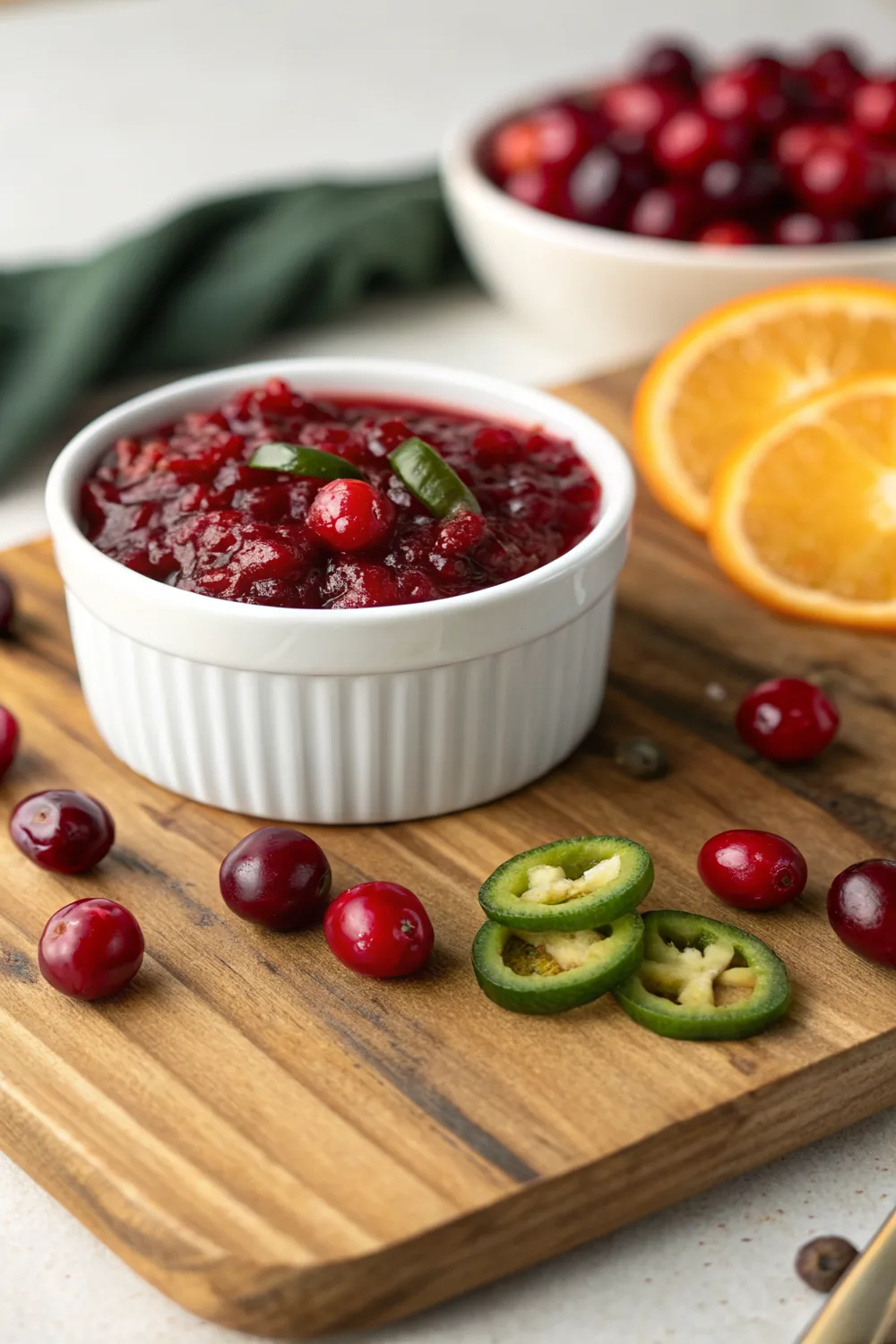
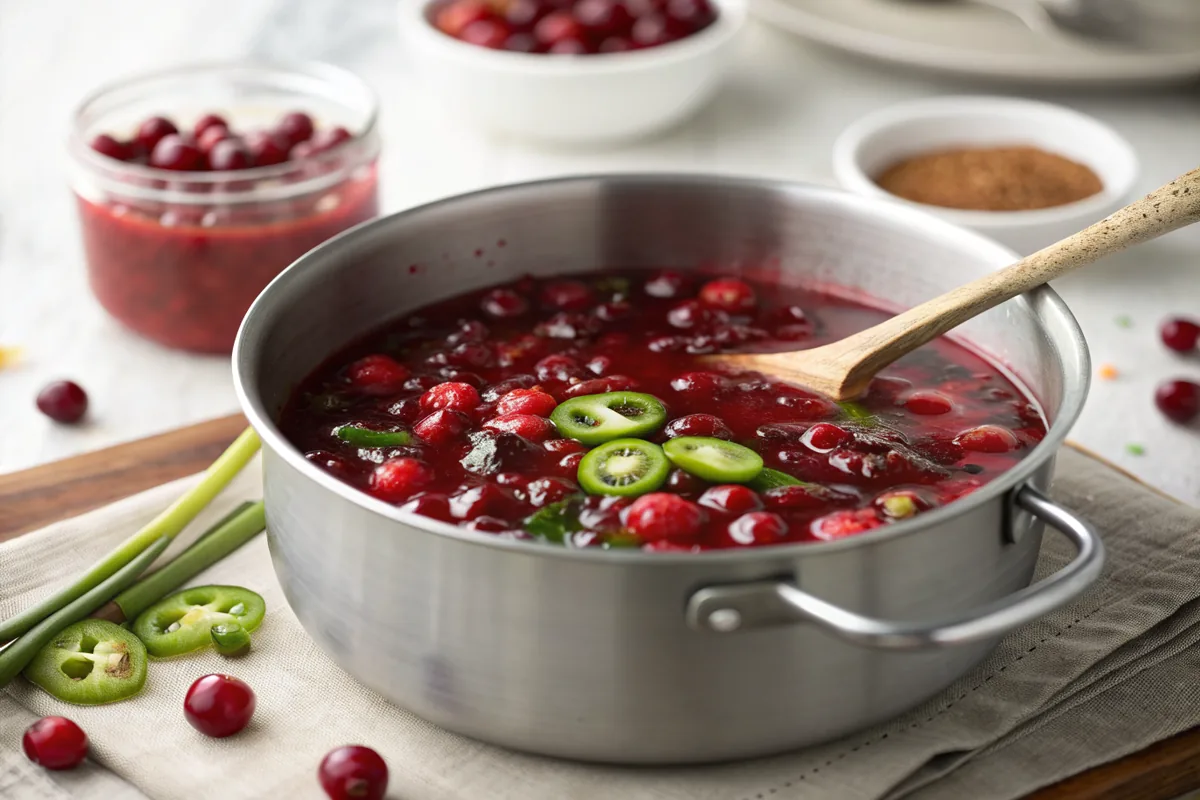
Chef Mia's jalapeno cranberry sauce: fresh berries, two jalapenos, lime, and 15 minutes in one saucepan. It sets on its own pectin, no boxed pectin needed.
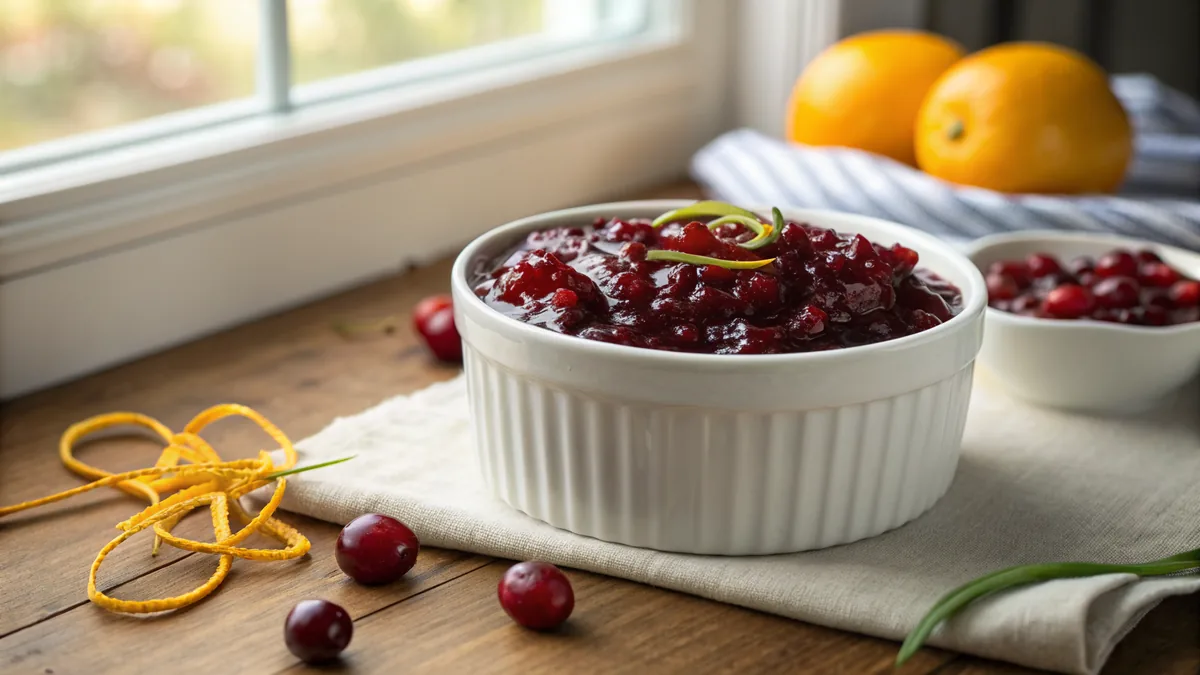
Quick answer: Jalapeno cranberry sauce is a 15-minute stovetop condiment: simmer a 12-ounce bag of fresh cranberries with 3/4 cup sugar, 1/2 cup water, two finely diced jalapenos, orange zest, and a pinch of salt until the berries pop and the liquid turns glossy, then cool it completely so it sets. Cranberries are one of the highest-pectin fruits in the produce aisle and they are already acidic, which is the entire reason this sauce thickens on its own with no boxed pectin, no cornstarch, and no gelatin. The heat is adjustable at one place only: the seeds and white ribs of the jalapenos. Leave them in for a sauce with a real back-of-the-throat warmth, take them out for a bright, gentle version that children will eat. It is better on day two than on day one and it keeps ten days in the refrigerator, which makes it the single most valuable thing you can cook the week before Thanksgiving. Makes about 2 1/4 cups, enough for 10 to 12 people.
The cranberry sauce is the only dish on the Thanksgiving table that nobody defends and everybody eats. It arrives in a can, it slides out with that particular sucking sound, it keeps the ridges, somebody slices it into discs, and by the end of the meal the dish is empty. I have made peace with the can. What I have not made peace with is the idea that the can is the only option, because the homemade version takes fifteen minutes of actual work and costs about three dollars.
The Texas part of this recipe is the jalapeno, and it is not a novelty. Cranberry sauce is built on a very simple flavor triangle: sour fruit, sugar, and whatever aromatic you add. In most of the country that aromatic is orange or cinnamon. Down here we reach for the pepper jar the way other people reach for the spice rack, and a fresh jalapeno diced into the pot turns the sauce into something that actually argues with the turkey instead of just sitting next to it. The heat comes up slow, behind the fruit, and it cuts the sweetness in a way that citrus alone cannot.
I started making this after a Thanksgiving in Lockhart where my neighbor brought a bowl of it, unannounced, in a Pyrex dish with a rubber lid. It went next to the canned stuff and by dessert only one of the two bowls was empty. I have made it every November since, always on the Sunday before, always doubled, because it keeps beautifully and because half of it ends up on turkey sandwiches for the rest of the week.
Why Cranberries Set Without Boxed Pectin
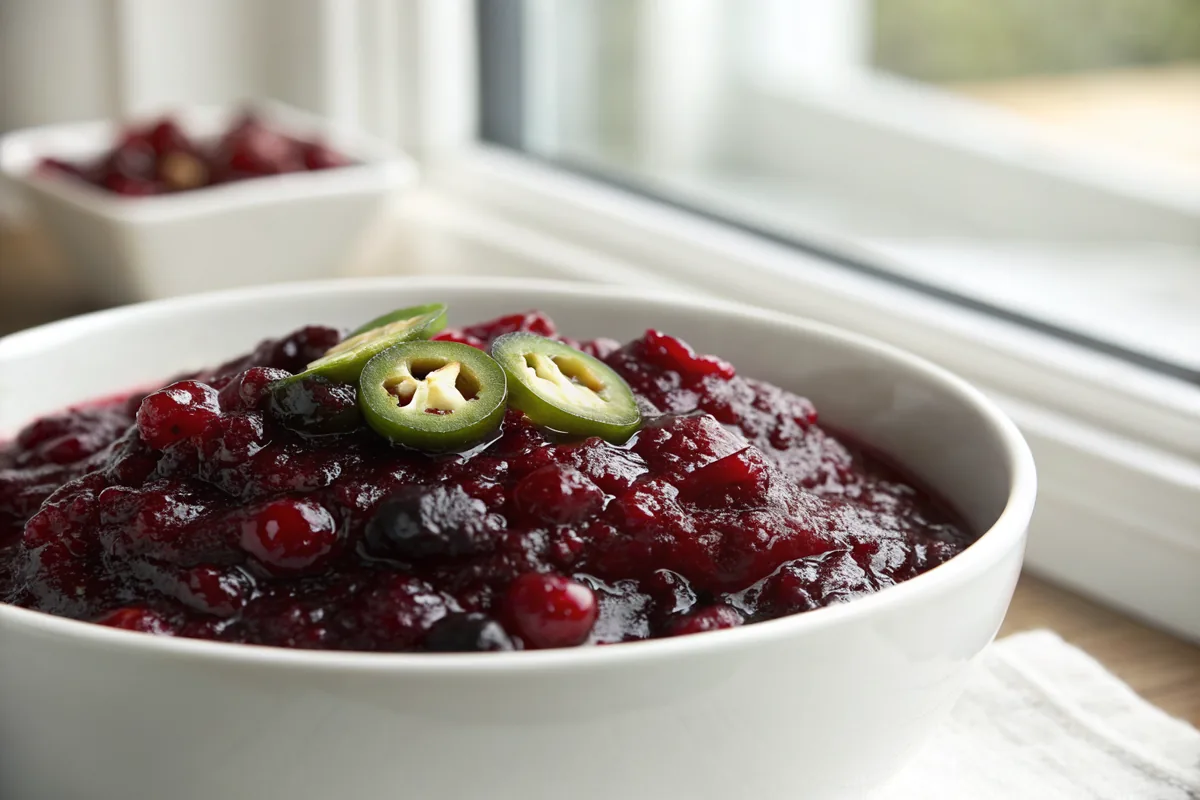
Almost every homemade jam recipe you have ever read includes a box or a pouch of pectin, and almost every cranberry sauce recipe does not. That is not an oversight and it is not a shortcut. Cranberries are one of the highest-pectin fruits sold in an American grocery store, and unlike apples or quince they carry that pectin along with enough natural acid to activate it. A gel needs three things: pectin, acid, and sugar. The berry brings two of them to the pot and you bring the third.
The chemistry is worth understanding because it tells you exactly when to stop cooking. Pectin molecules sit locked inside the cell walls of the fruit. Heat breaks those walls down, which is what the popping is: each berry splitting open and dumping its pectin into the surrounding syrup. Acid, which cranberries have in abundance at around pH 2.5, strips the electrical charge that keeps those pectin strands repelling each other. Sugar pulls water away from them. Once all three conditions are met, the strands link into a loose three-dimensional mesh and the liquid gets trapped inside it.
But that mesh only forms as the temperature drops. Hot pectin gel is a contradiction; the strands have too much energy to hold their bonds. This is the single most common reason people overcook cranberry sauce: they look into the pot at minute twelve, see something the consistency of thin soup, panic, and simmer it another fifteen minutes. What they end up with once it is cold is a stiff, rubbery block with a slightly bitter, over-caramelized edge. Ten to twelve minutes of simmering is genuinely enough. Trust the cooling.
There is one honest exception. If you are making a large batch, doubling or tripling this recipe in a wide pot, evaporation runs faster relative to volume and you can genuinely overshoot into stiffness. For big batches use a narrower, taller pot and cut the simmer to eight or nine minutes. The set is more forgiving than a fruit jam because the pectin load is so high, but it is not infinitely forgiving.
The Jalapeno: Where the Heat Actually Lives
Most people believe the seeds carry the heat of a chile. They do not, or at least not directly. Capsaicin is produced in the placental tissue, the pale spongy ribs that run down the inside walls of the pepper and hold the seeds in place. Seeds pick up heat by sitting against that tissue, which is why they taste hot when you bite one, but the ribs are the source. This matters here because it gives you a dial rather than a switch: scrape out both ribs and you cut the heat of a jalapeno by something like two-thirds without losing the grassy, green pepper flavor that makes the sauce interesting.
Jalapeno heat also varies enormously from pepper to pepper, more than almost any other chile at the grocery store. A jalapeno can run anywhere from 2,500 to 8,000 Scoville units, and the plant produces more capsaicin under stress, meaning drought-grown peppers late in the season are much hotter than irrigated ones in June. The visible tell is corking: those fine white striations on the skin of an older pepper. Corked jalapenos are usually the hot ones. Smooth, glossy, deep green ones are usually milder. Buy four, taste a sliver of each raw, and use the two you want.
For a fully different character, roast the jalapenos before dicing them. Blister them over a gas flame or under the broiler until the skin blackens in patches, steam them in a covered bowl for ten minutes, then rub the skins off and dice. Roasting converts some of the sharp green notes into something smoky and rounder, and it takes a little of the edge off the heat. Roasted-jalapeno cranberry sauce is the version I make when the turkey came off the pit rather than out of the oven, because the two smoke flavors find each other. If you want that same fresh-pepper brightness in a raw preparation, my pico de gallo runs on exactly the same seed-and-rib logic.
Serranos work as a straight substitute if you want more heat with the same green flavor: use one and a half serranos in place of two jalapenos and expect a noticeably sharper burn. Habaneros are a different proposition entirely, floral and fierce, and if you go that route use a quarter of one, minced to nothing, and warn people. What I would avoid is any dried or powdered chile here, which turns the sauce muddy brown and dusty rather than clean and red.
Sugar, Acid, and the Line Between Sauce and Candy
The standard American cranberry sauce ratio is one cup of sugar to a twelve-ounce bag of berries, and I use three-quarters of a cup. That quarter-cup difference is deliberate and it is the main thing separating this sauce from the jellied cylinder. Cranberries are ferociously sour, so the sugar is doing real work rather than just sweetening, but at a full cup the sauce crosses into dessert territory and stops doing its job on the plate. Its job is to cut through fat and salt, and a sauce that is mostly sweet cannot cut through anything.
There is a floor, though. Below about half a cup of sugar per bag you start compromising the set, because sugar is one of the three legs of the pectin gel, and you also end up with something genuinely difficult to eat. If you want a less sweet sauce than this one, the better move is not less sugar but more acid: add the lime juice as written and consider a splash of apple cider vinegar, about two teaspoons, stirred in at the end. Acid reads as brightness and makes a given amount of sugar taste like less.
The orange is structural, not decorative. Cranberry and orange is one of those pairings that survives because the bitter oils in the zest fill a gap that the fruit itself does not cover: cranberry is sour and tannic but has almost no aromatic top note. Use the zest rather than the juice if you want that lift without added sweetness, or swap the water for fresh orange juice if you want a rounder, softer sauce. Do not use both at full strength unless you like a distinctly citrus-forward result.
If you want to trade some of the granulated sugar for something with character, maple syrup and honey both work, though not one for one. Replace up to half the sugar by volume with either one and expect the set to be slightly softer, since neither contributes to the gel the way sucrose does. Maple is the better partner for the jalapeno; honey tends to compete with the orange. Brown sugar makes a darker, more molasses-heavy sauce that I find muddies the fruit.
Fresh, Frozen, and the Case for the Can
Fresh cranberries have an absurdly short season, roughly late September through December, which is precisely why they are the Thanksgiving fruit in the first place. Buy them when you see them. A bag keeps three to four weeks in the refrigerator and up to a year in the freezer, and if you have any intention of making this sauce more than once, buy four bags in November and freeze three.
Frozen cranberries work perfectly here and require no adjustment except one: do not thaw them. Add them to the pot frozen, straight from the bag, and give the simmer an extra two minutes to account for the cold. Thawing them first causes them to weep liquid and collapse before they hit the heat, which makes for a mushier sauce with fewer intact berries. This is the opposite of most frozen-fruit advice and it is the correct call for cranberries specifically.
And then there is the can, which I am not going to insult. Jellied cranberry sauce has been produced continuously since 1941 and it is a genuinely well-engineered product: strained, uniformly gelled, sweet enough to please a child, and it holds a shape. Millions of people have a real emotional attachment to those ridges and to the ritual of sliding it out whole. On my own table both appear, the can at one end and this bowl at the other, and I have never once had to explain why. Make the homemade version because it is better, not because the can is bad.
The practical difference on the plate is texture and heat. The can is smooth, sweet, and one-note. This sauce is chunky, tart, and has a slow warmth that arrives about two seconds after the sweetness. Guests who say they do not like cranberry sauce almost always mean they do not like sweet gel, and this converts a fair number of them.
Make-Ahead, Storage, and the Ten-Day Window
This is the most make-ahead-friendly dish on the entire Thanksgiving menu, and treating it that way is the whole point. Cook it the Sunday before. It needs at minimum four hours in the refrigerator to set and to let the jalapeno heat distribute, and it genuinely peaks somewhere around day two or three, when the pepper has stopped being a separate ingredient and has become part of the fruit. Making it on Thursday morning is a waste of both counter space and the sauce's potential.
In a covered container in the refrigerator it holds ten days easily, and I have kept it two weeks without any decline. The sugar and the acidity do the preserving work. What you will notice over time is that it tightens slightly and the color deepens toward garnet. If it firms up more than you want, stir in a tablespoon of water or orange juice and it loosens right back.
It freezes well too, which surprises people. Portion it into small containers, leave half an inch of headspace, and freeze up to three months. Thaw overnight in the refrigerator and stir vigorously; the texture breaks slightly on thawing and comes back together with agitation. I keep a pint in the freezer year-round for pork chops and for cheese boards in June.
For canning, this recipe is a reasonable candidate given its acidity, but I am careful about what I claim there. If you want shelf-stable jars, follow a tested water-bath canning recipe from a source that has done the acidity math for the specific proportions, rather than adapting this one, since the jalapenos are a low-acid addition. In the refrigerator and the freezer, no such concerns apply. When I am planning the whole holiday cook and deciding what gets made when, my Texas Thanksgiving guide lays out the full make-ahead schedule dish by dish.
Serving It: The Plate, the Sandwich, the Cheese Board
On the Thanksgiving plate, cranberry sauce is not a side dish, it is a corrective. Everything else on that plate is some combination of rich, salty, starchy, and soft: turkey and gravy, dressing, potatoes, a casserole. Cranberry sauce is the only thing on the table that is sharp and cold, and it exists so that the fifth bite tastes as good as the first. Serve it cold, in a small bowl with its own spoon, and put it near the turkey rather than off at the end where people forget it. Where it fits into the full spread is the whole subject of my Texas Thanksgiving menu.
The leftover turkey sandwich is where this sauce becomes indispensable, and it is why I always double the batch. White bread, cold sliced turkey, a smear of mayonnaise, a thick spoonful of this, and a leaf of lettuce. The jalapeno turns what would be a mild, slightly sad sandwich into something with an actual argument in it. A slab of leftover cornbread dressing in there too, cold and dense, is the Texas move.
That sandwich is the first of the nine day-after dishes in my leftover turkey recipes, and a few of the others, the enchiladas and the breakfast tacos, want a spoon of this on the side too.
The cheese board trick is the one I use in months that are not November. Set a block of cream cheese on a plate, pour this sauce over the top so it pools around the edges, and serve with sturdy crackers or tortilla chips. It takes eleven seconds and it looks like you planned something. On a holiday appetizer table it sits comfortably next to a warm dish of buffalo chicken dip, one cold and sharp, one hot and creamy, and between the two of them nobody notices that dinner is running forty minutes late.
Beyond the holiday, it is a genuine condiment. It belongs on pork chops, on a turkey or ham panini, next to a wedge of sharp cheddar, spooned over goat cheese, and on a plate of roast chicken. I have put it on a breakfast biscuit with sausage and regretted nothing. The heat is what makes it versatile; a purely sweet cranberry sauce has a much shorter list of places it can go.
Mistakes That Ruin Cranberry Sauce
Cooking it until it looks thick in the pot. The single most common error, and the reason so many homemade cranberry sauces come out stiff and slightly bitter. The gel forms as it cools, not as it simmers. Ten to twelve minutes, then off the heat, no matter what the surface of the pot is telling you.
Adding the lime juice at the beginning. Fresh citrus juice loses its brightness under a long simmer and turns flat and faintly metallic. Zest goes in early because the aromatic oils are heat-stable; juice goes in at the end, off the burner.
Dicing the jalapenos too coarsely. Quarter-inch chunks read as pieces of pepper floating in fruit, and somebody gets a mouthful of pure heat while somebody else gets none. An eighth-inch dice disappears into the sauce and delivers the heat evenly, which is the entire design.
Thawing frozen cranberries first. They weep and collapse, and you lose the whole berries that give the sauce its texture. Frozen berries go into the pot frozen and get two extra minutes of simmer.
Serving it warm. A warm cranberry sauce is a loose cranberry sauce, because the pectin bonds that set on cooling come undone again with heat. If it has been sitting out, that is fine, cool room temperature is good. Reheating it is not.
Making it Thursday morning. It will taste fine and it will be a shadow of what it becomes by Saturday. The jalapeno needs a night in the refrigerator to spread through the fruit. This is a Sunday job, and it frees up a burner on the day that matters.
Jalapeno Cranberry Sauce Recipe
Ingredients
- For the sauce:
- 12 oz (340 g) fresh or frozen whole cranberries, about 3 cups, picked over
- 3/4 cup (5 1/4 oz / 150 g) granulated sugar
- 1/2 cup (4 oz / 120 ml) water, or fresh orange juice for a rounder sauce
- 2 medium jalapenos (about 2 oz / 55 g total), stemmed and finely diced
- Zest of 1 orange, about 1 tablespoon, removed in fine strips or grated
- 1/4 teaspoon kosher salt
- To finish, off the heat:
- 1 tablespoon fresh lime juice
- 2 tablespoons chopped fresh cilantro, optional
Instructions
- Sort the berries first. Tip the cranberries into a bowl of cold water and pick out the soft ones, the shriveled ones, and any stems that came along for the ride. Good cranberries are firm and bounce; a berry that squashes between your fingers is already past it and will turn a small patch of the sauce muddy. This takes two minutes and it is the only prep that matters.
- Decide the heat before you dice. Split the jalapenos lengthwise and look at the white ribs inside. That pith, not the seeds, is where most of the capsaicin lives. Scrape both ribs and seeds out with the tip of a spoon for a gentle sauce, leave one pepper's worth in for a medium sauce, or leave everything in for real heat. Then dice the flesh as finely as you can manage, about 1/8 inch, so it disappears into the sauce as texture rather than showing up as a bite.
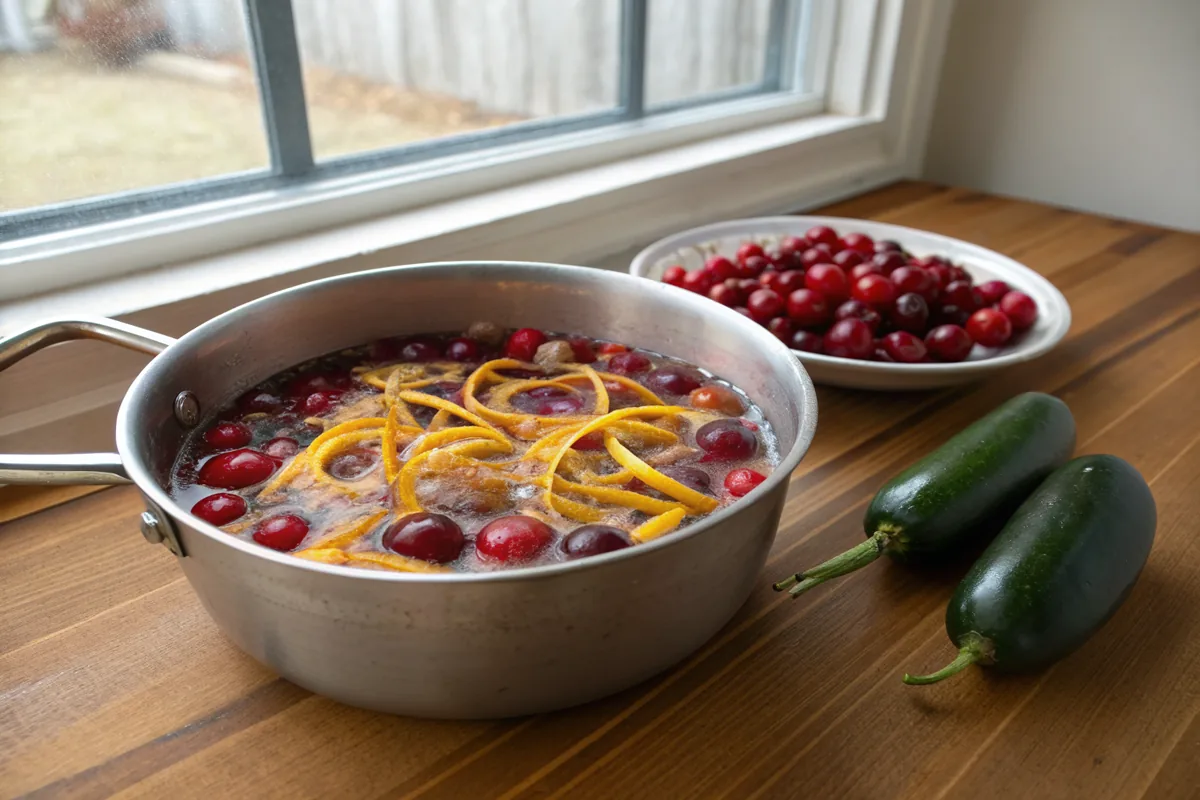
- Dissolve the sugar before the fruit goes in. In a 2-quart heavy saucepan, combine the sugar, water, orange zest, and salt over medium heat and stir until the sugar is fully dissolved and the liquid runs clear, about 2 minutes. Starting from dissolved sugar rather than a gritty slurry keeps the finished sauce smooth and stops sugar from scorching against the bottom of the pan while the berries are still cold.
- Add the cranberries and the jalapenos. Stir in the cranberries and the diced jalapenos, bring the pot to a gentle boil, then drop it to a steady simmer. Set a timer for 10 minutes. Within the first three or four minutes you will start hearing the berries pop, a soft, irregular ticking against the pan, and that sound is the pectin being released into the syrup.
- Simmer 10 to 12 minutes and stop. Stir every couple of minutes, pressing a few berries against the side of the pan if you want a smoother sauce, leaving them whole if you want texture. The sauce is done when roughly three-quarters of the berries have burst, the liquid has darkened to a deep ruby, and a spoon dragged across the bottom leaves a track that fills in slowly. Do not chase a thick sauce in the pot; it is still loose and hot at this stage and it is supposed to be.
- Finish off the heat. Pull the pot off the burner and stir in the lime juice and the cilantro if you are using it. Adding acid at the end keeps it bright, because a long simmer flattens fresh lime into something dull. Taste it now, carefully, because it is molten sugar. If it is too tart, stir in another tablespoon of sugar while the sauce is still hot enough to dissolve it.
- Cool completely: this is where it sets. Transfer the sauce to a bowl or a wide storage container and let it cool at room temperature for at least an hour, uncovered, then refrigerate. It will look alarmingly thin when it comes off the stove and it will be spoonable and thick when it is cold. Nothing you do in the pot changes that; the pectin sets on cooling, not on cooking.
- Rest it overnight if you can. Cover and refrigerate at least 4 hours, ideally overnight. The jalapeno heat needs that time to spread evenly through the fruit, and on day one it is still concentrated in pockets. Serve it cold or at cool room temperature, never warm, since warming it loosens the set again.

Frequently Asked Questions
How spicy is jalapeno cranberry sauce?
That is entirely under your control, and the dial is the white ribs inside the pepper rather than the seeds. Scrape both ribs and seeds out of both jalapenos and you get a sauce with a faint warmth that most children will eat happily. Leave one pepper's ribs in for a medium sauce with a slow build. Leave everything in and it has a real back-of-the-throat heat that lingers a few seconds after the sweetness. Jalapenos also vary a lot on their own, from about 2,500 to 8,000 Scoville units, so taste a sliver raw before you commit.
Do I need to add pectin to cranberry sauce?
No, and adding it usually makes things worse. Cranberries are one of the highest-pectin fruits in the produce section and they are naturally acidic at around pH 2.5, which means they already have two of the three ingredients a gel needs. You supply the sugar. The sauce sets as it cools, not while it simmers, so a pot that looks like thin soup after twelve minutes is exactly on track. Boxed pectin on top of that produces a stiff, rubbery texture closer to a firm jelly than a spoonable sauce.
Can I use frozen cranberries?
Yes, and they work just as well as fresh with one rule: do not thaw them. Add them to the pot straight from the freezer and add about two extra minutes to the simmer to make up for the cold. Thawed cranberries weep liquid and collapse the moment they hit heat, which costs you the whole intact berries that give the sauce its texture. Fresh cranberries also freeze beautifully for up to a year, so buying extra bags during the short autumn season is worth doing.
How far ahead can I make cranberry sauce?
Make it up to ten days ahead and you will have a better sauce than if you made it that morning. It needs at least four hours in the refrigerator to set, and it genuinely peaks around day two or three once the jalapeno heat has spread evenly through the fruit. In a covered container it holds ten days without any decline and I have kept it two weeks. It also freezes for three months; thaw it overnight in the refrigerator and stir it hard to bring the texture back together.
Why is my cranberry sauce runny?
Almost always because it has not finished cooling. Pectin gels form as the temperature drops, so a sauce that is still warm will be loose no matter how long it simmered. Give it an hour on the counter and then several hours in the refrigerator before judging it. If it is genuinely thin after a full night cold, the likely causes are too much liquid to start with, or a sugar quantity below about half a cup per twelve-ounce bag, which weakens the gel. Simmering it again for five minutes and re-cooling usually fixes it.
Can I make cranberry sauce with less sugar?
You can go down to about half a cup per twelve-ounce bag before the set starts to suffer, since sugar is one of the three legs of the pectin gel. Below that you get a loose, aggressively sour sauce. A better approach for a less sweet result is to keep the sugar and add acid instead: the lime juice at the end, plus two teaspoons of apple cider vinegar if you want more. Acid reads as brightness on the palate and makes the same amount of sugar taste like less.
What do you serve jalapeno cranberry sauce with?
On the holiday table it belongs next to roast or smoked turkey, where its job is cutting through the fat and salt of everything else on the plate. Past that it is a real year-round condiment: pork chops, roast chicken, ham sandwiches, sharp cheddar, goat cheese. The best trick is pouring it over a block of cream cheese and serving it with crackers or tortilla chips as an appetizer. The leftover turkey sandwich, with mayonnaise and a thick spoonful of this, is the reason to double the batch.
Can I use dried cranberries instead of fresh?
Not for this recipe. Dried cranberries have been sweetened and had most of their water removed, and with it most of the free pectin that makes the sauce set. What you get is a sticky, jammy compote rather than a sauce, and a much sweeter one. If fresh and frozen are both unavailable, a better substitute is a bag of frozen sour cherries plus an extra tablespoon of lime juice, which at least keeps the acidity, though the result is a different dish.