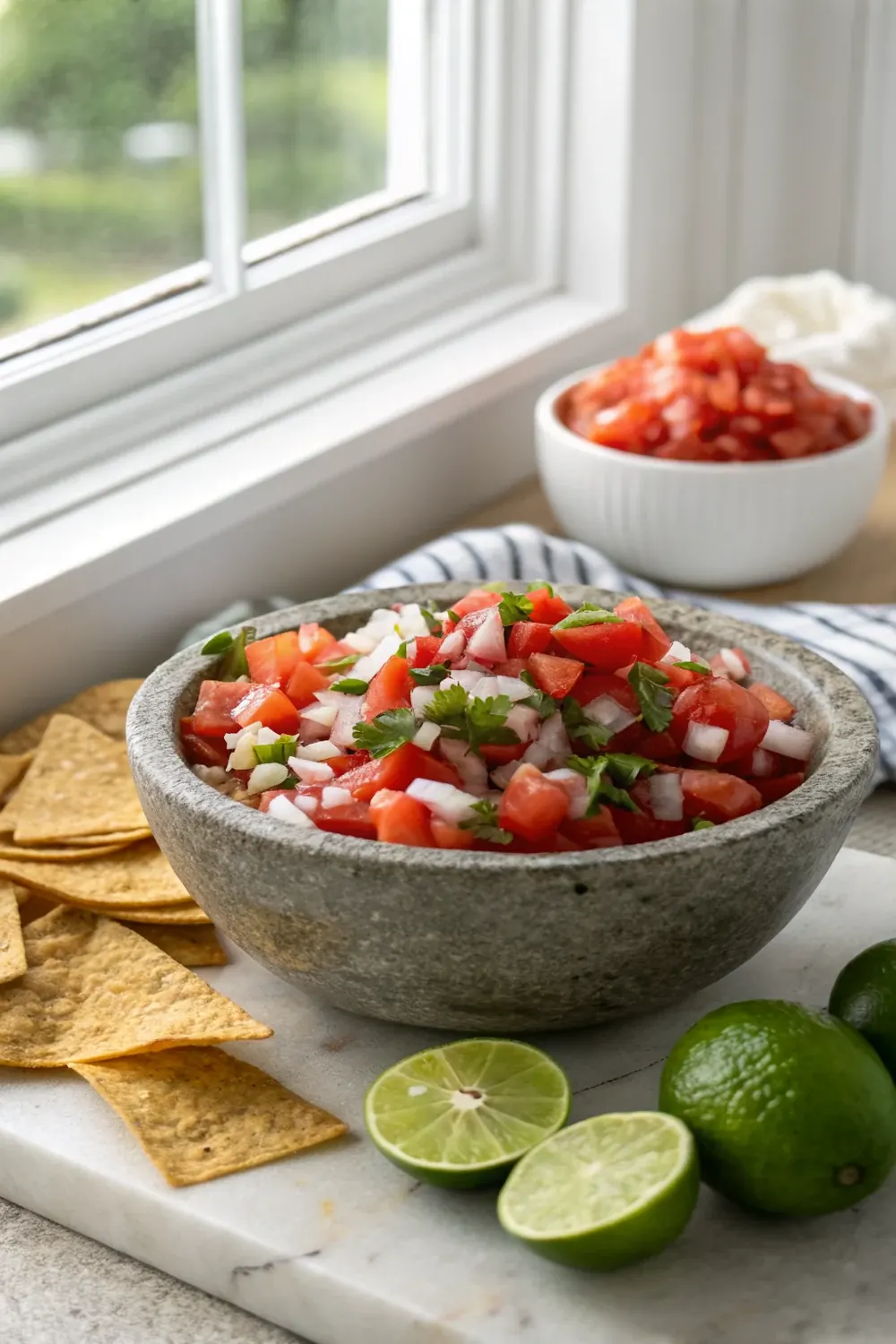
Tex-Mex Recipes
Pico de Gallo
Chef Mia's pico de gallo: 2:1:1 tomato-onion-jalapeno ratio by weight, salted and drained 10 minutes so it never goes watery. Hand-chopped, never blended.
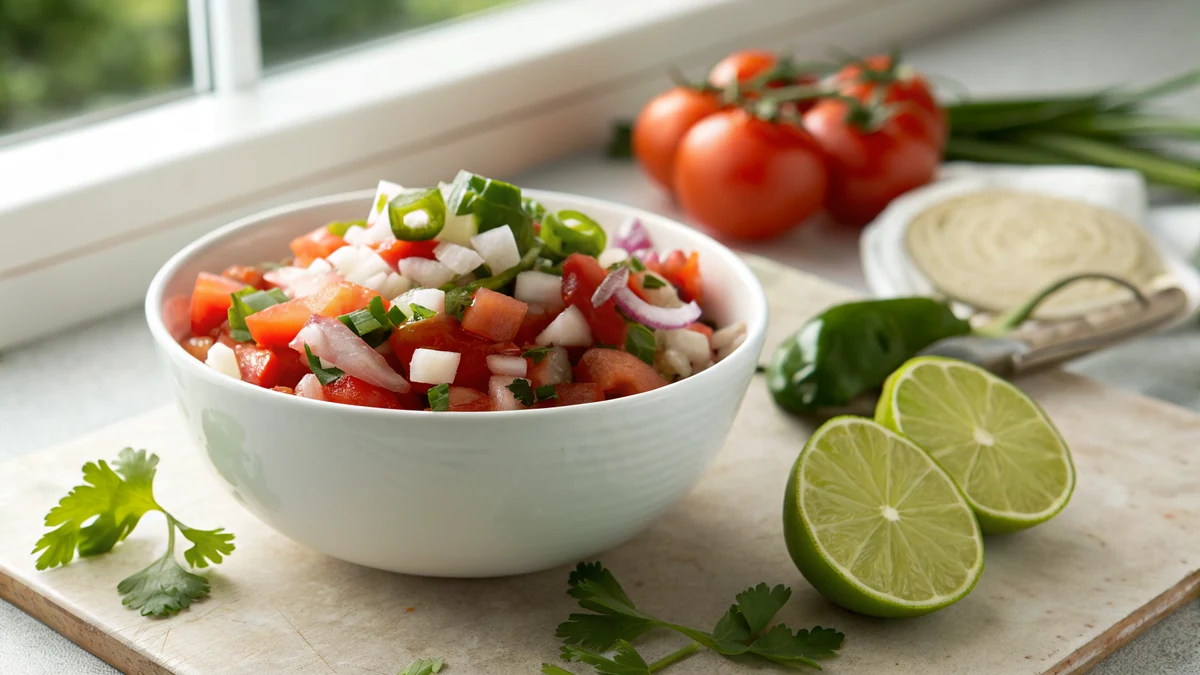
Quick answer: Pico de gallo is a raw, hand-chopped salsa: quarter-inch dice of ripe tomato, white onion, and jalapeno with cilantro, lime, and salt, and it is never blended. The ratio that keeps it balanced is 2:1:1 by weight, two parts tomato to one part onion to one part combined jalapeno and cilantro. The technique that separates good pico from the watery bowl at the back of the potluck table is salting first: toss the diced tomato with the salt alone, let it sit in a colander for 10 minutes so the salt pulls out the excess juice, then fold in everything else. Fifteen minutes of knife work, ten minutes of draining, and it is ready, though it peaks about half an hour in. Makes 3 cups.
Every Tex-Mex restaurant in Texas puts a bowl of red salsa on the table for free, and almost none of them put out pico de gallo unless you order it. There is a reason, and the reason is labor. Pico is knife work, and knife work costs money. That should tell you something about what pico actually is: it is the fresh, expensive, deliberate version of tomato salsa, the one where every ingredient stays itself instead of dissolving into the whole.
My grandmother in San Marcos called it salsa mexicana, because the red, white, and green run the same as the Mexican flag, and she made it exactly once a day, at four in the afternoon, for dinner at six. She was onto something with that timing. Pico is a clock. At thirty minutes it is perfect, the salt has pulled the flavors together and nothing has gone soft. By the next morning it is a different, lesser thing, and no refrigerator can stop that.
The version I settled on after years of making it for taco nights and brisket days differs from most written recipes in one mechanical step: I salt the tomatoes alone and drain them before anything else touches the bowl. Ten minutes in a colander solves the single most common pico complaint, the puddle of pink water at the bottom of the bowl, and it means the lime and salt you add at the end are seasoning the vegetables rather than a soup. Everything else is a knife, a ratio, and restraint.
The 2:1:1 Ratio, by Weight Not by Count
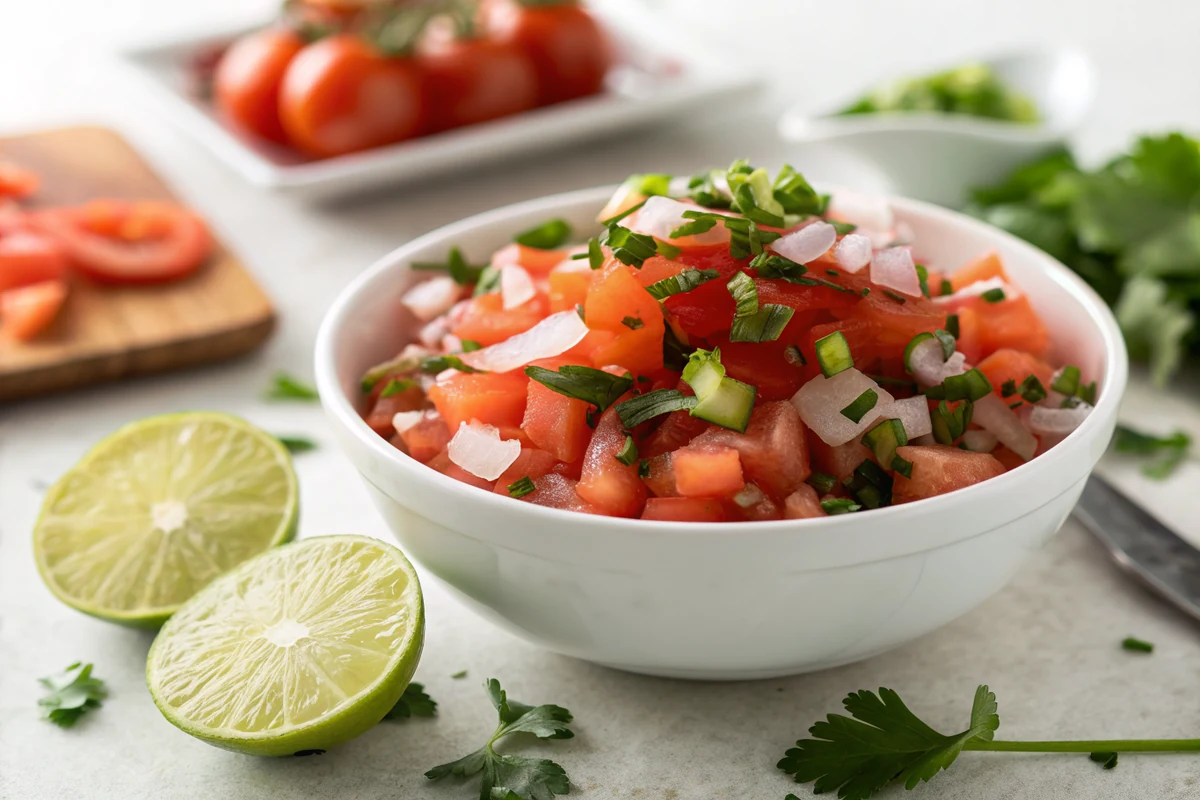
Most pico recipes say something like four tomatoes, one onion, two jalapenos, and that is how you end up with onion salad one week and tomato mush the next, because tomatoes and onions do not come in standard sizes. The ratio that holds is by weight: two parts tomato, one part onion, one part jalapeno plus cilantro combined. For a standard bowl that is a pound and a half of tomato, twelve ounces of onion, and a few ounces of pepper and herb.
The logic of the ratio is structural. Tomato is the body and the sweetness. Onion is the crunch and the bite, and at half the tomato weight it stays a supporting actor; push it higher and every bite leads with onion, which is the single most common flaw in restaurant pico. The pepper-and-cilantro quarter is the register the whole thing plays in, heat from one and that soapy-fresh green note from the other.
Weighing sounds fussy for what is essentially chopped vegetables, but it is the difference between pico that tastes the same every single time and pico that wanders. A kitchen scale, thirty seconds, done. After three or four batches you will be able to eyeball it, because you will know what a correct pile of each vegetable looks like next to the others on the cutting board.
One thing the ratio does not include: tomato water. The 2:1:1 is for drained tomato, after the salt has pulled the loose juice out. If you skip the drain and weigh wet, the tomato fraction is inflated by liquid that adds nothing but the puddle at the bottom of the bowl.
Salt First, Drain Ten Minutes
This is the step that separates this recipe from the hundred others online, and it is not optional, so here is exactly what is happening and why it earns its ten minutes.
A ripe tomato is mostly water, and much of it is loosely held in the seed cavities and the cell walls you just ruptured with a knife. Salt on cut tomato starts pulling that water out immediately by osmosis. If the salt goes on with everything already mixed, that water releases into the finished pico, diluting the lime, washing the salt off the onion, and pooling pink at the bottom of the bowl within the hour.
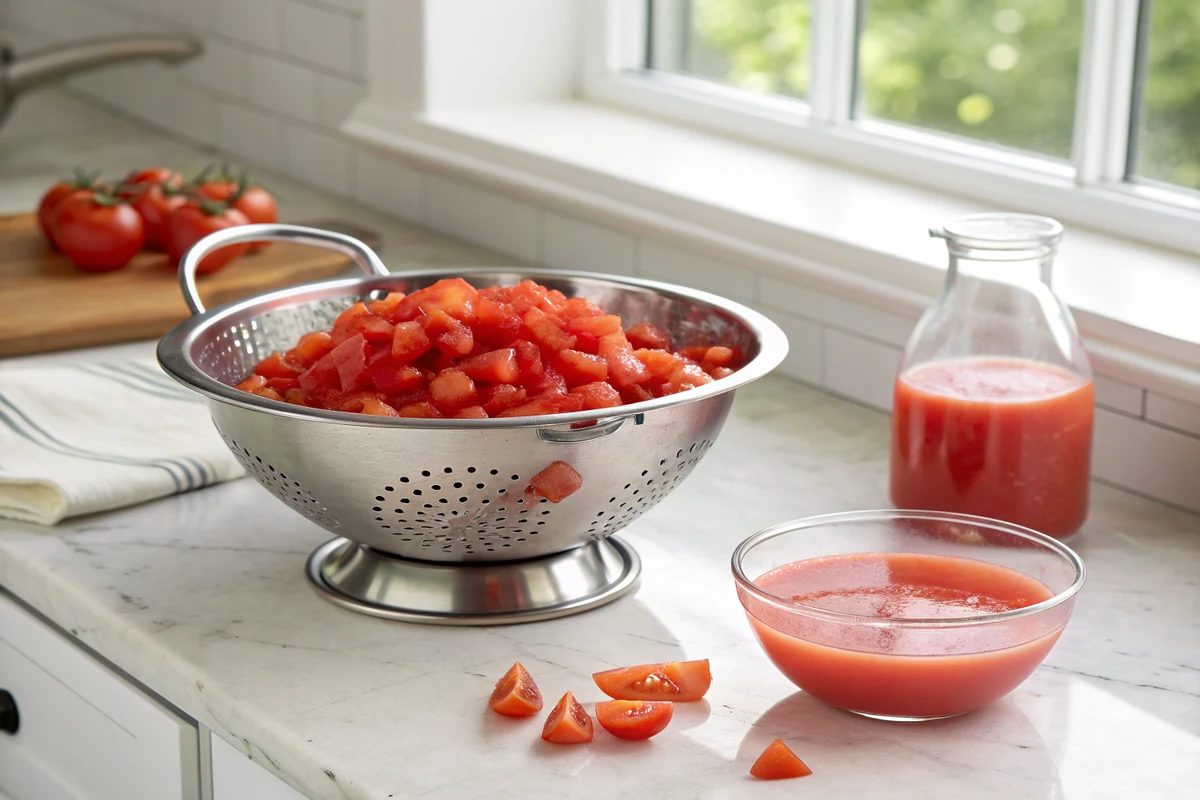
Salting the tomato alone in a colander flips the timing. The same water releases, but it releases into the sink instead of into your pico, and it carries the salt into the tomato flesh on its way out, seasoning the inside of every cube instead of just the surfaces. Ten minutes takes out the loose water without softening the dice; thirty would start to slump it.
Do not rinse the tomatoes after draining, just shake the colander. And taste one cube before you add the finishing salt at the end; drained tomato arrives already partly seasoned, which is why the recipe splits the salt into two additions instead of dumping it all in at the mix.
The drained juice, by the way, is delicious. Salty, sweet, intensely tomato. Drink it, or save it for the blender the next time you make my restaurant-style salsa, where liquid is a feature instead of a bug.
Tomatoes: Roma Year-Round, Whatever Is Ripe in Summer
Pico is a raw tomato dish, which means the tomato is not hiding behind cooking, char, or a blender. It has to be worth eating on its own, and that rules out the pale styrofoam spheres sold as slicing tomatoes most of the year.
Roma (plum) tomatoes are the year-round answer, and not as a compromise. Romas have thick walls, small seed cavities, and less water relative to flesh than round tomatoes, which means they hold a dice beautifully and give up less liquid in the drain. Even a mediocre winter Roma, salted and drained, makes respectable pico. Look for ones that are fully red, heavy for their size, and just barely yielding.
June through September, the rules loosen completely. A dead-ripe Texas field tomato, a fistful of halved Sungolds, a mix of whatever the farm stand had that morning: all spectacular, all wetter than Roma, which makes the drain step even more important, not less. A peak-summer beefsteak can be a third seed jelly by weight, and the colander is what turns that from a problem into concentrated flavor.
Never refrigerate tomatoes before they go into pico. Below about 55F the enzymes that produce ripe tomato aroma shut down, and the texture goes mealy. Counter-ripen them stem-side down, and if you bought hard ones, a few days in a paper bag with a banana genuinely works.
Cherry tomatoes deserve a mention for winter emergencies: they are bred for sugar and ship ripe. Quartering a pound of them is tedious, but quartered cherries with the same salt-and-drain treatment beat January Romas more often than not.
Knife Work: Quarter-Inch Dice, Even and Unhurried
Pico de gallo translates loosely as rooster's beak, and the most common story ties the name to the size of the pieces, small and irregular as if pecked. Whatever the etymology, the dice is the identity of the dish. This is the salsa you chop and never blend, and the chopping is not a chore before the recipe; it is the recipe.
Quarter inch is the target for tomato and onion, matched, so every chip-scoop or taco-spoonful carries both. Bigger and it eats like a chopped salad that slides off chips; smaller and the tomato breaks down into slush. The jalapeno goes finer, an eighth inch, because nobody wants a quarter-inch cube of straight heat, and the finer mince spreads the capsaicin evenly through the bowl.
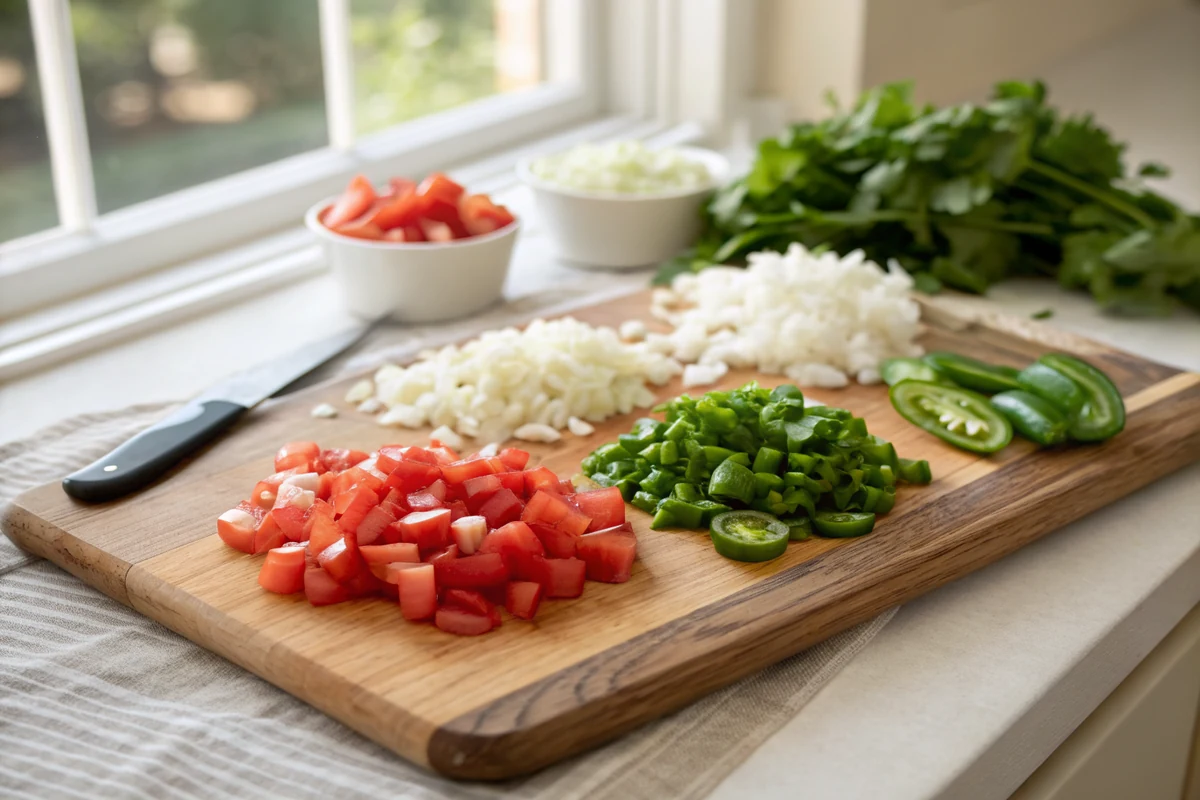
A sharp blade matters more here than anywhere else in Tex-Mex cooking. A dull edge does not cut tomato skin, it crushes the cube behind the skin, squeezing out juice you were trying to keep and leaving ragged pieces that break down fast. If your tomatoes are tearing instead of slicing, stop and hone the edge; the two minutes pays for itself.
White onion, not yellow and not red, is the traditional and correct choice. White onion is cleaner and hotter, built for eating raw, and it stays crisp in acid. Yellow onion reads sweet and slightly cooked-tasting even when raw. Red onion works in a pinch and looks pretty, but it bleeds purple into the tomato within an hour and its flavor sits oddly low in this dish.
The 30-second cold rinse after dicing is the professional touch nobody skips once they try it. It rinses away the sharp sulfur compounds sitting on the cut surfaces, which is what makes some pico taste like onion breath in a bowl. The onion itself stays completely crunchy.
Pico, Salsa Roja, Verde, or Guacamole: Which Bowl Does the Job
Four bowls anchor the Tex-Mex table and they are not interchangeable, so here is the honest guide to which one your meal actually needs.
Pico, this page, is the fresh, chunky, raw one: knife-cut vegetables holding their shape, no blender within reach, at its best spooned onto food as a topping, where its dryness after draining is exactly the point. It is a condiment that eats like a salad.
Want it smoky, pourable, and bottomless with chips? That is my restaurant-style salsa, the blended, fire-roasted red one every Tex-Mex joint sets on the table. Same core vegetables, opposite philosophy: the blender erases every knife cut and builds one unified, scoopable sauce. Want the bright green version instead, tangy where the red is smoky? My tomatillo salsa verde chars tomatillos under the broiler for a sauce with green-apple acidity that red tomatoes cannot reach. And if the job is rich instead of sharp, that is guacamole, where ripe avocado gets fork-mashed over a pounded serrano-lime base and the pico-style vegetables shrink into a supporting role inside the fat.
The four also work as a set, which is exactly how a good taqueria condiment bar treats them: one fresh, one smoky-red, one tangy-green, one rich. If I am putting out two, it is pico plus the restaurant-style salsa, the topping and the dip, and between them they cover practically everything on the table. The same logic runs at the holiday table, where the fresh-chile bowl is my jalapeno cranberry sauce: cold, sharp, and cut with raw pepper, doing for a plate of turkey exactly what pico does for a plate of tacos.
What Pico Actually Goes On
The chip bowl is pico's audition, not its career. Where it earns a permanent place in your rotation is as a topping, because it is one of very few condiments that adds freshness, acid, crunch, and heat in a single spoonful without adding any richness at all.
Breakfast is its quiet stronghold. A spoonful over migas right at serving is standard practice in Austin, the cold-fresh against the hot-soft eggs, and folding it into breakfast tacos wakes up eggs, potato, and bacon better than any bottled sauce. Drain it well first; a wet spoonful is how tortillas die.
On the grill side, it is the standing partner for rich meat. Over fajitas it is close to mandatory, and a pile alongside charred Mexican street corn turns two sides into a plate. It does for grilled meat exactly what a squeeze of lime does, plus texture.
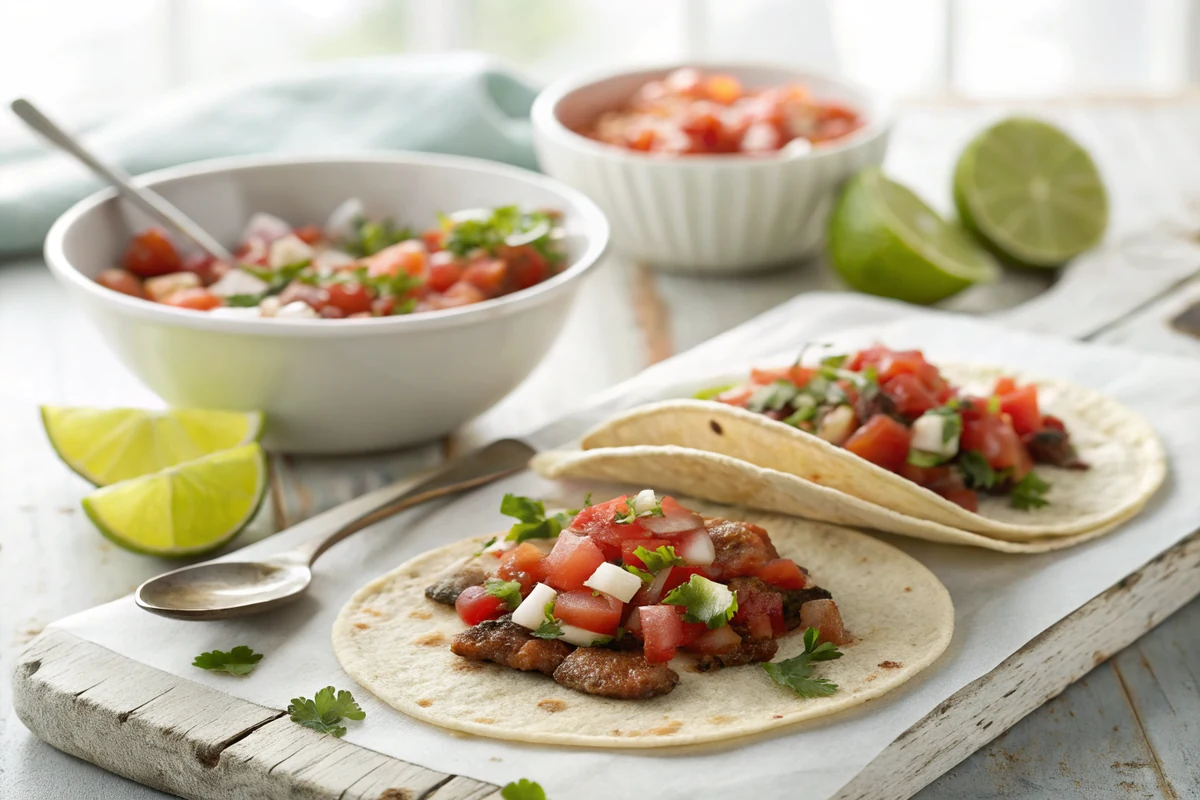
It is also the fastest route to making heavy dishes feel finished. A handful over Frito pie, a line of it down white queso in the classic Tex-Mex presentation, a scatter across any bowl of beans or rice: the pattern is always the same, cold-bright-crunchy against hot-rich-soft.
The one place I skip it: anything saucy that will sit, like enchiladas going back in the oven. Heat murders pico in about ninety seconds, wilting the onion and turning the tomato to sauce. It goes on at the table, never before.
Texas Caviar Is a Different Dish
Pico gets confused with Texas caviar often enough that the distinction is worth two paragraphs, especially since both show up at the same cookouts in nearly identical bowls with the same chips.
My Texas caviar is a marinated cold salad built on black-eyed peas: beans, corn, peppers, and onion soaked in a tangy dressing for hours, deliberately deepening as it sits. Pico is the opposite on almost every axis: no beans, no dressing beyond lime and salt, no marination, and a shelf life measured in hours rather than days. Caviar improves overnight; pico peaks at thirty minutes and declines from there. One is a make-ahead dish for feeding a crowd off a buffet, the other is a last-minute dish made while the meat rests.
If you need something pico-shaped that can be made the day before a party and hold on a table for hours, make the caviar. If the tomatoes at the market are perfect today, make pico today and serve it today. The two share a cutting board philosophy and nothing else.
Make-Ahead Reality and the Second-Day Problem
Pico has a real clock, and pretending otherwise is how it gets a bad reputation. Here is the honest timeline and how to work around it.
Peak window: 20 minutes to about 4 hours after mixing, held at cool room temperature for the first hour and refrigerated after. The salt-first drain extends this window considerably, since the usual cause of decline, accumulating tomato water, has been mostly pre-empted. This is the range where the dice is intact, the onion snaps, and the lime tastes fresh.
Same-day make-ahead is a prep question, not a mixing question. Every component can be cut in the morning and held separately: drained salted tomatoes in one container, rinsed onion in another, jalapeno and lime juice standing by, cilantro chopped at the last minute because cut cilantro browns and flattens within hours. Fold together 30 minutes before serving and it is indistinguishable from just-made. This is how restaurants that do it right do it.
Day two is real but demoted. Overnight pico weeps even after a good drain, the onion pickles slightly, the cilantro darkens, and the texture slackens. It is no longer a proud topping, but it is a fine ingredient: drain it again and it goes into scrambled eggs, quesadillas, beans, or the blender as the start of a cooked salsa. I plan for zero leftovers and treat any that exist as tomorrow's cooking, not tomorrow's condiment.
Do not freeze it. There is nothing on the other side of thawed raw tomato and onion worth eating.
Mistakes That Ruin Pico
Skipping the drain. The number one cause of watery pico and soggy everything it touches. Ten minutes, a colander, done.
Chopping too fine. Under a quarter inch, tomato stops being dice and starts being pulp. If the bowl looks blended from across the room, it went too far. The blender itself is not a shortcut here; blended pico is just unseasoned salsa.
Yellow onion, unrinsed. Wrong onion, and raw sulfur on top of it. White onion, quarter-inch dice, 30-second cold rinse.
All the salt at the end. Half the salt belongs on the tomato at the start, where the drain carries it inside the cubes. End-salted pico tastes seasoned on the surface and hollow in the middle.
Bottled lime juice. The dish is five raw ingredients and citrus; shelf-stable lime concentrate reads bitter and cooked in something this bare. Two fresh limes cost less than the tomatoes.
Refrigerating the tomatoes beforehand. Cold storage kills ripe tomato aroma permanently. Counter tomatoes, always, and serve the pico closer to cool room temperature than fridge-cold.
Making it at noon for a 7 pm dinner and mixing it all. Prep at noon, hold components separately, mix at 6:30. Same work, completely different result.
Pico de Gallo Recipe
Ingredients
- For the pico:
- 1 1/2 lbs (680 g) ripe Roma tomatoes, about 6-7, cored and diced 1/4 inch
- 1 1/4 teaspoons kosher salt, divided
- 12 oz (340 g) white onion, about 1 large, diced 1/4 inch
- 2-3 jalapenos (about 3 oz / 85 g), seeded for mild or seeds-in for hot, minced
- 1 packed cup (about 1 oz / 30 g) fresh cilantro leaves and tender stems, chopped
- 3 tablespoons fresh lime juice, from about 2 limes
- Optional:
- 1 garlic clove, finely grated (Tex-Mex leaning, not traditional)
- 1/2 teaspoon dried Mexican oregano, crumbled
Instructions
- Core and dice the tomatoes. Cut each Roma in half lengthwise, flick out the loose seed jelly with your thumb (leave the firm inner ribs, they are flavor), and dice the flesh into 1/4-inch cubes. Do not go smaller. Pico lives or dies on the dice staying distinct, and tomato cut under a quarter inch collapses into pulp by the time it is stirred.
- Salt the tomatoes alone and drain. Toss the diced tomato with 3/4 teaspoon of the salt in a colander set over a bowl. Leave it 10 minutes while you chop everything else. The salt pulls out a surprising amount of watery juice, a quarter cup or more, which is the exact liquid that would otherwise pool in the bottom of your serving bowl and flood your tacos.
- Dice the onion and rinse it. Dice the white onion to the same 1/4 inch as the tomato, then put it in a fine strainer and rinse 30 seconds under cold water. Rinsing washes off the sulfurous surface compounds that make raw onion repeat on you for hours. The onion stays crunchy and sharp but loses the aggression. Shake it as dry as you can.
- Mince the jalapeno to match your table. For a family-friendly bowl, split the jalapenos, scrape out seeds and ribs with a spoon, and mince. For real heat, leave the ribs in one of the three. The pepper should be minced finer than the tomato and onion, about 1/8 inch, so the heat distributes evenly instead of arriving as occasional land mines.
- Chop the cilantro coarse. Bunch the cilantro tight and chop it coarsely, leaves and the tender top stems both; the stems carry as much flavor as the leaves. Chop it last so it does not sit around wilting. You want about a packed cup, which looks like too much until it is folded through and disappears into the background of every bite.
- Fold everything together. Give the colander of tomatoes a final shake and tip them into a wide bowl with the rinsed onion, jalapeno, and cilantro. Add the lime juice and the remaining 1/2 teaspoon salt. Fold gently with a spatula, lifting from the bottom, rather than stirring in circles. Circular stirring bruises the tomato dice you worked to keep intact.
- Rest 20 to 30 minutes at room temperature. Pico straight from the knife tastes like four separate vegetables. Twenty minutes on the counter and the salt and lime pull it into one thing. Room temperature matters here; the fridge dulls raw tomato flavor dramatically, so hold it out until serving unless serving is hours away.
- Taste and correct in this order. Taste with a chip, not a spoon, since the chip brings its own salt. Flat? More salt before more lime. Sharp or sour? A pinch of salt, not sugar. Watery despite the drain? Tip the bowl and spoon off the corner. Not hot enough? Minced serrano fixes it faster than more jalapeno.
- Serve it where it belongs. Spoon it over tacos, fold it into breakfast tacos, pile it on grilled meat, or serve it with sturdy chips and a slotted spoon if you want to be kind to your guests. A regular spoon transfers juice onto chips that shatter; a slotted spoon or a small sieve-edge serving fork keeps the scoop dry.
Frequently Asked Questions
What is pico de gallo?
Pico de gallo is a raw Mexican salsa of hand-chopped tomato, white onion, and jalapeno with cilantro, lime juice, and salt. Everything is diced to about a quarter inch and folded together, never blended, so each vegetable stays distinct. It is also called salsa fresca or salsa mexicana, the latter because red tomato, white onion, and green pepper echo the Mexican flag. It doubles as a chip dip and, more importantly, as a fresh topping for tacos, grilled meat, eggs, and beans.
What is the difference between pico de gallo and salsa?
Texture and treatment. Pico is raw and hand-chopped, with visible quarter-inch pieces and very little liquid, essentially a fresh vegetable relish. Restaurant-style salsa is blended and usually built on fire-roasted or cooked tomatoes, making a smooth, pourable, spoonable dip. Same core ingredients, opposite philosophy: pico preserves every knife cut, salsa erases them. Pico tops food; salsa gets scooped with chips.
How do you keep pico de gallo from getting watery?
Salt the diced tomato alone and drain it in a colander for 10 minutes before mixing. Salt pulls the loose water out of the cut tomato by osmosis, and draining sends that water down the sink instead of into your serving bowl. A quarter cup or more comes out of a pound and a half of tomatoes. Also dice no smaller than a quarter inch, since finer cuts rupture more cells and weep more juice.
What tomatoes are best for pico de gallo?
Roma (plum) tomatoes year-round: thick walls, small seed cavities, less water, and they hold a dice without collapsing. In summer, any dead-ripe local tomato beats any Roma, just expect more juice and lean harder on the drain step. Ripe cherry tomatoes, quartered, are the best winter fallback because they are bred for sugar. Avoid refrigerated and pale-shouldered tomatoes; cold storage permanently kills ripe tomato flavor.
Is pico de gallo supposed to be spicy?
Mildly, by default. Two seeded jalapenos in a pound and a half of tomato gives fresh pepper flavor with gentle warmth. The heat is fully adjustable: seed and de-rib the peppers for mild, leave the ribs in one for medium, or swap in serranos, which are hotter and brighter, for genuine heat. Mince the pepper fine either way so the heat spreads evenly rather than landing in occasional hot pockets.
How long does pico de gallo last?
It peaks 20 minutes to 4 hours after mixing and holds acceptably for about 24 hours refrigerated in a sealed container. After that the tomato weeps, the onion pickles, and the cilantro darkens. Day-two pico is best repurposed as an ingredient: drain and fold into scrambled eggs, quesadillas, or a pot of beans, or blend it into a cooked salsa. Do not freeze it; thawed raw tomato and onion have no useful texture.
Can I make pico de gallo ahead for a party?
Yes, but hold the components separately rather than mixing early. Dice, salt, and drain the tomatoes; dice and rinse the onion; mince the jalapeno; juice the limes. Refrigerate each in its own container up to a day ahead, chop the cilantro last-minute, and fold everything together 30 minutes before serving. Mixed pico declines within hours, but separated components hold their texture almost perfectly overnight.
Why do restaurants rinse the onion for pico de gallo?
A 30-second cold-water rinse washes the volatile sulfur compounds off the cut surfaces of the onion. Those compounds are what make raw onion taste aggressive and linger on your breath, and in a raw dish there is no cooking to mellow them. Rinsed white onion keeps its full crunch and clean sharp flavor but stops dominating the bowl. It is the single cheapest upgrade in the whole recipe.