Tex-Mex Recipes
King Ranch Beef Casserole
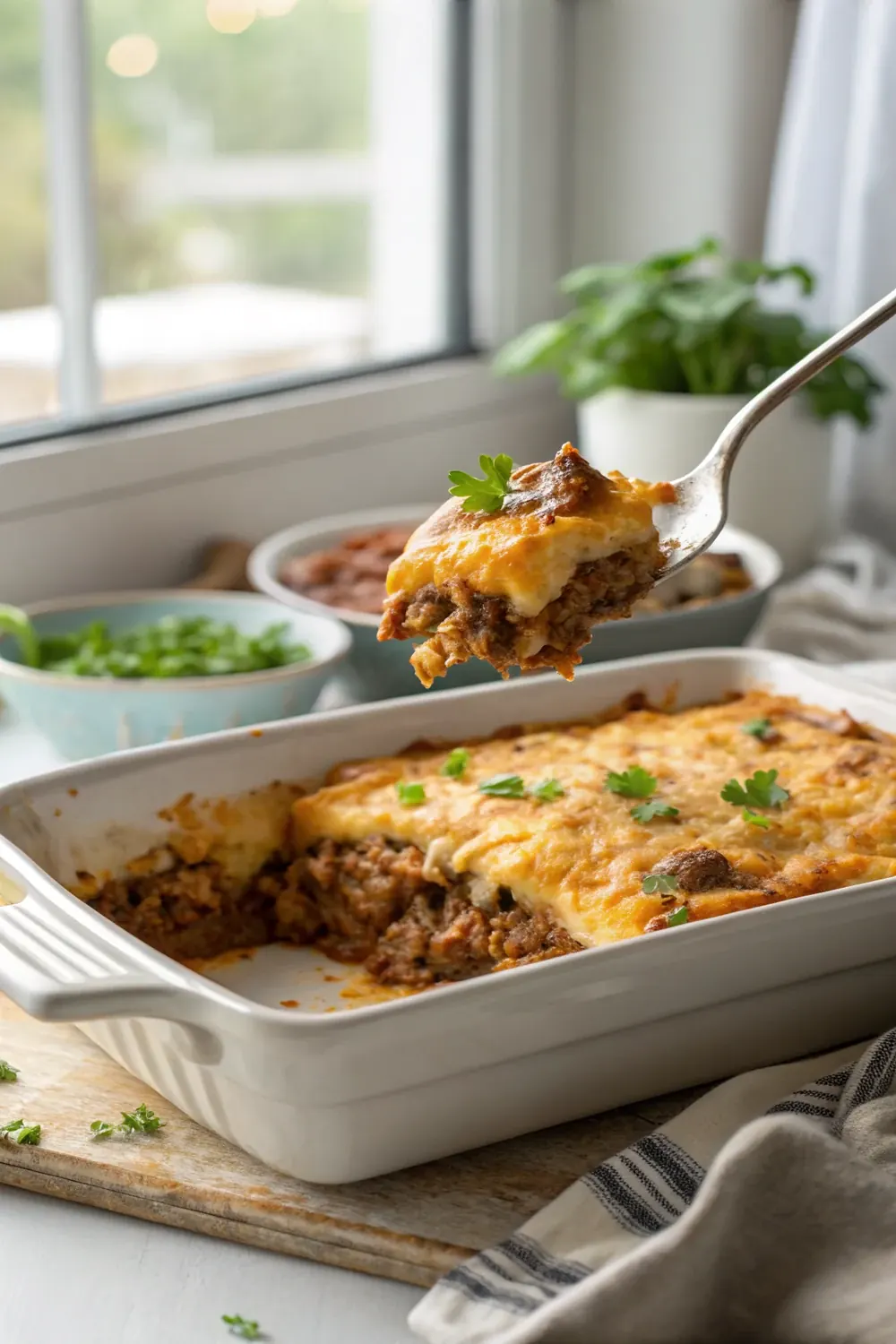
King Ranch casserole with ground beef: Rotel, corn tortillas, poblano, and a from-scratch cream sauce, baked under yellow cheddar. Chef Mia's beef version.
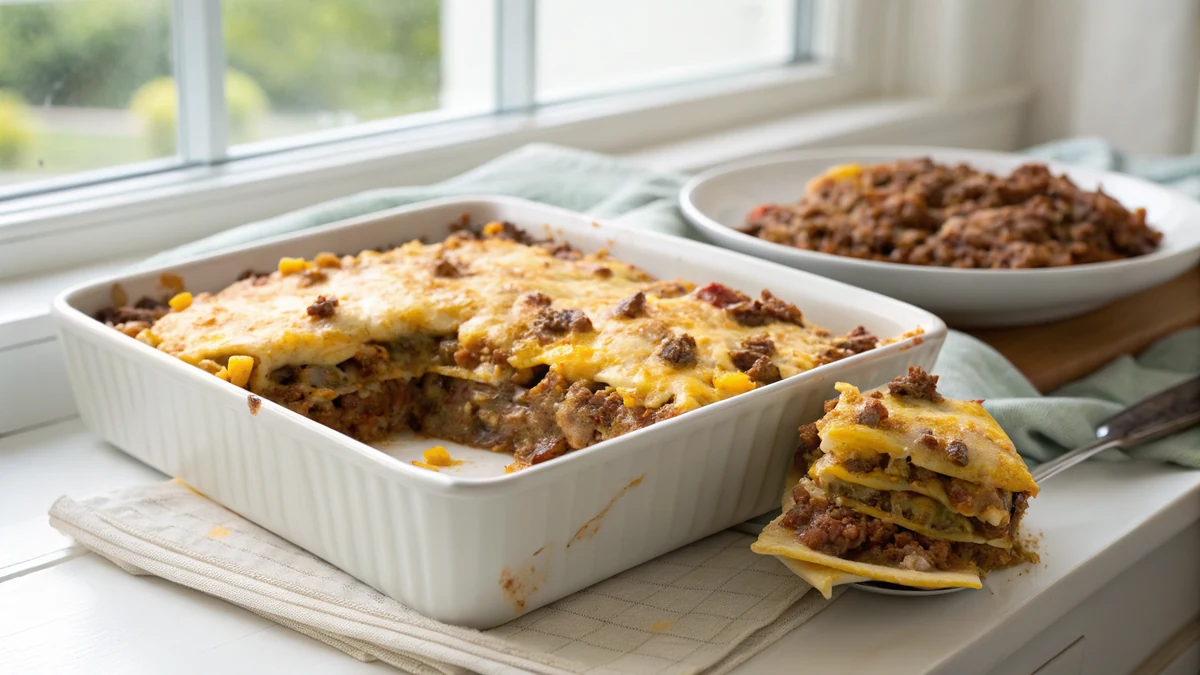
Quick answer: King Ranch beef casserole is the ground beef version of the Texas potluck legend: the same layered corn tortillas, Rotel-spiked cream sauce, and yellow cheddar blanket, built on 2 pounds of browned beef instead of shredded chicken. Brown the beef hard with onion, poblano, and red bell pepper, season with chili powder, cumin, and oregano, then fold it into a from-scratch sauce made from a butter-flour roux, beef broth, milk, Rotel, and a spoon of sour cream. Layer it in a 9x13 with 12 corn tortillas that took a quick pass through the skillet, top with 3 cups of shredded colby jack and cheddar, and bake at 350F (177C) for 30 minutes covered plus 10 uncovered, until bubbling at the edges with browned spots on the cheese. Rest 15 minutes before cutting. It feeds 8, freezes beautifully, and answers the eternal Texas question of what to do when the King Ranch craving hits and the refrigerator says beef.
Every Texas cook who makes King Ranch chicken eventually gets asked the question, usually by a teenager holding a fork: can you make this with beef? The church-cookbook answer was always yes, quietly. Flip through enough spiral-bound congregational cookbooks from the 1970s and you will find the beef variant hiding two pages behind the chicken one, usually credited to a woman who raised cattle and saw no reason to buy a bird. My version comes from that tradition by way of my own kitchen in Lockhart, where the beef King Ranch long ago stopped being the understudy and became the one my daughter requests by name.
Beef changes the dish more than a simple swap should, and for the better if you handle it right. Ground beef browned hard brings a roasted, crusty depth that poached chicken never offers, and it stands up to the chili powder and cumin in a way that turns the casserole a shade closer to enchilada territory. The architecture stays pure King Ranch: corn tortillas, a creamy Rotel sauce, peppers and onions, a yellow cheese roof with browned spots. If you want the canonical chicken original and its history, my original King Ranch chicken page tells that story. This page is what happens when the same beloved formula meets 2 pounds of beef and a hot skillet.
What King Ranch Casserole Is, and Where Beef Fits
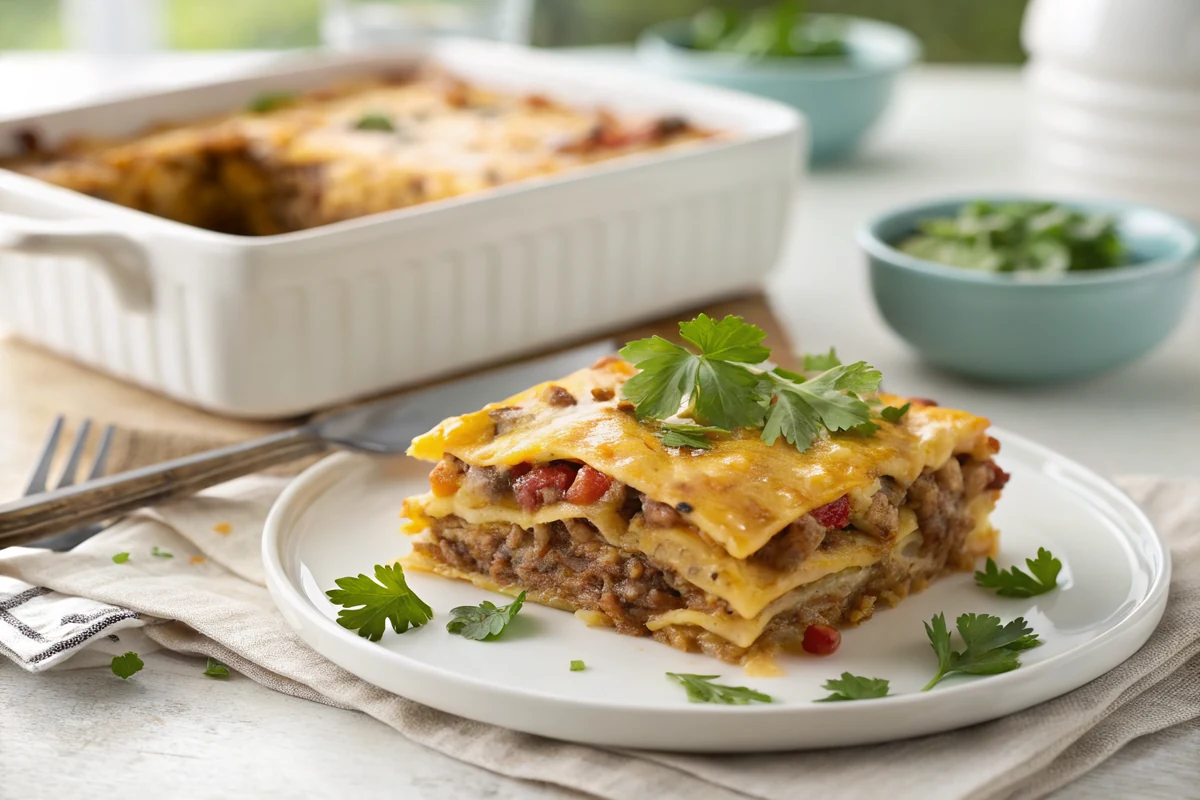
King Ranch casserole is Texas potluck architecture: layered corn tortillas, a creamy sauce electrified by Rotel tomatoes with green chiles, sauteed peppers and onions, and a roof of yellow cheese, baked until the whole structure fuses into something between a Tex-Mex lasagna and a casserole-dish hug. The chicken version is the famous one, named, for no documented reason, after the 825,000-acre King Ranch in South Texas, which has never claimed it. Church cookbooks spread it across the state between the 1950s and the 1990s, and my original King Ranch chicken page walks through that whole strange, wonderful history.
The beef version rode along quietly the entire time. Cattle-country cooks made it because beef was what the freezer held, budget cooks made it because ground beef undercut a whole chicken, and weeknight cooks made it because browning beef takes 10 minutes while poaching and shredding a bird takes most of an hour. It never got the famous name attached, which is the only reason it reads as a variant instead of a sibling. Structurally it is the same dish making a different argument: deeper, beefier, a half-step closer to the enchilada end of the Tex-Mex spectrum. The family even has a third branch now, the one-pot King Ranch chicken soup, which loosens the same Rotel-and-cream flavors into a bowl.
And the argument holds up. Ground beef browned hard brings fond and crust that no poached chicken can, the warm spices lean into the beef the way they do in chili, and the Rotel acidity that keeps the chicken version lively does the same balancing work against richer meat. If your table already loves the chicken one, this is not a replacement; it is the second lane of the same highway. Mine get requested in strict alternation, which I consider the correct outcome.
The Beef: Browning Is the Whole Ballgame
Use 85/15 ground beef and brown it like you mean it. The difference between a good and a great beef King Ranch is almost entirely decided in the first 4 minutes, when the beef either sears in a hot, roomy pan or steams in a crowded lukewarm one. Spread the meat in an even layer, leave it untouched until the underside builds a real brown crust, then break it apart and finish. That crust is concentrated roasted-beef flavor that dissolves into the sauce and seasons the entire casserole from inside. Gray beef makes a beige dish, in every sense.
The 85/15 ratio matters at both ends. Leaner beef, 93/7, gives you a drier filling that fights the creamy sauce instead of joining it, and fattier 80/20 leaves enough grease to pool at the corners of the dish. Brown the 85/15, then spoon off all but about 2 tablespoons of fat and let those 2 tablespoons cook the vegetables; that is free flavor doing double duty. If brisket burnout has left your freezer holding smoked leftovers, a cup of chopped smoked brisket folded in with the ground beef is the luxury remix, and I will pretend I do not do it regularly.
Season the beef layer like a pot of chili in miniature: chili powder, cumin, oregano, salt, and black pepper, bloomed for a minute against the hot meat and vegetables so the spices toast instead of tasting raw. The quantity is deliberately moderate. This is a creamy casserole with a chile undertone, not a chili with tortillas in it, and the Rotel still has its own heat to contribute. Cooks who want the louder version can add a minced chipotle in adobo here, which pushes the whole dish toward its smokier alter ego without changing anything structural.
The Sauce: From Scratch, Ten Minutes, No Cans of Soup
The original church-cookbook King Ranch runs on cream of mushroom soup, and I keep a documented respect for that tradition on the chicken page. For the beef version I am firmer: make the sauce from scratch, because beef deserves a sauce with a backbone and it takes 10 minutes flat. A roux of 4 tablespoons of butter and a quarter cup of flour, cooked to the smell of pastry, then beef broth whisked in, then milk, then the whole can of Rotel with its juices, and finally sour cream off the heat. That is the entire operation, and it beats the can on salt control, texture, and taste in every blind test my family has ever staged.
Each component has one job. Beef broth ties the sauce to the meat instead of leaving them as strangers in the same dish; the chicken version uses chicken broth for the same reason. Whole milk keeps the sauce creamy without the heaviness that pure cream brings to a casserole this rich. The Rotel juices carry chile-tomato acidity that cuts through beef fat exactly the way it cuts through cheese, which is why the can, an authentic 1950s Texas ingredient if there ever was one, survives untouched in my scratch version. And the sour cream, whisked in off the heat so it cannot break, adds the tang that makes the third bite as interesting as the first.
Consistency is the checkpoint before assembly: the finished filling should mound softly on a spoon, creamy but not pourable. Too loose and the tortilla layers slide and the squares collapse; too stiff and the casserole bakes up dry, because the tortillas will drink another few tablespoons of moisture in the oven. Adjust with a splash of broth or an extra 2 minutes of simmering, and taste for salt at the end with the knowledge that corn tortillas are salt sponges. A filling that tastes slightly overseasoned in the pot lands perfectly seasoned on the plate.
Tortillas: Corn, Passed Through a Hot Skillet
Corn tortillas are not negotiable, and I say that with love to every flour-tortilla household in Texas. Flour tortillas bake into uniform pasta sheets, pleasant and characterless; corn tortillas keep their earthy, nixtamal flavor and their structural opinion, giving the casserole the texture that makes King Ranch recognizable blindfolded. The dish is, at heart, corn and chile and cheese cooperating, the same trinity that runs the enchilada, and my beef and cheese enchiladas make the family resemblance obvious. Swap in flour and you have made a fine casserole that is no longer quite this one.
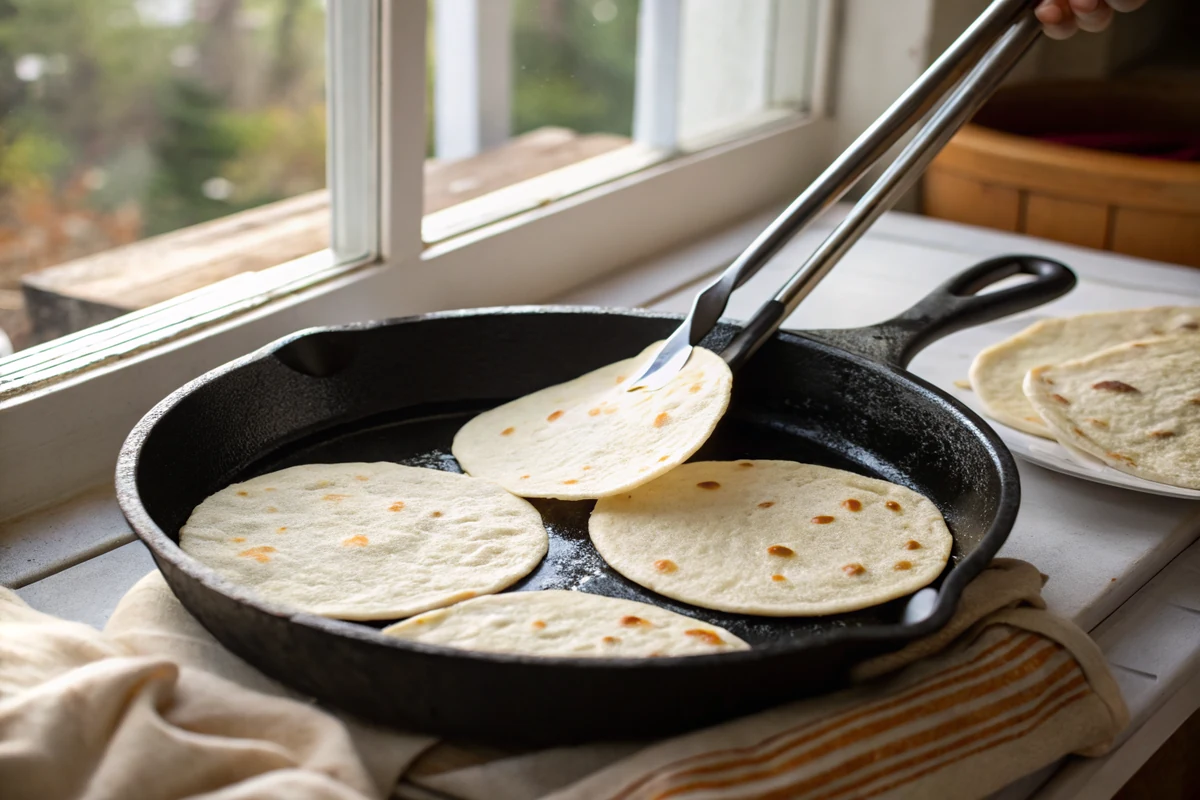
The skillet pass is the step the old recipes skipped and the step that fixes their one flaw. Straight from the bag, corn tortillas carry raw starch that turns to mush under sauce; 15 seconds per side in a hot, barely oiled skillet gelatinizes the surface, wakes the corn aroma, and builds light blisters that hold the line through 40 minutes of baking. It takes 6 minutes for the dozen and transforms the final texture from soft-on-soft to layered. Cut the toasted tortillas in half afterward; half-moons tile a 9x13 with less overlap and fewer gaps than whole rounds.
Some heirloom versions dip each tortilla in the warm sauce before layering, enchilada style, and it is a lovely, messier road to a similar place. The skillet pass gets you 90 percent of that benefit with 10 percent of the cleanup, and it leaves the sauce in the pot where the measuring stays honest. Whichever route you take, do not simply stack them dry from the bag and hope. The tortillas are a third of the dish; treat them like an ingredient, not packaging.
Assembly: The Order of Operations
The build order is a small architecture with a logic to it. Butter the dish, then lay the first third of the tortillas edge to edge with modest overlap, climbing slightly up the sides; this base layer is the foundation that lets squares release cleanly. Half the beef filling goes over it, spread to the corners, then a third of the cheese, because cheese between layers is mortar, not just roofing. Repeat with the second third of tortillas, all the remaining filling, another third of cheese. The final layer of tortillas gets the last of the cheese in an even blanket, out to the very edges so the corners brown instead of drying.
Two ratios keep the structure sound. Filling outweighs tortillas roughly two to one by volume, which is why the layers hold together instead of reading as bread with gravy; and the cheese splits one-third inside, two-thirds on top... actually one-third per station, and the top simply looks like more because it browns. Three cups total, 2 of colby jack for melt and 1 of sharp yellow cheddar for flavor and color, is the house blend. Pre-shredded cheese works here, its anti-caking starch harmless inside a casserole, though a block shredded fresh melts a shade silkier if the evening allows.
Edge behavior tells you the pan is built right: the filling should sit a half inch below the rim, because a King Ranch bubbles as it bakes and an overfilled dish donates its sauce to the oven floor. If your quantities ran generous, park the surplus in a small ramekin and bake it alongside as the cook's private portion, an old potluck trick that doubles as quality control. Foil on top for the first stretch of baking, and shiny side down if you think about such things, though the casserole has never once checked.
The Bake: Covered, Then Uncovered, Then the Rest
Thirty minutes at 350F under foil, then 10 uncovered, is the rhythm. The covered stretch heats the interior through and lets the tortillas finish their marriage with the sauce in a steamy, protected environment; the uncovered finale browns the cheese roof and tightens the top layer. You are looking for confident bubbling at the edges and browned spots, not an even tan, across the cheese. A casserole assembled cold from the refrigerator wants 10 extra covered minutes, and a probe or knife tip into the center should come out hot to the touch either way.
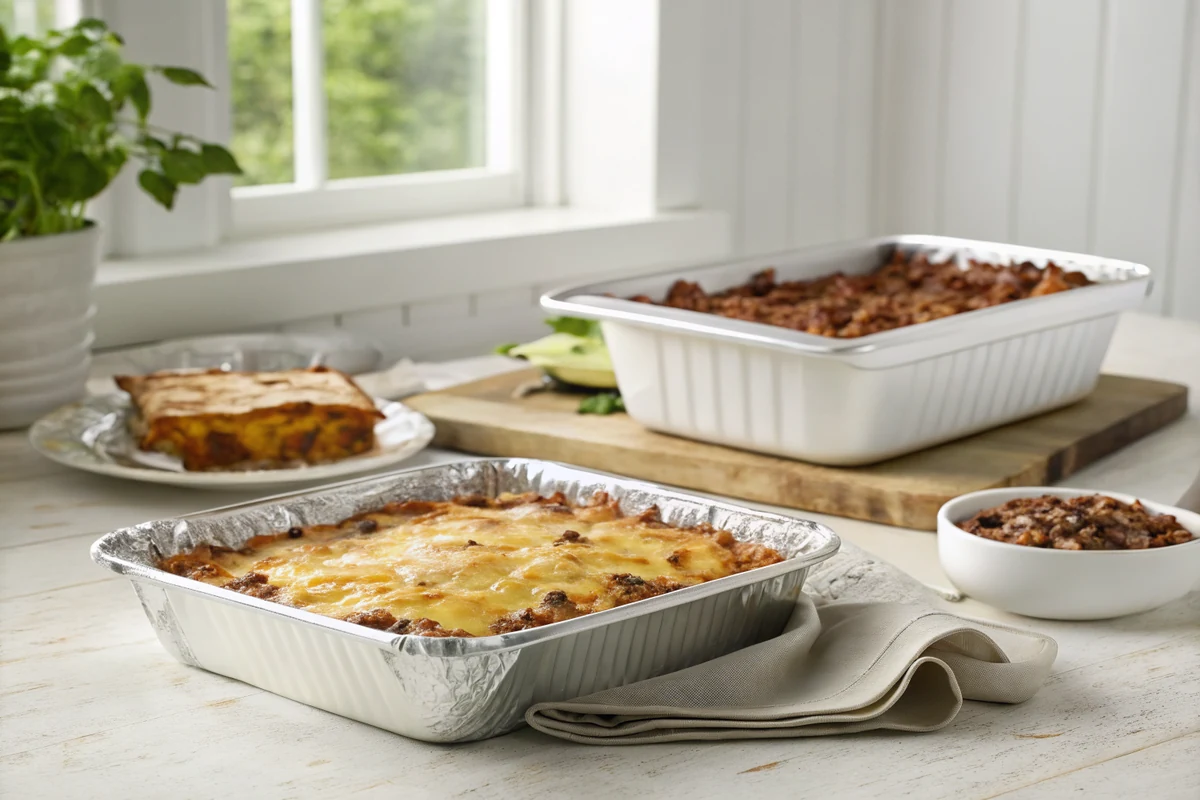
The rest is the step Texans skip and then wonder why the squares slumped. Fifteen minutes on the counter lets the molten sauce thicken from lava back to custard, so a spatula lifts clean-edged portions with visible strata instead of ladling casserole soup. The dish loses no meaningful heat; a 9x13 of this density holds serving temperature for half an hour. I set the timer the moment the dish exits the oven and use the window to warm tortillas and set the table, which is exactly the pace a casserole evening should run at.
Doneness troubleshooting, briefly. Pale cheese at the 40-minute mark means your oven runs cool or the rack sat low; 2 minutes under the broiler with the door watched fixes it. Sauce visibly watery at the edges means the filling went in too loose, and 10 more uncovered minutes plus the full rest will mostly rescue it. A dry, tight casserole means the filling went in too stiff or the foil came off early; serve it with the reserved trick of the house, a warm ladle of thinned sour cream over each square, and adjust the sauce next round.
Variations: Chipotle, Brisket, and the Venison Winter
The chipotle version is the one I make for company. One minced chipotle in adobo plus a teaspoon of the sauce, added with the garlic, pushes a low smoky heat through the whole dish that plays beautifully against the sour cream tang. It reads as a grown-up King Ranch without alienating the teenager demographic, and it pairs with a cold lager like they were introduced at a wedding. Going further down that road, a half cup of chopped smoked brisket alongside the ground beef turns the casserole into barbecue-leftover royalty, the best second act a Sunday cook ever gets.
Deer season writes its own variant across half the kitchens in Texas. Ground venison runs lean, so brown it with an extra tablespoon of butter or bacon fat and keep everything else identical; the warm spices and creamy sauce flatter venison the same way they flatter beef in my venison chili. A half-and-half blend of venison and 80/20 beef is the sweet spot if straight venison reads too austere. And skillet loyalists should know this whole formula collapses happily into one pan: my Texas hash occupies that weeknight territory, beef and rice doing the tortillas' job.
What I do not recommend is the vegetable creep that afflicts casserole recipes over time: corn, black beans, zucchini, spinach, each addition diluting the chile-cream-corn clarity that makes King Ranch itself. The dish has survived seventy years on a short ingredient list because the short list is correct. If the garden demands an outlet, roasted poblano strips folded into the filling are the one addition that deepens rather than dilutes, doubling down on the pepper that already belongs there. Everything else is a different casserole borrowing a famous name.
Make-Ahead, Freezer, and the Potluck Logistics
King Ranch beef is a make-ahead dish by birthright. Assemble the full casserole up to 24 hours ahead, cover, and refrigerate unbaked; the resting time actually improves it, giving the tortillas a head start on the sauce. Bake straight from the refrigerator with 10 extra covered minutes. The components also hold separately, filling for 3 days refrigerated and tortillas toasted the day of, which is how I stage it when the week looks hostile. What does not work is baking, chilling, and rebaking the whole dish; twice-baked tortilla layers surrender their structure.
For the freezer, assemble in a foil pan, wrap tight in plastic and then foil, and freeze unbaked for up to 3 months. Thaw overnight in the refrigerator and bake as written plus 10 covered minutes, or bake from frozen at 350F, covered, for about 75 minutes plus the uncovered finish. Baked leftovers keep 4 days refrigerated and reheat best in a 325F oven, covered, or honestly fine in a microwave for lunch, a sentence I would not write about many dishes on this site. The flavors round overnight, and the day-two square is quietly better than the day-one square.
Transport logistics, since this dish attends more gatherings than I do: bake it at home through the covered stage, run the uncovered browning just before leaving, and the residual heat holds through a 30-minute drive wrapped in towels. A 9x13 yields 8 dinner squares or 12 potluck squares, and it is polite arithmetic to assume potluck. Bring a spare bag of chopped cilantro and green onion for the top; garnish applied on site looks fresh in a way that garnish applied an hour ago does not, and appearances at a potluck are a competitive sport.
What to Serve With It
The casserole is rich, creamy, and layered, so the table around it should be everything it is not: sharp, fresh, and loose. Charro beans or simple Texas pinto beans are the classic partner, their brothy plainness the right counterweight. A tangle of shredded lettuce with lime and cilantro, pickled jalapenos, and a bowl of salsa cover the acid flank. Warm corn tortillas on the side seem redundant and never are; somebody always builds a small tortilla-and-casserole taco, and that somebody is usually me.
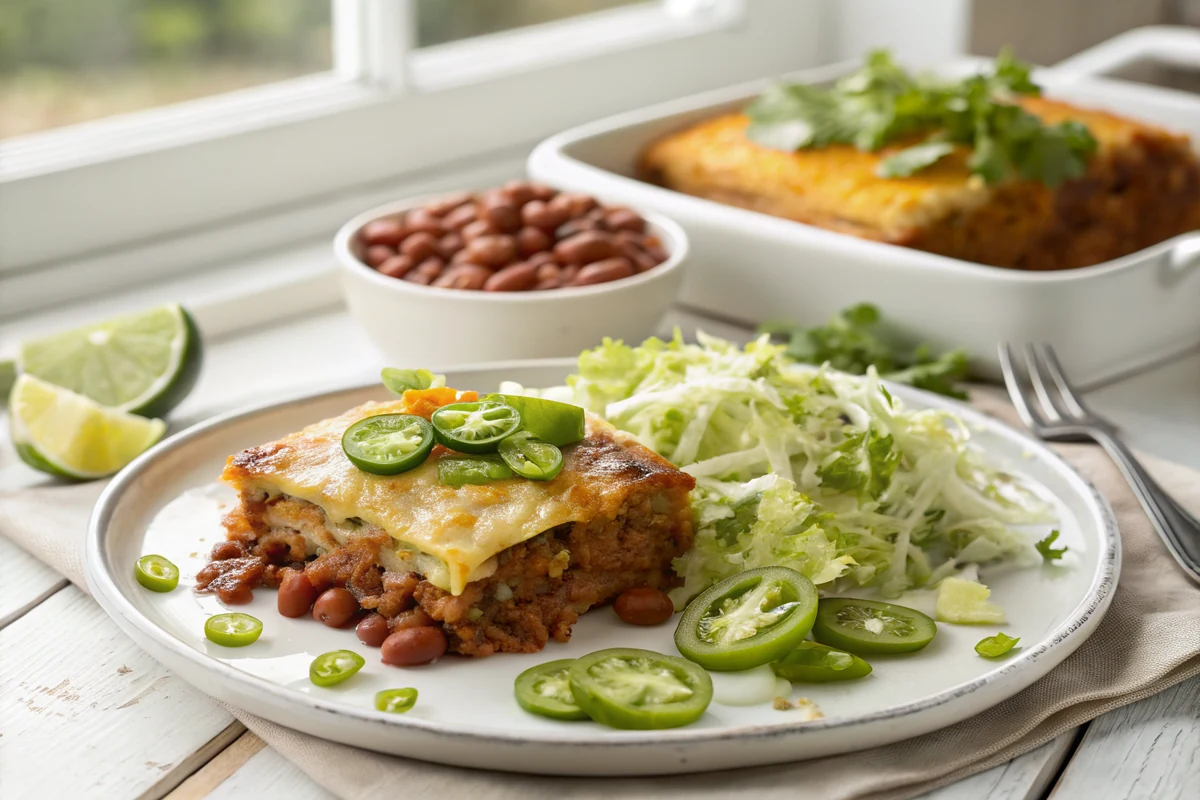
Drinks lean cold and simple. Sweet tea holds the family end of the table, and the adult end does well with a lime-forward cocktail; a rocks Texas margarita cuts the cream and cheese exactly the way the Rotel does inside the dish. A cold Mexican lager is the zero-effort answer. Dessert after a casserole this comforting should be modest: sliced oranges dusted with cinnamon in the old San Antonio style, or nothing at all until somebody remembers the pan of Texas sheet cake in the garage refrigerator.
And the leftovers plan deserves a sentence, because this dish overdelivers there: a reheated square topped with a fried egg is one of the great Texas breakfasts nobody markets, and the filling scraped from a final stubborn corner reheats into an outstanding queso-adjacent dip for tortilla chips. Plan the casserole for eight, feed six, and consider the remainder a scheduled asset rather than an accident. That is how the church cookbooks always treated it, and they ran the logistics of feeding this state for fifty years.
The Five Mistakes That Sink a King Ranch
Mistake one is gray beef, the quiet foundational failure: meat crowded into a cool pan steams instead of searing, and the whole casserole inherits the blandness. Hot pan, even layer, patience, drain to 2 tablespoons. Mistake two is raw-bag tortillas layered straight from the plastic, which dissolve into starch paste; the 15-second skillet pass is 6 minutes of insurance. Mistake three is the watery can decision: draining the Rotel juices away, then wondering where the chile brightness went. The juices are seasoning. The can goes in whole.
Mistake four is a sauce built too loose, whether from under-simmering or an extra pour of broth, and it is the failure with the saddest presentation: a beautiful top over a sliding interior, squares that arrive at the plate as ramps. The filling must mound on a spoon before assembly, and the 15-minute rest after baking is the second half of that same promise. Mistake five is skipping that rest entirely because the kitchen smells too good, which I understand and have committed, holding a spatula, apologizing to nobody. The layers you photographed in your head need the 15 minutes you did not give them.
A bonus word on seasoning, because casseroles fail quietly in that direction: taste the filling before it meets the tortillas, and taste it knowing the corn and cheese will mute everything by a step. Slightly too salty and slightly too spiced in the pot is exactly right on the plate. The old potluck cooks salted with confidence because they were feeding forty people who would say nothing either way; you are feeding eight people who will say everything, and the ones who go quiet with a full mouth are the review that counts.
King Ranch Beef Casserole Recipe
Ingredients
- For the beef layer:
- 2 pounds (900 g) ground beef, 85/15
- 1 yellow onion, diced
- 1 poblano pepper, seeded and diced
- 1 red bell pepper, diced
- 3 garlic cloves, minced
- 2 teaspoons chili powder
- 1.5 teaspoons ground cumin
- 1 teaspoon dried oregano
- 1 teaspoon kosher salt, plus more to taste
- 1/2 teaspoon black pepper
- For the sauce:
- 4 tablespoons (56 g) butter
- 1/4 cup (30 g) all-purpose flour
- 1.5 cups (360 ml) beef broth
- 1 cup (240 ml) whole milk
- 1 can (10 oz / 283 g) Rotel diced tomatoes with green chiles, with juices
- 1/2 cup (120 g) sour cream
- For assembly:
- 12 corn tortillas
- 1 tablespoon (15 ml) neutral oil, for the tortilla pass
- 2 cups (226 g) shredded colby jack
- 1 cup (113 g) shredded sharp yellow cheddar
- Chopped cilantro and sliced green onion, to serve
Instructions
- Brown the beef hard. Heat a wide skillet or Dutch oven over medium-high. Add the ground beef in an even layer and leave it alone for 3 to 4 minutes until deeply browned underneath, then break it up and cook until no pink remains. Spoon off all but about 2 tablespoons of fat. Browned crust here is flavor in the finished casserole; gray steamed beef is the most common quiet failure of this dish.
- Add the vegetables and spices. Add the onion, poblano, and red bell pepper to the beef and cook 5 to 6 minutes until softened. Stir in the garlic, chili powder, cumin, oregano, salt, and black pepper and cook 1 minute more, until the spices smell toasted. Scrape the mixture into a bowl.
- Build the roux and sauce. In the same pan over medium, melt the butter and whisk in the flour. Cook the roux 2 minutes, whisking, until it smells nutty but has not darkened. Whisk in the beef broth in stages, then the milk, and simmer 3 to 4 minutes until the sauce coats a spoon.
- Finish the sauce. Stir in the entire can of Rotel with its juices and simmer 2 minutes. Off the heat, whisk in the sour cream until smooth. Taste and correct the salt; the sauce should taste slightly overseasoned on its own, because the tortillas will mute it.
- Combine beef and sauce. Fold the beef and vegetable mixture into the sauce until everything is evenly coated. The filling should be thick enough to mound on a spoon but still creamy. If it looks stiff, loosen it with a splash of broth.
- Give the tortillas a skillet pass. Brush a hot skillet with the oil and toast each corn tortilla about 15 seconds per side, until pliable and lightly blistered. This wakes up the corn flavor and keeps the tortillas from dissolving into paste inside the casserole. Cut them in half for easier layering.
- Layer the casserole. Butter a 9x13 baking dish. Lay down a third of the tortillas, overlapping, then half the beef filling and a third of the cheese. Repeat: tortillas, remaining beef, cheese. Finish with the last tortillas and the rest of the cheese on top.
- Bake covered, then uncovered. Cover with foil and bake at 350F (177C) for 30 minutes, then uncover and bake 10 minutes more, until the edges bubble and the cheese shows browned spots. Rest 15 minutes on the counter before cutting; the rest is what lets squares come out layered instead of collapsing.
Frequently Asked Questions
Can you make King Ranch casserole with beef instead of chicken?
Yes, and the beef version is nearly as old as the chicken one, hiding in the same Texas church cookbooks that spread the original. Swap 2 pounds of well-browned 85/15 ground beef for the shredded chicken, use beef broth instead of chicken broth in the sauce, and keep everything else structural: corn tortillas, Rotel-spiked cream sauce, sauteed onion and peppers, yellow cheese on top, 350F for about 40 minutes. The beef brings a deeper, more enchilada-like character to the dish. Browning the meat hard, in an even layer without crowding, matters more than any other single step.
What is King Ranch casserole named after?
The 825,000-acre King Ranch in South Texas, one of the largest ranches in the world, which has no documented connection to the recipe and has never claimed it. The casserole appeared in Texas community and church cookbooks in the 1950s and 1960s with the grand name already attached, author unknown, and the mystery has never been solved. The dish itself is pure potluck engineering: layered corn tortillas, a creamy chile-tomato sauce, meat, and cheese, designed to feed a crowd cheaply. The name was, as best anyone can tell, aspirational branding by a home cook, and it worked for seventy years.
Do I have to use Rotel in King Ranch beef casserole?
You need its two jobs done: diced tomato body and green chile brightness with acidity to cut the cream and cheese. The 10-ounce can of Rotel original, juices included, does both and is the historically correct ingredient. Substitutes work fine: a cup of diced tomatoes plus a 4-ounce can of chopped green chiles, or fresh Roma tomatoes with a minced jalapeno sauteed along with the peppers. What you should not do is drain the can or skip the chile element entirely, because an all-cream King Ranch eats flat and heavy. Hot Rotel is the easy upgrade for tables that like heat.
Corn or flour tortillas for King Ranch casserole?
Corn, and the tradition is unanimous on this. Corn tortillas keep their earthy flavor and enough structure to give the casserole distinct layers, while flour tortillas bake into soft, neutral sheets closer to pasta. The one improvement worth making over the old recipes: give each corn tortilla 15 seconds per side in a hot, lightly oiled skillet before layering. The pass wakes up the corn flavor and keeps the tortillas from going to mush under the sauce. Cut them in half afterward; half-moons tile a 9x13 dish more evenly than whole rounds and make cleaner squares.
Can I make King Ranch beef casserole ahead or freeze it?
It is one of the best make-ahead dishes in the Texas repertoire. Assemble unbaked up to 24 hours ahead, refrigerate covered, and bake with 10 extra covered minutes; the rest actually improves the texture. For the freezer, assemble unbaked in a foil pan, wrap tightly, and freeze up to 3 months, then thaw overnight and bake as written, or bake from frozen, covered, about 75 minutes plus the uncovered browning. Baked leftovers keep 4 days refrigerated and reheat well covered at 325F. What to avoid is fully baking, chilling, and rebaking the whole dish, which costs the tortilla layers their structure.
Why did my King Ranch casserole come out watery?
Three usual suspects. First, the filling went into the dish too loose: it should mound softly on a spoon before assembly, so simmer the sauce until it coats a spoon and remember the beef and vegetables release moisture too. Second, untoasted tortillas straight from the bag broke down into starch and released their moisture; the quick skillet pass prevents this. Third, and most common, the casserole was cut straight out of the oven. The 15-minute counter rest lets the molten sauce set from lava back to custard so squares hold their layers. A watery batch still tastes right; serve it with a spoon and toast the tortillas next time.
What goes with King Ranch beef casserole?
Sharp, fresh, and simple sides, because the casserole covers rich, creamy, and layered by itself. Brothy pinto or charro beans are the classic partner. Add shredded lettuce dressed with lime and cilantro, a bowl of salsa or pickled jalapenos for acid and heat, and warm corn tortillas for the inevitable casserole tacos. Sweet tea or a cold Mexican lager handles the drinks, and a rocks margarita is the grown-up pairing that cuts the cheese and cream best. Dessert stays modest: cinnamon-dusted orange slices, or sheet cake if the gathering demands ceremony.