Texas Desserts
Peach Cobbler with Cake Mix
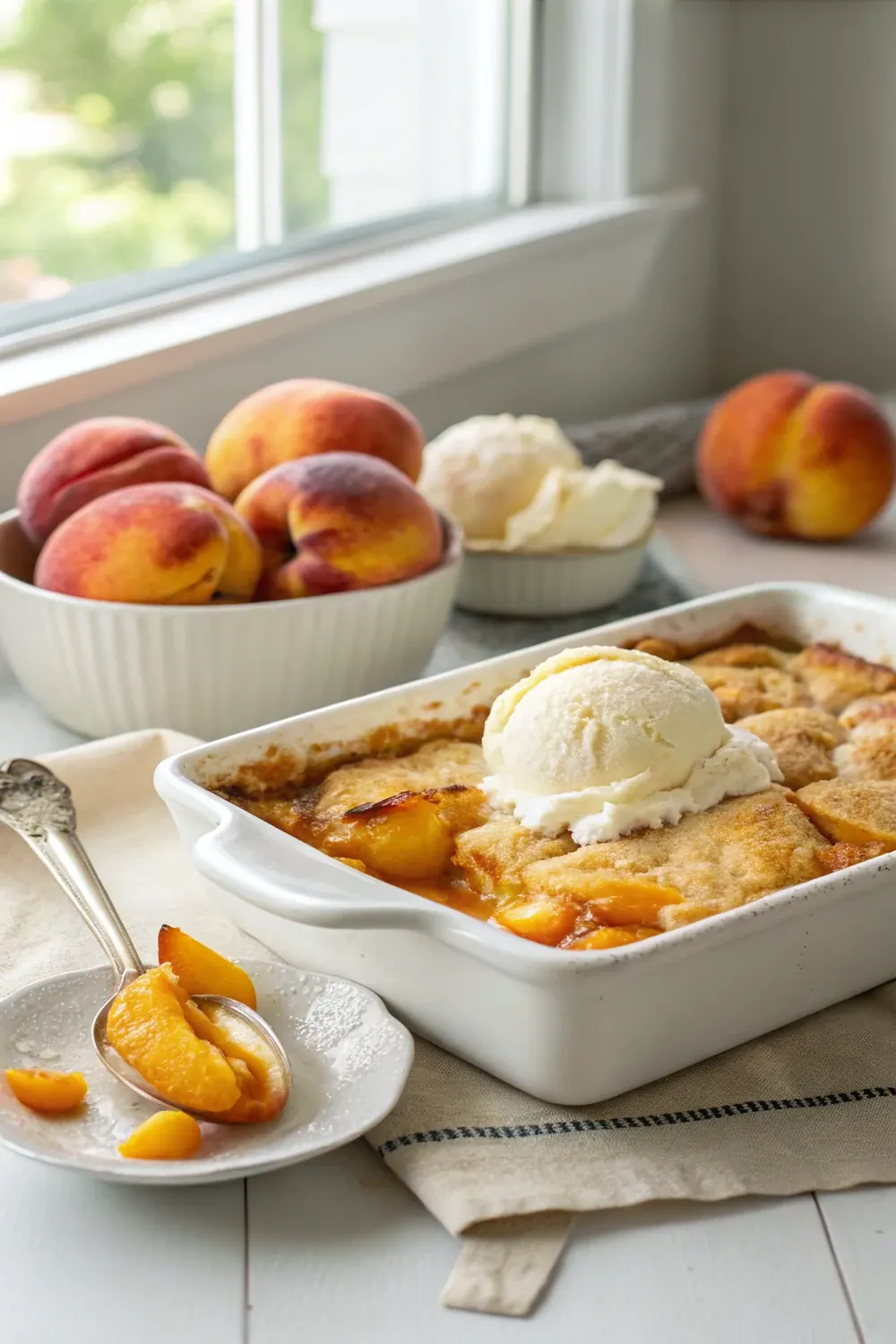
Chef Mia's peach cobbler with cake mix shortcut: 4 ingredients, no mixing, 45 minutes bake. Pinterest-perfect Texas church potluck dessert.
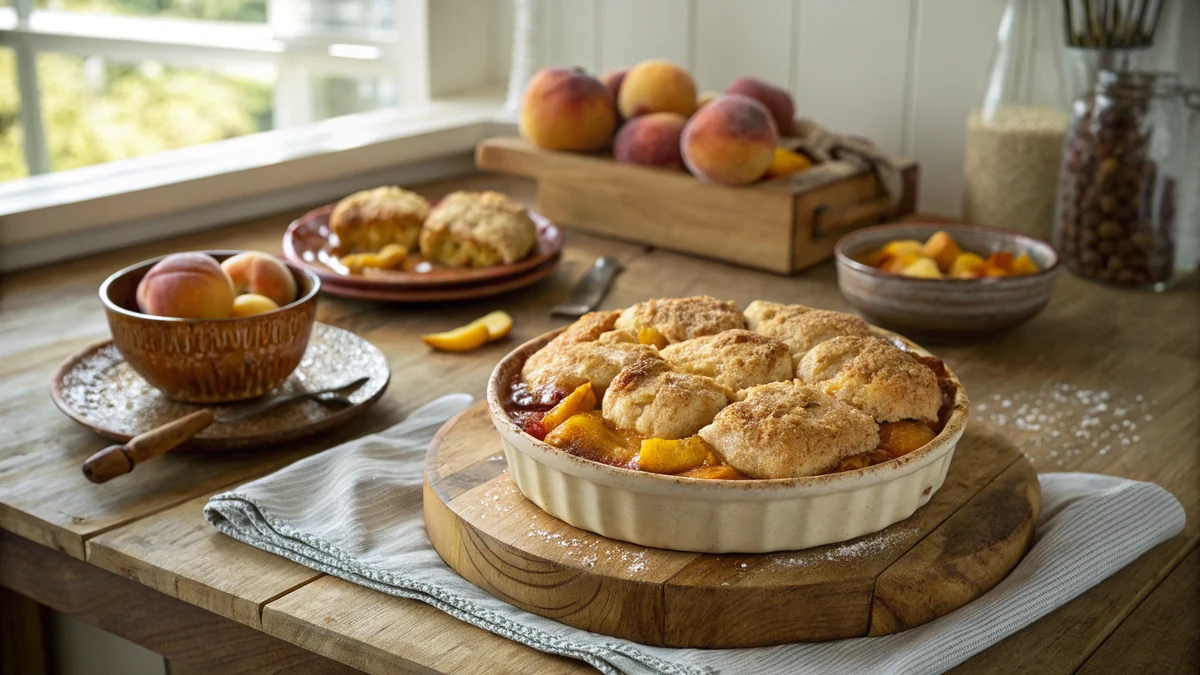
Quick answer: Peach cobbler with cake mix is the four-ingredient Texas dump-cake shortcut that has lived on church potluck tables since the 1960s. Open two cans of sliced peaches in light syrup and spread them across a 9-by-13 baking dish, juice and all. Sprinkle a 15.25-ounce box of yellow cake mix evenly over the peaches without stirring. Slice a stick of cold butter into thin pats and arrange them across the top of the dry cake mix. Sprinkle ground cinnamon over everything. Bake uncovered at 350F for 45 to 50 minutes until the top is golden brown and the peach juices bubble up through the cracks. Serve warm with a scoop of vanilla ice cream.
Peach cobbler with cake mix is the Sunday-after-church dessert I learned from a neighbor in Brenham, Texas when I was twelve years old. She kept a box of Duncan Hines yellow cake mix in her pantry specifically for surprise dinner guests and cobbler emergencies. The whole dessert came together in five minutes of dumping and slicing, slid into the oven before the roast came out, and was bubbling on the counter by the time we sat down for coffee. The same dessert lives at every potluck supper, every funeral reception, and every Wednesday-night church social from Tyler to El Paso. It is the Pinterest-favorite, the recipe scribbled on the back of a church-cookbook index card, the one your grandmother's neighbor brought to the Christmas party every year.
The recipe below is the four-ingredient canonical version: canned peaches, yellow cake mix, butter, cinnamon. No mixing bowl. No stirring. Just dump the cans, dust the mix, slice the butter, sprinkle the spice, bake. It is the laziest cobbler that has ever existed and it tastes better than it has any right to. Texans call this style 'dump cake,' a name coined in the 1970s by Cake Mix Doctor Anne Byrn's mother's church-cookbook compilers, and the dump-cake method has stuck around for fifty years because it works. The crumb topping forms a buttery streusel-like crust, the peaches turn jammy underneath, and the smell coming out of the oven brings everyone in the house into the kitchen.
What Cake-Mix Cobbler (Dump Cake) Is
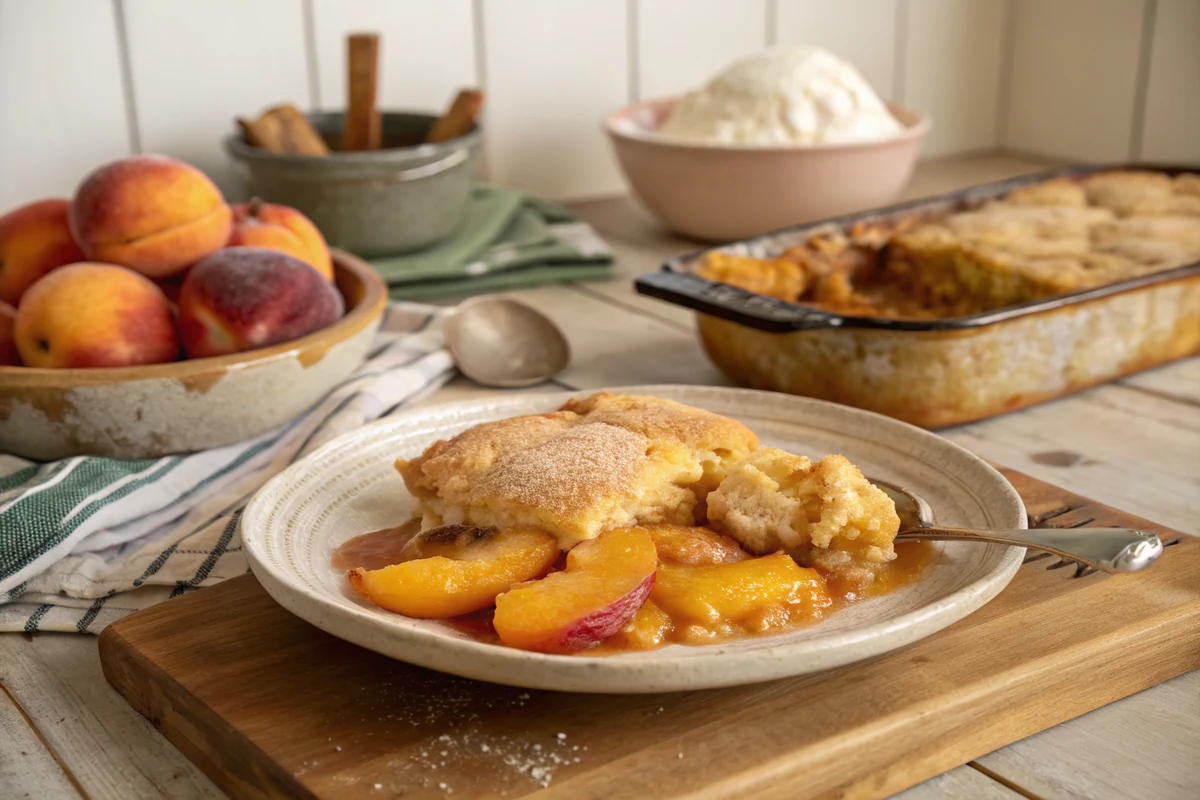
Dump cake is the American shortcut dessert that emerged in the 1960s and 1970s as the boxed cake mix industry got serious about marketing convenience. The basic formula is universal: dump a can or two of fruit into a baking dish, dump a box of cake mix on top, dot the surface with butter, bake. No mixing bowl, no eggs, no measuring of dry ingredients. The combination of fruit juice from below and melting butter from above hydrates the dry cake mix into a streusel-like crumb crust during the bake.
The peach version below is the most popular dump cake variant in the South. Cherry dump cake (cherry pie filling plus cake mix plus butter) is a close second. Apple, pineapple, and blueberry dump cakes round out the family. All four follow the same pattern; only the fruit changes. Each version produces a slightly different texture and flavor based on the fruit's natural acidity, sweetness, and water content.
Why dump cake works: the chemistry is simple. The dry cake mix is essentially flour, sugar, and leaveners (baking soda and baking powder) plus emulsifiers. When liquid from the fruit hits the bottom of the cake mix and melting butter hits the top, the mix hydrates from both sides simultaneously. The result is a topping that has the texture of crumb cake or streusel, neither cake nor crumb exactly but pleasantly between the two. It is messy, rustic, and tastes like comfort.
The Texas Hill Country Church-Potluck Tradition
Peach cobbler with cake mix is the Pyrex-dish-with-a-rubber-band-label that turns up at every Texas church potluck supper. Wednesday-night family fellowship dinners, funeral receptions, baby showers, baptism celebrations, Sunday-after-church coffees, summer block parties. The dessert is portable, scales up easily, holds well on a buffet for hours, and can be made by anyone including a kid who wants to help.
The Texas Hill Country canon for this dish was solidified by the early 1970s. Yellow cake mix became the default because it produced the most consistent crumb. Canned sliced peaches in light syrup became the standard fruit because they were available year-round and the syrup was already sweetened. Butter (real butter, not margarine) was the topping fat, sliced into pats for even melting. Cinnamon was the only spice. Variations got added over time but the core four ingredients have not moved.
I learned this recipe from my neighbor in Brenham. She got it from her mother in Burnet. The recipe traces back through the Methodist church cookbook from 1968 and from there into a handwritten note on the back of a recipe card dated 1962. Five decades of Texas family suppers, essentially unchanged. The dessert outlasts trends because it is hard to mess up and impossible to dislike.
Cake Mix Choice: Yellow vs White vs Spice
Yellow cake mix is the canonical and recommended choice. It has the right balance of sweetness, vanilla flavor, and golden color that pairs naturally with the canned peaches. Duncan Hines Classic Yellow is my default; the brand has been making cake mix since 1956 and the formula is reliably consistent batch to batch. Betty Crocker Super Moist Yellow works equally well. Pillsbury Moist Supreme Classic Yellow is the third major brand and produces the same result.
White cake mix produces a paler cobbler with a slightly less pronounced sweet-vanilla note. The dessert is still excellent; some Texans prefer it because the pale crumb makes the peaches more visually prominent. Use white cake mix if you want a more refined look or if yellow cake mix is sold out.
Spice cake mix is the upgrade if you want a more autumnal flavor profile. The spice mix typically includes cinnamon, nutmeg, allspice, and cloves baked into the dry mix. Combined with the additional cinnamon on top, you get a more aromatic cobbler that tastes like a peach-spiced coffee cake. Excellent for fall cobblers when fresh peaches are out of season and you want warmth.
Avoid: chocolate cake mix (clashes with peaches), strawberry or other flavored mixes (compete with the fruit), and any 'low sugar' or 'sugar-free' cake mixes (the artificial sweeteners taste off when baked into a cobbler topping). The standard yellow box is the right choice nine times out of ten.
Canned Peaches: Light Syrup, Heavy Syrup, or Juice-Packed
Canned sliced peaches in light syrup are the canonical choice for this recipe. Light syrup is sweetened just enough to balance the peach's natural tartness without making the cobbler cloying. Del Monte and Dole both make excellent canned peaches. Libby's is acceptable. Store brands work fine but tend to use thinner slices that break down during baking.
Heavy syrup canned peaches work in a pinch but make the cobbler noticeably sweeter; reduce or skip any optional brown sugar in the recipe. Juice-packed (no added sugar) peaches make a less sweet cobbler that some Texans prefer. The trade-off is that the cake mix on top stays drier because there is less syrup to hydrate it; add an extra 2 tablespoons of butter to compensate.
Fresh peaches: 6 to 8 medium fresh peaches, pitted and sliced 1/2-inch thick, plus 1/2 cup of granulated sugar and 1/4 cup of water mixed together, replaces the two cans. Use during Texas peach season (mid-May through mid-August). Fredericksburg and Stonewall peaches are the canonical Texas Hill Country varieties; my scratch peach cobbler uses these fresh.
Frozen peaches: 1 (16 oz) bag of frozen sliced peaches, thawed and drained, plus 1/2 cup of peach nectar or apple juice replaces the cans. Works year-round. Texture is slightly softer than canned but the flavor is excellent.
Butter Distribution: Pats Beats Pour
The butter is the single most consequential ingredient choice in dump cake. Cold butter sliced into pats is the canonical method, and it beats every other distribution method I have tried. The pats melt evenly across the surface of the cake mix during the bake, and the melted butter seeps down through the dry mix in a controlled, distributed way. The result is a uniformly buttery crumb crust.
Melted butter poured over the cake mix is the shortcut that does not work as well. The pour pools in low spots and leaves dry patches in high spots. The result is a cobbler with golden-brown buttery sections and pale, gummy uncooked-cake-mix sections. Skip the pour.
Softened butter is not appropriate for this recipe. Softened butter spreads on contact and creates a barrier between the cake mix and the moisture from the peaches below. The crumb topping turns dense and pasty rather than crumbly.
Use real butter, not margarine. Margarine has a different water content and a lower smoke point; it can taste oily and slightly chemical when baked into a dessert. Salted or unsalted both work; I default to unsalted for control over the salt level. One stick (8 tablespoons) is the right amount for a 9-by-13 dish; 1.5 sticks gives a richer crumb if you want more decadence.
Cinnamon and Optional Add-Ins
Cinnamon is the single seasoning the canonical recipe calls for. One teaspoon is the right amount for a 9-by-13 cobbler. Sprinkled evenly over the butter pats before baking, the cinnamon distributes into the crumb during the bake and gives the dessert its warm, comforting backbone.
Use freshly ground cinnamon if you have it. Pre-ground cinnamon from a jar that has been open for over 6 months loses most of its volatile oils and tastes muted. Vietnamese cinnamon (Saigon cinnamon, sold by Penzeys and Trader Joe's) is the upgrade; it carries a stronger sweet-spicy note than standard Ceylon or cassia cinnamon.
Nutmeg is the optional second spice that pairs naturally with peaches. 1/4 teaspoon freshly grated is the right amount. Add it with the cinnamon. Skip if you do not have it; cinnamon alone is sufficient.
Chopped pecans are the canonical Texan upgrade. 1/2 cup sprinkled across the top of the cake mix before baking. The pecans toast during the bake and add a layer of nutty crunch that bridges the cobbler to the Texas dessert canon (pecan pie, pecan praline cookies, Texas trash pie). San Saba pecans are the Texas-canonical choice for this and any Texas dessert.
Vanilla extract (1 teaspoon, drizzled over the peaches before adding the cake mix) deepens the dessert's flavor profile without adding distinct vanilla notes. Optional but recommended if you have an open bottle of pure vanilla extract.
The Bake: 350F for 45 to 50 Minutes
Three hundred and fifty degrees Fahrenheit (175C) is the right temperature for a 9-by-13 dump cake cobbler. Higher temperatures (375F or above) brown the top too fast and risk burning before the interior is bubbly. Lower temperatures (325F or below) require a longer bake and produce a paler, less crispy top.
Forty-five to fifty minutes is the bake window. Begin checking at 45 minutes. The cobbler is done when the top is uniformly golden brown across most of the surface, the butter is fully melted into the cake mix with no remaining dry pockets, and the peach juices are bubbling up through the cracks around the edges and in the center. If the top is golden but the juices have not bubbled visibly, give it another 5 minutes - the bubbling is the signal that the interior is properly hot and the syrup is properly thickened.
Tenting with foil: if the top is browning faster than the interior is bubbling (rare but possible in hot ovens), loosely tent the dish with aluminum foil after 35 minutes. The foil slows surface browning while letting the interior continue to cook. Pull the foil off in the last 5 minutes to refresh the golden color.
Glass versus metal: a glass or ceramic baking dish (Pyrex, CorningWare, Le Creuset stoneware) gives the best browning because it conducts heat steadily and lets you see the side caramelization. Metal pans (light aluminum or anodized) work but tend to brown the bottom edges faster. Dark metal pans can over-brown; reduce the temperature by 25F if using dark metal.
Why the Dump-Cake Method Works (The Chemistry)
Dump cake is the rare recipe where the chemistry is more interesting than the technique. The dry cake mix sits as a barrier between the wet peaches below and the melting butter above. As the dish heats, three things happen in parallel:
First, the canned peach syrup heats up and begins boiling at the bottom of the dish. The steam rises through the cake mix layer above. The steam hydrates the cake mix gradually from below, in small bubbles, which is what creates the crumb texture rather than a uniform cake batter.
Second, the butter pats on top melt and seep downward through the cake mix. The melted butter coats the dry mix particles, creating tiny shortbread-like crumbs that brown beautifully in the dry heat of the oven. The butter-coated crumbs are what give the topping its golden-brown streusel quality.
Third, the cake mix particles that are hit by both steam from below AND butter from above turn into a kind of crumb cobbler crust - not quite cake, not quite streusel, somewhere between the two. The result is unique to the dump-cake method and impossible to replicate with traditional cobbler technique (which mixes a wet batter before pouring on top of fruit).
Dump Cake vs Scratch Peach Cobbler
The dump-cake method is fundamentally different from scratch peach cobbler. The differences explain why both exist and why neither is strictly better.
Scratch peach cobbler (see my full scratch recipe) uses fresh peaches, a homemade biscuit-or-cake topping, and traditional baking technique. The topping is mixed in a separate bowl with flour, sugar, butter, milk, and leaveners, then spooned over the fruit. The result is more refined - the biscuit topping is structured, the peaches are softer because they cook longer, and the entire dish feels more like a designed dessert than an emergency answer.
Dump cake is rustic and convenient. The four ingredients cost about $6 total. The prep is 5 minutes. The result is delicious and dramatically homier than scratch cobbler. Most family members and church-potluck guests prefer the dump-cake version even when blind tasted alongside scratch, because the cake-mix crumb topping has a slight commercial-bakery quality that triggers nostalgia for everyone who grew up eating it.
The scratch version is the right choice when you want to impress people who care about technique. The dump-cake version is the right choice when you want to feed people and not stress about it. Both are correct in their place. My household keeps both recipes in active rotation.
Peach crumble is a third related dessert - oats and flour and butter mixed by hand into a crumb topping over fresh peaches. Peach crumble splits the difference between scratch cobbler and dump cake.
Variations Worth Trying
Cherry-peach dump cake. Replace one can of peaches with one can of cherry pie filling. The cherries deepen the color and add a tart counterpoint. Most-requested variation at my family gatherings.
Bourbon-pecan peach dump cake. Drizzle 2 tablespoons of bourbon over the peaches before adding the cake mix. Sprinkle 1/2 cup chopped pecans over the top before baking. The bourbon notes pair beautifully with the peaches and the toasted pecans add Texan polish.
Pina colada dump cake. Replace the peaches with one (20 oz) can of crushed pineapple plus one cup of shredded coconut. Use yellow cake mix. The dump cake leans tropical and tastes like a frozen cocktail in dessert form.
Apple-cinnamon dump cake. Replace the peaches with two cans of apple pie filling. Use spice cake mix instead of yellow. The result is essentially fall in a baking dish - perfect for Thanksgiving as a casual alternative to apple pie.
Mixed berry dump cake. Replace the peaches with one bag (16 oz) of frozen mixed berries thawed and drained, plus 1/2 cup granulated sugar mixed in. Use white cake mix for a paler, prettier finish. The berries hold their shape better than peaches and stay distinctly visible in the finished cobbler.
Serving: Ice Cream Is Mandatory
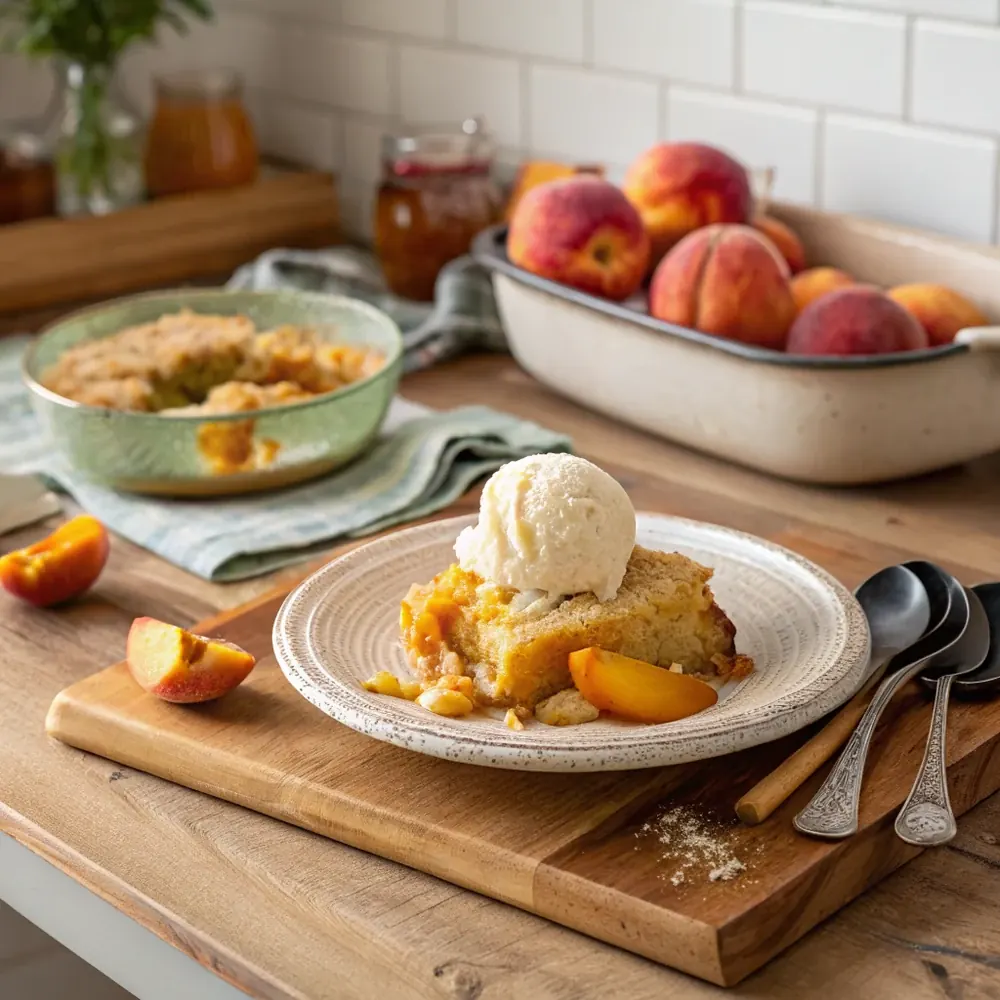
Vanilla ice cream is the canonical Texan pairing for peach cobbler, and the dump-cake version is no exception. The combination of hot bubbling cobbler and cold melting ice cream is the entire reason this dessert is on the church-potluck rotation. The temperature contrast is what makes the dish feel like a treat rather than just a dessert.
Blue Bell Homemade Vanilla is the Texas-canonical scoop. Made in Brenham, Texas since 1907, the brand is essentially the official ice cream of Texas. Blue Bell French Vanilla works too. If Blue Bell is unavailable, Haagen-Dazs Vanilla, Tillamook Old Fashioned Vanilla, or Ben and Jerry's Vanilla Bean are all excellent alternatives. Avoid generic store-brand vanilla; the mouthfeel is gummy and the vanilla flavor is artificial.
Whipped cream is the secondary option. Real whipped cream (heavy cream beaten with sugar and vanilla) is excellent. Cool Whip from the freezer is the Texas-canonical short-cut and acceptable. The whipped cream alternative is good but the ice-cream-melting-into-hot-cobbler experience is what makes the dessert unforgettable.
Coffee is the canonical Texas drink pairing for warm cobbler. A cup of strong black coffee or coffee with cream balances the sweetness of the cobbler beautifully. A glass of cold milk works for kids. Texas sweet iced tea is the summer-Sunday pairing.
Storage and Reheating
Dump-cake peach cobbler holds beautifully and is forgiving on storage. The cobbler tastes nearly as good on day two as on day one (better in some ways - the crumb topping has fully absorbed the peach syrup and the texture becomes more like fruit-streusel).
Counter storage: leave the cobbler on the counter, covered loosely with foil or plastic wrap, for 24 hours. The cobbler is shelf-stable at room temperature for this short window because the high sugar content and the baked-through state inhibit bacterial growth.
Refrigerator storage: cover tightly with foil or plastic and refrigerate for up to 5 days. The cobbler will firm up significantly in the fridge as the butter solidifies and the crumb topping sets. Reheat to soften.
Reheating: 10-15 minutes in a 325F oven uncovered restores the cobbler to served-warm consistency. The microwave (30 seconds per single-serving portion at 50% power) works for individual reheats but turns the crumb topping slightly soggy. Avoid full-power microwaving; the syrup boils unevenly.
Freezing: portion into individual freezer-safe containers, freeze for up to 3 months. Thaw in the fridge overnight before reheating in a 350F oven for 20 minutes. The texture survives freezing reasonably well; the crumb topping softens slightly.
Mistakes to Avoid
Stirring the cake mix into the peaches. This is the number one mistake. The dump-cake method depends on the dry mix sitting separately on top. Stirring creates peach soup with cake clumps, not cobbler.
Using melted butter instead of pats. Melted butter pools in low spots and leaves dry patches. Cold butter sliced into pats melts evenly and seeps down through the mix in a controlled way.
Draining the peaches. The canned peach syrup is what hydrates the cake mix from below. Draining means no crumb formation - just dry cake mix sitting on dry peaches.
Using a too-small baking dish. An 8-by-8 or 9-by-9 dish concentrates the fruit-to-cake ratio too much; the cobbler comes out too wet. A 9-by-13 is the canonical size. A 10-by-15 works but the cobbler is thinner.
Skipping the rest. Hot peach syrup straight out of the oven will scald a tongue. Ten minutes of counter-rest also lets the topping set and the syrup thicken. The wait is non-negotiable.
Using margarine. The water content is wrong and the flavor is off. Real butter only.
Tips for the Best Cake-Mix Peach Cobbler
Five batches in, you start noticing the small dials. These are the moves I keep returning to in my Hill Country kitchen, the ones that lift a simple dessert from good to memorable.
- Use Duncan Hines yellow cake mix specifically. The brand has been making cake mix since 1956 and the formula is reliably consistent batch to batch. Betty Crocker and Pillsbury work, but Duncan Hines has my preference.
- Slice the butter cold. Cold butter from the fridge slices into clean pats. Room-temperature butter smears on the knife. Cold pats also melt more evenly across the surface during baking.
- Sprinkle pecans on top before baking. 1/2 cup of chopped pecans adds Texan polish, a layer of nutty crunch, and a more sophisticated finished look. Worth the extra dollar.
- Let it cool 10 minutes before serving. Volcanic-hot peach syrup straight out of the oven scalds tongues. The 10-minute rest lets the syrup thicken and the topping set.
- Make it the day before for potlucks. The cobbler tastes even better on day two because the crumb topping has absorbed the syrup. Reheat in a 325F oven for 15 minutes before serving.
For the scratch version, head to my Texas peach cobbler. For the next dessert in the Texas canon to learn, try buttermilk pie, pecan pie, or Texas sheet cake.
Peach Cobbler with Cake Mix Recipe
Ingredients
- For the cobbler:
- 2 cans (15 oz / 425 g each) sliced peaches in light syrup, do not drain
- 1 box (15.25 oz / 432 g) yellow cake mix (Duncan Hines, Betty Crocker, or Pillsbury)
- 1 stick (113 g) unsalted butter, COLD, cut into 1/4-inch pats
- 1 teaspoon ground cinnamon
- Optional but recommended:
- 1/2 cup (60 g) chopped pecans (sprinkle on top before baking for a Texan touch)
- 1/4 teaspoon ground nutmeg (warmer spice profile)
- 1 teaspoon vanilla extract (drizzle over peaches before adding cake mix)
- 1/4 cup (50 g) light brown sugar (extra sweetness if peaches are tart)
- Equipment:
- 9-by-13 inch baking dish (glass Pyrex or ceramic; metal works in a pinch)
- Oven mitts, sharp knife (for slicing the butter)
- For serving:
- Vanilla ice cream (Blue Bell Homemade Vanilla is the Texas-canonical pairing)
- Whipped cream, optional
Instructions
- Preheat oven to 350F (175C). Pull a rack to the center position. Make sure the rack has at least 4 inches of clearance above for the cobbler to puff. Preheating fully is non-negotiable; the dump-cake method depends on the butter melting evenly across the surface as the dish hits the oven, and a cold oven gives uneven distribution.
- Pour peaches into the baking dish. Open both cans of sliced peaches and pour the entire contents - peaches and syrup - into an ungreased 9-by-13 inch baking dish. Spread the peaches into a relatively even layer with a spoon. The syrup should pool around the peach slices. Do not drain the cans; the syrup is what the cake mix uses to form the crumb. If you want to add the optional vanilla extract, drizzle it across the peaches now.
- Sprinkle the cake mix over the peaches. Open the box of yellow cake mix and pour the dry mix evenly across the top of the peaches. Use a fork or your fingers to break up any large lumps and spread the mix in a uniform layer that covers the peaches completely. Do not stir the mix into the peaches - this is the entire trick. The cake mix sits on top, separate from the peaches, and absorbs the bubbling syrup from below during baking. If you stir it in, you get peach soup with cake clumps; if you leave it on top, you get cobbler with a buttery crumb crust.
- Slice the cold butter into pats. With the stick of cold butter directly from the fridge, slice it crosswise into 1/4-inch thick pats. You should get 12 to 16 pats from one stick. Arrange the pats across the top of the cake mix in a rough grid, covering as much surface area as possible. Edge pats can be slightly smaller. The butter will melt during baking and seep down through the cake mix to combine with the peach syrup, which is what gives the topping its streusel-like crumb texture. If you have extra butter, do not be shy; up to 1.5 sticks total works for a richer crumb.
- Sprinkle cinnamon (and optional pecans). Dust the ground cinnamon evenly across the top of the butter pats. A fine-mesh sifter gives the cleanest distribution; pinching from your fingers also works. If you are adding pecans, sprinkle 1/2 cup of chopped pecans across the top of the cake mix now. The pecans toast in the oven and add a quintessentially Texan dimension to the dish. Optional brown sugar (1/4 cup) goes on now if your peaches need extra sweetness; taste a slice from the can before deciding.
- Bake 45 to 50 minutes. Place the baking dish on the center rack and bake uncovered at 350F for 45 to 50 minutes. The cobbler is done when the top is golden brown, the butter has fully melted and combined with the cake mix into a crumb crust, and the peach juices are bubbling up through the cracks around the edges and through the center. If the top is browning too fast (after 35 minutes), tent loosely with foil; if it is still pale at 50 minutes, give it another 5-10 minutes. Every oven is slightly different.
- Cool 10 minutes before serving. Pull the cobbler out of the oven and let it rest on the counter for at least 10 minutes before serving. The peach syrup is volcanic-hot immediately out of the oven and will scald a tongue. The 10-minute rest lets the temperature drop to scoopable, lets the crumb set slightly, and lets the syrup thicken from boiling to glossy. Serve warm directly from the dish.
Frequently Asked Questions
What is dump cake?
Dump cake is the American shortcut dessert technique where you dump canned fruit into a baking dish, dump dry cake mix on top, dot with butter, and bake. No mixing bowl, no eggs, no measuring. The fruit syrup from below and the melting butter from above hydrate the dry cake mix into a streusel-like crumb topping. The technique emerged in the 1960s-1970s and became a Southern church-potluck staple.
Can I use fresh or frozen peaches?
Yes. Fresh: 6-8 medium peaches, pitted and sliced 1/2-inch thick, plus 1/2 cup sugar and 1/4 cup water mixed together. Frozen: 1 (16 oz) bag frozen sliced peaches thawed and drained, plus 1/2 cup peach nectar or apple juice. Both substitutes work year-round. Fresh is best during Texas peach season (mid-May through mid-August). The canned version is the canonical choice because it is available year-round and the syrup is already calibrated to the recipe.
Which cake mix brand works best?
Duncan Hines Classic Yellow is my default and the historic Texas Hill Country choice. Betty Crocker Super Moist Yellow and Pillsbury Moist Supreme Classic Yellow are equally good substitutes. All three brands produce consistent results. Avoid generic store-brand cake mixes; they tend to have less consistent crumb structure. Avoid 'sugar-free' or 'low-fat' cake mixes; the artificial sweeteners taste off when baked into a cobbler topping.
Do I have to use the butter-pats method?
Pats are dramatically better than melted butter. Cold butter sliced into 1/4-inch pats melts evenly across the surface during baking and seeps down through the cake mix in a controlled way. Melted butter poured over the mix pools in low spots, leaving dry patches that bake into a pasty topping. The pats method is the canonical technique and produces visibly better results. Stick with the pats.
Is peach cobbler with cake mix gluten-free?
No. Standard yellow cake mix contains wheat flour. For a gluten-free version, substitute Betty Crocker Gluten Free Yellow Cake Mix or King Arthur Gluten-Free Yellow Cake Mix (both certified GFCO). The texture is slightly different (less rise, slightly grittier crumb) but the dessert is still excellent. The other ingredients (canned peaches, butter, cinnamon) are naturally gluten-free.
Can I make this dairy-free?
Yes. Replace the butter with 1 stick (113 g) of vegan butter (Miyoko's, Earth Balance) or solid coconut oil. The cobbler is otherwise dairy-free. Pair with dairy-free vanilla ice cream (So Delicious, Coconut Bliss, Oatly) for a fully dairy-free dessert. The flavor is slightly different but still delicious; most casual eaters cannot tell the difference.
How long does it keep?
On the counter loosely covered for 24 hours. Refrigerated and covered for up to 5 days. The cobbler tastes even better on day two as the crumb absorbs more peach syrup. Reheat in a 325F oven for 10-15 minutes to restore served-warm consistency before serving leftovers.
Can I freeze peach dump cake?
Yes. Portion into individual freezer-safe containers, freeze for up to 3 months at 0F. Thaw in the fridge overnight before reheating in a 350F oven for 20 minutes. The texture survives freezing well; the crumb topping softens slightly but the overall dessert is still excellent. Freezing in single-serving portions is more flexible than freezing the entire dish.