Texas Desserts
Texas Pumpkin Pie
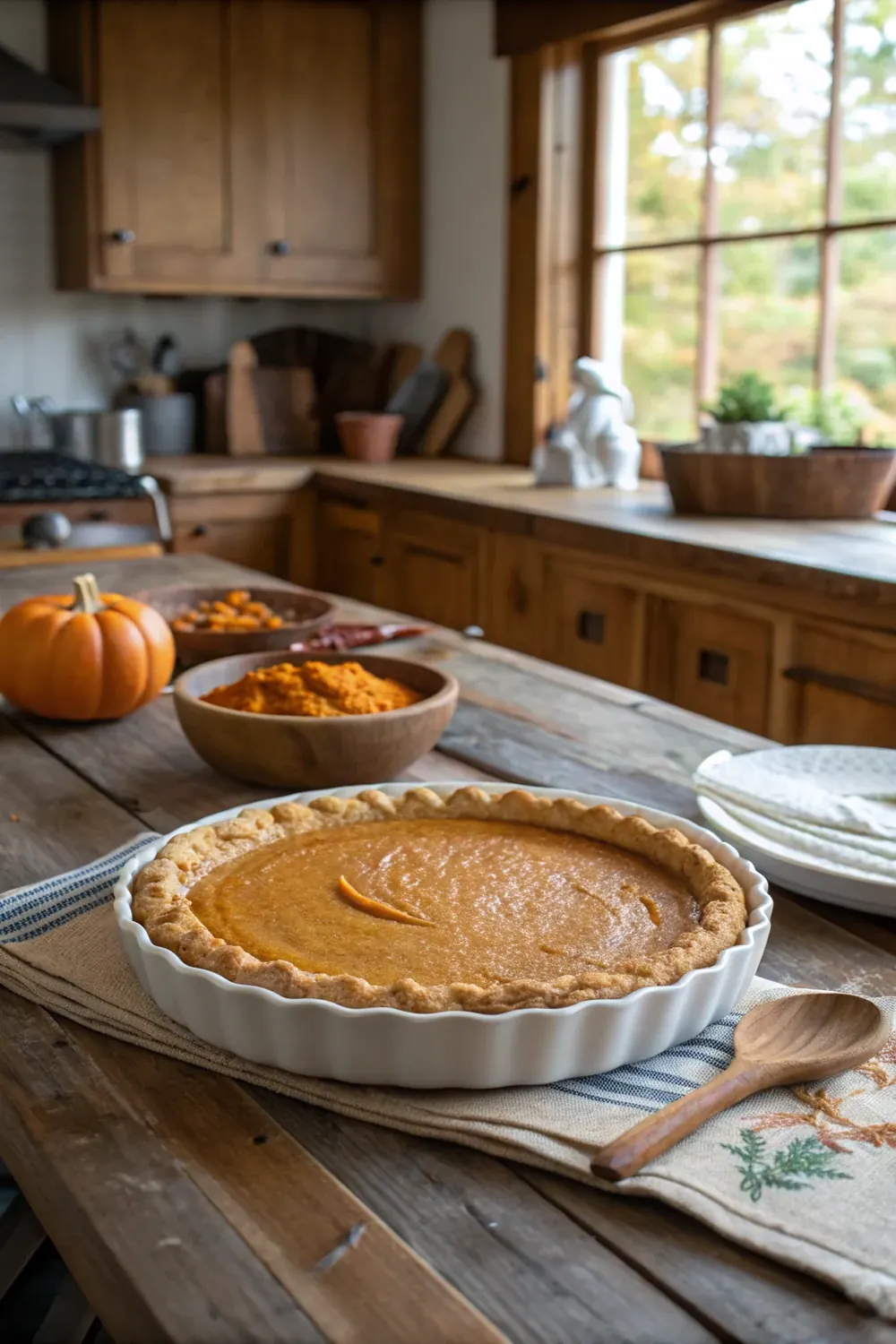
Chef Mia's Texas pumpkin pie: brown butter pecan crust, Libby's pumpkin, evaporated milk custard, spice blend, no crack. The Hill Country Thanksgiving original.
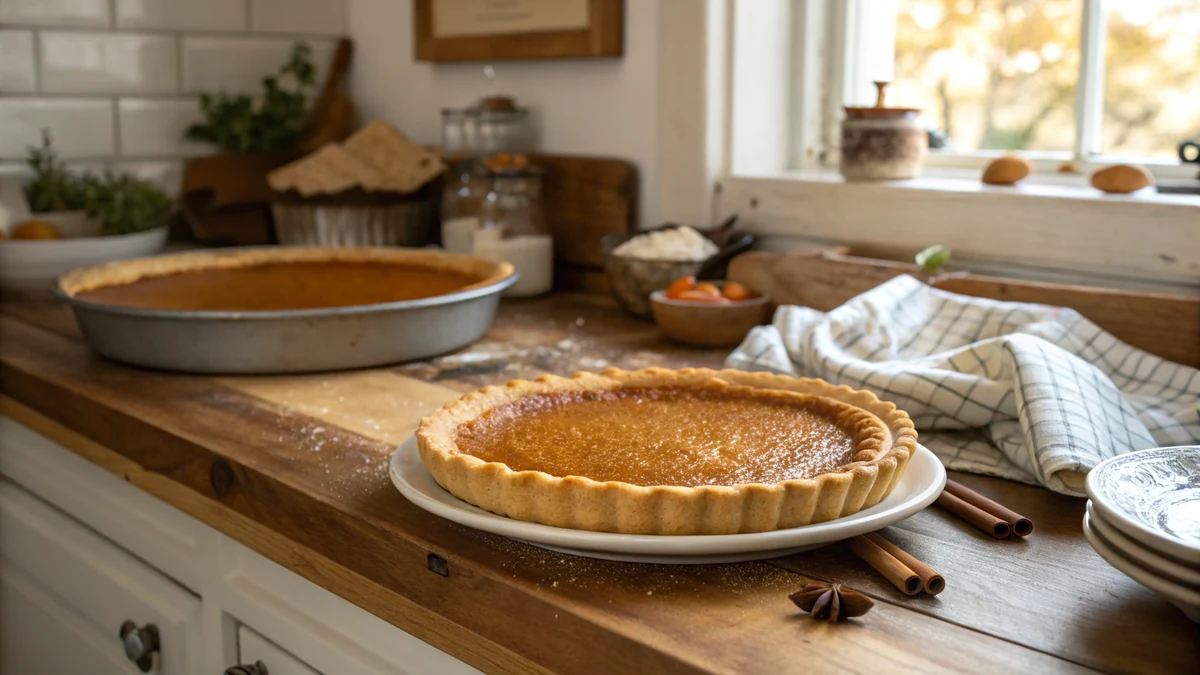
Quick answer: Texas pumpkin pie keeps the iconic American pumpkin custard but rebuilds the crust around brown butter and chopped Texas pecans, giving the pie a nutty smoky undertone that pairs naturally with the warm spices. Blind-bake a brown butter pecan crust until set and golden. Whisk a 15-ounce can of Libby's pure pumpkin with 3/4 cup dark brown sugar, 2 large eggs plus 1 yolk, 1 can of evaporated milk, 2 teaspoons pumpkin pie spice, 1 teaspoon kosher salt, and 2 teaspoons vanilla. Pour into the warm crust, bake at 425F for 15 minutes, drop to 350F for 35 to 40 minutes more. Pull when the edges are set and the center wobbles like firm jello when tapped. Cool 4 hours before slicing.
Pumpkin pie is the closest thing America has to a national dessert. It appears on essentially every Thanksgiving table from Maine to California, and the recipe has barely changed since 1929 when Libby's published the back-of-can recipe that the brand has been printing ever since. The Texas version below keeps the iconic custard intact and rebuilds the crust around brown butter and toasted Texas pecans, which is a Hill Country move that pulls the pie toward the broader Texas dessert canon (pecan pie, buttermilk pie, Texas sheet cake) without losing the Thanksgiving identity of pumpkin pie itself.
I make this pie every year for Thanksgiving lunch in my Hill Country kitchen, and I make it once or twice more between the first cold front and Christmas. The brown butter crust is the small change that elevates the dessert from competent to memorable. Browned butter has more depth and toasted-nut complexity than regular butter, and the chopped pecans in the crust give the pie a textural counterpoint to the smooth custard filling. The custard itself is the Libby's recipe with the dark brown sugar bumped slightly higher for warmth and a touch of black pepper added to the spice blend for back-of-the-palate complexity. Most guests cannot identify the differences from a standard pumpkin pie but they always notice that something is better, and they will go back for second slices.
The Pumpkin Pie Origin (Plymouth to Libby's)
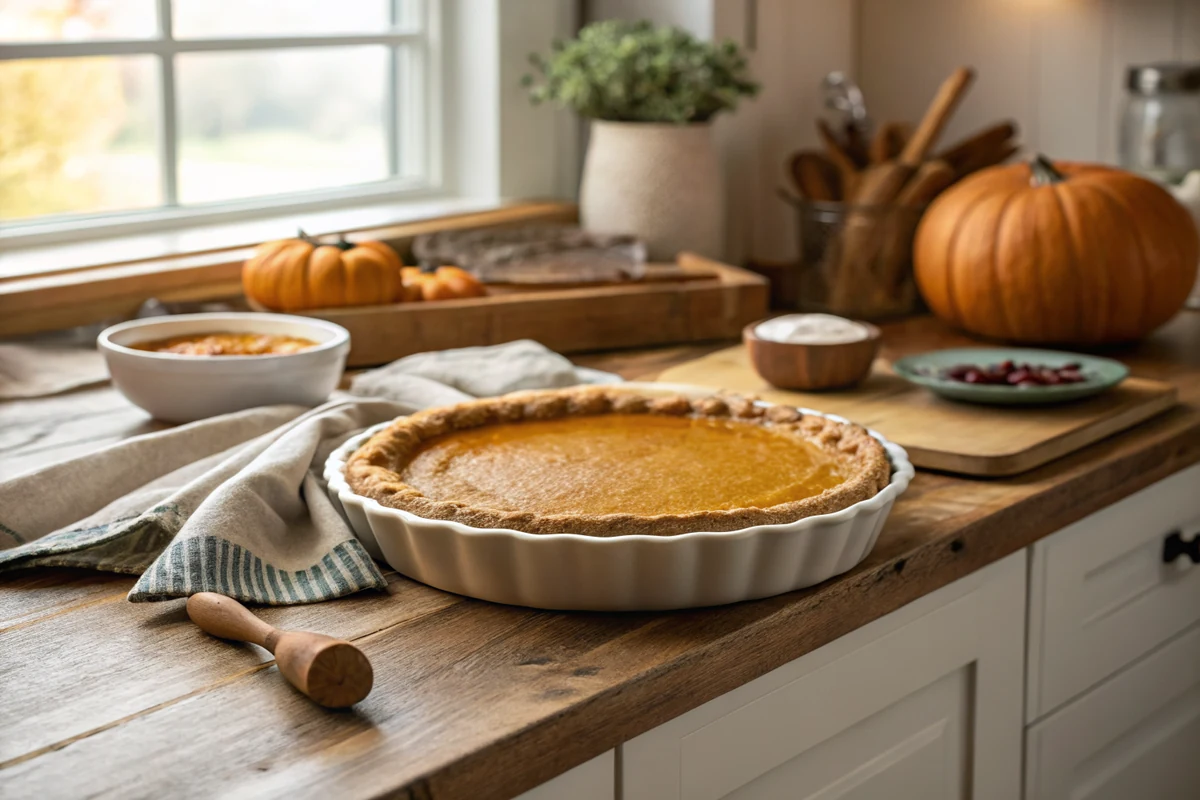
Pumpkin pie has been on American Thanksgiving tables since the first commemorative feasts in the mid-1800s. The original colonial Massachusetts version was essentially a hollowed pumpkin stuffed with milk, eggs, honey, and spices, baked in the embers of a fireplace. The pumpkin itself served as the crust. The recipe evolved through the 19th century as English-style flour-and-butter pie crusts replaced the pumpkin shell, sugar replaced honey, and standardized spice blends emerged.
The recipe was codified for the modern era by the Libby's company in 1929. The back-of-can recipe printed on every Libby's 15-ounce can since then is essentially: 3/4 cup sugar, 1 teaspoon ground cinnamon, 1/2 teaspoon ground ginger, 1/4 teaspoon ground cloves, 1/2 teaspoon salt, 2 large eggs, 1 can pure pumpkin, 1 can evaporated milk, 9-inch unbaked pie shell. Bake at 425F for 15 minutes, then at 350F for 40-50 minutes. The recipe has not changed in 95 years and remains the canonical American pumpkin pie.
Most American home cooks make this exact recipe at least once a year. Texas variations like the one below build on the Libby's foundation rather than departing from it - the iconic flavor is part of the holiday emotional memory, so the changes need to be subtle. The brown butter pecan crust, the dark brown sugar swap, and the touch of black pepper are the three quiet upgrades that take this version beyond the canonical without disrupting the Thanksgiving familiarity.
What Makes This Pumpkin Pie Texan
Texas pumpkin pie has three distinguishing moves: brown butter in the crust, chopped Texas pecans worked into the crust dough, and a small Texan adjustment to the spice profile (dark brown sugar instead of granulated, a pinch of freshly ground black pepper). None of these moves change the pie's identity. Anyone who has been eating Libby's pumpkin pie for fifty years will recognize this pie as pumpkin pie. But every bite has slightly more depth, slightly more texture, and slightly more Hill Country than the standard version.
The brown butter crust is the biggest move. Browning the butter before incorporating it into the crust adds toasted-nut complexity that you cannot get from regular butter. The flavor pairs naturally with the pumpkin's earthy sweetness and amplifies the warm spices. It is the technique that French patisserie has been using for two centuries; bringing it to a back-of-can pumpkin pie recipe gives the dessert a layered finish that elevates the whole experience.
The chopped pecans in the crust give the pie textural contrast. The smooth pumpkin custard is one-note in texture - perfectly smooth, no surprises. The pecans break that monotony with little crunch-points throughout the crust. Toasted pecans (toasted in the brown butter as it browns) add even more flavor. This is the same principle as the chocolate-chip cookie: textural variety improves the bite.
Dark brown sugar in place of white sugar adds molasses depth. The flavor difference is subtle but cumulative across a full slice. Most guests cannot identify the change but they read the pie as 'warmer' or 'more autumn-like'.
Libby's vs Other Brands vs Fresh Pumpkin
Libby's pure pumpkin in the 15-ounce can is the canonical and recommended choice for this pie. The company has been the dominant US canned pumpkin brand since the 1920s; they grow a proprietary Dickinson pumpkin variety specifically for canning that has more flesh, less water, and a sweeter flavor than common jack-o-lantern pumpkins. The flavor is what most Americans think of as 'pumpkin pie taste' and the consistency is reliable batch to batch.
Note: Libby's makes TWO products that look almost identical on the shelf - 'Pure Pumpkin' (the orange-and-white can, just cooked mashed pumpkin) and 'Pumpkin Pie Mix' (the orange-and-green can, pre-sweetened and pre-spiced). Use ONLY Pure Pumpkin for this recipe. The Pie Mix is calibrated for a different recipe and will over-sweeten and over-spice the pie.
Other brands: 365 Whole Foods organic pumpkin works well. Farmer's Market Organic Pumpkin is excellent and slightly drier (good for richer pies). Trader Joe's pumpkin is fine but slightly more watery; reduce evaporated milk by 2 tablespoons to compensate.
Fresh pumpkin: roast a small sugar pumpkin (sometimes labeled 'pie pumpkin' or 'sweet pumpkin') at 400F for 60-90 minutes until tender, scoop the flesh, puree in a food processor, and drain through cheesecloth for 30 minutes to remove excess water. Use 1.75 cups of puree to replace the 15-ounce can. Fresh pumpkin gives a slightly fresher taste but the consistency is harder to control. Worth the effort once a year for the experience; canned is the right choice the other times.
Avoid: butternut squash puree (works but tastes squash-forward, not pumpkin-forward), kabocha squash puree (too dense), or pumpkin pie filling cans (pre-sweetened, throws off the recipe).
The Brown Butter Pecan Crust Technique
Brown butter (beurre noisette) is butter cooked past melting until the milk solids brown and the butter develops a nutty, toasted flavor. The technique is canonical in French patisserie and works beautifully in pie crusts. The flavor difference between regular butter and brown butter is significant - browned butter has roughly 30% more aromatic complexity by the perceived flavor metric.
Browning the butter: place 1/2 cup of butter in a small saucepan over medium heat. The butter will go through four phases - melt (1 minute), foam (1-2 minutes), foam subsides and milk solids appear at the bottom (2-3 minutes), milk solids turn amber and the butter smells nutty (4-6 minutes total). Pull off heat the moment the solids are amber; one more minute and they burn. The smell is the more reliable indicator than color.
Cooling the brown butter: pour into a shallow dish (the wider the dish, the faster it cools) and refrigerate for 30 minutes. The browned butter solidifies as it cools, but the milk solids stay distributed throughout. The texture you want for the crust is soft butter (yields to a thumb-press) not hard butter (rock-solid from the fridge).
Working the brown butter into the crust: use a pastry cutter or fingers to cut the soft brown butter into the flour-pecan mixture. The chopped pecans give the dough a slightly textured appearance which is correct. The dough is otherwise handled like any pie crust: ice water added in small increments, the dough just-held-together when squeezed, chilled for at least an hour before rolling.
Spice Profile: The Pumpkin Pie Trinity Plus
The canonical American pumpkin pie spice blend is cinnamon, ginger, nutmeg, and cloves. This combination has been settled since the late 1800s and is what every commercial 'pumpkin pie spice' jar in the US grocery store delivers (McCormick, Penzeys, Trader Joe's all use this blend in slightly different ratios). Two teaspoons of pumpkin pie spice is the right amount for one 9-inch pie.
DIY blend: if you do not have pumpkin pie spice on hand, mix 1 teaspoon ground cinnamon, 1/2 teaspoon ground ginger, 1/4 teaspoon ground nutmeg, and 1/4 teaspoon ground allspice (or ground cloves). The result is essentially identical to commercial pumpkin pie spice. Freshly ground spices give noticeably better flavor than pre-ground; if you have whole nutmegs and a microplane, grate fresh.
The Texas adjustments: dark brown sugar replaces white sugar (adds molasses depth), and a quarter teaspoon of freshly ground black pepper joins the spice blend (adds back-of-the-palate warmth that you cannot identify but that you definitely feel). Some Hill Country recipes add a pinch of cayenne for additional warmth; I prefer black pepper because it does not push the spice profile into 'spicy' territory.
Bourbon, optional but recommended: 1 tablespoon of Texas bourbon (Garrison Brothers, Balcones, Treaty Oak) whisked into the custard adds an oak-vanilla note that pairs beautifully with the pumpkin spices. The flavor is detectable but not assertive; it reads as 'something good' rather than 'bourbon-flavored pumpkin pie'. Skip if you do not drink alcohol; the pie remains excellent without it.
Eggs and Dairy Ratio
Pumpkin pie is a custard pie. The structure comes from eggs setting around the pumpkin and dairy during baking. The egg-to-liquid ratio determines the final texture: more eggs gives a firmer, more sliceable pie; fewer eggs gives a creamier, slightly softer custard.
This recipe uses 2 whole eggs plus 1 extra yolk (3 yolks total, 2 whites). The extra yolk adds richness and gives the pie a slightly creamier mouthfeel than the canonical Libby's 2-egg recipe. The 1 can of evaporated milk (12 oz / 355 ml) is the standard dairy amount and is calibrated to the pumpkin and egg ratios.
Evaporated milk vs heavy cream vs whole milk: evaporated milk is the canonical American choice. It is shelf-stable, concentrated (about 60% water content vs 90% for regular milk), and produces the exact custard texture that American pumpkin pie eaters expect. Heavy cream gives a richer pie but slightly heavier mouthfeel. Whole milk gives a thinner custard and shortens the keeping time. Stick with evaporated milk for the canonical result.
Sweetened condensed milk is a different product and produces a different pie - sweeter, denser, more like Mexican flan than American pumpkin pie. If you accidentally buy condensed milk, save it for a flan recipe and buy evaporated milk for this pie. The two cans look nearly identical on the shelf; read the labels.
Room temperature eggs are important. Cold eggs added to room-temperature pumpkin mixture can curdle the proteins slightly. Pull eggs from the fridge 30 minutes before baking.
The Blind Bake (Pre-Baking the Crust)
Blind baking - pre-baking the crust before adding the filling - is the technique that gives pumpkin pie its signature crisp-bottom crust instead of the soggy bottom that ruins many home-baked pumpkin pies. The custard filling is wet and slow-cooking; without blind baking, the bottom of the crust never reaches the temperature it needs to brown and crisp.
The blind-bake process: line the chilled crust with parchment paper, fill with pie weights (or dried beans, or rice), bake at 400F for 15 minutes. Remove the parchment and weights, return to the oven, bake another 5 to 8 minutes until the bottom looks dry and pale golden. Pull when the crust is barely set; it will continue baking with the filling. Reduce oven to 425F (the temperature for the first phase of the custard bake).
Pie weights vs alternatives: ceramic pie weights are the canonical choice. Dried beans work great. Dried rice works. Coins (in foil packets) work. The point is to weigh the crust down so it does not puff during the dry bake. About 2 cups of weight is the right amount.
Why crust still gets soggy sometimes: the most common cause is filling poured into a cold pre-baked crust. The cold crust does not seal against the hot filling, and the moisture seeps in. Always pour filling into a WARM pre-baked crust (still warm from the oven, or briefly re-warmed). The second cause is over-pricking the bottom; 8-10 holes is plenty, more creates leak points.
The 425F-to-350F Bake Method
The two-stage bake (15 minutes at 425F, then 35-40 minutes at 350F) is the canonical Libby's method and it works for good reason. The high-heat first phase sets the edges of the custard and helps the filling start gelling around the rim. The lower-temperature second phase cooks the center through gently without curdling the eggs.
Why a single-temperature bake does not work as well: if you bake at 350F the whole time, the edges are still raw when the center should be set. If you bake at 425F the whole time, the center cooks too fast and the eggs curdle, giving a grainy, water-leaking pie. The two-stage method splits the difference.
Do not open the oven for the first 15 minutes. The high-heat phase needs uninterrupted heat to set the edges. Opening the door drops the temperature by 50-100F and the pie has to re-equilibrate.
After the temperature drop, you can briefly open the oven to check progress around minute 30 of the second phase. Look for the wobble test: tap the pan with a wooden spoon, the center 2 inches should still wobble like firm jello but the rest of the pie should be still. If the center ripples like liquid, give it another 5-10 minutes. If the whole pie shakes uniformly, it is over-baked.
Doneness Tests: Wobble + Crack + Temperature
Three doneness tests work for pumpkin pie. Use any one, or use all three for the best assurance. The wobble test, the crack test, and the temperature test.
The wobble test (most reliable): pull the oven rack out slightly and tap the side of the pie pan. The center 2 to 3 inches should jiggle softly like firm jello but should not ripple like liquid. If it ripples, give the pie 5 more minutes. The rest of the pie should be still. Practiced cooks can hit doneness reliably with this test alone.
The crack test: a small crack starting to form on the surface near the edge is a sign of doneness. Pull the pie when you see the first crack. Pumpkin pies that crack significantly are over-baked; small crack or no crack means perfect.
The temperature test: an instant-read thermometer pushed into the center should read 175-180F (79-82C) when the pie is done. Pull at 175F. The internal temperature continues climbing during the resting phase and the eggs finish setting at around 180-185F.
Common mistake: waiting for the center to be completely still. By the time the center is set the same as the edges, the eggs have over-cooked and the pie will weep liquid the next day. Pull when the center is still slightly wobbly; the residual heat finishes the job.
The 4-Hour Cooling Rest (Why It Matters)
The cooling rest is the step most home cooks shortchange, and it is the difference between a pumpkin pie that slices clean and a pumpkin pie that runs onto the plate. The custard continues to set as it cools, and the structural integrity of the slice depends on the resting phase being long enough.
Cool at room temperature for at least 4 hours, ideally 6 to 8. The custard transitions from soft-set (immediately after baking) to firm-set (around hour 2) to sliceable (around hour 4). Slicing at 2 hours gives wet runny pieces. Slicing at 4 hours gives clean cuts.
Do not refrigerate during the initial cooldown. Cold fridge air against the warm pie causes condensation to form on the surface, which makes the top look wet and slightly puddled. Cool at room temperature for the full 4 hours, then you can refrigerate if you prefer a cold slice.
If you must make the pie the day of serving: bake it the morning of (before 10 AM) and let it cool through the afternoon. By 4 PM the pie is ready for the Thanksgiving dessert course. Last-minute pie baking is risky; the cooling step cannot be shortcut.
Day-ahead is even better. Bake the pie on Wednesday evening for Thursday dinner. The flavor improves overnight as the spices marry into the custard, the crust crispness firms up, and the wet-vs-set custard equilibrates. Day-ahead pumpkin pie is the canonical Thanksgiving move. Baking every pie on Wednesday is one line in a longer schedule, and the rest of that schedule is in my Texas Thanksgiving guide.
Variations Worth Trying
Bourbon-pecan pumpkin pie. Double the bourbon to 2 tablespoons, increase the chopped pecans in the crust to 1/2 cup, and sprinkle 2 tablespoons of toasted pecan pieces on top of the filling before the second bake. The pie tilts toward pecan pie territory. Excellent for adult-only Thanksgiving.
Maple pumpkin pie. Replace the dark brown sugar with 3/4 cup pure maple syrup (preferably Grade A Dark). The flavor leans New England rather than Texas. Pairs beautifully with whipped cream sweetened with maple instead of vanilla.
Chai pumpkin pie. Replace the pumpkin pie spice with a chai spice blend: 1 teaspoon cinnamon, 1/2 teaspoon ginger, 1/4 teaspoon cardamom, 1/4 teaspoon black pepper, 1/4 teaspoon allspice, pinch of clove. The pie leans Indian-influenced and pairs beautifully with chai-spiced whipped cream.
Smoked pumpkin pie. Add 1/2 teaspoon of liquid smoke (Wright's hickory) to the custard. The smoke note pairs beautifully with the pumpkin's natural earthiness and creates a savory undertone. A controversial but compelling Texan twist.
Pumpkin pie with gingerbread crust. Replace the brown butter pecan crust with a gingerbread cookie crust (12 oz crushed Biscoff cookies + 6 tablespoons melted butter, pressed into the pan, baked 8 minutes). The crust adds spicy depth and bypasses the rolled-crust complication. Fast and reliable.
Mistakes to Avoid
Using pumpkin pie filling instead of pure pumpkin. Read the label. Pure Pumpkin is the orange-and-white Libby's can. Pumpkin Pie Mix is the orange-and-green can. The Pie Mix is pre-sweetened and pre-spiced; the recipe is calibrated for Pure Pumpkin.
Cold filling poured into a cold crust. Always pour the room-temperature filling into a warm pre-baked crust. The warm crust seals against the filling and prevents soggy bottoms.
Over-baking. The center should still wobble when you pull the pie. Past that point the eggs over-cook and the pie weeps liquid the next day.
Skipping the rest. Slicing at 2 hours gives runny pieces. Four hours minimum; six is better.
Using sweetened condensed milk. The two cans look similar on the shelf. Sweetened condensed milk produces a different pie (more like flan). Evaporated milk is the canonical choice.
Cold eggs added straight from the fridge. Cold eggs can curdle the custard when added to room-temperature pumpkin mixture. Room temperature eggs blend smoothly.
Tips for the Best Texas Pumpkin Pie
Five batches in, you start noticing the small dials. These are the moves I keep returning to in my Hill Country kitchen, the ones that lift this Thanksgiving dessert from competent to memorable.
- Brown the butter to amber, not gold. Pulled at gold, the butter is undercooked and missing flavor. Pulled past amber, the milk solids burn. Amber + nutty smell = pull immediately.
- Use Libby's Pure Pumpkin specifically. The brand has been the dominant canned pumpkin since the 1920s for good reason. Generic store-brand canned pumpkin can be watery or fibrous.
- Pull when the center still wobbles. The residual heat finishes setting the custard. Pulling at 'looks done' usually means over-baked.
- Cool 4 hours minimum. Non-negotiable. The cooling rest sets the custard; slicing too early gives runny pieces.
- Make it the day before. Day-ahead pumpkin pie tastes better than same-day pumpkin pie. The flavors marry overnight and the slicing improves.
For the Thanksgiving plate that goes with this pie, see my Texas BBQ-style turkey and turkey brine. For the other Texas pies that round out a Hill Country dessert table, head to pecan pie and buttermilk pie.
Texas Pumpkin Pie Recipe
Ingredients
- For the brown butter pecan crust:
- 1 1/4 cups (160 g) all-purpose flour
- 1/3 cup (38 g) finely chopped Texas pecans (San Saba if available)
- 1 tablespoon granulated sugar
- 1/2 teaspoon kosher salt
- 1/2 cup (113 g) unsalted butter, browned then cooled
- 3-4 tablespoons ice water
- For the pumpkin custard filling:
- 1 can (15 oz / 425 g) pure pumpkin puree (Libby's preferred, NOT pumpkin pie filling)
- 3/4 cup (150 g) packed dark brown sugar
- 2 large eggs plus 1 large egg yolk, room temperature
- 1 can (12 oz / 355 ml) evaporated milk (whole, not skim)
- 2 teaspoons pumpkin pie spice (or homemade blend: 1 tsp cinnamon, 1/2 tsp ginger, 1/4 tsp nutmeg, 1/4 tsp allspice)
- 1/4 teaspoon freshly grated black pepper (the Texan secret weapon, optional)
- 1 teaspoon kosher salt
- 2 teaspoons pure vanilla extract
- 1 tablespoon bourbon, optional
- For serving:
- 1 cup heavy cream, whipped with 2 tablespoons sugar and 1 teaspoon vanilla
- Additional pecan halves for garnish
- Equipment:
- 9-inch deep-dish pie plate (glass or ceramic; metal acceptable)
- Saucepan for browning butter, large mixing bowl, whisk, pie weights or dried beans
Instructions
- Brown the butter (do this first). In a small saucepan, melt the 1/2 cup of butter over medium heat. Continue cooking, swirling the pan occasionally, for 4 to 6 minutes. The butter will foam, then the foam will subside and the milk solids at the bottom will turn from white to golden to deep amber. Pull off the heat the moment the solids are amber and the butter smells nutty - one more minute and they burn. Pour into a shallow dish to stop cooking. Refrigerate for 30 minutes until just firm but still pliable (the texture of soft butter).
- Make the pecan crust dough. In a large bowl, whisk together the flour, chopped pecans, sugar, and salt. Add the cooled brown butter and use a pastry cutter (or fingers) to cut it into the flour mixture until pea-sized pieces form. Drizzle in 3 tablespoons of ice water and toss with a fork. The dough should just hold together when squeezed; if it crumbles, add the 4th tablespoon. Visible butter chunks make a flaky crust. Form into a flat disc, wrap in plastic, chill at least 1 hour.
- Roll and shape the crust. On a lightly floured surface, roll the chilled dough into a 12-inch circle, about 1/8-inch thick. The chopped pecans make the dough slightly more textured than a plain crust; do not worry about a few cracks. Transfer to a 9-inch deep-dish pie plate, press into the corners without stretching, trim the overhang to 1 inch, fold under itself, crimp decoratively. Prick the bottom 8-10 times with a fork. Chill 30 minutes.
- Blind bake the crust. Preheat oven to 400F (200C). Line the chilled crust with parchment paper and fill with pie weights or dried beans. Bake 15 minutes. Remove parchment and weights, return to oven, bake another 5 to 8 minutes until the bottom looks dry, pale golden, and the pecans on the surface are toasted but not burned. The crust should be barely set; it will continue baking with the filling. Reduce oven to 425F (220C).
- Whisk the pumpkin filling. In a large bowl, whisk the pumpkin puree until smooth, breaking up any lumps. Add the dark brown sugar and whisk until fully incorporated, no streaks of dry sugar. Add the eggs and yolk, evaporated milk, pumpkin pie spice, black pepper if using, kosher salt, vanilla, and optional bourbon. Whisk until completely smooth and glossy, about 90 seconds. The mixture should pour easily; if it looks thick, the canned pumpkin is dehydrated (some store brands run dry) - add 1 to 2 tablespoons of water.
- Pour and bake at 425F for 15 minutes. Place the warm pre-baked crust on a rimmed baking sheet (insurance against overflow). Pour the filling slowly into the warm crust, leaving 1/4 inch of space below the rim. Carefully transfer to the 425F oven. Bake 15 minutes - this initial high-heat phase sets the edges of the custard and starts the proteins denaturing.
- Drop to 350F and bake 35 to 40 minutes more. Without opening the oven, reduce the temperature to 350F (175C). Continue baking for 35 to 40 minutes. The pie is done when the edges are puffed and set, the center 2 inches still wobbles like firm jello when you tap the pan (it should not ripple like liquid), and the surface is deep amber-orange. If the crust edges brown too fast, tent loosely with foil after 25 minutes.
- Cool 4 hours before slicing. Cool the pie on a wire rack at room temperature for at least 4 hours, ideally 6 to 8. The custard continues to set as it cools; slicing at 2 hours gives runny pieces that look broken. Do not refrigerate during the initial cooldown - condensation on the surface makes the top look wet. Once fully cooled, the pie can be served at room temperature or refrigerated overnight for a firmer cold slice. Top each slice with whipped cream and a pecan half just before serving.
Frequently Asked Questions
Can I use fresh pumpkin instead of canned?
Yes. Roast a small sugar pumpkin (sometimes labeled 'pie pumpkin' or 'sweet pumpkin') at 400F for 60-90 minutes until tender. Scoop the flesh, puree in a food processor, and drain through cheesecloth for 30 minutes to remove excess water. Use 1.75 cups of drained puree to replace one 15-ounce can. Fresh pumpkin gives a slightly fresher taste but the consistency is harder to control. Most years I just use Libby's.
Why use Libby's specifically?
Libby's has been the dominant US canned pumpkin brand since the 1920s and grows a proprietary Dickinson pumpkin variety specifically for canning. The flesh has more sugar, less water, and a more consistent flavor than common pumpkins. The 'pumpkin pie taste' that most Americans associate with the dessert is essentially Libby's flavor. Other brands work but the result is slightly off-canonical.
Why brown the butter for the crust?
Browning the butter adds toasted-nut complexity that regular butter cannot deliver. The milk solids in the butter caramelize during browning, releasing flavor compounds that read as deeper, warmer, and slightly nutty. The technique pairs naturally with pumpkin's earthy sweetness and amplifies the warm spices. It is the single biggest flavor lift in this recipe.
Can I use a store-bought crust?
Yes, in a pinch. Pillsbury refrigerated pie crust works fine. Trader Joe's frozen pie crust works. The pie will lose the brown butter pecan crust upgrade but the overall dessert remains excellent. If you use store-bought, still blind-bake for 10 minutes at 400F before filling to avoid soggy bottom. The custard does most of the flavor work; the crust is the supporting actor.
Can I make this dairy-free?
Yes, with substitutions. Replace the butter in the crust with vegan butter (Miyoko's or Earth Balance), brown it the same way. Replace the evaporated milk with full-fat coconut milk (canned, well shaken) - this is the canonical dairy-free substitute and works beautifully. The pie has a slight coconut note but most guests cannot identify it. Skip the whipped cream or use coconut whip (So Delicious CocoWhip).
Is this pumpkin pie gluten-free?
Not as written. The flour in the crust contains wheat. For a gluten-free version, replace the 1 1/4 cups all-purpose flour with 1 1/4 cups King Arthur Measure for Measure Gluten-Free Flour (1:1 ratio). The texture is slightly more crumbly but works fine. Or use a gluten-free graham cracker or gingersnap crust instead (12 oz crushed GF cookies + 6 tablespoons butter). The custard filling is naturally gluten-free.
Why is my pumpkin pie cracked on top?
Almost always over-baking. The eggs continue cooking after the pie comes out of the oven; pulling too late means the structure over-sets and shrinks unevenly during cooling, which causes cracks. Pull when the center 2 inches still wobble like firm jello when you tap the pan. If you see a crack starting to form during baking, pull immediately.
How long does pumpkin pie keep?
Loosely covered on the counter, 24 hours. Tightly covered and refrigerated, up to 4 days. Pumpkin pie should always be refrigerated after 24 hours because the egg custard can support bacterial growth. The pie can be sliced cold or brought to room temperature for 30 minutes before serving.
Can I freeze pumpkin pie?
Yes. Wrap the cooled pie tightly in plastic wrap, then foil, and freeze for up to 2 months. Thaw overnight in the refrigerator before serving. The texture survives freezing well; the custard may release a small amount of liquid that can be blotted with a paper towel. Best to freeze the whole pie rather than individual slices to minimize moisture loss.
What's the difference between pumpkin pie spice and just cinnamon?
Pumpkin pie spice is a blend (typically cinnamon, ginger, nutmeg, cloves, and sometimes allspice). Using just cinnamon makes the pie taste flatter and one-dimensional. The blend gives layered warmth that defines the canonical American pumpkin pie flavor. If you do not have pumpkin pie spice, the DIY blend in the ingredient list works identically.