Texas BBQ
Smoked Mac and Cheese
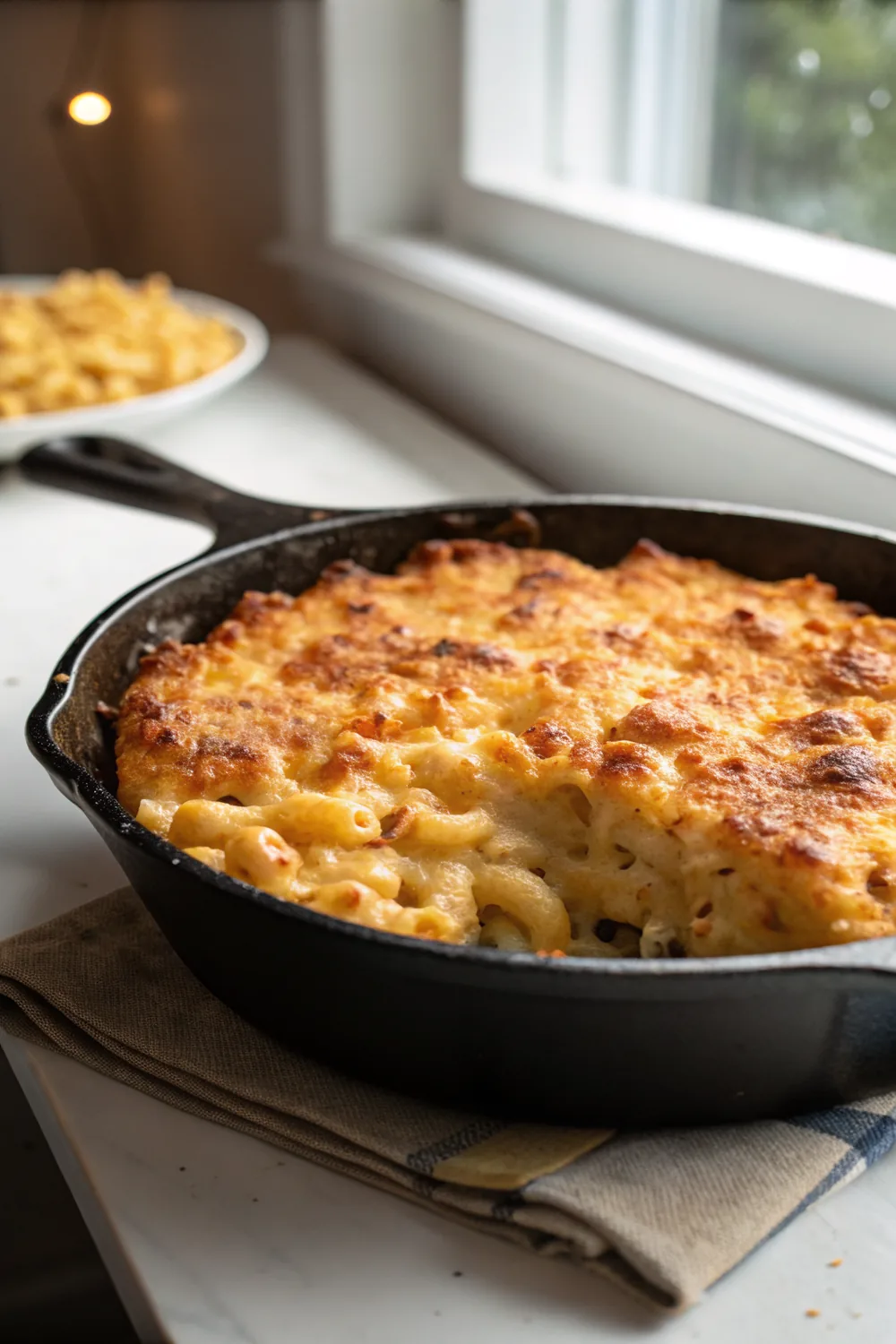
Chef Mia's smoked mac and cheese: evaporated milk sauce, hand-grated cheddar and jack, pasta undercooked 2 minutes, 45-60 minutes at 225F in cast iron.
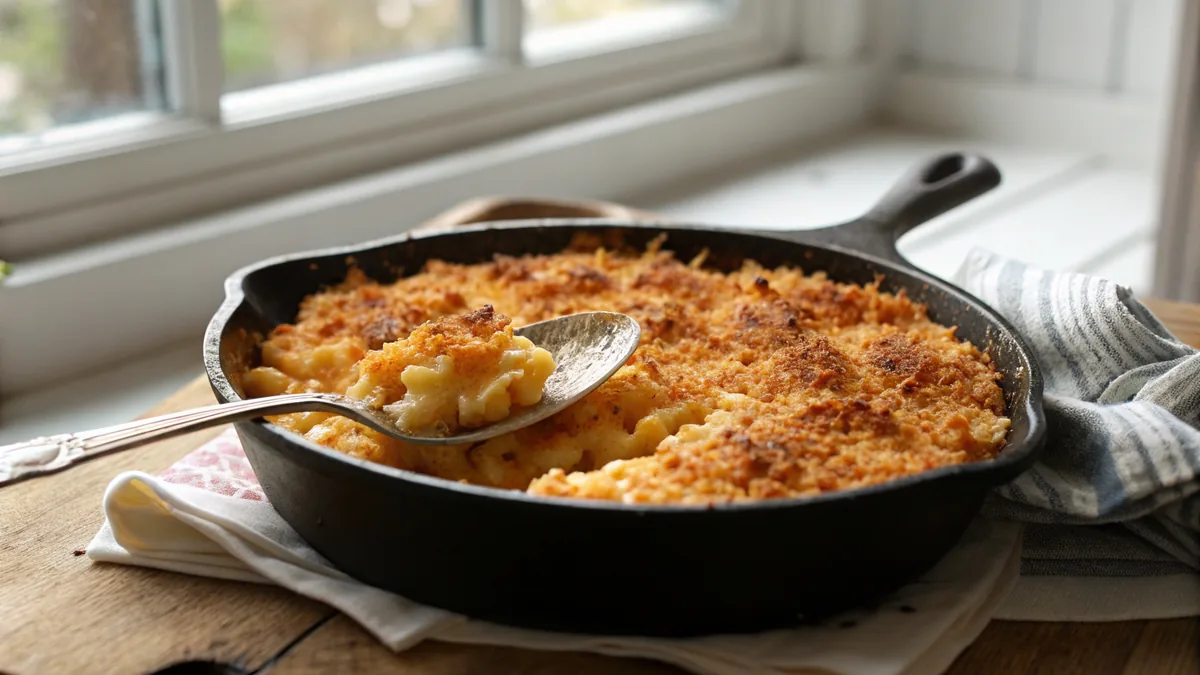
Quick answer: Smoked mac and cheese is a cast iron skillet of extra-saucy mac, smoked uncovered at 225 to 250F for 45 to 60 minutes, no longer. Three moves keep it creamy instead of grainy and dry. First, the sauce is built on evaporated milk plus a light roux, which protects the cheese proteins from breaking, and the cheese itself is sharp cheddar, Monterey Jack, and one dedicated melter, all grated by hand because pre-shredded cheese carries anti-caking starch that turns sauce gritty. Second, the pasta is pulled two full minutes before al dente, so it finishes cooking in the smoker instead of blowing past done. Third, a half cup of cream is held back and poured over the surface right before the skillet goes in, a sacrificial layer that absorbs the drying heat so the mac underneath stays loose. One skillet feeds ten as a side.
There is a moment at every Lockhart cookout when the brisket comes off to rest and somebody's aunt asks what else is coming, and the answer that gets the biggest reaction is never the beans. It is mac and cheese, and specifically mac and cheese that went into the smoker instead of the oven, because smoke does something to cheddar that an oven simply cannot: it settles into the fat and turns a kids' side into the dish adults hover over.
I resisted it for years, honestly. Every smoked mac I ate off other people's pits was either dried into a casserole brick or broken into grease and grit, and I decided the smoker was the wrong tool for a dairy dish. I was wrong about the tool. I was right about the technique everyone was using. The failures all trace to three fixable habits: sauce made with nothing but cheddar and hope, pasta boiled to done before an hour of extra heat, and a skillet left in the smoke until it looked photogenic on top and was desert underneath.
This is the version I landed on after a couple of summers of testing it next to the briskets: an evaporated milk sauce that cannot break, three cheeses grated by hand off the block, elbows pulled two minutes early, and a reserved layer of cream poured over the top like a rain jacket before the skillet goes in at 225F. Forty-five minutes to an hour of post oak later, it comes out smoky to about an inch deep, creamy the whole way down, and it never sees a blue flame or a broiler.
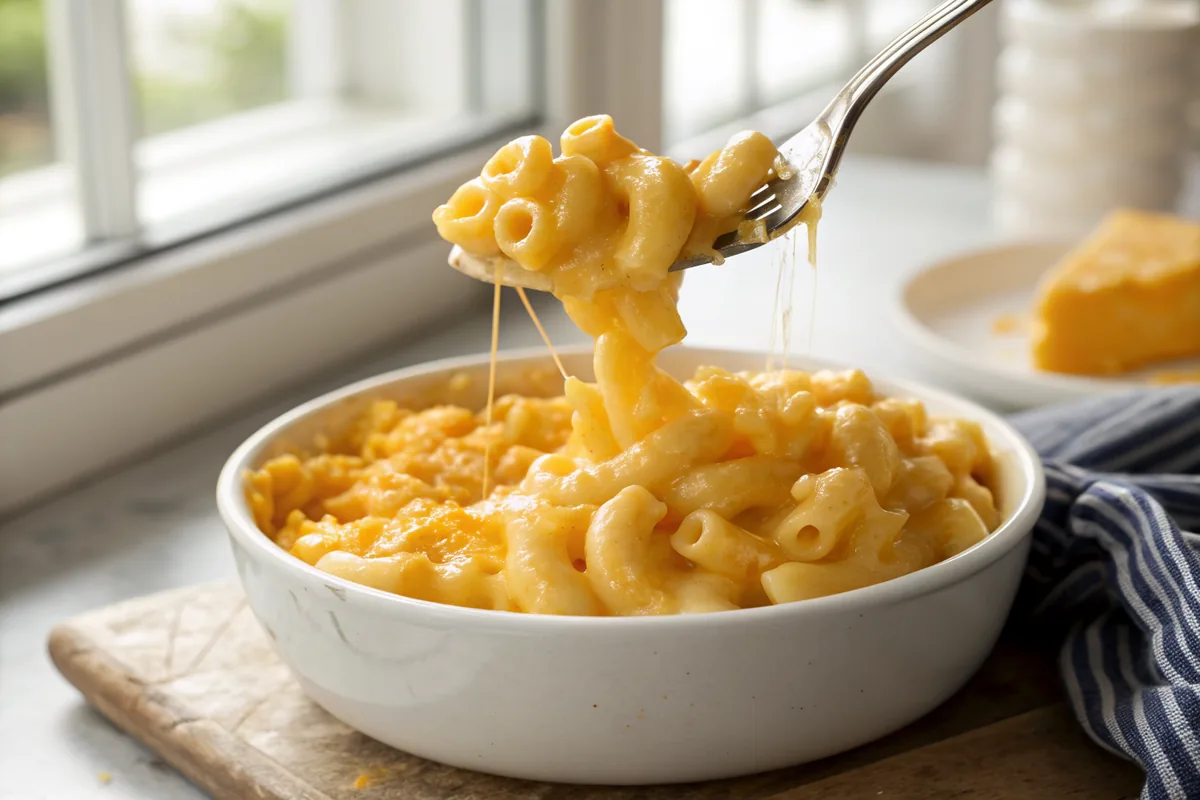
Evaporated Milk Is the Anti-Grainy Insurance
Every broken, gritty smoked mac starts the same way: cheese proteins got too hot for too long, seized into curds, and squeezed their fat out into an oil slick. An hour in a smoker is exactly the kind of long, uneven heat that makes it happen, which is why a sauce that survives the oven for 20 minutes can still fall apart on the pit. The fix is not babysitting. The fix is building a sauce that chemically cannot break, and that is what evaporated milk does.
Evaporated milk is just milk with 60 percent of its water cooked out, and the concentration does two useful things. The extra milk protein and the small amount of carrageenan most brands carry act as emulsifiers, holding fat and water together the way egg yolk holds a mayonnaise. And because it has already been cooked in the can, it does not curdle under heat the way fresh milk can. A cheese sauce built on evaporated milk plus a light roux will hold glossy through the entire smoke and through reheating the next day.
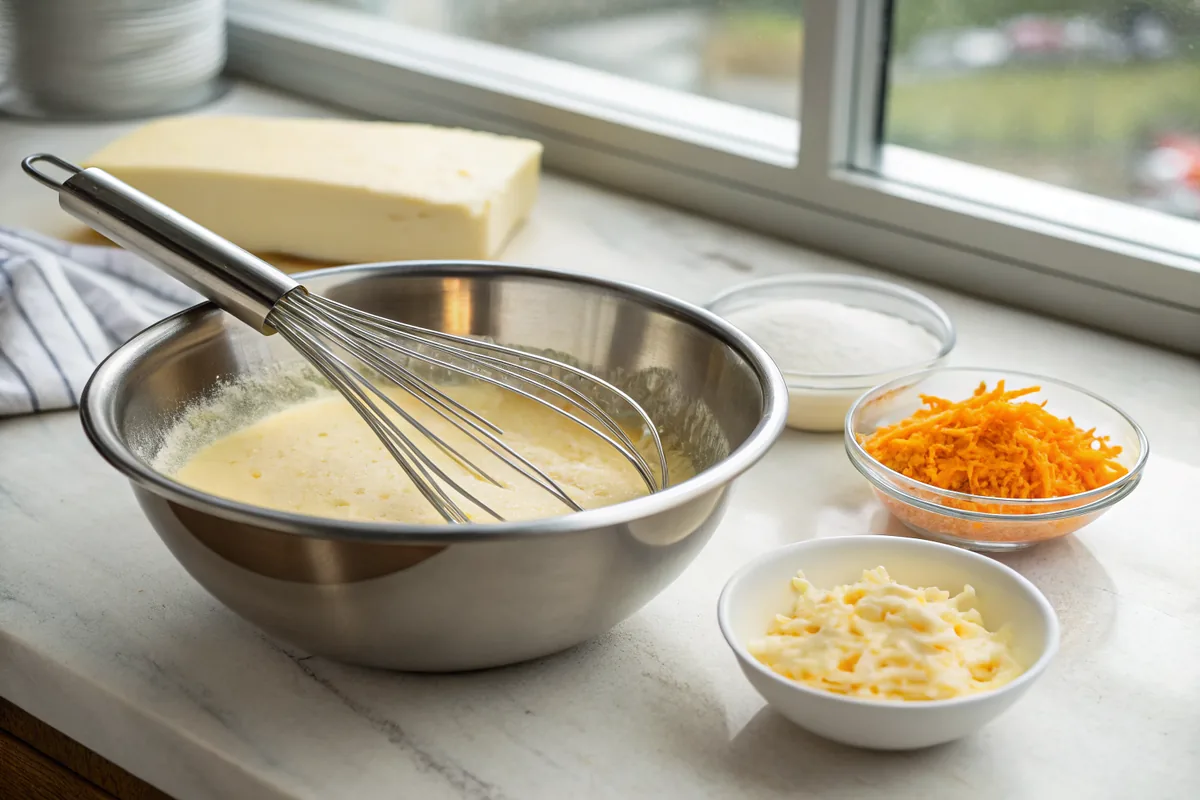
The roux is the second half of the insurance. A quarter cup of flour cooked briefly in butter thickens the milks into a base with body, and the gelatinized starch physically gets between cheese proteins so they cannot find each other and clump. Between the roux and the evaporated milk, you have two independent systems protecting the sauce, and I have never had this version break, including the time a wind shift ran my pit to 300F while I was busy wrapping ribs.
The last protection is procedural: the cheese goes in off the heat, in thirds. Cheese needs only about 150F to melt, and every degree past 170F pushes the proteins toward seizing. Kill the burner, let the bubbling stop, then whisk. This is the same discipline that keeps my smoked chorizo queso silky through a whole afternoon on the pit, and it costs you nothing but patience.
Grate the Cheese by Hand, Every Time
If you take exactly one rule from this page, take this one: the cheese comes off a block, grated on the big holes of a box grater, every single time. It is five minutes of work for a full skillet, and it is the difference between a sauce and a suspension of grit.
Bagged pre-shredded cheese is tossed with cellulose powder and potato starch so the shreds pour freely instead of fusing in the bag. Those anti-caking coatings do their job right up until you try to melt the cheese, at which point they absorb water, thicken unevenly, and leave a fine sandiness on the tongue that no amount of whisking removes. In a quick quesadilla you will never notice. In a sauce that is 26 ounces of cheese, you absolutely will.
Hand-grated cheese also melts faster and at a lower temperature because the shreds are moister and irregular, which matters here since the whole melting strategy is built on doing it off the heat. Dry, coated commercial shreds need more heat to melt, and more heat is exactly what this sauce is designed to avoid.
Two practical notes. Grate the cheese while the pasta water comes up, not before; freshly grated melts best. And grate the block cold from the refrigerator, since a cool block shreds into clean pieces while a room-temperature one smears. If your market sells cheddar in five-pound blocks, buy it, grate what you need, and vacuum-bag the rest. The per-pound savings against bagged shreds funds the heavy cream.
The Blend: Sharp Cheddar for Flavor, Jack for Peace, One True Melter
No single cheese can carry a smoked mac. The ones that taste like something melt badly, and the ones that melt like a dream taste like nothing. So the blend has three jobs and three cheeses, in a 12, 8, 6 ounce split that I have stopped adjusting because it works.
Sharp cheddar, 12 ounces, is the flavor. It has the acidity and depth to stay interesting under a layer of smoke, and a proper sharp cheddar is assertive enough that the finished dish still tastes like cheese rather than like warm dairy. It is also, on its own, the worst melter of the three, prone to going grainy, which is why it never travels alone.
Monterey Jack, 8 ounces, is the peacekeeper. It is mild, high-moisture, and melts into complete smoothness, diluting the cheddar's temper without diluting the overall cheese flavor much. Jack is also the traditional Texas choice here; this is the same cheddar-and-Jack partnership running through half the Tex-Mex canon, and it earns its place on a barbecue table.
The third slot, 6 ounces, belongs to a dedicated melter: young gouda or fontina. Both are washed-curd style cheeses with elastic, buttery melt that gives the sauce its glossy pull, that ribbon of stretch when the spoon lifts. Young gouda leans sweet and nutty; fontina leans earthy. Havarti works too. What you want is a young, supple cheese, not an aged one; an aged gouda is a magnificent eating cheese and a crystalline disaster in a sauce.
Feel free to swap personality into the cheddar slot, pepper jack into the Jack slot, or a few ounces of smoked gouda into the melter slot if your pit time will be short. What you should not do is push past about 26 ounces total. More cheese does not make mac cheesier; past a point it just makes the sauce heavier and more fragile.
Undercook the Pasta by Two Full Minutes
The smoker is going to cook your pasta for another 45 to 60 minutes after the boil, gently but genuinely, and pasta that goes in perfectly al dente comes out swollen and soft with blown-out corners. The rule is simple and non-negotiable: pull the elbows two full minutes before the low end of the package's al dente time. Bite one; the center should still be firm with a thin chalky core.
Underdone pasta does more than survive the smoke. As it finishes cooking in the skillet, it drinks from the sauce, which is precisely why the sauce is built deliberately loose. The pasta absorbs the extra liquid, plumps to exactly done, and locks the sauce onto itself in the process. This is the same principle as finishing pasta in its pan sauce on a stovetop, just stretched across an hour.
Shape matters more here than in stovetop mac. Elbows are classic and correct, and cavatappi is my honest preference: the corkscrew holds sauce in its channels and stands up to the long heat even better. Big delicate shapes like large shells tend to shatter under the folding, and tiny shapes like ditalini turn to porridge. Whatever the shape, buy a bronze-cut brand if you can; the rough surface grabs sauce.
Drain the pasta and do not rinse it. The surface starch is glue for the sauce, and the pasta is about to be drowned in dairy, so nobody needs it cooled or slick. A small knob of butter tossed through keeps it from setting into a single macaroni brick while you finish the sauce, a real risk with underdone pasta, which is starchier on the surface than fully cooked pasta.
Cast Iron at 225 to 250F: The 45 to 60 Minute Window
The pan is not a style choice. Cast iron holds and evens out heat in a pit that is always hotter on one side, it can sit on grates over live fire without complaint, and a 12-inch skillet is exactly the right depth: about two inches of mac, enough surface area to take on smoke, enough depth to protect the bottom layers from drying. A disposable foil pan, the default at too many cookouts, does the opposite on every count and is half the reason smoked mac has a dry reputation.
Temperature is 225 to 250F, which is not a coincidence. It is the range your pit is already running for brisket, ribs, and pork butt, and that is the entire logistical beauty of this dish: it claims a corner of grate space on a smoker that is already lit and already stable. If I have ribs running their 3-2-1 schedule, the mac goes in when the ribs get wrapped, and both come off within sight of each other.
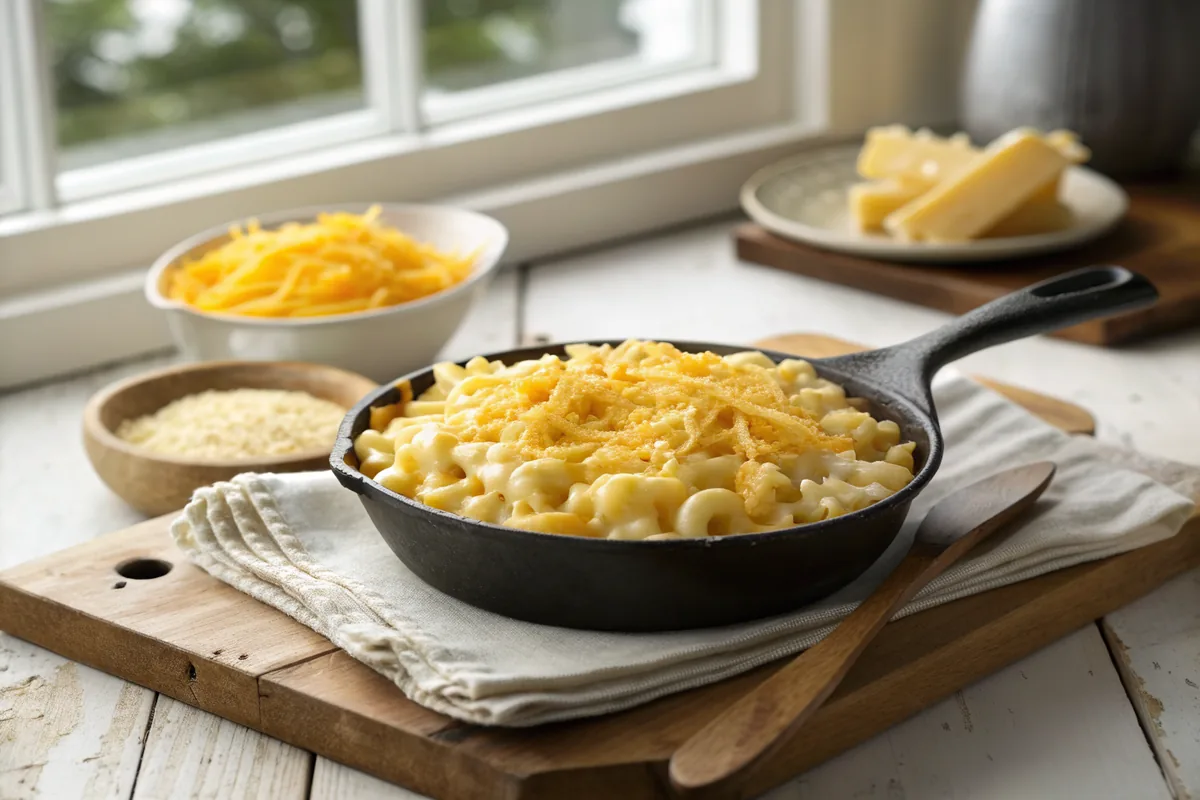
The window is 45 to 60 minutes, and the far edge of it is a wall, not a suggestion. Smoke flavor in dairy accumulates fast because fat absorbs the aromatic compounds directly; at 45 minutes you have a clearly smoked dish, at 60 a boldly smoked one, and at 90 an ashtray. Moisture runs on the same clock. Every extra 15 minutes past the hour costs you sauce you cannot get back.
Doneness cues, in order of reliability: the reserved cheese on top is fully melted and bronzing at the edges, the sauce is bubbling quietly at the rim, and the center jiggles like a baked custard when you shake the handle. If the top has melted but the center still sloshes, give it 10 more minutes. There is no internal temperature to chase; you are looking at texture, not safety.
Wood choice follows the same restraint. Post oak, the Lockhart default, is exactly right; pecan and the fruit woods are lovely and slightly sweeter. Mesquite is a mistake on dairy, full stop; the same aggressive edge that suits a hot-and-fast fajita turns cheese acrid inside half an hour.
The Reserved Cream Layer, or How to Smoke Dairy Without Drying It
Here is the trick that separates this recipe from most of the smoked macs on the internet, and it costs half a cup of cream you were already buying. Before the skillet goes into the pit, you drizzle the reserved cream slowly over the entire surface, letting it pool in the low spots and slide around the shredded cheese on top.
The physics are simple. A smoker is a slow dehydrator; that is what makes bark on a brisket. Bark is exactly what you do not want on a dairy dish, and the surface of the mac is where all the evaporation happens. The cream layer is a sacrificial moisture reserve sitting precisely at that surface. For the first half of the smoke, the pit's dry heat spends itself evaporating and reducing the cream instead of pulling water out of your sauce. By the end, the cream has thickened into the top inch of the mac, and that top inch, the smokiest part of the dish, is also the richest instead of the driest.
This is also why the skillet goes in uncovered and stays uncovered. Foil would protect the moisture, but foil also blocks the smoke, and then you have simply baked mac and cheese in an inconvenient oven. The cream layer lets you have it both ways: full smoke exposure on an unprotected surface that has been given its own dedicated liquid to lose.
If your pit runs hot, toward 275F, or your smoke will run long because the meat dictates the schedule, double the protection: pour the cream layer, and set a small foil pan of water on the grate beside the skillet to raise the humidity in the chamber. And if despite everything the mac comes out tighter than you like, the rescue is a quarter cup of warm milk folded through just before serving. It loosens right back; the evaporated milk sauce re-emulsifies instead of breaking.
The Butter-Panko Topping, Optional but Persuasive
Texas mac splits into two congregations: the creamy-top people, who believe the melted cheese lid is the whole point, and the crunchy-top people, who believe mac without contrast is pudding. I was raised creamy and married crunchy, so this recipe serves both. The base recipe is complete without the topping. The topping is 4 minutes of work for the people who need it.
The method is panko, melted butter, and salt, tossed until every crumb is coated, then scattered over the skillet for the last 20 minutes of the smoke. The pit's dry moving air toasts butter-coated panko to an even gold in that window, and 20 minutes is short enough that the crumbs pick up toast without picking up bitterness.
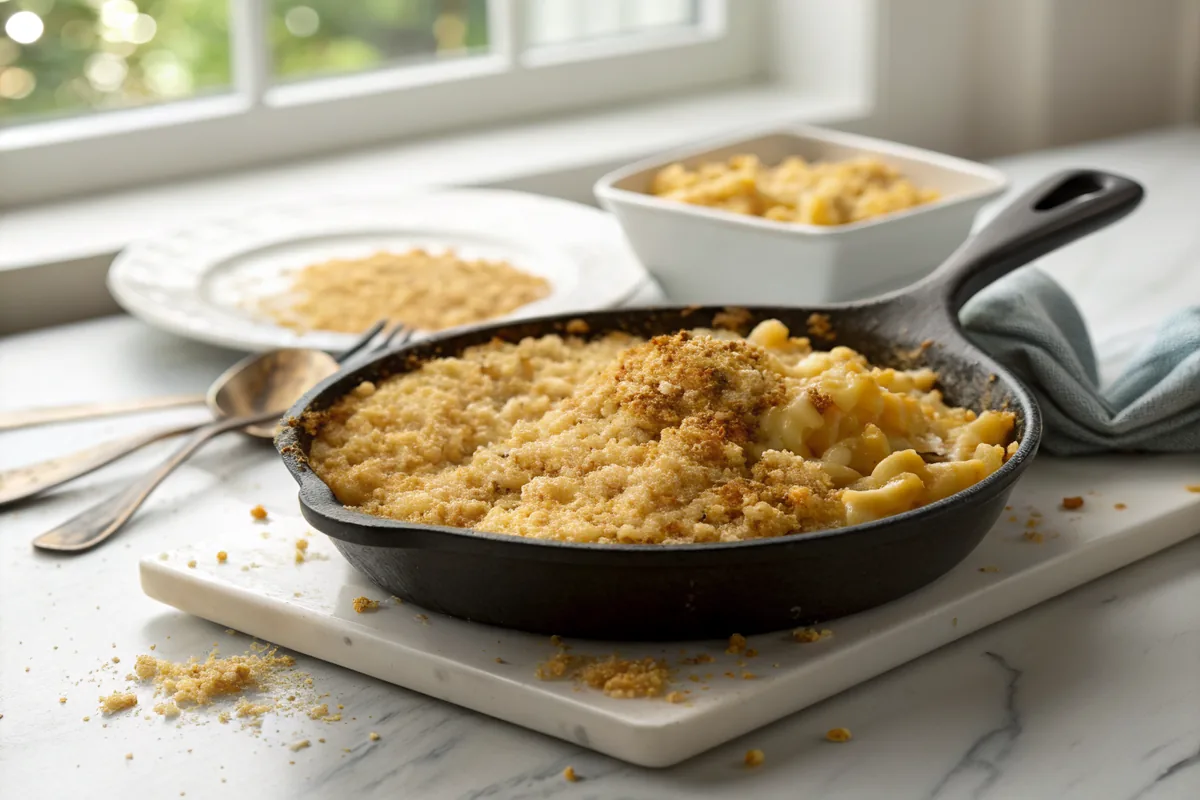
Timing is the only way to get this wrong. Panko added at the start of the smoke spends an hour absorbing steam from the mac below and arrives soggy and greasy, which converts crunchy-top people back to creamy-top people at a rate of one household per cookout. Last 20 minutes, no earlier.
Two upgrades if you are feeling ambitious. Toss the buttered panko with a tablespoon of finely grated parmesan for a deeper, saltier crust. Or skip crumbs entirely and go burnt-ends style: scatter a handful of chopped smoked brisket point over the top for the final 20 minutes, and let the meat crisp at its edges while its fat drips into the mac. That version stops being a side in most people's hands, which is either a warning or an endorsement.
This Page Is the Side. The Nashville Plate Lives Elsewhere.
A quick map, because this site has two mac and cheese destinations and they do different jobs. This page is the standalone smoked side: a skillet built for the barbecue table, cooked in the smoker, meant to sit next to meat that someone else is slicing. It is the version you bring to the cookout, the one that rides along under the brisket, the one measured in scoops.
The other destination is my Nashville hot chicken with mac and cheese, and that page is a complete assembled plate: cayenne-lacquered fried chicken sitting on a bed of creamy stovetop mac, built as a single composed dish where the mac is the cooling landing pad for the heat above it. Its mac is deliberately made on the stovetop and kept mild and loose, because it has a supporting role. If what you are actually planning is that plate, chicken over mac as the whole meal, go there; this smoked skillet is too assertive to sit quietly under hot chicken.
The differences are practical, not cosmetic. This skillet spends an hour in wood smoke and comes out assertive, bronzed, and thick enough to hold a scoop shape; the Nashville mac never sees the pit, stays pale and pourable, and is seasoned quietly on purpose so the chicken's cayenne oil can do the talking. Swap one for the other and the plate stops working: smoked mac under hot chicken is two loud dishes shouting over each other, and stovetop mac alone on a barbecue tray disappears next to smoked meat.
The short version: cooking for a barbecue spread, stay right here. Cooking chicken-over-mac as dinner itself, follow the link. The two recipes share a philosophy about grainy sauce and nothing else, and neither substitutes for the other without changing the meal you end up eating.
Building the Plate Around It
Smoked mac is rich, smoky, and soft, which means it wants neighbors that are none of those things. The plate logic is the same one that governs every good barbecue tray: something acidic, something crunchy, something fresh, so the richness has somewhere to reset between bites.
The canonical partner is brisket, and I will argue it is the single best pairing in Texas barbecue. A slice of slow-smoked brisket laid over a scoop of this mac, with the rendered fat working its way down into the sauce, is the bite people describe in the car on the way home. The two also share a pit schedule perfectly: the mac smokes during the brisket's rest, so both hit the table at their peak.
For the reset elements, a sharp creamy coleslaw does the acid work, cold and crunchy against the hot skillet, and a pile of fried okra brings the crisp element without repeating any flavor already on the plate. Pickles, pickled red onion, and sliced jalapenos off the condiment tray all pull the same weight for zero effort. The full roster of options, with the reasoning for what goes with which meat, lives in my Texas barbecue sides guide.
One honest note for the low-carb table: this dish cannot be rescued for keto, and I will not pretend cauliflower in cheese sauce is the same food. A pound of pasta is the point. If you are feeding keto eaters at the same cookout, park the mac at one end of the table and pull a couple of genuinely low-carb dishes from my keto barbecue sides instead, so nobody is scraping sauce off noodles and calling it dinner.
Portion math for planning: a 12-inch skillet yields about ten side servings next to meat, or six if the crowd skews teenage. At a big cookout I run two skillets and stagger them 30 minutes apart, because the first one is always gone before the ribs are unwrapped.
Make-Ahead, Reheating, and the Mistakes That Ruin It
Make-ahead is genuinely good news here. Build the entire skillet, sauce, pasta, cheese topping and all, up to a day ahead, press parchment onto the surface, and refrigerate. Pull it 45 minutes before pit time so the cast iron is not fridge-cold, pour the cream layer on at the last second, and add about 15 minutes to the smoke. The evaporated milk sauce is the reason this works; a plain cheddar sauce would go grainy overnight, this one does not.
Leftovers reheat better than any baked mac you have made, for the same reason. Covered skillet in a 300F oven with a splash of milk, or a saucepan over low heat with the same splash, and the sauce re-emulsifies to glossy. The microwave works in short bursts at half power, stirring between rounds. The smoke flavor actually deepens overnight, and cold smoked mac folded into scrambled eggs the next morning is a Lockhart secret I am giving away for free.
The mistakes, in the order they happen. Bagged pre-shredded cheese: anti-caking starch, gritty sauce, no exceptions. Pasta boiled to al dente: it goes in perfect and comes out mush; two minutes under, always. A sauce that looks right before smoking: if it looks servable going in, it will be stiff coming out; soupy in, creamy out.
Then the pit-side errors. A foil pan instead of cast iron: scorched corners and a stewed middle. Mesquite or heavy hickory: acrid dairy in under 30 minutes; post oak, pecan, or fruit wood only. And the big one, leaving it in past the hour because the top looks so good: smoke and dehydration both compound, and the second hour takes more moisture than the first. Set a timer at 45 minutes, judge with your eyes at the skillet, and be out by 60.
Last one, because I see it every summer: smoking it directly over the fire on an offset. The skillet belongs at the far end of the chamber, same as anything delicate. Cast iron over the firebox side turns the bottom inch into a cheese chicharron while the top is still pale. Far side, uncovered, cream layer on, and walk away until the timer says otherwise.
Smoked Mac and Cheese Recipe
Ingredients
- For the pasta and sauce:
- 1 lb (454 g) elbow macaroni or cavatappi
- 4 tablespoons (57 g) unsalted butter
- 1/4 cup (30 g) all-purpose flour
- 1 can (12 oz / 354 ml) evaporated milk
- 2 cups (480 ml) whole milk
- 1 cup (240 ml) heavy cream, half of it reserved for the surface
- 12 oz (340 g) sharp cheddar, grated by hand off the block
- 8 oz (227 g) Monterey Jack, grated by hand
- 6 oz (170 g) young gouda or fontina, grated by hand
- 1 tablespoon Dijon mustard
- 1 1/2 teaspoons kosher salt, plus more for the pasta water
- 1/2 teaspoon coarse black pepper
- 1/4 teaspoon cayenne
- Optional topping:
- 1 cup (60 g) panko breadcrumbs
- 3 tablespoons (43 g) unsalted butter, melted
- 1/4 teaspoon kosher salt
Instructions
- Run the smoker at 225 to 250F. Get the pit steady at 225 to 250F with a mild wood: post oak, pecan, or a fruit wood like apple or cherry. Dairy takes on smoke roughly three times faster than meat, so this is not the place for mesquite or heavy hickory. If meat is already on, the mac simply joins it at whatever temperature the meat is running in that range.
- Grate all three cheeses by hand. Grate the cheddar, Jack, and gouda off the block on the large holes of a box grater and toss the piles together in one bowl. Set aside 2 loose cups of the mix for the top of the skillet. Pre-shredded bagged cheese is coated in cellulose and potato starch that keep it from clumping in the bag and keep it from melting smoothly in a sauce; it is the single most common cause of grainy smoked mac.
- Boil the pasta 2 minutes under the package time. Cook the macaroni in well-salted water and pull it two full minutes before the low end of the package's al dente time. It should still have a firm, slightly chalky center. Drain it, do not rinse it, and toss it with a small knob of butter so it does not weld into a block while you build the sauce. It finishes cooking in the smoker.
- Build the roux and milk base. In a large pot over medium heat, melt the 4 tablespoons of butter, whisk in the flour, and cook the paste for 90 seconds until it smells like pie crust but has not colored. Whisk in the evaporated milk first, then the whole milk and half a cup of the cream, working out lumps as you go. Simmer 3 to 4 minutes, whisking, until it coats a spoon like thin gravy.
- Melt the cheese off the heat, in thirds. Pull the pot off the burner and let it stop bubbling. Whisk in the Dijon, salt, pepper, and cayenne, then add the grated cheese in three additions, whisking each handful until fully smooth before the next goes in. Off-heat melting keeps the cheese proteins below the temperature where they seize and squeeze out their fat. The sauce should look too loose; that is correct.
- Fold together and load the skillet. Fold the drained pasta into the sauce until every elbow is coated and the whole thing looks soupier than any mac you would serve directly. Pour it into a 12-inch cast iron skillet or a similar heavy pan, scatter the reserved 2 cups of cheese evenly across the top, and do not press or pack anything down.
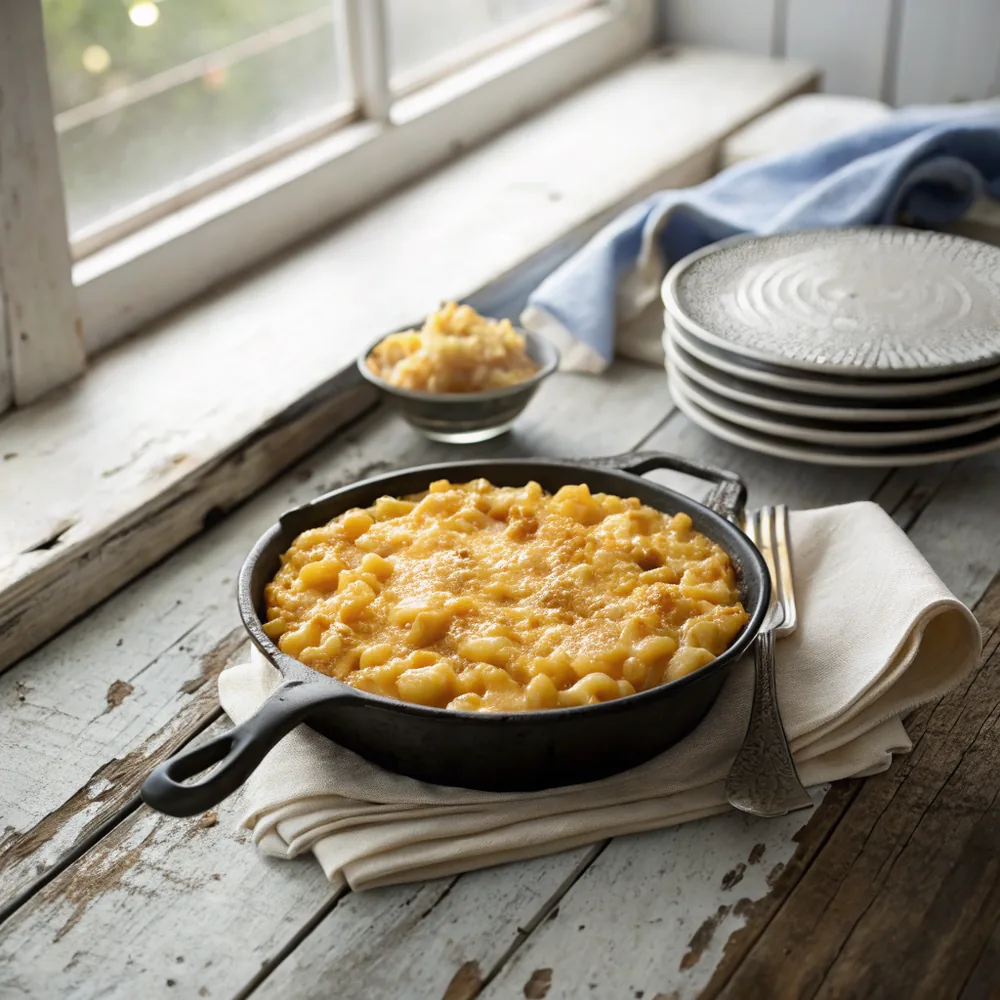
- Pour on the cream layer and smoke 45 to 60 minutes. Drizzle the reserved half cup of heavy cream slowly over the entire surface so it pools in the low spots. Set the skillet on the grate, uncovered, away from the hottest side of the pit, and smoke 45 to 60 minutes at 225 to 250F. It is done when the top is melted, lightly bronzed at the edges, and the center jiggles like a baked custard when you nudge the handle.
- Add the panko in the last stretch, if using. For a crunchy lid, stir the panko into the melted butter and salt, and scatter it over the skillet for the final 20 minutes of the smoke. It toasts to golden in the pit's dry heat. Skip this entirely if you are a creamy-top household; the mac needs nothing.
- Rest 10 minutes before serving. Bring the skillet in and let it sit 10 minutes on a trivet. The sauce thickens noticeably as it drops from pit temperature, which is exactly why it went in loose. Serve straight from the skillet with a big spoon, scooping deep so every portion gets smoky top and creamy middle.
Frequently Asked Questions
What temperature do you smoke mac and cheese at?
225 to 250F, the same range a Texas pit runs for brisket and ribs, which is exactly the point: the skillet claims spare grate space on a smoker that is already lit. At that temperature the mac needs 45 to 60 minutes. Hotter pits work with adjustments, at 275F check at 35 minutes and consider a water pan beside the skillet, but past 300F the surface dries and the sauce tightens faster than smoke can accumulate, and you are better off waiting for the pit to settle.
How long do you smoke mac and cheese without drying it out?
45 to 60 minutes, and treat 60 as a hard stop. Dairy fat absorbs smoke compounds roughly three times faster than meat, so flavor arrives quickly, and the pit is dehydrating the surface the entire time. Three protections keep it creamy inside that window: a sauce built deliberately loose, pasta undercooked by two minutes so it drinks the extra liquid, and a half cup of cream poured over the surface before the skillet goes in, which absorbs the drying heat as a sacrificial layer.
What cheeses are best for smoked mac and cheese?
A three-part blend: 12 ounces sharp cheddar for flavor, 8 ounces Monterey Jack for smooth, mild melt, and 6 ounces of a dedicated melter like young gouda or fontina for glossy stretch. No single cheese does all three jobs; sharp cheddar alone goes grainy, and mild melters alone taste like warm dairy. Whatever the blend, grate it by hand off the block. Bagged pre-shredded cheese carries anti-caking starch that turns any sauce gritty.
Why is my smoked mac and cheese grainy?
One of three causes, usually in this order. Pre-shredded bagged cheese, whose cellulose and potato starch coating never melts smooth. Cheese added over direct heat, which pushes the proteins past about 170F where they seize and squeeze out fat; always melt off the burner, in batches. Or a fragile sauce base, fixed by building on evaporated milk plus a light roux, two independent emulsion protections that hold the sauce glossy through a full hour on the pit and through next-day reheating.
What wood is best for smoked mac and cheese?
Mild wood only: post oak is the Texas default and exactly right, pecan is slightly sweeter, and fruit woods like apple or cherry are the gentlest. Dairy fat soaks up smoke compounds far faster than meat, so the wood that seasons a brisket over twelve hours can overwhelm a skillet of cheese in one. Mesquite is the one hard no; its sharp, resinous edge turns dairy acrid in under half an hour. Thin blue smoke, not billowing white, matters more than the species.
Can you make smoked mac and cheese ahead of time?
Yes, and it holds remarkably well. Assemble the full skillet up to 24 hours ahead, press parchment onto the surface, and refrigerate. Pull it 45 minutes before smoking so the cast iron loses its chill, pour the reserved cream layer over the top at the last moment, and add roughly 15 minutes to the smoke time. The evaporated milk sauce is what makes this safe; it re-emulsifies smoothly where an all-cheddar sauce would come out of the refrigerator already broken.
Can I use pre-shredded cheese for smoked mac and cheese?
No, and this is the least negotiable rule on the page. Bagged shreds are coated with cellulose powder and potato starch so they pour freely, and those coatings absorb water and refuse to melt smoothly, leaving a fine grit through the whole sauce. Grating 26 ounces off the block takes about five minutes on a box grater and the blocks cost less per pound. Grate the cheese cold from the refrigerator and do it the day you cook; freshly grated melts best.
Do you cover mac and cheese in the smoker?
No. The skillet goes in uncovered and stays uncovered, because foil blocks the smoke and defeats the entire exercise; covered mac in a smoker is just baked mac in an inconvenient oven. The drying risk that makes people reach for foil is handled instead by the reserved cream layer poured over the surface, which gives the pit's dry heat its own liquid to burn through. If your pit runs hot or long, add a small pan of water on the grate beside the skillet.