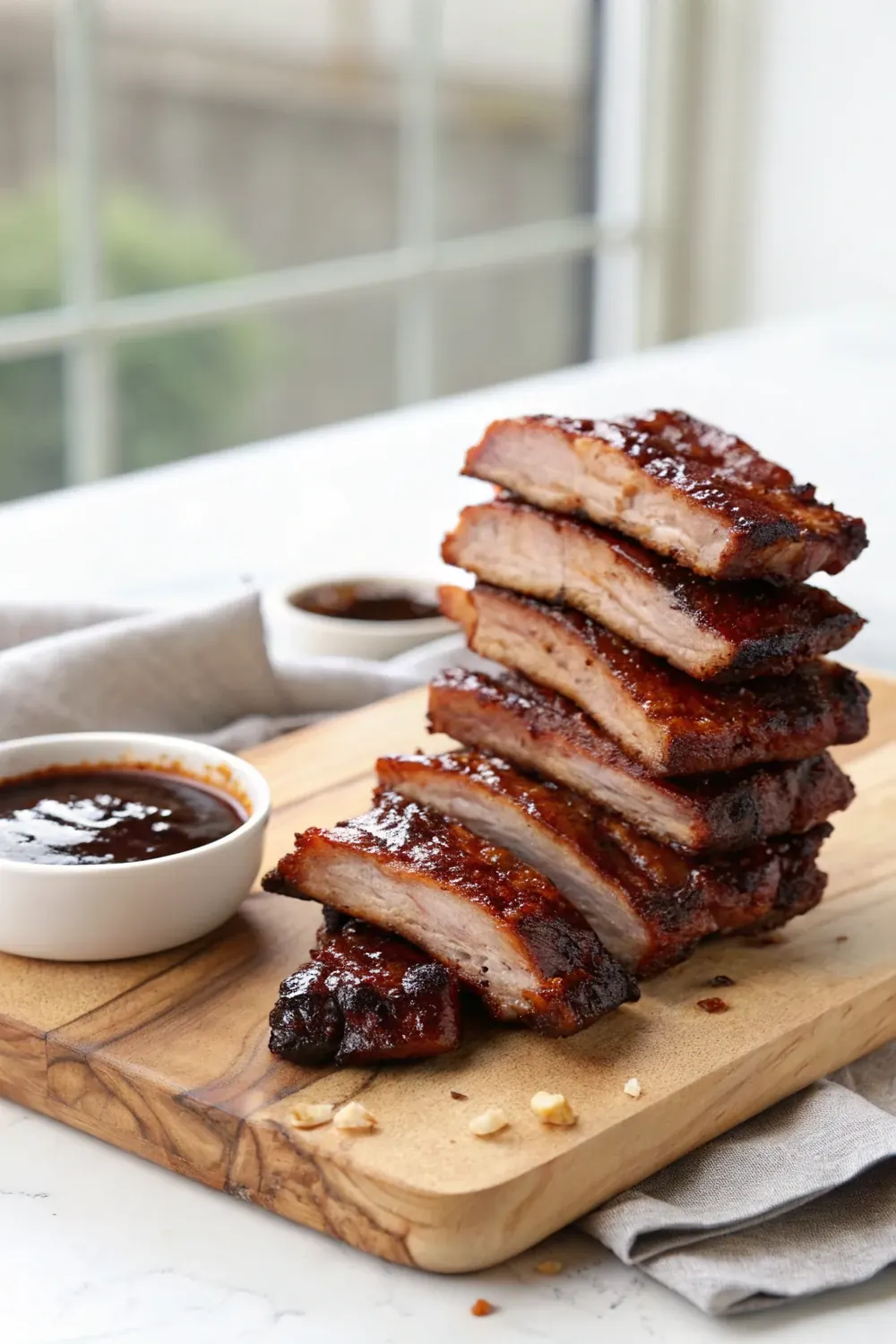
Texas BBQ
3-2-1 Ribs
The 3-2-1 ribs method: 3 hours of bare smoke at 225F, 2 hours wrapped in foil, 1 hour sauced to set. Built for spare ribs; run 2-2-1 for baby backs.
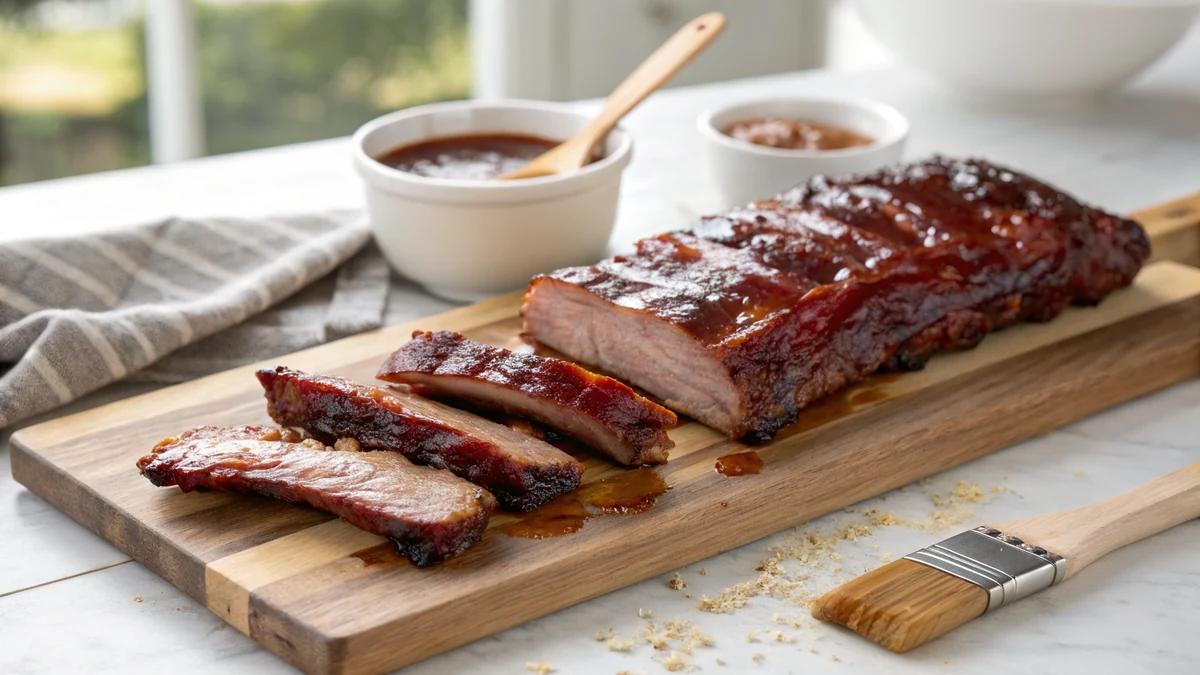
Quick answer: The 3-2-1 method smokes spare ribs in three timed stages at a steady 225F (107C). Stage one: 3 hours of bare smoke, bone side down, until the rub sets into a red-brown bark. Stage two: 2 hours wrapped tight in heavy foil with butter, brown sugar, and a splash of apple juice, meat side down, while the ribs braise tender. Stage three: unwrap, brush with sauce, and smoke 1 final hour to set the glaze and firm the bark back up. Total: 6 hours, and the ribs land at 200 to 205F, fully fall-off-the-bone. Run the numbers as written for spare ribs or St. Louis cut only; baby backs are smaller and leaner, so cut the schedule to 2-2-1 or they overshoot. It is the most forgiving rib method ever written, and that forgiveness is exactly what it is for.
Every pit habit I have started somewhere, and mine started with 3-2-1 ribs. My first paycheck smoker was a leaky kettle with a thermometer that lied by 40 degrees, and the 3-2-1 method was the formula that got edible, then good, then genuinely proud-of-them ribs off that grate while I was still learning what clean smoke even smelled like. I have opinions about the method now, and I will share every one of them, but I teach it to every beginner who asks, because it works on almost any smoker and it forgives almost every mistake you are going to make in your first season of cooking ribs.
Here is the honest framing, because you deserve it up front. The 3-2-1 method is training wheels, and I mean that with respect. Training wheels are how you learn to ride. The formula trades a little bark quality for a lot of certainty: the foil stage guarantees tenderness on a clock, no feel required, no judgment calls at hour four. The trade is real, and further down I will show you exactly what you give up, what the competition-bite crowd does instead, and when you are ready to take the wheels off. But nobody should be ashamed of a rack of 3-2-1 ribs. My family ate them happily for two years, and the version below, run carefully, beats most of what gets served at backyard cookouts in this state.
This guide is the full walkthrough: what each number does, the chemistry inside the foil, the 2-2-1 recalibration for baby backs, how the formula shifts at 250F and 275F, which smokers run it as written and which one absolutely does not, and the graduation path for the day the timer starts feeling like a leash. Pour the coffee, light the fire, and let us walk through six of the most reliable hours in barbecue.
What the Numbers Mean and Who This Method Is For
The 3-2-1 method is a fixed schedule for smoking spare ribs at 225F: 3 hours exposed to smoke, 2 hours sealed in foil, 1 hour unwrapped to set sauce. Six hours, three stages, one temperature. Each stage has one job. The first builds flavor and color, the second builds tenderness on a guarantee, and the third repairs the surface and lands the glaze. That is the entire method, and its genius is that every hard judgment call in rib cookery, is the bark set, has the collagen rendered, is it tender yet, gets replaced by a number you can read off a phone timer.
Who is it for? Anyone cooking their first dozen racks. Anyone running an unfamiliar or untrustworthy pit. Anyone feeding a crowd that genuinely prefers ribs that surrender off the bone, which, polite barbecue society rarely admits, is most crowds. The method was popularized in competition circles decades ago and then colonized every backyard forum on the internet because it converts a feel-based craft into a recipe, and recipes are how everyone starts.
Who is it not for? Cooks chasing the competition standard, where a bite should leave a clean half-moon and the rest of the meat stays put on the bone, and cooks who prize a crisp, craggy bark above all. The 2-hour foil braise is simply too much steam for both goals. That is not a flaw; it is the design. The method promises fall-off-the-bone and it delivers exactly that, every single time, which is more than most methods can say.
The Cut Decides the Clock: Spares, Not Baby Backs
The 3-2-1 numbers were written for spare ribs, the big rack from the belly side of the hog, 3 to 3.5 pounds, with serious fat and connective tissue that genuinely need six hours of work. A St. Louis cut, which is a spare rack squared off, runs the schedule just as well. Run those numbers on a rack of baby backs, though, and you will overshoot badly: baby backs are a pound lighter, leaner, and from higher on the loin, and the full schedule turns them into pulled pork you happen to be serving on bones.
For baby backs the standard recalibration is 2-2-1, and honestly I trim even that to 2-1.5-0.5 on smaller racks. The stages keep their jobs; only the durations shrink. If you are staring at the package trying to tell the cuts apart: baby backs are shorter, curved, and the meat sits plump on top of the bone; spares are longer, flatter, and streakier with fat. My beef vs pork ribs guide maps the whole rib landscape if the butcher case has you second-guessing.
One more cut note: this is a pork method. Beef ribs are a different animal, literally and structurally, with a much thicker muscle that wants a different cook entirely. Do not run plate ribs through a 3-2-1; my smoked beef ribs guide covers how those big bones actually want to be treated.
Hour Zero: Trim, Membrane, Rub
The cook is won or lost before the fire sees the meat. Flip the rack bone side up and find the glossy membrane, the silverskin, covering the bones. It has to come off: it blocks smoke, blocks rub, and cooks into a sheet of parchment nobody wants to chew. Slide a spoon handle under it at the second bone, work a corner loose, grip with a paper towel, and peel. Most days it comes off in one satisfying sheet; on stubborn racks it comes off in two or three pieces, and that is fine.
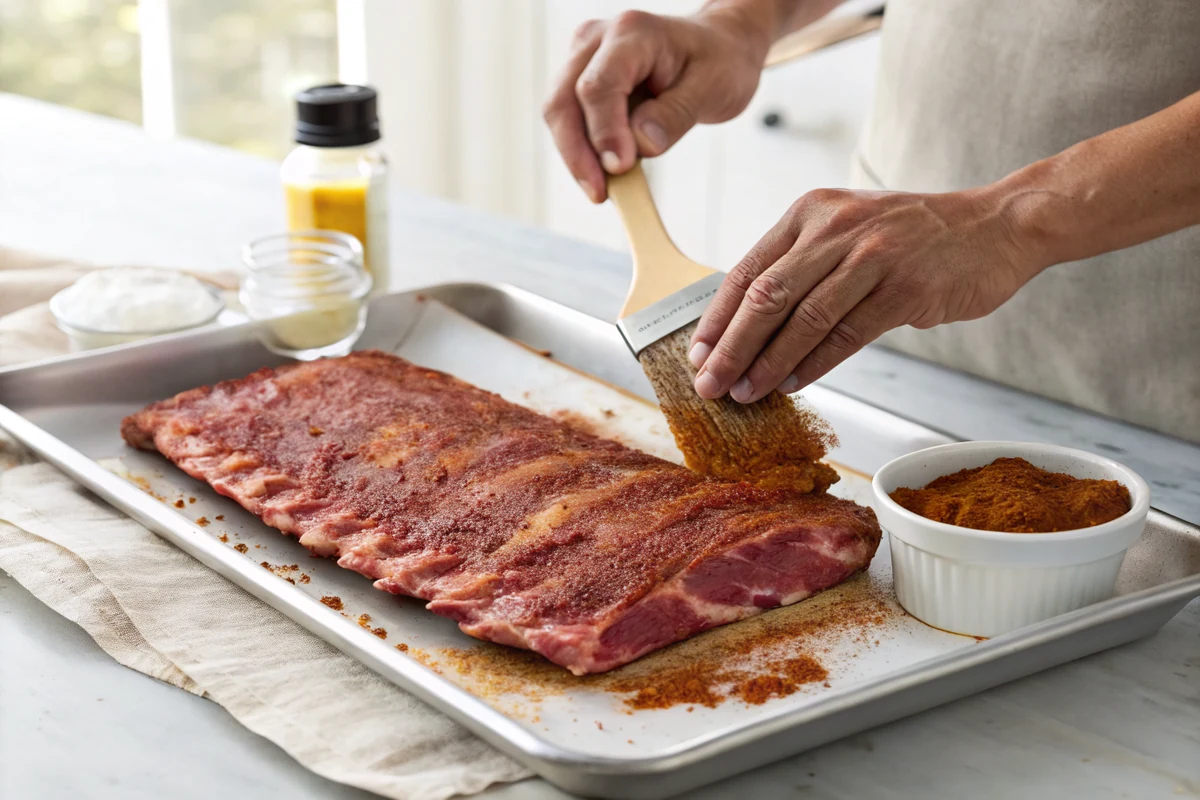
The rub for a 3-2-1 can carry more sugar than a naked-cook rub, because the meat spends a third of the cook protected inside foil where sugar cannot scorch. Mine runs brown sugar, kosher salt, coarse black pepper, smoked paprika, garlic, and onion, roughly a Kansas-City-leans-Texas blend. Mustard goes on first as a binder; it vanishes completely in the cook. Season the bone side, wait a few minutes, flip, season the meat side heavier, and give the rub 15 minutes to turn wet and tacky before the rack meets the grate. If you want to go deeper on blends, my tested Texas BBQ rubs roundup covers what actually earns shelf space.
The First 3: Bare Smoke at 225F
Stage one is where all the barbecue flavor happens, full stop. For three hours the rack sits bone side down in clean, thin smoke at 225F, and three things develop at once: smoke compounds bond to the wet surface, the rub and surface proteins brown into bark, and the meat picks up the smoke ring that makes the first slice photogenic. Nothing that happens in foil later can add flavor; stages two and three only change texture. So protect this stage. Burn seasoned wood, keep the smoke pale and see-through, and if the smoke ever billows white and acrid, fix the fire before you worry about anything else. If the surface starts looking parched late in the stage, a light pass of my mop sauce wets the bark without rinsing off the rub.
Discipline here is mostly about doing nothing. Do not flip the rack, do not rotate it every 30 minutes, do not open the lid to admire it. Every peek costs 10 to 15 minutes of recovery and dumps the humidity your bark is developing in. The two exceptions: a light spritz of water or apple juice at hour two if the edges look genuinely dry, and a rotation at the same mark if your pit has a known hot end.
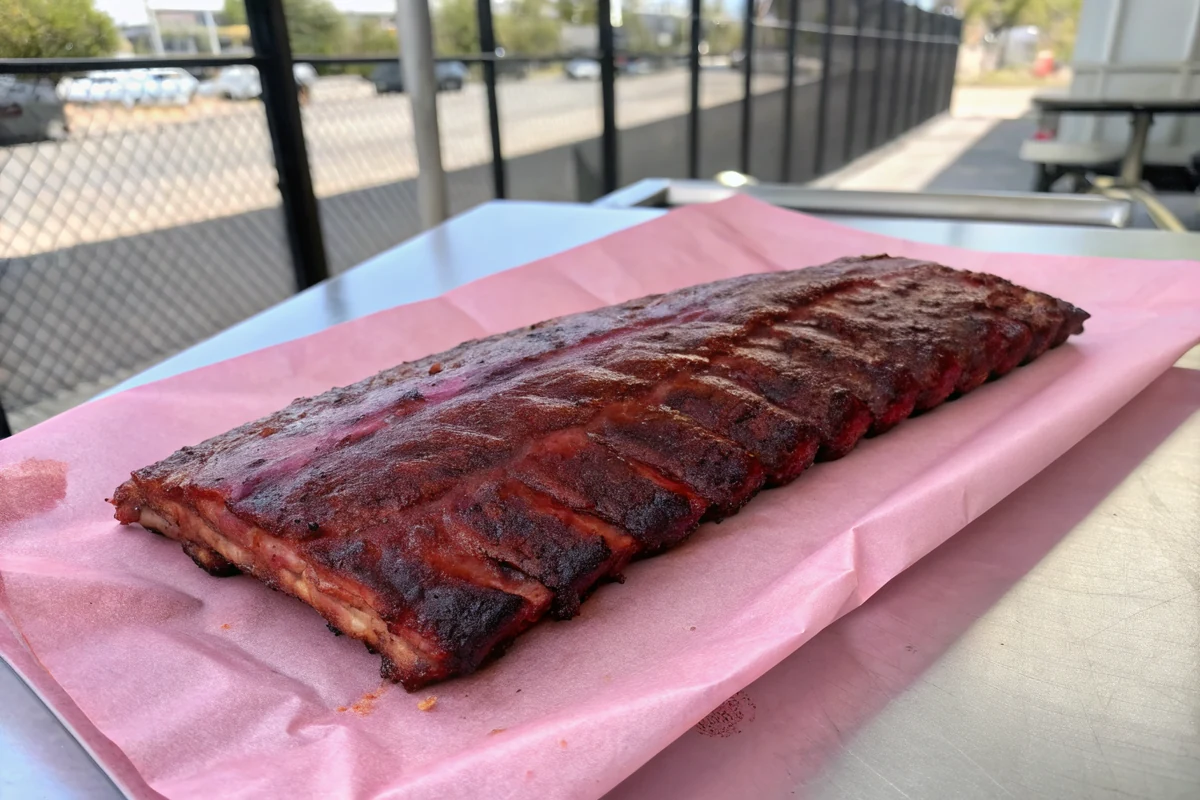
What you want at the end of hour three is a bark that has set: deep red-brown, dry to a light touch, and the rub no longer smears when you drag a knuckle across it. If the color is pale and the surface still wet at three hours, your pit is running cool or your smoke is thin; give it 30 more minutes bare before wrapping, because foil will lock the surface exactly as it finds it.
The Middle 2: What Foil Actually Does
Stage two is a braise, and it helps to call it that honestly. Sealed in heavy foil with butter, brown sugar, and a splash of juice, the rack stops smoking and starts steaming in its own rendering fat and the liquid you added. Trapped steam pushes the meat through the stall without drama, and the wet 225F environment melts collagen into gelatin at maximum speed. Two hours in that packet takes spare ribs from set-but-tough to genuinely tender. This is the guarantee stage, the reason the method never fails on tenderness.
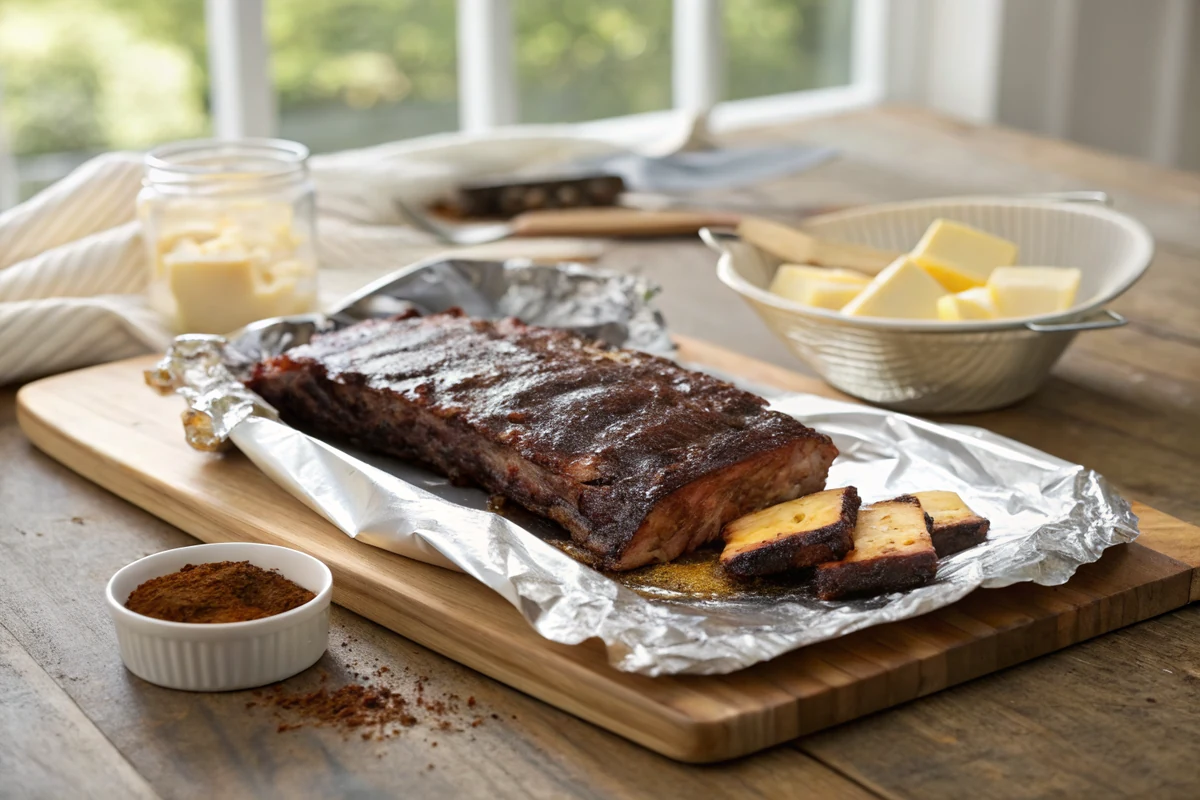
Technique matters more here than anywhere else in the cook. Use two overlapping sheets of heavy-duty foil per rack; the bones will puncture a single cheap sheet the moment you lift it. Build the sweet layer on the foil first, pats of butter, a scatter of brown sugar, the apple juice, then lay the rack meat side down so the surface braises directly in it. Wrap tight. A loose packet leaks steam, stalls the braise, and drools sugar onto your pit. And set a real timer: the difference between tender and mush inside foil is 30 unattended minutes. This foil braise is exactly the maneuver Texans call the crutch, and the debate around it is old and loud; I settle my side of it in my no-wrap ribs method, but inside the 3-2-1, the foil is not optional. It is the point.
The Last 1: Unwrap, Sauce, Set
Open the packets away from your face; the steam means it. What comes out will look worse than what went in, and this is the moment every first-timer panics: the bark is soft, wet, and pale-edged, the color of pot roast. Expected. Stage three exists to fix it. Slide the racks back onto the grate bone side down, paint the meat side with a thin coat of sauce, and give the pit its final hour at 225F.
Two things happen in that hour. The surface dries and the softened bark firms back into something with texture, never quite the crust of a naked cook, but respectable. And the sauce cooks from a wet paint into a tacky, set glaze that will not slide off on the first bite. Thin coats win: one light pass at the start of the hour and a second at the 30-minute mark beats one thick flood, which never quite sets. My homemade Texas BBQ sauce is built for exactly this job, more vinegar and less sugar than the shelf stuff, so it tightens fast without candying.
If your crowd is a dry-rib crowd, and plenty of Texans are, skip the sauce entirely and run the final hour naked with a fresh dusting of rub. The stage still matters: it is the bark-repair hour whether or not sauce is involved.
Fall-Off-the-Bone: The Promise and the Fine Print
Run as written, 3-2-1 produces ribs at 200 to 205F internal with the collagen fully surrendered: pick up a bone and it slides free clean and white. For most tables that is not a defect, it is the definition of great ribs, and I have watched platters of them vanish at my own table while prouder racks sat half-finished. Cook for the people eating, always.
But you should know what the standard is elsewhere, because someday someone at your fence line will mention it. At a judged barbecue table, fall-off-the-bone scores as overcooked. The target there is competition bite: teeth leave a clean half-moon, the rest of the meat holds to the bone with just enough grip to feel alive. The 2-hour foil braise steams spare ribs past that point by design. You cannot have both textures from one schedule, and the 3-2-1 chose its side honestly.
If you want to aim the method at the firmer target without leaving its comfort, shorten the middle number first: 3-1.5-1 lands noticeably closer to competition texture while keeping the guarantee-ish structure. That small edit is also the first step out the door toward feel-based cooking, which is where the last section of this guide points.
Recalibrations: 2-2-1, Hotter Pits, and the 275F Track
The formula bends to your situation as long as you respect what each number is for. Baby backs, as covered, run 2-2-1 or slightly under. Extra-heavy spares north of 4 pounds can take 3.5-2-1. Meaty racks headed to a crowd that wants sliceable, not collapsing, ribs run 3-1.5-1. The first number builds flavor, the middle builds tenderness, the last sets the surface: adjust whichever job needs more or less doing.
Temperature is the other axis. At 250F everything compresses about 20 percent, call it 2.5-1.5-0.75, and the wrap window gets less forgiving, so probe at the early end. At 275F the schedule becomes the 2-1-1, the hot-and-fast cousin that gets spares done in four hours; my ribs at 275F guide runs that full timing chart, including when to shorten it for baby backs. Past 275F, stage-based formulas stop being useful; you are just cooking ribs fast and should be probing constantly.
Weather counts as a recalibration too. A cold, windy day steals pit heat and can quietly add 30 to 45 minutes to stage one before the bark sets. The foil stages are nearly weatherproof, which is one more reason beginners love this method in January.
Which Smokers Run It as Written, and the One That Does Not
Offsets, kettles on the snake method, pellet smokers, drums, and kamados all run the 3-2-1 as written. The formula was literally built for leaky, drafty pits, the 2-hour braise exists to undo six hours of dry moving air, so the leakier your smoker, the better the method fits. Pellet cooks get the easiest ride of all: set 225F, and the machine holds the schedule while you hold a lawn chair. On a kamado the ceramic runs humid and efficient, so lean toward the short end of the wrap; my Big Green Egg beef ribs guide digs into how that ceramic environment changes barbecue math in general.
The exception is the electric cabinet smoker, and it is a hard exception. A sealed, gasketed electric box with a water pan is already a humid braise chamber before any foil appears; run the classic 3-2-1 in one and the wrap stage double-braises the ribs into mush. The fix is a rebuilt schedule, 3-1.5-0.5 for St. Louis, 2-1.5-0.5 for baby backs, and my ribs in an electric smoker guide walks that whole adaptation, chip management included. If your smoker plugs into a wall, read that guide before this schedule.
Gas grills can fake the method with a two-zone setup and a smoker tube, though stage one will taste lighter. Ovens can run stages two and three perfectly, which is a decent rescue play when weather kills a cook at hour three: finish the wrap and glaze indoors and nobody at the table will file a complaint.
Serving Day: Rest, Slice, and the Table
Ribs off the pit are structurally fragile after a foil braise, so give them a 15-minute rest, loosely tented, before slicing. The juices settle, the glaze finishes setting, and the rack firms up just enough to cut clean. Flip it bone side up so you can see your lanes, and take one long, confident stroke between each bone; sawing shreds tender meat.
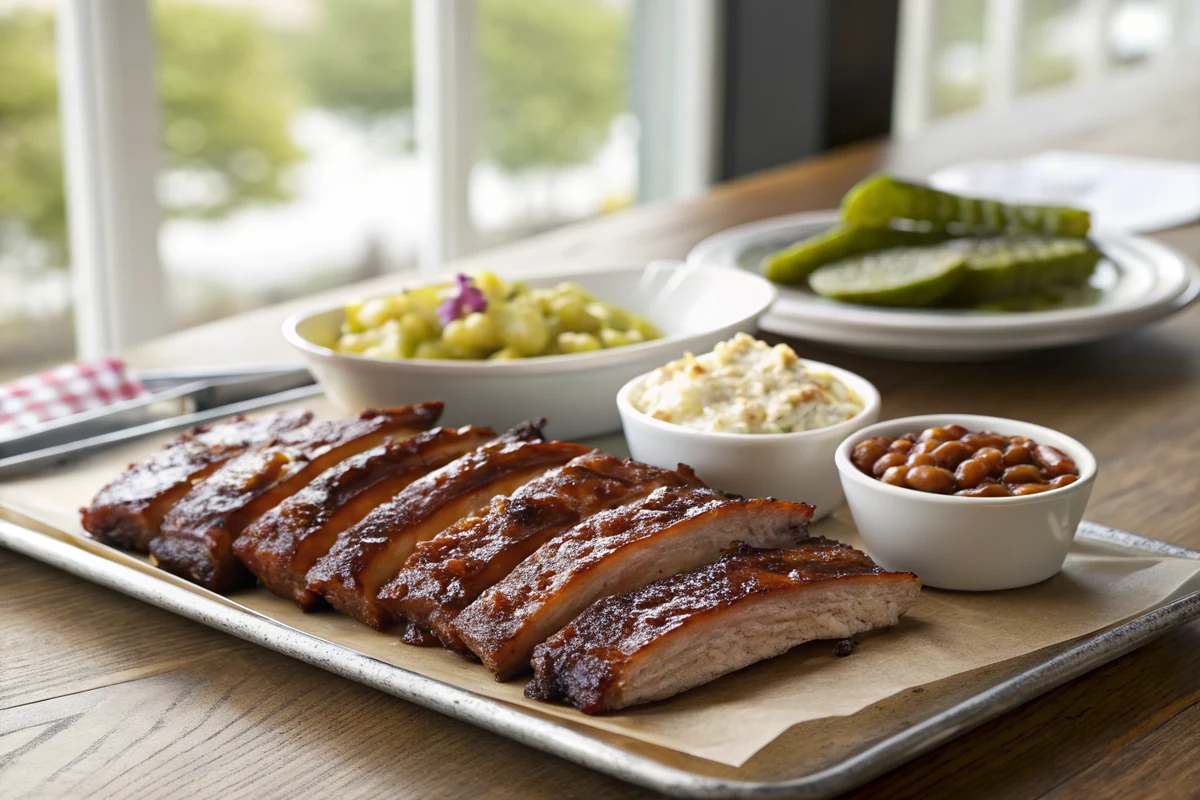
Round out the platter the Texas way: a pot of pinto beans, a scoop of BBQ potato salad, pickles, white bread or crackers, and sauce on the side. Leftovers reheat shockingly well because the meat carries so much rendered gelatin; my reheating smoked ribs guide covers the oven method that brings day-two racks back without drying them out.
Taking the Training Wheels Off
Somewhere around your tenth rack, the timer starts to feel less like a guarantee and more like a leash, and that instinct is worth trusting. The path off the formula runs in small steps, not one leap. First, swap the foil for pink butcher paper in stage two: paper breathes, so the braise gentles and the bark survives about 90 percent intact. Second, stop wrapping on the clock and start wrapping on the bark, whenever it sets, hour three or hour four. Third, start probing for doneness instead of trusting stage math: done is a probe sliding between the bones like warm butter, somewhere in the 200 to 203F range.
The finishing school is cooking a rack with no wrap at all, riding the stall in open smoke and managing bark with a spritz schedule and a water pan. That cook teaches more about your pit than a summer of foil ever will, and it produces the best bark of your life; the full playbook is in my no-wrap smoked ribs method. For the cut-specific deep dive at the same skill level, my smoked St. Louis style ribs cooks to feel, not formula, and explains every judgment call as it comes.
And then, honestly? Keep the 3-2-1 in your pocket forever. I still run it on chaotic cook days, unfamiliar pits, and for guests who light up at fall-off-the-bone. A method you can execute perfectly while distracted is not a beginner method. It is a tool, and good pit cooks keep every tool sharp.
3-2-1 Ribs Recipe
Ingredients
- 2 racks pork spare ribs or St. Louis cut, 3 to 3.5 lb each
- 3 tablespoons yellow mustard, as a rub binder
- 1/4 cup dark brown sugar
- 2 tablespoons kosher salt
- 2 tablespoons coarse black pepper
- 1 tablespoon smoked paprika
- 2 teaspoons garlic powder
- 1 teaspoon onion powder
- 6 tablespoons unsalted butter, sliced into pats, for the wrap
- 1/4 cup dark brown sugar, extra, for the wrap
- 1/2 cup apple juice, for the wrap
- 3/4 cup barbecue sauce, for the final glaze
Instructions
- Set up the smoker at 225F. Light the smoker and stabilize it at 225F (107C) with post oak, hickory, or a pecan blend. Set a water pan near the fire if your pit runs dry. Give the pit a full 30 minutes at temperature before the meat goes on; the schedule assumes a stable 225F from minute one.
- Trim and peel the membrane. Flip the racks bone side up and work a spoon handle under the papery membrane at one corner. Grip it with a paper towel and peel it away in one sheet. Square up any loose flaps of meat or thick fat pockets so the racks cook evenly.
- Rub the racks. Smear a thin layer of mustard over both sides. Mix the brown sugar, salt, pepper, paprika, garlic powder, and onion powder, and season both sides generously, meat side heavier. Let the racks sit while the rub turns wet and tacky, about 15 minutes.
- Stage one: 3 hours of bare smoke. Set the racks bone side down on the grate and close the lid. Hold 225F and feed clean, thin smoke for 3 hours. Do not flip, do not peek hourly, do not sauce. If the surface looks dry at the 2-hour mark, spritz lightly with water or apple juice.
- Stage two: wrap 2 hours. Lay out two long sheets of heavy-duty foil per rack. On each, scatter half the butter pats and extra brown sugar, and pour half the apple juice. Set the rack meat side down onto the sweet layer, wrap tight with both sheets, and return to the pit, still at 225F, for 2 hours. Baby backs: 1.5 hours maximum.
- Stage three: unwrap, sauce, 1 hour. Open the foil carefully; the escaping steam is hotter than it looks. Slide the racks back onto the grate bone side down, brush the meat side with barbecue sauce, and smoke 1 final hour until the glaze goes tacky and the bark firms back up.
- Check, rest, slice. The racks should read 200 to 205F between the bones and bend deeply when lifted with tongs. Rest 15 minutes on a cutting board, loosely tented. Slice between the bones with one long stroke each and serve with extra sauce on the side.
Frequently Asked Questions
What is the 3-2-1 method for smoking ribs?
It is a three-stage schedule for spare ribs at 225F: 3 hours of bare smoke to build bark and flavor, 2 hours wrapped tight in foil with butter, brown sugar, and juice to braise the meat tender, and 1 final hour unwrapped with sauce to set the glaze and firm the bark. Total cook time is 6 hours, and the ribs finish fall-off-the-bone tender at 200 to 205F internal. It is the most beginner-friendly rib method because every stage runs on a timer instead of judgment calls.
Does 3-2-1 work for baby back ribs?
Not as written. Baby backs are about a pound lighter and noticeably leaner than spares, and the full schedule overcooks them into mush. Run 2-2-1 instead, 2 hours of smoke, 2 hours wrapped, 1 hour to set, and on smaller racks trim the wrap further to 90 minutes. Everything else stays identical: 225F, bone side down, meat side down in the foil, sauce in the final stage.
What temperature do you smoke 3-2-1 ribs at?
A steady 225F (107C) for all six hours; the schedule's timings assume it. At 250F, compress every stage by about 20 percent (roughly 2.5-1.5-0.75). At 275F the formula becomes the 2-1-1, the hot-and-fast version that finishes spares in about four hours. Whatever the temperature, the stages keep the same jobs: bare smoke for flavor, wrap for tenderness, unwrapped finish for the glaze.
What goes in the foil wrap for 3-2-1 ribs?
The classic packet is butter, brown sugar, and a splash of apple juice, about 3 tablespoons of butter, 2 tablespoons of sugar, and a quarter cup of juice per rack. Lay the sweet ingredients on the foil first and set the rack meat side down onto them so the surface braises in the mixture. Honey and a dash of hot sauce are common additions. Use two sheets of heavy-duty foil and wrap tight; a punctured or loose packet leaks steam and stalls the braise.
Why are my 3-2-1 ribs mushy?
The wrap stage ran too long, too hot, or in too humid a smoker. Two hours in foil is calibrated for full spare ribs in a drafty pit at a true 225F. Baby backs, hotter-running smokers, and sealed cabinets all overshoot on that schedule. Shorten the middle number first, 90 minutes wrapped fixes most mush complaints, and verify your grate temperature with a trusted probe. In an electric smoker, run a rebuilt 3-1.5-0.5 schedule, because the sealed cabinet braises dramatically faster than an open pit.
Are 3-2-1 ribs overcooked?
By competition standards, yes, on purpose. Judges want a bite that leaves a clean half-moon while the rest of the meat stays on the bone, and the 2-hour foil braise carries ribs past that point into full fall-off-the-bone. By backyard standards, that texture is exactly what most people love about ribs. If you want a firmer, competition-style bite, shorten the wrap to 90 minutes or switch to butcher paper, which braises more gently and preserves more bark.
Do you flip ribs during the 3-2-1 method?
No flipping at any stage. Stage one runs bone side down the whole time so the bones shield the meat from grate heat while the surface builds bark. Stage two goes meat side down in the foil so the surface braises directly in the butter and juice. Stage three returns to bone side down for the glaze. The only mid-stage touch I endorse is a light spritz and an end-for-end rotation at hour two if your pit has a hot side.
Can you do 3-2-1 ribs on a pellet grill or gas grill?
Pellet grills are the easiest 3-2-1 machines there are: set 225F and the controller holds every stage while you handle the wrapping. Gas grills can approximate it with a two-zone setup, burners lit on one side, ribs on the other, and a pellet tube for smoke, though stage one flavor will be lighter than a real fire gives. The one machine that cannot run the classic numbers is a sealed electric cabinet smoker, which needs the shortened 3-1.5-0.5 adaptation.
Should I sauce 3-2-1 ribs or serve them dry?
The method works both ways. The classic finish brushes thin coats of sauce during the final hour so it sets into a tacky glaze, one pass at the start, one at the 30-minute mark. For a dry-rib table, skip the sauce, dust the unwrapped racks with a fresh layer of rub, and run the same final hour; the stage still matters because it re-firms the bark the foil softened. Either way, serve extra sauce on the side and let eaters vote.