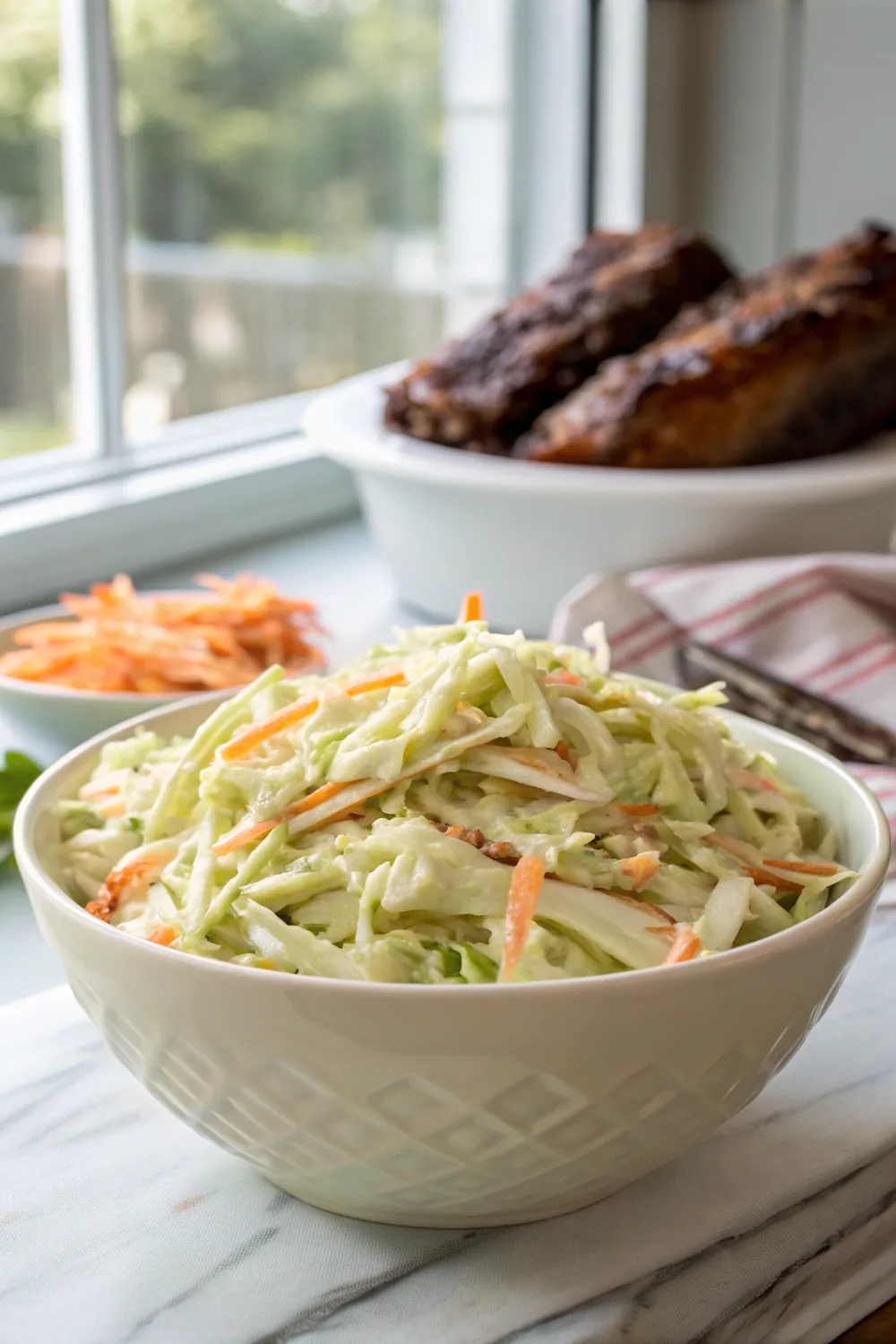
Texas BBQ
Texas BBQ Coleslaw
Chef Mia's creamy Texas BBQ coleslaw: cabbage salted and drained 30 minutes so it stays crunchy 2 days. Mayo-buttermilk dressing with celery seed.
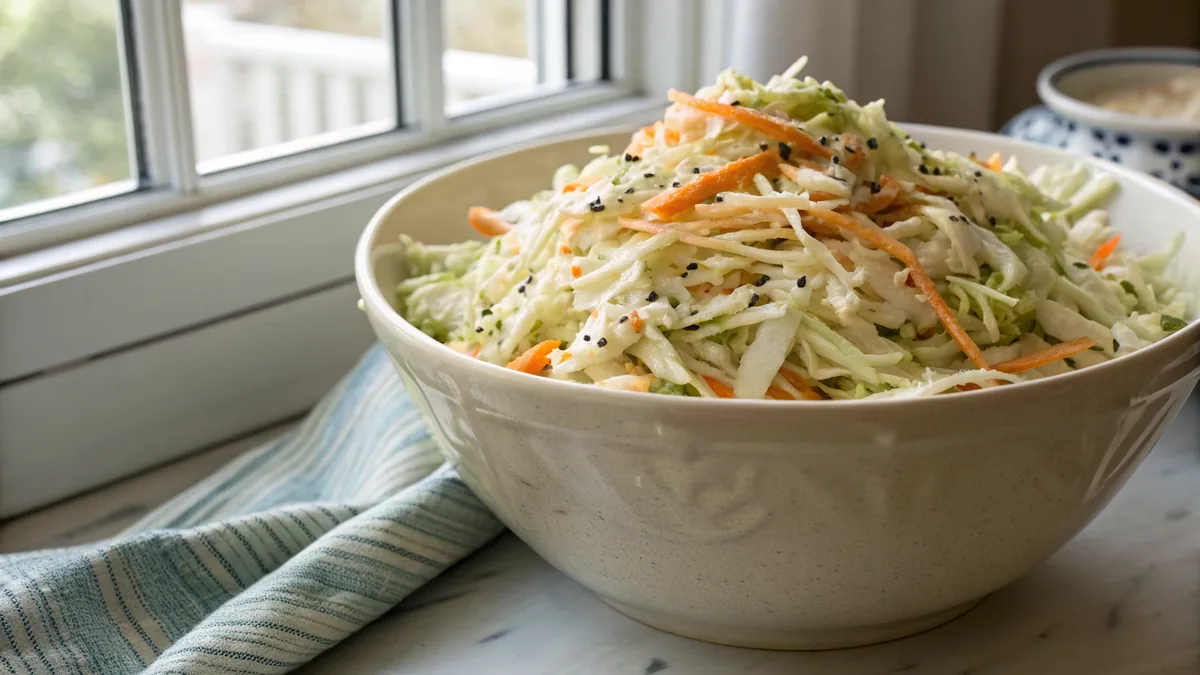
Quick answer: Texas BBQ coleslaw is the creamy kind: thin-sliced green cabbage and carrot in a mayo and buttermilk dressing sharpened with cider vinegar, a small spoonful of sugar, and celery seed. It is the cold, crunchy counterweight every barbecue tray needs against rich smoked meat. The step that separates it from the weeping deli tub is salting first: toss the sliced cabbage with salt, let it drain in a colander for 30 to 45 minutes, squeeze it dry, then dress it. The salt pulls the water out before the dressing ever goes on, so the slaw stays crunchy and undiluted for two full days instead of two hours. Slice the cabbage with a knife for ribbons that hold their snap, or use the food processor if you like it finer; both work as long as you salt. Twenty minutes of work, 40 minutes of draining, an hour of chilling. Makes about 8 cups, enough for a brisket-sized crowd.
Walk the counter line at any barbecue joint worth its post oak and watch what lands next to the brisket. Beans, sure. Potato salad, usually. And a scoop of creamy coleslaw, almost always, because a hundred years of Texas meat markets figured out what a plate of smoked fat needs sitting next to it: something cold, something crunchy, something with enough acidity to reset your mouth between bites. The slaw is not a garnish. It is the relief valve for the whole tray.
Here is the problem with most homemade versions: they are perfect for about an hour, and then the cabbage starts giving up its water into the dressing. By dinner the slaw is swimming, the dressing is thin and bland, and everybody quietly moves it to the edge of the plate. I watched my aunt in Lockhart fight that puddle for years with more mayo, which just makes soup with a higher fat content. The fix is not in the dressing at all. It is in the cabbage, before the dressing ever shows up.
Salt the sliced cabbage, let it drain 30 to 45 minutes, squeeze it dry, and the slaw you dress stays crunchy for two days in the refrigerator. That one step is the whole difference between this recipe and the back of the mayo jar. The rest is a dressing balanced the way the old meat markets liked it, mayo rounded out with buttermilk and cider vinegar, a restrained spoonful of sugar, and celery seed doing the quiet work that makes people ask what is in it. This is the creamy slaw, assumed and unapologetic; the vinegar camp gets its due farther down, with directions to where those recipes live.
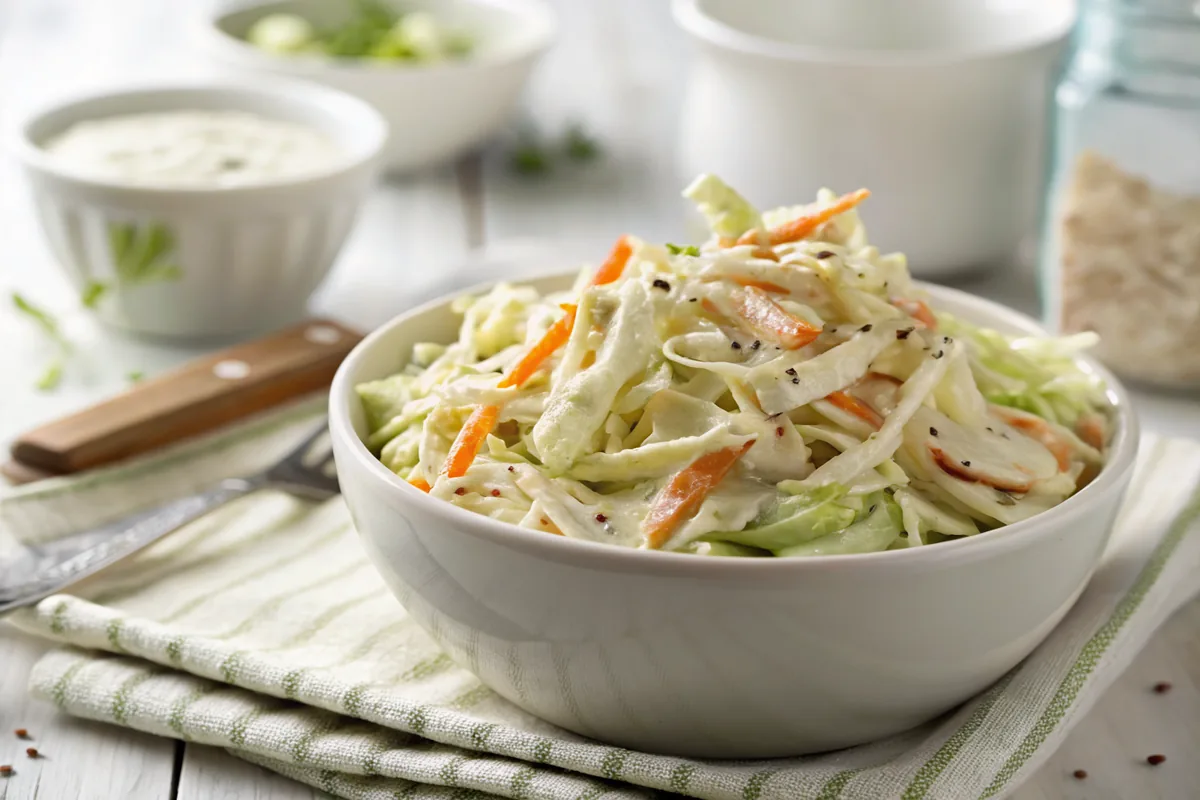
Why BBQ Joint Slaw Is Creamy, and Why That Is the Point
Barbecue is a fat delivery system. Brisket point, pork shoulder, sausage, ribs: the whole canon is rich, hot, smoky, and soft. A plate built entirely from that list exhausts your palate by the third bite, which is something the old Central Texas meat markets understood decades before anyone wrote the phrase palate fatigue. The sides that survived a century of counter service are the ones that push back against the meat, and slaw pushes back on four axes at once: cold against hot, crunchy against soft, acidic against rich, and creamy against smoky.
That last pairing is the one people underrate. The mayo is not there to be heavy; it is there to be cool. Chilled creamy dressing coats your mouth for half a second and then the vinegar in it cuts through, and that little two-step is what makes the next bite of fatty brisket taste like the first one. A slaw that is all vinegar resets your palate but gives you nothing to sink into. A slaw that is all mayo is just more richness on a plate that already has plenty. The joint-style slaw splits the difference on purpose.
There is also a temperature argument that only makes sense once you have eaten barbecue in a Texas July. Everything else on the tray is warm. The slaw comes out of the walk-in at 38 degrees, and that first cold forkful next to hot meat is half the pleasure of the plate. This is why slaw goes on last at the counter and why you should serve it straight from the refrigerator at home, not after an hour of sitting out getting acquainted with room temperature.
So this recipe is the creamy one, without apology and without hedging. It is the slaw of the counter line, the one that shows up in the little paper boat next to the peach paper. It is sweetened, but barely: one tablespoon of sugar across a two-pound head of cabbage, enough to round the vinegar off, nowhere near the dessert-adjacent slaw of some chain sides. If your reference point is slaw that tastes like cake frosting met a cabbage, recalibrate. This one leans sharp.
Salt the Cabbage, Drain 30 to 45 Minutes
This is the step that makes the recipe, so it gets the full explanation. Cabbage is roughly 92 percent water, held inside cells with sturdy walls. When you slice a head thin, you open thousands of those cells along the cut edges, and the moment salt or a salty dressing touches them, osmosis starts pulling water out. If the cabbage goes straight into the dressing, that water has exactly one place to go: into your slaw. Over the next few hours the dressing thins, the seasoning dilutes, and the bowl develops the milky puddle everyone recognizes from the bottom of the deli tub.
Salting first flips the timing, exactly like salting tomatoes for pico. Toss the sliced cabbage with a tablespoon of kosher salt in a colander and the same osmosis happens, but the water drains into the sink instead of into the dressing. Thirty minutes pulls out the bulk of it; 45 gets nearly all the loose water without taking the cabbage past crunchy into limp. You will collect over half a cup of liquid from a single medium head, and every drop of it is water that would otherwise have ruined tomorrow's leftovers.
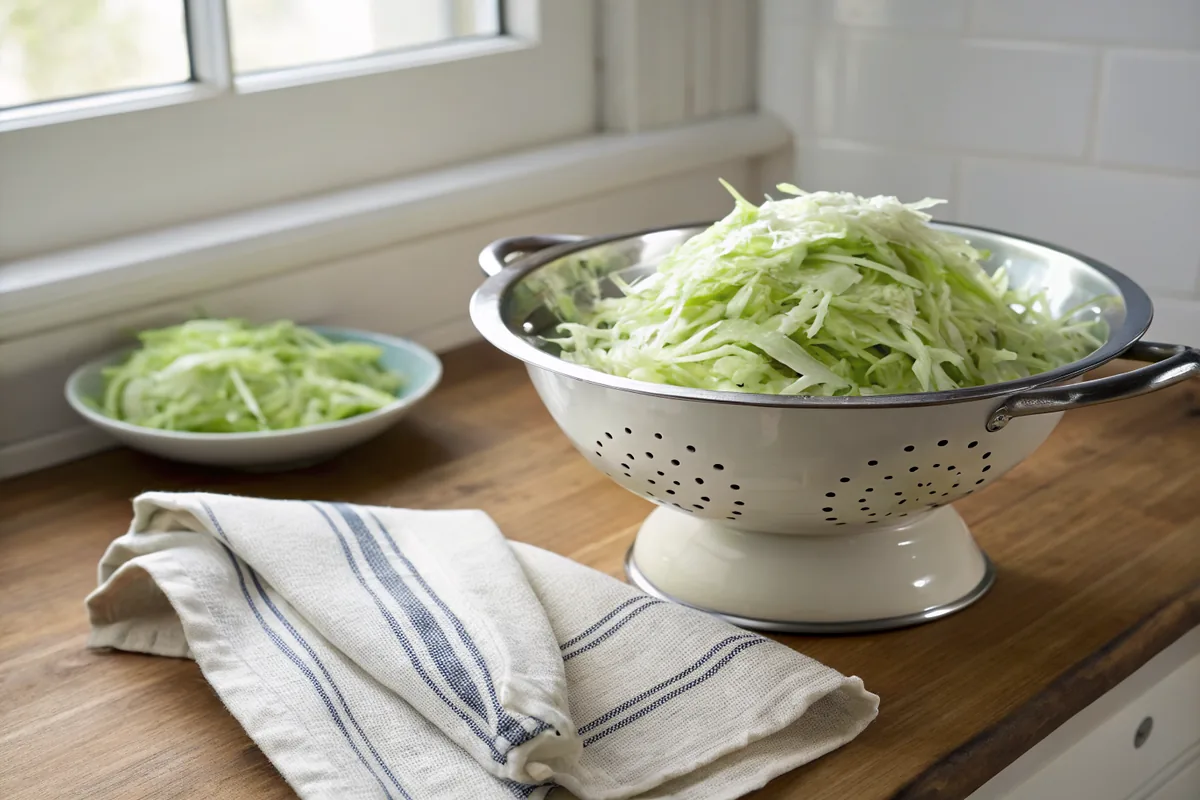
The texture change is the part that surprises people. Raw sliced cabbage is stiff, almost brittle, and it eats like packing material in a creamy dressing. Salted and drained cabbage relaxes into something flexible but still snappy, closer to the texture of a good pickle. It takes dressing better too, because the surface water that would have made the mayo slide right off is gone. The dressing clings to drained cabbage; it merely floats around raw cabbage.
Squeeze before you dress, and do not rinse. Most of the salt leaves with the water during the drain, and the trace that stays behind is doing the seasoning work; the dressing recipe accounts for it, which is why it only adds a quarter teaspoon of its own. Squeeze the cabbage in handfuls over the sink, firmly, like you mean it, then pat it dry on a towel. Wet handfuls at this stage are the only way left to sabotage the batch.
The payoff is measured in days, not minutes. Dressed slaw made from unsalted cabbage is at its best the moment it is mixed and visibly weeping within four hours. This slaw is at its best after an hour of chilling and still genuinely crunchy at the 48-hour mark, which means you can make it the day before a cookout and spend brisket day thinking about the brisket.
Knife or Food Processor: An Honest Comparison
Every slaw recipe picks a side here, usually with more conviction than evidence, so let me lay out what each tool actually gives you and let you decide based on the slaw you grew up liking.
The knife makes ribbons. Quarter the head, core it, and slice crosswise into strips about an eighth of an inch wide. Ribbons have length, and length is texture: they fold around the fork, they hold visible shape in the bowl, and they keep a distinct snap because each piece has relatively few cut edges leaking water. This is the slaw of the old meat markets, and it is what the photos on this page show. It costs you about eight minutes of unhurried slicing per head.
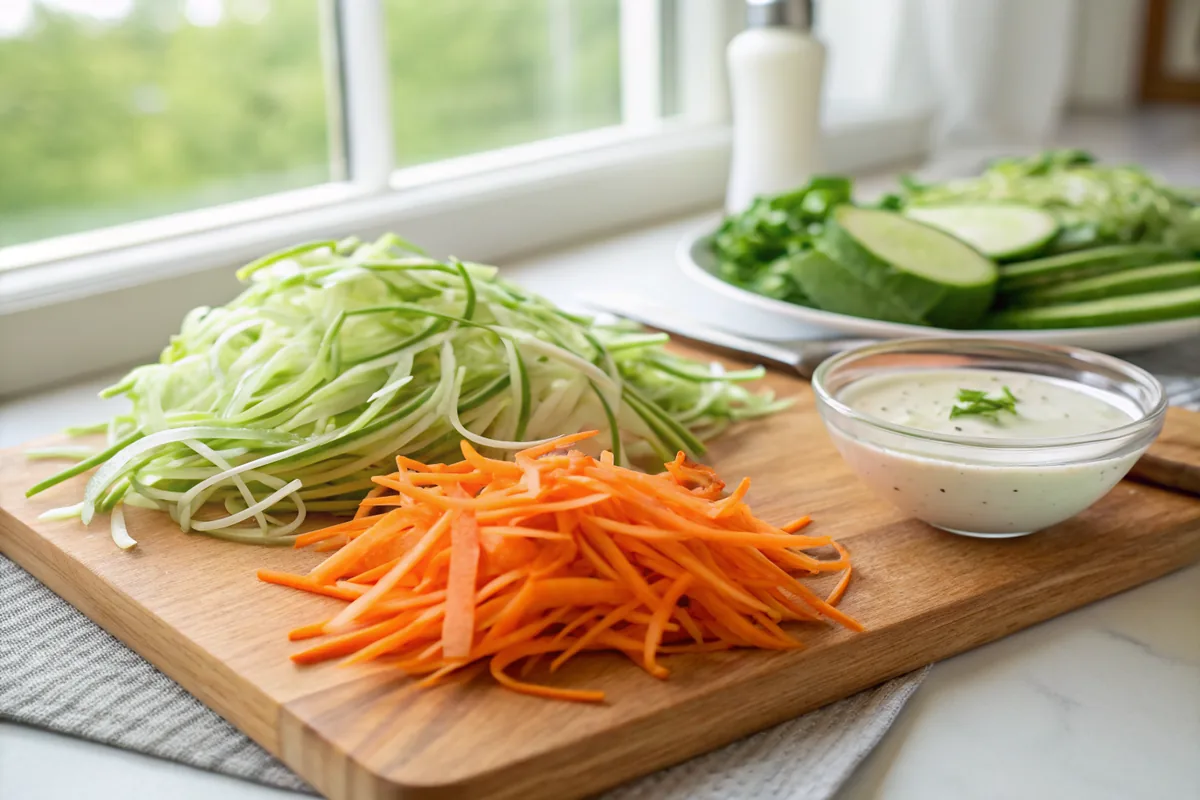
The food processor makes confetti. The shredding disc tears cabbage into short, fine shreds with an enormous amount of cut surface area, which means faster wilting, faster water loss, and a slaw that eats more like a spread than a salad. That is not automatically a flaw. Fine-shred slaw settles into a sandwich beautifully, packs tighter into the scoop, and some people simply prefer it because it is what the barbecue chains and the grocery deli serve. If that is your slaw, use the slicing disc rather than the shredding disc and you will land somewhere between confetti and ribbon.
The processor's real advantage is scale. One head of cabbage by knife is pleasant work; four heads for a church picnic is a forearm workout, and the machine turns it into six minutes. For big batches I use the processor without apology and just shorten the salting window to 30 minutes, because finer cut cabbage gives up its water faster.
Whichever tool you use, the salting step is not negotiable, and it actually matters more for the processor. All that extra cut surface means machine-shredded cabbage weeps harder and faster than knife-cut, so unsalted processor slaw is the wateriest slaw of all. Salt covers the machine's biggest weakness and the knife's only one.
The Dressing: Mayo, Buttermilk, Cider Vinegar, Celery Seed
The dressing is a balance of five jobs: fat, tang, acid, sweetness, and the seasoning that ties it together. Mayo carries the fat, and the brand genuinely matters less than people argue about, though Duke's has the edge for this because it contains no sugar of its own, which keeps the sweetness under your control. Three quarters of a cup sounds restrained for two pounds of cabbage, and it is; drained cabbage does not need to be buried to be coated.
Buttermilk is the quiet upgrade. A quarter cup loosens the mayo from a paste into a dressing that pours and coats, and it brings a lactic tang that reads as depth instead of just sourness. Slaw made with straight mayo tastes like mayonnaise; slaw with buttermilk in the dressing tastes like slaw. If you keep buttermilk around for biscuits, this is one more reason the carton earns its shelf space. No buttermilk in the house? Thin the mayo with milk plus an extra teaspoon of vinegar, and accept a slightly flatter result.
Apple cider vinegar is the acid, three tablespoons of it, which is more than most creamy slaw recipes call for and exactly why this one works next to smoked meat. Cider vinegar has a fruity roundness that white vinegar lacks and enough bite to cut brisket fat. The single tablespoon of sugar is not there to make the slaw sweet; it is there to take the raw edge off that vinegar. Taste the finished dressing alone and it should lean noticeably sharp, because two pounds of sweet cabbage and carrot are about to dilute it.
Celery seed is the signature. Half the people who love a good barbecue joint slaw could not tell you what that faint bitter-herbal hum in the background is, and the answer is one teaspoon of celery seed. It needs the hour of chilling to bloom into the dressing, which is half the reason the rest matters. Do not substitute celery salt, which is mostly salt and will throw the seasoning off; the little jar of whole seed costs a couple of dollars and lasts a year of slaw.
The mustard and black pepper are the supporting cast: a teaspoon of plain yellow mustard sharpens the dressing without announcing itself, and fresh-ground pepper gives the finish a little grip. Grated sweet onion, folded in with the vegetables rather than the dressing, dissolves into the whole thing and does the same allium work that onion powder does in a rub, presence without chunks. Nobody should ever bite into raw onion in a creamy slaw.
Want It Vinegar-Based Instead? Fair, and Covered
There is a second church of Texas slaw, and its members are reading this page with their arms crossed: the vinegar slaw people, no mayo, no cream, just cabbage in a hot or cold sharp dressing. That style has real history on its side, especially in the older German and Czech meat market tradition, where a krautsalat-style slaw was the natural sidekick to smoked sausage long before mayonnaise came in jars. I am not going to pretend the creamy version is the only legitimate one; it is simply the one this page is for.
If you want it vinegar-based, no mayo at all, I keep a bright vinegar slaw in my Texas BBQ sides lineup, where it earns its place on exactly the argument the vinegar camp makes: it stays sharp for days, it never breaks in the heat, and it cuts fat even harder than the creamy version does. On a tray with especially rich meat, say all-point brisket or pork belly, there are days I reach for it myself.
If your objection is the sugar rather than the mayo, that is a different fork in the road, and it leads to the no-sugar slaw in my keto BBQ sides collection, built to sit next to smoked meat without a spoonful of sugar anywhere in the dressing. The structure of this recipe survives the conversion almost untouched, since the salting step has nothing to do with sweetness, and a single tablespoon of sugar was only ever doing balance work that an allulose pinch or simple restraint can approximate.
What I would ask of either camp is this: steal the salting step anyway. Vinegar slaws water out exactly the way creamy slaws do, and a drained cabbage drinks up a sharp dressing even more gratefully than a creamy one. The technique on this page is not a creamy-slaw technique. It is a cabbage technique, and cabbage does not care what you dress it in.
The Slaw's Job on the Barbecue Tray
Build a tray in your head: sliced brisket, a pork rib or two, half a sausage link, all of it warm, smoky, and rich. Now audit what is missing. Nothing cold. Nothing crunchy. Nothing sharp. The slaw is not on the tray for variety; it is on the tray because it is the only thing supplying three sensations the meat cannot, and it supplies all three in one scoop.
The classic Texas trio is slaw, beans, and potato salad, and it works because each side takes a different job. My BBQ baked beans run sweet, smoky, and warm, harmonizing with the meat rather than contrasting it. Potato salad is the rich, starchy anchor. The slaw is the counterpuncher, and if you can only make two sides, make the beans and the slaw: one that agrees with the meat and one that argues with it. That argument is what keeps a long barbecue meal interesting from the first bite to the last.
Against specific meats, the slaw earns its keep differently. Next to smoked brisket, especially the point end, the acid is doing the heavy lifting, scrubbing rendered fat off your palate. Next to pulled pork, which usually arrives sauced and sweet, it is the cold and the crunch that matter most, since the sauce already brought its own acidity. Ribs sit in the middle. There is no plate of smoked meat this bowl does not improve.
It also plays well with the richer end of the sides table. A scoop of slaw next to smoked mac and cheese is the same cold-against-rich logic applied twice over, and a pile of it beside a basket of fried okra gives the fried crunch something cool to land on. The pattern never changes: the heavier the rest of the plate, the harder the slaw works.
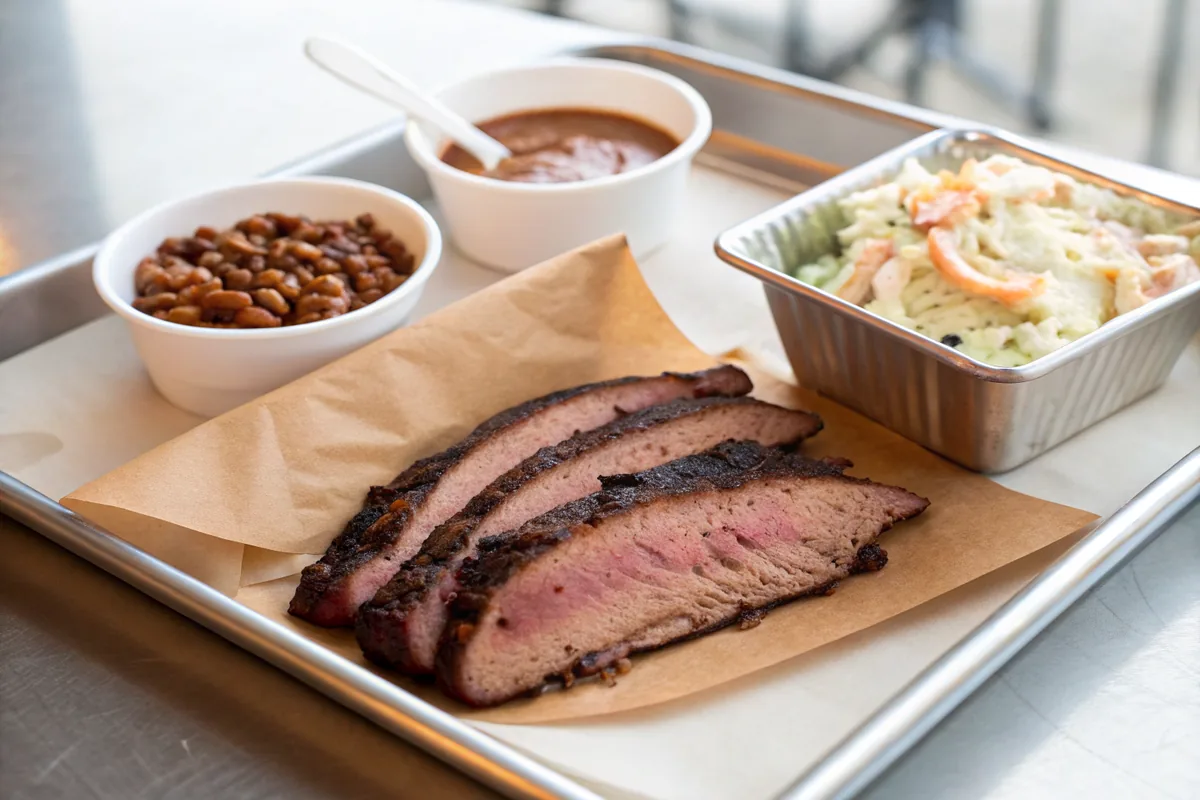
Portion generously. The polite little golf ball of slaw on a catering plate is a mistake; the slaw gets eaten across the whole meal, a forkful between bites of meat, and a proper serving is closer to a cup than a quarter cup. When I cater a backyard brisket, I plan three quarters of a cup per person and the bowl still comes back scraped.
Slaw on the Sandwich Is Not Optional
Somewhere between the tray and the picnic table, Texans figured out that the slaw does its best work inside the sandwich rather than next to it, and once you have eaten it that way it is hard to go back. The logic is architectural. A barbecue sandwich is warm meat, sweet sauce, and soft bun, three soft warm things stacked together, and the slaw goes on top of the meat as the crunch layer, the cold layer, and the acid layer in a single spoonful.
The canonical version is the chopped beef sandwich with a drained scoop of slaw right on the beef, where the cold crunch against the hot saucy chopped brisket is the entire reason the combination has survived every trend in Texas barbecue. Pulled pork with slaw is the Carolina-rooted cousin and every bit as good. Either way, the operative word is drained: lift the slaw with a slotted spoon or press the scoop gently against the side of the bowl first, because a wet spoonful is how the bottom bun dies before you reach the second half.
This is also where the fine-shred processor slaw quietly wins the rematch with the knife-cut ribbons. Short shreds settle into an even mat across the meat and stay put when you bite; long ribbons slide and drag. If sandwiches are the main event, run the cabbage finer on purpose. If the slaw is going in a bowl on the side, keep the ribbons. One head of cabbage, split two ways, covers both jobs.
Do not stop at barbecue sandwiches. A spoonful of this slaw on a thick Texas-style burger replaces the lettuce, the pickle, and the special sauce in one move, and it survives the heat of the patty far better than lettuce ever has. Fried chicken sandwiches, blackened fish tacos, even a Friday-night hot dog: anywhere you would want pickle crunch plus creamy sauce, the slaw is both at once.
Cabbage, Carrots, and What Not to Add
Plain green cabbage is the right cabbage, and the cheapest thing at the market being the correct choice is one of the small recurring pleasures of Texas cooking. Pick a head that is heavy for its size with tight, shiny outer leaves. Heavy means dense, and dense means the interior leaves are packed and crisp. A two-pound head yields about ten cups sliced, which cooks down, so to speak, to eight cups of finished slaw once the salt does its work.
Red cabbage looks gorgeous in the bowl for about an hour, and then its pigment starts bleeding lavender streaks into the buttermilk dressing. In a vinegar slaw, where there is nothing pale to stain, red cabbage is wonderful. In a creamy slaw it is a countdown clock. If you want it anyway, keep it to a quarter of the total and accept the tint by hour three. Savoy is too tender for this job and wilts past crunchy even with a careful salt; napa is even more delicate. Plain green cabbage holds the line.
Carrots earn their place, and not just for the color. Coarsely grated, they bring a sweetness that lets you keep the added sugar at one tablespoon, and their texture survives the salt untouched since they never get salted at all. Keep the ratio modest, about three parts cabbage to one part carrot by volume; slaw that has drifted carrot-heavy eats like a different, sweeter salad. Grate them on the coarse holes, because fine-grated carrot turns to damp orange fuzz in a creamy dressing.
The restraint list matters as much as the ingredient list. Raisins, pineapple, and apple push the slaw toward dessert and have no business next to brisket. Bell pepper goes bitter and wet by day two. Fresh herbs look pretty for an hour and then wilt into dark flecks. The only add-ins I will defend are a handful of thin-sliced jalapeno for a Tex-Mex table, or a teaspoon of pickle brine in the dressing when the meat is especially rich. Joint slaw is a four-ingredient vegetable list for a reason: cabbage, carrot, onion, celery seed. Everything else is somebody's potluck experiment.
Make-Ahead Timeline and the Two-Day Window
The salting step turns slaw from a last-minute dish into a genuine make-ahead dish, and that changes how you should schedule it. Here is the honest timeline from someone who has made this for a lot of brisket weekends.
Hour zero to one: mixed, chilling, not ready. Freshly dressed slaw tastes like its parts, the vinegar sitting on top, the celery seed still asleep, the sugar not fully dissolved. Resist serving it. The single hour in the refrigerator is not a suggestion; it is the second half of the recipe.
Hour one through day two: the window. This is the entire point of the salting method. The slaw at hour 24 is nearly indistinguishable from the slaw at hour two, still crunchy, still creamy rather than soupy, the flavor actually a notch better as the celery seed and onion settle in. Making it the afternoon before a cookout is not a compromise. It is the play, because it frees up cook-day hands and refrigerator-door discipline for the meat.
Day three: edible, demoted. The cabbage finally starts to slacken, the dressing loosens a little even with the salt step, and the celery seed drifts from aromatic toward slightly bitter. It will not hurt anyone, but it is no longer proud slaw. Fold it into a quick fish taco or pile it on a lunch sandwich and call it done. Freezing, for the record, is off the table entirely; thawed cabbage in mayo is a texture I will not describe over food.
Two logistics notes for a crowd. First, dressing and cabbage can be held separately for up to three days, which means you can salt, drain, squeeze, and bag the cabbage midweek, whisk the dressing whenever, and mix Thursday for a Saturday cookout at peak texture. Second, at the cookout itself, set the bowl in a larger bowl of ice if it will sit out past an hour. The texture would survive the afternoon; the buttermilk and mayo in the Texas heat should not be asked to.
Mistakes That Ruin Coleslaw
Skipping the salt and drain. The number one cause of watery slaw, thin dressing, and leftovers nobody wants. Thirty to 45 minutes in a colander, a firm squeeze, done. If you take one thing from this page, take this.
Dressing it all at once. Cabbage heads vary and so do appetites for creaminess. Half the dressing first, fold, look, then add. The bowl you cannot fix is the one where all the dressing went in before the first taste.
Fine-grating everything, except the onion. The shredding disc plus the fine holes of the box grater produces cabbage dust and carrot fuzz that hold water, shed crunch, and eat like a spread. Slice the cabbage, coarse-grate the carrot, and fine-grate only the onion, which is the one vegetable that should dissolve; nobody wants a cold crunchy cube of raw onion in a creamy bite.
Celery salt instead of celery seed. They sit next to each other on the shelf and they are not the same jar. Celery salt is mostly salt and will wreck the seasoning math on top of the salted cabbage. Whole celery seed only.
Serving it at room temperature. Half of what the slaw brings to a barbecue plate is temperature contrast, and a tepid creamy slaw is losing that plus flirting with the food safety clock. Straight from the refrigerator, bowl on ice outdoors, always.
Making it a fruit salad. Pineapple, raisins, and apple belong somewhere, maybe, but not next to smoked brisket. The sweetness on this plate is the meat's bark and the beans. Let the slaw stay sharp; that is its whole job.
Texas BBQ Coleslaw Recipe
Ingredients
- For the slaw:
- 2 lbs (900 g) green cabbage, about 1 medium head, cored and sliced thin
- 1 tablespoon kosher salt, for salting the cabbage
- 6 oz (170 g) carrots, about 2 medium, peeled and coarsely grated
- 2 oz (55 g) sweet onion, about 1/4 small onion, grated on the fine holes
- For the dressing:
- 3/4 cup (170 g) mayonnaise, Duke's or Hellmann's
- 1/4 cup (60 ml) buttermilk, well shaken
- 3 tablespoons (45 ml) apple cider vinegar
- 1 tablespoon (13 g) sugar
- 1 teaspoon celery seed
- 1 teaspoon yellow mustard
- 1/2 teaspoon freshly ground black pepper
- 1/4 teaspoon kosher salt, for the dressing, plus more to taste
Instructions
- Slice the cabbage thin. Quarter the cabbage through the core, cut the core out of each quarter, and slice crosswise into ribbons about 1/8 inch wide, a little thinner than a pencil. Work with a sharp blade and take your time; even ribbons wilt evenly. If you prefer the food processor, use the slicing disc, not the shredding disc, and pulse in batches so nothing turns to confetti.
- Salt the cabbage and drain 30 to 45 minutes. Toss the sliced cabbage with 1 tablespoon kosher salt in a large colander set over a bowl or in the sink. Let it sit 30 to 45 minutes, tossing once halfway. The salt will pull out a startling amount of water, often more than half a cup from one head, and the ribbons will go from stiff and squeaky to flexible but still crunchy.
- Prep the carrot and onion while you wait. Grate the carrots on the coarse holes of a box grater and the onion on the fine holes, so the onion melts into the dressing instead of arriving in raw chunks. If the grated onion is very wet, press it briefly in a paper towel. Carrots do not need salting; they carry far less water than cabbage.
- Whisk the dressing. In a small bowl, whisk the mayonnaise, buttermilk, cider vinegar, sugar, celery seed, mustard, black pepper, and 1/4 teaspoon salt until smooth. It should taste slightly too sharp and too loose on its own; the cabbage will mellow and thicken it. If it tastes perfect from the spoon, it will taste flat on the slaw.
- Squeeze the cabbage dry. Working in handfuls, squeeze the drained cabbage firmly over the sink, then spread it on a clean kitchen towel and pat it dry. Do not rinse it; the drain has already carried most of the salt out with the water, and what remains is the seasoning. Taste a ribbon: it should be pleasantly seasoned, not salty.
- Dress with half, then adjust. Combine the cabbage, carrot, and onion in a large bowl. Add half the dressing and fold with a spatula until every ribbon is coated. Add more dressing a spoonful at a time until the slaw is creamy but not drowned; you may not need all of it. Undressed slaw firms up; overdressed slaw never recovers.
- Chill at least 1 hour. Cover and refrigerate for at least 1 hour before serving, and up to 2 days. The rest lets the celery seed bloom, the sugar dissolve completely, and the flavors settle into one thing instead of six. Because the cabbage was salted and drained, the texture after the rest is nearly identical to the texture going in.
- Taste cold and correct. Taste the slaw straight from the refrigerator, since that is how it will be eaten. Cold mutes salt and acid, so what tasted balanced at room temperature often needs a pinch more salt or a teaspoon more vinegar now. Flat means salt first, then vinegar. Too sharp means a small pinch of sugar, not more mayo.
- Serve it cold, next to something smoked. Serve with a slotted spoon straight from the refrigerator, piled next to sliced brisket, pulled pork, or ribs, or spooned directly onto a sandwich. Keep the bowl on ice if it is sitting out at a cookout for more than an hour; the texture holds, but mayo and buttermilk in the August sun is a food safety line, not a flavor line.
Frequently Asked Questions
What kind of coleslaw do Texas BBQ joints serve?
Overwhelmingly the creamy kind: thin-cut green cabbage and carrot in a mayo-based dressing balanced with vinegar, a little sugar, and celery seed, served cold from the walk-in. It runs sharper and less sweet than grocery deli slaw because its job is cutting through rich smoked meat, not standing alone. A minority of joints, often the older German and Czech influenced meat markets, serve a vinegar slaw with no mayo instead, and some places offer both styles side by side.
How do you keep coleslaw from getting watery?
Salt the sliced cabbage before it ever meets the dressing. Toss it with a tablespoon of kosher salt in a colander, let it drain 30 to 45 minutes, then squeeze it dry in handfuls. The salt pulls out over half a cup of water per head, which is exactly the liquid that would otherwise leach into the dressing and turn the bowl soupy by dinner. Slaw made from salted, drained cabbage stays crunchy and creamy for two days.
Should coleslaw for BBQ be sweet or tangy?
Tangy, with just enough sweetness to round off the vinegar. Smoked meat is already rich and its bark is already sweet, so a sugary slaw stacks sweet on sweet and quits doing its job as a counterpoint. This recipe uses three tablespoons of cider vinegar against a single tablespoon of sugar for a whole head of cabbage. If your reference is very sweet chain-style slaw, this will taste sharp on the first bite and correct by the third.
Is it better to cut cabbage by hand or in a food processor?
Knife-cut ribbons hold more crunch, look better in the bowl, and weep less water because they have fewer cut edges, so they are my default for slaw served as a side. Processor shreds are faster for big batches and actually superior on sandwiches, where a fine, even mat of slaw stays put when you bite. Both work if you salt and drain the cabbage first; the salting step matters even more for processor shreds, which release water fastest.
How far ahead can I make coleslaw?
Made with salted, drained cabbage, the finished slaw holds at peak texture for a full two days in the refrigerator, so making it the afternoon before a cookout is ideal rather than a compromise. It actually improves over the first day as the celery seed and onion bloom into the dressing. For even more runway, hold squeezed cabbage and dressing in separate containers up to three days and combine the day you serve. Always give mixed slaw at least one hour of chilling.
What is the flavor in BBQ coleslaw that I can never identify?
Almost certainly celery seed. One teaspoon across a whole head of cabbage adds a faint, slightly bitter, herbal hum in the background of the dressing that most people cannot name but immediately miss when it is gone. It needs about an hour of chilling to bloom into the mayo and buttermilk. Buy whole celery seed, not celery salt, which is mostly salt and will throw off the seasoning, especially on top of cabbage that was already salted and drained.
Can you put coleslaw on a BBQ sandwich?
You should. A drained scoop of creamy slaw on top of chopped brisket or pulled pork adds the cold, the crunch, and the acid that a warm, saucy, soft-bun sandwich is otherwise missing, all in one layer. The one rule is drainage: lift the slaw with a slotted spoon or press the scoop against the bowl first, because a wet spoonful soaks the bottom bun within minutes. Finer-shredded slaw stays in the sandwich better than long ribbons.
How long does homemade coleslaw last in the fridge?
Made with the salt-and-drain method, it keeps its proper crunchy-creamy texture for about two days in a sealed container and remains safe and edible into day three, though by then the cabbage slackens and the flavor dulls. Without the salting step, the realistic window is closer to four hours before it turns watery. Never freeze creamy slaw; thawed cabbage in a mayo dressing has no texture worth serving. At a cookout, keep the bowl on ice past the first hour.