Southern Comfort Food
Terlingua Texas Chili
Chef Mia's Terlingua Texas chili: cubed chuck, dump-stage chili powders, no beans, masa finish. The CASI cookoff recipe that wins West Texas ribbons.
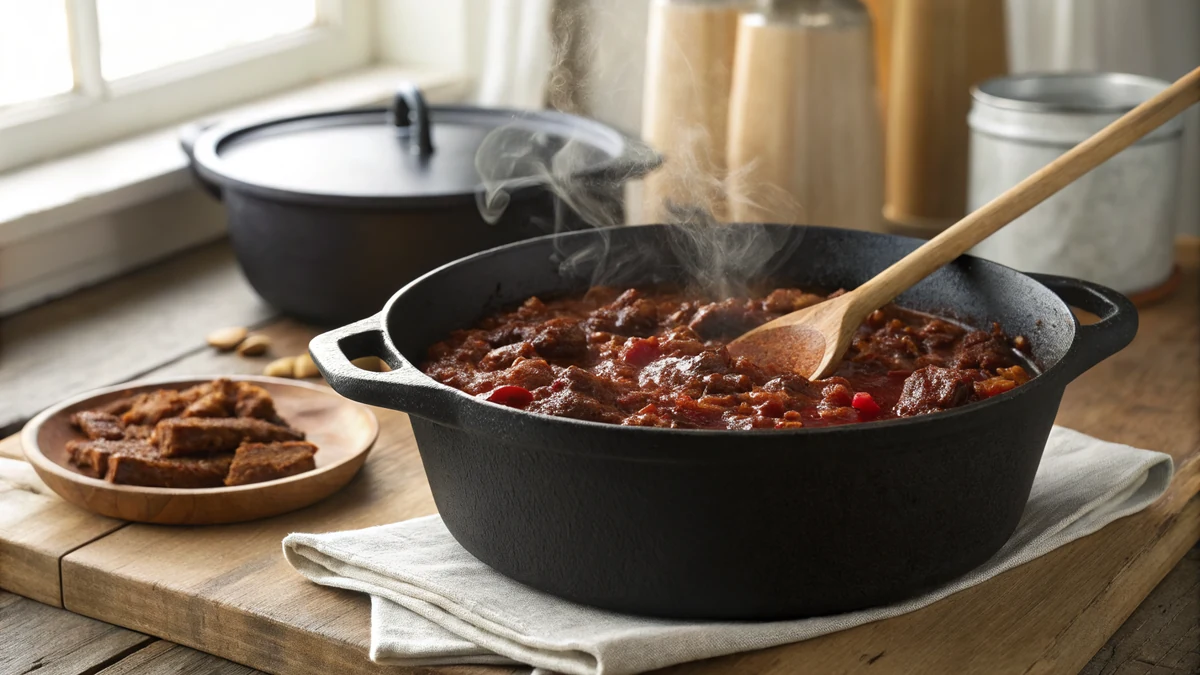
Quick answer: Terlingua Texas chili is competition-style red: no beans, no tomato bulk, beef chuck cut into 3/8-inch cubes, and a dump-stage chili powder method instead of a single spice hit. You brown the cubes in tallow, build a base of broth and tomato sauce, then add chili powder, cumin, and oregano in two or three timed dumps over a two-hour simmer. The final dump goes in during the last 20 minutes for bright top-note heat. Thicken with masa harina, balance with a splash of vinegar, and serve straight from the pot. It is the style judged at the CASI Terlingua International Chili Championship every first Saturday of November.
I drove out to Terlingua for the cookoff the first Saturday of November in my late twenties, and the desert taught me something my Lockhart kitchen never had. The CASI grounds at Rancho CASI de los Chisos sit in a ghost town near Big Bend, and the wind carries cumin for a mile. I watched a cook from Abilene dump chili powder into his pot in three separate handfuls, checking his watch each time, and I asked why. He said one dump cooks down into the meat, the next builds the body, and the last one rides on top so the judges taste fresh chile. That is the whole game.
Competition red is not the chili most folks grew up with. There are no beans, no fistful of diced tomato, no ground beef going gray in the bottom of a pot. It is cubed chuck, beef broth, and chile carried by a powder method that gets dumped in stages instead of all at once. I have cooked this style for backyard pots and for one nervous turn-in cup at a sanctioned local cookoff. The recipe below is how I make it at home, scaled for a family supper instead of a judging table, but built on the same Terlingua bones.
What Makes Terlingua Chili Different
Terlingua is a ghost town in far West Texas, out past Alpine on the road to Big Bend, and it should not be famous for anything. Yet the first Saturday of every November it fills with thousands of chiliheads because of what happened there in 1967. Frank X. Tolbert and Wick Fowler staged a chili showdown in the desert to settle whether a New Yorker named H. Allen Smith could out-cook a Texan. That stunt became the seed of the modern cookoff world, and Terlingua is still the place a ribbon means the most.
Two big cookoffs run there now on the same weekend, born from a long-ago split: the CASI Terlingua International Chili Championship at Rancho CASI de los Chisos, and the original Tolbert-Fowler event nearby. Both judge the same thing, a single cup of red, blind, with no garnish to hide behind.
That blind cup is why the style is what it is. There is no bread, no cheese, no sour cream to carry a weak chili. The chili has to deliver beef, chile, and balance in one spoonful. Every choice in this recipe, from cubing the meat to dumping the spice in stages, exists to make that single cup taste complete. If you want the gentler home version with toasted whole chiles, my Texas chili walks through the paste method instead.
The No-Beans, No-Tomato-Bulk Rule
Ask a Texan if beans go in chili and you will start an argument that outlives the meal. In competition the question is settled: beans disqualify a cup, full stop. CASI rules name it plainly, and so do the Tolbert-Fowler rules across the road. Beans absorb the chile and dilute the beef, and a judge who finds one in the cup is done tasting.
Tomatoes are a softer rule but the same instinct applies. I use a single small can of tomato sauce here, eight ounces, and only for the acidity and color it lends the gravy. That is seasoning, not bulk. You will never see a competition pot loaded with diced tomatoes the way a pot of northern chili might be.
The reasoning is taste-driven, not just tradition. Without starch or pulp to buffer it, the chili reads as pure meat and chile, which is exactly what the style is chasing. If you crave beans, cook a pot of pintos on the side and spoon them next to the chili, never into it.
I learned this the hard way at a backyard pot in my twenties when I doubled the tomatoes to stretch a batch. A cook from San Angelo tasted it, set the spoon down, and said it tasted like spaghetti sauce that lost its way. He was right.
Cubed Chuck, Not Ground
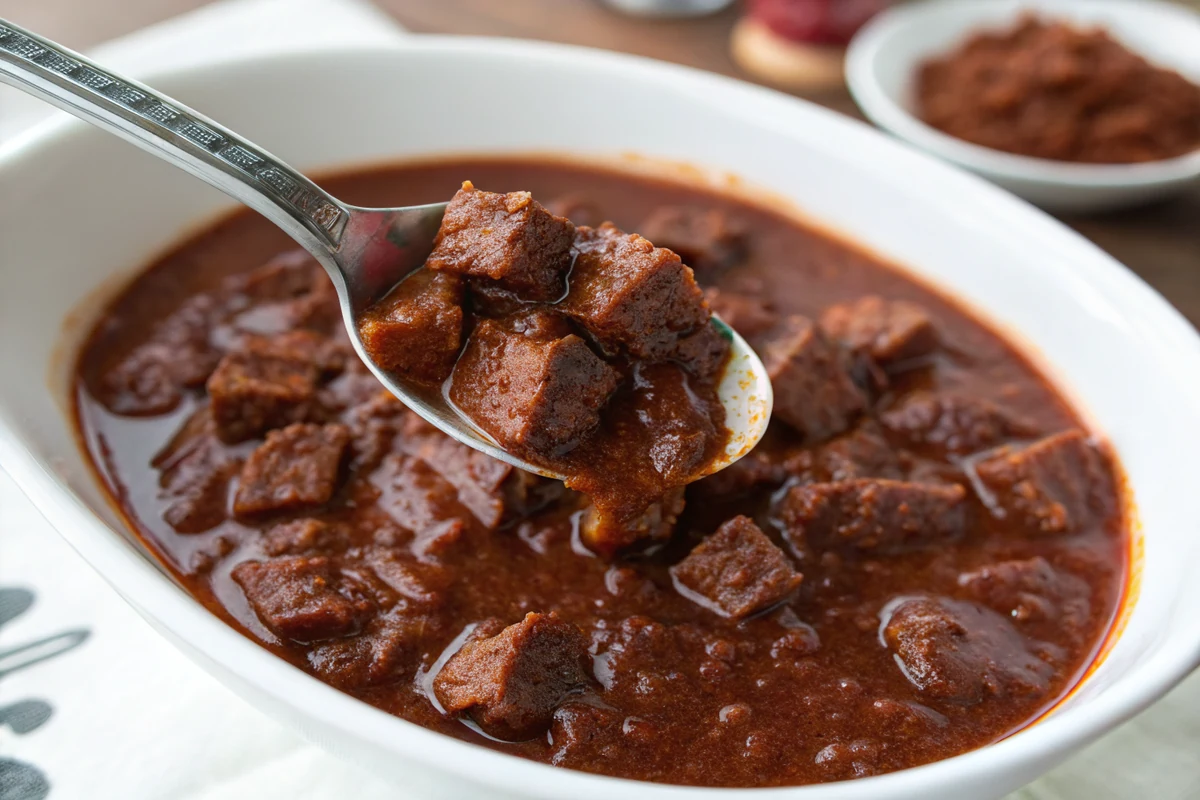
Competition red is built on cubed meat, and the cut of choice is beef chuck. Chuck carries about 18 percent fat, deep beef flavor, and the collagen that melts into gelatin over a long simmer to give the gravy its silky body. I cut my cubes at 3/8 inch, a touch smaller than stew meat, so they fit on a judging spoon and turn tender inside two and a half hours.
Grind has no place here for two reasons. It shreds into a sandy texture, and it releases fat and protein that cloud the gravy. A judge wants to see distinct, tender cubes suspended in a clean red sauce. At home the same texture is just plain better eating.
Buy a whole chuck roast and cube it yourself. Pre-cut stew meat is a grab bag of random trim with wildly different tenderness. Ten minutes with a sharp knife gives you uniform cubes that all cook at the same rate, and you control how much fat stays on.
Skip the lean cuts entirely. Sirloin, round, and eye of round all turn dry and stringy over a long cook. The fat in chuck is not a flaw to trim away, it is the thing that makes the chili taste like chili.
The Dump-Stage Chili Powder Method
This is the heart of Terlingua-style cooking and the part that separates a flat pot from a winning one. Instead of dumping all your spice in at the start, you split it into stages, traditionally two or three dumps timed across the simmer. Each dump does a different job, and together they build layers a single addition never can.
The first dump goes in early and cooks down into the meat, becoming the deep, rounded background. The second dump, around the 90-minute mark, rebuilds the chile body that has mellowed and pushes the color back to mahogany. The final dump rides in during the last 15 to 20 minutes, and that fresh, unmuted chile is the first thing a judge smells when the cup comes up.
Most competitors lean on blended chili powders rather than starting from whole pods, because consistency matters when a ribbon is on the line. Gebhardt and Mexene are old Texas standbys; I round mine out with pure ancho powder, cumin, Mexican oregano, and a measured hit of cayenne. The blend in this recipe is my home ratio, but the timing is the lesson. Compare it to the all-at-once approach in my Instant Pot Texas chili and you will taste why stages matter.
Crush your Mexican oregano between your palms as it goes in. It is a different plant from Mediterranean oregano, more citrusy and grassy, and waking up its oils right before they hit the pot makes a real difference in the finished aroma.
Finishing With Masa Harina
A competition cup should ribbon off the spoon, not run like soup and not sit like paste. The Texas thickener for that is masa harina, the same nixtamalized corn flour used for tamales and tortillas. It tightens the gravy to a clean coating body and leaves a faint toasted-corn note that flatters the chile.
Whisk the masa into a little warm broth first, until it is perfectly smooth, then stir the slurry into the pot. Dumping dry masa straight in gives you lumps that no amount of stirring fully fixes. Cook it at least eight minutes after adding so the raw-corn taste cooks out and the starch fully sets the gravy.
Go easy. Two tablespoons for this batch is my standard, and you can always add a touch more after it has cooked a few minutes. Over-thickened chili turns gluey as it cools, and a cup that stiffens up reads as heavy and dull on the palate.
If you ever turn in a cup, do your masa adjustment last, after the final spice dump, so you can judge the true consistency right before the cup goes to the table. The gravy keeps tightening as it sits, so aim slightly looser than you think you want.
Building Heat and Balance
Heat in competition red is supposed to build, not slap. A cup that scorches on the first taste loses points because the judge cannot taste anything after it. I build heat with cayenne in the spice dumps and let it accumulate spoon over spoon, which is the West Texas way. A half teaspoon reads as warm, a full teaspoon as a confident medium.
Balance is where a lot of home pots fall short. After a long cook the chili can taste flat and one-note, and the fix is acid plus salt. A single teaspoon of apple cider vinegar stirred in at the end lifts the whole pot and makes the chile flavor pop. It should not taste sour, just brighter.
Salt last and salt twice. Long-simmered chili almost always needs more than you expect because the broth has reduced and concentrated. Add a half teaspoon, stir, taste, and repeat until the beef flavor snaps into focus. Under-salted chili is the most common home mistake I see.
For a richer table version, melt a spoonful of my cowboy butter over each bowl right before serving. It is not competition-legal, but at a Sunday supper that garlicky, herby butter melting into the red is hard to argue with.
Serving and Storing Terlingua Chili
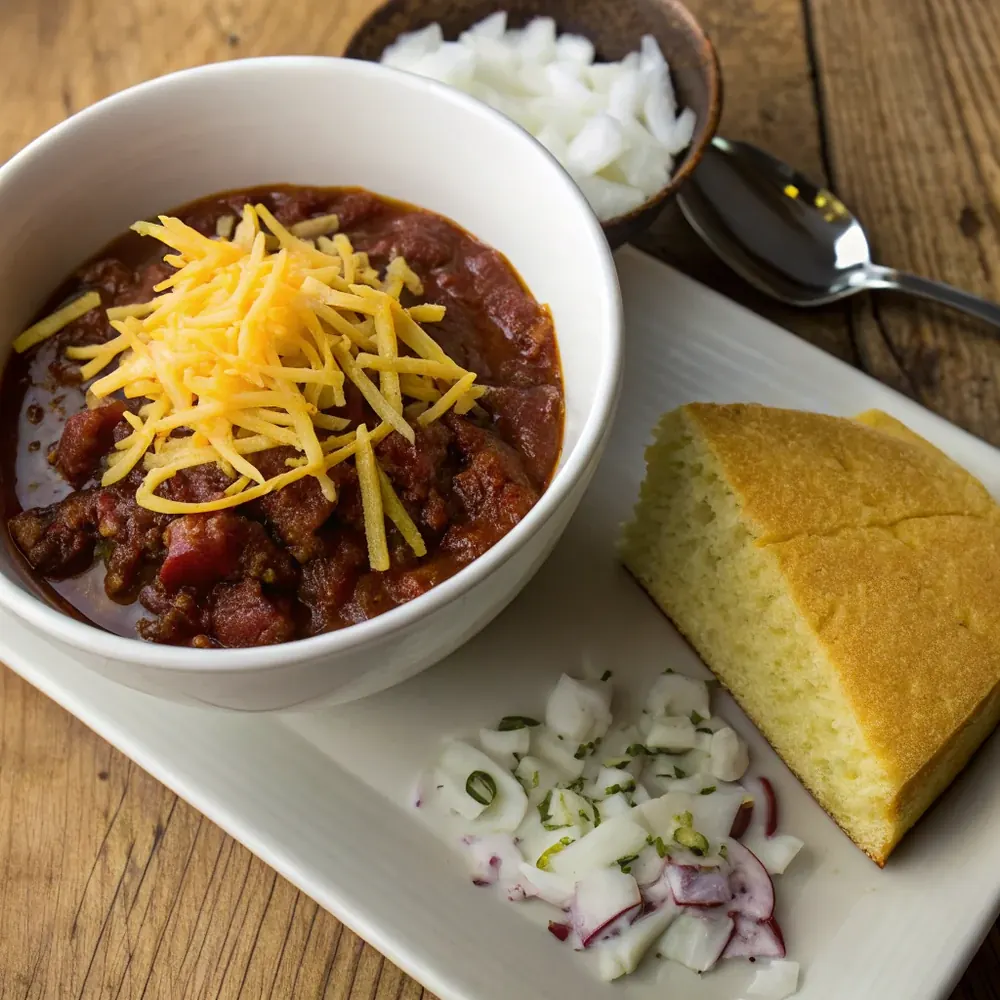
True to form, competition red turns in naked: no cheese, no onion, no crackers, just the cup. At home I am less strict. I set out chopped white onion, shredded sharp cheddar, sliced pickled jalapeno, and a stack of cornbread or saltines so everyone builds their own bowl. Keep the garnishes on the side so the chili still stands on its own.
This chili is one of the rare dishes that genuinely tastes better the next day. The fat re-emulsifies, the chile rounds out, and the masa-set gravy firms up beautifully. I often cook a pot the day before I plan to serve it and just reheat low and slow, loosening it with a splash of broth.
It freezes like a dream. Cool it fully, portion into quart containers, and freeze up to three months. Thaw overnight in the fridge and reheat gently on the stove. Cube chili holds its texture through freezing far better than ground chili, which is one more reason to cube.
If you serve beef often, the same chuck-and-chile mindset shows up across Texas cooking. The low-and-slow patience here is cousin to the patience behind a good Texas brisket, and a cookoff weekend often has both pots going at once.
Cookoff Culture and a Few Tips
Cookoff culture has its own rhythm, and Terlingua is the high holy day of it. Cooks arrive days early, set up camp in the desert, and trade samples and stories around their pots well into the night. The competition itself is fierce but the campground is generous; someone will always hand you a taste and tell you exactly what they did, even if they leave one secret out.
Wick Fowler, half the namesake of the original event, went on to create the 2-Alarm Chili Kit that still sits on Texas grocery shelves, with a little packet of cayenne you can leave out for a milder pot. That kit is many a Texan's first chili, mine included, and its dump-the-packets design is basically a beginner's version of the staged method in this recipe.
A few hard-won tips. Cook your chili the day before any contest or party. Carry extra broth to loosen a pot that tightened overnight. Keep a small portion of spice held back so you can correct the chile right before serving. And taste constantly; the pot changes every 20 minutes and the only way to know it is a spoon.
If you want to read the actual rules and the championship history yourself, CASI keeps them at the official CASI site. Whether you ever turn in a cup or not, cooking to that standard at home will make your everyday chili noticeably better. For a chain-restaurant take on the comfort end of the spectrum, my Texas Roadhouse chili sits at the opposite pole from this desert competition pot.
Terlingua Texas Chili Recipe
Ingredients
- For the meat:
- 2 1/2 lb (1.1 kg) beef chuck, cut into 3/8-inch cubes
- 3 tablespoons (45 g) rendered beef tallow or lard, divided
- 1 teaspoon kosher salt, for the sear
- For the base:
- 1 medium yellow onion, finely diced
- 5 garlic cloves, minced
- 3 cups (710 ml) low-sodium beef broth, plus more as needed
- 8 oz (227 g) tomato sauce (one small can; flavor, not bulk)
- 1 tablespoon Worcestershire sauce
- For the spice dumps (divided into 3):
- 1/4 cup (28 g) good chili powder, such as Gebhardt or a Mexene/ancho blend
- 2 tablespoons (14 g) ground ancho chile powder
- 1 tablespoon (7 g) ground cumin
- 2 teaspoons Mexican oregano, crushed
- 1 teaspoon cayenne, or 1/2 teaspoon for milder heat
- 1 teaspoon garlic powder
- 1 teaspoon onion powder
- To finish:
- 2 tablespoons masa harina, whisked into 1/4 cup warm broth
- 1 teaspoon apple cider vinegar
- Salt to taste
Instructions
- Cube the chuck. Trim the chuck of any thick gristle but leave the marbling. Cut into 3/8-inch cubes, smaller than stew meat but not minced. Pat the cubes dry with paper towels so they sear instead of steam. Wet meat is the most common reason a home pot turns out gray and flat.
- Sear the beef. Heat 2 tablespoons of tallow in a 5-quart cast iron Dutch oven over medium-high heat until it shimmers. Working in two or three batches so you never crowd the pot, brown the cubes 3-4 minutes until they take color on a couple of sides. Salt lightly as they cook. Pull each batch to a bowl and hold the juices.
- Sweat the onion and garlic. Lower the heat to medium and add the last tablespoon of tallow. Add the diced onion and cook 5 minutes until soft and translucent. Add the garlic and stir 30 seconds until fragrant. Scrape up the browned fond from the pot bottom; that dark stuff is concentrated beef flavor you do not want to leave behind.
- Build the liquid base. Return the beef and all its juices to the pot. Pour in the beef broth, tomato sauce, and Worcestershire. Stir well. The liquid should just cover the meat; if it does not, top up with a little more broth. Bring everything to a gentle simmer, not a rolling boil.
- First spice dump. In a bowl, combine all the spice-dump ingredients, then divide into three roughly equal piles. Stir the first pile into the simmering pot. This dump cooks down into the meat over the long simmer and becomes the deep background flavor of the chili. Stir to dissolve any clumps.
- Simmer low and slow. Cover loosely, vented slightly, and drop the heat to low. Simmer 90 minutes, stirring every 20 minutes so nothing sticks. The cubes should be turning tender and the liquid should be reducing into a gravy. Add broth a half cup at a time if it tightens up too fast.
- Second spice dump. At the 90-minute mark, stir in the second pile of spices. This dump rebuilds the chile body that has mellowed during the cook and pushes the color back toward a deep mahogany red. Simmer another 20 minutes uncovered to let it integrate and reduce a touch more.
- Thicken with masa. Whisk the masa harina into 1/4 cup of warm broth until smooth with no lumps. Stir it into the pot. Masa is the Texas thickener: it tightens the gravy to a spoon-coating body and adds a faint toasted-corn note that store thickeners cannot fake. Cook 8 minutes until the chili ribbons off the spoon.
- Final spice dump and rest. Stir in the last pile of spices in the final 15-20 minutes. This top dump rides on the surface and gives that fresh chile aroma a judge tastes first when the cup is lifted. Simmer 10 more minutes, then pull off the heat and let the pot rest 10 minutes for the flavors to settle.
- Adjust and serve. Stir in the apple cider vinegar to brighten the deep red flavor, then taste for salt; long-cooked chili almost always wants another half teaspoon. Serve straight from the pot, no beans, no garnish if you want it true to form. At home I allow chopped onion and shredded cheddar on the side.
Frequently Asked Questions
What is Terlingua Texas chili?
Terlingua Texas chili is the competition style of red chili judged at the cookoffs held in Terlingua, Texas every first Saturday of November. It uses cubed beef chuck instead of ground beef, no beans, and only a little tomato for color, with chile flavor delivered through a dump-stage chili powder method. The chili is judged blind as a single cup with no garnish, so it has to taste complete on its own.
Why does Terlingua chili have no beans?
Beans are banned in sanctioned chili competition, including the CASI Terlingua International Chili Championship and the original Tolbert-Fowler cookoff. Finding a single bean in a judging cup disqualifies the entry. The reasoning is that beans absorb the chile and dilute the deep beef flavor that defines Texas red. If you want beans, cook them separately and serve them on the side.
What cut of beef is best for competition chili?
Beef chuck is the standard. It has roughly 18 percent fat, strong beef flavor, and the collagen that melts into gelatin over a long simmer to give the gravy a silky body. Cut it into 3/8-inch cubes rather than buying ground beef or pre-cut stew meat. Avoid lean cuts like round or sirloin, which turn dry and stringy during the cook.
What is the dump-stage chili powder method?
It means adding your spice blend in two or three timed batches across the simmer instead of all at once. The first dump cooks down into the meat as a deep background, the second rebuilds the chile body around the 90-minute mark, and the final dump goes in during the last 15 to 20 minutes for fresh top-note aroma. Staging the spice builds layers that a single addition cannot.
Do you put tomatoes in Terlingua chili?
Only a little. Most competition cooks use a small amount of tomato sauce for acidity and color, not as bulk. This recipe uses one 8-ounce can for a 6 to 8 serving batch. You will not find competition red loaded with diced tomatoes the way northern-style chili often is, because the pulp buffers the meat and chile the style is built around.
How do you thicken Texas chili without flour?
Masa harina is the traditional Texas thickener. Whisk two tablespoons into a quarter cup of warm broth until smooth, then stir the slurry into the pot and cook at least eight minutes. It tightens the gravy to a spoon-coating consistency and adds a faint toasted-corn flavor that flatters the chile. Add it gradually, since over-thickened chili turns gluey as it cools.
How spicy should competition chili be?
It should build, not blast. A cup that scorches on the first taste costs points because the judge cannot taste anything after it. Heat should accumulate spoon over spoon to a confident medium. In this recipe a half teaspoon of cayenne reads as warm and a full teaspoon as solid medium heat, layered through the staged spice dumps rather than dumped in at once.
Can you make Terlingua chili ahead and freeze it?
Yes, and it is better for it. The chili tastes noticeably deeper the next day as the fat re-emulsifies and the chile rounds out, so cooking it a day ahead is ideal. It freezes well for up to three months in airtight containers; thaw overnight in the fridge and reheat gently with a splash of broth. Cubed beef holds its texture through freezing far better than ground.