Tex-Mex Recipes
Tex-Mex Bowl
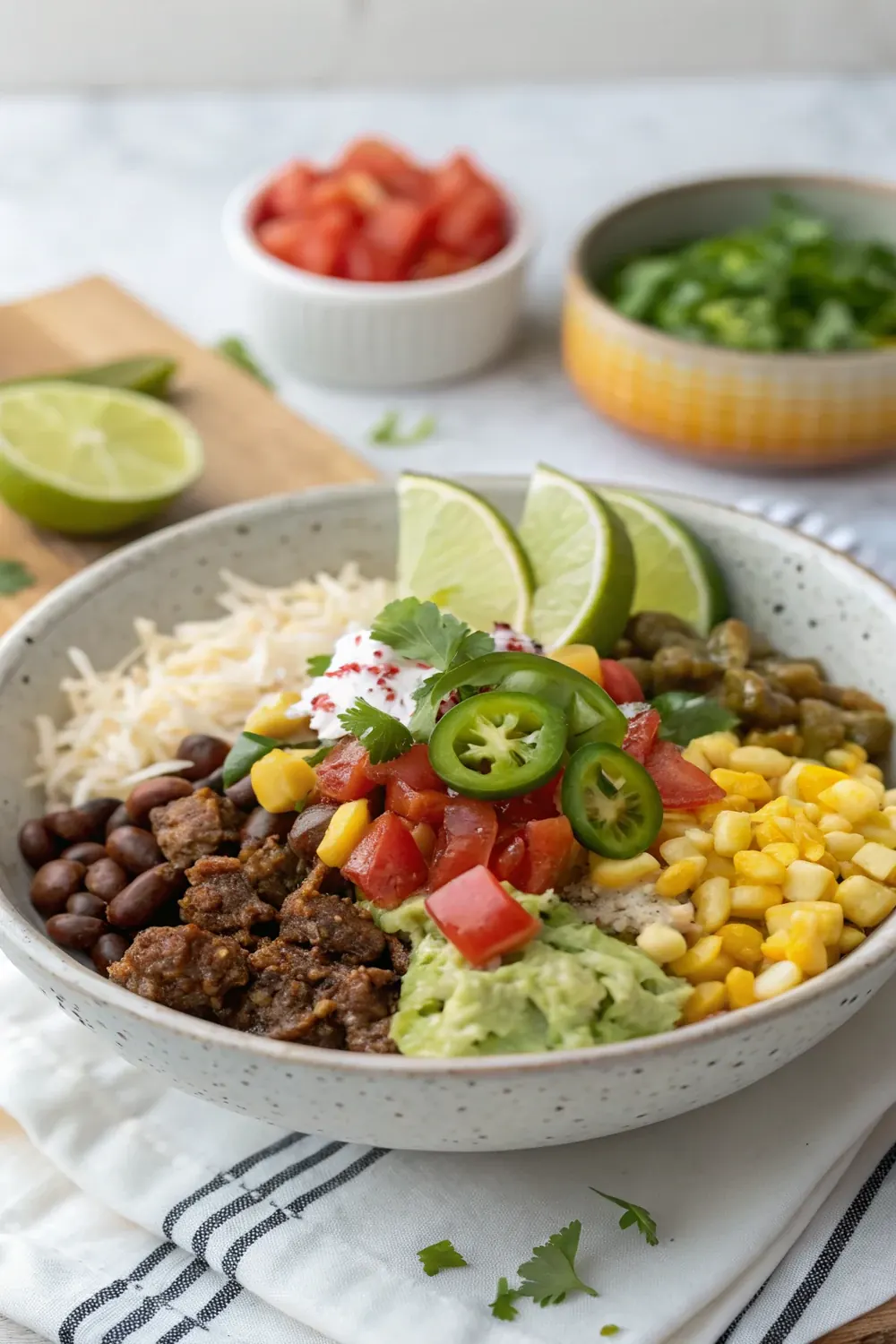
Chef Mia's loaded Tex-Mex bowl: cilantro-lime rice, seasoned beef or chicken, black beans, charred corn, pico, and quick guac. Made to customize and meal-prep.
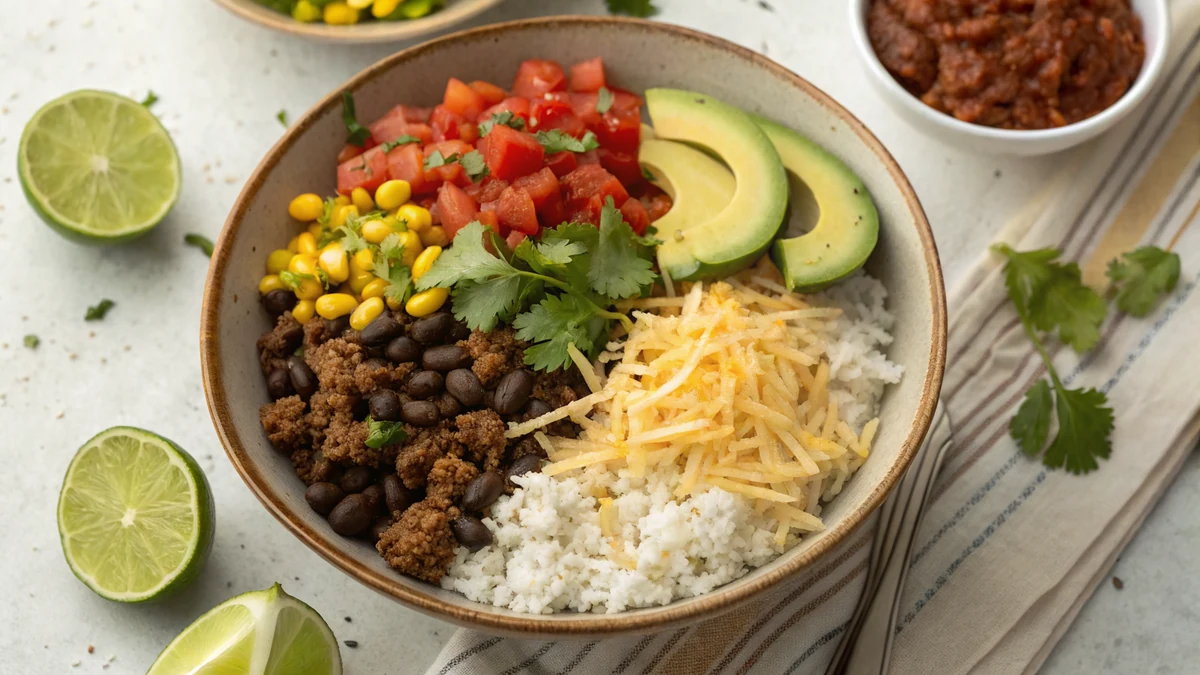
Quick answer: To build a Tex-Mex bowl at home, start with a base of cilantro-lime rice, then pile on a seasoned protein like ground beef or chicken cooked with a homemade Tex-Mex spice blend of chili powder, cumin, garlic, and smoked paprika. Add warmed black beans, charred corn, fresh pico de gallo, shredded cheese, and either sliced avocado or a quick guacamole. From there you customize: shredded lettuce, a spoon of sour cream, pickled jalapenos, and a hard squeeze of lime. Everything cooks in about 30 minutes, and each component stores separately, so this is one of the best meal-prep dinners I make. Set the parts out and let everyone build their own bowl exactly how they like it.
A Tex-Mex bowl is the supper I make when I want everybody at the table happy with zero arguing. It is the home version of the build-your-own burrito bowl you get at the counter places, except I think mine tastes better because the rice is fresh, the pico is made that afternoon, and the seasoning on the meat is my own blend instead of a packet. I lay out a base of cilantro-lime rice, a seasoned protein, beans, charred corn, cheese, and a row of toppings, and then folks build their own bowl exactly the way they want it. Picky kids, big eaters, and the one cousin who does not eat meat all get fed from the same spread.
What I love most is how forgiving and flexible it is. Nothing here is fussy, and almost every piece can be made ahead and stashed in the fridge, which makes this my go-to for meal prep on a Sunday. I cook a big pot of rice, brown a skillet of seasoned beef or chicken, char some corn, and chop a bowl of pico, then portion it all out for the week. Come supper, it is just heat and assemble. In this recipe I will walk you through every component the way I make it in my Texas kitchen, plus my homemade Tex-Mex seasoning, so you can build a loaded bowl in about half an hour.
What Makes a Tex-Mex Bowl
A Tex-Mex bowl is really just a deconstructed burrito served in a bowl instead of wrapped in a tortilla. You build it in layers, starting with a rice base, then a seasoned protein, beans, and a stack of toppings that you pile on however you like. Because nothing is rolled up and sealed, every component stays distinct, so you taste the bright pico, the smoky corn, the creamy avocado, and the savory beef all on their own and together. That layering is the whole point, and it is what separates a real bowl from a one-pot skillet dinner.
The beauty of the format is that it is built for customization. I set out every part in its own dish and let people assemble their own bowl, which means the meat-eaters load up on seasoned beef, the kids skip the jalapenos, and my vegetarian sister builds hers on beans and extra guacamole. One spread feeds a whole table of different appetites with no special requests to juggle. That flexibility is exactly why these bowls have become such a staple, both at restaurants and in home kitchens like mine.
This is not a casserole and it is not a soup, and that distinction matters for how you cook it. You are not simmering everything together in one pot until it melds. You are cooking each component to its own best version, the rice fluffy, the corn charred, the protein well seasoned, the pico fresh and raw, then keeping them separate until the bowl gets built. It takes a few pans, but none of it is hard, and the payoff is a plate where every single bite tastes clean and distinct.
The Cilantro-Lime Rice Base
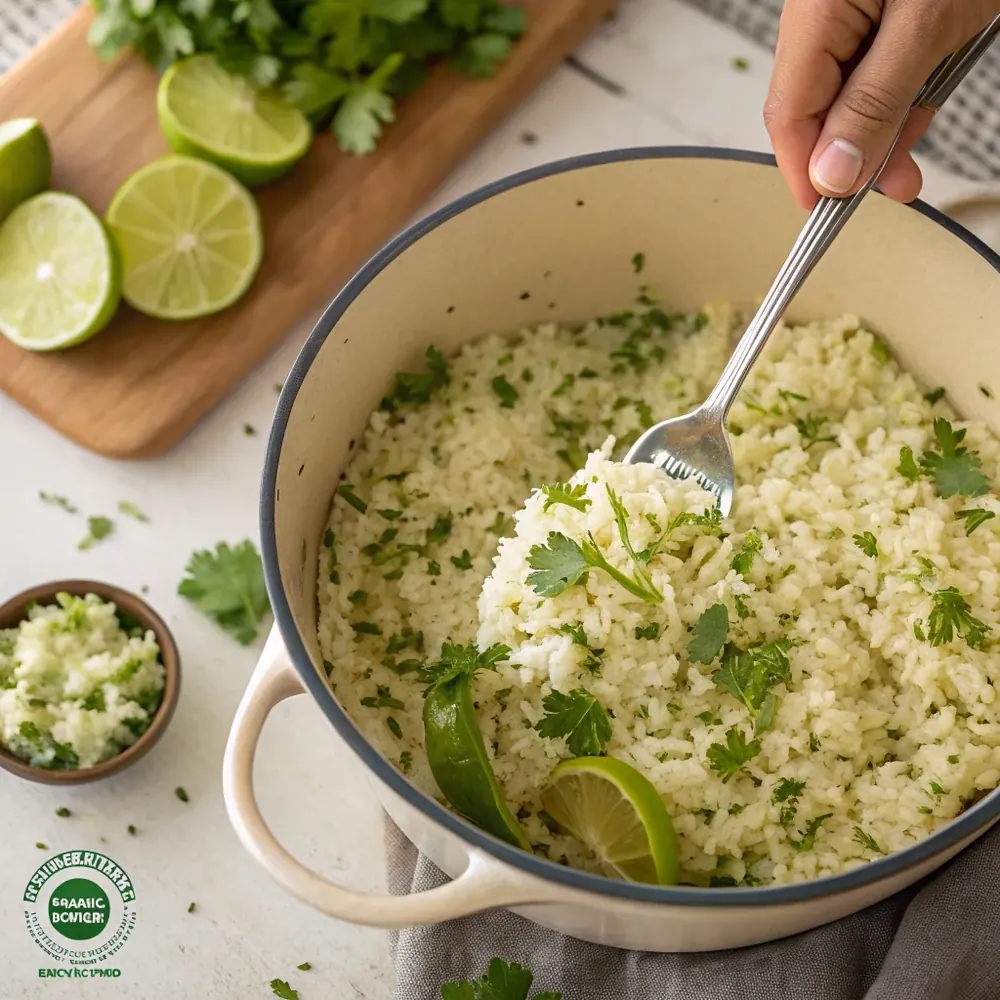
The rice is the foundation, so I do not treat it as an afterthought. Plain white rice would be fine, but cilantro-lime rice turns the base into something you actually want to eat on its own. I cook long-grain white rice with a little salt, then once it is fluffed I fold in chopped fresh cilantro, lime zest, and a good squeeze of lime juice off the heat. The zest carries the floral lime oil and the juice brings the tang, and together they wake up the whole bowl from the bottom up.
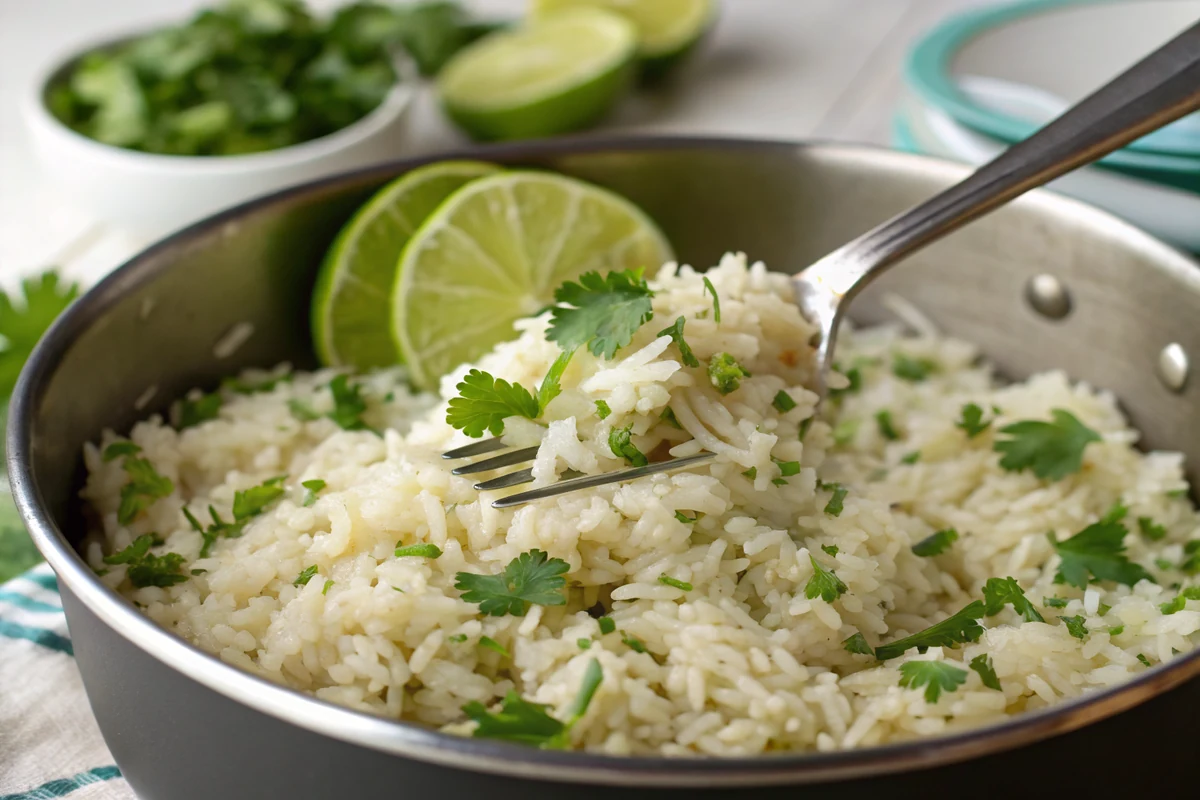
A couple of small habits make the rice come out right every time. Rinse it first until the water runs clear, which washes off surface starch so the grains cook up separate and fluffy instead of gluey. Cook it in chicken broth instead of water if you want more savory depth. And always add the lime and cilantro after cooking, not during, because the heat would dull the bright lime flavor and turn the cilantro drab. Off-heat folding keeps everything fresh and green.
If you want to switch up the base, you have good options. Brown rice or cauliflower rice both work for a lighter or heartier bowl, just cook them to their own timing. For a more classic Tex-Mex flavor underneath, you can swap in a tomato-based Spanish rice instead. My Mexican rice recipe makes a fantastic base when I want that deeper, slightly smoky tomato note under the toppings. Whichever way you go, season the base well, because bland rice drags the whole bowl down no matter how good the toppings are.
My Homemade Tex-Mex Seasoning
The seasoning is what makes the protein taste like Tex-Mex instead of just browned meat, and I gave up on the little packets years ago. My blend is chili powder, cumin, smoked paprika, garlic powder, onion powder, dried oregano, and salt, with a pinch of cayenne when I want some kick. It comes together in under a minute from spices you probably already have, and it tastes fresher and brighter than anything from a foil envelope, with no cornstarch fillers or mystery additives bulking it out.
Each spice pulls its weight. Chili powder is the backbone, cumin brings that warm, earthy depth that says Tex-Mex, and smoked paprika adds a subtle smokiness like the meat saw a grill. Garlic and onion powder round it into a savory base, oregano adds a herbal lift, and cayenne dials the heat exactly where you want it. I always mix more than one batch needs and keep a jar in the cabinet, because this blend is just as good on fajita veggies, roasted potatoes, and eggs.
The trick to getting the most out of it is to bloom the spices in the hot pan. After I brown the meat and drain it, I sprinkle the seasoning over and stir it in with a splash of water, then let it simmer a couple of minutes. That brief cooking toasts the spices and dissolves them into a glossy sauce that coats every crumble of meat, instead of leaving a raw, dusty taste. If you are short on time, this same blend is the heart of so many dishes in my ultimate Tex-Mex recipes guide.
Choosing Your Protein
The protein is the most customizable part of the bowl, and there is no wrong answer. Ground beef is my classic go-to, 85/15 so there is enough fat to carry flavor without greasing up the bowl. I brown it hard, drain the excess fat, then season and simmer it down. Ground chicken or ground turkey work the exact same way for a lighter bowl, and they soak up the Tex-Mex seasoning beautifully since they start out so mild. Whatever ground meat you use, get real color on it before the spices go in.
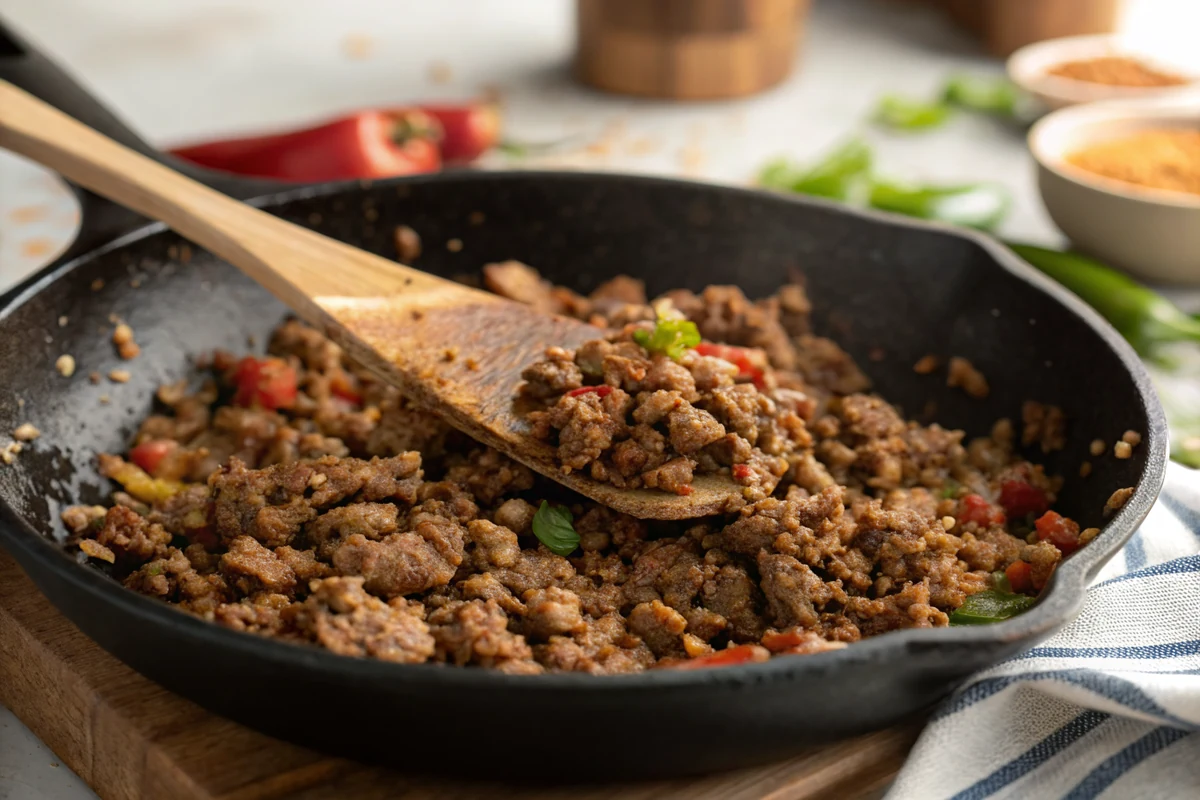
If you want chunkier protein, diced or shredded chicken thighs are excellent. I season the diced thigh with the same blend and sear it in a hot skillet until cooked through with crispy edges, or I shred poached thighs and toss them in the bloomed seasoning. Steak strips, carnitas, or even grilled shrimp all slot right in if you are feeling fancy. The cooking method changes a little by protein, but the seasoning stays the same, which keeps the whole bowl tasting cohesive.
For a vegetarian bowl, you do not need to fake the meat at all. Doubling the black beans and adding a scoop of seasoned pinto beans or sauteed peppers and onions makes a hearty, satisfying bowl on its own. Roasted sweet potato cubes or sauteed mushrooms tossed in the Tex-Mex blend are two of my favorite meatless fillers. Because the bowl is already loaded with rice, cheese, corn, and guac, a meatless version never feels like it is missing anything. This is exactly why the build-your-own format feeds everyone at once.
Charred Corn and Black Beans
Charred corn is a small step that adds a big payoff, so I never skip it. I get a skillet ripping hot, add the corn in a single layer, and then leave it alone so it blisters and browns in spots before I stir. That char brings out the corn's natural sweetness and adds a smoky, almost grilled note that plays off the bright pico and the savory meat. Fresh corn off the cob is best in summer, but frozen or even drained canned corn chars up great the rest of the year.
The key with the corn is patience and high heat. If you stir it constantly, it just steams in its own moisture and stays pale and bland. Spread it out, let it sit, and resist the urge to fuss with it until you see dark spots forming on the bottom. A cast-iron pan holds heat best for this, but any heavy skillet works. A pinch of salt while it cooks is all the seasoning it needs, since you want that clean, sweet corn flavor to come through against everything else.
The black beans are the easy, hearty backbone of the bowl. I just warm a can of drained, rinsed black beans with a little cumin, minced garlic, and a splash of water until they are hot and the garlic is fragrant. Mashing a few against the pot makes them creamy and helps them cling to the rice. Keep them loose and saucy, not dried out. If you would rather build the whole bowl around beans and skip the corn step, lean on heartier sides like my Texas Frito pie for inspiration on bean-forward Tex-Mex comfort.
Pico de Gallo and Fresh Toppings
Pico de gallo is the fresh, raw element that keeps a Tex-Mex bowl from tasting heavy, and it is worth the five minutes of chopping. I dice ripe Roma tomatoes, finely dice white onion, mince a seeded jalapeno, and toss it all with chopped cilantro, lime juice, and salt. Then I let it sit at least ten minutes so the flavors marry and the onion softens its bite. That bright, acidic crunch cuts through the rich meat, cheese, and avocado, and it is the topping people always go back for seconds of.
Salting the pico and letting it rest does two things. It draws a little juice out of the tomatoes to make a light dressing in the bowl, and it mellows the raw onion so it does not overpower everything. If your tomatoes are watery, drain off some of that liquid before it goes in the bowl, or your rice base can get soggy. Adjust the lime and salt right before serving, since fresh tomatoes vary so much in flavor and acidity from one batch to the next.
Beyond the pico, the cold toppings are where each bowl becomes personal. Shredded Monterey Jack or cheddar melts a touch against the warm rice and meat. Avocado adds buttery richness, either sliced or mashed into a quick guacamole with lime and salt. Shredded crisp lettuce brings crunch, sour cream brings cool tang, and pickled jalapenos bring a vinegary heat that I personally cannot live without. A final hard squeeze of fresh lime over the assembled bowl ties every one of these flavors together at the very end.
How to Build the Bowl
Building the bowl in the right order makes a real difference in how it eats. I always start with the warm cilantro-lime rice as the base, because it anchors everything and soaks up the juices from the toppings above it. On top of the rice go the warm components next, the seasoned protein, the saucy black beans, and the charred corn, so their heat and flavor settle down into the rice. Getting the warm layer in first keeps the cold, fresh toppings from wilting against hot rice too soon.
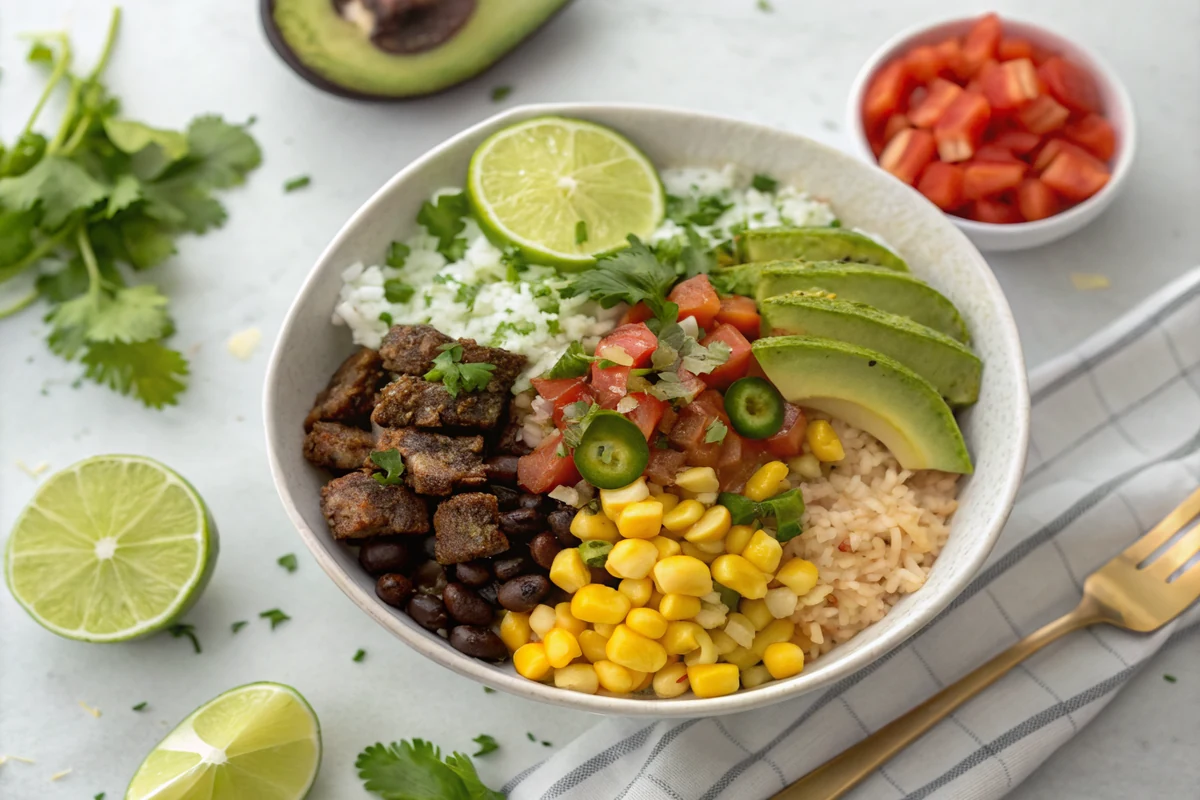
Then come the cold and fresh toppings, arranged in their own little zones rather than dumped in a pile. I like to fan the avocado on one side, spoon the pico on another, scatter the cheese, add a dollop of sour cream, and tuck the pickled jalapenos in where I can grab them. Arranging it this way is not just for looks, though it does make a gorgeous bowl. It lets each person dig into the toppings they want most without hunting through a mixed-up heap.
The finishing move is always a hard squeeze of fresh lime over the whole assembled bowl, plus a final scatter of cilantro if I have it. That last hit of acid brightens everything and makes the flavors pop. If I am serving a crowd, I skip building individual bowls entirely and just set every component out in its own dish, buffet style, with empty bowls stacked at the end. Letting everyone build their own is the most fun way to serve this, and it is how it usually goes at my house.
Make It Meal Prep
This is hands-down one of the best meal-prep dinners I make, because every component stores separately and holds up beautifully in the fridge. On a Sunday I cook a big pot of cilantro-lime rice, brown a double batch of seasoned beef or chicken, char a couple cups of corn, and warm a batch of beans. I let everything cool, then portion it into containers. Come a busy weeknight, dinner is just reheating the warm parts and adding fresh toppings, which takes about five minutes instead of cooking from scratch.
The smart way to meal prep these is to keep the wet and fresh stuff separate from the cooked components. Rice, protein, beans, and corn all refrigerate well together or in their own tubs for three to four days. But store the pico, avocado, cheese, sour cream, and lettuce on the side and add them fresh at serving time. If you mix everything in advance, the fresh toppings go soggy and the avocado browns, and the whole bowl loses that just-made feel that makes it worth eating.
For grab-and-go lunches, layer the cold components on the bottom of the container and the warm ones on top, or pack a small separate cup for the toppings you want crisp. The rice, beans, protein, and corn microwave well straight from the fridge. Add a wedge of lime and a little tub of pico or salsa to squeeze on after reheating. A batch of these bowls genuinely makes the workweek easier, and they reheat far better than most prepped lunches because each part was cooked right to begin with.
Is a Tex-Mex Bowl Healthy
A Tex-Mex bowl can be as light or as loaded as you want, which is part of why I like it. The bones of it are genuinely wholesome: rice for energy, lean protein, fiber-rich black beans, charred corn, and fresh vegetables in the pico and lettuce. A typical bowl as I build it lands somewhere around 550 to 640 calories, depending on the protein and how heavy a hand you have with the cheese, sour cream, and guacamole. It is a balanced, filling meal that does not need a side to feel complete.
If you are watching macros, the bowl flexes easily. To lighten it, use ground chicken or turkey instead of beef, go easy on the cheese and sour cream, and lean harder on the beans, corn, pico, and lettuce. To bump the protein, double the meat or add extra beans. To cut carbs, swap the rice for cauliflower rice or shredded lettuce as the base. Because every component is added by the spoonful, you control exactly what goes in your bowl without giving up the flavor.
The toppings are where the calories add up fastest, so that is the easiest place to adjust. Avocado, cheese, and sour cream are all rich, and a little goes a long way. I never tell people to skip them, because they are part of what makes the bowl satisfying, but knowing where the heavy hitters are lets you balance the bowl to your goals. Compared to grabbing fast food, a homemade Tex-Mex bowl made with fresh components and your own seasoning is a genuinely nourishing dinner.
My Texas Kitchen Tips and Variations
After making these bowls more times than I can count, a few things keep them great. Season every layer, not just the meat. A pinch of salt and lime in the rice, salt on the corn, salt in the beans and pico, all of it adds up to a bowl that tastes complete instead of flat. Taste as you go and adjust. The biggest mistake I see is a well-seasoned protein sitting on top of bland everything else, which leaves the bowl tasting one-note no matter how good that meat is.
Do not skip the char on the corn or the rest on the pico, because those two small steps carry an outsized amount of the flavor. And add the fresh toppings last, right before eating, so the avocado stays green and the lettuce stays crisp. If you are building bowls for the week, keep the components separate as I described, and they will taste freshly made every night. A squeeze of lime over the finished bowl is non-negotiable in my kitchen, since that final acid is what makes everything pop.
For variations, this template takes endless turns. Swap the rice base for a tortilla and you basically have the makings of a breakfast taco spread, the same flavors I lean on for my migas on weekend mornings. Add a drizzle of queso for a richer, indulgent bowl, or build a nacho-style version with chips underneath. A spoon of warm queso blanco dip over the top turns this into the most crowd-pleasing bowl on the table, and it is my move when I want to make a regular weeknight feel a little special.
Most of all, treat this recipe as a framework rather than a strict set of rules. Use whatever protein you have, lean on the toppings your family loves, and build it to your taste. That is the spirit of a build-your-own bowl, and it is why this one has earned a permanent spot in my dinner rotation. Once you have the cilantro-lime rice and that homemade Tex-Mex seasoning down, you can throw together a loaded, satisfying bowl any night of the week with whatever is in the fridge.
Tex-Mex Bowl Recipe
Ingredients
- For the cilantro-lime rice:
- 1 1/2 cups long-grain white rice
- 2 1/4 cups water or chicken broth
- 1 tablespoon neutral oil or butter
- 1 teaspoon salt
- 1/4 cup chopped fresh cilantro
- Zest of 1 lime plus 2 tablespoons lime juice
- For the Tex-Mex seasoning blend:
- 1 tablespoon chili powder
- 2 teaspoons ground cumin
- 1 teaspoon smoked paprika
- 1 teaspoon garlic powder
- 1 teaspoon onion powder
- 1/2 teaspoon dried oregano
- 1/2 teaspoon kosher salt
- 1/4 teaspoon cayenne (optional, for heat)
- For the seasoned protein:
- 1 lb ground beef (85/15) or 1 lb ground chicken or diced chicken thighs
- 1 tablespoon neutral oil
- 1/3 cup water
- For the charred corn:
- 2 cups corn kernels (fresh, frozen, or canned and drained)
- 1 tablespoon neutral oil
- Pinch of salt
- For the black beans:
- 1 (15 oz) can black beans, drained and rinsed
- 1/2 teaspoon cumin
- 1 clove garlic, minced
- Salt to taste
- For the pico de gallo:
- 3 Roma tomatoes, diced
- 1/2 small white onion, finely diced
- 1 jalapeno, seeded and minced
- 1/4 cup chopped cilantro
- Juice of 1 lime
- Salt to taste
- For the bowls:
- 1 1/2 cups shredded Monterey Jack or cheddar cheese
- 2 avocados, sliced, or 1 cup quick guacamole
- 2 cups shredded romaine or iceberg lettuce (optional)
- 1/2 cup sour cream
- Pickled jalapenos, to taste
- Lime wedges, to serve
Instructions
- Cook the cilantro-lime rice. Rinse the rice under cold water until it runs clear, then combine it with the water or broth, oil, and salt in a pot. Bring it to a boil, drop to low, cover, and simmer 15 to 18 minutes until the liquid is gone. Take it off the heat and let it sit covered 5 minutes. Fluff with a fork and fold in the chopped cilantro, lime zest, and lime juice. Taste and add a pinch more salt if it needs it.
- Mix the Tex-Mex seasoning. While the rice cooks, stir together the chili powder, cumin, smoked paprika, garlic powder, onion powder, oregano, salt, and cayenne if you want some heat in a small bowl. This homemade blend beats any store packet and skips the fillers. Make a double or triple batch and keep it in a jar, because you will reach for it on tacos, fajitas, and roasted vegetables all week. Give it a quick whiff so you know what fresh, toasty Tex-Mex spice should smell like.
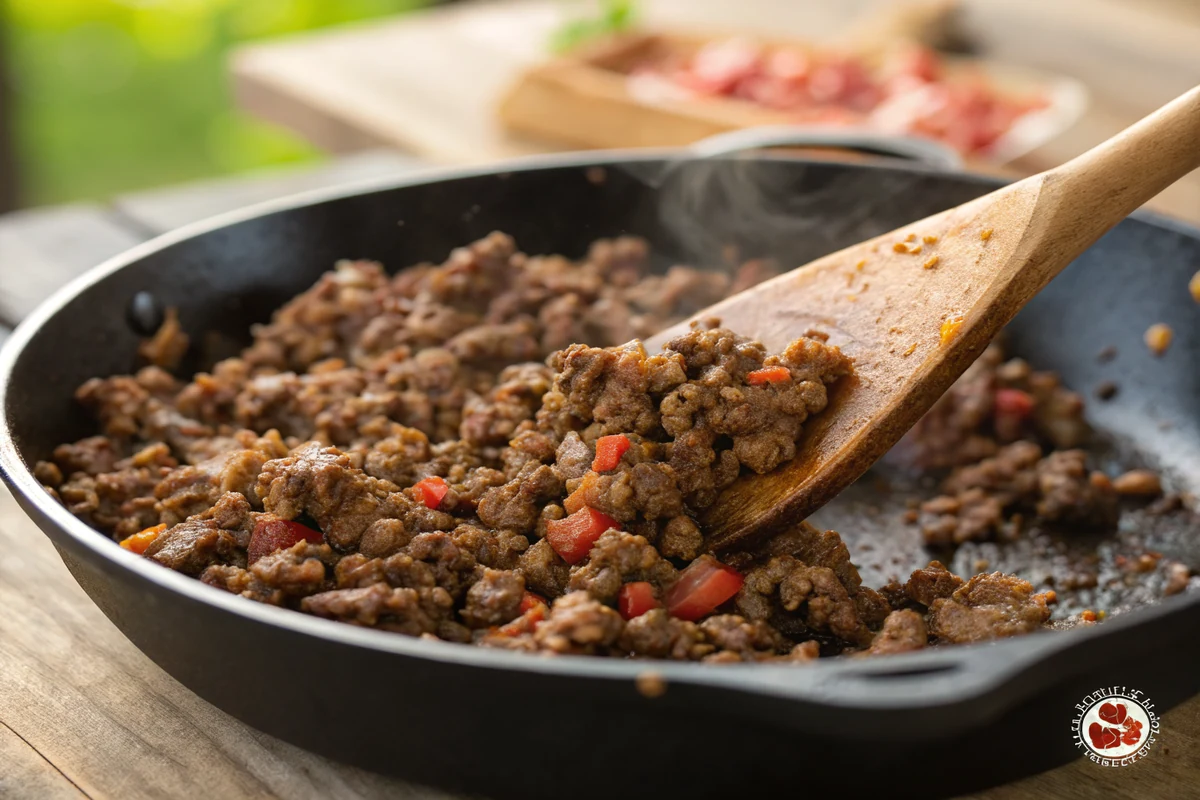
- Season and cook the protein. Heat the oil in a large skillet over medium-high. Add the ground beef or chicken and break it apart, browning it 5 to 6 minutes until no pink remains and the bottom gets some color. Drain off excess fat if using beef, then sprinkle in all of the Tex-Mex seasoning and pour in the water. Stir and simmer 2 to 3 minutes until the liquid cooks down into a glossy sauce that coats every crumble. Taste and adjust the salt before pulling it off the heat.
- Char the corn. Wipe out a skillet or use a second one, set it over high heat, and add the oil. Pour in the corn in an even layer with a pinch of salt and let it sit undisturbed a minute or two so it picks up dark, blistered spots. Stir and char again, repeating until much of the corn is browned and a little smoky, about 4 to 5 minutes total. That char is where all the sweet, toasty flavor lives, so do not stir it too often or it will just steam.
- Warm the black beans. In a small saucepan, combine the drained black beans, cumin, minced garlic, and a splash of water. Warm them over medium heat for 4 to 5 minutes, stirring now and then, until they are hot through and the garlic loses its raw bite. Mash a few beans against the side of the pot if you like them a little creamy. Season with salt to taste. Keep them loose and saucy, not dried out, so they spoon nicely over the rice in the bowl.
- Make the pico de gallo. Toss the diced tomatoes, white onion, minced jalapeno, and chopped cilantro in a bowl. Squeeze in the lime juice and season with salt, then stir and let it sit at least 10 minutes so the flavors come together and the onion mellows. Taste and add more lime or salt as needed. This fresh pico brings the brightness that keeps the whole bowl from feeling heavy, so do not skip it. Make it first if you can so it has time to rest.
- Prep the cold toppings. While everything else finishes, get your toppings ready so assembly goes fast. Shred the cheese if it is not already, slice the avocados right before serving so they stay green, or whip up a quick guacamole by mashing avocado with lime, salt, and a little of the pico. Shred the lettuce, scoop the sour cream into a bowl, and set out the pickled jalapenos and lime wedges. Having every component lined up is what makes a build-your-own bowl night so easy.
- Build the bowls. Start each bowl with a generous scoop of cilantro-lime rice as the base. Add a portion of the seasoned protein, a spoon of black beans, and a pile of charred corn on top. Crown it with pico de gallo, shredded cheese, avocado or guacamole, lettuce, a dollop of sour cream, and pickled jalapenos to taste. Finish with a hard squeeze of fresh lime over everything. Or set all the parts out and let everyone build their own bowl exactly the way they like it.
Frequently Asked Questions
Should I use chicken, beef, or make it vegetarian?
All three are great, so use what you love. Ground beef gives the classic rich, savory flavor, while ground or diced chicken makes a lighter bowl that soaks up the Tex-Mex seasoning beautifully. For a vegetarian bowl, skip the meat and double the black beans, or add seasoned pinto beans, sauteed peppers and onions, or roasted sweet potato. Because the bowl is already loaded with rice, cheese, corn, and guacamole, a meatless version is just as filling and satisfying as one with meat.
What is the best rice for a Tex-Mex bowl?
I use long-grain white rice cooked with salt, then folded with cilantro, lime zest, and lime juice off the heat for a bright, fresh cilantro-lime base. Cooking it in chicken broth adds savory depth. If you want a more classic Tex-Mex flavor underneath, swap in a tomato-based Spanish rice. Brown rice or cauliflower rice work for a heartier or lower-carb base. Whatever you choose, rinse the rice first so it cooks up fluffy and season the base well, since bland rice drags the whole bowl down.
How do I meal prep and store Tex-Mex bowls?
Cook the rice, protein, beans, and corn ahead and store them in the fridge for three to four days, either together or in separate tubs. The key is keeping the fresh toppings separate: store the pico, avocado, cheese, sour cream, and lettuce on the side and add them fresh at serving time so nothing goes soggy. To reheat, warm just the cooked components in the microwave, then pile on the cold toppings and a squeeze of lime. They reheat far better than most prepped lunches because each part was cooked right.
How do I keep the avocado from turning brown?
The simplest fix is to slice or mash the avocado right before serving instead of ahead of time, since exposure to air is what browns it. If you must prep it early, toss the avocado or guacamole with plenty of fresh lime juice, since the acid slows oxidation, and press plastic wrap directly against the surface so no air touches it. For meal prep, I just store whole, uncut avocados and cut them fresh each day. That small habit keeps every bowl looking and tasting bright green.
Is a Tex-Mex bowl healthy?
It can be a genuinely balanced, nourishing meal. The base is wholesome: rice for energy, lean protein, fiber-rich black beans, charred corn, and fresh vegetables in the pico and lettuce. A typical bowl lands around 550 to 640 calories depending on the protein and toppings. To lighten it, use chicken or turkey, go easy on the cheese and sour cream, and load up on beans, corn, and pico. To cut carbs, swap the rice for cauliflower rice. Since you add each component by the spoonful, you control exactly what goes in.
What is the difference between a burrito bowl and a Tex-Mex bowl?
Honestly, they are nearly the same thing, and the terms get used interchangeably. A burrito bowl is simply the filling of a burrito served unwrapped in a bowl instead of rolled in a tortilla, popularized by fast-casual chains. A Tex-Mex bowl is the broader, homestyle name for that same idea, built on the Texas-meets-Mexican flavors of cumin, chili powder, beans, cheese, and fresh salsa. Both layer a rice base, a seasoned protein, beans, and toppings. Call it whichever you like; the build-your-own approach in this recipe works for both.
Can I make it spicy?
Absolutely, and there are several ways to dial up the heat. Add the cayenne to the Tex-Mex seasoning blend, and leave the seeds and membranes in the jalapeno in your pico for more kick. Pile on pickled jalapenos, drizzle hot sauce over the finished bowl, or add diced serrano or a pinch of chipotle powder to the meat. For a smoky heat, stir a little adobo sauce from a can of chipotles into the protein. Because everyone builds their own bowl, you can make the base mild and let each person spice theirs to taste.