Tex-Mex Recipes
Tex-Mex Egg Rolls
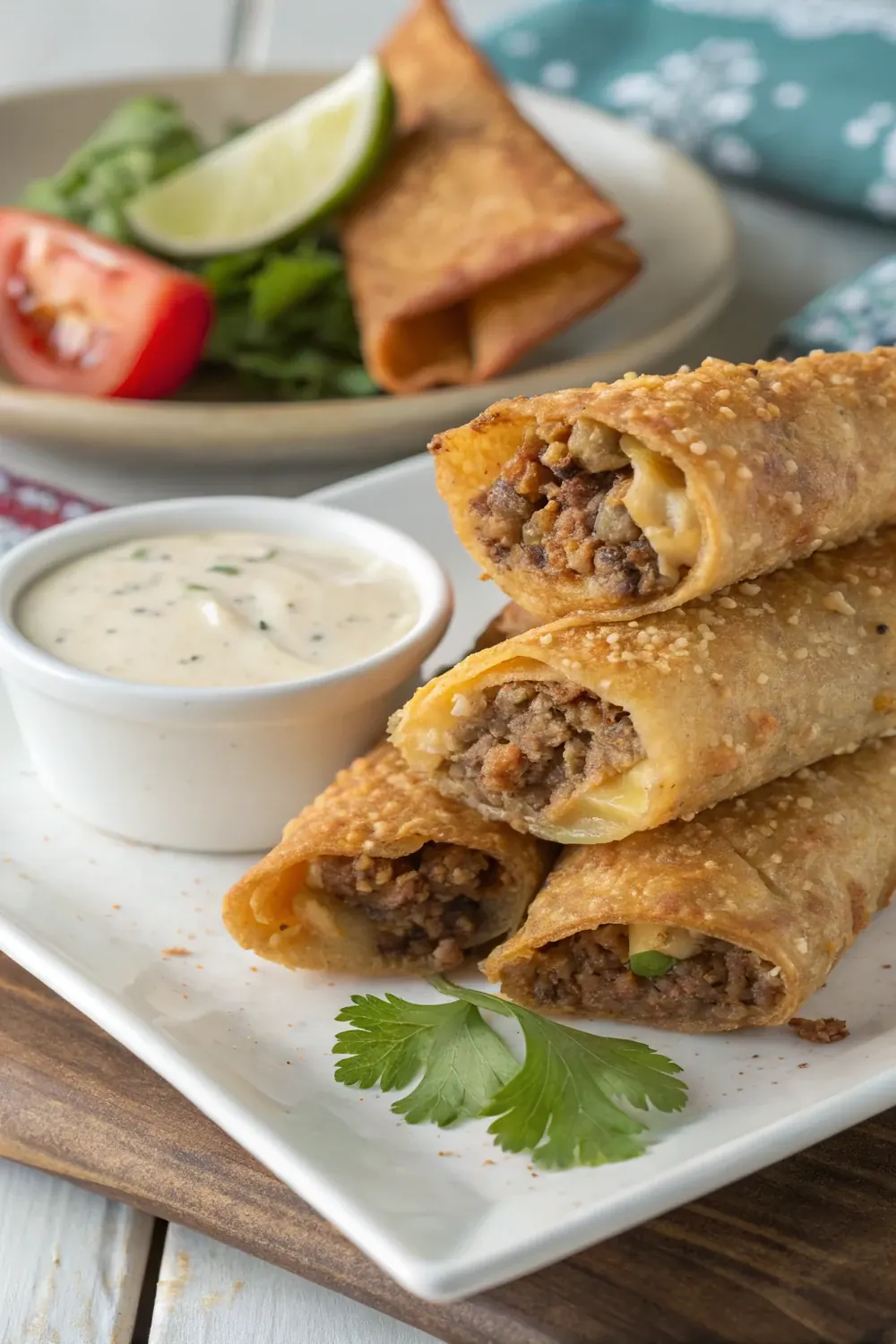
Chef Mia's Tex-Mex egg rolls: seasoned beef, black beans, corn, green chiles, and melty cheese rolled tight and fried golden. The crunchy party appetizer.
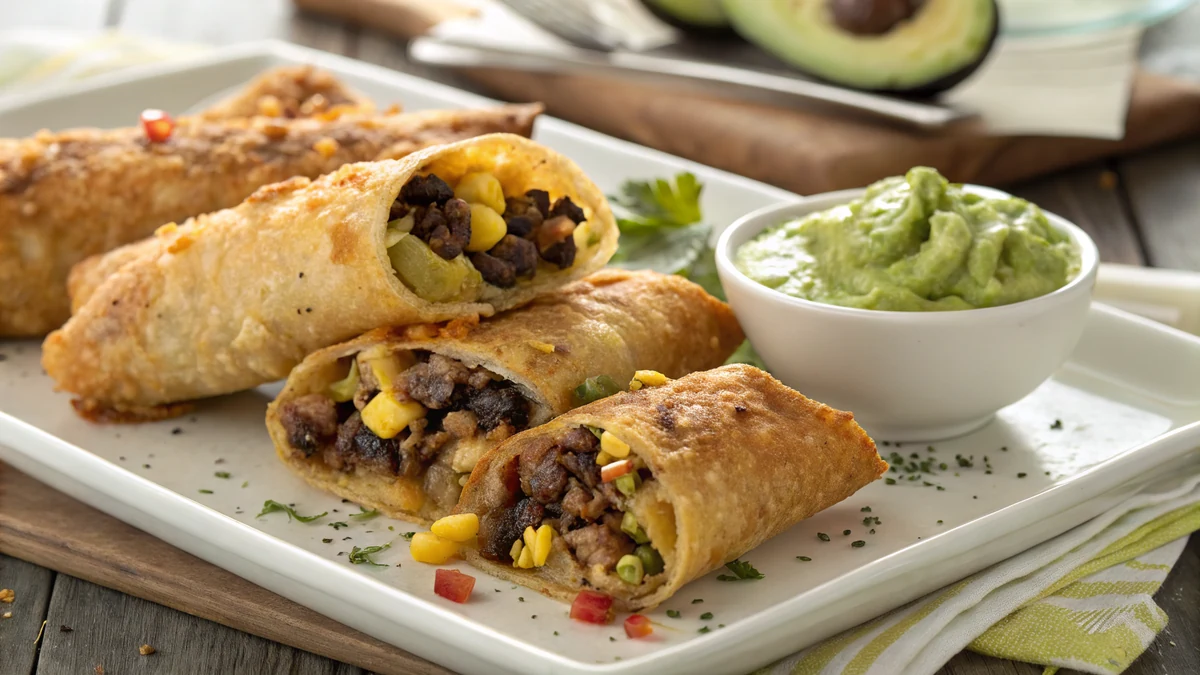
Quick answer: Tex-Mex egg rolls are a fusion appetizer that wraps a Tex-Mex filling, seasoned ground beef or chicken, black beans, corn, green chiles, and melty cheese, inside a thin egg roll wrapper and fries it until shatteringly crisp. Cook and season the filling, let it cool so it does not tear the wrappers, roll each one tight with a flour-and-water seal, then deep-fry at 350F for 3 to 4 minutes until deep golden, or air-fry at 380F. Serve hot with a creamy avocado-lime or cilantro-ranch dipping sauce. The recipe makes about 12 egg rolls and the filling can be made a day ahead. They are the crunchy, hand-held cousin of a plate of Tex-Mex.
Tex-Mex egg rolls are what happens when a plate of Tex-Mex and a Chinese takeout order shake hands, and the result is the single most-requested appetizer at my house on game day. Picture everything good about a loaded taco, seasoned beef, black beans, sweet corn, green chiles, and melty cheese, packed tight into a thin wrapper and fried until it shatters when you bite it. The crunch gives way to a hot, savory, slightly gooey center, and a swipe of cool avocado-lime sauce ties it all together. They disappear faster than I can fry them.
They look fancy and restaurant-y, the kind of thing you assume came from a freezer box, but they are genuinely simple to make and almost entirely make-ahead. The filling is a one-skillet job you can cook a day in advance. The rolling is the same fold-and-tuck motion as a burrito, just smaller. And you can deep-fry them for the classic blistered shell or air-fry them for a lighter version that still crunches. I will walk you through the filling, the rolling technique that keeps them from bursting in the oil, and the two ways to cook them so you can pick what suits your kitchen.
Why Tex-Mex Egg Rolls Work So Well
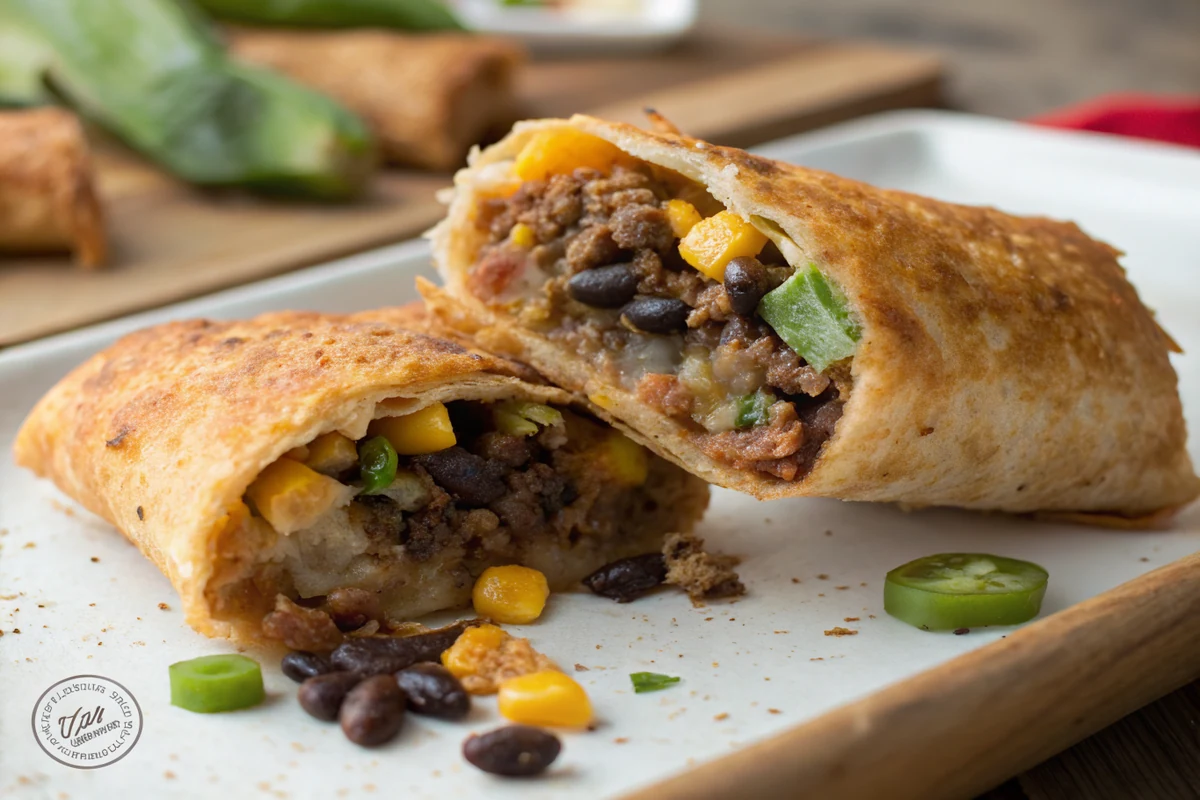
Fusion food can feel gimmicky, but Tex-Mex egg rolls work because the two traditions actually solve the same problem the same way: wrap a savory filling in a thin starch and make it portable. A burrito and an egg roll are closer cousins than they look. What the egg roll wrapper adds is the one thing a flour tortilla cannot, a thin, glassy, deep-fried shell that shatters. That crunch against a soft, cheesy, spiced interior is the textural contrast that makes these so hard to stop eating.
They are also a brilliant way to stretch a pound of beef into an appetizer that feeds a crowd. Bulked out with black beans, corn, and cheese, one pound of meat fills a dozen egg rolls, each one a few satisfying bites. That makes them ideal party food: cheap, generous, and impressive-looking for the effort. Set a stack next to a bowl of queso and a Tex-Mex salad and you have a spread that looks like you cooked all day.
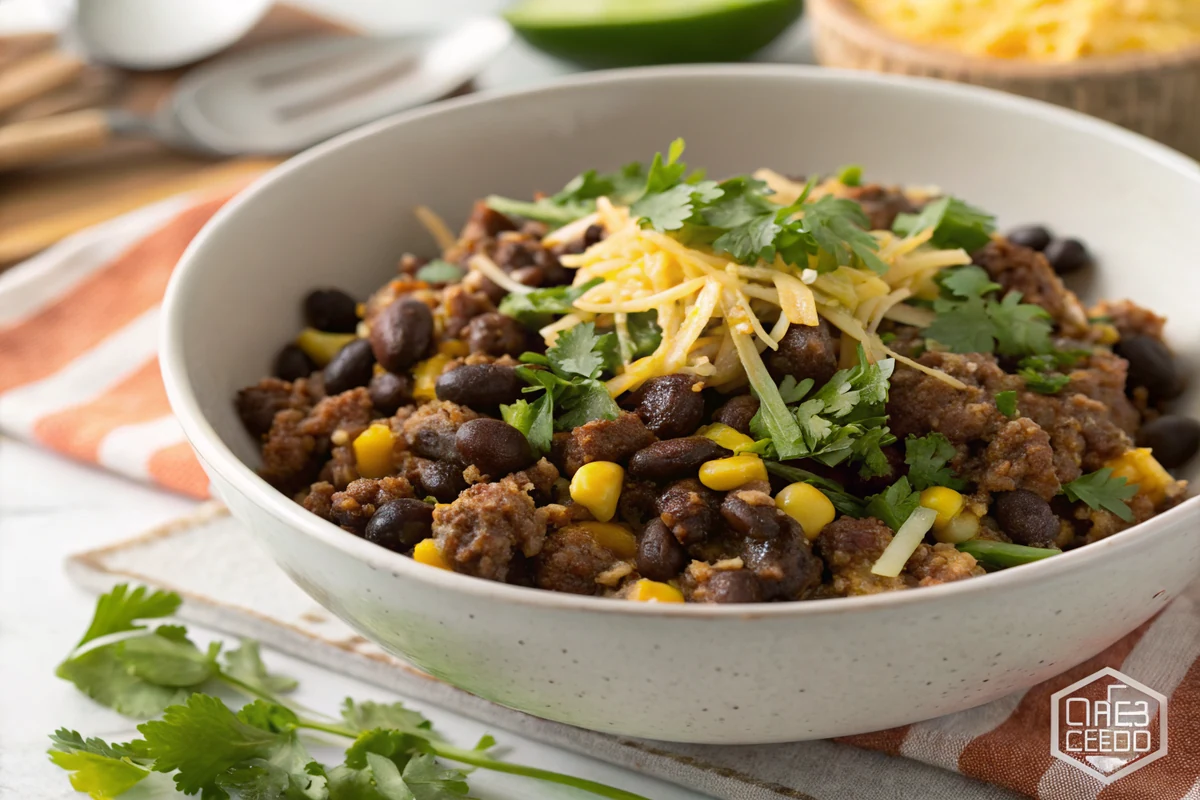
Best of all, the work splits neatly across two days. The filling can be cooked, seasoned, and chilled a full day ahead, which actually improves it as the flavors settle and the mixture firms up for easier rolling. You can even roll the egg rolls a few hours before guests arrive and fry them to order, so the only last-minute job is a few minutes at the stove and a hot, fresh platter every time.
Building a Filling That Does Not Leak
A great Tex-Mex egg roll starts with a filling built to stay put. The spiced ground beef is the base, browned hard and seasoned in the hot fat with chili powder, cumin, smoked paprika, and garlic so it tastes like a proper taco rather than plain meat. Ground chicken or turkey swap in cleanly for a lighter roll, and leftover fajita meat chopped small is a fantastic shortcut if you have it.
The supporting cast has to be dry, and this is where most homemade egg rolls go wrong. Black beans, corn, and green chiles all carry water, and water inside an egg roll turns to steam in the fryer and blows the shell apart. Drain and rinse the beans, pat the corn dry, and squeeze the green chiles, then cook the mixture a minute longer than feels necessary to drive off moisture. A drier filling fries up crisp and intact; a wet one bursts and spits.
Cheese is the glue and the soul of the filling. Monterey Jack or a Mexican melting blend binds everything into a scoopable mass and gives you those molten threads when you snap a finished roll in half. Stir it in only after the beef has cooled, so it does not melt prematurely into grease. Add the cilantro and green onion at the same time for freshness, and resist overfilling: a tightly rolled, modestly filled egg roll always beats a fat, loose one that splits.
The Rolling Technique, Step by Step
Rolling is the part people fear and it is genuinely easy once you see it: it is the same envelope fold as a burrito, just smaller and tighter. Set a wrapper in front of you as a diamond, with one point aimed at your belly. Keep the rest of the stack under a damp towel, because egg roll wrappers dry out and crack within minutes of hitting the air, and a cracked wrapper leaks in the oil.
Place about three tablespoons of filling in a neat horizontal log just below the center of the diamond. Resist the urge to overstuff; a slim, tightly packed roll fries evenly and holds its shape, while an overstuffed one bursts at the seams. Fold the bottom point up and over the filling and tuck it underneath, then fold the left and right points in toward the middle like closing an envelope.
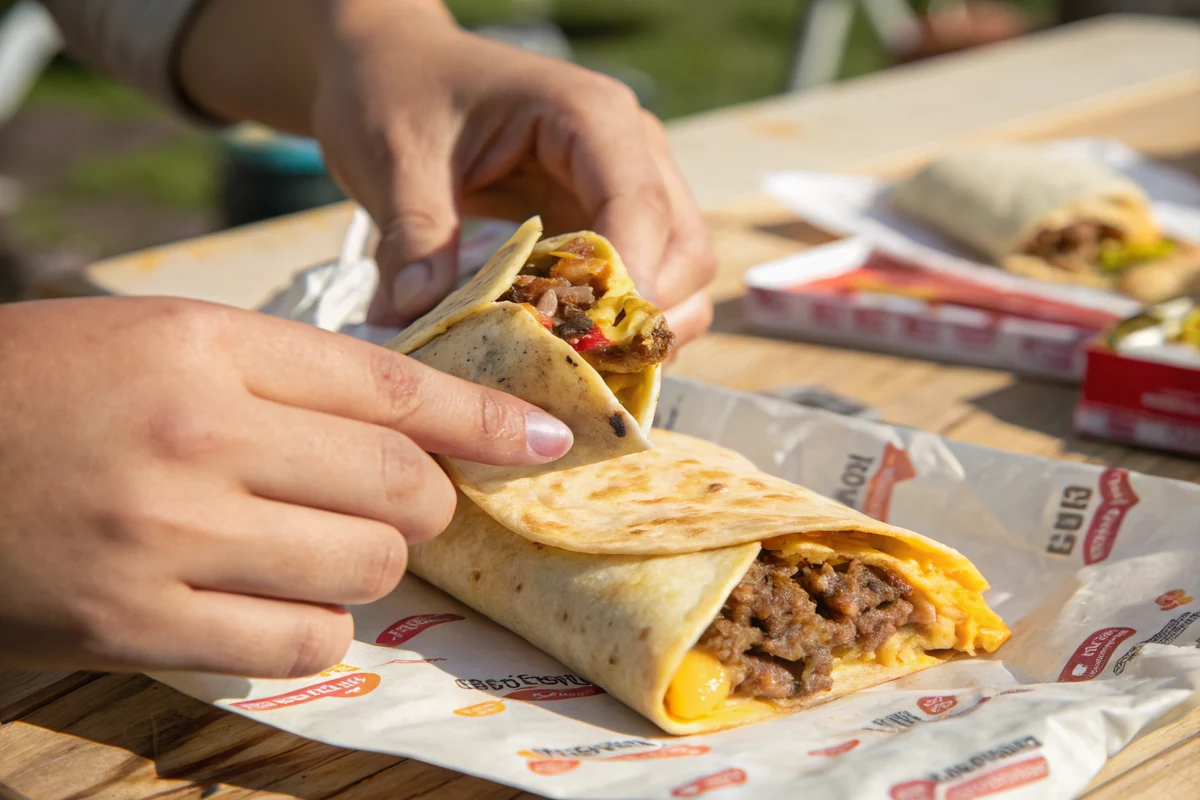
Now roll the whole bundle up and away from you, snug and firm, toward the last point. Brush that final corner with the flour-and-water paste and press it down to seal, the way you would lick an envelope. The paste is what keeps the roll from unraveling in the hot oil. Roll firmly enough that there are no air pockets, because trapped air expands in the fryer and is the number one cause of a burst egg roll. Set each finished roll seam-side down while you work through the rest.
Deep Fry vs Air Fry
Deep frying is the classic method and it gives you the blistered, bubbled, deeply golden shell that is the whole point of an egg roll. Heat two inches of neutral oil to 350F and hold it there, using a thermometer rather than guessing. Too cool and the rolls drink oil and turn greasy; too hot and the shell browns before the filling heats through. Fry just four to six at a time so the oil temperature does not crash, turning them for an even color.
Three to four minutes gets you deep golden brown and crisp all the way around. Drain the finished rolls on a wire rack rather than paper towels, which trap steam against the bottom and turn it soggy. A rack lets air circulate so every side stays crunchy. Salt them lightly the moment they come out of the oil while the surface is still slick enough to hold it.
Air frying is the lighter route and it genuinely works, with a fraction of the oil. Brush or spray each rolled egg roll all over so the wrapper can crisp, then air fry at 380F for nine to eleven minutes, flipping halfway. The result is a little less blistered than deep-fried but still has a real crunch, and it is my pick for a weeknight batch or a crowd where I do not want to babysit a pot of hot oil. Keep them in a single layer with space around each one so the air can do its work.
Whichever way you cook them, serve them hot and fresh. Egg rolls are at their absolute best within a few minutes of cooking, when the shell is at peak crunch and the cheese inside is still molten. If you are feeding a crowd, hold fried rolls in a single layer on a rack in a 200F oven for up to twenty minutes, but do not stack them or they steam each other soft.
Dipping Sauces and What to Serve Alongside
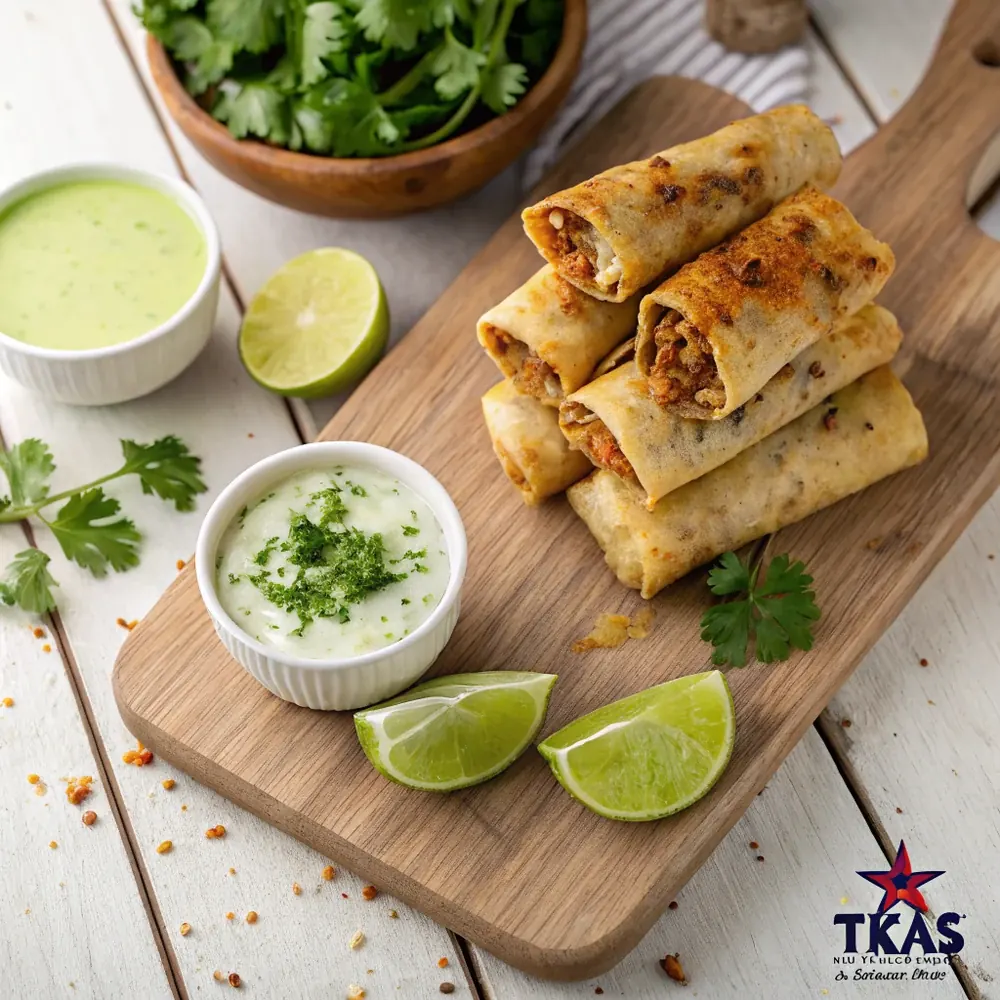
A Tex-Mex egg roll wants a cool, creamy, tangy dip to play against its hot, crunchy, savory shell, and my default is an avocado-lime sauce. Blend a ripe avocado with sour cream, lime juice, cilantro, garlic, and salt, then thin it with a little water to a dipping consistency. It is cooling, bright, and rich all at once, and it doubles as a salad dressing or a taco drizzle if you make extra.
If avocado is not in the cards, a cilantro-lime ranch is the crowd-pleaser: stir chopped cilantro, lime juice, and a pinch of cumin into a good ranch and you are done. Salsa, a quick pico de gallo, or a smoky chipotle crema all work too. For a sweet-heat contrast, a drizzle of honey mixed with hot sauce is surprisingly great against the savory filling. Put out two or three dips and let people mix and match.
As for the rest of the spread, these egg rolls are appetizers that love company. They sit naturally beside queso blanco for dipping, a bowl of guacamole, or a fresh Tex-Mex salad to cut the richness. For a full party table, add quesadillas, jalapeno poppers, and a pitcher of margaritas or agua fresca. They are built for game day, potlucks, and the kind of grazing dinner where nobody really sits down.
Make-Ahead, Freezing, and Reheating
These egg rolls are a make-ahead dream, which is most of why I love them for entertaining. The filling can be cooked, seasoned, and refrigerated up to a day in advance, and it genuinely improves overnight as the flavors meld and the mixture firms for easier rolling. You can also roll the egg rolls several hours ahead, keep them covered with a damp towel and then plastic wrap in the fridge, and fry them fresh right before serving.
They freeze beautifully raw, which means you can make a big batch and pull out a few whenever a craving hits. Roll them, freeze them in a single layer on a sheet pan until solid, then transfer to a freezer bag for up to three months. Fry or air fry them straight from frozen, adding a couple of minutes to the cook time. Do not thaw first; frozen-to-fryer keeps the wrapper from going gummy.
Leftover cooked egg rolls reheat best in a hot oven or air fryer, never the microwave, which turns the crisp shell to a chewy disappointment. A few minutes at 375F brings back most of the crunch. Store cooked leftovers in the fridge for up to three days in a loosely covered container so they do not sweat. Honestly, though, leftovers are rare around here; a platter of these tends to vanish before anyone thinks about saving some.
This freezes-raw quality is exactly why these are my favorite use for a Hatch chile stash: assemble two dozen in August while the chiles are fresh, then fry them straight from frozen in November. My Hatch chile recipes guide covers roasting and freezing a full sack.
Wrappers: Egg Roll vs Spring Roll vs Tortilla
The wrapper you choose decides the texture, so it pays to know the difference. Egg roll wrappers are the right call here. They are thicker, wheat-based, and made with egg, and they fry up into the bubbly, sturdy, deeply golden shell that gives these their signature shatter. You will find them in the refrigerated produce section near the tofu, usually in seven-inch squares. Keep them covered with a damp towel as you work, because they dry and crack fast once exposed to air.
Spring roll wrappers are a different animal and not what you want for this. They are thinner, often rice-based or a delicate wheat sheet, and they fry into a light, glassy, blistered crisp rather than the substantial crunch of an egg roll. They tear more easily under a hearty Tex-Mex filling and can leak. Save them for lighter, more delicate rolls; for a beef-and-cheese filling that needs structure, the thicker egg roll wrapper wins.
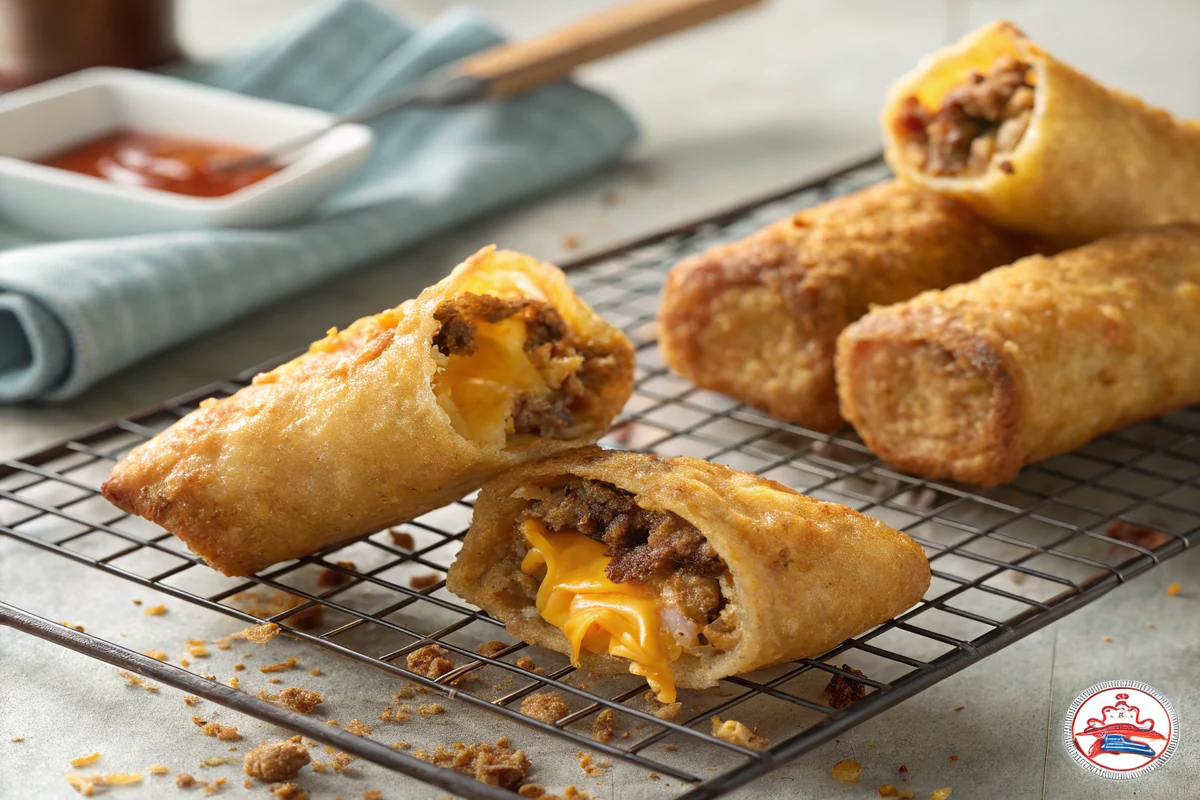
You can use a large flour tortilla in a pinch, and the result is closer to a chimichanga than a true egg roll. Tortillas are softer and chewier and will not give you that brittle crunch, but they hold a Tex-Mex filling well and fry to a nice blistered brown. If you go this route, warm the tortilla first so it folds without cracking, roll it tight like a burrito, and secure the seam with a toothpick before it hits the oil.
Whatever wrapper you choose, the sealing step is the same and it matters. A flour-and-water paste brushed on the final edge glues the roll shut so it cannot unravel in the hot oil. Some cooks use a beaten egg wash instead, which works just as well. Press the sealed edge firmly and set the roll seam-side down to hold while you finish the batch. A roll that pops open in the fryer dumps its filling and spits hot oil, so do not skip the glue.
Scaling Up for a Party
These are party food at heart, and they scale up gracefully if you plan the workflow. The filling doubles or triples without any trouble, so for a crowd I cook a big batch of seasoned beef a day ahead and chill it, which spreads the work out and makes the meat easier to roll. Figure two to three egg rolls per person as an appetizer among other snacks, and a few more if they are the main event of a grazing table.
Set up an assembly line when you are rolling a big batch. Lay out a row of wrappers under a damp towel, portion the filling with a measuring scoop so every roll is the same size and fries evenly, and roll them one after another seam-side down onto a sheet pan. Working in a rhythm, you can roll three dozen in well under an hour, and uniform rolls mean they all finish frying at the same moment.
Frying for a crowd is the one bottleneck, so manage the oil and the holding. Fry in small batches to keep the oil at a steady 350F, and hold the finished rolls in a single layer on a rack in a 200F oven for up to twenty minutes so they stay crisp while you work through the rest. Do not stack them hot or they steam each other soft. For a hands-off crowd option, air fry trays in rotation instead of babysitting a pot of oil.
Round out the table so the egg rolls are the star, not the whole show. A couple of dips, a big bowl of queso blanco, a fresh Tex-Mex salad to cut the richness, and something cold to drink turn a plate of egg rolls into a real spread. They travel well to potlucks too: fry them just before you leave, carry them loosely covered on a rack, and they hold their crunch for the short trip better than almost any other fried appetizer.
Tex-Mex Egg Rolls Recipe
Ingredients
- For the filling:
- 1 lb (450 g) ground beef (or ground chicken or turkey)
- 1 tablespoon chili powder
- 1 1/2 teaspoons ground cumin
- 1 teaspoon smoked paprika
- 1/2 teaspoon garlic powder
- 3/4 teaspoon kosher salt
- 1 can (4 oz) diced green chiles, drained
- 1 cup black beans, drained and rinsed
- 1 cup sweet corn (canned or thawed frozen), patted dry
- 2 cups shredded Monterey Jack or a Mexican blend
- 1/4 cup chopped fresh cilantro
- 2 green onions, sliced
- For assembly and frying:
- 12 egg roll wrappers (7-inch)
- 1 tablespoon all-purpose flour mixed with 2 tablespoons water (sealing paste)
- Neutral oil, for frying (about 1 quart for deep frying)
- For the avocado-lime dipping sauce:
- 1 ripe avocado
- 1/2 cup sour cream
- 2 tablespoons fresh lime juice
- 1/4 cup cilantro
- 1 small garlic clove
- 1/4 teaspoon kosher salt, plus water to thin
Instructions
- Brown and season the filling. Heat a dry skillet over medium-high. Brown the ground beef 5 to 6 minutes, breaking it into small crumbles, until no pink remains. Drain off excess fat. Add the chili powder, cumin, smoked paprika, garlic powder, and salt and stir 30 seconds until fragrant. Stir in the green chiles and cook 1 minute more to drive off their liquid.
- Cool the filling completely. Scrape the seasoned beef into a bowl and let it cool to room temperature, then stir in the black beans, dried corn, cheese, cilantro, and green onions. This cooling step is not optional: hot filling melts the cheese into grease, steams the wrappers, and makes them tear and burst in the oil. For the best results, chill the filling 30 minutes so the cheese helps it hold together.
- Set up your rolling station. Lay one egg roll wrapper on a clean surface in a diamond orientation, one corner pointing toward you, keeping the rest covered with a damp towel so they do not dry out. Stir the flour and water into a thin paste for sealing. Have a baking sheet ready for the rolled egg rolls.
- Fill and roll tight. Spoon about 3 tablespoons of filling in a log across the center of the wrapper, just below the middle. Fold the bottom corner up and over the filling, fold in the two side corners like an envelope, then roll up snugly toward the top corner. Brush the final corner with sealing paste and press to close. Roll firmly; loose egg rolls trap air and burst.
- Deep fry to golden. Heat 2 inches of oil to 350F in a heavy pot. Fry the egg rolls 4 to 6 at a time, turning, for 3 to 4 minutes until deep golden brown and crisp all over. Do not crowd the pot, which drops the oil temperature and gives you greasy, pale shells. Drain on a wire rack, not paper towels, so they stay crisp on all sides.
- Or air fry for a lighter version. Brush or spray the rolled egg rolls all over with oil. Air fry at 380F for 9 to 11 minutes, flipping halfway, until golden and crisp. They will be a little less blistered than the deep-fried version but still satisfyingly crunchy, with far less oil. Work in a single layer with space around each one.
- Make the dip and serve. Blend the avocado, sour cream, lime juice, cilantro, garlic, and salt until smooth, thinning with a tablespoon of water at a time to a dipping consistency. Let the egg rolls cool 2 minutes so the filling does not scald, then serve hot with the avocado-lime sauce and lime wedges.
Frequently Asked Questions
What are Tex-Mex egg rolls made of?
Tex-Mex egg rolls wrap a Tex-Mex filling inside a thin egg roll wrapper and fry it crisp. The classic filling is seasoned ground beef (or chicken), black beans, sweet corn, diced green chiles, melty Monterey Jack or Mexican-blend cheese, and fresh cilantro and green onion. The mixture is seasoned with chili powder, cumin, smoked paprika, and garlic, cooled, rolled tight, and deep-fried or air-fried until golden. They are served hot with a creamy dip like avocado-lime or cilantro-ranch. Think of them as a loaded taco in a shatteringly crisp shell.
How do you keep Tex-Mex egg rolls from bursting in the oil?
Three things prevent bursting. First, cool the filling completely and keep it dry by draining the beans, patting the corn dry, and cooking off excess moisture, since steam is what blows wrappers apart. Second, do not overfill; a slim, tightly packed roll holds, an overstuffed one splits. Third, roll firmly with no trapped air and seal the final corner with flour-and-water paste so it cannot unravel. Frying at a steady 350F, not too hot, and not crowding the pot also keeps them intact.
Can you air fry Tex-Mex egg rolls?
Yes, and they come out genuinely crisp with far less oil. Brush or spray each rolled egg roll all over with oil so the wrapper can crisp, then air fry at 380F for 9 to 11 minutes, flipping halfway, until golden. Keep them in a single layer with space around each one. The shell is slightly less blistered than the deep-fried version but still crunchy. You can air fry them straight from frozen too, adding a couple of extra minutes.
Can I make Tex-Mex egg rolls ahead of time?
Absolutely. The filling can be made and refrigerated up to a day ahead and actually improves overnight. You can roll the egg rolls a few hours before serving, keep them covered with a damp towel and plastic wrap in the fridge, and fry them fresh. For longer storage, freeze them raw in a single layer, then bag them for up to three months and cook straight from frozen. Cooked egg rolls are best fresh but reheat in a hot oven or air fryer.
What dipping sauce goes with Tex-Mex egg rolls?
A cool, creamy, tangy dip is the perfect foil for the hot crunchy shell. Avocado-lime sauce (blended avocado, sour cream, lime, cilantro, and garlic) is my default. Cilantro-lime ranch, chipotle crema, salsa, pico de gallo, or guacamole all work well too. For a sweet-heat option, mix honey with hot sauce. Putting out two or three dips lets guests mix and match, and any creamy lime-based sauce doubles as a salad dressing if you make extra.
Can I freeze Tex-Mex egg rolls?
Yes, and freezing raw works best. Roll the egg rolls, freeze them in a single layer on a sheet pan until solid, then transfer to a freezer bag for up to three months. Fry or air fry them straight from frozen, adding a couple of minutes to the time; do not thaw first, or the wrappers turn gummy. You can also freeze cooked egg rolls and reheat them in a 375F oven or air fryer, though the texture is best when you cook them fresh from frozen.
What is the difference between Tex-Mex egg rolls and Southwest egg rolls?
They are nearly the same idea with small differences. Southwest egg rolls, made famous by chain restaurants, usually skip the meat and lean on black beans, corn, spinach, and cheese with Southwestern spices, often baked or air-fried. Tex-Mex egg rolls typically include seasoned beef or chicken and lean harder into taco flavors like chili powder and cumin, with cheese and green chiles. Both wrap a Southwestern-style filling in an egg roll wrapper and fry it crisp; the meat and the spicing are the main distinction.