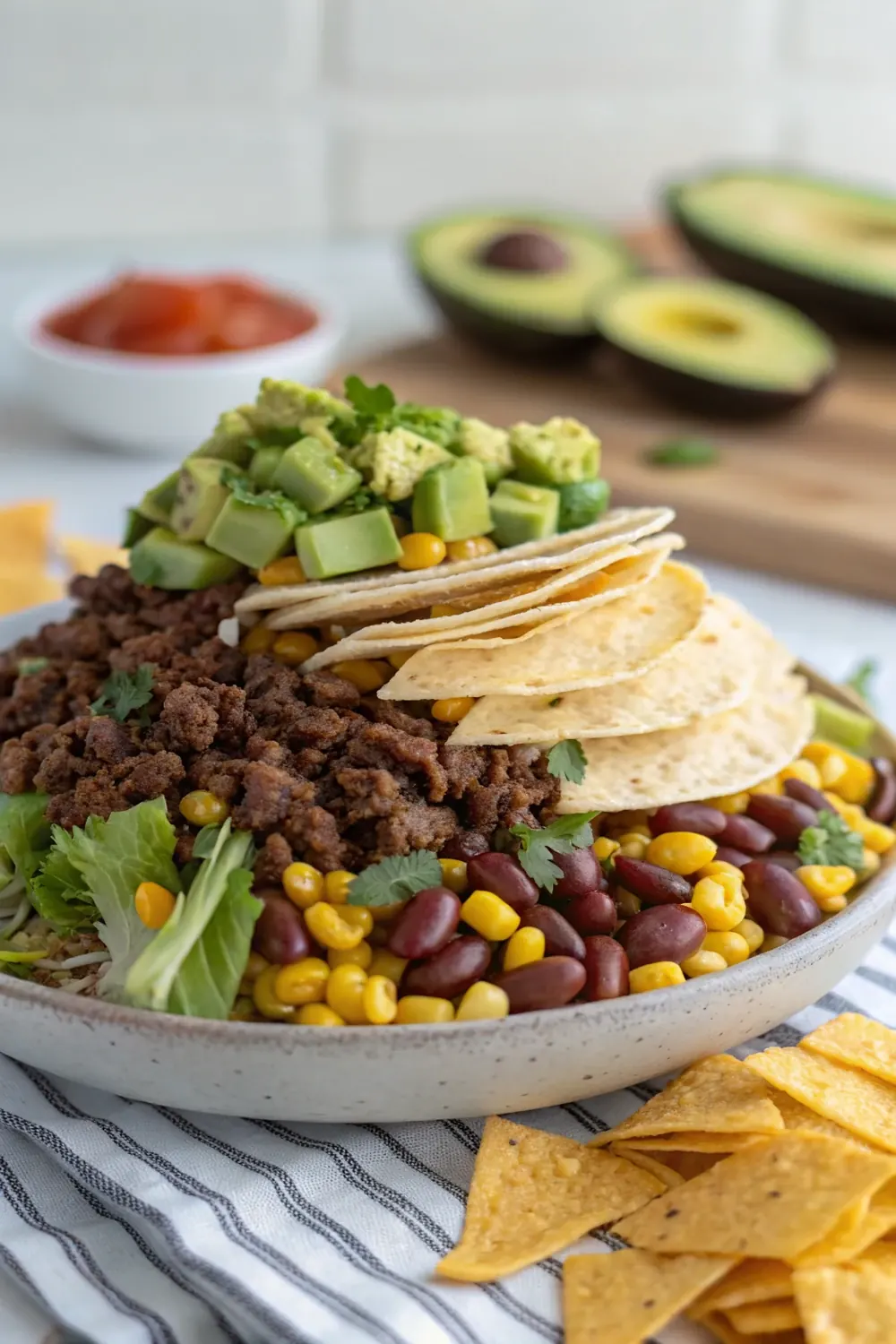
Tex-Mex Recipes
Tex-Mex Salad
Chef Mia's 7-layer Tex-Mex salad: seasoned beef, black beans, romaine, avocado, and crunchy tortilla strips under a bright cumin-lime dressing.
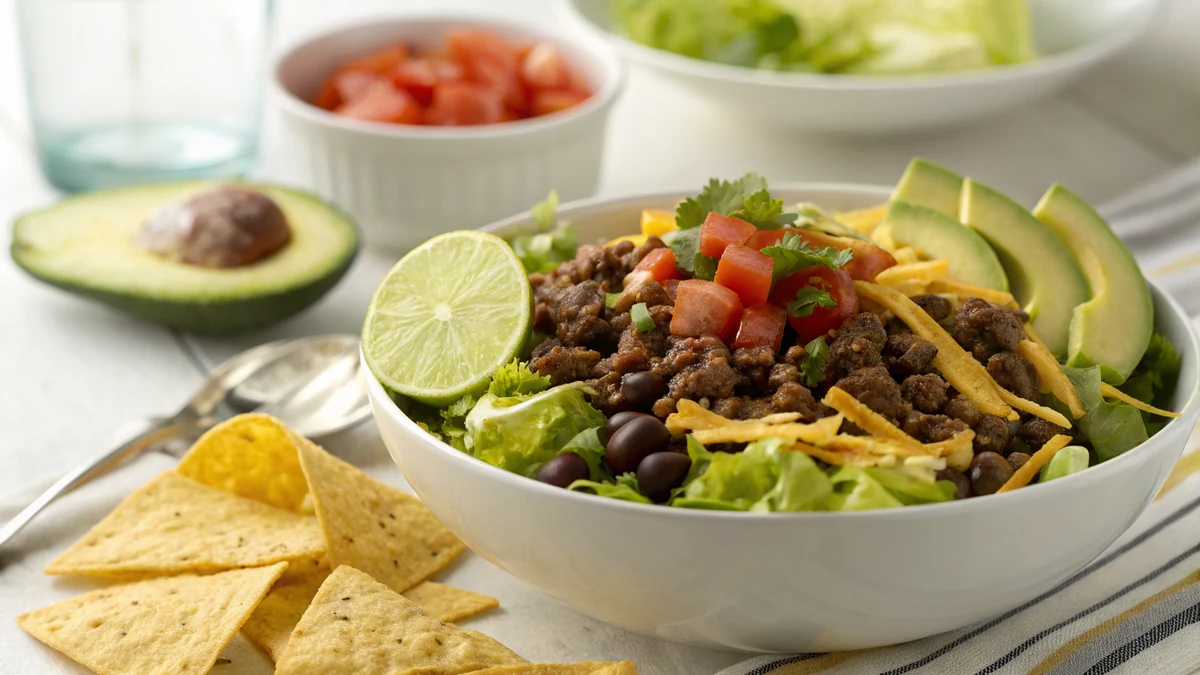
Quick answer: A Tex-Mex salad is a composed dinner salad built in layers: crisp chopped romaine, seasoned ground beef or grilled chicken, black beans, sweet corn, diced tomato, sharp cheddar, avocado, and crunchy fried tortilla strips, all tossed at the table with a cumin-lime dressing. Brown 1 pound of beef with chili powder, cumin, garlic, and a splash of broth, then build the bowl cold-to-warm so the lettuce stays crisp. Whisk lime juice, olive oil, honey, cumin, and a little mayonnaise for the dressing. Dress it only at the last minute, because a Tex-Mex salad goes soggy the moment the warm beef and acidic dressing sit on the greens. Serves four as a main.
A Tex-Mex salad is the meal I make on the Tuesday after a weekend of heavy cooking, when the family still wants the flavors of a Tex-Mex plate but nobody wants another casserole. It is everything good about a plate of nachos reorganized into something you can pretend is light: seasoned beef, beans, corn, sharp cheddar, cool avocado, and a fistful of tortilla strips for crunch, all sitting on chopped romaine and tossed with a bright cumin-lime dressing. It eats like a full supper and comes together in about half an hour, most of which is chopping.
This is not the iceberg-and-Catalina taco salad from a 1970s church cookbook, though I have a soft spot for that one too. This is the version I learned to build working through Tex-Mex kitchens, where the rule is texture and temperature contrast. Warm spiced beef against cold crisp lettuce. Creamy avocado against crunchy fried tortilla. Sweet corn against sharp lime. Get those contrasts right and the salad tastes like far more than the sum of a few pantry cans. Get them wrong, dump it all in a bowl and drown it in dressing twenty minutes early, and you have warm wet lettuce. I will walk you through doing it right.
Why a Tex-Mex Salad Beats a Sad Desk Salad
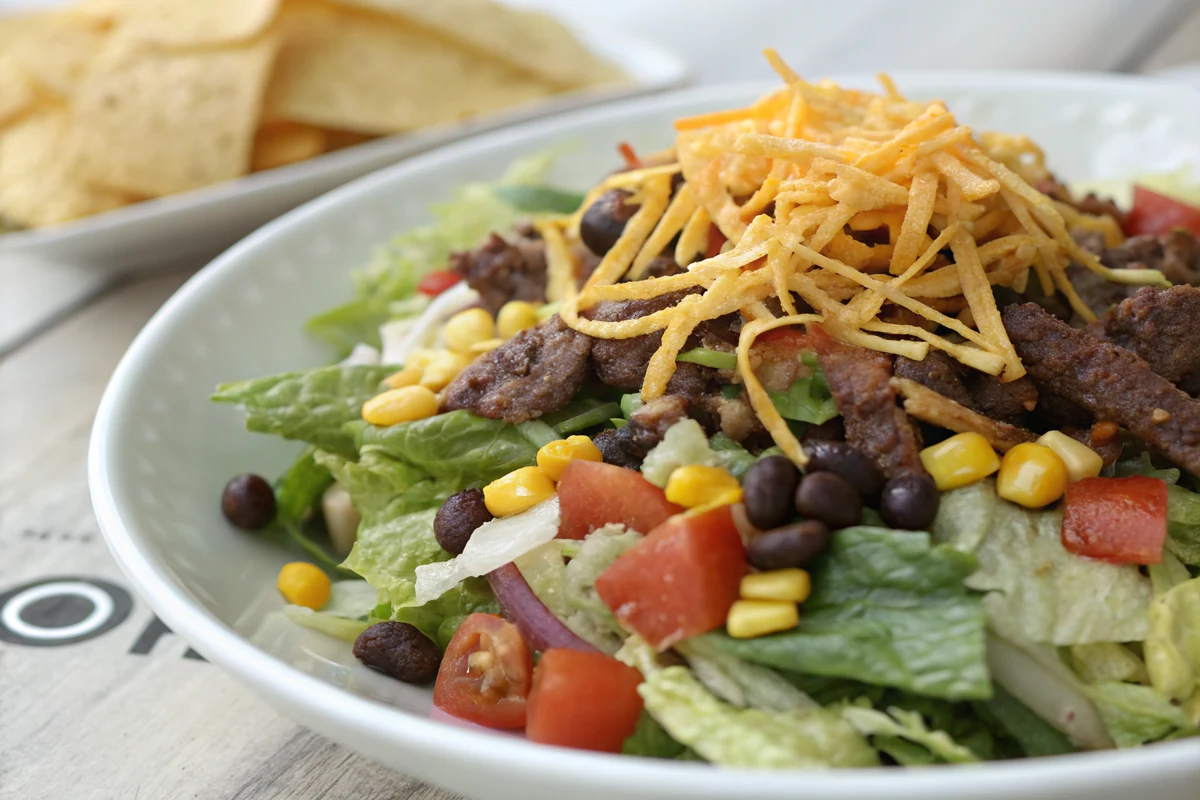
The reason most salads feel like punishment is that they are built on one note: cold, wet, green, and not much else. A Tex-Mex salad is the opposite. It is engineered around contrast, the same principle that makes a plate of enchiladas or a basket of chips and queso so satisfying. Every forkful has something warm and spiced, something cold and crisp, something creamy, and something crunchy. Your mouth never gets bored, which is the whole trick to a salad that eats like a real dinner.
It also happens to be genuinely flexible, which is why it lives in my regular rotation. The base formula is greens plus a protein plus beans plus a crunchy element plus a bright dressing, and every one of those slots takes substitutes. No ground beef? Use shredded rotisserie chicken or the leftover beef from fajitas. Cooking for a meatless night? Double the black beans and add roasted sweet potato. The structure holds no matter what you hang on it.
There is a practical reason I reach for it on busy weeks too. Almost every component can be made ahead and parked in the fridge. The dressing keeps five days, the beef reheats in a minute, the beans and corn are ready from the can, and the only things you handle at the last moment are the lettuce and the tortilla strips. That makes it one of the few salads you can actually meal-prep without it turning to sludge by Wednesday.
The Cumin-Lime Dressing That Pulls It Together
The dressing is where a Tex-Mex salad lives or dies, and the good news is it takes ninety seconds in a jar. The backbone is fresh lime juice, never the bottled stuff, because bottled lime tastes flat and faintly bitter where fresh lime tastes alive. Two limes give you the quarter cup you need. Cut them at room temperature and roll them hard under your palm before juicing to break the membranes and get every drop.
Around the lime you build balance. Olive or avocado oil carries the flavor and softens the acid. A tablespoon of honey rounds off the sharp edge so the dressing tastes bright instead of sour. A teaspoon of ground cumin is the ingredient that makes it read as Tex-Mex rather than generic vinaigrette, that warm, earthy, slightly smoky note that ties the whole bowl to the spiced beef. A spoon of mayonnaise is my quiet secret: it emulsifies the dressing so it clings to the lettuce instead of pooling at the bottom.
Grate the garlic rather than mincing it. A microplaned clove melts into the dressing and spreads its flavor evenly, while a minced clove leaves you with sharp raw garlic bombs in random bites. Salt is the last adjustment. A finished dressing should taste slightly too punchy on its own, because it has to season a whole bowl of mild lettuce and beans once it spreads out. If it tastes perfect straight from the jar, it will taste like nothing on the salad.
Dress at the table and never before. This is the single rule that separates a crisp Tex-Mex salad from a wilted one. Acid and oil start breaking down delicate romaine within minutes, and warm beef speeds the collapse. Toss with half the dressing first, because you can always add more but you cannot un-soak a salad. Bring the jar to the table and let people add a little extra to their own plate if they want it.
Choosing and Prepping the Greens
Romaine is the right lettuce for this job, and it is not close. It has the sturdy, crunchy ribs that stand up to warm beef and heavy dressing without going limp, and a clean, faintly sweet flavor that does not fight the spices. Iceberg works in a pinch and brings even more crunch, but it brings almost no flavor. Tender greens like spring mix or butter lettuce are a mistake here; they collapse into green slime the second the beef lands on them.
Chop the romaine into bite-size pieces, roughly an inch wide, rather than leaving long ribbons. Big leaves are awkward to eat in a composed salad and they do not hold the toppings; bite-size pieces catch beef, beans, and dressing in every forkful. Chop it just before you build so the cut edges stay crisp and do not oxidize into that rusty brown you see on bagged lettuce.
Dry the lettuce like you mean it. This is the step everyone skips and everyone regrets. Wet lettuce dilutes the dressing into pale water and keeps the whole salad from holding any flavor at all. Wash the chopped romaine, then spin it dry in batches, then lay it on a clean towel for a few minutes to shed the last of the water. Dry leaves grip the cumin-lime dressing; wet leaves shrug it off.
The Seasoned Beef, and How to Keep It From Wilting Everything
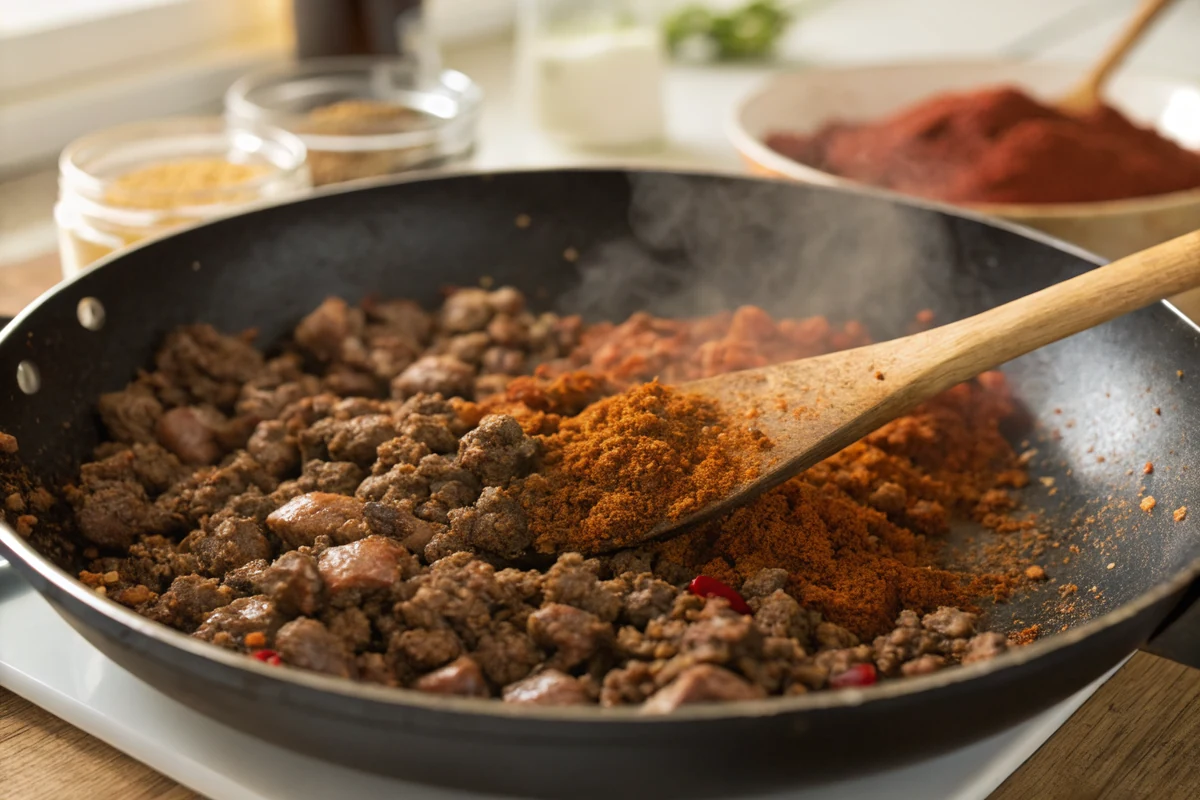
Eighty-twenty ground beef is what you want, because the fat carries the chili-powder and cumin flavor and keeps the meat from drying into pebbles. Brown it hard in a dry, hot skillet and resist the urge to stir constantly. Letting the crumbles sit for a minute at a time builds little browned edges, and those edges are where the deep savory flavor lives. Drain most of the rendered fat but leave a tablespoon to bloom the spices in.
Season after the meat is browned, not before. Spices added to raw beef just boil in the released water and taste raw and dusty. Once the beef is brown and most of the moisture has cooked off, add the chili powder, cumin, smoked paprika, and garlic powder and stir them in the hot fat for thirty seconds until they smell toasted and fragrant. That quick bloom in the fat is what turns a spice rack into actual flavor.
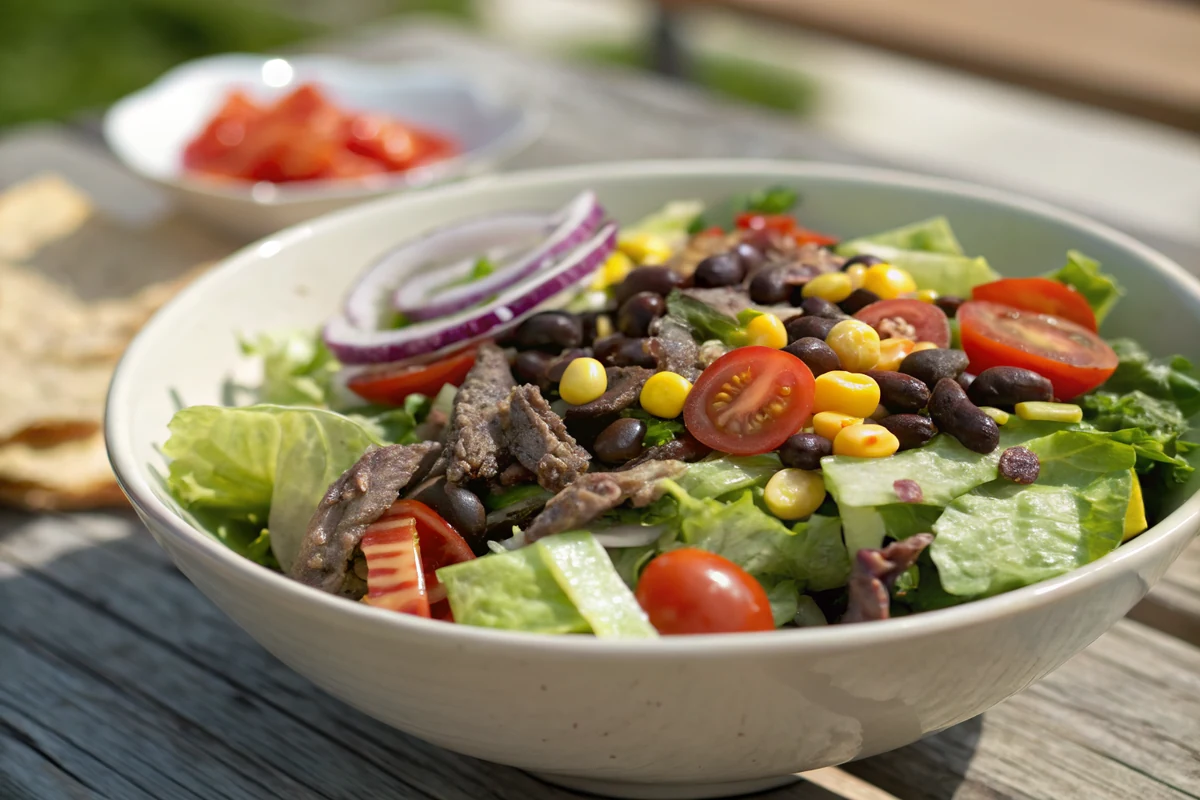
The temperature trick is everything. Hot beef dumped straight onto romaine wilts it in seconds, so let the cooked beef rest off the heat for about five minutes until it is warm rather than scalding. You want it warm enough to soften the cheddar a little but not so hot it cooks the lettuce. If you have made the beef ahead and it is cold, warm it gently and let it come back down to that just-warm point before it touches the greens.
Building in Layers, Cold to Warm
Order matters when you compose this salad, and the principle is simple: cold and sturdy on the bottom, warm and delicate on top. Start with the dry chopped romaine spread across a wide, shallow bowl. A platter or a low wide bowl beats a deep one every time, because depth traps steam and crushes the layers under their own weight. You want surface area so everything sits in a single generous layer.
Scatter the sturdy cold components next: black beans, corn, halved cherry tomatoes, and red onion. Rinse the black beans well so they do not muddy the bowl with starchy can liquid, and pat the corn dry if it came from a can. Lay these in loose rows or zones rather than tossing them through, both because it looks better and because it guarantees a fair share of each thing in every scoop.
Now the warm and creamy layers go on last. Spoon the just-warm beef over the vegetables, then add the cheddar while there is still enough residual heat to soften it slightly without melting it into grease. Tuck the diced avocado in at the end so it keeps its shape, and finish with cilantro and a heavy handful of queso-worthy crunch from the tortilla strips. Add those strips only at the very last second, because the whole point of them is the crunch and they go leathery the moment they sit in dressing.
Make It a Meal: Proteins, Swaps, and Leftovers
Ground beef is the default, but this salad is a frame that holds almost any Tex-Mex protein. Shredded chicken from a rotisserie bird is the fastest swap and keeps it lighter. Leftover steak from a fajita night, sliced thin, turns it into something close to a steakhouse salad. Carnitas or leftover pulled pork work beautifully, and for a vegetarian bowl I double the black beans and add a cup of roasted sweet potato or a handful of grilled peppers.
The crunchy element is negotiable too, as long as you keep one. Fried corn tortilla strips are classic and worth the five minutes, but crushed tortilla chips, toasted pepitas, or even crumbled tostadas all do the job. The non-negotiable is that something on the plate has to shatter when you bite it, because crunch against the soft beef and creamy avocado is half of why this salad satisfies the way a plate of nachos does.
For leftovers, store the parts separately, never the assembled salad. Keep the beef, the chopped vegetables, the dressing, and the tortilla strips in their own containers, and the components hold three to four days. Build each bowl to order. An already-dressed Tex-Mex salad is tomorrow's compost, but a fridge full of prepped parts is four fast lunches that taste freshly made. If you like this build-your-own approach, my Tex-Mex bowl uses the same logic over rice instead of greens.
Where the Tex-Mex Salad Comes From
The composed Tex-Mex salad has a longer history than its weeknight reputation suggests, and it runs straight through the Tex-Mex restaurants of San Antonio and the Rio Grande Valley. The chili queens who fed downtown San Antonio in the late 1800s sold bowls of spiced beef, beans, and chile that were salad-adjacent long before anyone fried a tortilla shell. The dish we recognize today, greens piled with seasoned meat, cheese, and a crunchy element, took shape as Tex-Mex sit-down restaurants standardized their menus through the mid-1900s.
The fried-shell taco salad, the one served in a bowl-shaped tortilla, was the version that went national in the 1960s and 1970s, helped along by chain restaurants and a famous fast-food rendition. That is the one most people picture, often drowned in a sweet orange Catalina dressing. It is a fine guilty pleasure, but it drifted a long way from the fresher, brighter salads being served in Texas kitchens.
What I cook is closer to the home version, the salad a Tex-Mex cook makes for the family rather than the showpiece served to tourists. It keeps the seasoned beef and cheese but leans on fresh avocado, cilantro, lime, and a cumin-lime dressing instead of bottled sweet stuff. It is lighter, it tastes more of actual ingredients, and it fits the way people eat now. The bones are traditional; the brightness is the modern update.
Knowing the lineage helps you cook it better, because it tells you what matters. This is a dish built on contrast and freshness, not on a novelty shell or a sugary dressing. Respect the spiced meat, keep the vegetables crisp and cold, hit it with real lime, and you are cooking in the actual Tex-Mex tradition rather than the drive-through memory of it.
Common Mistakes and How to Fix Them
The number one mistake is dressing the salad too early. People build a beautiful bowl, toss it with dressing, and let it sit on the counter while they finish other things, and twenty minutes later the romaine has collapsed into warm wet ribbons. The fix is simple and absolute: dress at the table, right before eating, and never a minute sooner. Bring the jar of dressing to the table and let the salad go out crisp.
The second mistake is scalding the lettuce with hot beef. Fresh off the heat, seasoned beef is hot enough to cook greens on contact, so it wilts everything it touches. Let the beef rest off the heat for about five minutes until it is warm rather than blazing. You want just enough residual heat to soften the cheese, not enough to steam the romaine into submission.

The third mistake is a watery, underseasoned bowl, and it usually traces to two causes: wet lettuce and timid dressing. Dry your romaine thoroughly, because every drop of cling water dilutes the dressing into pale nothing. And season the dressing assertively, so it tastes a touch too punchy in the jar, because it has to flavor a whole bowl of mild greens and beans once it spreads out. A salad that tastes bland is almost always a salad that was under-salted and over-watered.
The last mistake is soggy tortilla strips, which defeats the entire purpose of the crunch. Add them at the very last second, after the salad is dressed and on its way to the table, never folded in early. If you are packing this for lunch, carry the strips in a separate bag and add them when you sit down. Crunch is half of why this salad satisfies; protect it like it matters, because it does.
Tex-Mex Salad Recipe
Ingredients
- For the cumin-lime dressing:
- 1/4 cup fresh lime juice (about 2 limes)
- 1/3 cup olive oil or avocado oil
- 2 tablespoons mayonnaise
- 1 tablespoon honey
- 1 teaspoon ground cumin
- 1 small garlic clove, grated
- 1/2 teaspoon kosher salt
- For the seasoned beef:
- 1 lb (450 g) ground beef (80/20)
- 1 tablespoon chili powder
- 1 1/2 teaspoons ground cumin
- 1 teaspoon smoked paprika
- 1/2 teaspoon garlic powder
- 3/4 teaspoon kosher salt
- 1/4 cup beef broth or water
- For the salad:
- 1 large head romaine, chopped (about 8 cups)
- 1 can (15 oz) black beans, drained and rinsed
- 1 cup sweet corn (fresh, canned, or thawed frozen)
- 1 cup cherry tomatoes, halved
- 1 cup shredded sharp cheddar
- 1 ripe avocado, diced
- 1/2 cup diced red onion
- 1/4 cup chopped fresh cilantro
- 2 cups corn tortilla strips (store-bought or fried at home)
- Lime wedges and pickled jalapenos, to serve
Instructions
- Whisk the cumin-lime dressing. In a jar, combine the lime juice, oil, mayonnaise, honey, cumin, grated garlic, and salt. Seal and shake hard for 20 seconds until it looks creamy and uniform. Taste and adjust: more honey if the limes are sharp, more salt if it tastes flat. Refrigerate while you cook so the flavors marry.
- Fry the tortilla strips (if making from scratch). Cut 4 corn tortillas into thin 1/4-inch strips. Heat 1/2 inch of neutral oil in a skillet over medium-high to 350F. Fry the strips in two batches for 60 to 90 seconds until golden and crisp, stirring once. Drain on paper towels and salt immediately. Skip this step entirely if you bought tortilla strips.
- Season and brown the beef. Heat a dry skillet over medium-high. Add the ground beef and break it into small crumbles. Cook 5 to 6 minutes until no pink remains and some edges brown. Drain off excess fat, leaving about a tablespoon. Add the chili powder, cumin, smoked paprika, garlic powder, and salt and stir 30 seconds until fragrant.
- Glaze the beef. Pour in the beef broth and stir, scraping up the browned bits stuck to the pan. Simmer 1 to 2 minutes until the liquid mostly cooks off and the beef is glossy and coated, not dry. Pull it off the heat and let it cool for 5 minutes so it does not instantly wilt the lettuce.
- Build the base. Spread the chopped romaine across a wide, shallow serving bowl or platter. A wide bowl matters: a deep narrow bowl steams the lettuce and crushes the layers. Scatter the black beans, corn, cherry tomatoes, and red onion over the greens in loose rows so every serving gets some of each.
- Add the warm and creamy layers. Spoon the cooled seasoned beef over the vegetables. Add the shredded cheddar while the beef is still slightly warm so it just begins to soften. Tuck the diced avocado in last so it does not get crushed, and scatter the cilantro over the top.
- Crown with tortilla strips and serve. Pile the tortilla strips over the salad right before it goes to the table so they stay crunchy. Bring the dressing and lime wedges separately. Toss with about half the dressing at the table, taste, and add more only if it needs it. Serve immediately with pickled jalapenos for anyone who wants heat.
Frequently Asked Questions
What is a Tex-Mex salad made of?
A Tex-Mex salad is a composed dinner salad built on chopped romaine and topped with a seasoned protein (usually spiced ground beef or grilled chicken), black beans, sweet corn, diced tomato, red onion, sharp cheddar, avocado, and crunchy fried tortilla strips. It is tossed with a bright dressing, most often a cumin-lime vinaigrette or a creamy chili-lime dressing. The defining feature is the contrast of warm spiced meat against cold crisp greens, with a crunchy and a creamy element in every bite.
How is a Tex-Mex salad different from a taco salad?
They are close cousins and the names are often used interchangeably. A taco salad traditionally means the same toppings served inside a deep-fried flour tortilla shell, leaning heavily on beef, cheese, and a sweet Catalina-style dressing. A Tex-Mex salad usually skips the fried shell, uses a brighter cumin-lime or chili-lime dressing, and leans on fresh components like avocado, cilantro, and lime. Think of the Tex-Mex salad as the lighter, fresher, bowl-served version of the same idea.
How do you keep a Tex-Mex salad from getting soggy?
Three rules. First, dry your lettuce thoroughly so it grips the dressing instead of diluting it. Second, let the cooked beef cool to just-warm before it touches the greens, since scalding beef wilts romaine in seconds. Third and most important, dress and toss only at the table, right before serving, and add the tortilla strips last. A Tex-Mex salad assembled and dressed twenty minutes early turns to wet sludge; built and dressed at the last minute, it stays crisp.
Can I make Tex-Mex salad ahead of time?
Yes, if you store the parts separately. Make the dressing (keeps 5 days), cook the seasoned beef (keeps 4 days), and chop the vegetables ahead, keeping each component in its own container. Keep the tortilla strips airtight at room temperature. Then assemble each bowl to order in about two minutes. Do not build and dress the whole salad ahead; the lettuce wilts and the strips go soft. Prepped components, assembled fresh, is the way to meal-prep this one.
What dressing goes on a Tex-Mex salad?
The two classics are a cumin-lime vinaigrette (lime juice, oil, honey, cumin, garlic, and a little mayonnaise to emulsify) and a creamy chili-lime or cilantro-lime dressing. The cumin-lime version in this recipe is bright and lets the spiced beef lead. Avocado-based or ranch-style dressings also work if you want something richer. Whatever you choose, make it taste slightly too punchy in the jar, because it has to season a whole bowl of mild greens once it spreads out.
Is Tex-Mex salad healthy?
It can be a genuinely balanced meal: lean protein, fiber from beans and vegetables, and healthy fat from avocado and olive oil. The components that push up the calories are cheese, fried tortilla strips, and heavy dressing, all of which you control. Use 90/10 beef or chicken, go lighter on the cheese, bake rather than fry the strips, and dress with a measured hand, and it is a satisfying high-protein dinner. The fresh vegetables and lime keep it feeling light even as a full main.
What do you serve with a Tex-Mex salad?
As a main it needs little, but it loves a side of warm tortillas, a bowl of queso or guacamole for dipping, or a cup of brothy beans. For a bigger spread, serve it alongside enchiladas, quesadillas, or fajitas to round out a Tex-Mex dinner. A wedge of lime and pickled jalapenos at the table let everyone adjust brightness and heat to taste. A cold Mexican lager or an agua fresca finishes the plate.