Tex-Mex Recipes
Texas Paloma Cocktail
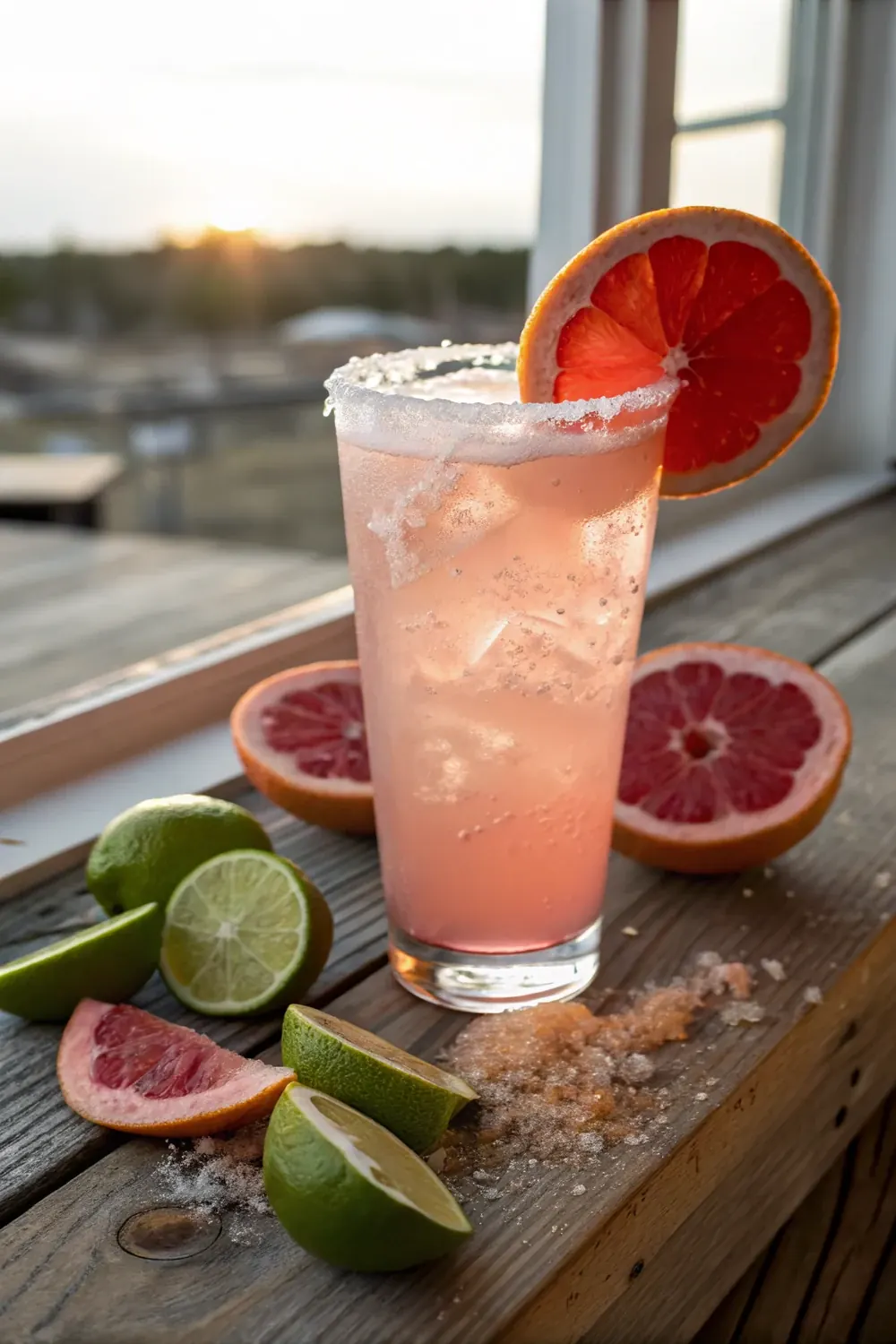
The Texas border-town paloma made with fresh ruby red grapefruit, blanco tequila, lime, Topo Chico, and a Tajin chile-lime salt rim. Ready in 5 minutes.
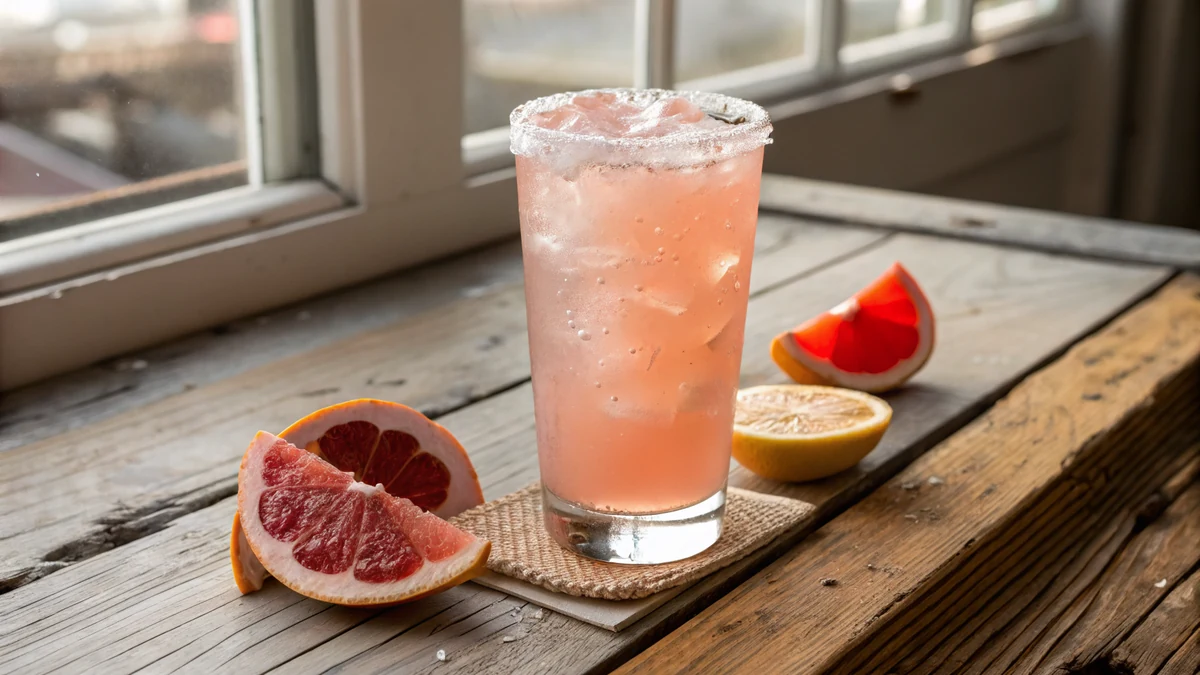
Quick answer: A Texas paloma cocktail is the border-town version of the classic Mexican paloma, built with fresh ruby red grapefruit juice (not Squirt soda), blanco tequila, fresh lime, a pinch of salt, and ice-cold Topo Chico mineral water, served in a highball glass with a Tajin chile-lime salt rim. You rim the glass with Tajin, fill it with ice, pour 2 oz blanco tequila, 3 oz fresh grapefruit juice, 0.5 oz lime juice, then top with Topo Chico. Total time about 5 minutes; serves one.
The first real Texas paloma I ever drank was in a small bar in Laredo, on a summer evening when the heat had finally broken and the air smelled like mesquite smoke from the taqueria across the street. The bartender did not reach for Squirt or Jarritos Toronja. He pulled a ruby red grapefruit from a wooden bowl, halved it on a board, and juiced it by hand into a battered tin shaker. He rimmed a highball with Tajin, packed it with crushed ice, poured Espolon Blanco, the fresh grapefruit, a squeeze of lime, a pinch of salt, and topped it with cold Topo Chico. One sip told me everything I knew about palomas was a polite suggestion.
The Texas paloma is the border-town variation of the Mexican original. The difference is fresh ruby red grapefruit (the Rio Grande Valley grows the best in the country), Topo Chico instead of generic club soda, and a Tajin chile-lime rim that turns every sip into a little flash of citrus heat. The Mexican paloma uses grapefruit soda for speed and consistency; the Texas paloma takes ten extra minutes to juice a real grapefruit and pays you back with brighter, more complex citrus that no soda can match. Total time about 5 minutes once your grapefruits are juiced; serves one in a highball glass. If you love the tequila-and-Topo-Chico backbone, ranch water strips it to three ingredients, and the rest of the family tree lives in my Texas cocktails guide.
The Texas Paloma vs the Mexican Paloma
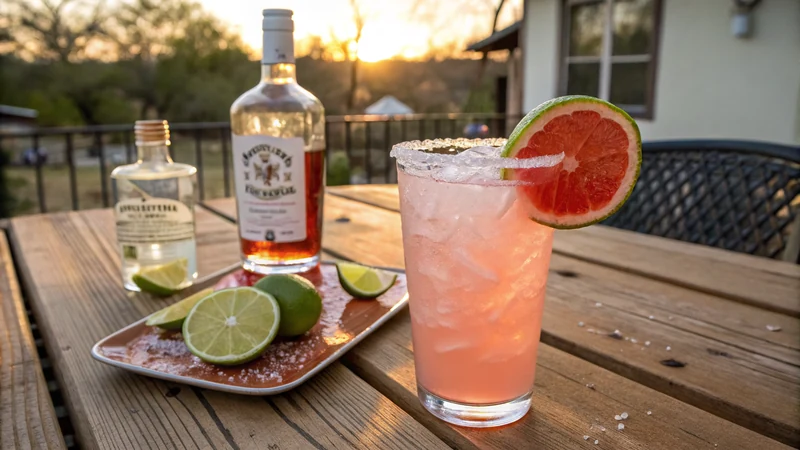
The Mexican paloma and the Texas paloma share a family tree but they are not the same drink. The Mexican original, born in Jalisco and popularized across Mexico in the mid twentieth century, is built with grapefruit soda (Squirt, Jarritos Toronja, or Fresca) poured over blanco tequila and lime in a salted highball. The soda does the work; the bartender does very little. It is the most ordered cocktail in Mexico, served everywhere from beach palapas in Tulum to small cantinas in Guadalajara, and it is fast, sweet, slightly bitter, and reliable.
The Texas paloma, served in the border towns of Laredo, Eagle Pass, McAllen, and Brownsville and in the Tex-Mex restaurants of San Antonio and Austin, swaps the soda for fresh ruby red grapefruit juice and the generic club soda for Topo Chico. The Tajin chile-lime salt rim replaces plain salt, and a tiny pinch of salt goes inside the drink itself. The result is brighter, more complex, less candy-sweet, and noticeably more citrus-forward. You taste the actual grapefruit, with its floral pink-fruit notes and gentle bitterness, instead of the sugared imitation in the bottle.
Both versions are correct; they are just made for different occasions. The Mexican paloma is the everyday cantina drink, fast and consistent. The Texas paloma is the weekend porch cocktail, the one you build for friends at a Hill Country backyard or order at Mi Tierra in San Antonio when you want the upgraded version. If you are making palomas at home in Texas, the fresh-grapefruit method is worth every extra minute. For another bottle-served Texas classic, see my ranch water recipe.
Why Fresh Ruby Grapefruit Beats Squirt Soda
Squirt and Jarritos Toronja are workhorse sodas; they are designed for speed and shelf stability, not for cocktail nuance. Both are made with grapefruit flavoring rather than significant fresh juice, both are heavily sweetened with high-fructose corn syrup or cane sugar, and both have a slightly artificial top note that becomes obvious the moment you taste them next to the real fruit. The Mexican paloma works around this with high lime acidity and a generous salt rim, which mask the soda character. The drink is delicious, but it is built on flavored sugar water.
Fresh ruby red grapefruit juice is an entirely different ingredient. Texas Rio Red and Ruby Sweet grapefruits, both grown in the Rio Grande Valley around Mission, Edinburg, and McAllen, have deep pink flesh, lower bitterness than older varieties, and a natural sweetness that does not need help from corn syrup. When you juice one fresh and pour it over blanco tequila, the cocktail picks up floral, slightly tropical notes you cannot get from soda. The color is also unmistakable: deep coral pink, not the pale yellow-orange of a Squirt paloma.
The trade-off is time. A Mexican paloma is built in under two minutes; a Texas paloma takes about five, because you have to halve, juice, and strain the grapefruit. For a single cocktail this is trivial. For a pitcher serving six, juice three large grapefruits in advance and refrigerate the juice for up to two days. The flavor difference is worth every second; once you have tasted a Texas paloma, the soda version starts to feel like a placeholder.
Picking the Tequila (Blanco vs Reposado for Palomas)
Blanco tequila is the right choice for a Texas paloma, and the reason is straightforward: the cocktail is built on bright citrus, and blanco is the bright-citrus partner. Blanco (also called silver or plata) is bottled within sixty days of distillation, has no oak contact, and tastes clean, peppery, and herbaceous, with the agave forward in every sip. That clean profile lets the grapefruit and lime stand up without being buried under barrel notes.
Reposado and anejo tequilas are aged in oak from two months to three years and pick up caramel, vanilla, and toasted-wood flavors. Those are beautiful in a neat sipping pour or in a cocktail designed around them, but they fight the grapefruit in a paloma. A reposado paloma tastes muddled, with the citrus pulled in one direction and the wood in another. I have tested this many times at home; the blanco version always wins for clarity.
Within blanco, the canonical Texas options are Espolon Blanco around $25 (the everyday bartender favorite, 100% agave), El Jimador around $20 (the budget classic), Lalo Blanco around $50 (the new-wave Austin pick, made by tequila royalty), Casamigos Blanco around $50 (the smooth crowd-pleaser), and Herradura Silver around $45 (the traditional Jalisco standard). Avoid any tequila not labeled 100% agave; mixto tequilas have added sugars and produce harsher cocktails and worse hangovers. For a tequila comparison across drinks, see my Texas margarita recipe.
The Tajin Salt Rim Technique
Tajin Clasico is the Mexican chile-lime seasoning that has become essential at every Tex-Mex bar in Texas. The blend is mild chile powder (mostly ancho and arbol), dehydrated lime, and salt, and it adds a flash of heat, acidity, and salinity in a single ingredient. On a paloma rim, Tajin does what plain salt cannot: it sharpens the grapefruit, echoes the lime, and adds a gentle chile warmth that builds with each sip. Most border-town bars use Tajin straight; some upscale Tex-Mex spots like La Fogata in San Antonio mix it half-and-half with flaky sea salt for a more pronounced saltiness.
The technique matters as much as the seasoning. Run a fresh lime wedge around the rim of your glass to moisten only the outer edge; do not soak the glass or the Tajin will clump. Spread the Tajin on a small flat plate (a saucer works better than a deep bowl), then press the moistened rim into the seasoning at a slight angle, rotating slowly. Aim for a clean ring about a quarter inch thick. Tap off excess; you want a coating, not a crust.
Some home bartenders rim only half the glass, leaving the back half plain so the drinker can choose Tajin or no Tajin with each sip. This is the smart move when you are not sure how your guests feel about chile. For a pitcher service, rim each glass individually rather than rimming the pitcher; the seasoning is a sip-by-sip experience.
Topo Chico, Mineral Water, and the Right Fizz
Topo Chico is the carbonated soul of Texas cocktail culture. Bottled in Monterrey, Nuevo Leon since 1895 from a natural mineral spring, the brand has noticeably higher carbonation than LaCroix, Perrier, or generic club soda, plus a mineral profile that adds slight salinity and a subtle bitterness on the back end. In a paloma, that fizz lifts the grapefruit and tequila and keeps the cocktail from feeling heavy; the mineral character ties to the tiny pinch of salt inside the drink and amplifies the Tajin rim.
Use the 12 oz green glass bottle and use it cold. Aluminum cans (introduced in 2020) lose carbonation faster, and plastic bottles hold cold less efficiently. Refrigerate for at least four hours before you build the cocktail, or pack the bottles in a cooler of ice for thirty minutes; warm Topo Chico loses fizz the moment you pour. Buy the glass six-pack at HEB, Central Market, Whole Foods, Total Wine, or Spec's; the case packs at HEB run around $25 and are the right move for any gathering bigger than two people.
If you cannot find Topo Chico, your next-best options are Mexican Sidral Mundet sparkling mineral water or Saratoga sparkling. Avoid plain club soda when possible; the mineral content makes a real difference in how the cocktail finishes. La Croix Pamplemousse, which is grapefruit-flavored, is a tempting shortcut but it adds an artificial-tasting top note that fights the fresh grapefruit. Stick with unflavored mineral water and let the real fruit do the work.
Glassware (Highball vs Rocks vs Pint)
The Texas paloma belongs in a highball or Collins glass, ten to twelve ounces, tall and slim. The tall format keeps the ice column compact, slows dilution, and gives the carbonation room to rise; a wide rocks glass would let the fizz dissipate too quickly and would not hold enough Topo Chico to balance the cocktail. Most Tex-Mex restaurants in San Antonio and Austin serve palomas in highballs for exactly this reason.
The pint glass, often used in casual border-town bars and at backyard cookouts, is the bigger-format alternative. A 16 oz pint takes 2.5 oz of tequila, 4 oz of grapefruit juice, 1 oz of lime, and a longer Topo Chico pour; it is the right move when you want the drink to last a full hour and you are not planning a second one. Use a sturdy pint, not a flimsy one; cold cocktails sweat heavily and a thick base prevents slippery hand-offs.
Avoid the wide margarita coupe and the martini glass. Both look pretty but neither holds the volume or the carbonation correctly. A paloma is a long drink, not a sipper; the highball is built for it. If you want to upgrade the presentation, buy a set of Mexican hand-blown highball glasses with a thick base and a slightly irregular rim; they cost around $40 for six at any Mexican import store and they make every paloma feel like a Mi Tierra moment.
The Pitcher Paloma (Scaling for a Crowd)
Texas palomas are easy to scale for a backyard or porch gathering. For a pitcher that serves six, juice three large ruby red grapefruits to get about 18 oz of fresh juice, juice three medium limes for 3 oz of juice, and pour both into a large glass pitcher with 12 oz of blanco tequila, a generous pinch of fine sea salt, and 1.5 teaspoons of agave nectar if your grapefruit is on the tart side. Stir to combine and refrigerate until ten minutes before serving.
Do not add the Topo Chico to the pitcher. The carbonation will be gone within an hour. Instead, set the pitcher on a tray with six rimmed highball glasses, a bowl of crushed ice, and two or three chilled bottles of Topo Chico. Each guest fills their own glass with ice, pours about 4 oz of the pre-mixed paloma base, and tops with 2 oz of Topo Chico. The cocktail stays fizzy from first pour to last.
Garnish a serving tray with extra grapefruit wedges, lime wheels, and a small bowl of Tajin for re-rimming if anyone wants a second round. A pitcher of Texas palomas pairs beautifully with a backyard Tex-Mex spread; try it alongside queso blanco dip and a basket of warm tortilla chips while the brisket is on the smoker.
Border-Town History (Crucero, La Capilla, the Mexican Origin)
The paloma was born in Jalisco, the same Mexican state that gave us tequila itself, and the most widely cited origin story credits Don Javier Delgado Corona, the legendary bartender at La Capilla in Tequila, Jalisco. La Capilla, which has been pouring drinks since 1937 and is sometimes called the most important tequila bar in the world, served Don Javier's signature combinations of blanco tequila and grapefruit soda for decades. Whether he invented the paloma or simply codified an existing folk recipe is unclear; what is certain is that by the 1950s, palomas were a Jalisco staple.
The drink crossed into Texas through the natural channels of border culture. Ciudad Acuna, Piedras Negras, Nuevo Laredo, and Reynosa all had local versions of the paloma by the 1960s, and Texan border towns absorbed the cocktail through family ties, restaurant kitchens, and weekend trips across the bridge. Crucero, an old cantina that sat on the Laredo side of the Rio Grande, was famous in the 1970s for its fresh-grapefruit paloma; the version used Rio Grande Valley citrus rather than soda, which set the template for what we now call the Texas paloma.
By the time the cocktail spread north to San Antonio, Austin, and Houston in the 1980s and 1990s, the fresh-grapefruit border-town method had been refined at restaurants like Mi Tierra (in San Antonio's Market Square since 1941) and La Fogata (also San Antonio, since 1978). Polvos in Austin and Fonda San Miguel did similar work in central Texas. Today the Texas paloma is recognized by Liquor.com and bartender publications as a distinct regional variant.
Sweet vs Tart Balance (the Lime + Agave Decision)
Balancing a Texas paloma is mostly about reading your grapefruit. Texas Rio Red, the dominant commercial variety from the Rio Grande Valley, is naturally sweet with low bitterness, especially in peak season (November through April). A ripe Rio Red juiced fresh often needs no added sweetener at all; the natural sugars and the lime acidity balance perfectly with the tequila and Topo Chico. Taste the juice before you build, and trust your palate.
If your grapefruit is tart (out of season, underripe, or the more acidic Ruby Sweet variety), add 1/4 teaspoon of light agave nectar per cocktail. Agave dissolves easily in cold liquid, integrates cleanly with tequila, and adds gentle sweetness without the heavier mouthfeel of simple syrup. Do not use honey; the flavor is too assertive and clashes with the grapefruit. Do not use white sugar; it will not dissolve in a cold drink without shaking.
The lime is the other lever. If the cocktail tastes flat, add another 1/8 oz of fresh lime juice; if it tastes too sharp, dial the lime back. The pinch of salt inside the glass is what unifies the sweet-tart-bitter triangle; do not skip it. Once you have built three or four Texas palomas, you will start to taste the balance instinctively, and the recipe stops feeling like measurements and starts feeling like a small kitchen ritual.
Spicy Variations (Jalapeno, Chamoy, Tajin-Rimmed)
The Tajin rim is the entry-level chile move; a true spicy Texas paloma takes it further. The simplest upgrade is to muddle two thin rounds of fresh jalapeno in the bottom of the glass before adding ice. The capsaicin infuses with the citrus and the tequila over the drinking window, building a slow warmth that pairs beautifully with the grapefruit's bitterness. Use a seeded jalapeno for moderate heat; leave seeds in for a serious kick.
Chamoy, the Mexican condiment made from pickled fruit, chile, and lime, is the next level. Drizzle a teaspoon of chamoy around the inside of the rimmed glass before adding ice; as the ice melts, ribbons of chamoy bleed down into the cocktail and create a sweet-salty-spicy-sour bottom layer that you sip up through the fizz. This is the chamoyada paloma, a regional favorite at small Tex-Mex spots in Brownsville and McAllen.
For a smokier spicy variation, use mezcal in place of half the tequila (1 oz mezcal, 1 oz blanco) and finish with a chipotle-Tajin rim made by mixing Tajin with a pinch of ground chipotle. The smoked-chile version pairs perfectly with grilled meats and works for cooler fall evenings. For the migas-and-cocktail brunch pairing, try a Texas paloma alongside Austin breakfast tacos.
Pairings with Tex-Mex Food
A Texas paloma is a Tex-Mex food cocktail in the deepest sense; the citrus-and-salt profile cuts through rich, smoky, or spicy dishes the way no margarita quite does. Pair it with fajitas, tacos al pastor, carnitas, cochinita pibil, or a plate of enchiladas verdes; the grapefruit lifts the meat flavors and the Tajin rim plays off the salsa heat. At Mi Tierra in San Antonio, the menu pairing for a Texas paloma is the queso flameado followed by the fajita platter, and I have not found a better afternoon yet.
Brunch is the other natural fit. The Texas paloma plays beautifully against breakfast tacos with chorizo and egg, chilaquiles verdes, or migas with refried beans. The citrus wakes up the palate, the carbonation cuts the heaviness of cheese and eggs, and the Tajin echoes the salsa on the plate. Most Austin brunch spots like Veracruz All Natural and Polvos lean into this pairing on weekend menus.
For barbecue, the paloma is a better choice than ranch water; the grapefruit sweetness balances the bark on smoked brisket and the lime cuts through fat. Pair with pulled pork sandwiches, smoked sausage links from Snow's BBQ, or ribs from Franklin Barbecue. For a non-meat option, the paloma is perfect alongside grilled vegetables, especially charred poblanos and zucchini with a squeeze of lime.
Mistakes to Avoid
Using grapefruit soda instead of fresh juice. Squirt and Jarritos Toronja are fine for a Mexican paloma, but they are not the Texas version. The whole point is fresh juice; do not skip this step or you have made a different drink.
Bottled grapefruit juice from the dairy case. Ocean Spray and other pasteurized grapefruit juices taste cooked and dull. If you cannot juice fresh, you are better off skipping the cocktail entirely than substituting bottled juice.
Reposado or anejo tequila. The oak aging adds caramel and vanilla notes that fight the grapefruit. Use blanco only; the cocktail wants the clean agave punch, not wood.
Generic club soda instead of Topo Chico. Topo Chico's higher carbonation and mineral content make a real difference. Generic club soda goes flat fast and adds nothing to the flavor.
Skipping the pinch of salt inside the drink. The rim alone is not enough; a tiny pinch of salt dissolved into the cocktail itself is the secret that rounds out the grapefruit bitterness.
Too much Tajin on the rim. A quarter-inch ring is plenty. Over-rimming turns every sip into a mouthful of chile salt and overwhelms the citrus.
Building the pitcher with Topo Chico already mixed in. The carbonation will be flat within an hour. Keep the bottles separate and top each glass at service.
Warm Topo Chico. A warm bottle goes flat instantly. Always chill for at least four hours or ice for thirty minutes before you pour.
Variations (Frozen Paloma, Hibiscus Paloma, Smoked Paloma)
Frozen Texas paloma. Blend 2 oz blanco tequila, 3 oz fresh grapefruit juice, 0.5 oz lime juice, 1 teaspoon agave, a pinch of salt, and 1 cup of crushed ice on high until smooth. Pour into a Tajin-rimmed highball or hurricane glass and serve with a long straw. The frozen version is a summer Hill Country favorite and shows up at lake-house parties from Lake Travis to Canyon Lake.
Hibiscus paloma (paloma de jamaica). Replace 1 oz of the grapefruit juice with strong-brewed hibiscus tea (jamaica). The hibiscus deepens the color to ruby-magenta and adds a tart, floral, slightly cranberry-like note. A favorite at Tex-Mex restaurants in Austin like Suerte and Polvos.
Smoked paloma. Replace 1 oz of the blanco tequila with mezcal (Del Maguey Vida is the standard). The smoke pairs with the grapefruit bitterness in a way that feels almost like grapefruit over a campfire. Best in fall and winter.
Spicy jalapeno paloma. Muddle two thin jalapeno rounds in the bottom of the glass before building. Seeded for moderate heat, seeds-in for serious heat.
Brunch paloma. Halve the tequila to 1 oz, add an extra splash of Topo Chico, and serve in a tall flute or pint glass for a session-strength brunch sipper. Pairs perfectly with chilaquiles or breakfast tacos. For more brunch-friendly Tex-Mex drinks, see my michelada recipe.
Pitcher Texas paloma for six. Scale the recipe by six in a large glass pitcher (skip the Topo Chico), refrigerate, and top each glass with cold Topo Chico at service.
Chef Mia's Kitchen Notes
Buy a five-pound bag of Texas Rio Red grapefruits from HEB or Central Market when they hit the shelf in November; the peak season runs through April. A five-pound bag holds eight to ten grapefruits and costs around $7 to $10, and a bag will get you through two weekends of palomas. Store them on the counter for up to a week, or in the refrigerator crisper drawer for three weeks. Cold grapefruit juices a little harder; let the fruit come up to room temperature for thirty minutes before squeezing.
I keep a small dedicated paloma kit on a shelf next to my kitchen window: a Mexican yellow-and-green hand squeezer, a 2 oz jigger, a bottle of Tajin, a bag of flaky sea salt, and a long bar spoon. Everything is within reach when friends drop by, and the assembly takes less time than explaining what makes the cocktail different. The kit fits on a single tray and travels easily to a porch or backyard.
Test your grapefruit before you build the cocktail. Cut one in half, taste a spoonful of juice, and decide whether to add the agave. This single habit has saved me from at least a dozen overly tart palomas. Trust the fruit; it will tell you what to do. For a deeper dive on tequila cocktails, the team at Imbibe Magazine has run multiple feature stories on regional paloma variations.
Texas Paloma Cocktail Recipe
Ingredients
- For the rim:
- 1 tablespoon Tajin Clasico chile-lime seasoning
- 1 teaspoon flaky sea salt or kosher salt (optional, for a saltier rim)
- 1 lime wedge to wet the glass rim
- 1 small plate or saucer to hold the Tajin mixture
- For the cocktail:
- 2 oz (60 ml) blanco tequila (Espolon, El Jimador, Lalo Blanco, Casamigos Blanco, or Herradura Silver)
- 3 oz (90 ml) fresh ruby red grapefruit juice (Texas Rio Red or Ruby Sweet, about 1/2 of one large grapefruit)
- 0.5 oz (15 ml) fresh lime juice (about 1/2 of one medium lime)
- 1 small pinch of fine sea salt (about 1/16 teaspoon, for inside the drink)
- 1/4 teaspoon agave nectar (optional, only if grapefruit is very tart)
- Topo Chico mineral water, ice cold, to top (about 2 to 3 oz)
- Crushed or cubed ice to fill a highball glass
- For garnish:
- 1 ruby red grapefruit wheel or wedge
- 1 lime wheel (optional)
- Equipment:
- Citrus juicer (Mexican hand squeezer or electric)
- Jigger or 1 oz measuring shot
- Highball glass (10 to 12 oz capacity) or Collins glass
- Small plate for the Tajin rim
- Long bar spoon for a gentle stir
Instructions
- Juice the ruby red grapefruit fresh. Cut a large ruby red grapefruit in half across the equator, and juice one half over a small bowl using a Mexican hand squeezer or an electric citrus juicer. One half of a Texas Rio Red yields roughly 3 oz of juice, which is exactly what you need for a single cocktail. Strain through a small mesh sieve to catch pulp and seeds; a little pulp is fine, but seeds turn the drink bitter. Do not substitute Ocean Spray or any bottled grapefruit juice; the cooked, pasteurized version tastes flat compared to fresh.
- Juice the lime fresh. Halve a medium Persian lime and squeeze 0.5 oz of juice into a separate small container. You can press the lime into the grapefruit bowl if you are in a hurry, but I prefer to keep them separate so I can taste and adjust. Fresh lime is non-negotiable; bottled lime juice like Rose's or ReaLime tastes preserved and slightly chemical. Roll the lime on the counter with the heel of your hand before cutting to release more juice from the cells.
- Prepare the Tajin chile-lime salt rim. On a small plate, spread 1 tablespoon of Tajin Clasico, optionally mixed with a teaspoon of flaky sea salt for a saltier finish. Run a lime wedge around the rim of your highball glass to moisten it. Turn the glass upside down and press the rim into the Tajin mixture, rotating slowly until the rim is evenly coated. Tap off any excess. The Tajin should coat about a quarter inch of the rim, no more; too much overwhelms the cocktail.
- Fill the glass with ice. Fill the rimmed highball glass to the top with crushed or cubed ice. Crushed ice chills faster and dilutes slightly more, which softens the grapefruit; cubed ice melts slower and keeps the cocktail crisper. I use cubed for the first pour and let the natural melt do the work. Make sure your ice is fresh and clean; stale freezer ice picks up off flavors and ruins a delicate citrus cocktail like this.
- Add the blanco tequila. Pour 2 oz of blanco tequila directly over the ice. Use a jigger for accuracy. Blanco only; reposado and anejo add oak and caramel notes that fight the bright grapefruit and lime. Espolon Blanco is the everyday workhorse around $25, El Jimador is the budget classic under $20, Lalo Blanco is the new-wave Austin favorite around $50, Casamigos Blanco is the smooth crowd-pleaser around $50, and Herradura Silver is the traditional choice around $45.
- Pour in the fresh grapefruit and lime juice. Add the 3 oz of fresh ruby red grapefruit juice and the 0.5 oz of fresh lime juice over the tequila. The grapefruit is the dominant flavor; the lime adds a sharp citrus edge that ties everything to the tequila. If the grapefruit is very tart (out of season or underripe), add 1/4 teaspoon of agave nectar to soften; if the grapefruit is sweet and ripe, skip the agave entirely. The drink should taste citrus-forward, slightly bitter, with no candy sweetness.
- Add the pinch of salt inside the drink. Drop a small pinch of fine sea salt directly into the cocktail, roughly 1/16 teaspoon. This is separate from the rim and is the secret most home cooks skip. A tiny amount of dissolved salt rounds out the grapefruit bitterness, brightens the lime, and lifts the tequila. Without it, the cocktail tastes slightly hollow; with it, every flavor sharpens. Do not overdo it; more than a pinch and the drink goes briny.
- Top with ice-cold Topo Chico. Top the glass with 2 to 3 oz of ice-cold Topo Chico mineral water, pouring slowly down the side of the glass to preserve carbonation. Topo Chico has the highest carbonation and the best mineral profile of any sparkling water you can buy in Texas; LaCroix, Perrier, and generic club soda all fall flat by comparison. The bottle must be ice cold; warm Topo Chico loses fizz the moment you pour. Buy the green glass 12 oz bottles at HEB or Central Market.
- Stir gently and garnish. Give the cocktail one slow stir with a long bar spoon to integrate without knocking out the carbonation; two or three turns is enough. Garnish with a ruby red grapefruit wheel perched on the rim, and an optional lime wheel for color. Some Tex-Mex restaurants in San Antonio add a thin slice of jalapeno or a single sprig of cilantro for the spicy or herbal variation; in the classic Texas paloma, skip both and let the grapefruit shine. Serve immediately while the carbonation is alive.
- Drink slowly and refresh as needed. A Texas paloma is a sipping cocktail, not a chugging one. The carbonation, the Tajin rim, and the fresh grapefruit all reward slow drinking; rushing it dulls the experience. Plan on 15 to 20 minutes per glass. When the cocktail is half gone, you can top with another splash of Topo Chico to refresh the fizz without diluting the citrus too much. For a second round, build a new one from scratch; the rim is a one-time experience and you want a fresh Tajin coating each time.
Frequently Asked Questions
What makes a Texas paloma different from a regular paloma?
A Texas paloma uses fresh ruby red grapefruit juice (typically Texas Rio Red or Ruby Sweet from the Rio Grande Valley) instead of grapefruit soda like Squirt or Jarritos Toronja, swaps generic club soda for Topo Chico mineral water, and adds a Tajin chile-lime salt rim instead of plain salt. The drink originated in the Texas border towns of Laredo, Eagle Pass, McAllen, and Brownsville and was refined in Tex-Mex restaurants like Mi Tierra and La Fogata in San Antonio. The result is brighter, more complex, and noticeably less candy-sweet than the Mexican original.
Can I use bottled grapefruit juice instead of fresh?
Not really; the difference is enormous. Bottled grapefruit juice like Ocean Spray is pasteurized, which cooks out the floral and slightly tropical notes that make fresh ruby red grapefruit special. A bottled-juice paloma tastes flat compared to the fresh version. If you cannot juice fresh, you are better off making a Mexican-style paloma with Squirt or Jarritos Toronja, which are at least designed to taste like a finished cocktail mixer. Better yet, juice a few grapefruits in advance; fresh juice keeps for two days in the refrigerator and the active prep is about five minutes.
What's the best tequila for a Texas paloma?
Blanco tequila only; reposado and anejo are aged in oak and add caramel and vanilla notes that fight the bright grapefruit. The canonical Texas options are Espolon Blanco around $25 (everyday workhorse, 100% agave), El Jimador around $20 (budget classic), Lalo Blanco around $50 (new-wave Austin favorite), Casamigos Blanco around $50 (smooth crowd-pleaser), and Herradura Silver around $45 (traditional Jalisco standard). Any 100% agave blanco works. Avoid mixto tequilas (not labeled 100% agave); they have added sugars and produce harsher cocktails and worse hangovers.
Do I need Tajin for the rim, or can I use regular salt?
Tajin Clasico is the canonical Texas paloma rim and what separates the border-town version from the standard salt rim of a Mexican paloma. Tajin is a blend of mild chile powder, dehydrated lime, and salt; it adds a flash of heat, acidity, and salinity that plain salt cannot match. You can use plain kosher or flaky sea salt if Tajin is unavailable, but the cocktail loses a distinctive layer of flavor. Tajin is widely available at HEB, Central Market, Whole Foods, and most grocery stores in Texas; a 5 oz bottle costs around $3 and lasts months.
Why is Topo Chico specifically called for in this recipe?
Topo Chico, bottled in Monterrey, Mexico since 1895, has higher carbonation and a more mineral-forward profile than LaCroix, Perrier, San Pellegrino, or any generic club soda. That extra fizz lifts the grapefruit and tequila and prevents the cocktail from feeling heavy; the mineral character ties to the pinch of salt inside the drink and amplifies the Tajin rim. Use the 12 oz green glass bottle, ice cold; the aluminum can loses carbonation faster and the plastic version holds cold less well. Buy six-packs at HEB, Central Market, Whole Foods, or Spec's.
Can I make a pitcher of Texas palomas in advance?
Yes, with one rule: keep the Topo Chico separate. Combine 12 oz blanco tequila, 18 oz fresh ruby red grapefruit juice, 3 oz fresh lime juice, a pinch of salt, and optional agave (about 1.5 teaspoons) in a large glass pitcher; this base serves six. Refrigerate for up to four hours; do not add the Topo Chico to the pitcher or the carbonation will be gone within an hour. At service, fill each Tajin-rimmed highball with ice, pour 4 oz of the base, and top with 2 oz of cold Topo Chico. Each guest tops their own glass and the cocktails stay perfectly fizzy.
How strong is one Texas paloma?
About 8% to 9% ABV, slightly stronger than a craft beer but easy to sip slowly. The math: 2 oz of 80-proof (40% ABV) blanco tequila contains 0.8 oz of pure alcohol, mixed into roughly 8 to 10 oz of total cocktail volume after the grapefruit juice, lime, and Topo Chico. The carbonation, the salt rim, and the citrus all reward slow drinking; one Texas paloma typically lasts 15 to 20 minutes. Pace yourself in Texas summer heat, drink a glass of water alongside, and the cocktail is a sustainable afternoon companion rather than a quick punch.