Tex-Mex Recipes
Texas Pork Tamales
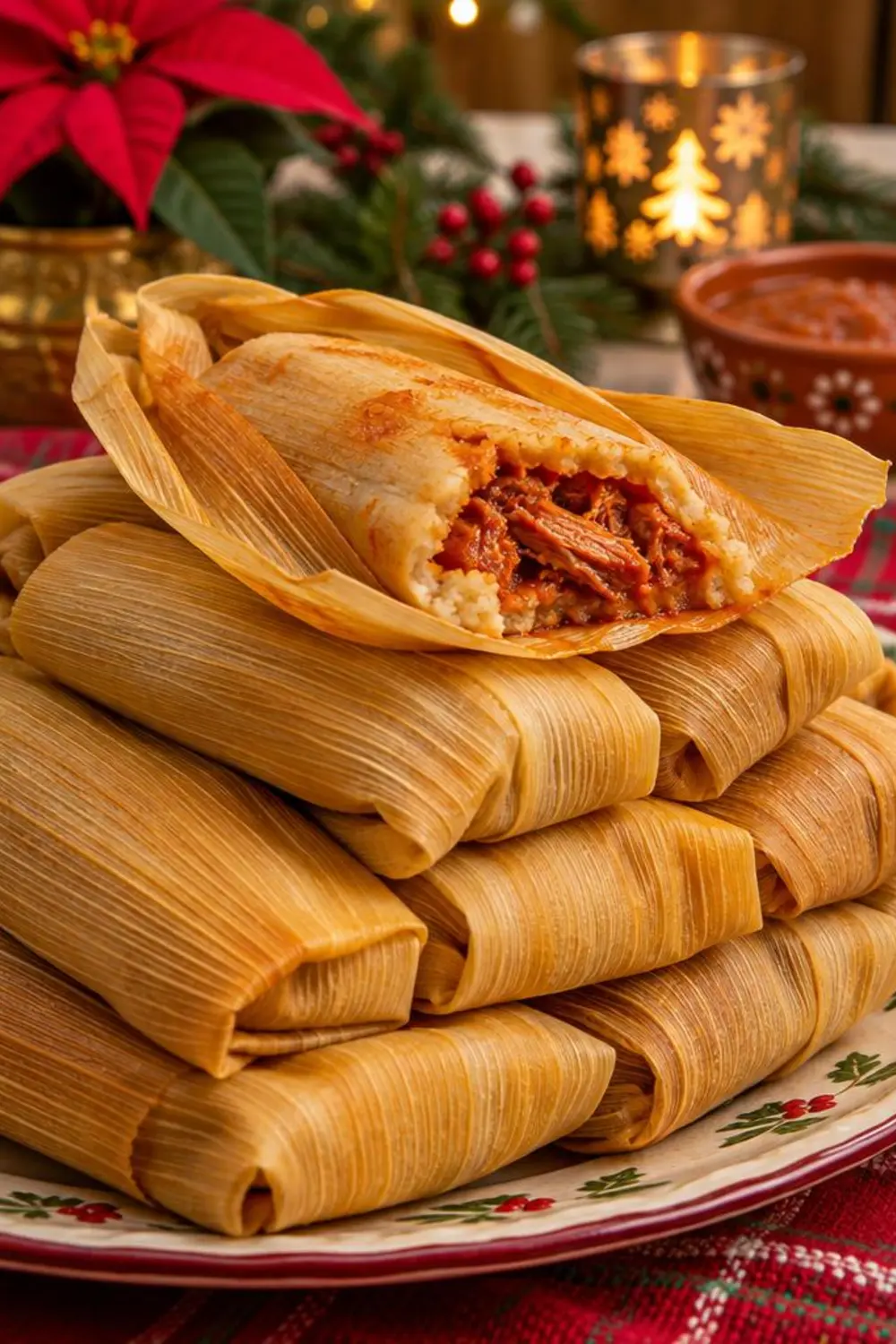
Our Texas red chile pork tamales: braised pork shoulder, ancho and guajillo sauce, whipped lard masa, corn husks, steamed 75 to 90 minutes. 4 dozen.
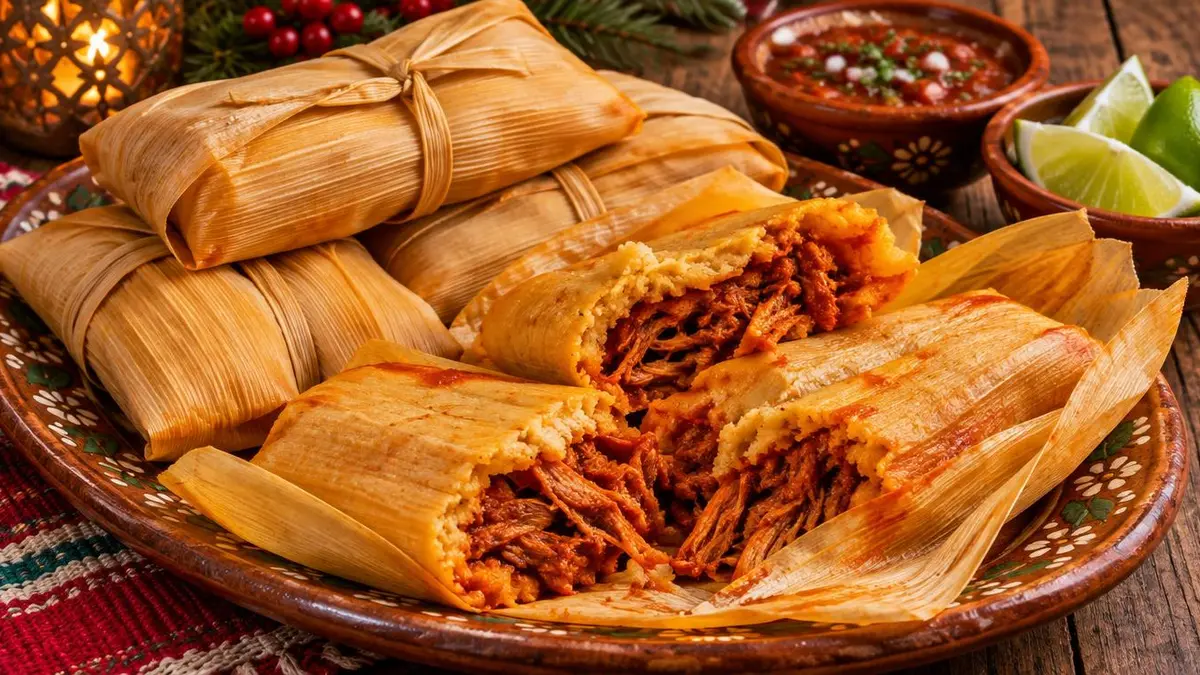
Quick answer: Texas pork tamales are corn husks spread with whipped masa, filled with pork shoulder braised and shredded in a red ancho and guajillo chile sauce, folded, and steamed upright for 75 to 90 minutes. They are done when the masa pulls away cleanly from the husk. One 4 pound pork shoulder and 4 pounds of prepared masa make about 4 dozen tamales.
In much of Texas, Christmas does not smell like cookies first. It smells like dried chiles soaking, pork simmering since morning, and a big pot of tamales steaming on the back burner. The tamalada, the family assembly line where everyone spreads masa, fills, and folds together, is one of the oldest holiday traditions in South and Central Texas, and the result is dozens of tamales handed out to neighbors, frozen for January, and eaten straight from the husk on Christmas Eve.
This recipe is the classic Texas version: pork shoulder braised until tender, shredded into a smooth red chile sauce made from dried ancho and guajillo chiles, and wrapped in a soft masa whipped with lard and seasoned with some of that same chile broth. It makes about four dozen, which is the right size for a first batch with a couple of helpers and a standard steamer pot.
Tamales are not hard, but they are a project, so the method is split into stages that can be spread over two days. Day one is the pork and the sauce; day two is the masa, the assembly, and the steaming. If you already make Tex-Mex at home, many of the flavors will be familiar from our Texas chili and beef and cheese enchiladas; the difference is the masa and the patience.
Tamales and Christmas in Texas
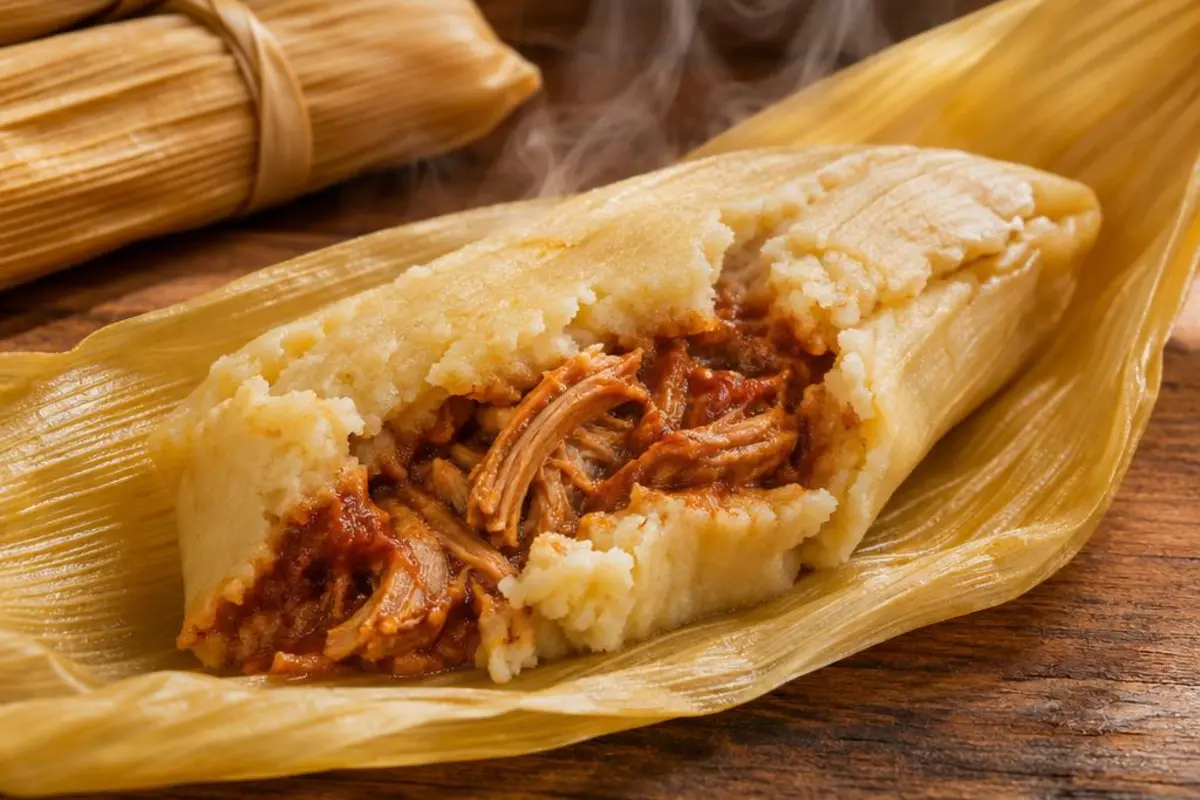
Tamales are one of the oldest foods in the Americas, made from corn dough steamed in a wrapper long before the arrival of Europeans. In Texas they arrived with the Mexican families who have lived in the region for generations, and they became tied to the holidays for a practical reason: they take a lot of work, so they are made in large batches when the whole family is together.
The tamalada is the heart of the tradition. One person spreads masa, another adds filling, another folds, someone keeps the steamer going, and everyone talks. A batch of ten or twenty dozen is common in families who make them every year, and the tamales are shared with neighbors, given as gifts, and frozen to last well into the new year.
Texas tamales tend to be smaller and slimmer than some Mexican regional versions, often filled with pork in red chile, and eaten with the fingers straight from the husk. This recipe follows that style. If you have never made them, start with this four-dozen batch; once the rhythm is familiar, doubling it is easy.
Choosing the Pork and Braising It Right
Pork shoulder, also sold as pork butt or Boston butt, is the best cut for tamales. It has enough fat and connective tissue to turn tender and juicy after a long simmer, and it shreds into the fine, moist pieces that fit neatly inside a tamale. Leaner cuts like loin dry out and taste bland inside the masa.
Cut the shoulder into large chunks so it cooks evenly, and simmer it gently with onion, garlic, bay leaves, and salt. A slow simmer, with small bubbles rather than a rolling boil, keeps the meat tender. After two and a half to three hours, a chunk should fall apart when pressed with a fork.
The broth is just as valuable as the meat. It seasons the chile sauce and it is the liquid that turns masa harina into a flavorful dough. Strain it, let the fat rise, and skim some of it off if the broth looks very greasy. Keep it warm for the masa stage; warm broth hydrates masa faster and more evenly than cold.
Ancho and Guajillo: Building the Red Chile Sauce
The red sauce is what makes these tamales taste like Texas Christmas. Ancho chiles, the dried form of the poblano, are deep red-brown, mild, and slightly sweet with notes of raisin and cocoa. Guajillo chiles are brighter red, a little tangy, and add color and a clean, moderate heat. Together they make a balanced, full-flavored sauce without much burn.
Remove the stems and seeds before toasting, since the seeds add bitterness and little flavor. Toast the chiles briefly in a dry skillet, just until they smell fragrant and soften slightly, ten to fifteen seconds per side. Scorched chiles turn the whole sauce bitter, and there is no fixing it afterward, so watch them closely.
For more heat, add two or three dried chiles de arbol to the soak. Blend the softened chiles with garlic, cumin, Mexican oregano, and pork broth until completely smooth, then strain the sauce through a sieve. Frying the sauce briefly in hot lard deepens the color and flavor, a technique common in Mexican cooking that makes a noticeable difference.
Masa Harina, Fresh Masa, and the Lard Question
Most home cooks in Texas use masa harina, dried nixtamalized corn flour that becomes dough when mixed with liquid. Look for a bag labeled specifically for tamales, which is ground slightly coarser than the version for tortillas and gives a fluffier result. Tortilla masa harina also works if that is all you can find.
In parts of Texas, especially around the holidays, you can buy fresh prepared masa from Mexican grocery stores and tortillerias, sometimes already mixed with lard and seasoning for tamales. If you use it, ask whether it is prepared (preparada) or plain. Plain fresh masa still needs the lard, salt, baking powder, and broth from this recipe.
Lard gives tamales their traditional flavor and their soft, tender texture. Freshly rendered lard from a butcher or a Mexican market tastes much better than the shelf-stable blocks, which can taste slightly stale. Vegetable shortening works and makes a lighter, more neutral masa; a mix of half lard and half shortening is a reasonable middle ground.
Whipping the Masa Until It Is Light
The most common problem with homemade tamales is dense, heavy masa, and the cause is almost always under-beating. Whipping the lard first until it is white and fluffy, then beating the masa into it for several minutes, traps air that expands during steaming. That is what gives a tamale its soft, cake-like crumb.
Add the broth gradually. The finished masa should be soft and spreadable, about the consistency of thick hummus or soft cookie dough. Too dry and it cracks when spread and comes out crumbly; too wet and it runs off the husk and never sets properly. It is easier to add more broth than to fix a masa that has become too loose.
Season the masa well. It is the largest part of every tamale, and under-salted masa makes the whole batch taste flat no matter how good the filling is. Taste a small amount; it should taste pleasantly salty on its own. The float test, dropping a small ball of masa into cold water to see whether it floats, is a popular check for enough air, but texture and taste matter more than the test.
Spreading, Filling, and Folding
Lay each husk smooth side up, with the wide end toward you. Spread the masa thinly and evenly over the upper two thirds of the wide part, using the back of a spoon, a small offset spatula, or a plastic masa spreader. A thin layer, about an eighth of an inch, cooks evenly and keeps the right balance between masa and filling.
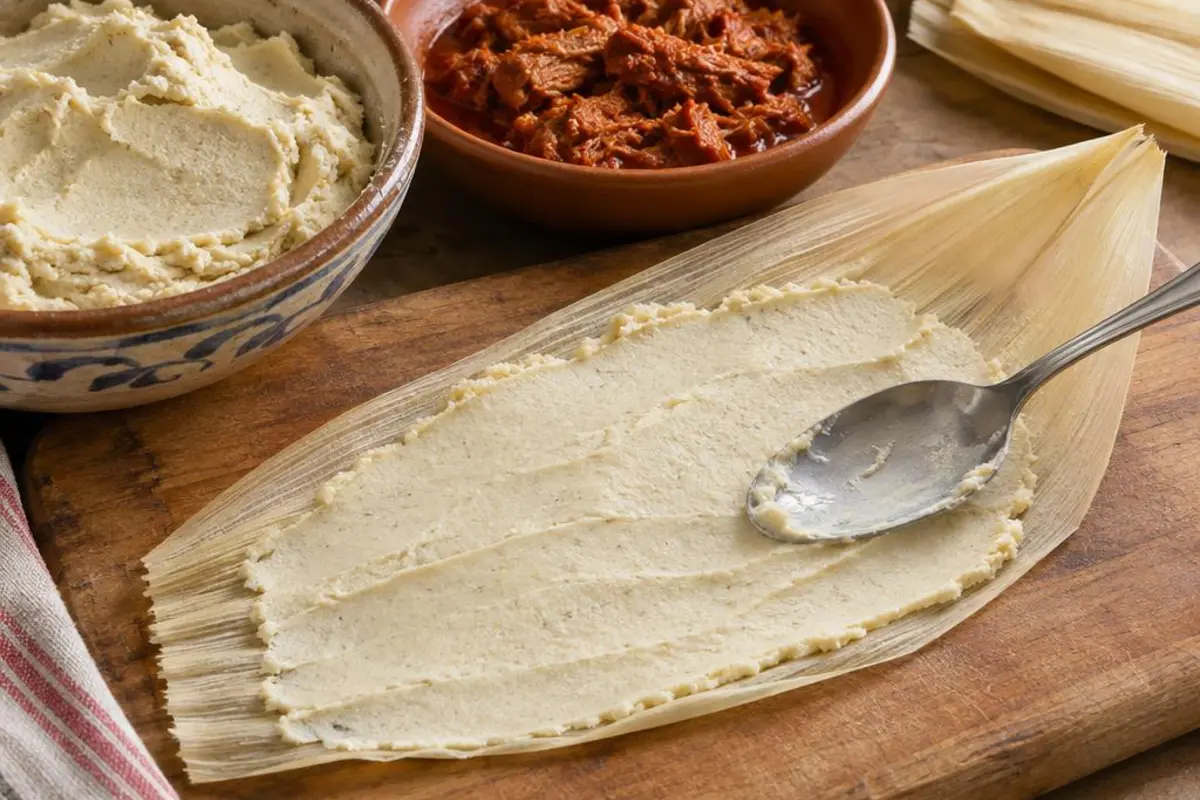
Keep the filling modest, about one and a half to two tablespoons, and spoon it in a line down the middle. Overfilled tamales burst open, and the filling leaks into the steamer. Fold one side over, then the other, so the masa edges meet and seal around the filling, then fold the narrow tail end up.
Assembly goes much faster with a system. One person spreads, one fills and folds, and finished tamales go seam side down on a tray. If you are working alone, spread six husks at once, fill all six, then fold them. Keep the masa covered with a damp towel so it does not dry out while you work.
Steaming: Setup, Timing, and the Doneness Test
A dedicated tamale steamer is ideal, but any tall stockpot with a steamer insert or a metal colander that keeps the tamales above the water works. Add water below the insert, line it with extra husks, and stand the tamales upright with the open end up so the filling stays in place. Pack them snugly but not tightly; steam needs to circulate.
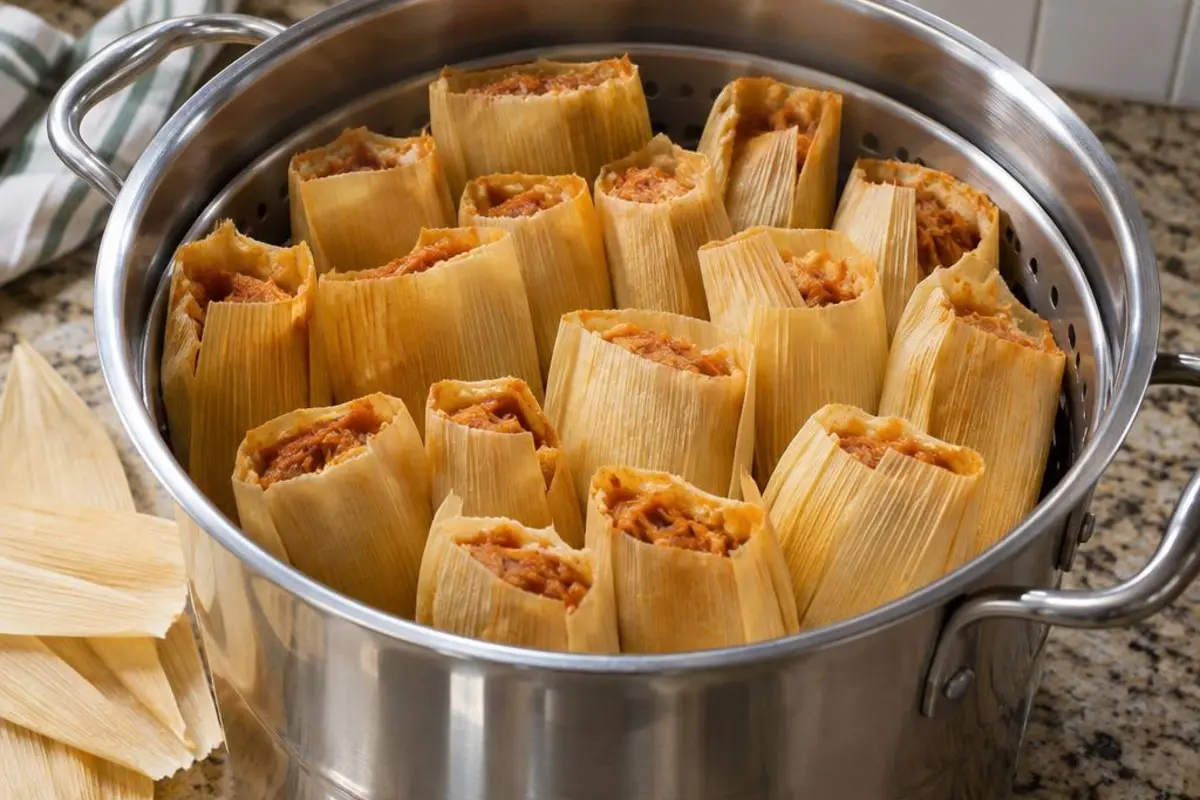
Cover the tamales with more husks and a damp towel before the lid. Bring the water to a boil, then lower the heat so the pot steams steadily without boiling dry. Check the water every thirty minutes and add boiling water carefully down the side, never over the tamales. A coin placed in the water rattles while there is still water in the pot, a trick many families use.
The doneness test is reliable: pull out one tamale, let it rest five minutes, and unwrap it. The masa should be firm and pull away from the husk cleanly. If it sticks or feels wet, put it back and steam ten to fifteen minutes longer. A full pot usually takes seventy-five to ninety minutes, and a very large or crowded pot can take up to two hours.
Other Fillings for the Same Masa
The masa in this recipe works with almost any filling. Chicken in salsa verde is a popular second batch: simmer chicken thighs, shred them, and mix with a tomatillo and green chile sauce. Beef cheek or chuck braised in the same red chile sauce makes a richer, darker filling.
For a vegetarian version, try rajas con queso: strips of roasted poblano with Monterey Jack or Oaxaca cheese. Make the masa with vegetable shortening and vegetable broth instead of lard and pork broth. Black beans with cheese and jalapeno are another easy meatless filling that freezes well.
Sweet tamales are a holiday tradition too. Add sugar, cinnamon, and raisins or pineapple to the masa, and color it pink with a little red food coloring if you want the classic look. Bean and cheese tamales, sweet tamales, and pork tamales often come out of the same tamalada, each kind tied or marked differently so they are easy to tell apart.
Making Tamales Over Two Days
Splitting the work makes tamales much more manageable. On day one, braise the pork, make the chile sauce, combine the filling, and refrigerate both the filling and the broth. The flavors improve overnight, and cold filling is easier to spoon neatly.
On day two, soak the husks for an hour, warm the broth, make the masa, assemble, and steam. With two or three people, assembly for four dozen takes about an hour, and steaming takes another hour and a half. Including cleanup, it is an afternoon.
If you plan a large tamalada, prepare the filling up to three days ahead and buy prepared masa on the morning of the event if it is available near you. Set up stations with the masa, the filling, the soaked husks, and trays for finished tamales, and keep a pot steaming while the next batch is assembled.
Storing, Freezing, and Reheating
Cooked tamales keep in the refrigerator for up to five days, wrapped well or in a sealed container. Leave them in their husks; the husks protect the masa from drying out.
For freezing, let the steamed tamales cool completely, then pack them in freezer bags in their husks, pressing out the air. They keep well for up to six months. Uncooked tamales can be frozen too, but freezing after steaming gives more reliable results.
To reheat, steam them again: 15 to 20 minutes from the refrigerator, or 30 to 40 minutes from frozen, until hot all the way through. A microwave works for one or two tamales: wrap them in a damp paper towel and heat about 1 minute each, turning once. Some families also heat them in a dry cast iron skillet in their husks until the husks char a little, which adds a toasty flavor.
How to Serve Tamales
Texas tamales are often eaten plain, unwrapped and eaten by hand, maybe with a splash of hot sauce. For a fuller plate, serve them with extra red chile sauce, a fresh salsa, or warm chile con queso spooned over the top.
Rice and refried beans are the standard sides, and a bowl of Texas chili poured over unwrapped tamales is a classic Texas combination often called a tamale plate. Pickled jalapenos, sliced radishes, and lime wedges add freshness against the rich masa.
On Christmas Eve, many families serve tamales with menudo or pozole, or simply with coffee or champurrado, a thick hot chocolate made with masa. Remind guests to remove the husk before eating; it is not edible, and first-timers do sometimes try.
Where Tamales Go Wrong
Dense, heavy masa: the lard was not whipped long enough, or the masa was not beaten after adding the masa harina. Whip the lard until white and beat the masa for at least five minutes.
Masa sticks to the husk: the tamales need more steaming. Test one, and if it sticks, steam 10 to 15 minutes more. Letting them rest after steaming also helps them release.
Bland tamales: the masa or the filling was under-salted. Season both generously and taste before assembling. Bitter sauce: the chiles were scorched while toasting; toast them briefly and watch closely.
Tamales falling apart or leaking: too much filling, too thick a layer of masa, or loose folds. Use a thin layer of masa, a modest line of filling, and fold firmly. Pot boiled dry: check the water every 30 minutes and top up with boiling water.
Texas Pork Tamales Recipe
Ingredients
- For the pork:
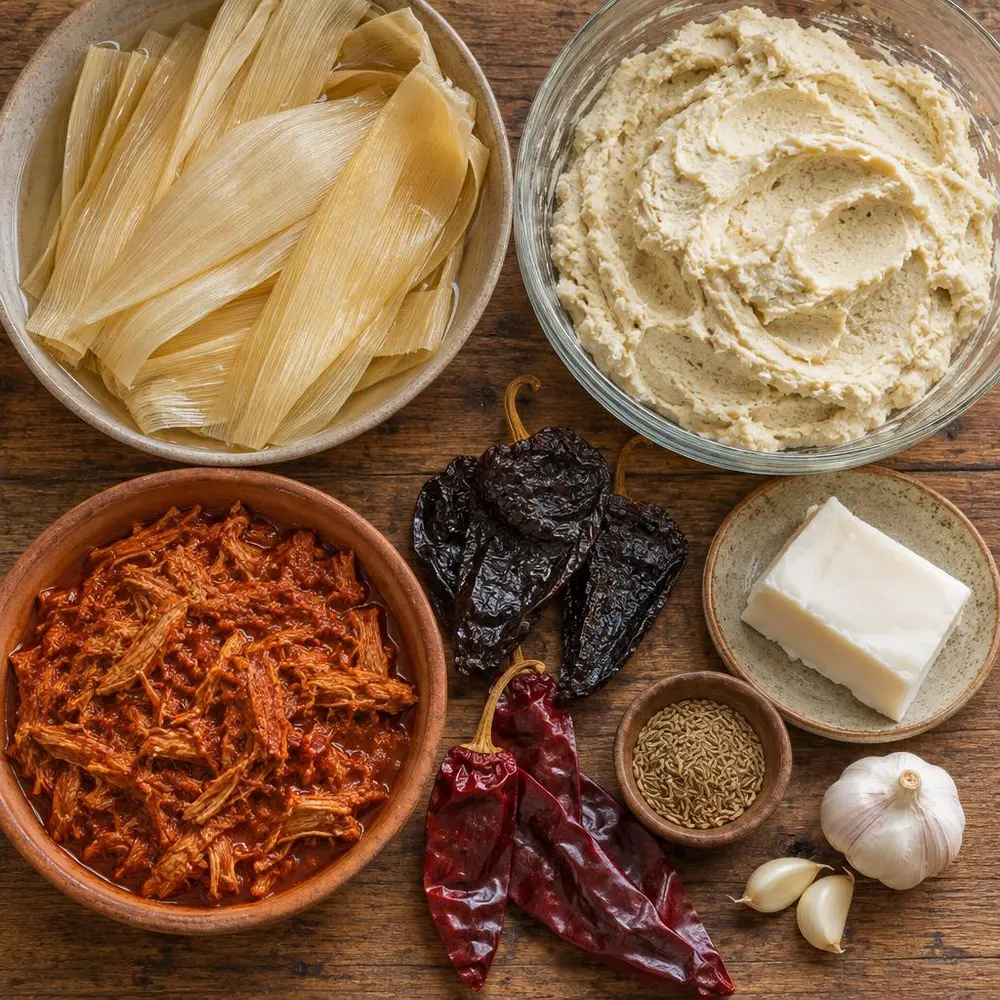
- 4 lb (1.8 kg) boneless pork shoulder (pork butt), cut into 3 inch chunks
- 1 white onion, halved
- 6 cloves garlic, peeled
- 2 bay leaves
- 1 tablespoon kosher salt
- Water to cover, about 3 quarts
- For the red chile sauce:
- 8 dried ancho chiles (about 4 oz / 115 g), stemmed and seeded
- 8 dried guajillo chiles (about 2 oz / 55 g), stemmed and seeded
- 4 cloves garlic
- 1 1/2 teaspoons ground cumin
- 1 teaspoon dried Mexican oregano
- 2 cups pork cooking broth, plus more as needed
- 2 tablespoons lard or neutral oil
- Kosher salt to taste
- For the masa:
- 1 1/2 cups (300 g) pork lard, softened (or vegetable shortening)
- 2 teaspoons baking powder
- 2 1/2 teaspoons kosher salt
- 6 cups (about 700 g) masa harina for tamales
- 4 to 5 cups warm pork broth (from cooking the pork)
- 1/2 cup red chile sauce (from above)
- For assembly:
- 1 package (8 oz) dried corn husks, about 60 husks, soaked
- Equipment:
- Large heavy pot or Dutch oven for the pork
- Blender
- Stand mixer with paddle, or a large bowl and strong arms
- Tamale steamer or large stockpot with a steamer insert
Instructions
- Braise the pork. Put the pork chunks, onion, garlic, bay leaves, and salt in a large pot and cover with water by about 2 inches. Bring to a boil, skim the foam, then lower to a gentle simmer. Cook partly covered for 2 1/2 to 3 hours, until the pork shreds easily with a fork. Lift out the pork, strain and keep the broth; you will need about 7 cups between the sauce and the masa.
- Toast and soak the chiles. Heat a dry skillet over medium heat. Toast the stemmed and seeded anchos and guajillos a few at a time, pressing them flat for 10 to 15 seconds per side, just until fragrant and slightly pliable. Do not let them blacken or the sauce turns bitter. Put them in a bowl, cover with very hot water, and soak 20 to 30 minutes until soft.
- Blend the red chile sauce. Drain the chiles and discard the soaking water. Blend them with the garlic, cumin, oregano, and 2 cups of pork broth until completely smooth, 1 to 2 minutes. Push the sauce through a fine sieve for the smoothest texture. Heat the lard in a wide pot, pour in the sauce carefully (it will spatter), and simmer 10 minutes, stirring, until slightly thickened. Salt to taste.
- Make the filling. Shred the pork with two forks, discarding any large pieces of fat. Set aside 1/2 cup of the red sauce for the masa, then stir the shredded pork into the rest of the sauce. Simmer 10 minutes until the pork is coated and the mixture is moist but not soupy. Taste and salt well; the filling should be slightly over-seasoned because the masa is mild. Cool completely. The filling can be refrigerated up to 3 days.
- Soak the corn husks. Separate the husks, rinse off any dust or silk, and put them in a large bowl or a clean sink. Cover with hot water and weigh them down with a plate so they stay submerged. Soak at least 1 hour, until soft and pliable. Keep them in the water until you use them, and set aside the torn ones for lining the steamer and for tying.
- Whip the lard and mix the masa. Beat the softened lard with the baking powder and salt in a stand mixer with the paddle on medium-high for 3 to 4 minutes, until white and fluffy. In a separate bowl, mix the masa harina with 4 cups of warm broth until it forms a soft dough. With the mixer on medium, add the masa to the lard in 4 or 5 additions, then the reserved 1/2 cup red sauce. Beat 5 more minutes, adding broth a little at a time, until the masa is soft like thick hummus and spreads easily.
- Check the masa. Taste the masa; it should be clearly salted. Many cooks also do the float test: drop a 1/2 teaspoon ball of masa into a glass of cold water. If it floats, the masa has enough air. If it sinks, beat a few minutes more. Either way, the texture matters most: it should spread smoothly without tearing and without being runny.
- Assemble the tamales. Pat a husk dry and lay it smooth side up, wide end toward you. Spread about 3 tablespoons of masa in a thin, even layer over the wide top two thirds of the husk, leaving a 1/2 inch border on one long side. Spoon 1 1/2 to 2 tablespoons of pork down the center. Fold the masa-covered sides over the filling so the edges meet, then fold the empty narrow end up toward the seam. Set aside seam side down and repeat.
- Load the steamer. Add water to the steamer pot below the level of the insert, about 2 to 3 inches. Line the insert with torn husks. Stand the tamales upright, folded end down and open end up, packed snugly so they support each other but are not crushed. Cover the tops with more husks and a damp kitchen towel, then the lid.
- Steam until the masa releases. Bring the water to a boil over high heat, then lower to a steady medium so the pot keeps steaming. Steam 75 to 90 minutes. Check the water level every 30 minutes and add boiling water down the side of the pot as needed. To test, take out one tamale, let it rest 5 minutes, and unwrap it: the masa should pull away cleanly from the husk. If it sticks, steam 10 to 15 minutes more.
- Rest and serve. Turn off the heat and let the tamales rest in the covered pot for 15 to 20 minutes; they firm up as they cool slightly. Serve in their husks with salsa, more red chile sauce, or a spoon of chile con queso, and let everyone unwrap their own.
Frequently Asked Questions
How long do you steam tamales?
Steam a full pot of tamales for 75 to 90 minutes over steady medium heat, checking the water every 30 minutes. They are done when the masa pulls away cleanly from the husk after a 5 minute rest. A very large or crowded pot can need up to 2 hours.
How do you know when tamales are done?
Take one tamale out of the steamer, let it rest for 5 minutes, and unwrap it. If the masa is firm and comes away from the husk in one clean piece, they are done. If it sticks or feels wet and soft, steam the batch 10 to 15 minutes more and test again.
Can I make tamales without lard?
Yes. Vegetable shortening is the most common substitute and gives a lighter, more neutral masa. Some cooks use a mix of shortening and butter, or oil, though oil makes a denser masa. Whip the fat well either way, since the air is what makes the masa tender.
How much masa and filling do I need for 4 dozen tamales?
About 4 pounds of prepared masa, made from 6 cups of masa harina, and the meat from a 4 pound pork shoulder make roughly 48 tamales. Use about 3 tablespoons of masa and 1 1/2 to 2 tablespoons of filling for each one.
Why are my tamales dry or crumbly?
The masa was too dry, under-whipped, or did not have enough fat. It should be soft and spreadable like thick hummus. Beat in more warm broth and make sure the lard was whipped until white. Overcooking in a pot that ran dry can also dry them out.
Can I freeze tamales?
Yes. Steam them, cool completely, and freeze in their husks in sealed freezer bags for up to 6 months. Reheat by steaming 30 to 40 minutes from frozen, or wrap one in a damp paper towel and microwave about 2 minutes, turning once.
Do you eat the corn husk on a tamale?
No. The corn husk is only a wrapper that holds the masa together while it steams and adds a subtle corn aroma. Unwrap the tamale and discard the husk before eating. Banana leaves, used for some regional tamales, are not eaten either.
Can I make tamales ahead of time?
Yes. The pork filling and red chile sauce keep up to 3 days in the refrigerator, and the filling is easier to work with cold. Make the masa on assembly day. Cooked tamales keep 5 days refrigerated and freeze very well, so they are ideal for making ahead for the holidays.