Tex-Mex Recipes
Texas Roadhouse Ranch Dressing Copycat
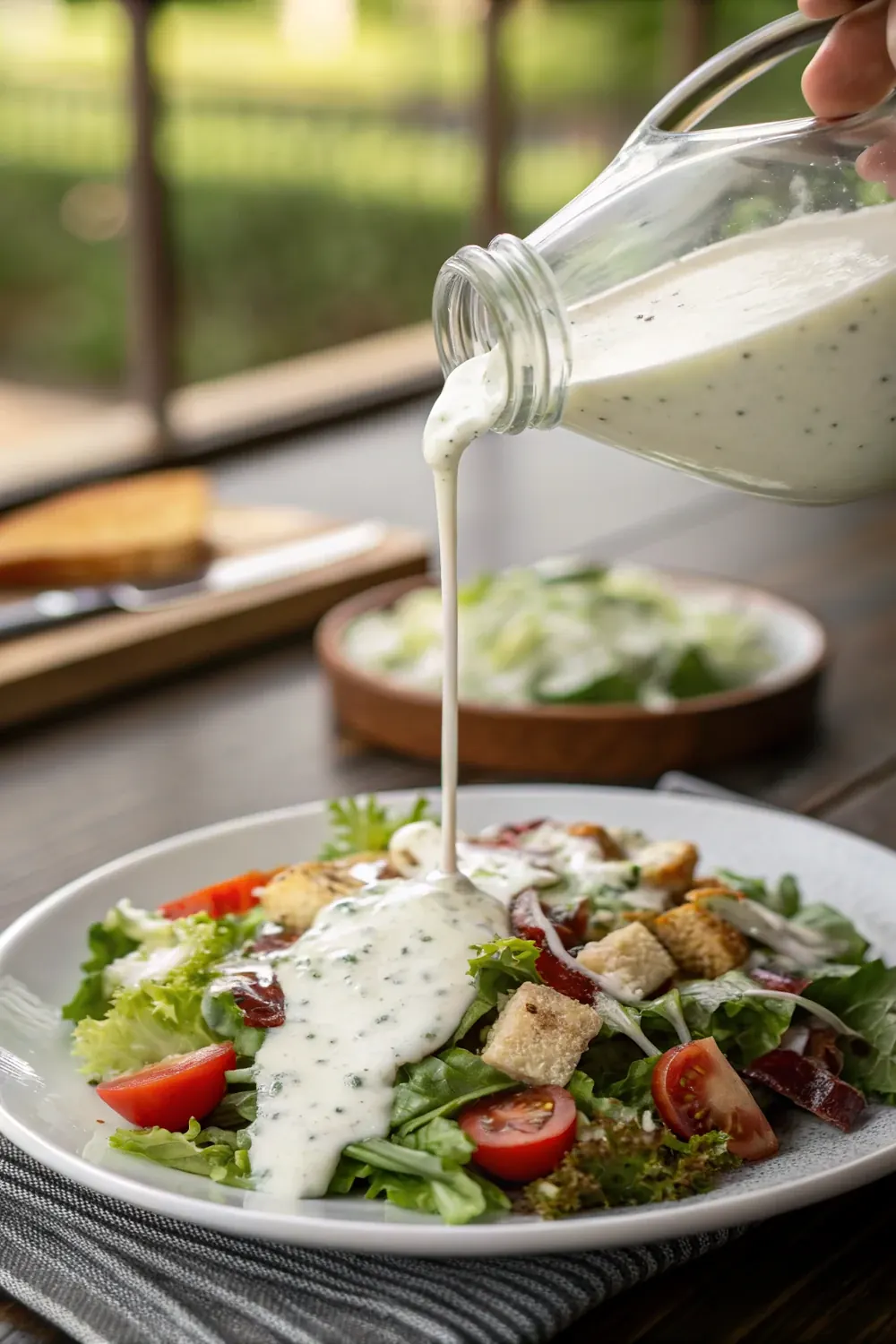
Chef Mia's copycat Texas Roadhouse ranch dressing: the cool, pourable buttermilk ranch salad dressing you drizzle over greens. Easy, creamy, ready fast.
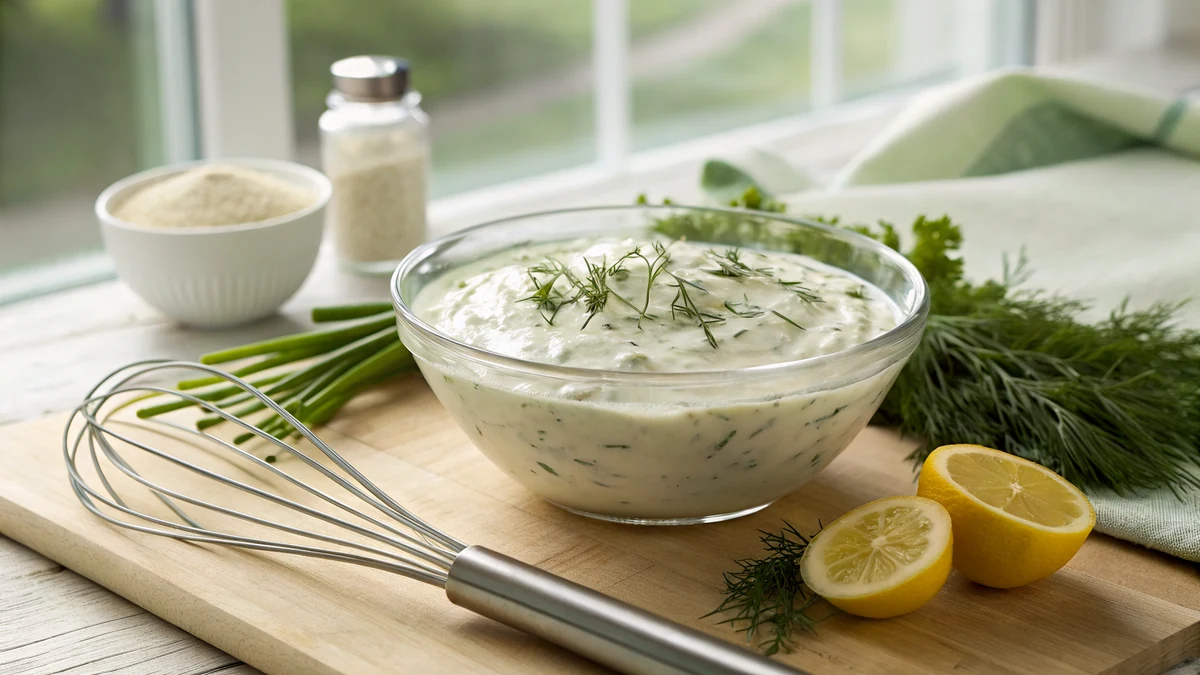
Quick answer: To make Texas Roadhouse ranch dressing, whisk mayonnaise and sour cream with buttermilk, then season with dill, parsley, chives, garlic powder, onion powder, salt, and a little black pepper. This is the pourable salad-dressing version, thinner than the steakhouse dip, so you add extra buttermilk until it ribbons off the whisk and coats a leaf of lettuce without clumping. It comes together in about five minutes with no cooking, and it tastes best after an hour in the fridge so the herbs soften and bloom. The result is a cool, tangy, herby buttermilk ranch that drizzles beautifully over salads, wraps, and roasted vegetables. For a thick dip instead, just hold back most of the buttermilk and use it as a spoonable ranch.
Every time we leave Texas Roadhouse, my youngest asks why our salads at home never taste as good. The answer, it turns out, was always the ranch. That cool, herby, pourable dressing they ladle over a house salad is its own little thing, and once I cracked it in my own kitchen, our weeknight greens got a serious upgrade. This is my copycat ranch salad dressing, and it is genuinely a five minute job.
Here is the important part, and I want to be clear up front. This is the thin, pourable salad dressing meant for drizzling over lettuce. It is not the thick steakhouse dip you scoop with a roll or a fry. If the spoonable version is what you came for, I have a whole separate recipe for the Texas Roadhouse ranch dip, and I will show you exactly how to slide between the two with one ingredient.
If you love their copycats like I do, this ranch sits right alongside my Texas Roadhouse Italian dressing and my Texas Roadhouse Caesar dressing in the fridge door, right next to my chunky Texas Roadhouse blue cheese dressing. Grab a whisk and a jar, and let me walk you through the buttermilk ranch that finally made my kids excited about salad.
Pourable Dressing vs the Thick Dip
Let me settle the most important question first, because it trips a lot of people up. Texas Roadhouse ranch shows up in two different textures, and they are not the same recipe. There is the thick, spoonable dip you swipe with a warm roll, and there is the thinner, pourable salad dressing they drizzle over a house salad. This page is the pourable one, the proper ranch salad dressing for greens.
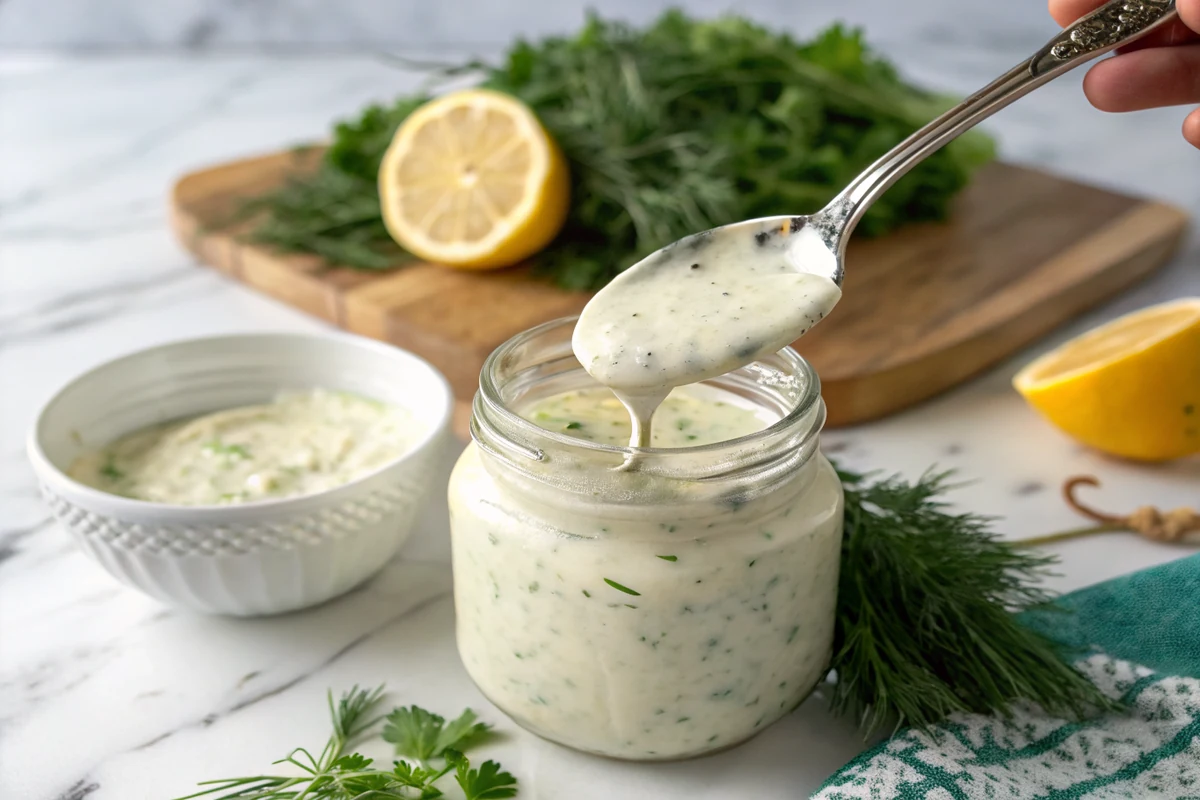
The difference comes down almost entirely to buttermilk. Less liquid gives you a dense, clingy dip that holds its shape on a spoon. More buttermilk loosens that same base into a ranch that flows, ribbons off the whisk, and coats lettuce in a thin, even sheen instead of sitting on top in heavy globs. Same flavor family, very different jobs at the table.
If the thick, scoopable version is actually what you want, do not fight this recipe to get there. I have a dedicated Texas Roadhouse ranch dip recipe built and seasoned specifically for that texture. Bookmark whichever one suits the meal, or honestly, make a single base and split it, which is exactly the trick I will show you in a minute.
I learned this distinction the hard way, years ago, when I tried to use a thick dip as a salad dressing for a dinner party. It clung to the lettuce in heavy clumps, the salad looked gloppy, and I spent the meal apologizing. A pourable dressing should kiss the greens, not bury them. Once you understand that buttermilk is the lever that moves you between the two textures, you will never be caught out again, and you will reach for the right one without thinking.
Why This Copycat Tastes Like the Restaurant
For a long time my homemade ranch tasted fine but flat, and I could not figure out why it never had that craveable steakhouse quality. The fix was not some secret ingredient. It was balance. Real Texas Roadhouse style ranch leans cool and tangy, with a clear buttermilk note, soft herbs, and just enough garlic and onion to feel savory without tasting like a spice rack exploded.
The creamy base is the foundation, and I use a blend of mayonnaise and sour cream rather than mayo alone. The mayo brings richness and body, while the sour cream adds that gentle, lactic tang that keeps the dressing from feeling heavy or greasy. That pairing is what gives this copycat its bright, fresh-tasting backbone instead of a dull, oily one.
The other secret is restraint with the herbs and patience with the chill. You want the dill, parsley, and chives present but background, not aggressive. And you genuinely have to let it rest. Mixed and tasted immediately, ranch tastes raw and disjointed. An hour later, the same bowl tastes like it came out of a restaurant kitchen. Time does most of the work for free.
I also think people underestimate how much the small acidic touches matter. That teaspoon of vinegar or lemon juice does not make the dressing taste sour, it brightens everything and keeps the creamy base from feeling flat and one-note. The optional pinch of sugar works the same way from the other direction, softening any harsh edges. These tiny adjustments are the quiet difference between a ranch that is fine and a ranch your family asks you to make on purpose, again and again.
Ingredients You Will Need
Nothing here is exotic, which is part of why I keep making it. The creamy base is mayonnaise and sour cream in equal parts. The thinner and the tang come from buttermilk, and how much you use decides whether you end up with a pourable dressing or a dip. Then you season with garlic powder, onion powder, salt, and black pepper, the savory core of any good ranch.
For herbs, fresh dill, parsley, and chives give the brightest, most restaurant-like result, and I reach for them when I have them. But dried works perfectly well in a pinch, and I have made this with my dried jars more times than I would like to admit on a busy weeknight. Just use about a third as much dried as fresh, since dried herbs are far more concentrated.
I also add a small splash of white vinegar or fresh lemon juice to sharpen the tang, and sometimes a tiny pinch of sugar to round everything out. Both are optional, but they nudge the flavor closer to that addictive restaurant balance. Use real buttermilk if you can, since it carries a cultured tang that the shortcuts only approximate.
One note on the mayonnaise, since it carries so much of the body here. A good, full-fat mayo gives the smoothest, richest result, and I steer away from the low-fat versions, which can turn the dressing thin and slightly watery in a way no amount of seasoning fixes. The sour cream should be full fat too. This is a treat poured over vegetables, after all, so I let the dairy do its job and keep the portion sensible instead of skimping on the ingredients themselves.
How to Make It Step by Step
Start by whisking the mayonnaise and sour cream together until the base is perfectly smooth. I cannot stress this enough, because lumps of mayo that survive this stage are nearly impossible to whisk out once the thin buttermilk goes in. Press the whisk against the bowl and work it until the mixture looks like one uniform, glossy cream with no streaks.
Next, stir in all your herbs and the dry seasonings, plus the vinegar or lemon and the optional pinch of sugar. Mix until the green flecks are evenly spread through. Only then do you start adding buttermilk, and you add it slowly, whisking the whole time, watching the texture loosen with each splash rather than dumping it all in at once.
Stop adding buttermilk when the dressing ribbons off the whisk and coats a spoon in a thin layer. Taste, adjust the salt and tang, then get it into a jar and into the fridge. The hardest step is the waiting, but that hour of chilling is what turns a decent bowl of ranch into the one your family asks for by name. Whisk again before you pour.
A whisk is my tool of choice, but a jar with a tight lid is a wonderful shortcut on a lazy night. Add all the ingredients, screw on the lid, and shake hard for thirty seconds until it comes together smooth. It is less precise for judging thickness than whisking in a bowl, but it makes almost no mess and lets you store the dressing in the very same jar. My kids have started doing this part themselves, which tells you how foolproof it really is.
Getting the Consistency Just Right
Consistency is the whole game with a pourable ranch, so it is worth dialing in. The target for a salad dressing is something that flows off a spoon in a steady ribbon and coats a lettuce leaf in a thin, even film. If your dressing plops down in heavy blobs, it is too thick and you simply need more buttermilk, added a teaspoon at a time.
Keep in mind that cold ranch is thicker than ranch at room temperature, so a dressing that looks perfectly pourable when you mix it will firm up noticeably after its hour in the fridge. I plan for this and make it just slightly thinner than my final target, knowing it will set up a little. A quick whisk after chilling also loosens it back up.
If you overshoot and the dressing comes out too runny, do not panic and do not toss it. Whisk in an extra spoonful of sour cream or mayonnaise to rebuild some body, then re-taste for seasoning since you have diluted it slightly. Getting comfortable nudging it thicker or thinner is what lets you make either the dressing or the dip from one base.
The brand and fat content of your dairy quietly affects thickness too. Different mayonnaises and sour creams vary in how stiff they are out of the jar, so the exact amount of buttermilk you need will shift a little from batch to batch. That is why I always tell people to add the buttermilk by feel rather than locking themselves to a precise number. Watch the texture, trust the ribbon-off-the-whisk test, and let your eyes guide the pour rather than the measuring cup.
Here is a simple visual test I rely on when I am not sure. Dip the back of a metal spoon into the dressing, lift it out, and draw a line through the coating with your fingertip. For a pourable salad dressing, that line should hold its shape briefly and then slowly soften and fill back in. If it fills instantly, the ranch is too thin. If the line stays sharp and the coating barely moves, you are in dip territory and want a splash more buttermilk.
Turn It Into the Thick Dip Instead
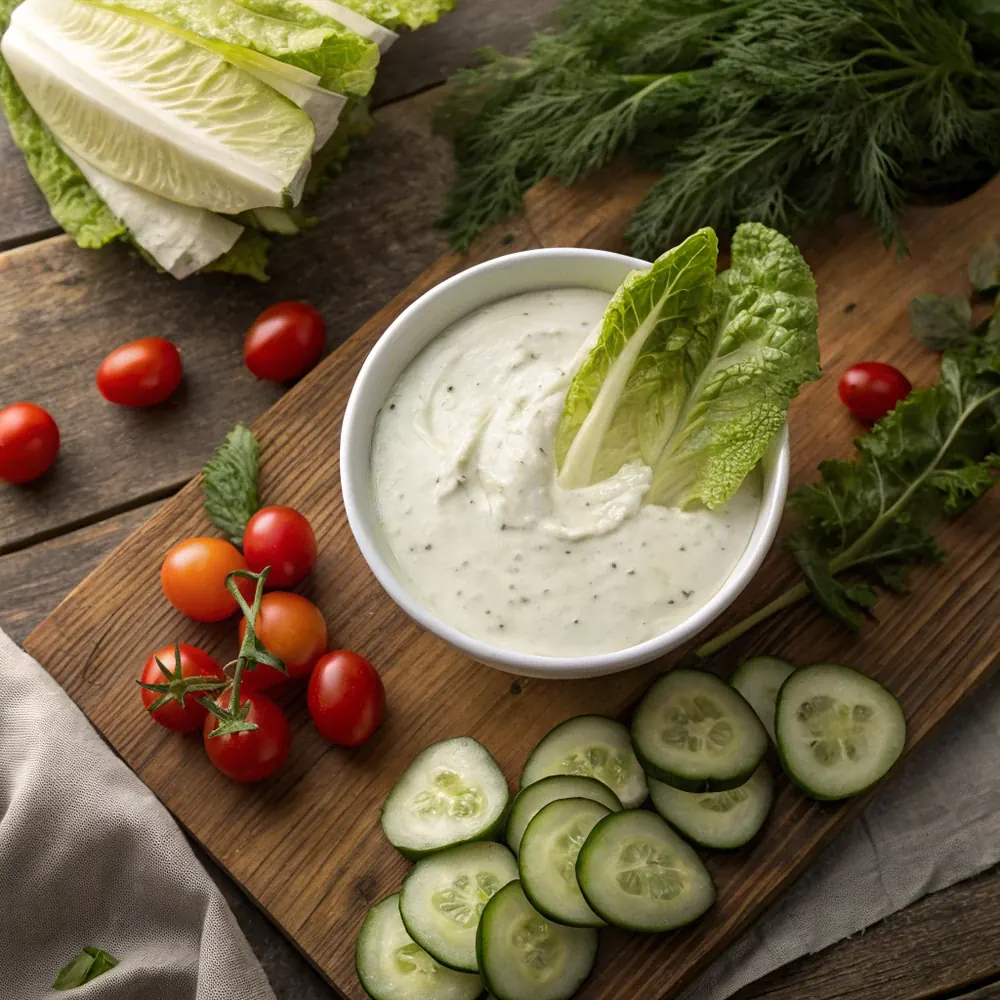
Because so many people want both versions, here is the one-bowl trick I promised. Make the creamy base and seasoning exactly as written, but hold back most of the buttermilk. For the thick, spoonable dip, you might use only a tablespoon or two of buttermilk, or none at all, leaving you with a dense ranch that holds its shape on a spoon and clings to a warm roll.
My favorite move at a gathering is to mix the full base, season it, then split it into two containers before thinning. One stays thick for dunking, and into the other I whisk extra buttermilk until it pours. Now I have a dip and a dressing from a single batch of seasoning, which saves time and keeps the flavor identical across both.
That said, if the dip is your main goal and you are not splitting anything, I would point you to my dedicated ranch dip recipe, which is tuned a touch differently for that thicker, scoopable texture. This page stays focused on the pourable salad dressing, so you always know which one you are reading.
When I do split a batch for a party, I label the two containers with a piece of tape, because once they are chilled the dip and the dressing look surprisingly similar at a glance. Nothing derails a snack table faster than someone trying to drizzle the thick dip over their salad and ending up with clumps. A two-second label saves the confusion and lets guests grab the right jar for whatever they are building, whether that is a loaded salad or a plate of crudites.
Ways to Use Your Ranch Salad Dressing
The obvious home for this is a crisp green salad, and that is where it shines. Pour it over a simple bowl of romaine, tomato, cucumber, and shredded carrot and you have basically recreated the Texas Roadhouse house salad on your own table. Because it is thin and pourable, a little goes a long way and every leaf gets coated without drowning.
But I use it far beyond salads. It is wonderful drizzled into wraps and over grain bowls, spooned onto baked potatoes, or used as a cool counterpoint to spicy buffalo chicken. Thinned ranch also makes a lovely dressing for a quick pasta salad or a slaw, where its tang cuts through richer ingredients.
When I want a copycat steakhouse dinner at home, I round out the table with my Italian dressing for those who skip ranch and a batch of Caesar dressing for the romaine lovers. Three jars in the fridge door and everyone builds the salad they actually want, which has quietly ended a lot of dinnertime negotiating in my house.
It has also turned into my secret weapon for getting vegetables into picky eaters. A plate of raw carrots, snap peas, and bell pepper strips that would otherwise be ignored suddenly disappears when there is a little cup of homemade ranch beside it. I thin the dressing just slightly more for dunking crisp vegetables, and I keep a small squeeze bottle of it in the door for exactly that. It is amazing what a good ranch can talk a child into eating.
Fresh Herbs vs Dried, and Buttermilk Notes
People always ask whether fresh or dried herbs matter, and honestly both make a good ranch. Fresh dill, parsley, and chives give the brightest, most vivid flavor and those pretty green flecks, so when my garden is going I always use them. The trade is that fresh herbs need that chilling time even more, since they have to hydrate and release their flavor into the dressing.
Dried herbs are the reliable backup, and they are what I keep on hand year round. They are more concentrated, so I use roughly one teaspoon dried for every tablespoon of fresh called for. Dried herbs especially benefit from a long rest, because they need time to rehydrate in the buttermilk, so give a dried-herb batch a couple of hours if you can spare them.
On the buttermilk itself, real cultured buttermilk gives the truest tang and is worth buying. If you are out, you can approximate it by stirring a teaspoon of lemon juice or white vinegar into a half cup of regular milk and letting it sit ten minutes. It is not identical, but it works. For more on what buttermilk actually is, this guide to buttermilk is a clear, friendly read.
If you find yourself buying a carton of buttermilk just for this recipe and worrying about the leftovers, do not. Buttermilk freezes well in an ice cube tray, so I portion the extra into cubes, pop them into a freezer bag, and thaw a couple whenever I want to whip up another batch of ranch or some biscuits. That way a single carton stretches across weeks of dressings without anything going to waste, which makes keeping real buttermilk on hand a lot more practical.
Storing It and Making It Ahead
This ranch is a champion make-ahead, which is exactly why I love it for busy weeks. Stash it in an airtight jar in the fridge and it keeps beautifully for about a week, though I will be honest, mine rarely survives that long once the kids discover a fresh jar. Always use clean utensils when you scoop or pour so you do not introduce anything that shortens its life.
The flavor actually improves on day two and three as everything continues to meld, so making it ahead is a feature, not a compromise. The one thing to expect is that it thickens as it sits in the cold. Just whisk in a splash of buttermilk before serving to bring it back to that pourable, drizzleable consistency, and it will taste as good as the day you made it.
Use the buttermilk and sour cream dates as your guide for how long to keep it, and trust your senses. If it ever smells sour in an off way, looks separated in a way a quick whisk will not fix, or tastes flat and old, let it go. Fresh ranch is so fast to whip up that there is never a reason to push a questionable jar.
I do not recommend freezing the finished dressing, by the way, even though the buttermilk on its own freezes fine. Dairy-based dressings tend to separate and turn grainy once thawed, and no amount of whisking fully brings the silky texture back. Since the whole recipe takes five minutes of active work, you are always better off making a fresh batch than trying to rescue a frozen one. I would rather mix a new jar than serve something broken and watery over a nice salad.
Common Mistakes to Avoid
The biggest mistake is skipping the chill and serving the ranch the instant you mix it. Fresh out of the bowl, it tastes raw, the garlic is harsh, and the herbs have not had a chance to soften. Give it that hour minimum and it transforms. If your homemade ranch has ever tasted flat compared to the restaurant, this is almost always the reason.
The second trap is dumping in all the buttermilk at once. You lose control of the consistency, and if you overshoot into soup you have to rebuild the body with more dairy. Add the buttermilk slowly and watch the texture, especially for this pourable version, where the line between perfectly drizzleable and too thin is just a splash or two.
Last, do not over-salt or overload the herbs early on, because the flavors concentrate and bloom as the dressing rests. Season it slightly bold but not aggressive, taste again after chilling, and adjust then. A heavy hand with dried herbs in particular can turn grassy overnight. Treat ranch gently and let time do the heavy lifting, and your copycat will rival the steakhouse every time.
One more mistake worth flagging is whisking the buttermilk into lumpy mayo. If your base was not smooth before the thin liquid went in, you will be left chasing little white lumps around the bowl that simply refuse to break up once everything is loose. It is maddening, and it is entirely avoidable. Spend the extra thirty seconds to get that mayo and sour cream perfectly creamy first, and the rest of the recipe falls into place without a fight.
Texas Roadhouse Ranch Dressing Copycat Recipe
Ingredients
- For the dressing:
- 1/2 cup mayonnaise
- 1/2 cup sour cream
- 1/2 cup to 3/4 cup buttermilk (more for a thinner, pourable dressing)
- 1 tablespoon fresh dill, finely chopped (or 1 teaspoon dried)
- 1 tablespoon fresh parsley, finely chopped (or 1 teaspoon dried)
- 1 tablespoon fresh chives, finely chopped (or 1 teaspoon dried)
- 1 teaspoon garlic powder
- 1 teaspoon onion powder
- 1/2 teaspoon salt, plus more to taste
- 1/4 teaspoon black pepper
- 1 teaspoon white vinegar or fresh lemon juice
- 1/4 teaspoon sugar (optional, to round out the tang)
Instructions
- Whisk the creamy base. In a medium bowl, whisk together the mayonnaise and sour cream until completely smooth and free of lumps. Getting this base silky first makes a big difference, because once you add the buttermilk it is hard to chase out any stubborn pockets of mayo. Work the whisk against the side of the bowl until it looks like a uniform cream.
- Add the herbs and seasoning. Stir in the dill, parsley, chives, garlic powder, onion powder, salt, and black pepper. Add the white vinegar or lemon juice and the pinch of sugar if you are using it. Whisk until the herbs are evenly distributed so you do not get a clump of dill in one bite and none in the next.
- Thin to pourable. Now pour in the buttermilk a little at a time, whisking as you go. For this pourable salad-dressing version you want it to ribbon off the whisk and coat the back of a spoon, then slide off slowly. Start with 1/2 cup and add more, up to 3/4 cup, until it reaches a thin, drizzleable consistency that will cling to a lettuce leaf without sitting on it in a glob.
- Taste and adjust. Dip a piece of lettuce or a spoon and taste. Add more salt if it is flat, more vinegar or lemon if you want sharper tang, or another pinch of garlic powder for depth. Remember the flavor mellows as it chills, so it is fine to season it a touch bolder than you think you want right now.
- Chill before serving. Transfer the dressing to a jar or airtight container and refrigerate for at least one hour, ideally longer. This rest is not optional if you want restaurant flavor. The herbs hydrate, the garlic and onion soften, and the whole thing turns rounder and more cohesive. Give it a quick whisk before serving, since it thickens slightly in the cold.
- Adjust thickness if needed. After chilling, the dressing firms up a bit. If it is too thick to pour, whisk in another splash of buttermilk a teaspoon at a time until it drizzles freely again. If you accidentally made it too thin, stir in a spoonful more sour cream to bring it back. Then serve it over greens, wraps, or roasted vegetables.
Frequently Asked Questions
How do you make Texas Roadhouse ranch dressing?
Whisk together equal parts mayonnaise and sour cream until smooth, then stir in dill, parsley, chives, garlic powder, onion powder, salt, and black pepper. Add buttermilk a little at a time until the dressing is thin enough to pour and ribbon off a whisk, which is the pourable salad-dressing texture. A splash of vinegar or lemon sharpens the tang. Chill it for at least an hour so the herbs soften and the flavors meld before serving over salad.
What is the difference between the ranch dressing and the ranch dip?
It comes down to buttermilk. The pourable ranch salad dressing on this page uses more buttermilk so it flows, ribbons off a whisk, and coats lettuce in a thin layer. The thick dip uses little to no buttermilk, so it stays dense and spoonable for swiping with rolls or fries. The seasoning is the same family, so you can make one base and split it, or use my separate dip recipe for the thicker version.
Can I make this ranch thicker for a dip?
Yes, easily. Make the creamy base and seasoning as written but hold back most or all of the buttermilk. With only a tablespoon or two, or none at all, you get a thick, scoopable ranch dip that clings to a roll. A handy trick is to mix the full seasoned base, then split it, leaving one half thick for dipping and thinning the other half with buttermilk into a pourable dressing.
Do I have to use buttermilk?
Buttermilk gives the most authentic cultured tang, so I recommend it. If you are out, stir a teaspoon of lemon juice or white vinegar into a half cup of regular milk and let it sit about ten minutes to make a quick substitute. You can also thin the dressing with a little extra milk plus the vinegar already in the recipe. It will be slightly less tangy but still a very good ranch.
Can I use dried herbs instead of fresh?
Absolutely. Fresh dill, parsley, and chives give the brightest flavor and prettiest flecks, but dried herbs work well and are what most of us keep on hand. Use about one teaspoon of dried herb for every tablespoon of fresh called for, since dried is more concentrated. Dried herbs especially need the chilling time to rehydrate, so give a dried-herb batch a couple of hours in the fridge if you can.
How long does homemade ranch dressing last?
Stored in an airtight jar in the refrigerator, this ranch keeps for about a week. Use clean utensils each time and let the dates on your buttermilk and sour cream guide you. The flavor actually improves over the first couple of days as it melds. It thickens in the cold, so whisk in a splash of buttermilk before serving to return it to a pourable consistency. Discard it if it ever smells off or looks oddly separated.
Why does my homemade ranch taste flat compared to the restaurant?
The most common culprit is serving it too soon. Ranch tastes raw and disjointed right after mixing, and it needs at least an hour in the fridge for the garlic, onion, and herbs to soften and meld into that smooth restaurant flavor. Flat ranch can also mean it needs a touch more salt or a splash of vinegar or lemon for tang. Season slightly bold, chill it, then taste and adjust.
How much does this recipe make and can I scale it?
As written it makes about two cups, which is plenty for several salads or a gathering. It scales up and down cleanly, so halve it for a small batch or double it for a party. Keep the mayonnaise and sour cream equal, and adjust the buttermilk to hit your desired thickness rather than measuring it rigidly, since the pour you want is easier to judge by eye than by a strict amount.