Southern Comfort Food
Texas Toast Stuffing
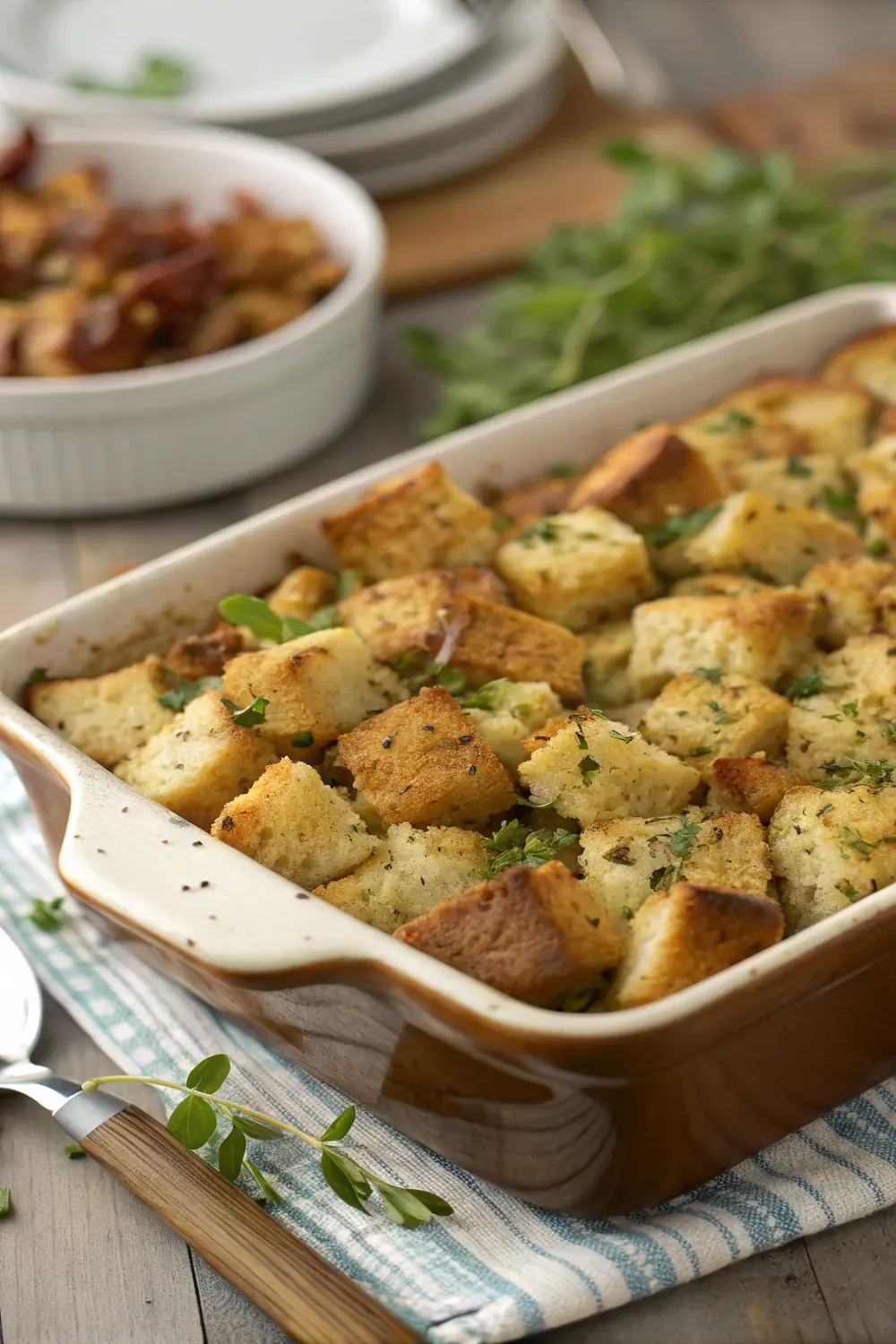
Chef Mia's Texas toast stuffing: thick bread cubes, butter, sage, and herbs baked golden and crisp on top. A buttery Thanksgiving side for 10 to 12.
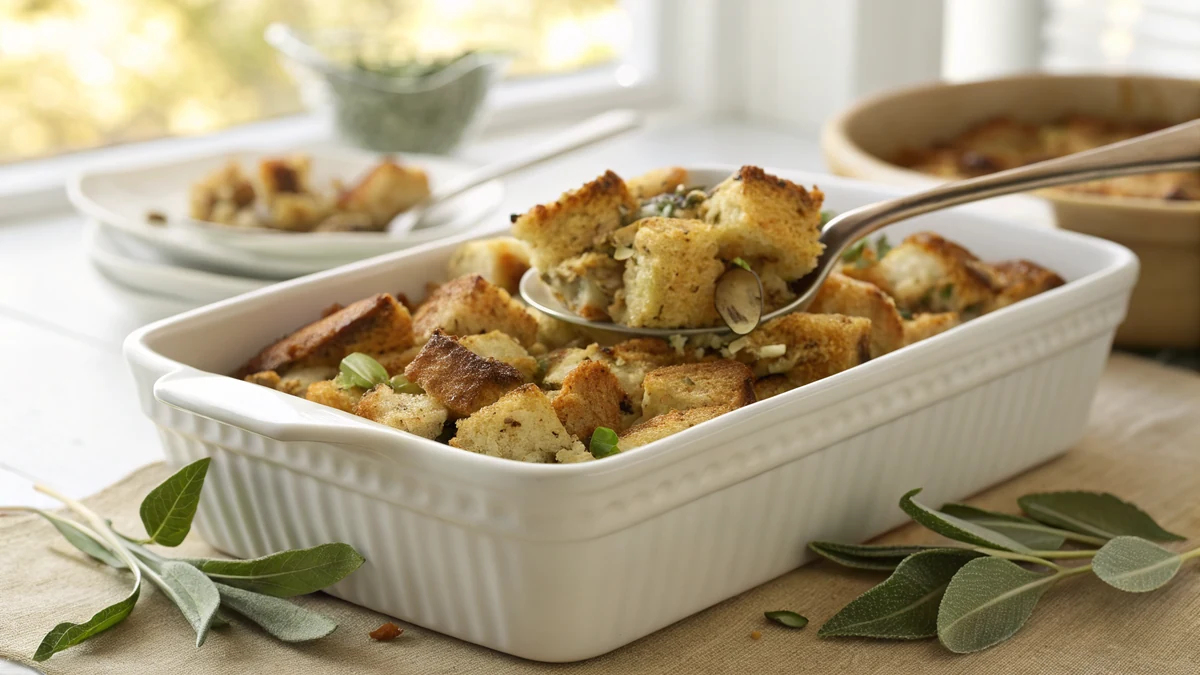
Quick answer: Texas toast stuffing is a Thanksgiving dressing made from thick-cut Texas toast bread instead of cornbread. You cube about 16 slices of Texas toast into 1 inch pieces, dry them in a low oven or overnight, then saute a diced yellow onion, three celery ribs, and four cloves of garlic in two sticks of butter with fresh sage, thyme, and rosemary. Toss the toasted bread with the buttery vegetables and chopped parsley, pour over 3 to 4 cups of broth and two beaten eggs, and fold gently. Spread it in a buttered 9 by 13 dish and bake covered at 350F for 30 minutes, then uncovered 15 to 20 minutes until the top is golden and crisp. It serves 10 to 12 and is buttery, herby, and rich.
Around here in Lockhart, the Thanksgiving table usually means cornbread dressing, and I make plenty of that. But the year I had a stack of leftover Texas toast and not enough cornmeal, I cubed it up, dried it out, and built a stuffing around it instead. It turned out so buttery and rich, with a crisp golden top and a soft, custardy middle, that it has earned a permanent spot next to the turkey. The thick slices soak up broth and butter without falling apart, which is exactly what you want in a stuffing that has to sit on a crowded holiday table.
This is a true bread stuffing, not a cornbread dressing, and the two are different animals. Texas toast gives you a sturdy, buttery white-bread base that toasts up into a real golden crust, where cornbread crumbles into something softer and more savory-sweet. I am going to walk you through cubing and drying the bread, building a deep butter and herb base with sage, thyme, and rosemary, getting the moisture just right so it bakes up moist but never gummy, and the choice between adding browned sausage or keeping it vegetarian. It serves 10 to 12 and reheats beautifully.
Why Texas Toast Makes the Best Stuffing
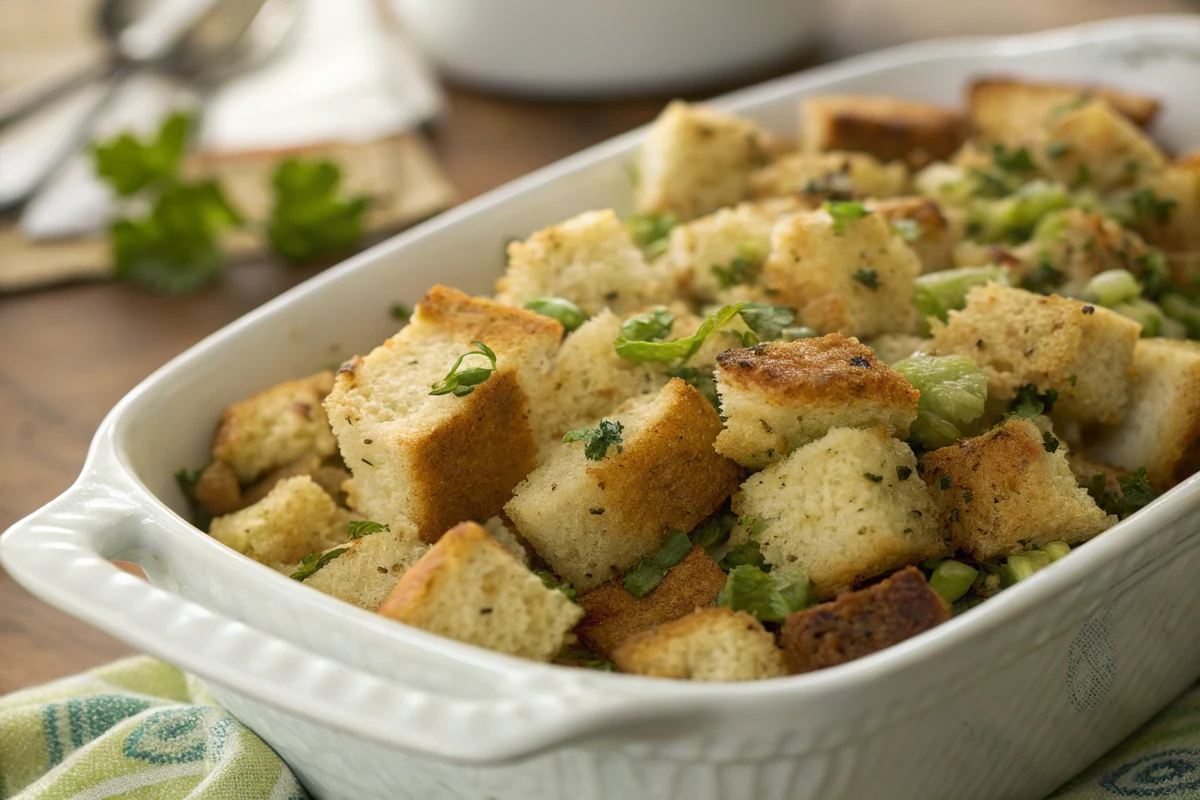
Texas toast is thicker than ordinary sandwich bread, usually close to twice as thick, and that heft is exactly what a good stuffing needs. Thin slices fall apart the second they hit the broth, but these sturdy cubes drink in butter and stock while still holding their shape. When the dish bakes, the outsides of the top cubes crisp into a real golden crust while the cubes underneath stay soft and custardy. That contrast of crisp and tender is the whole reason people go back for seconds.
There is also the flavor of the bread itself. Texas toast is a rich, slightly buttery white bread to begin with, so it brings its own backbone before you add a stick or two of butter. It is mild enough to let the sage, thyme, and rosemary shine, but substantial enough that the stuffing tastes like more than seasoned air. I have made stuffing from baguette, from sourdough, from plain sandwich loaf, and the Texas toast version comes out the richest and most satisfying every time.
It is also forgiving for a holiday cook who is juggling ten things at once. Because the cubes are big and sturdy, they are hard to overmix into paste, and they tolerate a little too much or too little broth better than delicate breads do. If you are feeding a crowd and want a stuffing that looks generous, bakes up golden, and does not collapse into mush on a long buffet table, thick-cut Texas toast is the bread I reach for first.
And honestly, it is practical. Texas toast comes in a loaf at almost any grocery store, it is inexpensive, and a single loaf of about 16 slices gives you the roughly 12 cups of cubes you need to fill a 9 by 13 dish for 10 to 12 people. No hunting for an artisan loaf, no slicing a fresh baguette paper thin. You buy the bread, cube it, dry it, and you are most of the way to a stuffing that tastes like you fussed far more than you did.
Stuffing vs Dressing (and How This Differs From Cornbread Dressing)
People argue endlessly about stuffing versus dressing, and the honest answer is that the words mostly come down to where you grew up and how it is cooked. Traditionally, stuffing is the mixture cooked inside the bird, and dressing is the same idea baked in a separate dish. In a lot of the South, including here in Central Texas, folks say dressing no matter where it bakes. I use the words loosely; this Texas toast version is baked in a dish, so you can call it either one.
The bigger, more useful distinction is the base. This recipe is a bread stuffing built on thick white Texas toast, which gives you sturdy cubes, a buttery flavor, and a crisp golden top. Classic Southern Texas cornbread dressing is built on crumbled cornbread instead, which behaves completely differently. Cornbread breaks down into a softer, more spoonable, almost casserole-like texture, with that distinctive savory-sweet corn flavor running through it.
So if you have only ever made cornbread dressing, know that this is not just the same recipe with different bread. Texas toast holds its cube shape and crisps where cornbread melts into tenderness. The toast version reads as buttery and herby and a little rustic, while cornbread dressing reads as soft, rich, and unmistakably corn-forward. Neither is better; they are two different dishes that happen to share a spot on the Thanksgiving table.
I genuinely love both, and some years I make one of each because they please different people. The cornbread crowd wants that soft, sweet-savory spoonful, and the bread-stuffing crowd wants the buttery cubes with the crispy top. If you are torn, read through my cornbread dressing recipe too and decide which texture your table will reach for. This page is for when you want the thick, golden, herb-buttered bread version.
Drying the Bread Is the Secret
If there is one step that separates great stuffing from a gummy disappointment, it is drying the bread before it ever meets the broth. Fresh, soft bread is full of moisture, so when you add stock on top of that it has nowhere left to go and you end up with a wet, pasty mass. Dried-out cubes, on the other hand, act like little sponges. They soak the buttery broth deep into their centers and swell up moist without turning to glue.
There are two easy ways to dry the cubes. The slow way is to cut the Texas toast into 1 inch pieces and leave them spread out uncovered overnight, even a full day, until they feel dry and a little stale. The fast way is to spread them on a sheet pan and put them in a low 250F oven for 45 minutes to an hour, stirring once or twice, until they are dry and just barely toasted. Both work; the oven is just quicker on a busy morning.
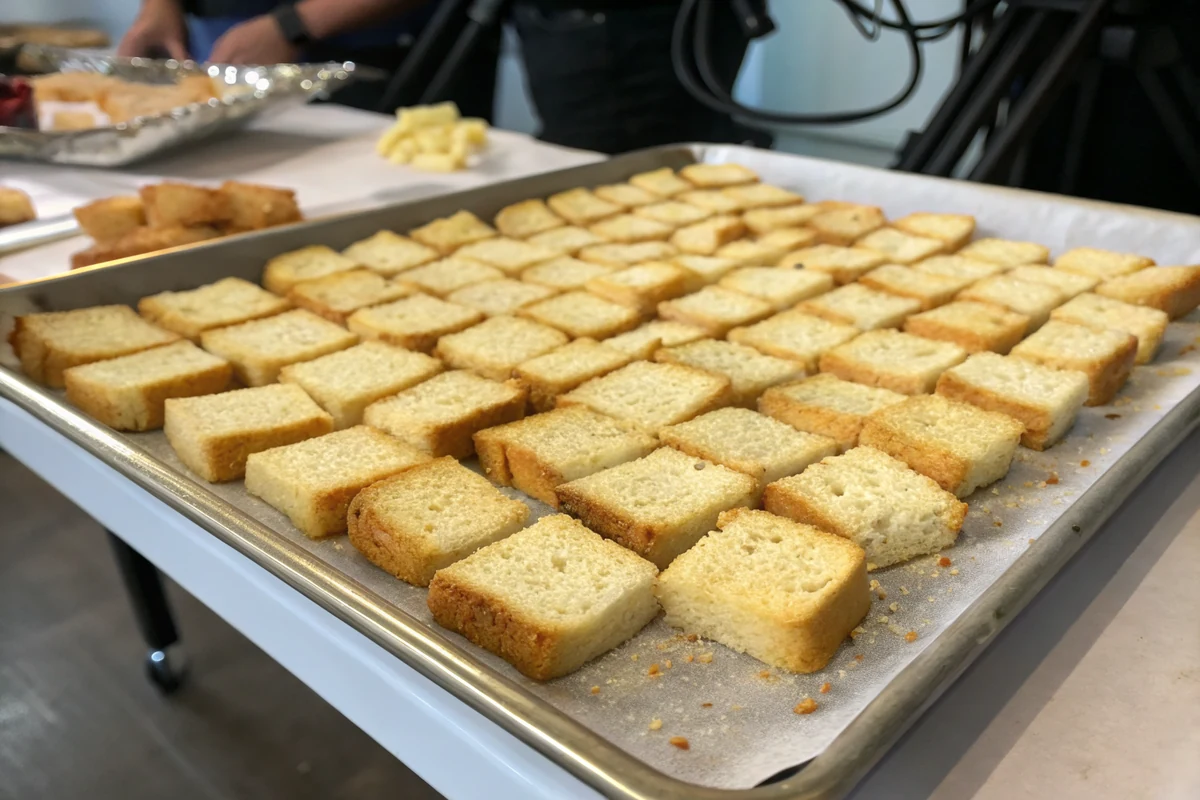
You want the cubes dry to the touch and lightly crisp, but not browned hard like croutons. If they take on too much color in the oven they can turn bitter and stay tough even after baking. Aim for dry and pale gold. A loaf of about 16 slices cut into cubes gives you roughly 12 cups, which is the right amount to fill a 9 by 13 dish without packing it. Once they are dried, they are ready to drink up all that herb butter and broth.
Building the Butter and Herb Base
The soul of this stuffing is the butter and herb base, and it is worth taking your time with it. I melt a full cup, two sticks, of unsalted butter in a big skillet and let the diced onion and celery cook gently in it for seven or eight minutes. You are not browning them hard; you want them soft, sweet, and translucent so they melt into the bread rather than staying crunchy. That slow saute is where a lot of the deep, savory flavor comes from.
Once the vegetables are tender, in go the four cloves of minced garlic and the herbs: two tablespoons of chopped fresh sage, a teaspoon of fresh thyme, and a half teaspoon of chopped rosemary. Sage is the classic Thanksgiving note and the one most people associate with stuffing, while thyme adds an earthy backbone and rosemary brings a little piney lift. Cook them just a minute, until everything smells fragrant, so the garlic does not scorch and the herbs bloom in the hot butter.
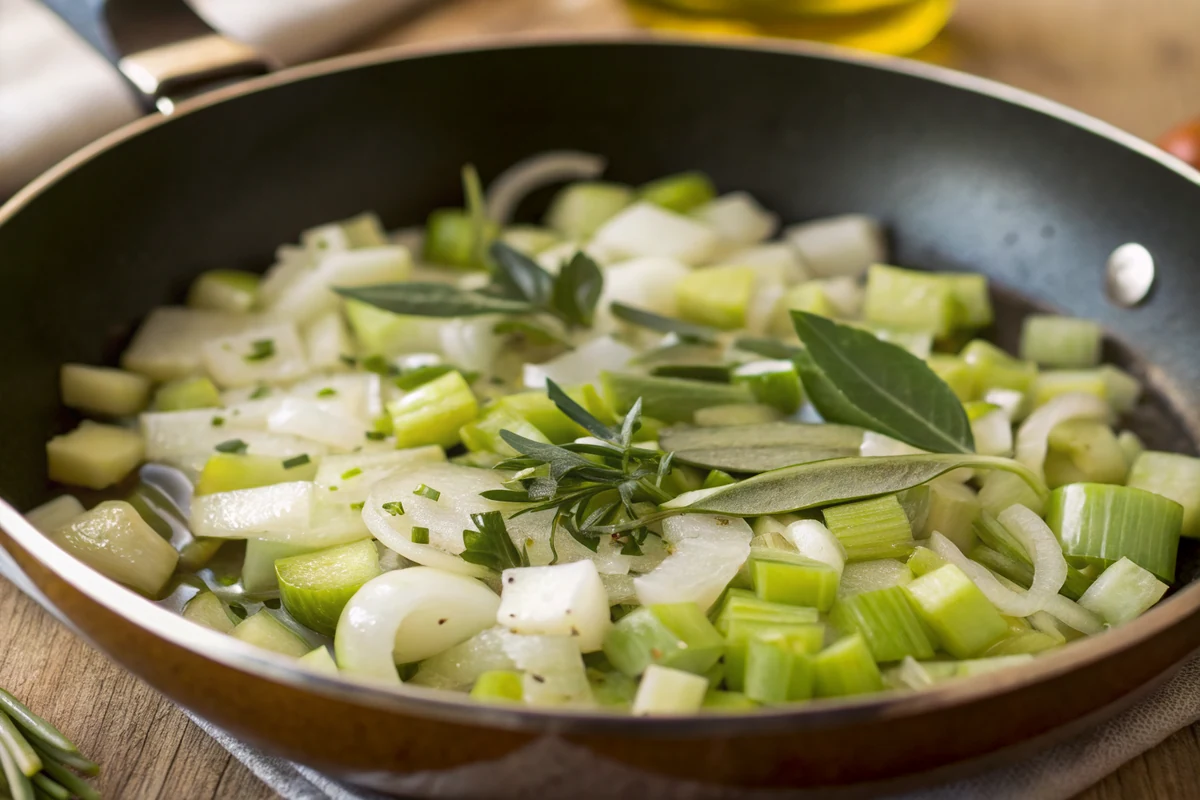
If you only have dried sage, use two teaspoons in place of the fresh, since dried herbs are more concentrated. Whatever you use, the goal is the same: a skillet full of glossy, golden, herb-flecked butter that you can smell from across the kitchen. When you pour that over the dried bread cubes, every piece gets coated in flavor before a drop of broth goes in. That is the difference between bland, broth-soaked bread and a stuffing that tastes genuinely rich.
Getting the Moisture Right
Moisture is where stuffing lives or dies, and the good news is that Texas toast gives you a wide margin to work in. The mixture should feel evenly moist and hold together when you press it, but it should not be swimming or soupy. I start with the beaten eggs whisked into 3 cups of broth, pour it over the bread slowly, and fold gently so the cubes soak it up evenly instead of leaving dry pockets and wet pockets.
After that first pour, I judge by feel. If some cubes still look dry and pale, I drizzle in up to one more cup of broth, a splash at a time, folding between additions until everything is evenly damp. Dried Texas toast can take a lot of liquid, so do not be shy, but add it gradually. It is much easier to add a little more broth than it is to rescue a dish you have already flooded.
The two beaten eggs do important work here. They set as the stuffing bakes and bind the moist cubes into a soft, sliceable custard rather than a loose pile of wet bread. That is what gives baked stuffing its tender, cohesive middle. Without the egg, the inside can stay mushy and never quite firm up. With it, the center sets gently while the top crisps, which is exactly the texture you are chasing.
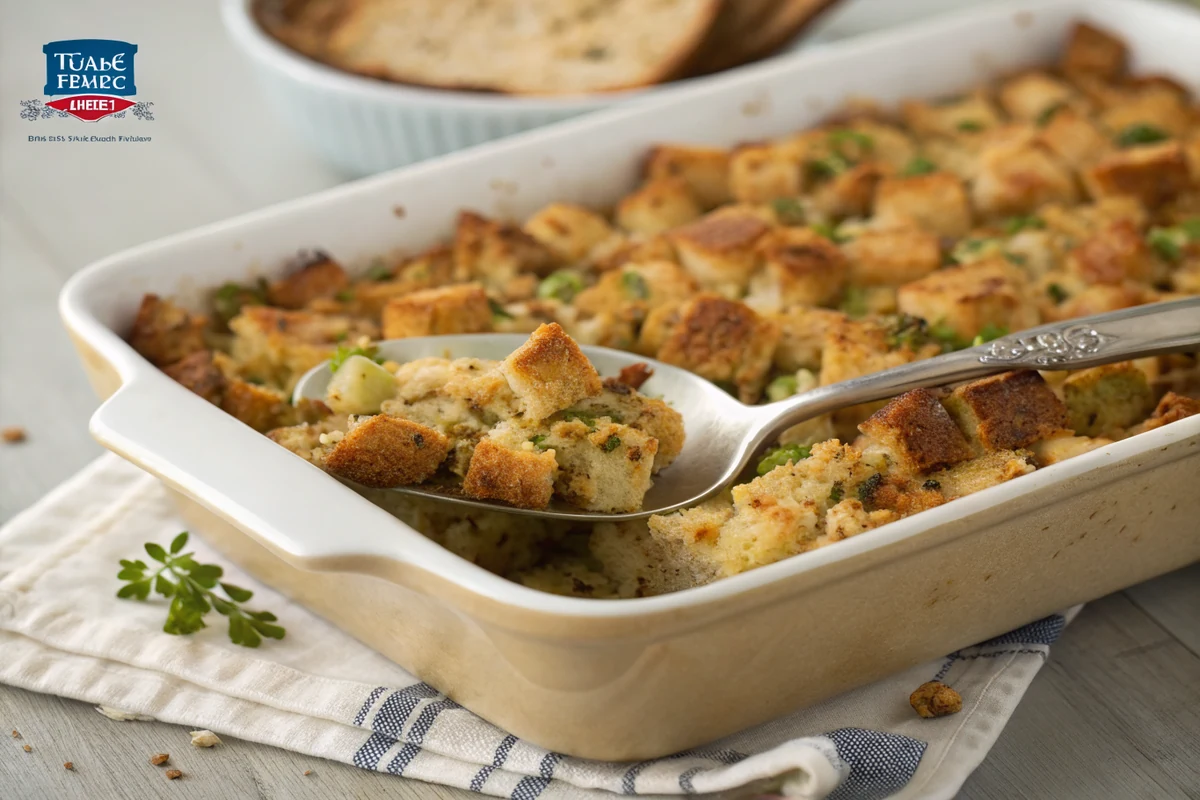
Then comes the bake that locks it all in. Covering the dish with foil for the first 30 minutes traps steam so the inside cooks through and the egg sets without the top burning. Pulling the foil for the last 15 to 20 minutes lets the surface dry out and crisp into that golden crust. If you bake it uncovered the whole time, the top can brown before the middle is done; covered then uncovered gives you both.
Add Sausage or Keep It Vegetarian
This stuffing is wonderful either way, so let your table decide. For a heartier, meatier version, I brown a pound of breakfast sausage in a separate skillet, breaking it into crumbles until it is fully cooked with no pink left, then drain off most of the grease and fold it in with the bread and vegetables. The sausage adds savory depth, a little fat, and those browned bits that make the whole dish taste richer. It is my go-to when stuffing is meant to be a centerpiece side.
To keep it vegetarian, simply leave the sausage out and swap the chicken broth for vegetable broth. That one change makes the whole dish meat free without giving up any of the buttery, herby character. The Texas toast, the two sticks of butter, and the sage-thyme-rosemary base carry plenty of flavor on their own, so a vegetarian pan never tastes like it is missing something. I often make one of each so everyone at the table is covered.
If you go the sausage route, taste before you add the full amount of salt. Breakfast sausage is already seasoned and can be fairly salty, so the 1 1/2 teaspoons of salt in the recipe may be a touch much once the sausage is in. I add most of it, then taste a bit of the tossed bread mixture before it goes in the dish and adjust. The egg and broth dilute things, so it should taste pleasantly seasoned, not bland, at that stage.
Other add-ins work nicely too if you want to riff. Sauteed mushrooms fold in beautifully with the onion and celery, a handful of chopped toasted pecans adds Texas crunch, and dried cranberries bring a sweet-tart pop for folks who like a little fruit in their stuffing. Keep additions modest so the bread, butter, and herbs stay the stars. The base recipe is built to take a little customizing without falling apart.
Stuffing It In the Bird vs Baking In a Dish
The name says stuffing, but I almost always bake this in a 9 by 13 dish rather than packing it inside the turkey, and I think that is the better way for most cooks. Baked in a dish, you get far more of that crisp golden top, the part everybody fights over, and you have full control over the texture. It also frees you to make a big batch for 10 to 12 people without being limited by how much fits in the cavity.
Food safety is the bigger reason, though. When you stuff the bird, the dressing in the center has to reach 165F to be safe, and by the time it does, the surrounding turkey meat is often overcooked and dry. It is a tricky balance even for experienced cooks. Baking the stuffing separately sidesteps the whole problem: the stuffing cooks to a safe temperature on its own schedule, and the turkey cooks on its own.
If you are roasting the turkey itself, my guides to cooking a turkey and to a good Thanksgiving turkey brine will help you get a juicy bird to serve alongside this dish. I like to keep the two projects separate on the day: brine and roast the turkey on its own, bake the Texas toast stuffing in its own dish, and let each one be its best instead of compromising both.
That said, if you truly want to stuff the bird, do it loosely with stuffing that is freshly made and warm, fill the cavity just before roasting, and verify with a thermometer that the very center of the stuffing hits 165F before you call the turkey done. You will lose some of the crisp top to the moist cavity, so I sometimes bake a second small dish of it alongside just to guarantee there is plenty of the golden, crunchy kind to go around.
Make-Ahead for Thanksgiving
Thanksgiving is a logistics puzzle, and this stuffing is a friend to anyone trying to get ahead. You can dry the Texas toast cubes a day or two in advance and keep them in a paper bag or loosely covered bowl on the counter; they only get better as they stale. The onion, celery, and herb butter base can also be cooked the day before and refrigerated, then warmed gently to loosen it before you toss it with the bread.
You can even assemble the whole dish the night before. Toss the bread with the buttery vegetables, parsley, and seasonings, pour over the broth and beaten eggs, fold it together, spread it in the buttered 9 by 13 dish, cover it, and refrigerate overnight. The cubes will keep soaking up the broth, which only deepens the flavor. Pull it out about 30 minutes before baking so it loses some chill, then bake covered, then uncovered, as written.
A few small adjustments help when you bake from cold. A fully chilled dish may need an extra 5 to 10 minutes under the foil to heat through to the center, so check that the middle is hot and set before you uncover it. You may also want to hold back a little broth at assembly and add a splash just before baking if it looks like the cubes drank up everything overnight and the mixture seems dry.
Leftovers store and reheat well too. Keep cooled stuffing covered in the fridge for up to three or four days. To reheat, cover with foil and warm in a 350F oven until hot through, then uncover for a few minutes to re-crisp the top. A small splash of broth before reheating revives cubes that have firmed up in the fridge. It also freezes for up to a couple of months, thawed in the fridge before reheating. The other thing worth cooking the weekend before is the jalapeno cranberry sauce, which peaks on day two or three, and the full make-ahead schedule sits in my Texas Thanksgiving guide.
Texas Toast Stuffing Nutrition
A serving of this Texas toast stuffing, figured as one of 10 to 12 portions from a full 9 by 13 dish, lands at roughly 320 calories. The exact number moves around depending on how much butter and broth the bread drinks up and whether you stir in the sausage. The two sticks of butter are the main driver of the richness, so a lighter hand there is the easiest way to trim calories if you are watching them.
Most of those calories come from the bread and the butter, with carbohydrate from the Texas toast and fat from the butter making up the bulk of it. The vegetarian version with vegetable broth and no sausage is the leaner of the two. Adding a pound of browned breakfast sausage bumps up the calories, fat, and protein noticeably, turning the dish into something closer to a hearty side that could almost stand on its own.
These are home-kitchen estimates based on the ingredients in this recipe, not lab figures, and they will shift with your specific bread, broth, and how generously you butter the dish. If you are tracking macros closely for the holiday, the honest move is to add up your actual ingredients and divide by the number of servings you cut, rather than trusting any single posted number, including mine.
If you want to lighten it without losing the soul of the dish, you have a few levers. Drop the butter to a stick and a half, lean on the herbs and a flavorful broth to carry the seasoning, and skip the sausage for the vegetarian route. You will still get the buttery, golden, herb-flecked stuffing people love, just a little gentler on the calorie count. For a holiday once a year, though, I usually make it the full, rich way and enjoy every bite.
What to Serve It With
This stuffing is built for the Thanksgiving plate, and it belongs right next to the bird. A juicy roast turkey, a ladle of gravy, a scoop of mashed potatoes, and a spoonful of cranberry sauce is the classic spread, and the buttery Texas toast cubes are perfect for catching extra gravy. The crisp top holds up against everything else on a crowded plate without getting lost or going soggy under the other sides.
I love to round out the table with both bread and corn-based dressings when the crowd is big, so a pan of this alongside a pan of cornbread dressing gives everyone their favorite. Green beans, roasted carrots, or a bright salad cut through the richness nicely, and a basket of warm Texas Roadhouse rolls with cinnamon butter never hurts on a holiday table, especially for the kids.
It is not just a November dish, either. I make this stuffing alongside a Sunday roast chicken, with pork chops, or next to a holiday ham, any time I want a comforting, buttery side. It pairs with anything you would serve gravy or pan juices with, since the bread soaks them up so well. Once you have the method down, it becomes a year-round side rather than a once-a-year special.
For the full barbecue-country Texas spin, I have even served it next to smoked turkey cooked low and slow. If that is your plan, my guide to cooking a turkey Texas BBQ style walks you through the smoke, and this buttery stuffing is a fine, sturdy counterpoint to all that smoky meat. However you build the meal, this is a side that plays well with just about everything and disappears fast.
Common Mistakes
The number one mistake is using fresh, soft bread instead of dried cubes. Skip the drying step and the stuffing turns gummy and pasty no matter how careful you are with the broth, because the bread is already saturated and cannot absorb any more. Always dry the Texas toast cubes first, in a low oven or overnight, until they feel dry and a little stale. That one step does more for the final texture than anything else in the recipe.
The second is drowning it in broth. Because dried Texas toast is so absorbent, it is tempting to keep pouring, but go too far and the middle bakes up wet and heavy with no crisp top. Add the broth gradually, fold as you go, and stop when the mixture is evenly moist and holds together when pressed. You can always add a splash more, but you cannot easily take liquid back out once it is in.
The third is baking it uncovered the whole time, or covered the whole time. Covered the entire bake and the top never crisps; uncovered the entire bake and the top can scorch before the custardy middle sets. The covered-then-uncovered method exists for a reason: foil on for the first 30 minutes to steam and set the inside, foil off for the last 15 to 20 to brown and crisp the top. Follow that order and you get both textures right.
The last common slip is under-seasoning. Bread and butter need a real hand with salt, pepper, and herbs or the whole dish tastes flat. Taste the tossed bread mixture before it goes in the dish and adjust, remembering that sausage adds its own salt. A stuffing that tasted a touch bold before baking usually lands just right on the plate, where it is sharing space with rich turkey and gravy. Season with confidence and your Texas toast stuffing will earn its spot at the table.
Texas Toast Stuffing Recipe
Ingredients
- For the stuffing:
- 1 loaf thick-cut Texas toast bread (about 16 slices), cut into 1 inch cubes and dried or toasted (about 12 cups)
- 1 cup (2 sticks) unsalted butter
- 1 large yellow onion, diced
- 3 celery ribs, diced
- 4 cloves garlic, minced
- 2 tablespoons chopped fresh sage (or 2 teaspoons dried)
- 1 teaspoon fresh thyme
- 1/2 teaspoon chopped rosemary
- 3 to 4 cups chicken broth (use vegetable broth to keep it vegetarian)
- 2 large eggs, beaten
- 1/4 cup chopped fresh parsley
- 1 1/2 teaspoons salt
- 1 teaspoon black pepper
- Optional:
- 1 lb breakfast sausage, browned and crumbled
Instructions
- Cube and dry the Texas toast. Cut the loaf of Texas toast into 1 inch cubes, about 12 cups total. Spread them on a sheet pan and dry them in a 250F oven for 45 minutes to an hour, stirring once or twice, until they feel dry and lightly toasted. You can also leave the cubes out uncovered overnight. Dry bread is what lets the stuffing soak up broth without turning to mush, so do not skip this step.
- Build the butter and herb base. Melt the cup of butter in a large skillet over medium heat. Add the diced onion and celery and cook 7 to 8 minutes until soft and translucent. Stir in the minced garlic, chopped sage, thyme, and rosemary, and cook one minute more until fragrant. The butter carries all that herb flavor into the bread, so let the vegetables get tender and the kitchen smell like the holidays before you move on.
- Brown the sausage if using. If you want a heartier stuffing, brown the pound of breakfast sausage in a separate skillet over medium-high heat, breaking it into crumbles, until cooked through and no pink remains, about 6 to 8 minutes. Drain off most of the grease. Skip this step entirely to keep the stuffing vegetarian, and use vegetable broth in place of the chicken broth so the whole dish stays meat free.
- Combine bread and vegetables. Put the dried Texas toast cubes in your largest bowl. Pour the buttery onion, celery, and herb mixture over the top, add the chopped parsley, the salt, and the black pepper, and the browned sausage if you are using it. Toss gently with your hands or a big spoon until every cube is coated in the herb butter. The bread should look glossy and smell deeply savory at this point.
- Add the broth and eggs. Beat the two eggs in a measuring cup, then whisk in 3 cups of the broth. Pour this slowly over the bread, folding gently as you go so the cubes soak it up evenly. The mixture should feel moist and hold together when pressed but not be soupy. Add up to 1 more cup of broth if the bread still looks dry, a little at a time, until it is evenly damp.
- Spread it in the dish. Butter a 9 by 13 baking dish well, then spread the stuffing into it in an even layer. Do not pack it down hard; you want it loose enough that air and heat can crisp the top while the middle stays tender. Dot the surface with a little extra butter if you like an even richer, more golden crust. Let it sit a few minutes so the bread keeps drinking in the broth.
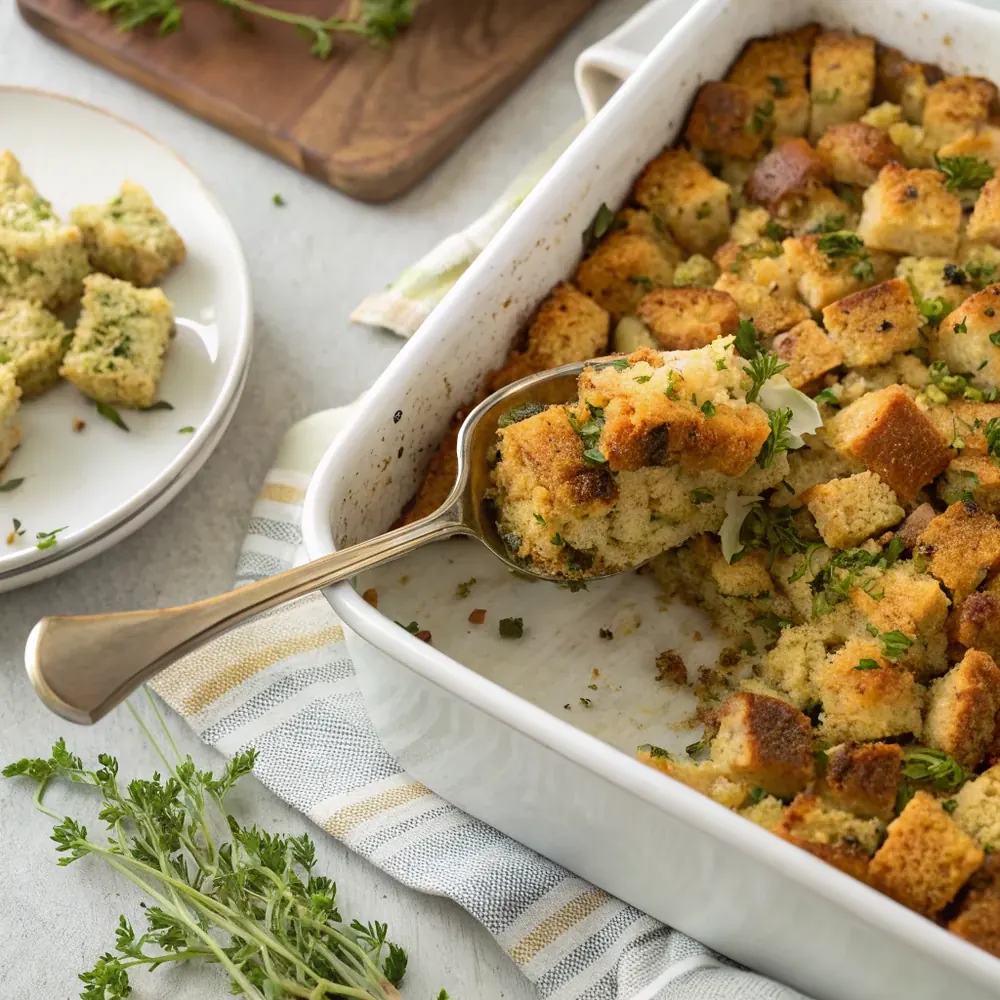
- Bake covered, then uncovered. Cover the dish with foil and bake at 350F for 30 minutes so the inside steams and sets. Remove the foil and bake another 15 to 20 minutes until the top is golden brown and crisp and the edges pull slightly from the dish. Let it rest 10 minutes before serving so the custardy middle firms up. The contrast of crisp top and soft center is the whole point.
Frequently Asked Questions
What is Texas toast stuffing?
Texas toast stuffing is a Thanksgiving bread stuffing, or dressing, made from thick-cut Texas toast bread instead of cornbread or regular sandwich bread. You cube the thick slices, dry them out, and bake them with a buttery base of sauteed onion, celery, garlic, and herbs like sage, thyme, and rosemary, bound with broth and beaten eggs. The thick bread holds its shape and crisps into a golden top while staying soft and custardy underneath, which makes it richer and sturdier than stuffing made from thin bread.
How is this different from cornbread dressing?
The difference is the base. This stuffing is built on thick white Texas toast, which stays in distinct cubes, tastes buttery, and bakes up with a crisp golden top. Cornbread dressing is built on crumbled cornbread, which breaks down into a softer, more spoonable, casserole-like texture with a savory-sweet corn flavor. They are genuinely two different dishes, not the same recipe with swapped bread. If you want the soft, corn-forward Southern classic, make my Texas cornbread dressing instead; this page is the buttery bread version.
Why do I have to dry the bread first?
Drying the Texas toast cubes is the single most important step for good texture. Fresh, soft bread is already full of moisture, so when you add broth it has nowhere to go and the stuffing turns gummy and pasty. Dried cubes act like sponges and soak the buttery broth deep into their centers, swelling up moist without falling apart. Dry them in a 250F oven for 45 minutes to an hour, or leave them out uncovered overnight, until they feel dry and lightly stale before you build the stuffing.
Can I make Texas toast stuffing vegetarian?
Yes, and it is easy. Simply leave out the optional breakfast sausage and use vegetable broth in place of the chicken broth. That keeps the whole dish meat free without giving up any flavor, because the Texas toast, the two sticks of butter, and the sage, thyme, and rosemary base carry plenty on their own. I often bake one vegetarian pan and one with sausage so everyone at the table is covered. The method and bake time stay exactly the same either way.
Can I make it ahead of Thanksgiving?
Absolutely, this dish loves being made ahead. You can dry the bread cubes a day or two early and store them loosely covered, and you can assemble the entire stuffing the night before, spread it in the buttered dish, cover it, and refrigerate overnight. The cubes keep soaking up the broth, which deepens the flavor. Let it lose some chill before baking, and add an extra 5 to 10 minutes under the foil if it goes in cold, checking that the center is hot and set before you uncover it.
Should I bake it covered or uncovered?
Both, in that order. Cover the dish with foil for the first 30 minutes at 350F so the inside steams, cooks through, and the egg sets without the top burning. Then remove the foil and bake another 15 to 20 minutes so the surface dries out and crisps into a golden brown crust. Baking it covered the whole time leaves a pale, soft top, and baking it uncovered the whole time can scorch the top before the middle is done. Covered then uncovered gives you both textures.
How much Texas toast do I need and how many does it serve?
One loaf of thick-cut Texas toast, about 16 slices, cut into 1 inch cubes gives you roughly 12 cups, which is the right amount to fill a 9 by 13 baking dish. That makes 10 to 12 servings, enough for a holiday table with leftovers. If you are feeding a much bigger crowd, double everything and use two dishes rather than overpacking one, since a crowded pan will not crisp on top the way a single even layer does. Leftovers keep three to four days in the fridge.