Texas BBQ
Beef Finger Ribs
Beef finger ribs are boneless strips from between the rib bones. Smoke at 250F for 3 hours, wrap with broth to 203F for short rib burnt end texture.
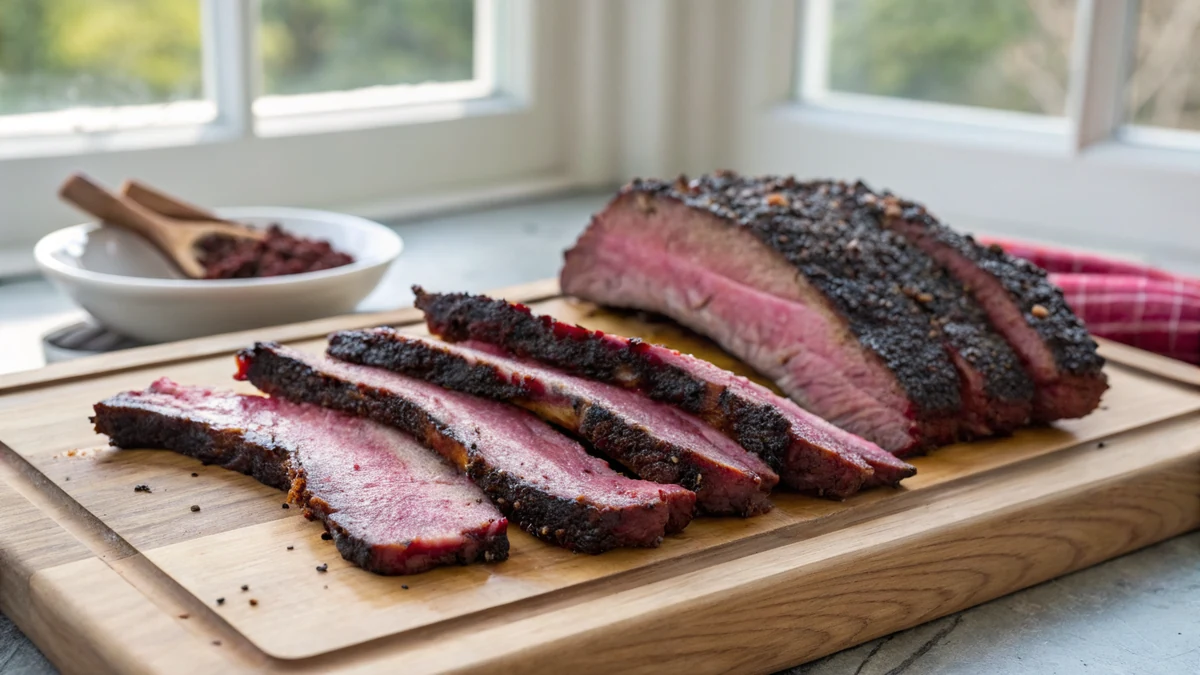
Quick answer: Beef finger ribs are the boneless strips of intercostal meat the butcher carves from between the bones of a beef rib plate: strips about 1 inch thick and 6 to 8 inches long, heavily marbled, sometimes labeled rib fingers, intercostal meat, or costillas. Here is the whole method. Trim any heavy silverskin, season with 2 tablespoons coarse black pepper, 1 tablespoon kosher salt, and 1 teaspoon garlic powder, and smoke at 250F (121C) over post oak for about 3 hours, naked, until the bark sets dark. Then wrap in foil with 1/2 cup beef broth and cook another 1 to 1.5 hours until a probe slides in like warm butter at around 203F. Rest 30 minutes, slice or cube, and toss in warmed sauce if you want burnt-end style bites. They eat like boneless short rib burnt ends at a third of the price, and 3 pounds feeds six people without anybody fighting over a bone.
Every barbecue cut has its moment, and I have been waiting years for beef finger ribs to get theirs. These are the strips of meat that live between the bones of a rib plate, the part the butcher carves out when a restaurant orders its ribs frenched and pretty. For most of my life they went into grind or sat in the case at 5 dollars a pound with a handwritten label while people walked past them to pay four times as much for the bones they came from. Heavily marbled, beefy as anything on the steer, no bone to pay for. The butchers I know in Lockhart have been taking them home for decades. That should tell you something.
This page is the full playbook: what finger ribs actually are and the three names they hide under, where to find them without calling eight stores, and the smoke-then-wrap method that turns them into what I can only describe as boneless short rib burnt ends. There is a Dutch oven path for folks without a smoker, a sauce toss for parties, and the honest list of ways people wreck this cut, because there are exactly three and they are all avoidable. Three hours of smoke, an hour and change in foil, and you will wonder why you ever thought good beef ribs required a second mortgage.
What Beef Finger Ribs Actually Are
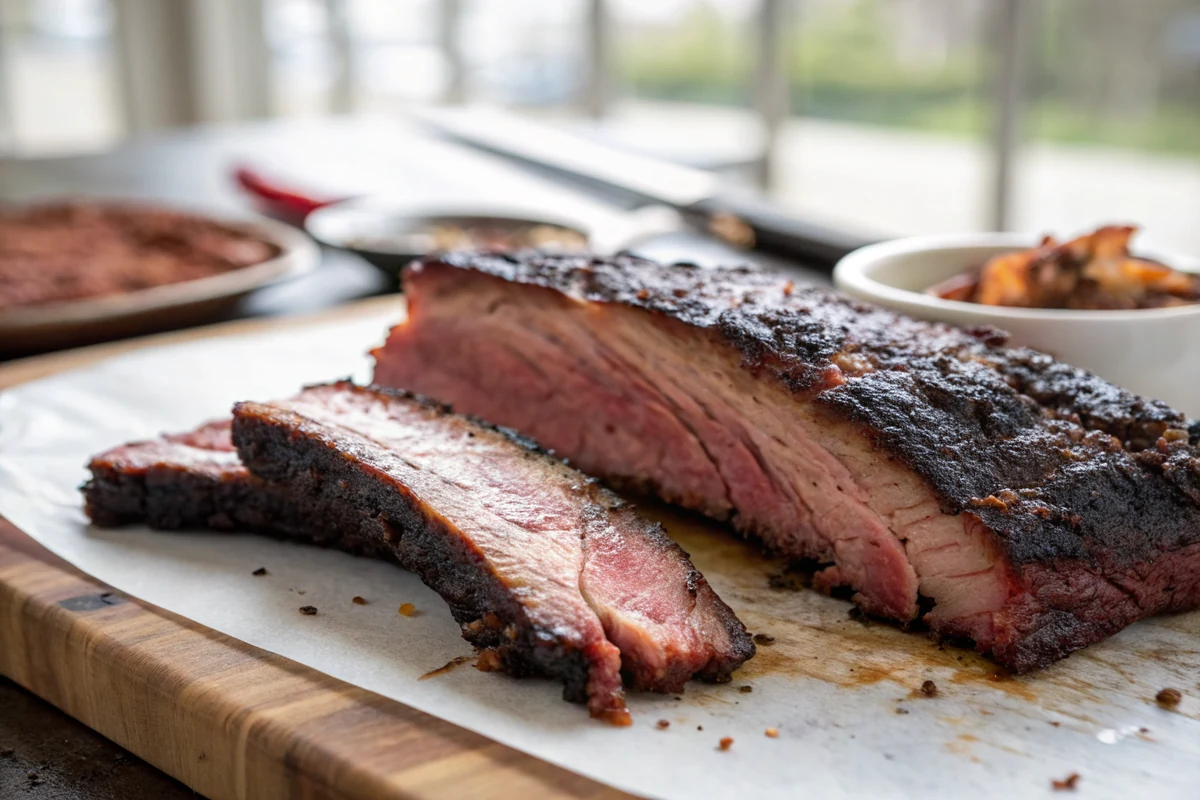
Picture a beef plate rib, one of those bones the size of a hatchet handle. Between each pair of bones runs a strip of meat called the intercostal, the muscle that works the ribs every time the animal breathes. When a butcher breaks down a rib plate for bone-on service, those strips get carved out from between the bones, and what comes off the knife is a boneless piece about 1 inch thick and 6 to 8 inches long, striped with fat the whole way through. That is a beef finger rib. Nothing exotic, nothing invented by a marketing department. It is the meat from between the bones, sold on its own.
The names are the first hurdle, because this cut wears at least three. Grocery stores that carry it usually write rib fingers or beef finger meat. Meat wholesalers and old-school butchers say intercostal meat. Mexican markets, which have never stopped selling this cut, label it costillas, and the boneless strips specifically go by costillas de res sin hueso. Same strips every time. If a package of boneless beef strips shows serious marbling, comes in pieces about the size of a thick candy bar, and costs less than stew meat has any right to, you have found them regardless of what the sticker says.
Here is the honest positioning, because I know what some of you are really shopping for. If you want the giant, primal, bone-on presentation, the caveman flex on the cutting board, that is my smoked beef ribs recipe and nothing else scratches that itch. Finger ribs are literally what the butcher carved from between those exact bones. Same muscle group, same marbling, same plate-rib flavor, usually a third of the price, and no bone weight on the scale. You trade the presentation for the value, and on a Tuesday, or feeding a crowd, that trade wins going away.
What they eat like, once cooked right, is boneless short rib. The intercostals work constantly, so the muscle is packed with connective tissue and intramuscular fat, which is barbecue code for tough when rushed and luxurious when rendered. Push them to probe tender and every strip turns into a column of soft, beefy, jiggly richness wrapped in bark. Because each strip is bark on nearly every side, the bark-to-meat ratio actually beats a whole plate rib. The first time I cubed a batch for a backyard party in Lockhart, a brisket guy I respect asked me whose short ribs I had raided. Nobody guesses the price.
Where to Find Them and What to Pay
Your best source, hands down, is a Mexican carniceria. This cut never went out of style in Mexican cooking, so any decent carniceria either has costillas in the case or will cut them while you wait. Ask for costillas de res sin hueso, boneless beef rib meat, or just point and say finger meat; the counter man will know. Prices there run the lowest I see anywhere, and the strips are usually cut that morning. In Lockhart I buy from a carniceria eleven minutes from my house, and the owner started setting aside the thickest strips for me once he figured out what I was doing with them.
Warehouse clubs are the second stop, and the sleeper. The big club stores frequently carry cryovac packages labeled beef finger meat or rib fingers, usually 3 to 4 pounds, tucked between the short ribs and the stew meat where nobody looks. The quality is honestly excellent, because that meat came out of the same rib plates that supplied their expensive bone-in cuts. If your club does not have it out front, ask at the meat counter; club butchers break down rib primals daily and can often pull a package from the back within a few minutes.
Third path: any butcher shop that cuts bone-in beef ribs cuts finger meat, whether they display it or not. When they trim rib plates for the case, the intercostals come out as a byproduct, and shops that do not sell them retail send them to grind. So ask. Say you want the finger meat from between the rib bones next time they break down plates, leave a phone number, and you will usually get a call within the week. I have never once had a butcher say no. You are offering to pay retail for something they were about to grind into 4 dollar hamburger; that conversation goes well.
On price, this remains one of the cheapest richly marbled beef cuts in any case, and I want you to appreciate how strange that is. Whole plate ribs have been discovered; prices tripled over the past decade. Boneless short ribs followed. Finger meat, the same tissue from the same primal, still sells for stew meat money most places because it looks unfamiliar and there is no bone to make it photogenic. When you find it under 6 dollars a pound, buy double what you need. It freezes beautifully in its vacuum packaging for 6 months, and future you will be grateful on some rainy Saturday.
Picking Strips and the Silverskin Problem
Not every package of finger meat is equal, and the sorting takes ten seconds once you know the tell. You want strips with visible white marbling threaded through the red, ideally strips that are plump and roughly uniform, about 1 inch thick. Thickness matters more here than on most cuts because thin, straggly strips, the ones under 1/2 inch, cook out to jerky before the connective tissue ever surrenders. A mixed package is normal; plan to smoke the thick strips and save the skinny ones for tacos al minuto in a hot skillet, where their quick-cooking nature becomes a feature.

Silverskin is the one real flaw to screen for, and it is the difference between a great batch and a chewy one. Because these strips sit against bone, some come off the saw wearing a wide band of pearly connective membrane down one face. Unlike fat, silverskin does not render at barbecue temperatures; it tightens into a strap. Packages where most strips carry heavy, continuous silverskin are worth passing on, because you will lose real weight trimming it. Light, patchy membrane is fine and melts into the bark. Flip the package over in the store; the ugly side tells the truth.
Trimming what you do bring home takes five minutes. Slip the tip of a boning knife under the edge of any wide silverskin band, angle the blade slightly upward against the membrane, and strip it off in ribbons exactly like cleaning a tenderloin. Square up any dangling flaps of fat thicker than 1/4 inch, since they will not render fully on a cut this size. From 3 pounds I typically lose 2 to 3 ounces, which is nothing. Do not get surgical about it. The goal is removing the strap, not sculpting; every gram of marbling you leave behind is flavor.
The Rub: Salt, Pepper, and Restraint
Central Texas rules apply, and they apply harder than usual: coarse black pepper, kosher salt, a little garlic powder, done. My ratio for 3 pounds is 2 tablespoons of 16 mesh pepper, 1 tablespoon coarse kosher salt, and 1 teaspoon garlic powder, over a thin swipe of yellow mustard or oil as a binder. The reason for restraint is geometry. A plate rib is a thick slab wearing rub on one broad face. A finger rib is a skinny strip wearing rub on all four sides, so the seasoning-to-meat ratio is already triple. The same heavy hand that seasons a brisket correctly turns finger ribs into salt licks.
Skip the sugar. This is a spot where beef and pork genuinely part ways, and if you want the full argument I laid it out in my beef vs pork ribs breakdown: pork ribs flatter a sweet, paprika-heavy rub, while rich, heavily marbled beef wants pepper and smoke and gets muddy under brown sugar. On a cut this small the case is even stronger, because sugar scorches during the long naked smoke before the meat is anywhere near tender. Pepper builds bark that tastes like a Lockhart pit room. Sugar builds bark that tastes like regret.
Season 30 to 60 minutes before the strips hit the smoker if you can, letting them sit at room temperature while the pit comes up. That window gives the salt time to dissolve and grip so the bark sets instead of shedding, and it takes the chill off the meat so the smoke ring develops evenly. Overnight dry brining, which I preach for briskets and plates, is overkill here and actually risky; salt penetrates a 1 inch strip fully within hours, and a full night can push the interior toward cured, hammy territory. An hour on the counter is the sweet spot.
The Smoke: 250F Over Post Oak, 3 Hours Naked
Run the pit at 250F (121C), and hold it steadier than you would bother to for a big cut, because thin strips register every swing. Post oak is the wood, no surprise from me, burning clean with thin blue smoke; finger ribs are practically all surface area, which means they take on smoke roughly three times faster than a plate rib, and dirty white smoke that a brisket would shrug off will turn these strips acrid and bitter. If your smoker runs dry, set a water pan in the chamber. Small cuts live and die by the humidity of the cooking environment.
Lay the strips across the grates with an inch of air between them, fattier side up, running perpendicular to the bars so nothing sags through. Then leave the lid shut for a full hour, no peeking, no spritzing, while the rub fuses into the surface. After that first hour I spritz with plain water or leftover beef broth every 45 minutes, only if the edges are looking dry. Around 90 minutes in they will have taken on a color that seems too dark too fast. It is not. That is the pepper crust doing its work, and it is exactly on schedule.
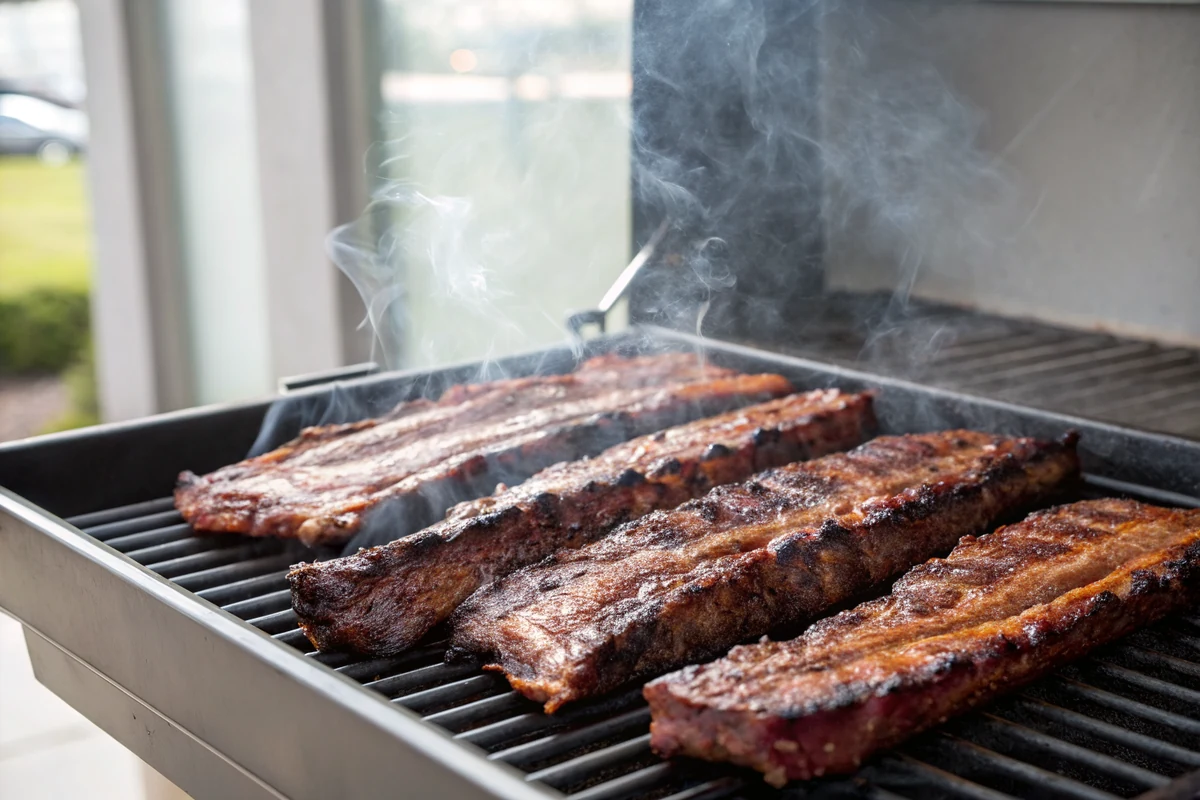
The naked phase ends on bark, not on the clock and not on internal temperature. Around the 3 hour mark, press a strip with your thumb: the surface should be deep mahogany, dry to the touch, and set firmly enough that the rub does not smear or lift. Internal temperature at that point usually reads 165 to 175F, which is useful trivia and nothing more. If the bark smears at 3 hours, give it 30 more minutes; if it set early because your pit ran hot, wrap early. On a cut this thin, bark readiness is the only vote that counts.
The Wrap: Foil, Broth, and the 203F Finish
Here is the step that separates the people who love this cut from the people who tried it once and called it dry. Finger ribs must be wrapped. A 5 pound plate rib carries enough mass and fat cap to ride out a whole cook naked; a 1 inch strip does not, and pushing it naked to tenderness means evaporating it to jerky first. So at bark-set, the strips go into a double layer of heavy foil or a foil pan with 1/2 cup of beef broth and, if I am feeling generous, 2 tablespoons of butter. Sealed tight, back on the pit at 250F.
Inside that package the environment flips from smoking to braising, and the strips spend the next 1 to 1.5 hours steaming in beefy liquid while the collagen dissolves into gelatin. This is the same physics that makes my smoked beef short ribs turn silky, just compressed into a fraction of the time because there is a fraction of the mass. The broth matters more than it looks: it keeps the vapor pressure up so the meat surrenders moisture slowly instead of all at once, and it becomes a pan jus you will absolutely be pouring back over the sliced meat.
Doneness is probe tender, full stop. Starting at the 1 hour mark of the wrap, slide an instant-read probe into the thickest strip through the foil. When it goes in with almost no resistance, the way a skewer slides into warm butter, they are finished, and on my pits that lands right around 203F. But read the feel, not the dial; I have had batches perfect at 198F and batches that needed 207F, depending on the animal. A strip that grips the probe just needs another 20 minutes. Nobody ever ruined this cut by cooking it 20 minutes longer in foil. Plenty ruined it by quitting at 195F.
Then rest, and do not skip it because the pieces are small. Crack the foil to vent the steam so they stop cooking, then let the strips sit in their juices, loosely covered, for 30 minutes. Straight off the pit, the fibers are clenched and the juice runs the moment a knife touches them; after a real rest they slice clean and stay glossy. For a party timeline, the wrapped package holds beautifully in a dry cooler wrapped in a towel for up to 2 hours, which means the whole cook can finish before your guests find parking.
No Smoker? The Dutch Oven Braise
If you do not own a smoker, do not let that keep you from this cut, because finger ribs happen to be one of the best braising cuts in the meat case. Same tissue as short ribs, remember. The oven version: season the trimmed strips with the same salt, pepper, and garlic rub, then sear them hard in a Dutch oven with a tablespoon of oil over medium-high heat, 2 to 3 minutes per side, working in batches so they brown instead of steam. That sear is your bark substitute, and skipping it costs you most of the flavor. Take the time.
Pour off all but a spoonful of fat, soften half a chopped onion in the pot, then add 1 cup of beef broth, a tablespoon of tomato paste, and a teaspoon of smoked paprika if you want an echo of the pit. Nestle the strips back in; the liquid should come halfway up, never covering them. Lid on, into a 300F (149C) oven for 2.5 to 3 hours, checking at 2.5 with the same probe-tender standard as the smoker version. What comes out is glossy, spoon-tender beef in a pan sauce that reduces into gravy in five minutes on the stovetop.
The one warning for the braise crowd: these are not stew meat, so do not cook them like stew meat. Stew cubes are cut small and simmered until they fall apart on purpose. Finger ribs are long, beautiful strips, and the goal is intact pieces that hold their shape and slice, with that dense, sticky short rib chew. Push them an hour past tender because the pot smelled good and they disintegrate into shreds, still tasty, but you have made ropa vieja by accident. Start checking at 2.5 hours, pull at probe tender, and serve them whole over mashed potatoes or rice like the little short ribs they are.
The Sauce Toss: Burnt-End Style Cubes
My favorite way to serve finger ribs at a gathering is the burnt-end treatment, and honestly the cut is better suited to it than actual brisket point, because every cube already has bark on multiple faces. After the rest, cut the strips into 1 inch cubes and pile them into a foil pan. Warm 3/4 cup of my Texas BBQ sauce loosened with 2 or 3 tablespoons of the foil juices, pour it over, and fold gently until every cube is glossed. The jus in the sauce is the move; straight sauce sits on the bark, but sauce cut with the meat's own drippings soaks in.
For sticky, lacquered cubes rather than merely sauced ones, return the open pan to the 250F smoker, or a 275F oven, for 20 to 30 minutes until the glaze goes tacky and the edges caramelize. Give the pan one gentle stir at the halfway mark. What comes out looks and eats remarkably like short rib burnt ends: dark, jiggly, sweet-edged cubes with smoke underneath. I did a double batch of these for a graduation party two summers back, set them out at four o'clock next to a full spread, and the pan was down to sauce smears before the brisket was even sliced.
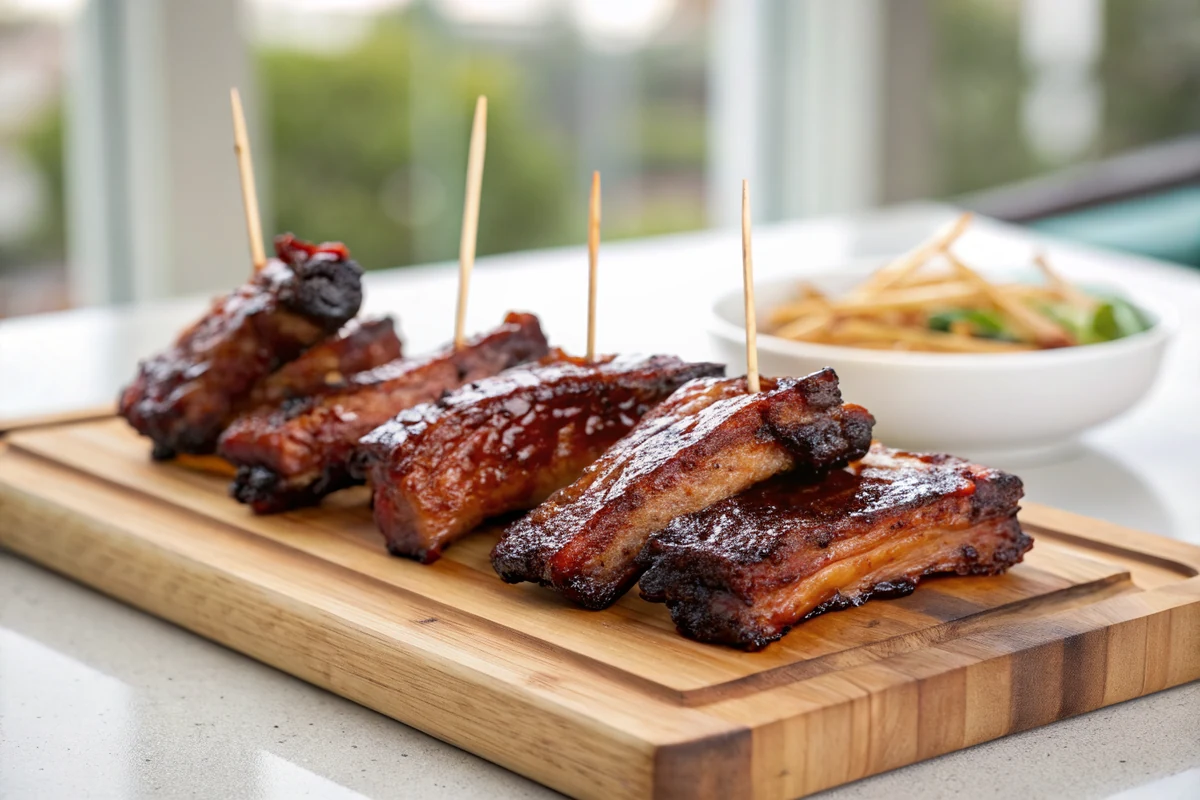
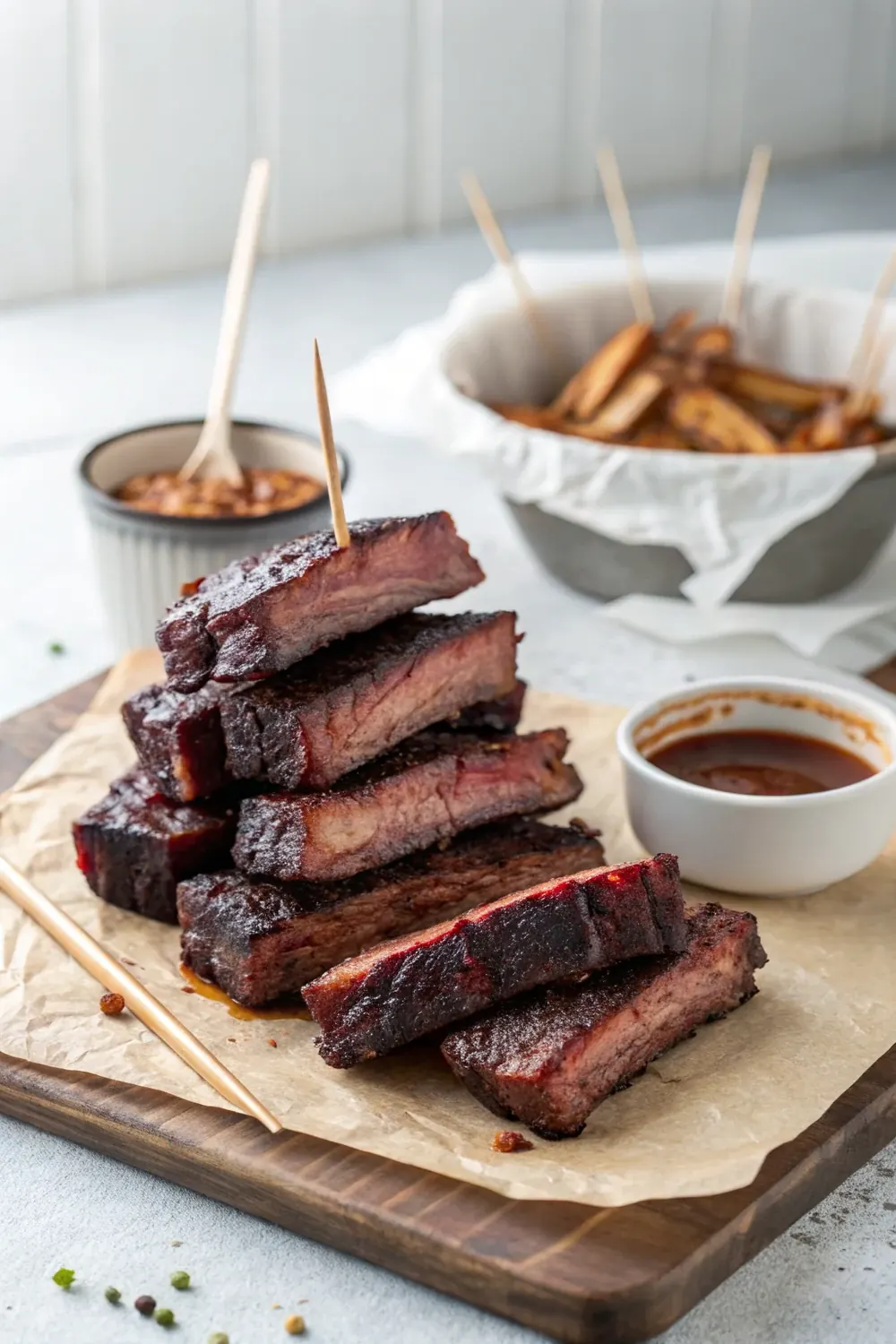
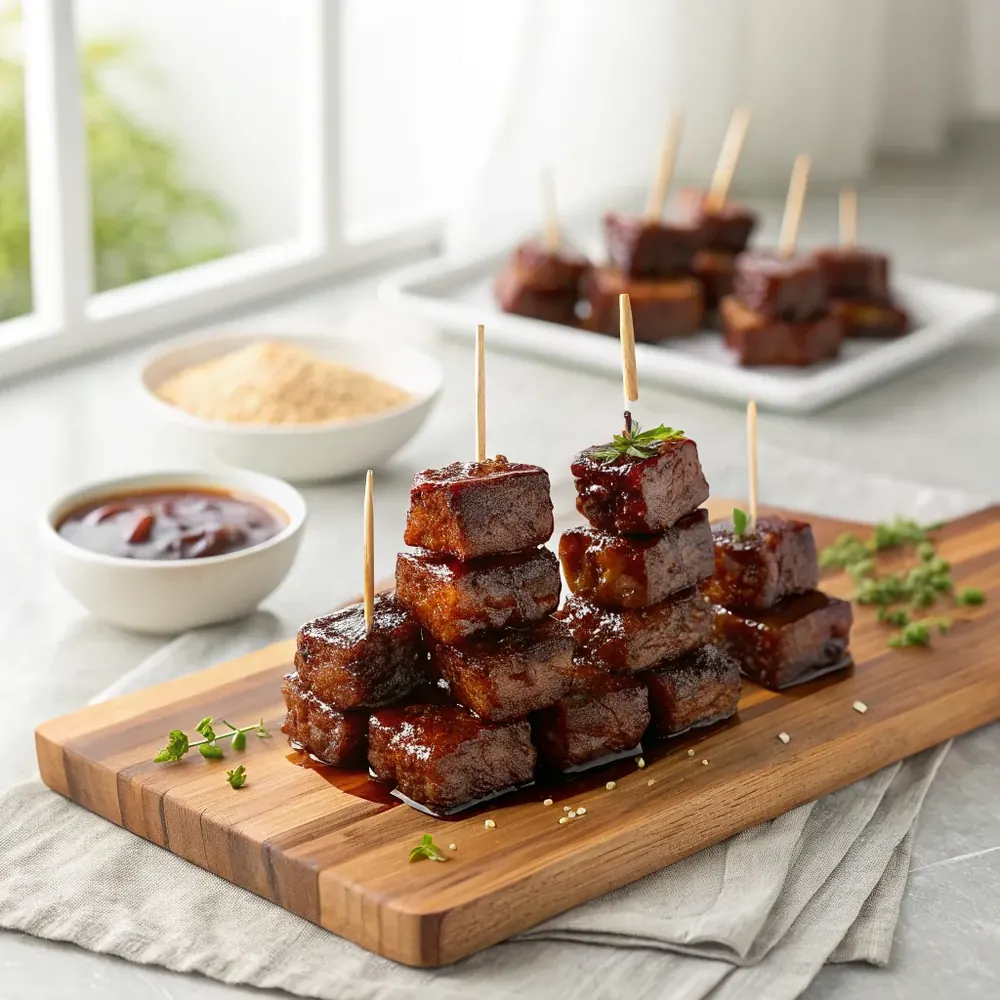
Serve the cubes on a wooden board with a cup of toothpicks and a small ceramic bowl of extra warmed sauce, and let people graze standing up, which is how the best barbecue gets eaten anyway. Plan on about 1/3 pound per person as an appetizer, more if these are the main event, because the disappearance rate is genuinely alarming. If sweet is not your table's direction, skip the toss entirely and serve the cubes naked with a sprinkle of flaky salt; the bark and the rendered fat carry the whole show without a drop of sauce. Both roads are correct. One is just stickier.
Serving: Tacos, Rice Bowls, and the Flanken Cousin
Tacos are the highest use of finger ribs short of eating them off the cutting board, which is also traditional. Chop the rested strips rough, moisten with the foil juices, and pile onto warm corn tortillas, doubled, with white onion, cilantro, a squeeze of lime, and a sharp salsa verde. The richness of the meat wants acid on every side. Pickled red onions are worth the ten minutes they take. A 3 pound cook chops into 12 to 14 generous tacos, which in my house means it feeds four people and produces zero leftovers no matter what the arithmetic claims.
For a plate supper, lay whole slices over white rice, mashed potatoes, or cheese grits and spoon the concentrated foil jus on top; it eats exactly like short ribs over polenta, minus the restaurant markup. Round it out the way I would any beef plate in Lockhart: pinto beans, a vinegary slaw or pickles for contrast, white bread or tortillas for mopping. Since the strips are already boneless, they also fold cleanly into quesadillas, cheesy rice bowls, or a Sunday pot of borracho beans, which is the fate of most of my odd leftover strips and possibly the best 4 dollar dinner in Texas.
While you are shopping the sleeper shelf, meet the other cross-cut bargain living down there: flanken beef short ribs, the thin cross-sections sawn straight through the short rib bones. The two cuts are mirror opposites in method. Flanken is cut thin to cook hot and fast, minutes over a raging grill; finger meat is a low-and-slow cut that needs hours to melt. But they share the same DNA, the same intense rib flavor, and the same habit of hiding at half the price of the glamour cuts around them. Learn both and the expensive end of the meat case loses most of its power over you.
Common Mistakes, Leftovers, and Reheating
Mistake one is treating finger ribs like stew meat, and it runs in both directions. Cubing them raw and simmering them for hours dissolves those beautiful strips into shreds and wastes everything that makes the cut special; cook them whole and cut after. The subtler version is overbraising, leaving the pot in the oven a lazy extra hour until the strips collapse. Probe tender is a moment, not a region. Start checking early, pull when the probe slides easy, and accept that on this cut, done and destroyed are about 45 minutes apart. Set a timer like you mean it.
Mistake two is skipping the wrap out of some misplaced loyalty to naked barbecue, and I say this as a naked-barbecue loyalist. A brisket carries insurance in its own mass; a 1 inch strip has none, and run dry to 203F it arrives leathery, gray, and about 40 percent smaller than it started. The foil-and-broth stage is not cheating, it is matching the technique to the geometry of the cut. Mistake three happens back at the store: buying strips strapped in heavy, continuous silverskin. No cooking method dissolves it. Flip the package, check the ugly side, and choose accordingly.
Leftovers, on the rare occasion they exist, keep beautifully because all that rendered gelatin protects the meat. Store slices or cubes in an airtight container with every drop of the foil juices poured over; the jus sets into a savory jelly overnight and remelts into a self-basting glaze when reheated. Three to four days in the refrigerator, or 3 months vacuum-sealed in the freezer. For bringing them back without losing the texture you worked four hours for, use the covered low-oven method from my how to reheat smoked ribs guide: 275F, splash of broth, foil on, about 20 minutes for strips.
The microwave is fine for a taco filling emergency, 60 to 90 seconds under a damp paper towel, but a skillet is better: medium-low, a spoonful of the jelly jus, lid on for 4 or 5 minutes, and the cubes come back glossy with crisped edges instead of steamed ones. Cold finger rib meat, chopped fine, also makes an outrageous breakfast taco with scrambled eggs, and that discovery alone justifies always cooking a pound more than the headcount requires. In Lockhart we call that planning ahead. My wife calls it hiding barbecue behind the eggs. We are both right.
Beef Finger Ribs Recipe
Ingredients
- For the ribs:
- 3 pounds (1.4 kg) beef finger ribs (intercostal strips), about 1 inch thick
- 1 tablespoon (15 ml) yellow mustard or neutral oil, as a binder
- For the rub:
- 2 tablespoons (14 g) coarse ground black pepper, 16 mesh if you can get it
- 1 tablespoon (15 g) coarse kosher salt
- 1 teaspoon garlic powder
- For the wrap and optional toss:
- 1/2 cup (120 ml) low-sodium beef broth
- 2 tablespoons (28 g) salted butter, optional, for the wrap
- 3/4 cup (180 ml) Texas-style barbecue sauce, optional, for burnt-end style cubes
- Equipment:
- Smoker, post oak splits or chunks, heavy-duty foil or a foil pan, instant-read thermometer
Instructions
- Trim the silverskin. Lay the strips on a cutting board and look at both faces of each one. Any wide, pearly band of silverskin gets slipped off with a sharp boning knife, the same motion you would use on a tenderloin. Thin, patchy membrane can stay; it renders. Trim any fat cap thicker than 1/4 inch. Expect to lose 2 to 3 ounces total from 3 pounds.
- Season simply. Rub the strips with a thin film of yellow mustard or oil, just enough to make the surface tacky. Mix the pepper, salt, and garlic powder and season every side, holding your hand 10 to 12 inches up so it falls evenly. These are thin strips with a lot of surface area, so resist the urge to double-coat; a heavy crust of rub turns salty fast.
- Run the smoker to 250F. Fire the smoker to a steady 250F (121C) with post oak. Clean, thin blue smoke, never white and billowing. Set a water pan in the cooker if yours runs dry; thin cuts feel a harsh cooking environment more than a brisket does. Let the pit settle a full 15 minutes at temperature before the meat goes anywhere near it.
- Smoke naked for 3 hours. Lay the strips on the grates with an inch between them, fattier side up, and leave the lid shut. No spritzing for the first hour while the rub sets. After that, spritz with water or leftover broth every 45 minutes if the edges look dry. Around the 3 hour mark the bark should be deep mahogany and set enough that it does not smear under your thumb.
- Wrap with broth. Transfer the strips to a double layer of heavy foil or a foil pan, pour in the 1/2 cup beef broth, and drop in the butter if you are using it. Seal the foil tight or cover the pan snugly. Internal temperature at this point usually reads 165 to 175F, but the bark, not the number, is what tells you it is time.
- Cook to probe tender at 203F. Return the wrapped package to the 250F smoker for 1 to 1.5 hours. Start probing at the 1 hour mark: slide an instant-read probe into the thickest strip, and when it goes in with almost no resistance, like probing warm butter, they are done. That usually lands around 203F, but tenderness outranks the thermometer. A strip that fights the probe needs 20 more minutes.
- Rest 30 minutes. Open the foil a crack to let the steam blow off, then let the strips rest in their juices for 30 minutes, loosely covered, on the counter or in a dry cooler. They come off the pit at their most fragile; the rest lets the fibers relax and reabsorb, and the difference between a 5 minute rest and a 30 minute rest is visible on the cutting board.
- Slice, or cube and toss. For plates and tacos, slice the strips crosswise into 1/2 inch pieces and moisten them with the foil juices. For party bites, cut them into 1 inch cubes, toss with the warmed barbecue sauce plus a spoonful of the foil juices, and either serve as is or return the cubes to the smoker for 20 minutes so the glaze sets tacky. Toothpicks, board, stand back.
Frequently Asked Questions
What are beef finger ribs?
Beef finger ribs are the boneless strips of intercostal meat, the muscle that sits between the bones of a beef rib plate. When a butcher cuts out those strips, each one is about 1 inch thick and 6 to 8 inches long, heavily marbled, and packed with the same rich flavor as bone-in plate ribs. You will see them labeled rib fingers, finger meat, intercostal meat, or costillas depending on the store. Because they work hard on the animal, they are tough when rushed and luxurious when cooked low and slow to probe tender, eating very much like boneless short ribs.
Where can I buy beef finger ribs?
Three reliable sources. Mexican carnicerias almost always have them; ask for costillas de res sin hueso or finger meat. Warehouse club stores frequently carry 3 to 4 pound cryovac packages labeled beef finger meat, shelved near the short ribs. And any butcher who cuts bone-in beef ribs produces finger meat as a byproduct, so ask them to save you the strips next time they break down rib plates; most will happily sell what they were about to grind. Expect one of the lowest prices per pound of any well-marbled beef cut in the case, often stew meat money.
How long do you smoke beef finger ribs?
Plan on 4 to 4.5 hours total at 250F (121C). The strips smoke naked for about 3 hours over post oak, until the bark is dark mahogany and set enough that it does not smear under your thumb. Then they get wrapped in foil with 1/2 cup of beef broth and cook another 1 to 1.5 hours until probe tender, which usually lands near 203F internal. Add a 30 minute rest in the juices before slicing. Bark readiness and probe feel matter more than the clock; a hot-running pit can shave 30 minutes, a cold snap can add it.
Are beef finger ribs the same as boneless short ribs?
Close cousins, not twins. Boneless short ribs are whole short rib muscles taken off the bone, usually chuck or plate meat in thick blocks. Finger ribs are the thinner intercostal strips carved from between the rib bones. Both are heavily marbled, collagen-rich cuts that need long, slow cooking, and once done they taste and feel remarkably similar, which is why I describe finished finger ribs as boneless short rib burnt ends. The practical differences: finger ribs are cheaper, thinner, cook faster, and carry more bark per bite, while boneless short ribs give you bigger, steakier portions.
Can I make beef finger ribs without a smoker?
Absolutely, and they are one of the best braising cuts in the store. Season with the same salt, pepper, and garlic rub, sear the strips hard in a Dutch oven, then braise them with 1 cup of beef broth, half an onion, and a spoonful of tomato paste in a 300F (149C) oven for 2.5 to 3 hours until probe tender. A teaspoon of smoked paprika in the liquid nods toward the pit. Keep the strips whole while they cook and pull them at tender, not falling apart, so they still slice like little short ribs instead of shredding.
Why did my beef finger ribs come out dry or tough?
Tough means undercooked; the collagen never finished dissolving, so push past it next time, all the way to probe tender around 203F, however long that takes. Dry usually means the wrap got skipped. These strips are only about 1 inch thick, and unlike a big plate rib they cannot survive a full naked cook; wrapping in foil with a splash of broth after the 3 hour bark phase is what keeps them juicy. The third culprit is silverskin, the pearly membrane that never renders. Trim heavy bands before cooking, and avoid packages where most strips are wrapped in it.
What do you serve with beef finger ribs?
Tacos first: chopped finger rib meat on doubled corn tortillas with onion, cilantro, lime, and salsa verde is the best use of this cut I know. For plates, lay slices over rice, mashed potatoes, or cheese grits and spoon the foil juices on top, with pinto beans and something vinegary, slaw or pickles, to cut the richness. As a party appetizer, cube the strips, toss them in warmed barbecue sauce with a little jus, and set them out with toothpicks; plan about 1/3 pound per person and expect the pan to empty before anything else on the table.