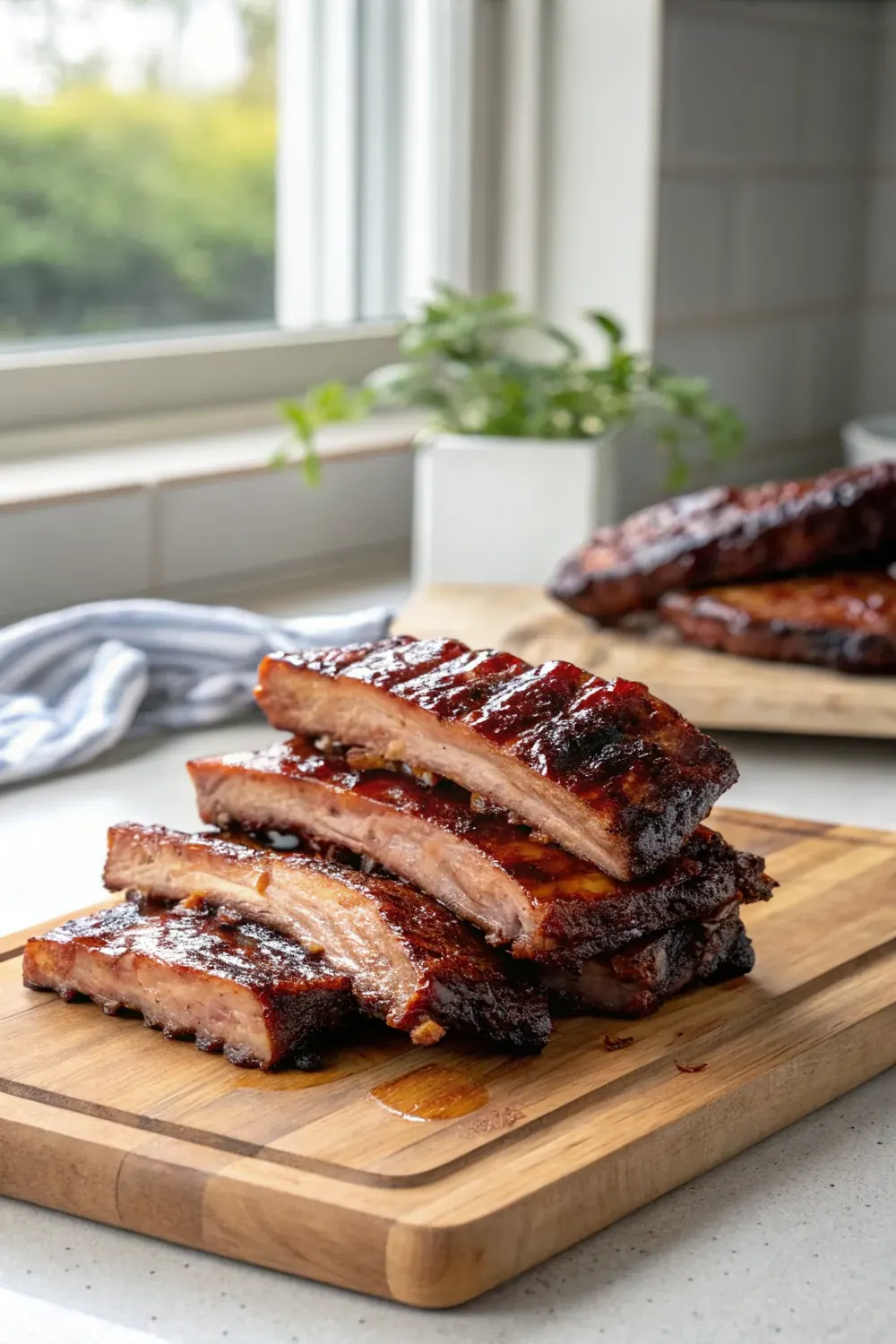
BBQ kitchen
How to Reheat Smoked Ribs
Nobody smokes a single serving of ribs. You cook two racks, three racks, a pile, because the smoker is already running and rib people do not do restraint. Which means rib leftovers are not an accident, they are the plan. The tragedy is how many of those beautiful leftover bones die in a microwave the next day. Reheating ribs well is genuinely easy, it just is not obvious, so let me walk you through every method I trust, in the order I trust them.
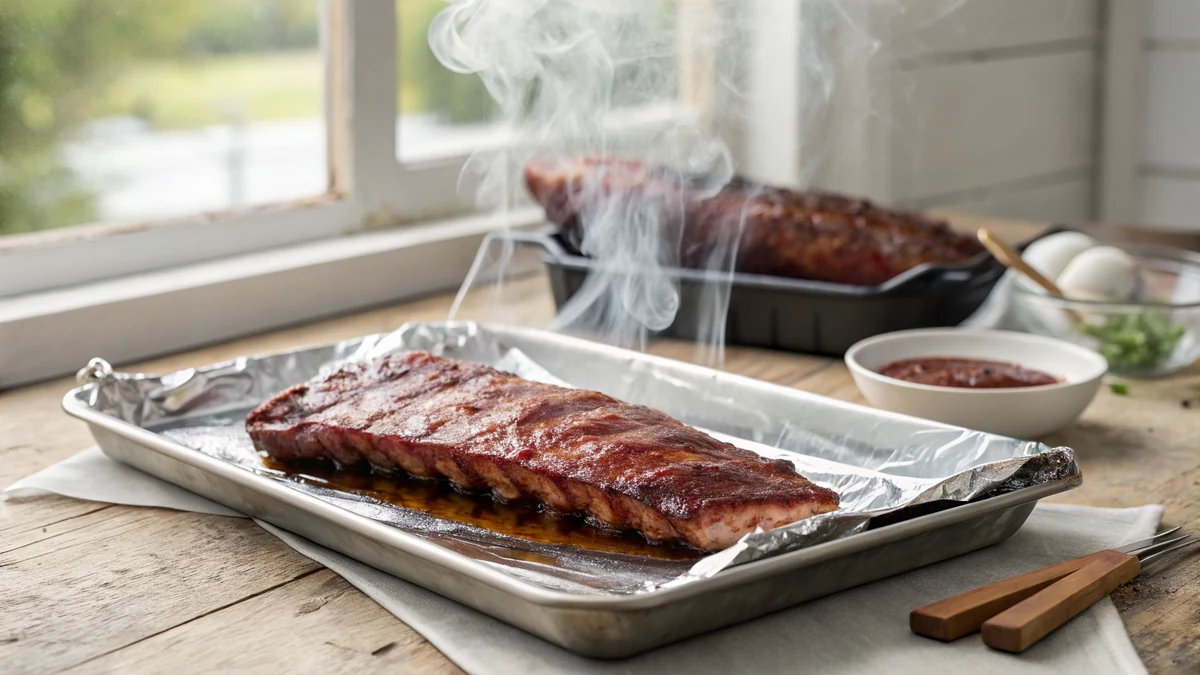
The short answer: reheat smoked ribs in a 275F oven, wrapped tightly in foil with 2 to 3 tablespoons of broth, apple juice, or thinned barbecue sauce per half rack. Warm them 25 to 35 minutes until the meat reaches 145 to 155F, then unwrap, brush lightly with sauce, and finish 5 minutes uncovered so the surface tightens and the bark comes back. On a grill or smoker, do the same thing over indirect heat at 250 to 275F and the ribs pick up a fresh breath of smoke while they warm. Avoid the full-power microwave, which turns rib meat rubbery and erases the bark you worked hours for.
The Golden Rule: Gentle Heat, Added Moisture, Crisped Finish
Reheating ribs follows the same physics as reheating any smoked meat, with one extra requirement. Like pulled pork, ribs want moisture added back and gentle, covered heat, because the meat lost liquid in the fridge and high heat only squeezes out more. But pulled pork is a pile of shreds you can stir; a rib is a thin band of meat on a bone wearing a bark you spent five or six hours building. That bark is the extra requirement, and it is why every good rib method ends uncovered.
So every method below runs the same two-stage pattern. Stage one is covered and moist: foil or a sealed bag, a splash of liquid, heat no higher than 300F, until the meat is warm through, roughly 145 to 155F at the thickest point. Stage two is brief and dry: unwrap the ribs and give the surface a few minutes of direct dry heat so the glaze re-sets and the bark stops being soggy foil-steamed leather and starts being bark again. Skip stage one and the ribs dry out. Skip stage two and they taste like a covered casserole.
For the liquid, use whatever is closest to the original cook: defatted drippings if you saved them, then low-sodium beef or chicken broth, then apple juice, which flatters pork ribs especially. A tablespoon of barbecue sauce whisked into the splash works too, but thin it; straight sauce burns and turns the foil packet into candy. Two to three tablespoons per half rack is plenty. You are creating steam, not braising.
The Best All-Around Method: The Oven at 275F
The oven is the method I recommend to everyone, because it is even, forgiving, and handles anything from three bones to three racks. Preheat to 275F. Lay each rack or portion meat side up on a double sheet of heavy foil, add your 2 to 3 tablespoons of liquid around (not on top of) the meat, and crimp the foil into a tight packet. A tight seal matters more than any other detail; a leaky packet vents the steam that was supposed to do the work.
Set the packets on a sheet pan and warm them 25 to 35 minutes for a half rack, 35 to 45 for a whole one, until an instant-read thermometer slid into the meat between two bones reads 145 to 155F. If the ribs went into the fridge fully sauced, lean toward the shorter time; sauced ribs heat faster because the glaze conducts. There is no penalty for checking early. There is a real penalty for trusting the clock and finding out at the table.
Then the finish: open the foil, brush the ribs with a thin fresh coat of sauce or the packet juices, and slide them bare onto the top rack for about 5 minutes, or 2 minutes under the broiler if you want caramelized edges. Watch the broiler like it owes you money; sugar goes from glossy to burnt in under a minute. Rest the ribs 5 minutes and they are honestly hard to tell from day one. This is the method that made my daughter accuse me of secretly smoking ribs on a Tuesday.
On the Smoker or Grill: The Flavor Play
If the pit or the grill is already lit, reheating outside beats the oven on flavor, because ribs are the rare leftover that can take on new smoke. Set up for indirect heat at 250 to 275F, charcoal banked to one side or the far burners off. The foil stage is identical to the oven: sealed packet, splash of liquid, cool side of the grate, lid closed, 20 to 30 minutes for a half rack.
The finish is where the grill earns its keep. Unwrap the ribs and lay them meat side up, still on the indirect side, for 10 more minutes with the lid down. If you are on a charcoal grill, toss a small chunk of oak or hickory on the coals first; ten minutes of clean smoke is enough to freshen the smoke flavor that faded overnight in the refrigerator, the same trick that separates good reheated brisket from great. Brush once with sauce in the last 5 minutes so it sets to a tack, not a syrup.
The one rule outside: never put leftover ribs directly over flame. The bark is loaded with rendered fat and sugars, the meat is already cooked, and direct fire chars the outside black while the center is still refrigerator-cold. Indirect heat the whole way, sauce late, lid closed. If you cooked the ribs on an electric cabinet, the same reheat works there too; my ribs in an electric smoker guide covers running one at 250F, and reheating in it is just a shorter version of the same session.
Sous Vide: The Perfectionist Method
If you own an immersion circulator and you plan your leftovers ahead, sous vide reheats ribs better than any other method, full stop. Because the water bath never exceeds the target temperature, the meat physically cannot overcook or dry out. Vacuum-seal rib portions the night they come off the smoker, refrigerate or freeze, and the reheat becomes a zero-attention operation: drop the sealed bag in a 150F bath for 45 minutes to an hour from the fridge, or about 90 minutes from frozen.
Out of the bath, the ribs are warm, juicy, and completely soggy on the outside, so the dry finish is not optional here, it is the whole second act. Pat the surface dry, brush with sauce, and give them 5 minutes under a hot broiler, 5 minutes on a hot grill, or 4 minutes in a 400F air fryer, until the exterior re-sets. The pattern is the same one behind my sous vide beef short ribs: the bath owns the interior, dry heat owns the surface, and neither can do the other's job.
The honest caveat is logistics. Sous vide only beats the oven if the ribs were sealed while fresh; vacuum-bagging three-day-old ribs recovers nothing they already lost. And whole racks need either a big bag folded into a circle or portions cut at bone four. For a household of two that smokes ribs monthly and eats leftovers all week, seal-and-bath is a genuine upgrade. For everyone else, the 275F oven gets you 95 percent of the way with none of the gear.
The Air Fryer: Best Crust, Smallest Batch
The air fryer is the sleeper here, and for two or three bones it is arguably better than the oven, because the circulating heat rebuilds a crisp exterior no foil packet can match. Cut the ribs into individual bones or two-bone pieces, brush them lightly with sauce or the reserved packet juices, and run them at 350F for 5 to 8 minutes in a single layer with a little space between pieces. No foil, no liquid; the brushed coating is the moisture insurance.
The trade-off is the same aggression that makes the crust: the air fryer dries meat faster than any covered method, so the window is tight. Check at 5 minutes. The surface should be glossy and sizzling and the meat hot to the bone; another 3 minutes past that point costs you juice you cannot recover. This is the single-serving weeknight method, the one for a working lunch of leftover St. Louis ribs eaten standing at the counter, and for that job nothing beats it.
Two practical notes. First, sauced bones will drip; a quick foil liner under the basket saves you the cleanup argument. Second, do not preheat empty for ages or stack pieces; cold spots come from crowding, not from a merely warm basket. If you need to reheat more than half a rack, the math flips and the oven wins on evenness. The air fryer is a scalpel, not a shovel.
The Microwave: Damage Control Only
I am not going to pretend the microwave never happens. Sometimes it is noon at the office and the ribs came in a lunch container. But understand what the microwave does to a rib: it heats the water in the meat violently and unevenly, steaming the bark into wet paper and tightening the muscle fibers into rubber, and it does all of that in about ninety seconds. So this is the damage-control protocol, not a recommendation.
Separate the ribs into individual bones so they heat evenly. Arrange them in a single layer in a dish with a spoonful of broth, juice, or thinned sauce, and cover with a damp paper towel to keep the steam close. Then, the part everyone skips: half power, 30-second bursts, rearranging the bones between bursts, until they are just hot. Half power matters because microwave duty cycles rest the meat between pulses, and that rest is the difference between warm ribs and rib jerky.
Stop the moment they are hot, not one burst later, and accept that the bark is gone; you traded it for speed, which some days is a fair trade. If there is a toaster oven within reach, even 3 minutes at 400F after the microwave brings a surprising amount of surface back. And if microwaved leftover ribs are a regular event in your life, start slicing the meat off the bone before storing and reheat it like pulled meat instead; it survives the treatment far better than whole bones do.
Reheating Ribs From Frozen
Smoked ribs freeze exceptionally well, better than most people expect, because the smoke and salt act as mild preservatives and the rendered fat protects the meat from freezer burn. The night they are cooked, wrap cooled portions tightly in plastic, then foil, or vacuum-seal them, which is worth the machine all by itself. Flat portions of three or four bones freeze and reheat far better than a whole rolled rack. Label optimism aside, eat them within 3 months for full quality.
The best path back is patience: thaw overnight in the refrigerator, still wrapped, then run the standard 275F foil method the next day. Thawed ribs reheat evenly and keep their texture. In a hurry, go straight from frozen to a 300F oven in a tightly sealed foil packet with a generous splash of liquid, 50 to 70 minutes for a half rack, unwrapping for the final 10 minutes to restore the surface. Frozen-to-air-fryer and frozen-to-microwave both cook the edges to leather before the center thaws; do not bother.
Vacuum-sealed racks get the cheat code: straight from the freezer into a 150F sous vide bath, bag and all, for about 90 minutes, then a hot broiler finish. That path is so gentle that I have served eight-week-old frozen ribs to guests who asked when I had found time to smoke that morning. I took the compliment and answered a different question, which is a host's right.
Beef Ribs Reheat Differently Than Pork
Everything above works for both animals, but the dials sit in different places. Pork ribs, baby backs and St. Louis cuts, carry a thin band of meat that warms fast and dries fast: shorter times, closer watch, more benefit from the apple-juice splash. Beef ribs, whether big plate ribs or smoked beef short ribs, carry a thick, fatty slab that takes longer to warm through but forgives nearly everything once the interior fat softens again. Give beef an extra 10 to 15 minutes in the packet and check the center, not the edge.
Beef also rewards a different liquid: skip the apple juice and use beef broth or the defatted braising juices, because sweetness that flatters pork just muddies beef. And a thick beef rib is the one leftover that genuinely benefits from being sliced before reheating; a full two-inch slab from the fridge can spend so long reaching temperature that the outside overcooks, while three-quarter-inch slices in a foil packet come back in 20 minutes, juicy edge to edge.
One more beef-specific note: the fat. Cold beef rib fat is waxy, and under-reheated beef ribs eat greasy because the fat never re-softened. That 150F-plus internal target matters more for beef than pork; it is the temperature where rendered beef fat turns silky again. If a reheated beef rib ever disappointed you, odds are it was warm but not warm enough. The full cut-by-cut breakdown lives in my beef vs pork ribs guide.
Storage: Where Good Leftovers Are Made
The reheat can only give back what storage preserved, so the leftover job starts the night of the cook. Get ribs into the refrigerator within two hours of coming off the smoker, per basic food safety, in portions rather than a whole heaped platter so they cool through quickly. Wrap racks tightly in foil or seal them in containers with any collected juices; those juices are tomorrow's packet liquid and they are worth more than any substitute.
Whole racks keep marginally better than cut bones, because every cut face is a moisture exit, but the difference is small next to wrap quality. Airtight is the standard: air is what stales smoke flavor and oxidizes fat, and a loosely covered rack tastes refrigerator-tired in two days while a tightly wrapped one is still excellent on day four. Three to four days is the fridge window. Past that, quality and safety both argue for the freezer, and honestly the freezer argument should have won on day one if you knew the schedule.
When you reheat, bring stored ribs to a safe temperature: 165F is the USDA figure for leftovers, and while the texture-perfect window is 145 to 155F for ribs eaten the next day, anything stored longer, transported, or destined for guests should see 165F and a thermometer, not a guess. Reheat only what will be eaten; a rib that has been chilled and rewarmed twice is done giving. And if the fridge holds both ribs and a tub of pulled pork from the same cook, the same session handles both; the pulled pork guide covers its half of the job.
Ribs Worth Reheating Start on the Smoker
A closing word of perspective: leftover ribs are only ever as good as the original cook, because reheating preserves quality but never creates it. Ribs that came off the pit dry go back to the table dry, with better PR. If your source material needs work, my ribs at 275 guide covers the hot-and-fast cook, and the oven-only crowd gets there with fall off the bone oven ribs, which reheat beautifully by these same methods.
And plan the surplus on purpose. Ribs are one of the few smoked meats where the leftover forms are arguably as good as the original: bones repainted with sauce and crisped in the air fryer, rib meat pulled and folded into tacos, chopped into beans, or piled on a baked potato. Once you trust the reheat, the second rack stops being ambition and starts being meal prep. That is not an excuse to smoke more ribs. It is a reason, and there is a difference, whatever my husband says.
Reheating Smoked Ribs FAQ
What is the best way to reheat smoked ribs?
The best way to reheat smoked ribs is a 275F oven with the ribs wrapped tightly in foil along with a couple tablespoons of broth or apple juice. Warm them 25 to 35 minutes for a half rack until the meat reaches about 145 to 155F inside, then unwrap, brush with a thin coat of sauce if you like, and give them 5 minutes uncovered near the top of the oven so the surface tightens back up. The foil stage protects the moisture; the unwrapped finish brings back the bark. Skip the full-power microwave, which turns rib meat rubbery faster than any other cut I know.
How do you reheat ribs without drying them out?
Three rules. First, add moisture back before heat touches the meat: a splash of broth, apple juice, or diluted barbecue sauce inside the foil wrap. Second, keep the heat gentle, 250 to 300F, never a screaming oven or a full-power microwave, because the thin band of meat on a rib bone has no reserve to give. Third, stop early. Ribs were already cooked to full tenderness the first time, so you are only warming them through to about 145 to 155F, not re-cooking them. Every degree past hot-and-ready squeezes moisture you cannot put back.
Can you reheat ribs on the grill or smoker?
Yes, and it is my favorite method when the pit is already going. Set up indirect heat at 250 to 275F, wrap the ribs in foil with a splash of liquid, and warm them on the cool side for 20 to 30 minutes. Then unwrap and lay them meat side up over the same indirect heat for 10 more minutes, brushing once with sauce, so the exterior sets and picks up a fresh kiss of smoke. Never reheat ribs directly over flame; the sugars in the bark and any sauce scorch long before the center is warm.
How do you reheat ribs in an air fryer?
The air fryer works well for two or three bones at a time. Run it at 350F for 5 to 8 minutes with the ribs in a single layer, ideally brushed lightly with sauce or drippings first, because the circulating air is aggressive about drying surfaces. The result has the crispest exterior of any reheating method, closer to a fresh-glazed rib than the oven gives you, but the window is short: check at 5 minutes, and pull them the moment the meat is hot through. Whole racks do not fit and should go to the oven instead.
Can you reheat smoked ribs in the microwave?
You can, for a single serving in a hurry, but do it gently or pay for it. Cut the ribs into individual bones, arrange them in a dish with a spoonful of broth or sauce, cover with a damp paper towel, and run 30-second bursts at half power, checking between each. Full power steams the surface and turns the meat rubbery within a minute. Even done carefully, microwaved ribs lose the bark entirely, so if there is any chance of using an oven, grill, or air fryer, use those instead.
How do you reheat frozen smoked ribs?
Thaw first whenever you can: overnight in the refrigerator, still in their wrapping, then reheat with the standard foil-and-oven method. Straight from frozen, use the oven at 300F, keep the ribs tightly foil-wrapped with a generous splash of liquid, and expect 50 to 70 minutes for a half rack, unwrapping for the last 10 minutes. Vacuum-sealed racks have a better option: drop the sealed bag straight into a 150F sous vide bath for about 90 minutes and they come back astonishingly close to fresh. Frozen ribs keep well for up to 3 months.
How long do smoked ribs last in the fridge?
Three to four days, wrapped tightly in foil or sealed in an airtight container, and the clock starts when they come off the smoker. Get them refrigerated within two hours of cooking; a whole rack cools faster if you cut it in half first. If you know the leftovers will not be eaten inside that window, freeze them the same night, ideally vacuum-sealed or double-wrapped in plastic and foil. When you reheat, bring the meat to 165F if it has been stored more than a day, use a thermometer rather than guessing, and reheat only the portion you plan to eat.