Texas BBQ
Beef Short Ribs in the Air Fryer
Chef Mia's air fryer beef short ribs: boneless chuck strips at 400F for 8 to 10 minutes, rested and sliced thin against the grain. Bone-in two-stage too.
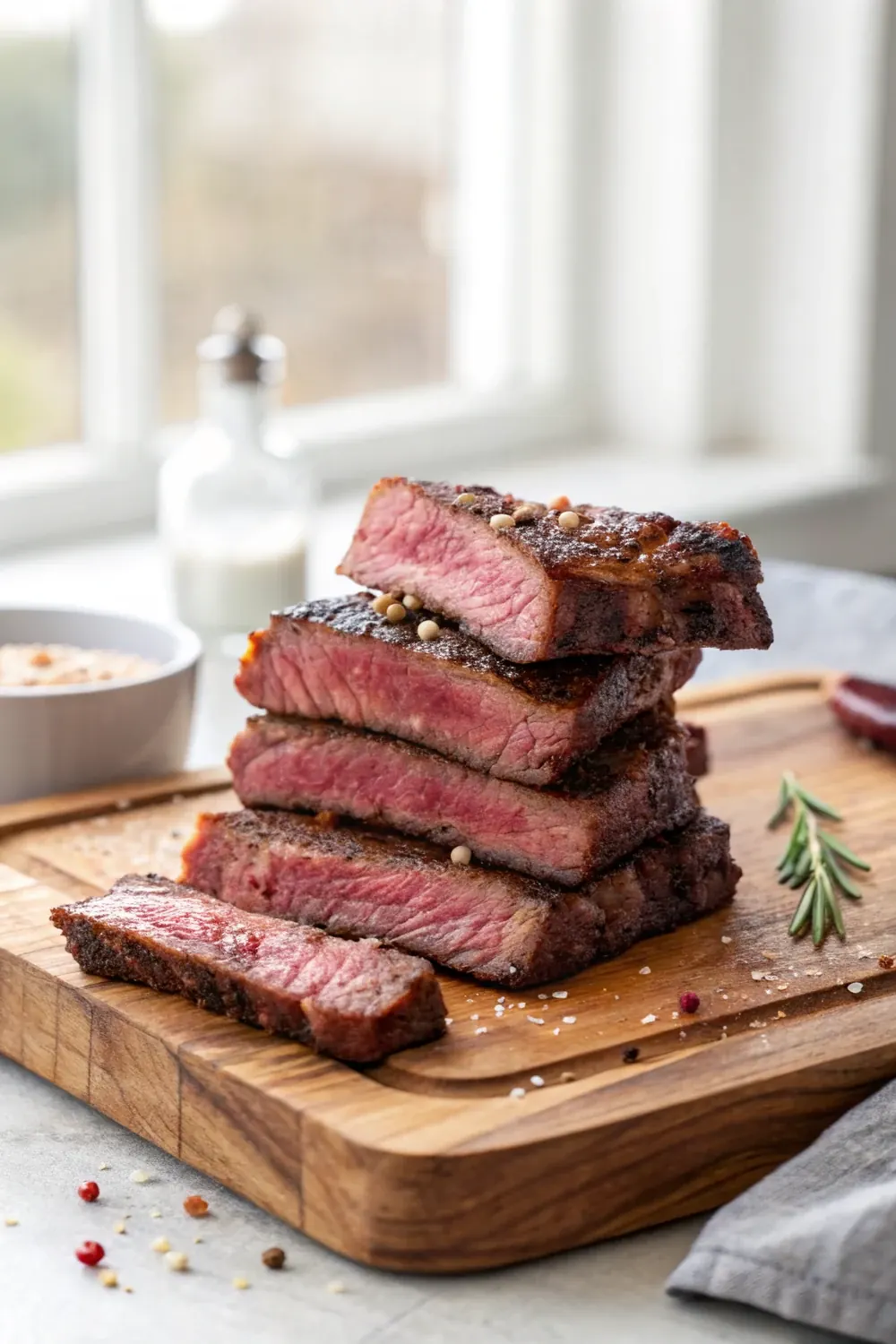
Quick answer: The air fryer cooks beef short ribs one way brilliantly: hot and fast, like a steak. Use 2 pounds of boneless chuck short ribs about 1 inch thick, dry brine them with 1.5 teaspoons of kosher salt for 45 minutes, then rub with 2 teaspoons of coarse black pepper, 1 teaspoon of granulated garlic, 1 teaspoon of smoked paprika, and a tablespoon of oil. Preheat the air fryer to 400F (204C) for 5 full minutes, lay the strips in a single layer, and cook 8 to 10 minutes, flipping at the halfway mark, until an instant-read thermometer shows 130 to 135F (54 to 57C) in the thickest piece. Rest 5 minutes, then slice thin against the grain, which is the step that makes or breaks the whole method. You get deeply beefy, medium-rare short rib with crisped edges in under 15 minutes of cooking. For bone-in English-cut ribs, use the two-stage method below instead: a covered low ride, then a hot blast to finish.
I resisted this recipe for about two years, and I want to be honest about why. I am an offset smoker person; my idea of short ribs involves post oak, a Saturday, and a lawn chair. The air fryer on my counter belonged to my daughter's weeknight chicken tenders, not to serious beef. Then one February evening with sleet on the porch rail and boneless chuck short ribs in the refrigerator, I treated them like the little marbled steaks they secretly are: hot machine, short cook, thin slice. The result was so far beyond what a 12-minute cook has any right to produce that I spent the next month running the method into the ground on purpose, finding its edges so I could write them down.
Here is the honest frame for this page. The air fryer will not braise and it will not smoke, so it cannot give you the spoon-soft short rib of a Dutch oven or the bark of a pit. What it does instead is the thing nobody tells you short ribs can do: it cooks the most marbled muscle on the steer like a strip steak, medium-rare, crusted, and sliced thin so the texture lands tender instead of chewy. This is the weeknight speed run of the short rib family, and it earns its spot next to the smoked, braised, and sous vide versions on this site rather than replacing any of them.
What the Air Fryer Actually Does to Short Ribs
An air fryer is a small, violent convection oven, and understanding that sentence is understanding this recipe. It moves 400F air fast enough to brown a surface in minutes, which makes it superb at exactly one beef job: crust. What it cannot do is hold meat at low temperature in a moist environment for hours, which is the only process that melts the collagen in a thick short rib. Every sad, chewy air fryer short rib on the internet comes from asking the machine to braise. It will not. It is a searing machine wearing a countertop costume.
So this recipe stops fighting the machine and hands it the version of the cut it can win with: boneless chuck short ribs about 1 inch thick, cooked like steak. At medium-rare, the collagen never needs to melt, because the thin slice at the end shortens every fiber the way hours of smoke otherwise would. Marbling does the rest. Chuck short rib meat carries more intramuscular fat than most ribeyes at a fraction of the price, and at 130 to 135F that fat is just softened enough to carry flavor through every slice.
The payoff is a genuinely different dish from the rest of the short rib family, not a shortcut imitation of it. My smoked beef short ribs are a Saturday ceremony and my slow cooker boneless short ribs are the hands-off braise; this is the 25-minute version with a rosy center and a peppered crust, closer in spirit to a skirt steak dinner than to Sunday pot roast. Different job, same magnificent muscle.
Buying: The Right Strips for a Hot, Fast Cook
Everything starts at the meat case, and the label you want is boneless beef chuck short ribs. The good packages hold strips 1 to 1.5 inches thick with visible white webbing of fat threaded through deep red meat; that marbling is your insurance policy at high heat. Thickness matters more than weight. Under 3/4 inch, the strips overshoot medium before the crust finishes; over 1.5 inches, the outside chars while the center stays raw. One inch is the bullseye, and a butcher will happily split thicker blocks for you if you ask.
Skip two lookalikes for this method. The thin cross-cut strips with rows of small bone sections are flanken, a wonderful cut that wants a screaming open fire; my flanken beef short ribs give them that fire, and the air fryer version of flanken appears later on this page as a variation, not the main event. And whole bone-in English-cut blocks are braising and smoking meat; the two-stage method below handles them, but they are the harder path in this machine, not the default.
Quality cues are the usual ones, worth repeating because this cook is too fast to hide flaws: bright cherry-red meat, creamy white fat rather than yellow, no gray edges, no excess liquid pooling in the package. Portion math runs a half pound per person, and the price should make you smile. Boneless chuck short ribs routinely cost less than half of what the steakhouse cuts run, and after the slice, nobody at the table can tell you cheaped out. They will assume the opposite.
The Dry Brine: 45 Minutes That Do Half the Work
Salt goes on early and alone, and this small scheduling decision outranks every gadget setting on the machine. Sprinkled 45 minutes ahead, kosher salt pulls moisture to the surface, dissolves into it, and migrates back into the meat, seasoning the interior instead of just the crust. Meanwhile the surface it leaves behind dries out, and dry surface is the entire precondition for browning in a convection machine. A wet strip spends its first 3 minutes boiling off water; a dry-brined strip spends them building crust.
The rub waits until the last minute for the same reason in reverse. Granulated garlic and paprika sitting on meat for an hour draw up moisture and turn to paste, then scorch in the moving air. Tossed on with the oil right before the basket, they toast instead. The blend is deliberately short: 16-mesh coarse black pepper for crag, granulated garlic for the savory floor, smoked paprika doing a quiet impression of the pit this recipe skipped. The oil is not optional. Air fryers brown poorly without a thin film of fat to conduct the heat.
If your evening did not include 45 minutes of planning, the recipe survives: salt and rub together, straight into the machine, and accept a slightly less seasoned center that a squeeze of lime or a spoon of chimichurri at the table covers easily. If your planning ran the other direction, overnight uncovered in the refrigerator is even better than 45 minutes, edging the surface toward the dry-aged side and the crust toward remarkable. The window is forgiving. The only wrong move is salting exactly 10 minutes ahead, when the moisture is up on the surface with no time to go back in.
Machine Setup: Preheat Like You Mean It
The single most common air fryer mistake is treating the preheat as optional, and on a 10-minute cook it is fatal. A cold basket and cold cavity soak up the first wave of heat, so your 400F cook is actually a 300F cook for 3 minutes, which is a third of your total time spent steaming instead of searing. Run the machine empty at 400F for 5 full minutes before the beef goes anywhere near it. When the strips hit the basket, you should hear an immediate, businesslike sizzle. Silence means the machine lied about being ready.
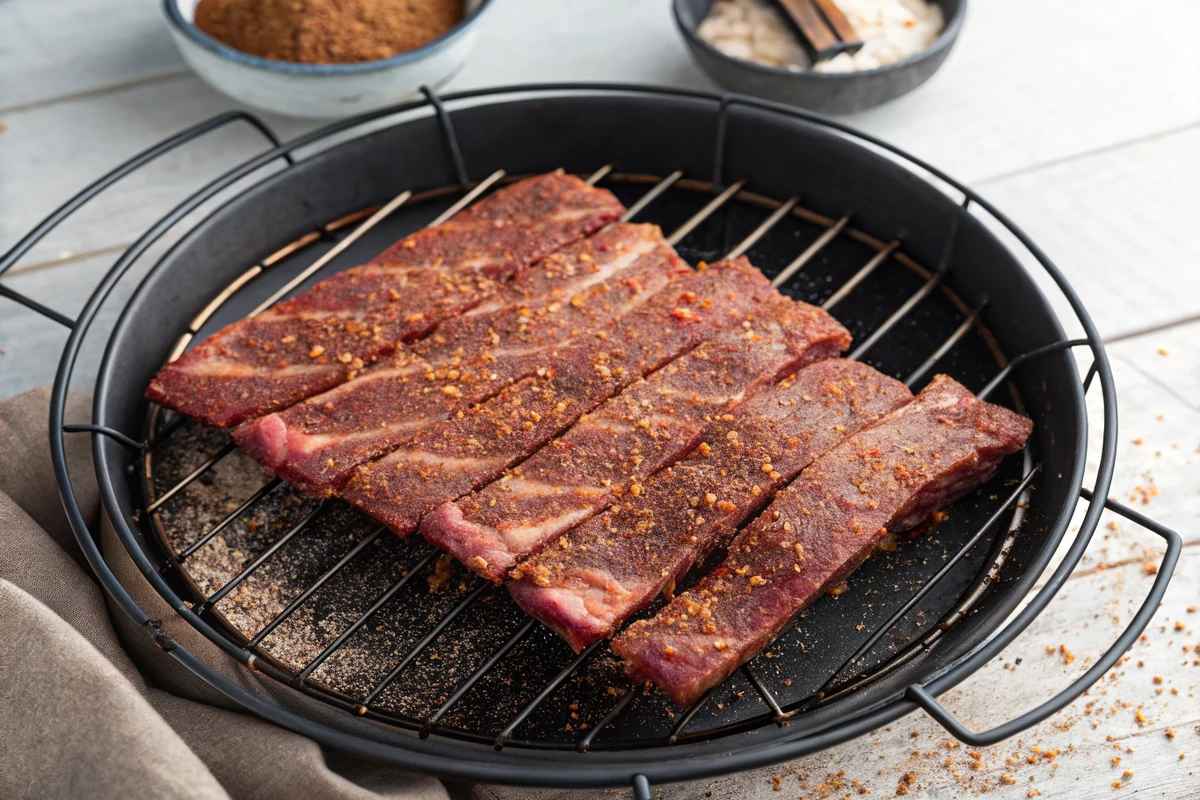
Spacing is the other half of setup. Air frying is airflow, and airflow needs a route: strips laid in a single layer with a finger's width between them brown on every face, while strips stacked or jammed edge to edge trap steam in the gaps and come out gray where they touched. Two pounds fits a 5-quart basket comfortably in one layer; smaller machines cook in two batches, and the first batch holds under loose foil with no meaningful loss. Ten patient minutes beat one crowded batch every time, and the second batch cooks faster anyway in a machine that is now thoroughly hot.
No basket shaking on this one, despite what the machine's manual says about everything else you cook in it. Shaking is for fries. Thick strips of beef want to sit still and build crust against hot air moving in one pattern, then flip exactly once at the halfway mark with tongs. Every extra flip interrupts browning and knocks rub into the drawer below, where it burns and smokes. Lay them down, close the drawer, and let the machine do the only thing it is great at.
The Cook: 400F, 8 to 10 Minutes, One Flip
The timeline is short enough to narrate in full. Minutes 0 to 4: the strips sizzle, the surface dries and tightens, and the pepper starts to toast; resist the urge to peek before the flip, because every drawer-pull dumps heat. Minute 4 to 5: flip each strip with tongs. The down face should already show real browning with dark mahogany edges where fat has rendered and crisped. Minutes 5 to 9: the second face catches up while the interior climbs through the 120s. Somewhere around minute 8 for thinner strips and minute 10 for full 1-inch pieces, you land in the window.
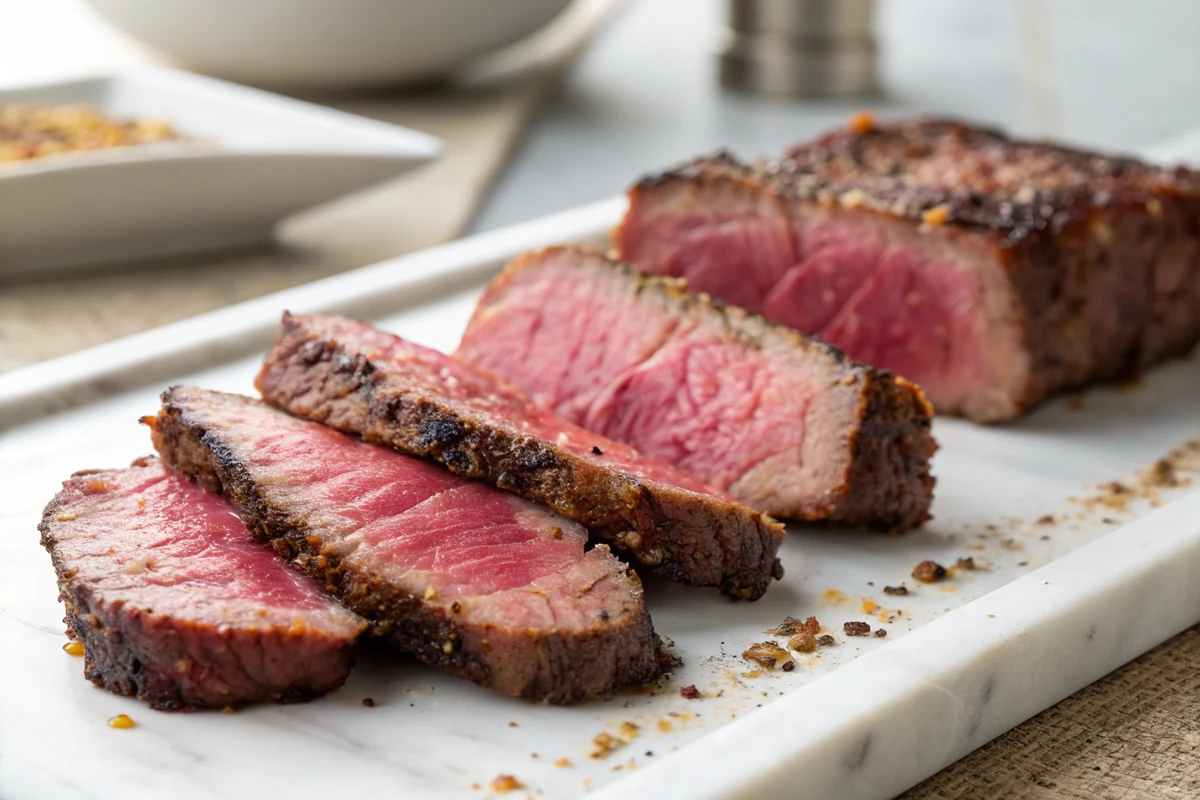
The window is 130 to 135F (54 to 57C) on an instant-read thermometer slid into the thickest strip from the side, and I want to make the case for it plainly, because it runs against a lifetime of short rib instinct. At medium-rare, the marbling has softened, the fibers are still relaxed, and the thin slice will handle tenderness. Past 145F, the tight weave of a working chuck muscle contracts hard, squeezes out its juice, and enters the dead zone: too cooked to be tender as steak, hours away from being tender as a braise. Medium-rare or the slow cooker. There is no good middle.
Machines vary more than recipes admit, so calibrate yours on the first run. Basket-style fryers with strong fans run hot and may finish at 8 minutes; oven-style units with racks run gentler and may want 11 or 12. Trust the thermometer over the clock without exception, and check the thickest strip, not the most convenient one. If your strips came thinner than 3/4 inch, drop to 6 to 8 minutes total and start checking early; thin pieces move through the window fast, and this cook has no stall to bail you out.
Rest, Then Slice Thin: The Step That Makes the Dish
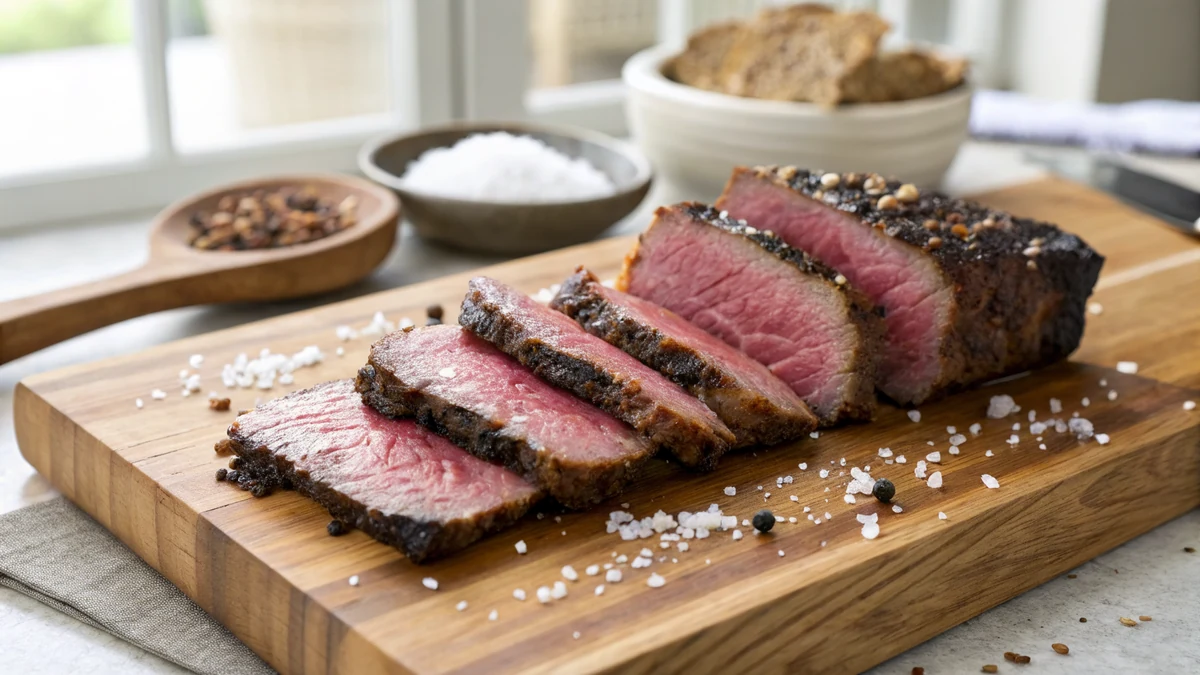
Five minutes on the board, loosely covered or not covered at all, and the strips go from good to correct. The rest lets carryover finish the centers, settles the juices back into the muscle, and firms the meat just enough to slice cleanly instead of shredding under the knife. Skipping it costs you a board full of juice that belonged in the slices. This is also the window to warm tortillas, melt a pat of butter into the resting juices, or do nothing and stand there smelling it, which is a legitimate use of the time.
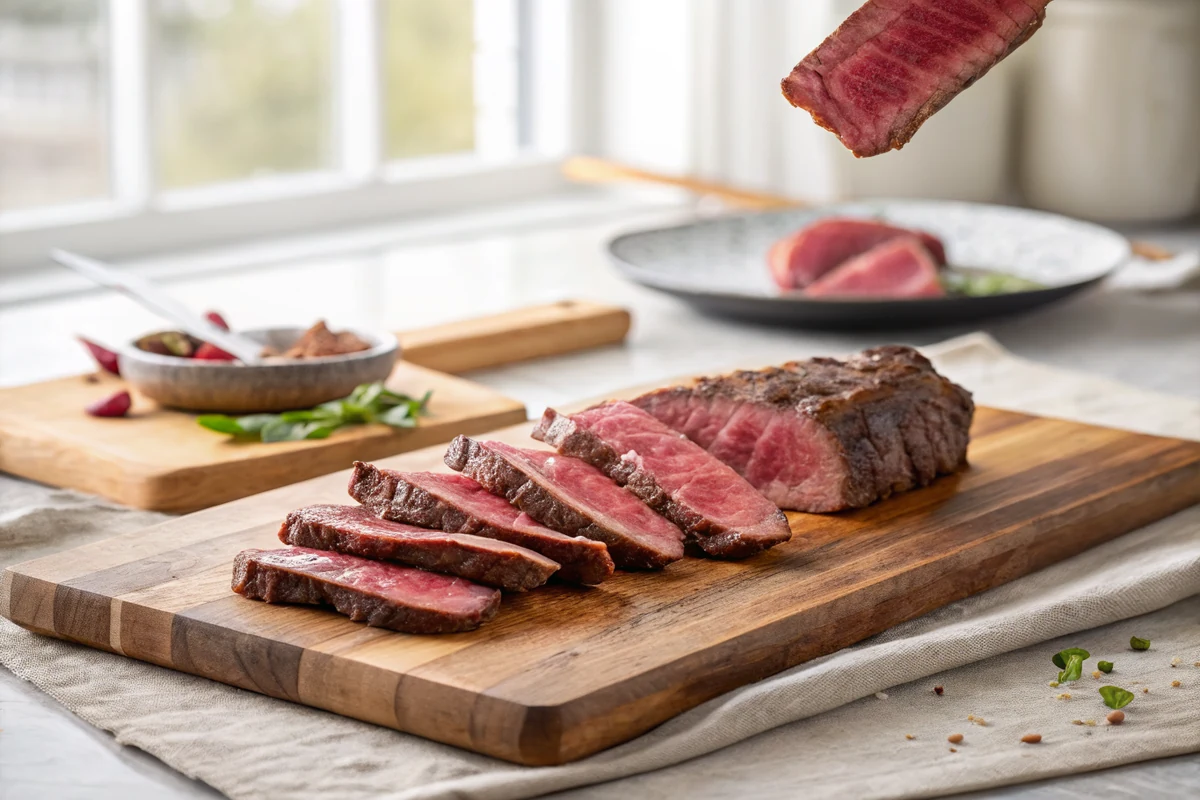
Now the step that carries the whole method: slice thin, against the grain, every time. Look at the cut face of a strip and find the direction the fibers run; they are easy to see on chuck. Turn the strip so your knife crosses those fibers at a right angle and cut slices a quarter inch thick or thinner, on a slight bias for wider, prettier pieces. Each cut shortens thousands of fibers to lengths your teeth barely notice. The same strip sliced with the grain, in thick lazy slabs, eats like a well-seasoned tire, and the machine will take the blame for what the knife did.
Chuck short ribs sometimes shift grain direction partway down a strip, a small ambush worth knowing about. When the fiber lines visibly change angle, stop, rotate the piece, and keep the knife crossing them. It takes 5 extra seconds and it is the difference between the third slice and the fourth slice eating identically. Thin, across, adjusted as you go: the three-word version of the most important paragraph on this page.
Bone-In Short Ribs: The Two-Stage Exception
Everything above assumes boneless strips, because that is the cut this machine flatters. But if what came home is bone-in English-cut short ribs, thick blocks riding a long flat bone, there is an honest air fryer path, and it works in two stages that respect what the cut needs. Stage one is gentle and covered: set the machine to 300F (149C), wrap the seasoned ribs snugly in a foil packet with 1/3 cup of beef broth, and let them ride 75 to 90 minutes. The packet turns the basket into a tiny braising oven, and the collagen gets the slow, moist heat it demands.
Stage two is the machine's home turf. Open the packet carefully, pour the collected juices into a cup for serving, and return the ribs to the basket uncovered at 400F for 5 to 6 minutes, brushed if you like with a thin coat of Texas BBQ sauce, until the surface crisps and the glaze goes tacky. The result eats like a small-batch braise with a lacquered finish: probe-tender at the bone, dark and glossy outside, done inside 2 hours instead of an afternoon. It is legitimately good, and I say that as someone whose bar for bone-in short ribs is a smoker.
I keep the two-stage in the toolkit for one or two racks of ribs on a night when the oven is occupied, and I stay honest about its ceiling. Above two pounds the foil packet crowds the basket, the timing stretches, and the machine loses its efficiency argument to the Dutch oven it was imitating. For a full family batch of bone-in ribs, the oven braise, the slow cooker, or the pit remains the right call, and for the deep barbecue version there is no substitute for the real smoked beef short ribs. The air fryer wins the sprint. It does not enter the marathon.
Flanken in the Air Fryer, and Where This Fits the Family
The flanken variation deserves its paragraph, because those thin cross-cut strips are secretly the second-best short rib format for this machine. Marinate them exactly as my flanken beef short ribs page directs, drain them well so sugar does not drip and scorch, and run them at 400F for 6 to 8 minutes total, flipping once, until the edges char and the surface goes glossy mahogany. No thermometer at that thickness; color and feel make the call. The open fire still produces the better version, but on a January weeknight the gap is smaller than my pride wants it to be.
It helps to see the whole short rib family on one shelf, because each method owns a different evening. The pit owns Saturday: bark, smoke ring, ceremony. The slow cooker owns the workday: eight unattended hours to a spoon-soft braise. Sous vide owns precision: steak texture from a braising cut, 24 hours in the bath. Flanken owns the backyard sprint. The air fryer owns the sprint indoors, the version you reach for when the craving is real and the timeline is not negotiable.
That framing also answers the question I get most about this recipe: is it as good as the smoker? No, and it is not trying to be, any more than a great skirt steak is trying to be brisket. It is a different excellent thing made from the same generous cut, and having it in rotation changes your relationship with the meat case. Boneless chuck short ribs stop being a special-occasion purchase and become a Tuesday one, and a household that eats medium-rare short rib on Tuesdays is a household winning at beef.
Serving: Board, Tacos, or a Steakhouse Plate
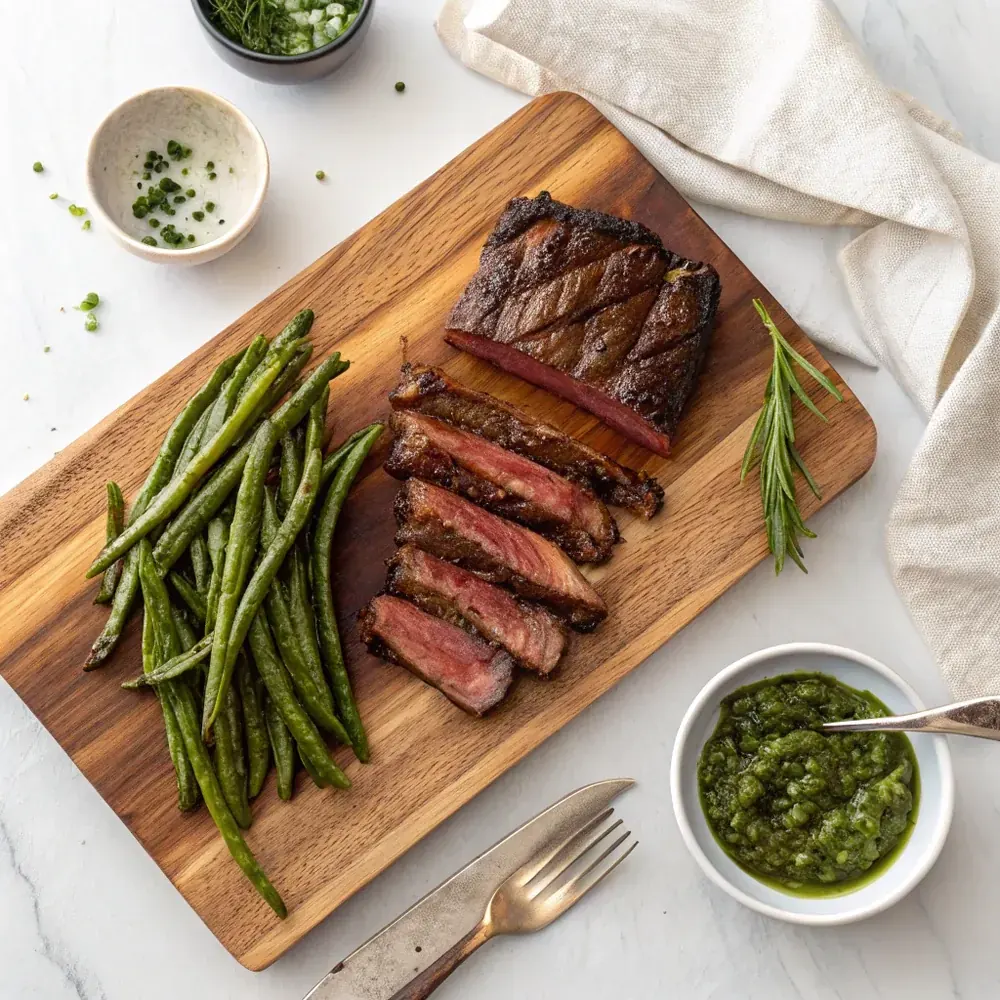
My default service is the cutting board itself: slices fanned where they fell, flaky salt, a spoonful of something green and sharp over the top. Chimichurri is the house move, and a round of cowboy butter melting across warm slices is the indulgent one. The rosy meat with its dark crust needs acid or herb more than it needs another rich element, so if a sauce is on the table, keep it bright. The reserved juices from the resting board, poured back over the slices, are not optional in my kitchen. That is dissolved seasoning and rendered marbling, and it belongs on the beef.
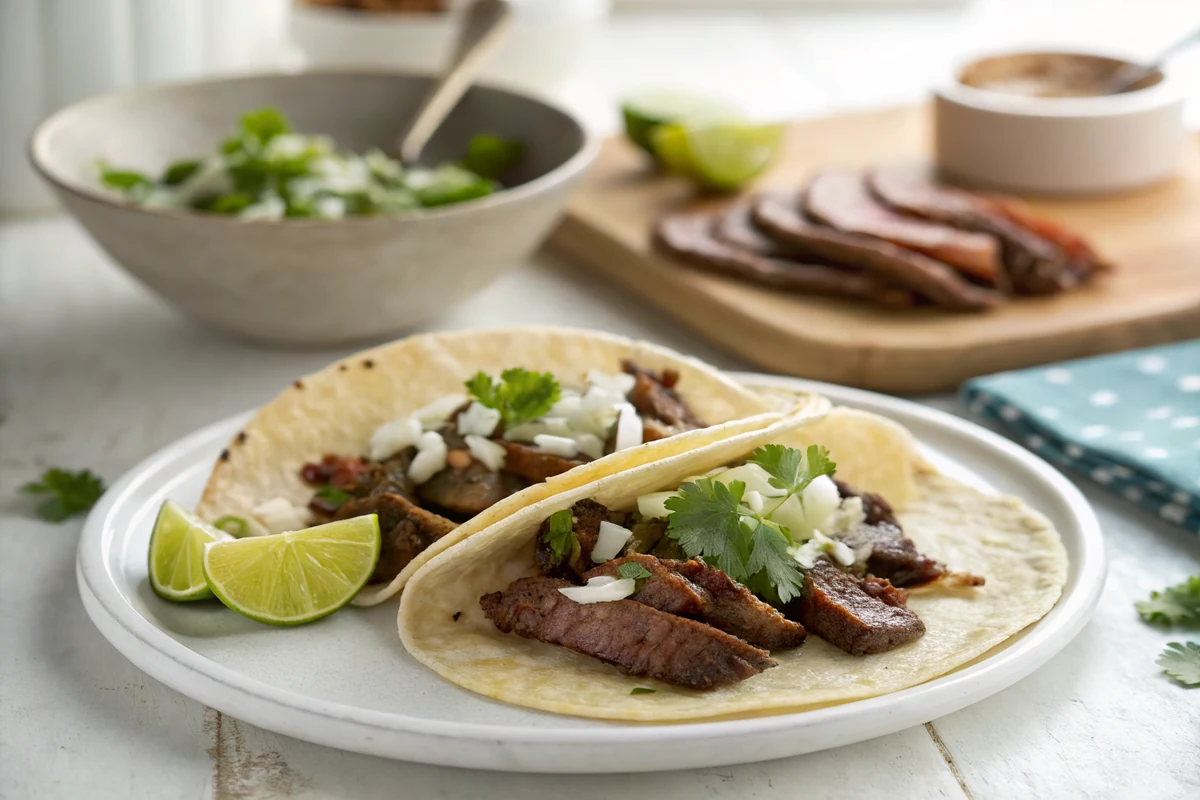
The taco route may be the best use of this recipe. Thin medium-rare slices on doubled warm tortillas with white onion, cilantro, and a hard squeeze of lime eat like carne asada from a cut with twice the marbling. Two pounds makes 10 to 12 generous tacos, and the whole spread, meat, warmed tortillas, and toppings, lands inside 30 minutes. Salsa verde is the right salsa here; its acid does the same work the lime does, cutting the richness so the third taco tastes as good as the first.
For a plated dinner, think steakhouse: the slices over mashed potatoes or cheese grits, something roasted and green alongside, and the board juices spooned over as the only sauce. Green beans share the machine gracefully, air fried in the 5 minutes the beef rests, and the wider universe of pit-worthy accompaniments in my Texas BBQ sides guide all work here, because this plate is barbecue-adjacent even if no smoke was harmed in its making. A cold beer or a glass of cheap red completes the argument.
The Five Mistakes That Ruin Air Fryer Short Ribs
Mistake one is the big philosophical error: trying to make fall-apart braised short ribs in an open basket. Naked strips at 300F for an hour do not braise, they dehydrate, and no sauce rescues jerky. If you want spoon-tender, use the foil-packet two-stage above or hand the job to the slow cooker. Mistake two is skipping the preheat, covered earlier and worth repeating because it is the most common one: a cold start steals your crust and stretches the cook past the tenderness window. Five empty minutes at 400F. Every time.
Mistake three is overshooting doneness, and the machine makes it easy because the meat is hidden in a drawer while the clock runs. The gap between 135F and 150F is about 2 minutes at these temperatures, and everything past 145F trends toward gray and grim. Pull the drawer at the first check time, use the thermometer, and remember that carryover adds 3 to 4 degrees during the rest. Mistake four is crowding: a double layer of strips steams itself pale, and the batch you saved 8 minutes on cost you the crust on both layers. Single layer, two batches, no exceptions.
Mistake five belongs to the knife: thick slices, or thin slices cut lazily with the grain. Half the tenderness in this method lives in the slicing, and it is the only step with no machine assist and no do-over. Watch the fiber direction, cross it at a quarter inch, and rotate the strip when the grain shifts. Do those five things right, salt early, preheat hard, single layer, pull at 135F, slice thin across, and this recipe is close to unruinable, which is a rare thing to say about beef this good moving this fast.
Beef Short Ribs in the Air Fryer Recipe
Ingredients
- For the ribs:
- 2 pounds (900 g) boneless chuck beef short ribs, about 1 inch (2.5 cm) thick
- 1.5 teaspoons kosher salt
- For the rub:
- 2 teaspoons 16-mesh coarse black pepper
- 1 teaspoon granulated garlic
- 1 teaspoon smoked paprika
- 1 tablespoon (15 ml) neutral oil
- For serving, optional:
- Flaky salt
- Chimichurri, cowboy butter, or warmed barbecue sauce
- Warm flour tortillas and lime wedges for tacos
- Equipment:
- Basket-style air fryer (5 quarts or larger fits 2 pounds in one layer), instant-read thermometer, tongs, and a sharp slicing knife
Instructions
- Dry brine 45 minutes. Pat the short ribs completely dry with paper towels and sprinkle the kosher salt evenly over every face. Set them on a rack or plate, uncovered, in the refrigerator for 45 minutes and up to overnight. The salt dissolves, migrates inward, and dries the surface, which is exactly what a hard, fast crust needs.
- Rub just before cooking. Pat the strips dry again, then toss them in a bowl with the oil, coarse pepper, granulated garlic, and smoked paprika until every side carries an even coat. The oil helps the crust build in a machine that cooks with moving air instead of direct metal contact.
- Preheat the air fryer 5 full minutes. Run the empty air fryer at 400F (204C) for 5 minutes before the beef goes in. A cold basket steals the first 3 minutes of your cook and costs you crust. If your machine has a preheat setting, use it; if not, just run it empty on the clock.
- Arrange in a single layer. Lay the strips in the basket in a single layer with a finger of space between them. Crowded or stacked strips steam each other gray. If your basket is small, cook in two batches; the first batch holds just fine under loose foil while the second cooks.
- Cook 8 to 10 minutes, flip once. Cook at 400F for 4 to 5 minutes, flip each strip with tongs, and cook 4 to 5 minutes more. Thinner strips finish at 8 minutes, full 1-inch pieces closer to 10. The surface should be deeply browned with dark edges where the fat has crisped.
- Pull at 130 to 135F. Check the thickest strip with an instant-read thermometer from the side: 130 to 135F (54 to 57C) for medium-rare to medium, which is where this cut stays tender. If any piece lags, give it 90 seconds more alone. Past 145F the muscle tightens and no slicing trick can fully save it.
- Rest 5 minutes. Move the strips to a cutting board and leave them alone for 5 minutes. The carryover pushes the centers up a few degrees while the juices settle back into the meat instead of onto the board.
- Slice thin against the grain. Look at the direction the muscle fibers run, turn the strip so your knife crosses them, and slice at a quarter inch or thinner on a slight bias. Finish with flaky salt and whatever sauce the evening calls for, or pile the slices into warm tortillas with lime.
Frequently Asked Questions
Can you cook beef short ribs in an air fryer?
Yes, with one condition: match the method to the cut. Boneless chuck short ribs about 1 inch thick cook brilliantly hot and fast, 400F for 8 to 10 minutes to an internal 130 to 135F, then rested and sliced thin against the grain; they eat like a deeply marbled steak. Bone-in English-cut ribs need the two-stage approach instead: a foil packet with broth at 300F for 75 to 90 minutes to melt the collagen, then 5 to 6 minutes uncovered at 400F to crisp and glaze. What the air fryer cannot do is tenderize a thick rib in open air; naked low-and-slow in a basket just dries the meat out.
How long do short ribs take in the air fryer?
Boneless strips at 1 inch thick take 8 to 10 minutes at 400F (204C) in a preheated machine, flipped once at the halfway mark, plus a 5-minute rest. Thinner strips near 3/4 inch finish in 6 to 8 minutes, and flanken-cut strips take 6 to 8 minutes total. Bone-in ribs on the two-stage method run about 90 minutes covered at 300F plus 5 to 6 minutes at 400F to finish. Machines vary by fan strength, so trust an instant-read thermometer over the clock: 130 to 135F for the steak-style boneless cook, probe-tender for the two-stage.
What temperature should air fryer short ribs be cooked to?
For the hot-and-fast boneless method, pull at 130 to 135F (54 to 57C) internal, which lands medium-rare to medium after carryover. That range keeps the chuck muscle relaxed and the marbling soft, and the thin slice against the grain handles the rest of the tenderness. The zone to avoid is 145 to 185F, where the meat is too cooked to be tender as steak and not cooked enough to be tender as a braise. For the bone-in two-stage method the target flips: you want the braise endpoint, meat that a probe slides into with no resistance, usually 200F or beyond inside the foil packet.
Why are my air fryer short ribs tough?
One of three causes, in order of likelihood. First, overcooking the boneless cook past medium: beyond about 145F the chuck fibers contract hard and squeeze out their juice, so pull at 130 to 135F and rest 5 minutes. Second, slicing thick or with the grain: this cut demands quarter-inch slices across the fiber direction, and thick lazy slabs chew like rubber regardless of a perfect cook. Third, asking the machine to braise: naked strips run low and slow in open air dehydrate instead of tenderizing. If you want fall-apart texture, use the foil-packet two-stage or a slow cooker, not a longer basket ride.
Should I marinate short ribs before air frying?
You can, but the dry brine on this page beats a marinade for the steak-style cook. Salt applied 45 minutes to overnight ahead seasons the interior and dries the surface, and a dry surface is what browns in convection air. Wet marinades leave the surface soaked, so the first minutes steam instead of crust. The exception is flanken-cut strips, which are thin enough that a soy-lime marinade seasons them clear through; drain them well before the basket so sugar does not drip and scorch. For the boneless strips, salt early, rub with oil and spices at the last minute, and put the flavor sauces on after slicing.
Are air fryer short ribs as good as smoked or braised?
They are a different dish, and judged as that dish, excellent. Smoked short ribs give you bark, smoke ring, and a rendered, buttery thickness no countertop machine can imitate; braised and slow cooker versions give you spoon-soft comfort. The air fryer version gives you something neither of those can: a medium-rare, crusted, steak-like short rib in under 15 minutes of cooking. The marbling that makes chuck short ribs great survives every method. Pick by the evening you are having: pit for a Saturday, slow cooker for a workday, air fryer for the night you decided on real beef at 6 pm.
What should I serve with air fryer short ribs?
Follow the two natural directions. As tacos: thin slices on doubled warm tortillas with white onion, cilantro, lime, and salsa verde, which turns 2 pounds into 10 to 12 excellent tacos. As a plate: fan the slices over mashed potatoes, cheese grits, or rice, spoon the resting-board juices over the top, and add one sharp element, chimichurri, cowboy butter, or a vinegary slaw, to cut the richness. Green beans or broccoli can air fry in the 5 minutes the beef rests. Any side that works next to smoked beef works here, from pinto beans to potato salad.