Texas Desserts
Peanut Butter Texas Sheet Cake
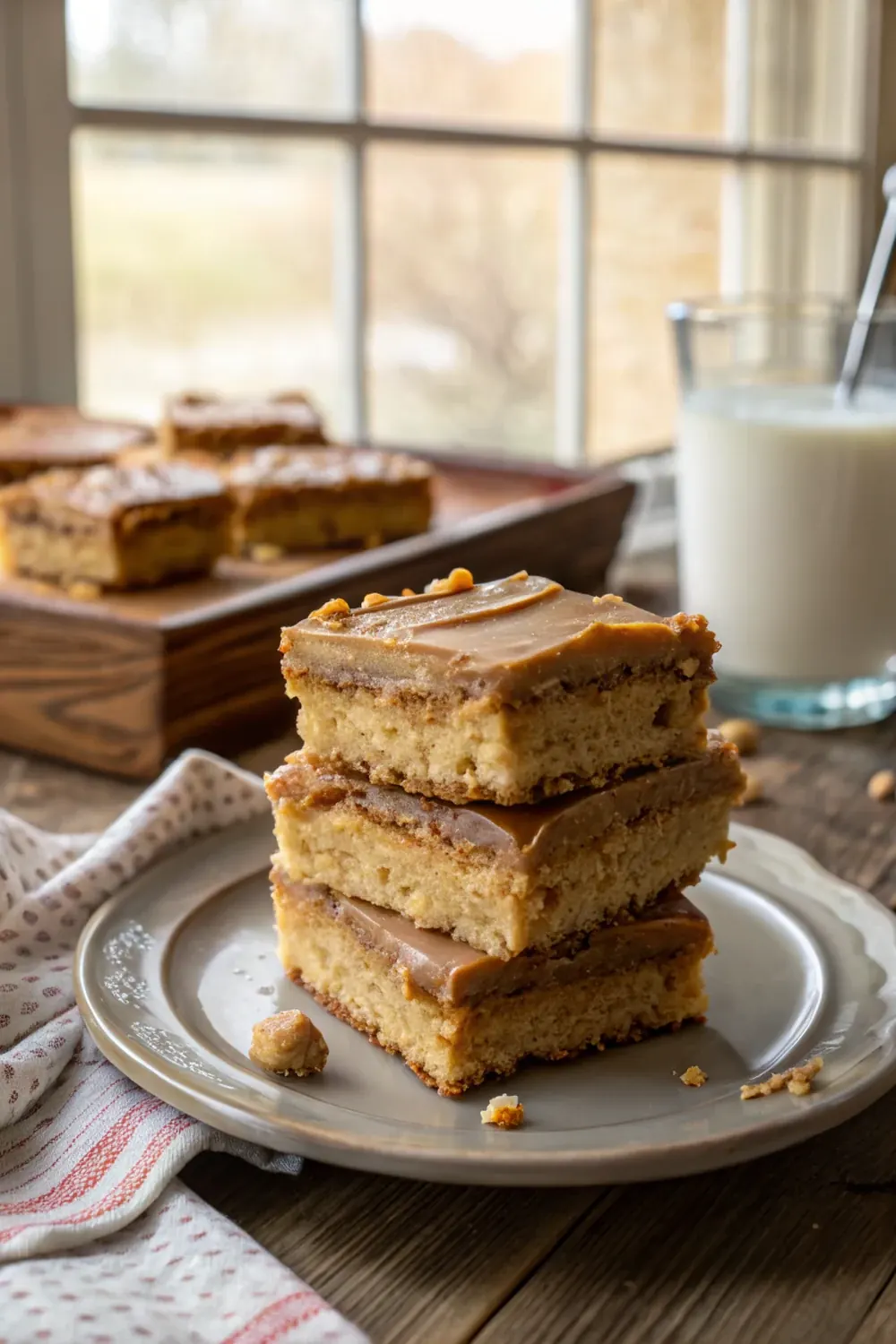
Chef Mia's peanut butter Texas sheet cake: tender peanut butter cake with warm frosting poured over hot. The 1-pan dessert that feeds 24 in an hour.
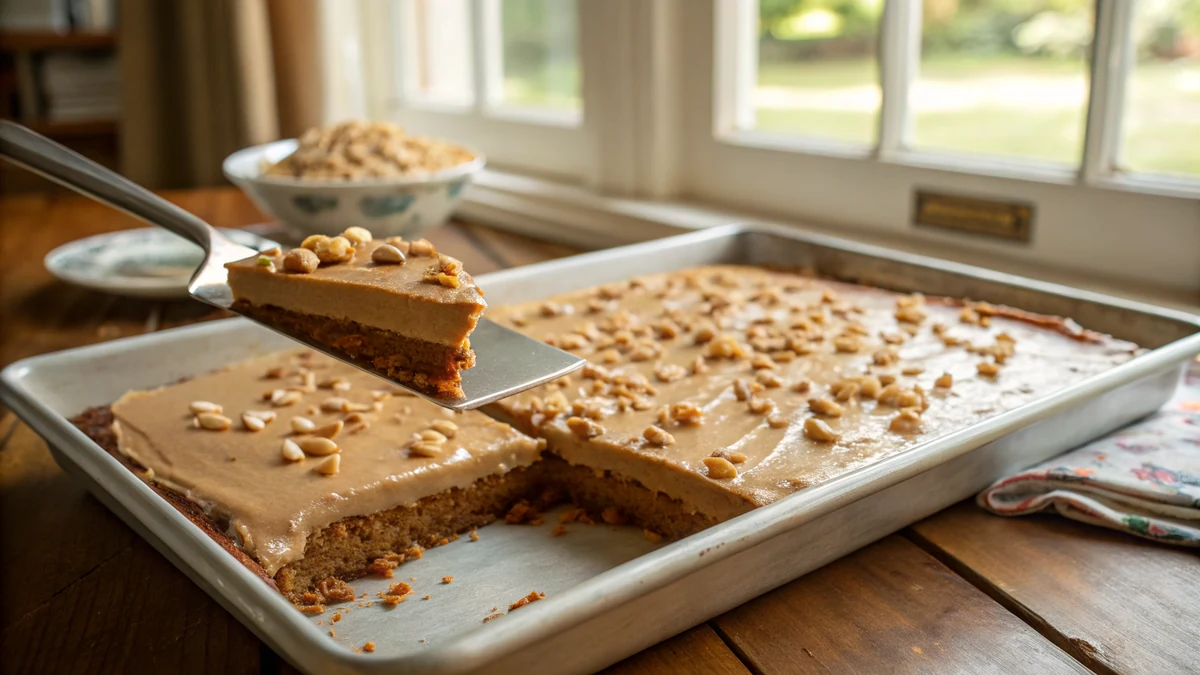
Quick answer: A peanut butter Texas sheet cake is the famous chocolate sheet cake with the cocoa swapped for creamy peanut butter, in both the cake and the frosting. You boil butter, water, and peanut butter, stir that into the dry ingredients with buttermilk, eggs, and vanilla, and bake it in a sheet pan at 350F for about 20 to 22 minutes. While the cake bakes, you make a warm peanut butter frosting and pour it over the cake the minute it comes out of the oven, so it soaks into the top layer and sets into a soft fudge. Start to finish takes about an hour, and one pan feeds 24 people.
Everybody in Texas knows the chocolate sheet cake. It shows up at funerals, church potlucks, and graduation parties with such regularity that my family just calls it 'the cake.' The peanut butter version is its quieter cousin, and I would argue it is the better one. Same thin, tender crumb, same warm frosting poured over a hot cake, but the peanut butter brings a salty, roasted depth that chocolate cannot match. The first time I served it at a Lockhart potluck, three people asked for the recipe before the pan was empty.
The method is pure Texas sheet cake: everything moves fast, nothing needs a mixer, and the frosting goes on while the cake is still hot from the oven. That hot-frosting trick is the whole soul of this cake. The top quarter inch of cake drinks in the warm peanut butter icing and turns into something between fudge and frosting, and the line where cake ends and icing begins gets beautifully blurry. Below I will walk you through the boil, the pour, the timing, and the handful of mistakes that separate a good sheet cake from a dry one.
What Makes This a Texas Sheet Cake
A Texas sheet cake is defined by its method, not its flavor. You boil butter and liquid, stir that into the dry ingredients, bake the thin batter in a big sheet pan, and pour a warm frosting over the cake while it is still hot. The result is a cake with an unusually fine, moist crumb and a frosting that half-merges with the top of it. My classic Texas sheet cake does this with cocoa in both layers; this version does it with peanut butter, and the architecture carries over perfectly.
Peanut butter actually behaves a lot like cocoa in this formula. Both are intense, fatty flavor pastes that dissolve smoothly into hot butter, which is why the swap works without rebalancing the whole recipe. The cake stays thin and tender, the frosting still pours, and the famous fudgy top layer still happens. What changes is the flavor register: where chocolate is sweet and dark, peanut butter is salty and roasted, and the cake eats a little more like a candy bar.
If you are deciding between the two for a crowd, I will say this: the chocolate version is the one everyone expects, and this is the one everyone remembers. Make both once and you will know which camp your family falls into.
The Peanut Butter to Use (and Why Natural Fails)
Use a commercial creamy peanut butter like Jif or Skippy in both the cake and the frosting. These are emulsified with a small amount of stabilizer, which means they melt into the boiled butter smoothly and stay suspended in the batter instead of breaking into oil and sludge. According to the National Peanut Board, peanut butter is roughly half fat by weight, and how that fat is held together is exactly what separates the two styles on the shelf.
Natural peanut butter, the kind with oil floating on top, is wonderful on toast and wrong for this cake. The oil separates when heated, the frosting can split into a greasy slick, and the cake crumb turns coarse. If natural is all you have, stir it militantly, measure after stirring, and accept a slightly denser cake. Crunchy peanut butter is a better compromise: the texture works, though I would still rather add my crunch as toasted peanuts on top where they stay crisp.
One more note: do not substitute powdered peanut butter. It lacks the fat that this batter is built around, and fat is doing structural work here, the same job the butter and cocoa do in the original.
Buttermilk, the Quiet Workhorse
Every proper Texas sheet cake has buttermilk in it, and mine is no exception. The acidity does two jobs: it reacts with the baking soda to lift the thin batter, and it tenderizes the crumb so the cake stays soft even though it spends time in a hot oven in a shallow pan. A cake this thin has no insulation, so every bit of tenderness has to be built into the batter itself.
No buttermilk in the fridge? Stir 1 1/2 teaspoons of lemon juice or white vinegar into 1/2 cup of milk and let it sit for five minutes. It will not be as thick as true buttermilk, but the acidity is what matters to the baking soda. Plain yogurt thinned with a splash of milk works too. What you cannot do is use sweet milk alone, because the baking soda needs an acid partner or the cake bakes up flat with a soapy edge.
If you love what buttermilk does here, my buttermilk Texas sheet cake leans into it even harder, and the comparison is a fun weekend experiment.
The Hot-Frosting Pour, Explained
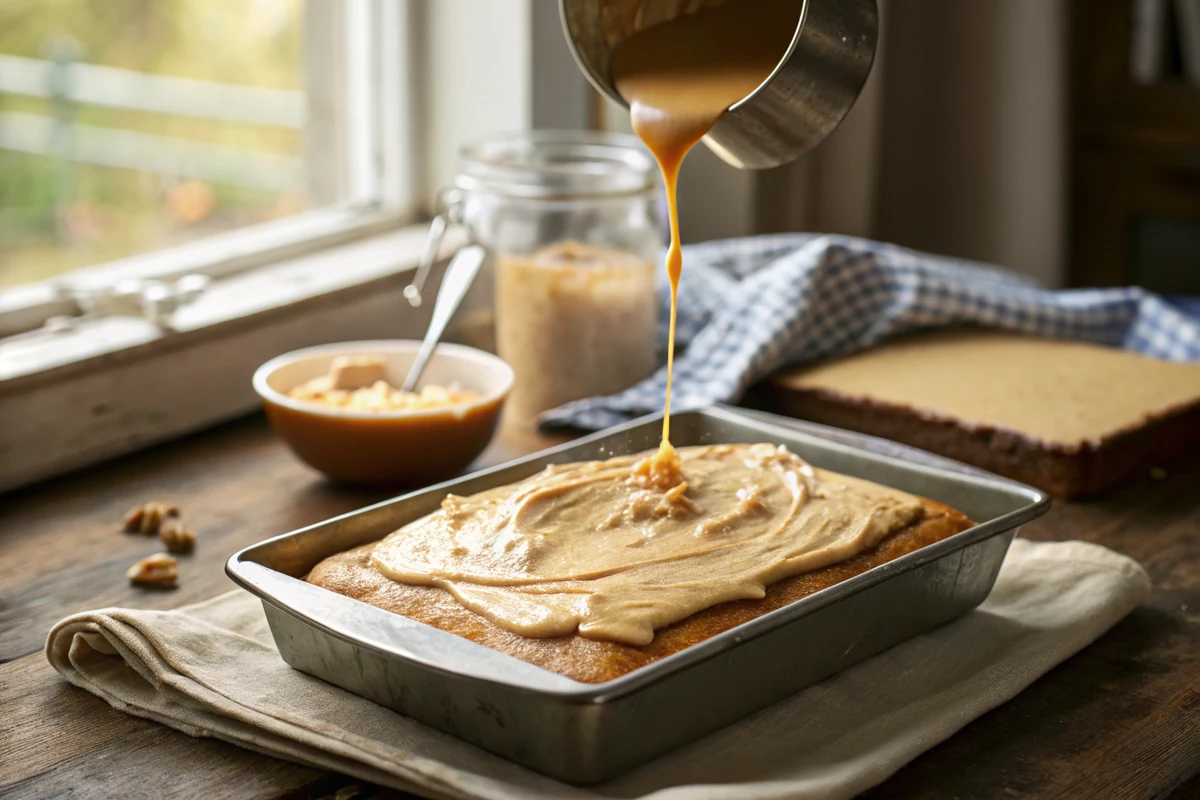
Pouring warm frosting over a hot cake sounds like a shortcut, and it started as one. Church-supper cooks needed a cake that could be frosted immediately instead of waiting hours for layers to cool. But the shortcut turned out to be the genius of the recipe. The hot cake absorbs the top of the frosting layer, creating a soft fudge zone that a cooled-and-frosted cake simply cannot have.
Timing matters more than technique. Have the frosting finished and pourable within a few minutes of the cake leaving the oven. If the frosting sits and tightens, warm it gently over low heat with a teaspoon of milk and it will loosen right back up. If the cake cools too long, the frosting will sit on top like a blanket instead of soaking in, which is still tasty but misses the point.
I keep a deeper dive into ratios, troubleshooting, and flavor swaps in my Texas sheet cake frosting guide, and everything in it applies to this peanut butter version.
Pan Size Changes Everything
The traditional pan is a half sheet, 18 by 13 inches, which gives you a cake about three quarters of an inch tall with a high frosting-to-cake ratio. That thinness is classic. In a 9 by 13 pan the same batter bakes up closer to an inch and a half, more like a snack cake, and needs 25 to 30 minutes instead of 20 to 22. Both are correct; they are just different cakes.
Whatever pan you choose, grease it well and check early. A thin cake overbakes in the time it takes to answer the door. The cake is done when the center springs back from a light press and a toothpick shows moist crumbs, not wet batter and not bone dry.
Resist the urge to double the batter in one pan to get a tall cake. The boiled-batter method is engineered for shallow, fast baking, and a deep version bakes unevenly, doming in the middle while the edges dry out.
Make It Yours: Variations That Hold Up
The chocolate-peanut butter crowd is well served here: pour the peanut butter frosting, then drizzle two ounces of melted dark chocolate over the top in thin ribbons. It looks professional and takes ninety seconds. Or split the difference entirely and frost this peanut butter cake with the chocolate frosting from my classic sheet cake, which turns the whole pan into a soft peanut butter cup.
For texture, chopped roasted peanuts are the obvious topper, but honey-roasted peanuts bring a sweet-salty edge that guests notice. A flaky salt finish works if your peanut butter runs sweet. And if your table loves pecans the way most Texas tables do, toasted pecans are not traditional on this cake but nobody has ever complained; they nod toward my pecan praline cookies, which sit on the same salty-sweet axis.
One variation I do not recommend: reducing the sugar by more than a quarter. Sugar is holding moisture in this thin cake, and big cuts turn the crumb dry and crumbly by day two.
Common Mistakes That Sink Sheet Cakes
Overbaking is mistake number one, and it usually comes from trusting the clock instead of the cake. Ovens vary, pans vary, and a thin cake has zero margin. Start checking at 18 minutes. The center should spring back; the edges should just barely pull from the pan.
Mistake two is cold ingredients. Cold buttermilk and cold eggs hitting warm batter can seize the melted butter into flecks and streak the crumb. Set them out while the oven preheats and you are covered. Mistake three is frosting a cooled cake, which we have covered: still good, no longer a Texas sheet cake.
And finally, slicing too soon. The frosting needs about 45 minutes to set from molten to fudgy. I know the smell makes the wait feel personal. Pour yourself coffee, wash the saucepan, and let the cake finish becoming itself.
Serving a Crowd, Texas Style
This cake exists to feed a lot of people without drama, and it travels in the pan it baked in. For a potluck, slice it at home, leave the squares in the pan, and bring a spatula. For a party at home, I stack squares on a cake stand in a loose pyramid and watch the pyramid shrink. Cold milk is the canonical pairing; strong black coffee is the adult one.
On a bigger dessert table, the cake plays well next to fruit-forward things that cut its richness. A bowl of sliced strawberries, a tart lemon pie, or a scoop of vanilla ice cream all balance the salty-sweet peanut butter. For more pairing math and a full dessert spread, my Texas desserts guide maps out a table that covers every kind of sweet tooth.
Squares of this cake also freeze beautifully for lunchbox duty, which I cover in the storage section below.
Storage and Make-Ahead
Covered at room temperature, the cake keeps 3 days and honestly tastes best on day one and two, when the fudge layer is at peak softness. In the refrigerator it stretches to 5 or 6 days, per the general guidance in the USDA cold food storage charts, though the crumb firms up when chilled; a square warmed for 10 seconds in the microwave comes right back to life.
To freeze, slice the cooled cake into squares, freeze them on a tray until solid, then bag them with parchment between layers. They hold 2 months and thaw at room temperature in about an hour. The frosting survives freezing better than most because of its high fat content.
Make-ahead strategy for a party: bake and frost the cake the night before, leave it covered in the pan, and slice the day of. The cake is genuinely better after an overnight rest, when the frosting has fully settled into the top crumb.
Peanut Butter Texas Sheet Cake Recipe
Ingredients
- For the cake:
- 2 cups (250 g) all-purpose flour
- 2 cups (400 g) granulated sugar
- 1 tsp baking soda
- 1/2 tsp kosher salt
- 1 cup (227 g) unsalted butter
- 1 cup (240 ml) water
- 3/4 cup (190 g) creamy peanut butter (commercial style, like Jif or Skippy)
- 1/2 cup (120 ml) buttermilk, at room temperature
- 2 large eggs, lightly beaten
- 1 tsp vanilla extract
- For the peanut butter frosting:
- 1/2 cup (113 g) unsalted butter
- 1/3 cup (80 ml) whole milk
- 2/3 cup (170 g) creamy peanut butter
- 3 1/2 cups (400 g) powdered sugar, sifted
- 1 tsp vanilla extract
- Pinch of kosher salt
- Optional: 3/4 cup chopped roasted peanuts, for the top
Instructions
- Prep the pan and oven. Heat the oven to 350F and grease a 18x13 inch sheet pan (a half sheet pan or jelly roll pan with sides at least 1 inch tall). A 9x13 pan also works and gives you a thicker, squarer cake; add 5 to 8 minutes of bake time. Have all the frosting ingredients measured before the cake goes in, because the frosting needs to be ready the minute the cake comes out.
- Whisk the dry ingredients. In a large mixing bowl, whisk the flour, sugar, baking soda, and salt until evenly combined. Sheet cake batter comes together in under a minute once the hot mixture hits, so you want the leavening already distributed rather than hiding in one corner of the bowl.
- Boil the butter and peanut butter. In a medium saucepan over medium heat, combine the butter, water, and peanut butter. Stir until the butter melts and the mixture just reaches a boil. The peanut butter will resist at first and then smooth out; keep stirring so nothing scorches on the bottom of the pan.
- Combine hot and dry. Pour the hot peanut butter mixture over the dry ingredients and stir with a wooden spoon or sturdy spatula until mostly smooth. The batter will be warm and loose, closer to a thick pancake batter than a typical cake batter. That thinness is correct and is what gives the cake its famously tender, even crumb.
- Add buttermilk, eggs, and vanilla. Let the batter cool for 2 minutes so the eggs do not scramble, then stir in the buttermilk first, followed by the beaten eggs and vanilla. Mix just until no streaks remain. Room-temperature buttermilk keeps the batter loose; cold buttermilk straight from the fridge can seize the melted butter into little flecks.
- Bake. Pour the batter into the prepared pan, tilt to level it, and bake 20 to 22 minutes, until the center springs back when pressed lightly and a toothpick comes out with a few moist crumbs. The cake is thin, so it goes from done to dry quickly; start checking at 18 minutes.
- Make the frosting while the cake bakes. In the last 10 minutes of baking, combine the butter and milk in a saucepan over medium heat and bring to a simmer. Pull the pan off the heat and whisk in the peanut butter until smooth, then whisk in the powdered sugar in two additions, followed by the vanilla and salt. The frosting should pour like warm honey; a splash more milk thins it if it tightens up.
- Pour the frosting over the hot cake. The moment the cake comes out of the oven, pour the warm frosting over the entire surface and spread it gently to the edges with an offset spatula. The heat of the cake keeps the frosting fluid as it spreads, and the top of the cake absorbs a thin layer of it. This step is why sheet cake tastes like sheet cake.
- Add peanuts and let it set. Scatter the chopped roasted peanuts over the frosting while it is still wet, if using. Let the cake cool in the pan at least 45 minutes so the frosting sets to a soft, fudgy finish before you slice. Cutting early gives you delicious lava; cutting after the rest gives you clean squares.
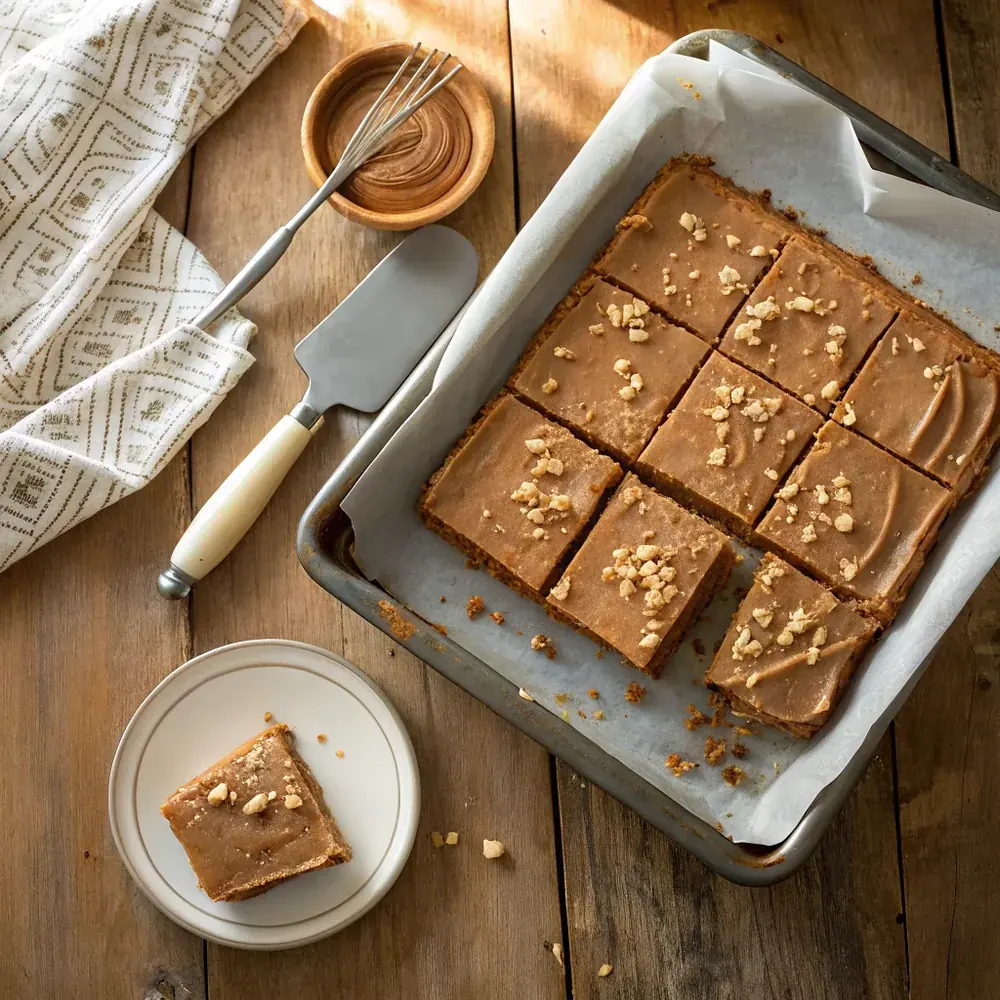
- Slice and serve. Slice into 24 squares right in the pan. The cake is rich, so sheet cake squares run small, and that is by design. Serve with cold milk or coffee, and store leftovers covered at room temperature for 3 days.
Frequently Asked Questions
What is a peanut butter Texas sheet cake?
It is the classic Texas sheet cake formula made with peanut butter instead of cocoa, in both the cake and the frosting. You boil butter, water, and peanut butter, stir that into the dry ingredients with buttermilk and eggs, bake it thin in a sheet pan, and pour a warm peanut butter frosting over the hot cake. The frosting partially soaks into the top and sets into a soft fudge layer, which is the signature of every Texas sheet cake.
Can I use natural peanut butter in a sheet cake?
I do not recommend it. Natural peanut butter separates when heated, which can split the frosting into a greasy layer and coarsen the cake crumb. Commercial creamy peanut butter like Jif or Skippy is emulsified, so it melts smoothly into the boiled butter and stays put. If natural is all you have, stir it extremely well before measuring and expect a slightly denser result.
Why is the frosting poured on while the cake is hot?
Because the hot cake absorbs the top of the warm frosting, creating a fudgy transition layer that a cooled, frosted cake cannot replicate. It is the defining trick of the Texas sheet cake method. Practically, it also means the cake is fully finished ten minutes after it leaves the oven, which is why this style became the workhorse of potlucks and church suppers.
What size pan do I need for Texas sheet cake?
The traditional pan is a half sheet, about 18 by 13 inches with 1-inch sides, which gives a thin cake with a high frosting ratio and bakes in 20 to 22 minutes. A 9 by 13 pan works too and produces a thicker, taller cake; add 5 to 8 minutes and start checking at 25. Grease either pan well and do not double the batter to force a tall cake, because the thin-batter method bakes unevenly at depth.
How is this different from your classic Texas sheet cake?
The architecture is identical: boiled batter, thin pan, warm poured frosting. The flavor swap is complete, though, with creamy peanut butter replacing cocoa in both layers. The peanut butter version eats saltier and more roasted, closer to a candy bar, while the chocolate version is darker and sweeter. The bake time, pan size, and storage are the same, so if you have made one, you can make the other without learning anything new.
Can I add chocolate to this cake?
Absolutely, and it is wonderful. The easiest route is a drizzle of melted dark chocolate over the set peanut butter frosting. The fuller commitment is frosting this peanut butter cake with classic chocolate sheet cake frosting, which effectively builds a giant peanut butter cup. A handful of mini chocolate chips scattered over the warm frosting also works and makes the cake very popular with the under-twelve crowd.
How long does peanut butter sheet cake last?
Covered at room temperature, 3 days, with the texture at its best in the first two. Refrigerated, 5 to 6 days, though the crumb firms when cold; 10 seconds in the microwave restores it. Frozen as individual squares with parchment between layers, it keeps 2 months and thaws in about an hour on the counter. The high fat content of the frosting helps it survive freezing better than most frosted cakes.
Why did my sheet cake turn out dry?
Almost always overbaking. The cake is thin, so two extra minutes does real damage; start checking at 18 minutes and pull it when the center springs back and a toothpick shows moist crumbs. Other culprits: cutting the sugar too far, which removes moisture-holding power, or using a bigger pan than the recipe expects, which thins the batter even more. Frost it hot and the frosting will cover a multitude of small sins.
Can I make this cake ahead for a party?
Yes, and you should. Bake and frost it the night before, leave it covered in its pan at room temperature, and slice the day of the event. An overnight rest lets the frosting settle fully into the top crumb, and most sheet cake fans agree the flavor is better on day two. For longer lead times, freeze sliced squares and pull them out the morning of the party.