Southern Comfort Food
Southern White Beans
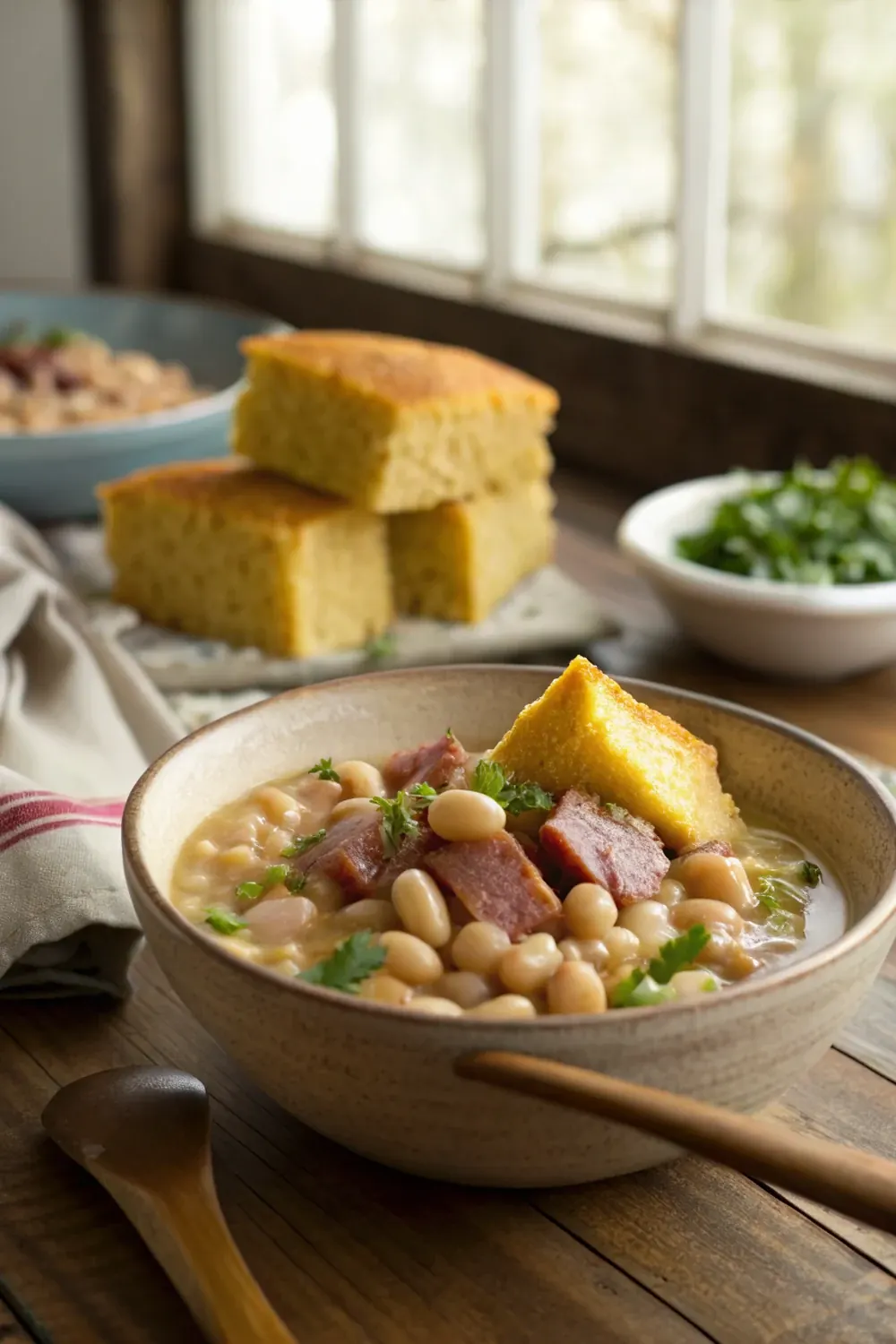
Chef Mia's Southern white beans: Great Northern beans simmered slow with a smoky ham hock until creamy. The 5-ingredient pot of comfort, cornbread required.
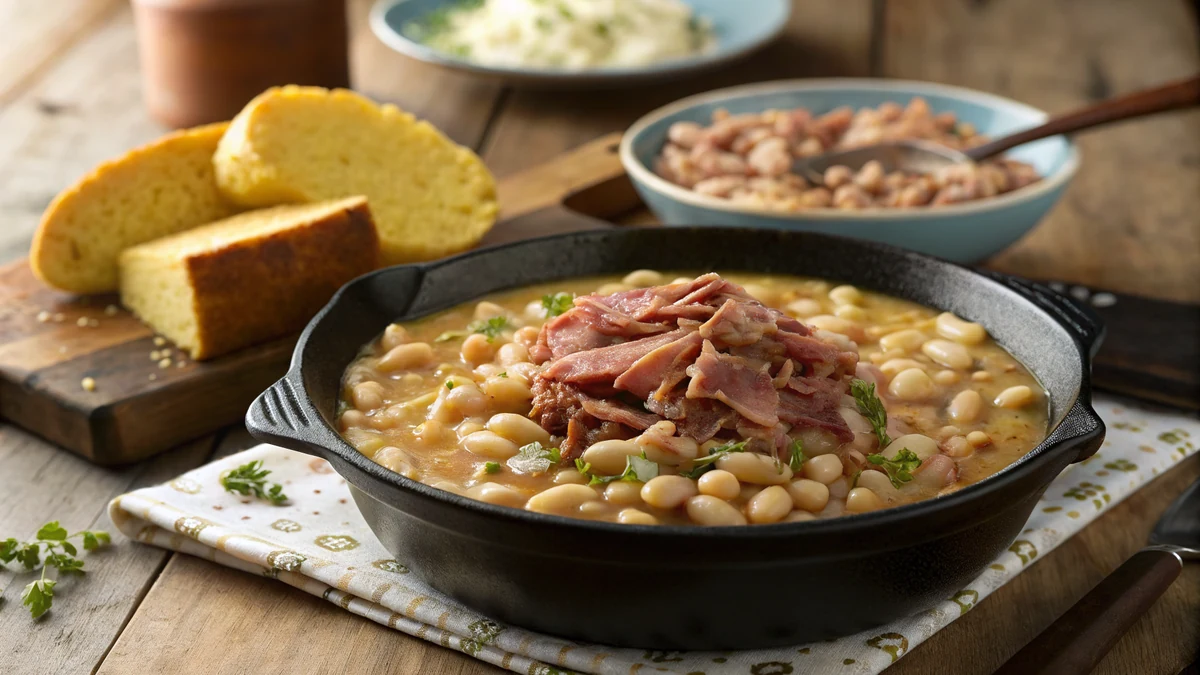
Quick answer: Southern white beans are Great Northern beans simmered low and slow with a smoked ham hock, onion, and garlic until the beans turn creamy and the broth thickens into a smoky, silky pot likker. The method is patience more than work: soak the beans, simmer the ham hock to start its broth, add the beans, and let the pot barely bubble for about 2 hours until tender. Salt comes at the end, once the beans have softened. The whole dish is built from about five core ingredients, costs a few dollars, and feeds eight with cornbread. It is Southern comfort at its most honest.
There is a pot of white beans somewhere on a stove in every Southern town right now, and the cook is not worried about it. That is the nature of this dish. Great Northern beans, a smoked ham hock, an onion, and time produce something far greater than the grocery bill suggests: beans gone creamy in a smoky broth the old folks call pot likker, the kind of supper that gets sopped up to the last drop with cornbread.
My grandmother made these every week of my childhood, and her rules were short. Buy fresh-ish dried beans, let the hock simmer ahead of the beans, keep the bubble lazy, and do not touch the salt until the end. I have tested every shortcut the internet offers and I keep coming back to her method, because it is barely more work and the difference in the bowl is real. Below is the full pot: bean buying, the soak question, the ham hock's job, and what to do with the leftovers, which might be the best part.
The Beans: Great Northern, Navy, or Cannellini?
Great Northern is the classic Southern choice and the one I use: medium-sized, mild, and quick to go creamy while still holding a gentle shape in the broth. Navy beans are smaller and break down further, which makes a thicker, more porridge-like pot that some families swear by. Cannellini run larger and meatier and stay more intact, more Tuscany than Tennessee, though nobody would refuse the bowl.
Whichever you buy, freshness matters more than brand. Dried beans are not immortal; beans that have sat in a warehouse for years cook unevenly and can stay stubborn no matter how long they simmer. Buy from a store with turnover, check for a date if the bag has one, and use bags within a year or so of purchase.
Sort before you soak. Spread the beans on a sheet pan and pick out pebbles, dirt clods, and shriveled beans. It takes two minutes, and it is a great deal cheaper than a cracked tooth. A quick rinse in a colander afterward washes off the field dust, and the beans are ready for the soaking bowl.
To Soak or Not to Soak
I soak, and I will tell you honestly why: evenness and time. An overnight soak hydrates the beans so they cook through at the same rate, shaves 30 to 45 minutes off the simmer, and in my experience produces fewer blowouts. The quick soak, a 2-minute boil followed by a covered 1-hour rest, accomplishes most of the same and rescues the cook who forgot last night.
The no-soak method works too; it simply costs more time and more attention to the water level, since unsoaked beans drink aggressively. If you skip the soak, plan on 2 1/2 to 3 hours of simmering and keep the kettle handy. The bean itself does not care which road you take to tenderness.
One myth to retire: soaking liquid does not need to be discarded out of fear. I drain it because fresh water gives a cleaner-tasting broth and a slightly gentler pot for sensitive stomachs, not because the soak water is harmful. The technique-minded folks at Serious Eats have run these comparisons more than once, and the practical differences are smaller than the arguments about them.
The Ham Hock Is the Whole Point
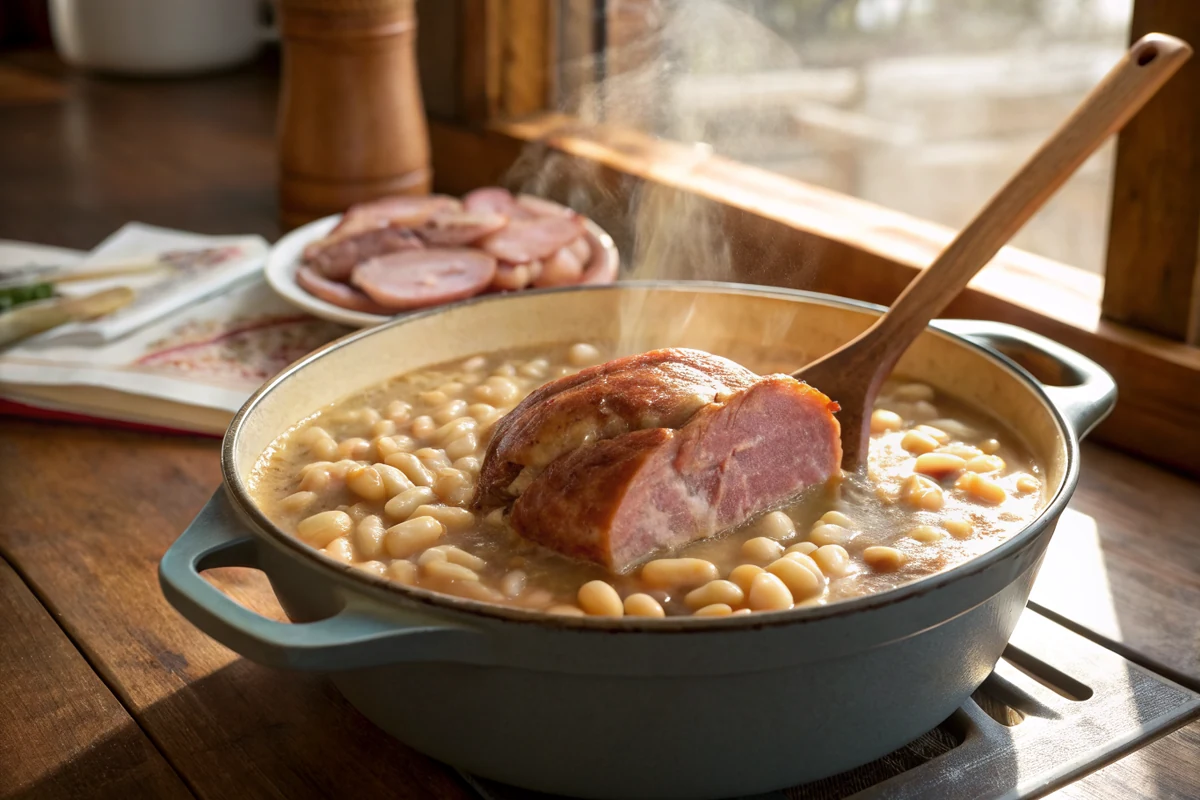
A smoked ham hock is the cut that makes these beans Southern. It is the lower shank of the hog, mostly skin, bone, connective tissue, and a respectable knot of meat, all of it smoked. Simmered, it surrenders three things in order: smoke into the water, gelatin from the collagen that gives the broth its silky body, and finally the shreddable meat that goes back into the pot.
Giving the hock a 45-minute head start before the beans go in is my grandmother's trick and the best single upgrade in this recipe. The beans then absorb smoky broth from minute one rather than swimming in plain water while the hock slowly catches up. If your hock is on the small side, use two; the pot rewards generosity.
Substitutions exist and they are honorable: smoked turkey legs or wings deliver the smoke without the pork, a meaty leftover ham bone after the holidays is a classic, and thick bacon plus a half teaspoon of smoked paprika is the weeknight approximation. For a deeper dive into the Southern pantry canon, Southern Living has chronicled the ham hock's reach across generations of recipes.
Salt Last: The Rule That Saves the Pot
Ham hocks carry their own salt, and no two carry the same amount. Salt the pot at the start and you are gambling with two unknowns at once: how much the hock will release and how much the beans will drink. Wait until the beans are tender and the meat is shredded back in, then season, rest five minutes, and taste again. You will land exactly where you want every time.
The old claim that salting early prevents beans from softening is mostly folklore; modern testing shows salted water can even improve bean texture. But with a hock in the pot, late salting is not about chemistry, it is about control. You cannot un-salt a pot of beans, and hocks have ruined more than one by themselves.
Acid is the other late addition. A dash of hot sauce or a small splash of vinegar at the table brightens the smoky broth beautifully, but acid added early genuinely does slow bean softening, so keep the vinegar bottle away from the pot until the beans are done.
Pot Likker, the Broth Worth Fighting Over
The thickened, smoky broth in the bottom of the pot has a proper name, pot likker, and a long history of being treated as the best part. It carries the gelatin from the hock, the starch from the beans, and every bit of the smoke and onion. In my house the argument is never over the beans; it is over who gets the last ladle of likker.
Getting it right is mostly about the simmer. A lazy bubble keeps the broth silky; a rolling boil turns it cloudy and ragged. The finishing move is mashing a cup of beans against the pot wall and stirring them back through, which thickens the likker into something closer to a thin gravy. Ten extra minutes of simmering after the mash settles it all together.
If the pot runs too thick, loosen it with hot water a splash at a time. Too thin, simmer uncovered a while longer. The target is a broth that coats the spoon and demands bread.
Cornbread Is Not Optional
White beans without cornbread is a sentence missing its verb. The traditional move is a wedge of cast iron skillet cornbread, split and laid in the bowl, with beans and likker ladled straight over the top. The crisp crust softens into the broth and the whole thing becomes one perfect bite repeated until the bowl is empty.
The other school crumbles the cornbread into the beans entirely, and a third dunks buttermilk biscuits instead. There are no wrong answers, only strongly held family positions. Chopped raw onion on top and a bottle of hot sauce on the table complete the traditional setting.
To round the meal out, collard greens or a vinegary slaw bring the sharpness the beans want, and a slice of something sweet after, maybe buttermilk pie, finishes supper the way a Southern grandmother would have. For the wider map of this table, my Southern comfort food guide connects all the pieces.
Where These Beans Sit in the Bean Universe
Every Southern and Texan kitchen runs on a small constellation of bean pots, and they are not interchangeable. These white beans are the gentle, smoky, creamy one. My Texas pinto beans are the earthy ranch-house cousin, simmered with chiles and cumin and built to sit next to brisket. BBQ baked beans are the sweet, molasses-and-sauce party dish that lives beside ribs and pulled pork.
And when the pantry holds a little of everything, 15-bean soup in the slow cooker is the everything-at-once option. Knowing which pot fits which supper is half of Southern menu planning: white beans for quiet weeknights and cornbread, pintos for Tex-Mex and barbecue plates, baked beans for the cookout.
The fifth pot in the rotation, my Southern black-eyed peas, is the sprinter: cowpeas need no soak at all and turn silky in about ninety minutes, with the same hock-and-potlikker logic as these white beans on half the schedule.
If you cook through them all, you will notice the technique transfers. Sort, soak when the pot calls for it, simmer gently, salt late. Beans are one skill wearing five costumes.
Variations Worth a Pot
The base recipe is deliberately plain, which makes it a canvas. The Cajun lean: add a diced green bell pepper and two ribs of celery with the onion, a half teaspoon of cayenne, and swap the hock for sliced andouille in the last half hour. The pot drifts toward white beans and rice territory, and a scoop of steamed rice underneath completes the thought.
The Tex-Mex lean is how these beans most often appear in my own kitchen: a diced jalapeño and a teaspoon of cumin in with the onion, a squeeze of lime at the end, and chopped cilantro over the bowl. It is not traditional Southern, and nobody at my table has ever filed a complaint. A spoonful of these next to enchiladas does the same work refried beans do, with half the effort.
For a creamy, almost soup-like pot, blend two cups of the finished beans with their broth and stir them back in, then loosen with a little water. Add a handful of chopped greens, collards or kale, for the last twenty minutes and you have a one-pot supper that needs nothing but the cornbread. The white bean is agreeable by nature; it says yes to nearly everything.
Storage, Freezing, and Better Tomorrows
Like most simmered pots, these beans improve overnight as the starch settles and the smoke distributes. Cool the pot promptly and refrigerate in airtight containers within two hours, per the USDA cold storage guidelines. They keep 4 days in the refrigerator, and the likker will set up like a loose jelly when cold thanks to the hock's gelatin; that is a badge of honor, not a flaw, and it melts right back on reheating.
For the freezer, portion the beans with their broth into containers, leaving an inch of headspace, and freeze up to 3 months. Thaw overnight in the refrigerator and reheat gently with a splash of water. Beans freeze better than almost any other leftover; the texture barely notices.
Leftover ideas earn their own paragraph: ladle the beans over rice, blend a cup of them into a silky white bean soup, or reduce a portion thick and spread it on toast under a fried egg. A pot of beans on Sunday quietly feeds half the week.
Southern White Beans Recipe
Ingredients
- For the beans:
- 1 lb (454 g) dried Great Northern beans, sorted and rinsed
- 1 smoked ham hock (about 12 oz / 340 g), or 2 small ones
- 1 yellow onion, diced
- 3 cloves garlic, minced
- 8 cups (2 L) water, plus more as needed
- 1 bay leaf
- For seasoning (added at the end):
- 1 1/2 tsp kosher salt, or to taste
- 1/2 tsp black pepper
- Optional: a pinch of cayenne or a dash of hot sauce
- For serving:
- Cornbread, chopped raw onion, and hot sauce at the table
Instructions
- Sort and soak the beans. Spread the dried beans on a sheet pan and pick out any pebbles or shriveled beans, then rinse well. Cover with cool water by 3 inches and soak overnight, 8 to 12 hours. Short on time? Use the quick soak: boil the beans in water for 2 minutes, cut the heat, cover, and let them stand 1 hour. Either path shortens cooking and helps the beans cook evenly.
- Start the ham hock first. In a large Dutch oven or heavy pot, combine the ham hock, 8 cups of water, and the bay leaf. Bring to a boil, then reduce to a gentle simmer, cover partially, and let the hock cook alone for 45 minutes. This head start pulls smoke, salt, and gelatin out of the hock so the beans cook in broth instead of plain water.
- Add beans, onion, and garlic. Drain the soaked beans and add them to the pot with the diced onion and minced garlic. The liquid should cover the beans by about an inch; top up with hot water if needed, since cold water shocks the simmer and slows the beans down. Return the pot to a bare simmer.
- Simmer low and lazy. Cook uncovered or partially covered at the gentlest bubble you can hold, 1 1/2 to 2 hours, stirring occasionally and adding hot water if the beans peek above the liquid. A hard boil tears the skins and breaks the beans before the insides go creamy, so keep the heat humble and let time do the work.
- Test for creaminess. Start tasting at the 90-minute mark. A done bean mashes against the roof of your mouth with no chalky center, and the broth will have begun to thicken from the starch. Old beans can take 30 to 60 minutes longer; just keep simmering and topping up the water.
- Pull and shred the ham hock. Lift the hock onto a cutting board and let it cool enough to handle. Pull the meat from the bone and skin, shred it, and stir it back into the pot. Discard the bone, skin, and bay leaf. One good hock usually gives up more meat than people expect.
- Season at the end. Now salt the pot: start with 1 1/2 teaspoons of kosher salt, stir, rest 5 minutes, and taste again. Hocks vary widely in saltiness, which is exactly why the salt waits until the end. Add the black pepper and the cayenne or hot sauce if using.
- Thicken the pot likker. For a creamier pot, mash a cup of beans against the side of the pot and stir them back in, then simmer 10 more minutes. The broth should coat a spoon lightly. This is the texture cornbread was invented for.
- Serve and sop. Ladle the beans into bowls with plenty of broth, top with chopped raw onion, and pass the hot sauce. Cornbread on the side is mandatory in spirit. The beans are even better tomorrow, and they freeze beautifully for busy weeks.
Frequently Asked Questions
What beans are used in Southern white beans?
Great Northern beans are the classic choice: medium-sized, mild, and reliably creamy. Navy beans work and break down into a thicker, more porridge-like pot, while cannellini stay larger and more intact. Buy dried beans from a store with good turnover, because old beans cook unevenly and can refuse to soften no matter how long they simmer.
Do I need to soak white beans before cooking?
Soaking is not strictly required, but it helps. An overnight soak hydrates the beans for even cooking and trims 30 to 45 minutes off the simmer. The quick-soak method, boiling 2 minutes and resting covered for 1 hour, achieves most of the same. Unsoaked beans simply need 2 1/2 to 3 hours and more attention to the water level as they drink.
What does the ham hock do in white beans?
Three jobs in sequence: it releases smoke into the cooking water, its collagen melts into gelatin that gives the broth a silky body, and its meat shreds back into the finished pot. Giving the hock a 45-minute simmer before the beans go in means the beans cook in smoky broth from the start, which is the single biggest flavor upgrade in the recipe.
Why do you salt the beans at the end?
Because smoked ham hocks carry unpredictable amounts of salt of their own. Seasoning after the beans are tender and the shredded meat is stirred back in lets you taste the true level and adjust once, instead of gambling at the start. Late salting is about control with a salty cut in the pot, not about the old myth that salt prevents beans from softening.
What is pot likker?
Pot likker is the thickened, smoky broth left in the pot after simmering beans or greens with a smoked cut of pork. It carries the gelatin from the ham hock, starch from the beans, and most of the flavor of the dish. In Southern tradition it is prized at least as highly as the beans themselves and is the reason cornbread sits beside the bowl, ready to sop.
Can I make Southern white beans without pork?
Yes. Smoked turkey legs or wings are the closest substitute and bring genuine smoke with the same gelatin-rich simmer. A vegetarian pot can lean on a half teaspoon of smoked paprika, a parmesan rind, and a bit of extra olive oil for body. The beans will still be creamy and comforting; the hock simply adds a depth you will want to replace deliberately rather than skip.
Can I make white beans in a slow cooker?
Yes. Give the ham hock a 45-minute head start on HIGH with the water, then add the soaked beans, onion, and garlic and cook on LOW for 6 to 8 hours until creamy. Salt at the end as always. The slow cooker holds the gentle temperature this dish loves; the only loss is evaporation, so expect a slightly thinner likker and mash a few extra beans to compensate.
Why are my white beans still hard after hours of cooking?
Old beans are the usual culprit; beans past their prime can stay chalky almost indefinitely. Acid is the other one, since tomatoes or vinegar added early genuinely slow softening. Hard water with high mineral content can also drag the process out. Buy fresher beans, keep acid out of the pot until the end, and just keep simmering; most stubborn pots get there with another hour.
What do you serve with Southern white beans?
Cornbread above all, ideally a skillet cornbread with a crisp crust, plus chopped raw onion on top and hot sauce at the table. Collard greens or a sharp vinegar slaw round out the plate, and rice underneath turns the beans into a fuller supper. They also stand beside smoked meats beautifully; a few slices of brisket or sausage make it a Sunday spread.
Are white beans and navy beans the same thing?
They are cousins, not twins. Navy beans are the smallest of the white beans, named for their long run in U.S. Navy rations, and they break down into a thicker, creamier pot. Great Northern beans are medium-sized and hold a gentler shape, which is why they are the classic for this dish. Cannellini are the largest and meatiest. All three are interchangeable here; only the texture of the finished pot changes.