Tex-Mex Recipes
Texas Pinto Beans
Chef Mia's Texas pinto beans simmered low with bacon, onion, garlic, and jalapeno into a creamy, smoky pot. Stovetop or slow cooker, salted late for tender b...
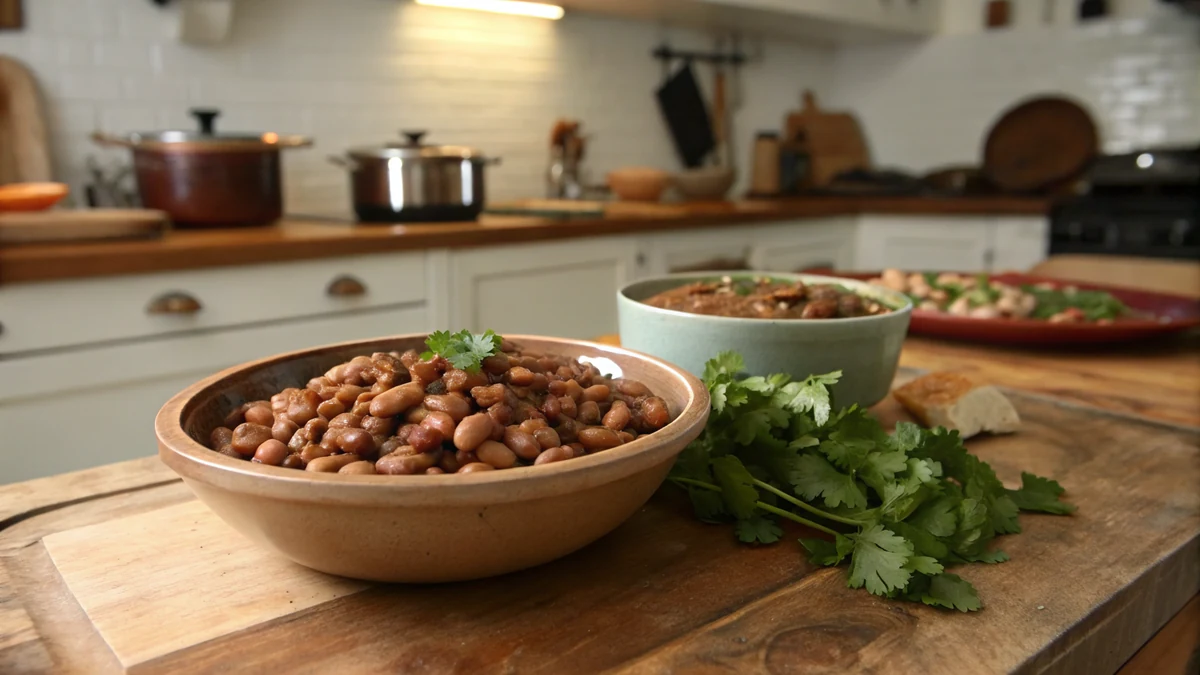
Quick answer: Texas pinto beans are a humble pot of dried pintos simmered slow with bacon or a smoked ham hock, onion, garlic, jalapeno, chili powder, cumin, a little tomato, and a bay leaf. Salt goes in late so the beans turn out tender, not tough. You can soak overnight, quick-soak, or skip soaking entirely. After about two and a half hours you get creamy beans swimming in smoky, rust-colored pot liquor. Serve with cornbread, brisket, or rice.
I grew up with a pot of pinto beans bubbling on the back burner most Sundays, and the smell of bacon, onion, and cumin still drags me straight back to my granny's kitchen in Lockhart. Texas pinto beans are not fancy. They are the opposite of fancy. A bag of dried beans costs about two dollars, and with a little patience that bag turns into a pot that feeds a whole table with leftovers for tacos. I have cooked these beans hundreds of times, in good years and lean ones, and I still get a little thrill when the pot liquor finally goes thick and rusty.
What makes them Texas beans, and not just any beans, is the seasoning hand. We lean on chili powder, ground cumin, a fresh jalapeno, and a smoky pork element, then we let time do the rest. No fuss, no shortcuts that matter. If you love a good pot of beans, you will also love my BBQ baked beans, which take a sweeter, stickier road. But these pintos right here are the everyday workhorse. I am going to walk you through soaking (or not), the stovetop method, a slow cooker version, and every little trick I have learned for getting that creamy, scoopable texture without the beans going to mush. Grab your biggest pot.
Why Texas Pinto Beans Belong on Every Table
Beans are the quiet backbone of Texas cooking. While brisket gets all the glory and the photos, it is the pot of pintos sitting next to it that actually stretches a meal and keeps everybody full. I have served these beans at potlucks, funerals, birthday parties, and a couple of Tuesday nights when there was nothing else in the house. They never embarrass me.
The beauty is the ratio of effort to reward. You do a little knife work up front, render some pork, and then walk away while the pot does the heavy lifting. There is no whisking, no babysitting beyond a stir now and then. By the time the smell fills the kitchen, you feel like you accomplished something, even though you mostly just waited.
And the flavor pays you back. A good pot of Texas pinto beans tastes deep and savory, a little smoky, a little spicy, with that thick pot liquor that begs for a piece of cornbread to mop it up. Once you make them from scratch, the canned stuff starts to taste like a sad imitation. This is real food, made the slow way, and it is worth every minute.
There is history in the pot too. Pintos have fed Texas families through hard times and good ones, on ranches and in tiny apartment kitchens alike. They were cheap protein when meat was a luxury, and the habit of keeping a pot going never left us. Every cook I learned from had her own little twist, a pinch of this, a splash of that, and I have stolen the best from all of them.
To Soak or Not to Soak, and Why It Matters
This is the argument that splits bean cooks down the middle, so let me give you my honest take. Soaking does two things: it shortens the cook time by roughly half an hour to forty-five minutes, and it gives you a slightly more even, uniform texture across the pot. For a big batch you want to look pretty, soaking helps.
An overnight soak is the gentlest. You cover the rinsed beans with cool water by about three inches and let them sit eight to twelve hours. A quick soak gets you there faster: boil two minutes, cover, rest an hour, drain. Both methods leach out some of the sugars that can cause, well, the musical side effect beans are famous for.
But here is my confession. Half the time I do not soak at all. No-soak beans take longer and the texture is a touch more rustic, but the flavor is arguably deeper because nothing gets poured down the drain. If you forgot to plan ahead, do not stress. Just rinse, add an extra cup of liquid, and give the pot more time. For a deeper primer on the science, this guide to cooking dried beans on the stove backs up everything I learned the hard way.
My honest verdict after all these years: soak when you have time and the meal needs to look its best, and skip it without guilt when life gets in the way. The pot forgives you either way. What you really cannot fudge is patience on the simmer, so the soaking question matters less than people make it out to. Beans reward time more than they reward any single trick.
The Salt Myth: Why It Goes In Late
If you take one thing from this whole page, take this: do not salt your beans at the start. I know your aunt does it, and I know somebody on the internet swears it makes no difference. In my kitchen, over hundreds of pots, salting early gives me beans with skins that stay stubborn and a little chalky no matter how long they cook.
The reasoning is about the bean skin. Salt firms up the cell walls and slows how the beans take on water, so they can fight tenderness for the entire cook. When you wait until the beans are already soft, the salt seasons them all the way through without that toughening effect. The difference is real, and once you taste it side by side you will not go back.
The same logic applies to acidic ingredients like tomatoes and lime. I add tomatoes for flavor, sure, but I keep the amount modest and I never dump in vinegar or a ton of acid early. Save the bright squeeze of lime for the bowl. Season the pot of beans for tenderness first, then chase brightness at the very end.
Choosing Your Smoky Pork Element
The soul of Texas pinto beans is smoke, and pork is how most of us get it. My everyday choice is thick-cut bacon, chopped and rendered right in the pot so the fat becomes the cooking base. Bacon is easy, it is in everybody's fridge, and the crispy bits scattered through the finished beans are a small joy.
When I want something deeper, I reach for a smoked ham hock. A hock is cheap, it is collagen-rich, and it slowly melts into the broth over a couple of hours, leaving the pot silkier and the liquor fuller. After cooking I fish it out, shred the soft meat off the bone, and stir that back in. A smoked turkey leg works the same way if you are skipping pork for diet reasons.
Leftover smoked meat is gold here too. A handful of chopped Texas pulled pork or the burnt ends from a brisket cook will turn a humble pot into something special. If you happen to be smoking meat anyway, save a little for the bean pot. Bean cooking is the best place I know to use up smoky scraps that would otherwise get forgotten in the back of the fridge.
Whatever pork you choose, render it slowly and let it give up its fat before the beans go in. That rendered fat carries flavor into every bean over the long simmer, and it is the difference between beans that taste seasoned and beans that taste truly cooked. Do not rush this step or drain off the good fat. It is doing quiet, important work in the bottom of your pot.
Dialing In the Heat and the Jalapeno
Texas beans should have a gentle hum of heat, not a slap. I use one fresh jalapeno for a pound of beans, and I usually seed it. Seeded, the jalapeno brings a grassy, bright pepper flavor with just a whisper of warmth that most folks at the table will enjoy without reaching for water.
If your crowd likes it spicier, leave the seeds and ribs in, or add a second jalapeno. For a smoky heat instead of a sharp one, a single minced chipotle in adobo is fantastic and plays beautifully with the cumin and chili powder. Start small, because you can always add heat at the table with hot sauce but you cannot pull it back out of the pot.
Keep in mind the heat mellows as the beans cook, so what tastes fiery at the start will settle into something rounder after two hours. I taste near the end and adjust then. A little pickled jalapeno chopped over the finished bowl is another way to let each eater set their own spice level without committing the whole pot.
The garlic and onion matter as much as the pepper here. I use a whole large onion and four fat cloves of garlic for a pound of beans, and I never feel like that is too much. They cook down into the background and give the pot its savory bones. Skimp on the aromatics and your beans will taste flat no matter how much chili powder you throw at them later.
Getting That Creamy Pot Liquor
The mark of a great pot of pintos is the liquid, what we call the pot liquor. It should be thick enough to coat a spoon and the color of old brick, not thin and watery like the beans are just floating in seasoned water. Thin pot liquor usually means too much liquid, not enough time, or both.
My favorite trick is the cheapest one: scoop out about a cup of cooked beans, mash them with a fork or the back of a ladle, and stir the paste back into the pot. The released starch thickens everything without any flour or cornstarch, and it tastes purely of beans. Do this in the last fifteen minutes of cooking.
Cooking with the lid slightly ajar also helps, because a little steam escapes and the liquid reduces as the beans soften. If you accidentally went too thick, just stir in a splash of hot water or broth to loosen it. And always let the pot rest ten minutes off the heat before serving; the liquor thickens a bit more as it cools and the flavors knit together.
One more thing about liquid: start with enough and resist the urge to keep topping it off. Every time you add cold water you cool the pot and dilute the flavor you have been building. I aim for about eight cups against a pound of beans and only add more in small splashes if the beans actually poke above the surface. A patient pot makes its own creaminess.
The Vegetarian Version
You do not need pork to make a satisfying pot, and I have served meatless pintos to skeptical relatives who never noticed. The job is to replace the smoke and the richness the bacon would have brought. My first move is to swap in a couple tablespoons of olive oil for the rendering step and lean harder on the spices.
For smoke, smoked paprika is your best friend; a teaspoon does wonders. A few drops of liquid smoke work too, but go light, because it can take over fast. A dried ancho or guajillo chile simmered whole in the pot adds body and a fruity, smoky depth, then you pull it out at the end. A spoonful of tomato paste deepens the savory base.
Finish a vegetarian pot with extra care at the bowl. A drizzle of good olive oil, plenty of fresh cilantro, raw onion, and a hard squeeze of lime make the beans taste lush and complete. Nobody will be sad about the missing bacon, and you get a pot that fits more people at the table.
Serving Texas Pinto Beans
The classic pairing is beans and cornbread, full stop. A wedge of buttery, slightly sweet cornbread crumbled into a bowl of beans is one of the great cheap pleasures of Texas eating. I keep a skillet of cornbread going almost every time I make a pot, and the two were clearly invented for each other.
At a barbecue, these beans are the side that ties the plate together. They are right at home next to Texas BBQ brisket, sausage, and ribs, soaking up all that smoky drippings flavor. For a full spread, my ultimate Texas BBQ guide walks you through timing the whole cook so the beans land hot at the same moment as the meat.
Beyond barbecue, spoon the beans over white rice for a quick weeknight bowl, ladle them next to scrambled eggs for breakfast, or pile them into a warm tortilla. They flatter just about everything they sit next to. They are the backbone of so much vegan and vegetarian Tex-Mex, and a scoop is my favorite side next to a thick slice of Texas meatloaf. A few links of spicy Texas hot links dropped right into the simmering pot is another move I love when feeding a hungry crowd.
Two close relatives are worth knowing, because this pot is the plainest of the family and the other two go in opposite directions. Loosen it with stock instead of water, add chorizo alongside the bacon, and finish with a heavy hand of cilantro and you have charro beans, the brothy Rio Grande Valley bowl eaten with a spoon. Drop the pork entirely and build a tangy vinegar-and-chili sauce around the beans instead and you have ranch style beans, the sharp copycat of the canned Texas classic. And for the fastest smoky pot in the family, my Southern black-eyed peas trade the pintos for thin-skinned cowpeas and reach the table in half the time, no soak involved.
Storing, Freezing, and Reheating
Pinto beans are leftovers royalty. They taste even better the second day after the seasonings have had a night to settle, so I almost always make a full pound even when I am cooking for two. Cool the beans, then store them in the fridge in their liquid for up to five days in a sealed container.
They freeze like a dream. Ladle cooled beans with plenty of their pot liquor into freezer bags or containers, leave a little headspace for expansion, and freeze flat for up to three months. I portion mine into two-cup bags so I can pull out exactly what a recipe needs. Label them, because frozen beans all start to look alike after a month.
To reheat, thaw in the fridge overnight or run the bag under warm water, then warm gently on the stove with a splash of water or broth to loosen the liquor back up. Microwaving works for a single bowl; just stir halfway. Avoid a hard boil on reheat, which can turn tender beans to mush.
Turning Leftovers Into New Meals
A pot of pintos is really two or three meals hiding in one. The most obvious encore is refried beans. Mash the leftovers in a hot skillet with a little bacon fat or oil, splash in some of the pot liquor, and cook until thick and creamy. Five minutes of work turns yesterday's side into today's main, and the full method, including why you mash with the pot liquor rather than plain water, is in my refried beans.
Drain a scoop and they become taco filling. I pile drained beans into warm tortillas with cheese, raw onion, cilantro, and salsa for a lunch that costs almost nothing. They also make a fantastic base for a quick chili: brown some beef, add the beans with their liquor, bump up the chili powder, and you have dinner.
Do not throw out leftover pot liquor on its own, either. That smoky, beany broth is liquid gold for cooking rice, simmering greens, or starting a soup. I keep a jar of it in the fridge and use it anywhere I would use stock. Frugal Texas cooks have stretched a bean pot this way for generations, and the habit still serves me well.
Troubleshooting: Old Beans, Hard Water, and Altitude
Sometimes beans just refuse to soften no matter how long you simmer, and the culprit is almost always age. Dried beans are not immortal; after a year or two on the shelf they dry out so far that they never fully rehydrate. If your beans are still firm after three hours, buy a fresher bag next time and check the package date.
Water chemistry matters more than people think. Very hard water, the kind full of minerals, can keep bean skins tough. If you have hard tap water and stubborn beans, try cooking with filtered water, or add a tiny pinch of baking soda, about an eighth of a teaspoon, to the pot. Go easy, because too much baking soda makes beans slippery and slightly soapy.
Altitude slows everything down because water boils at a lower temperature up high. In the mountains, expect noticeably longer cook times and plan to add more liquid. A pressure cooker fixes both problems at once; unsoaked pintos cook in about 35 to 40 minutes at high pressure with a natural release. Just remember to add the salt after pressure cooking, same rule as always.
Doubling the Recipe for a Crowd
When the whole family is coming, I scale straight up to two pounds of beans, and the method barely changes. Use your biggest, heaviest pot so the beans have room to move and do not scorch on the bottom. A crowded pot heats unevenly, and that leads to some beans turning to mush while others stay hard.
You do not need to double every single seasoning by exactly two. Liquid, beans, and pork scale one to one, but I bump the spices up by about one and a half times first, then taste and adjust at the end. Salt especially should always be added late and to taste, no matter the batch size, because a big pot needs more than you would guess.
Cook time stretches a little for a bigger pot, maybe an extra thirty minutes, and you will stir more often to keep the bottom from catching. A double batch is also the perfect excuse to freeze half. Make the big pot once, eat well that night, and stash meals away for the busy weeks ahead. That is the Texas way with a bean pot.
If you are cooking for a true crowd, a tailgate or a church supper, a slow cooker shines for keeping the beans hot and serveable for hours. Cook them through, then drop the slow cooker to the warm setting and let folks help themselves. Give the pot a stir now and then so the bottom does not get pasty, and keep a kettle of hot water nearby to loosen things as the afternoon wears on.
Texas Pinto Beans Recipe
Ingredients
- For the beans:
- 1 lb dried pinto beans (about 2 cups), picked over and rinsed
- 8 cups water or low-sodium chicken broth, plus more as needed
- 6 slices thick-cut bacon, chopped, or 1 smoked ham hock (about 1 lb)
- 1 large yellow onion, diced
- 4 cloves garlic, minced
- 1 fresh jalapeno, seeded and minced (leave seeds in for more heat)
- 1 (14.5 oz) can diced tomatoes, or 2 fresh Roma tomatoes, chopped
- 1 bay leaf
- For seasoning:
- 1 tablespoon chili powder
- 1 1/2 teaspoons ground cumin
- 1/2 teaspoon dried oregano (Mexican oregano if you have it)
- 1/4 teaspoon freshly ground black pepper
- 1 1/2 to 2 teaspoons kosher salt, added at the end and to taste
- Optional for serving: chopped raw onion, fresh cilantro, lime wedges, hot sauce
Instructions
- Pick over and rinse the beans. Pour the dried pintos onto a sheet pan and sort through them with your fingers. Toss any shriveled beans, clods of dirt, and the inevitable little pebble. Rinse them in a colander under cool water until it runs clear. This two-minute step saves a cracked tooth and gives you a cleaner pot, so do not skip it.
- Soak (optional) overnight, quick, or not at all. For an overnight soak, cover the beans with cool water by three inches and leave them on the counter eight to twelve hours, then drain. For a quick soak, bring the beans and water to a boil for two minutes, cover, kill the heat, and let them sit one hour, then drain. No soak works too; just expect about 30 to 45 extra minutes of simmering.
- Render the pork and build the base. In a heavy pot or Dutch oven, cook the chopped bacon over medium heat until the fat renders and the edges crisp, about six minutes. If using a ham hock instead, skip this and add a tablespoon of oil. Add the onion and cook until soft and translucent, five minutes. Stir in the garlic and jalapeno and cook one more minute until fragrant.
- Add beans, liquid, and aromatics. Add the drained beans, water or broth, ham hock if using, tomatoes, bay leaf, chili powder, cumin, oregano, and black pepper. Stir well. Do not add salt yet. Bring everything up to a rolling boil, then drop the heat to low so the pot barely simmers with lazy bubbles breaking the surface.
- Simmer low and slow on the stovetop. Cover the pot, leaving the lid slightly ajar, and simmer gently. Stir every 30 minutes and add a splash of hot water if the beans peek above the liquid. Soaked beans take about two hours; unsoaked beans take two and a half to three. They are done when a bean smashes easily against the side of the pot and the liquid has gone thick and creamy.
- Slow cooker method. Prefer hands-off? Render the bacon and saute the aromatics in a skillet, then scrape everything into the slow cooker with the beans, liquid, tomatoes, bay leaf, and dry spices. Cook on low for seven to eight hours or high for four to five. Soaking first gives a more even texture, but unsoaked beans cook fine on high if you add an extra cup of liquid.
- Salt late and adjust. Once the beans are fully tender, pull the bay leaf and, if used, the ham hock. Shred any meat off the hock and stir it back in. Now add the salt, starting with 1 1/2 teaspoons, then taste and climb from there. Salting now seasons the beans without toughening their skins.
- Thicken and serve. For a creamier pot, scoop out a cup of beans, mash them with a fork, and stir them back in; the starch thickens the liquid beautifully. Let the pot rest off the heat for ten minutes so the flavors settle. Ladle into bowls and top with raw onion, cilantro, and a squeeze of lime.
Frequently Asked Questions
Do I have to soak pinto beans before cooking?
No, soaking is optional. Soaking shortens the cook time by about thirty to forty-five minutes and gives a more even texture. If you skip it, just rinse the beans well, add an extra cup of liquid, and plan on simmering thirty minutes to an hour longer until the beans are fully tender.
Why are my pinto beans still hard after hours of cooking?
The most common reason is old beans that have dried out too far to rehydrate, so check the package date and buy a fresher bag. Hard, mineral-heavy water and salting too early can also keep skins tough. Try filtered water and remember to add salt only at the end.
When should I add salt to pinto beans?
Add salt at the very end, once the beans are already tender. Salting early firms up the bean skins and can leave them chalky no matter how long they cook. Wait until they are soft, then stir in salt a little at a time, tasting as you go until the whole pot is seasoned right.
Can I make Texas pinto beans in a slow cooker?
Yes, and it is wonderfully hands-off. Render the bacon and saute the aromatics first, then add everything to the slow cooker with the beans, liquid, and spices. Cook on low for seven to eight hours or high for four to five. Add an extra cup of liquid if you did not soak the beans first.
How do I make the bean broth thicker and creamier?
Scoop out about a cup of cooked beans, mash them with a fork, and stir the paste back into the pot during the last fifteen minutes. The released starch thickens the pot liquor naturally with no flour needed. Cooking with the lid slightly ajar also reduces the liquid for a richer, creamier result.
Can I make these pinto beans vegetarian?
Absolutely. Skip the pork and saute the aromatics in olive oil instead. Replace the smoky flavor with a teaspoon of smoked paprika or a dried ancho chile simmered in the pot. A spoonful of tomato paste adds richness. Finish with olive oil, cilantro, raw onion, and lime so nobody misses the bacon.
How long do cooked pinto beans last, and can I freeze them?
Stored in their liquid in a sealed container, cooked pintos keep about five days in the fridge and taste even better the next day. They freeze beautifully for up to three months; ladle them with plenty of pot liquor into bags, leave headspace, and freeze flat. Reheat gently with a splash of water.
What do you serve with Texas pinto beans?
Cornbread is the classic partner, crumbled right into the bowl. They also shine next to brisket, sausage, and ribs at any barbecue, soaking up the smoky flavor. Beyond that, spoon them over rice, tuck them into tacos, or serve alongside eggs at breakfast. They flatter nearly everything they sit beside.