Southern Comfort Food
Texas Roadhouse Cinnamon Butter
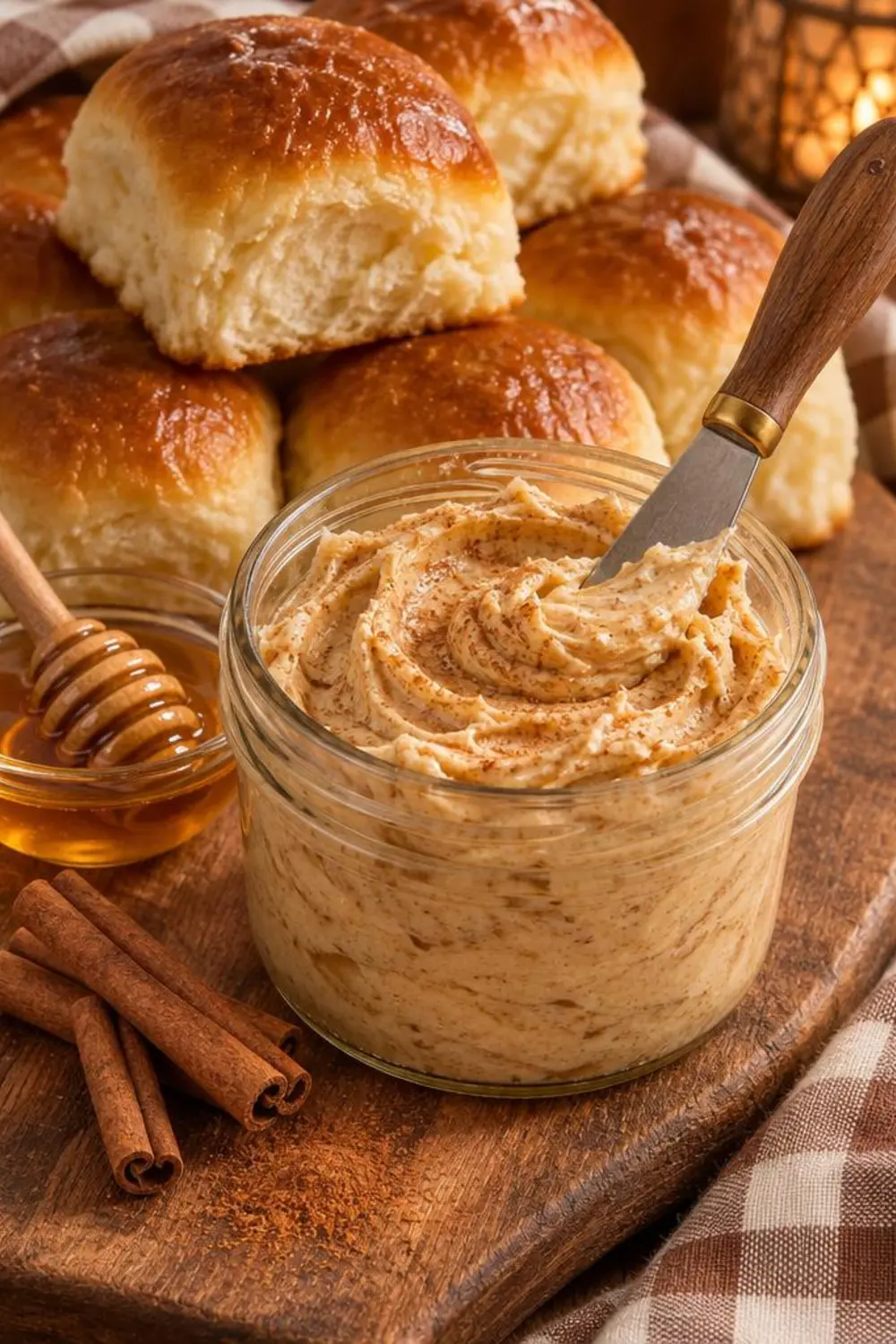
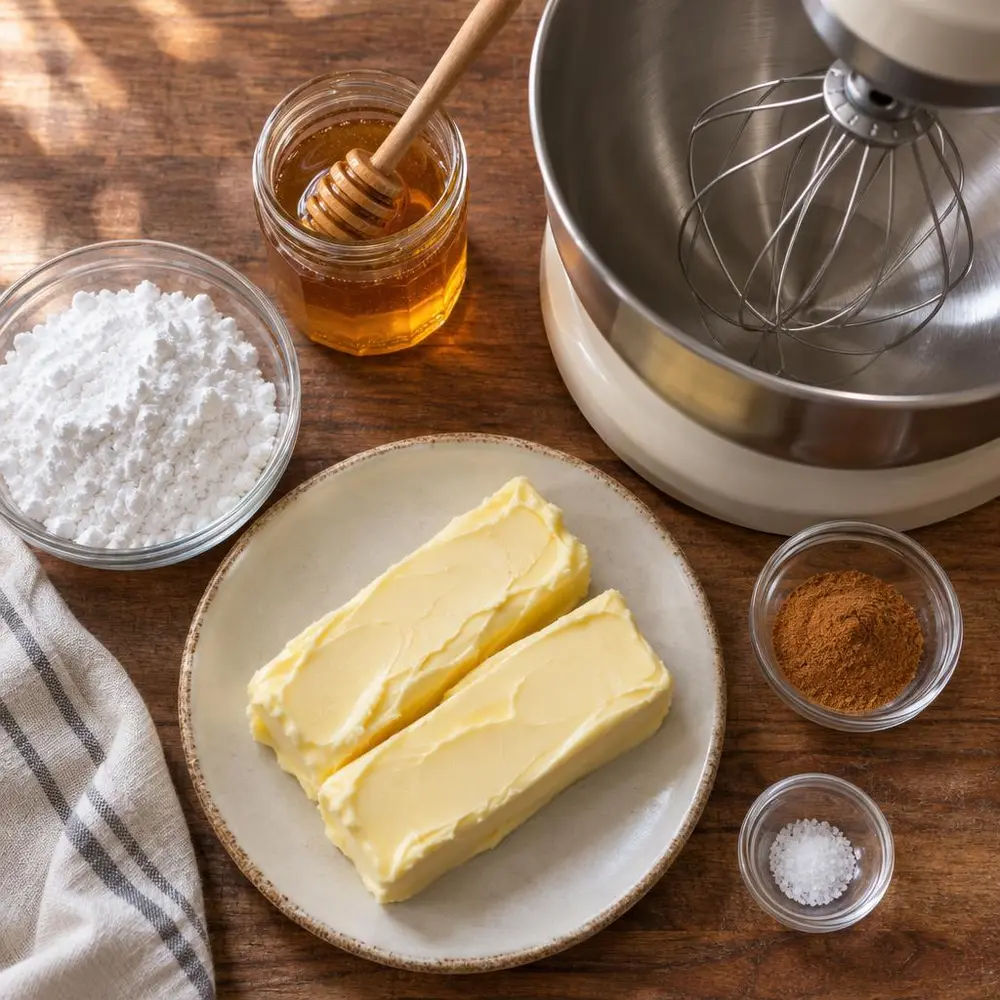
Our copycat Texas Roadhouse cinnamon butter: softened butter, powdered sugar, honey, cinnamon, pinch of salt, whipped 3 minutes. Makes 1 1/2 cups.
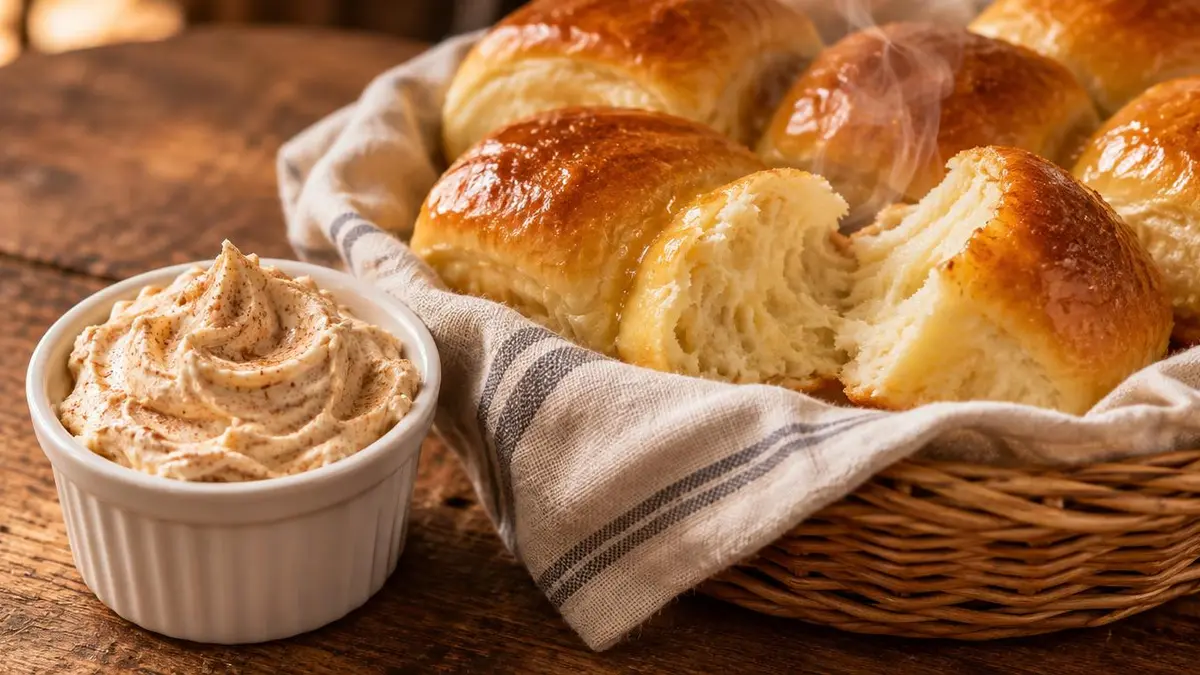
Quick answer: Texas Roadhouse style cinnamon butter is softened unsalted butter whipped with powdered sugar, honey, ground cinnamon, and a pinch of salt. Beat 1 cup (2 sticks) of truly soft butter for 1 minute, add 1/4 cup powdered sugar, 1/4 cup honey, 1 1/2 teaspoons cinnamon, and a pinch of salt, then whip 2 to 3 minutes until pale and fluffy. Serve soft, at room temperature, on warm rolls.
The bread basket is the first thing that lands on the table at a Texas Roadhouse, and the little cup of whipped cinnamon butter beside it is the reason people ask for a second basket before the steak arrives. It is sweet, a little salty, warm with cinnamon, and soft enough to melt into a hot roll on contact. The good news is that it is one of the easiest copycats on this site: five pantry ingredients, a mixer, and five minutes.
This page is the butter on its own, because that is what most people are actually searching for. The full roll recipe, with the enriched dough, the square cut, and the two rises, lives on our Texas Roadhouse rolls page, and the butter formula here is the same one we use there. What this page adds is everything around the butter: why each ingredient is in the bowl, how to get the whipped texture, how long it keeps, and the dozen places it is just as good as it is on a roll.
One honest note before we start. This is a homemade copycat built to taste like the restaurant version, not an official recipe, and Texas Roadhouse has no connection with this site. The chain, for the record, was founded in 1993 in Clarksville, Indiana, which surprises a lot of Texans. The butter does not care where it was born.
Why This Butter Became the Famous Part of the Bread Basket
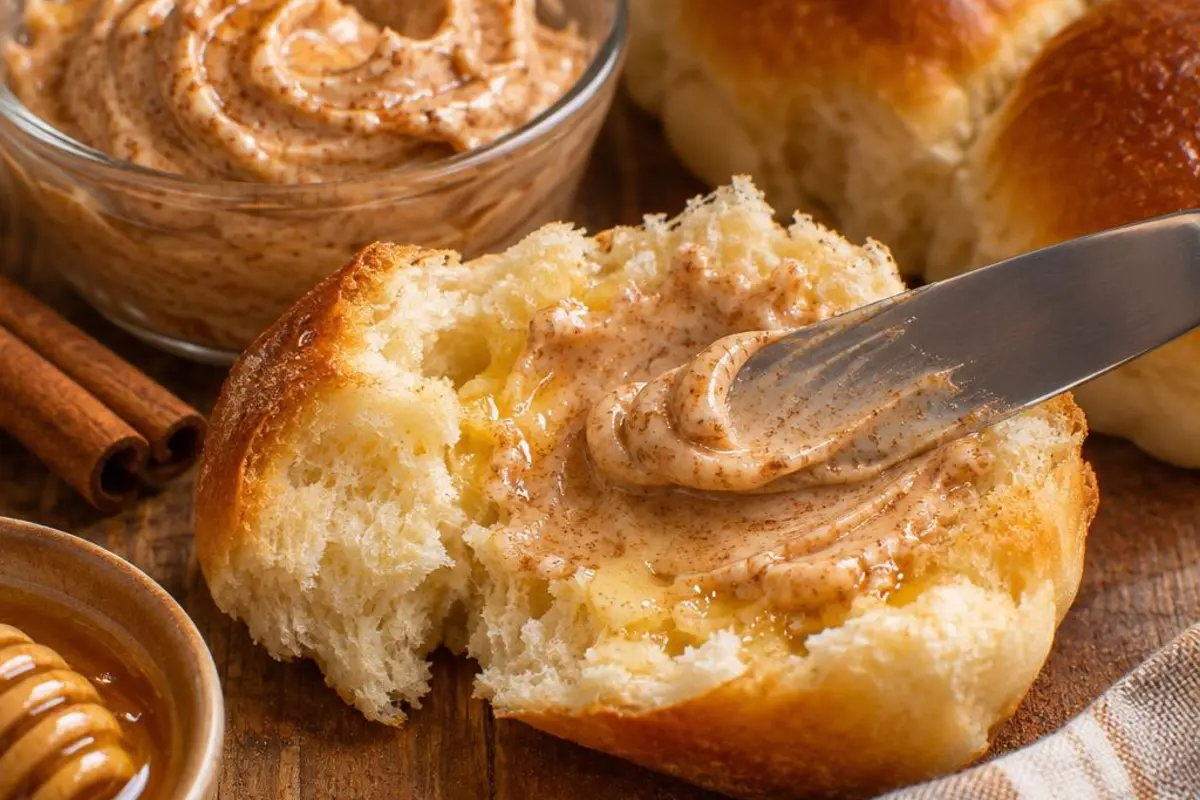
Plenty of restaurants serve warm rolls, and plenty serve honey butter. The reason this one is remembered is the combination: a soft, slightly sweet roll, still warm, and a butter that is sweet, spiced, and whipped so light that it melts on contact. Neither half would be famous alone. Together they turn a free bread basket into something people plan their order around.
The butter does three jobs at once. The fat carries the flavor of the roll, the sugar and honey echo the sweetness already in the dough, and the cinnamon adds warmth that makes the whole thing taste like a dessert you are allowed to eat before dinner. The small pinch of salt is the part people never notice and always miss when it is gone.
At home, you control all of it: the quality of the butter, how sweet it is, how much cinnamon, and whether it is served soft and fresh instead of out of a cold portion cup. That is the real advantage of making it yourself, and it is why a homemade batch often tastes better than the one you remember.
The Five Ingredients and What Each One Does
Butter is the base, and unsalted butter is the right choice because it lets you decide how much salt goes in. Standard American unsalted butter works perfectly. A European-style butter with higher fat content makes a richer, slightly denser spread; it is worth it for a holiday table, not necessary on a Tuesday.
Powdered sugar sweetens without grit. Granulated sugar does not dissolve in fat, so it stays crunchy in the butter. Powdered sugar is ground fine enough to melt in, and the bit of cornstarch it contains helps the whipped butter keep its shape on a warm table.
Honey brings moisture, a floral sweetness, and the slightly glossy finish of the restaurant butter. A mild honey such as clover or wildflower keeps the flavor familiar. Dark honeys like buckwheat taste strong and can take over the cinnamon.
Cinnamon is the signature. Ordinary ground cinnamon from the grocery store, usually cassia, gives the bold, warm flavor people expect. Ceylon cinnamon is milder and more floral; if that is what you have, use closer to 2 teaspoons. Salt, finally, sharpens everything. Without it the butter tastes flat and only sweet.
Getting the Butter Temperature Right
Temperature is the whole technique. Butter whips best at about 65 to 68F (18 to 20C), cool room temperature. At that point it is soft enough to trap air when the whisk beats it, but firm enough to hold the bubbles. Colder butter breaks into small lumps and never turns fluffy. Warmer, greasy butter cannot hold air and stays dense.
The simplest test is a finger press. Push gently into the stick: it should dent easily and hold the print, without your finger sliding through or the surface looking shiny and wet. In a cool kitchen that takes about two hours from the refrigerator; in a warm kitchen it can take less than one.
If you forgot to take the butter out, cut it into tablespoon-size cubes and spread them on a plate; they soften in 20 to 30 minutes. Avoid the microwave. Even on low power, it melts the outside before the middle softens, and partly melted butter will not whip back to the right texture.
Whipped Versus Simply Mixed
You can stir everything together with a spoon and get a perfectly tasty cinnamon honey butter. It will be dense, glossy, and closer to a spread you would put on toast. The restaurant version is different: it is whipped, which means air has been beaten into it, and that is what makes it pale, light, and so easy to spread.
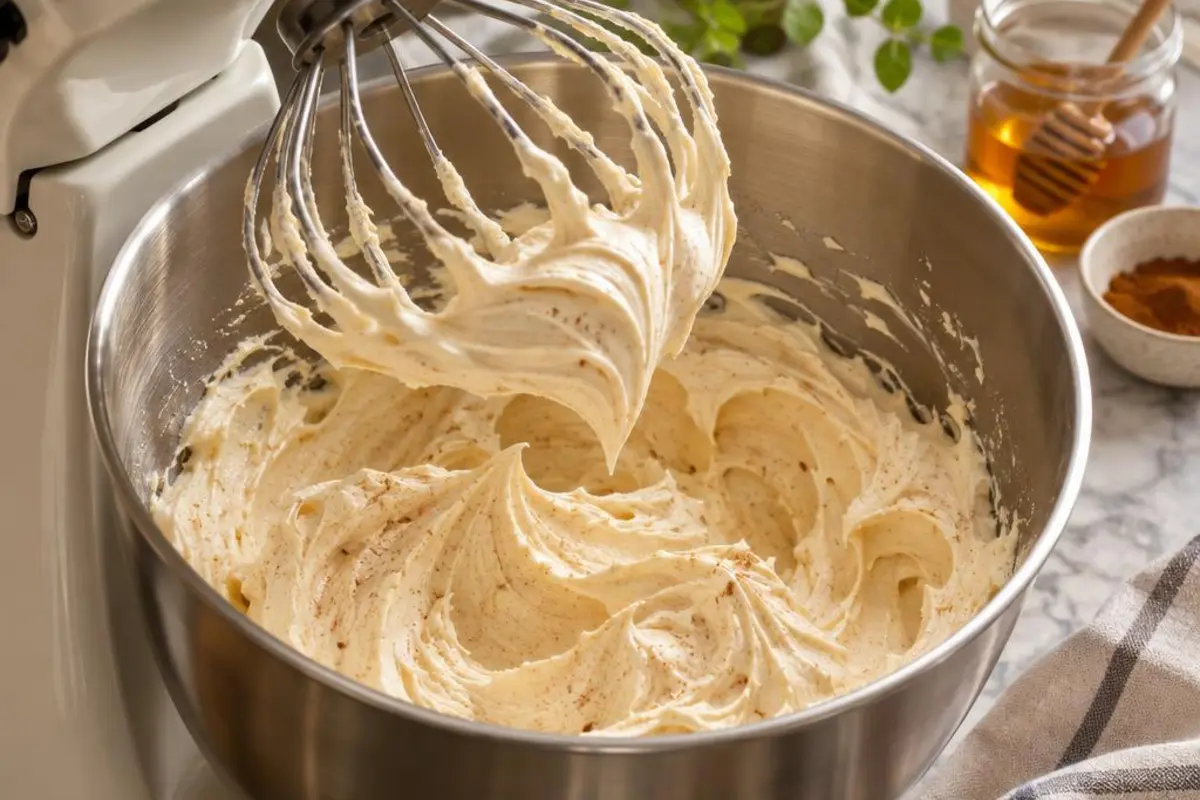
A stand mixer with the whisk attachment is the easiest tool, followed by a hand mixer. Beat the butter alone first, then add the rest and whip at medium-high for two to three minutes. The volume grows a little and the color lightens noticeably; that visual change is how you know it worked.
Whipped butter is also easier to portion. Spooned into ramekins or piped through a star tip, it holds its shape. For a party, piping rosettes onto a parchment-lined tray and chilling them for twenty minutes gives you neat individual portions that soften back to spreadable by the time the rolls are out of the oven.
Honey, Sugar, and How Sweet It Should Be
The ratio on this page, one quarter cup each of powdered sugar and honey to one cup of butter, gives a butter that is clearly sweet but still tastes like butter. It is the same balance we use on the rolls page, and it matches what most people remember from the restaurant.
For a less sweet butter, cut the powdered sugar in half and keep the honey; the honey alone gives enough sweetness for savory pairings like cornbread or a baked sweet potato. For a sweeter, dessert-style butter, increase the honey to one third of a cup. Beyond that, the butter starts to soften too much at room temperature.
Maple syrup can replace the honey for a different, deeper flavor; use the same amount and whip a little longer, since syrup is thinner. Brown sugar can replace part of the powdered sugar for a caramel note, but it leaves a slightly grainy texture unless it is very fine.
Salted or Unsalted Butter
Unsalted butter plus a measured pinch of salt gives the most predictable result, because salt content varies quite a bit between brands of salted butter. That predictability is why baking recipes almost always call for unsalted butter, and the same logic applies here.
If salted butter is all you have, use it and skip the added salt entirely. Taste after whipping; you will usually find it just right. The salt is not there to make the butter taste salty, but to make the sweetness and the cinnamon taste more vivid. A butter with no salt at all reads as flat and one-dimensional.
Flaky sea salt is a nice finishing touch for a party. Whip the butter with fine salt as written, then sprinkle a few flakes over the top of each ramekin just before serving. It looks good and gives a little crunch against the soft butter.
What to Serve It With Beyond Rolls
Warm rolls are the classic, and the copycat Texas Roadhouse rolls are the natural match. But this butter is just as good on buttermilk biscuits split open while they are still steaming, and on a square of skillet cornbread, where the sweetness plays against the corn.
It is excellent on a baked sweet potato. Split the potato, add a generous spoonful, and let it melt into the flesh. It also belongs on pancakes, waffles, and French toast, where it replaces both butter and syrup in a single step.
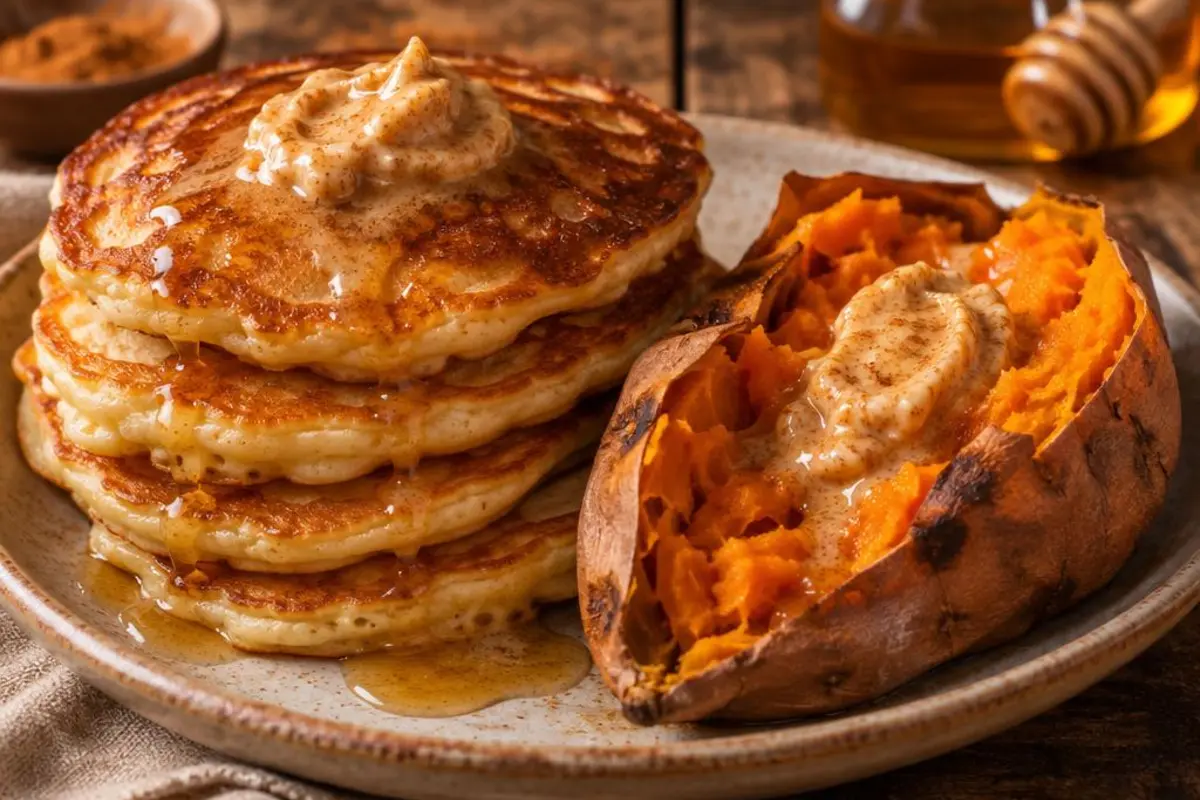
Toast, English muffins, banana bread, and warm cinnamon rolls all welcome it. On the holiday table, a ramekin next to the dinner rolls disappears quickly, and it is a natural partner for pecan pie season breakfasts. Brushed over grilled corn, a small amount gives a sweet and spiced twist on the usual butter.
Making It Ahead for Holidays and Parties
Cinnamon butter is one of the best make-ahead items for a big meal because it improves with a short rest: the cinnamon blooms into the fat and the flavor becomes rounder after a few hours. Make it up to a week ahead and refrigerate it in an airtight container.
The only catch is texture. Cold butter is firm and loses the airy feel of freshly whipped butter. On the day, take it out 30 to 45 minutes before serving, let it soften, and whip it again for 30 seconds. It comes right back to the light, spreadable texture.
For large gatherings, double or triple the recipe; it scales without any adjustment. Portion it into several small ramekins rather than one large bowl so each end of the table has its own, and keep a backup ramekin in the refrigerator to swap in when the first ones soften too much.
Storage, Freezing, and Food Safety
Because it contains only butter, sugar, honey, and spice, cinnamon butter keeps well. In an airtight container in the refrigerator, it stays good for up to two weeks. Press a piece of plastic wrap directly on the surface to keep it from absorbing refrigerator odors, which butter picks up easily.
For longer storage, freeze it. Roll the butter into a log in parchment paper, twist the ends, and wrap it in foil, or pack it into a freezer-safe container. It keeps for up to three months. Thaw it overnight in the refrigerator, then soften and re-whip before serving.
At room temperature, serve it the same day and do not leave it out overnight. Butter is fairly stable, but a warm kitchen and a shared knife are not a good long-term combination. If it ever smells sour or cheesy, or shows any mold, throw it out.
Variations Worth Trying
Maple cinnamon butter: replace the honey with pure maple syrup and add a pinch of nutmeg. It is especially good on waffles and sweet potatoes.
Pecan honey butter: fold in 1/3 cup of finely chopped toasted pecans after whipping. Toast them in a dry skillet for 4 to 5 minutes first; raw pecans taste flat by comparison.
Brown butter version: brown half of the butter in a saucepan until nutty, chill it until solid but soft, then whip it with the remaining softened butter. It takes more time and gives a deeper, toasty flavor.
Spiced holiday butter: add 1/4 teaspoon each of ground ginger and nutmeg and a small pinch of cloves for a gingerbread-like butter. Orange honey butter: add the finely grated zest of one orange, which pairs very well with cornbread and cranberry breads.
Troubleshooting
Butter stays lumpy: it was too cold. Let the bowl sit for 15 minutes, then whip again. You can also wrap a warm towel around the outside of the mixer bowl for a minute while it runs.
Butter looks greasy or soupy: it was too warm, or it was partly melted. Chill the bowl for 10 to 15 minutes until the butter firms a little, then whip again. It will recover in most cases.
Gritty texture: granulated sugar was used, or the powdered sugar was lumpy. Use powdered sugar and sift it if it has clumps. Honey pooling at the bottom: the bowl was not scraped. Scrape thoroughly and whip again for 30 seconds.
Too sweet: whip in 2 to 3 tablespoons of extra softened butter and a small pinch of salt. Not enough cinnamon flavor: add more, a little at a time, and let the butter rest 15 minutes before tasting again, because the spice keeps developing.
Texas Roadhouse Cinnamon Butter Recipe
Ingredients
- 1 cup (2 sticks, 225 g) unsalted butter, softened to room temperature, about 65 to 68F
- 1/4 cup (30 g) powdered sugar (confectioners sugar), sifted if lumpy
- 1/4 cup (60 ml / 85 g) honey, a mild clover or wildflower honey
- 1 1/2 teaspoons ground cinnamon
- 1/8 teaspoon fine salt, or a generous pinch (skip if using salted butter)
- Optional: 1/4 teaspoon pure vanilla extract
- Equipment:
- Stand mixer with whisk attachment, or a hand mixer and a medium bowl
- Silicone spatula
- Small ramekins or an airtight jar for serving and storage
Instructions
- Soften the butter properly. Take the butter out of the refrigerator 1 to 2 hours before you start and let it sit on the counter until it is truly soft, about 65 to 68F (18 to 20C). A finger pressed into the stick should leave an easy dent without sliding through. Cold butter will not whip; melted butter will not hold air. Do not microwave it to speed this up, because the edges melt while the center stays hard.
- Whip the butter alone first. Put the softened butter in the bowl of a stand mixer fitted with the whisk, or in a medium bowl with a hand mixer. Beat on medium speed for 1 minute until the butter is smooth, slightly paler, and creamy. This first minute is what starts to build the light, whipped texture of the restaurant version.
- Add the powdered sugar. Add the powdered sugar and mix on low speed for about 20 seconds so it does not puff out of the bowl, then raise the speed to medium. Powdered sugar dissolves into the butter much better than granulated sugar, and the small amount of cornstarch in it helps the butter hold its shape at room temperature.
- Add the honey, cinnamon, and salt. Add the honey, cinnamon, salt, and vanilla if using. Mix on low until combined, then scrape down the sides and bottom of the bowl with a spatula. Honey tends to sink and pool at the bottom, so this scrape matters more than it seems.
- Whip until pale and fluffy. Increase to medium-high and whip for 2 to 3 minutes, until the butter is visibly paler, lighter in texture, and holds soft peaks on the whisk. The color should move from deep yellow toward a pale tan speckled with cinnamon. Stop once it looks fluffy; there is no benefit to whipping much longer.
- Taste and adjust. Taste on a piece of bread rather than off a spoon. If it tastes flat, add a tiny pinch more salt. For more spice, add cinnamon 1/4 teaspoon at a time. For sweeter butter, add honey a teaspoon at a time and whip 10 seconds after each addition.
- Serve soft. Spoon the butter into small ramekins and serve at room temperature with warm rolls, biscuits, cornbread, or sweet potatoes. It is at its best within an hour of whipping, when it is still airy and spreads on contact.
- Store and re-whip. Pack leftovers into an airtight container and refrigerate for up to 2 weeks, or freeze for up to 3 months. Cold butter loses its fluffy texture; let it sit out 30 to 45 minutes, then whip again for 30 seconds to bring back the restaurant texture.
Frequently Asked Questions
What is Texas Roadhouse cinnamon butter made of?
A copycat version is softened unsalted butter whipped with powdered sugar, honey, ground cinnamon, and a pinch of salt. The butter is beaten until pale and fluffy so it spreads easily on warm rolls. This recipe uses 1 cup butter, 1/4 cup each powdered sugar and honey, and 1 1/2 teaspoons cinnamon.
Can I make cinnamon butter without a mixer?
Yes. With very soft butter, a sturdy whisk or a wooden spoon will blend everything into a smooth spread in a few minutes. It will be denser and less fluffy than the whipped version, but it tastes the same. A hand mixer gives a result very close to a stand mixer.
How long does homemade cinnamon butter last?
It keeps up to 2 weeks in an airtight container in the refrigerator, and up to 3 months in the freezer. Let refrigerated butter soften 30 to 45 minutes and whip it again for 30 seconds to bring back the light, restaurant-style texture.
Should I use salted or unsalted butter?
Unsalted butter with a measured pinch of salt gives the most consistent result, since salted butters vary by brand. If you only have salted butter, use it and leave out the extra salt. A little salt is important either way, because it keeps the butter from tasting flat.
Why is my cinnamon butter not fluffy?
The butter was almost certainly too cold or too warm. Butter whips best at about 65 to 68F. Too cold and it stays lumpy; too warm and it cannot hold air. Let cold butter soften longer, or chill warm butter for 10 to 15 minutes, then whip again.
Can I use granulated sugar instead of powdered sugar?
It is not recommended. Granulated sugar does not dissolve in butter, so the spread stays gritty. Powdered sugar blends in smoothly and its small amount of cornstarch helps the butter hold its shape. If you must, use only honey and skip the sugar.
Can I freeze cinnamon honey butter?
Yes. Roll it into a log in parchment paper, wrap it in foil, and freeze it for up to 3 months, or freeze it in a sealed container. Thaw it in the refrigerator overnight, soften it on the counter, and re-whip briefly before serving.
Is this the official Texas Roadhouse recipe?
No. It is a homemade copycat developed to taste like the butter served at the restaurant, and this site has no connection with Texas Roadhouse. The ingredients and ratio are a common home version that comes very close to the original.