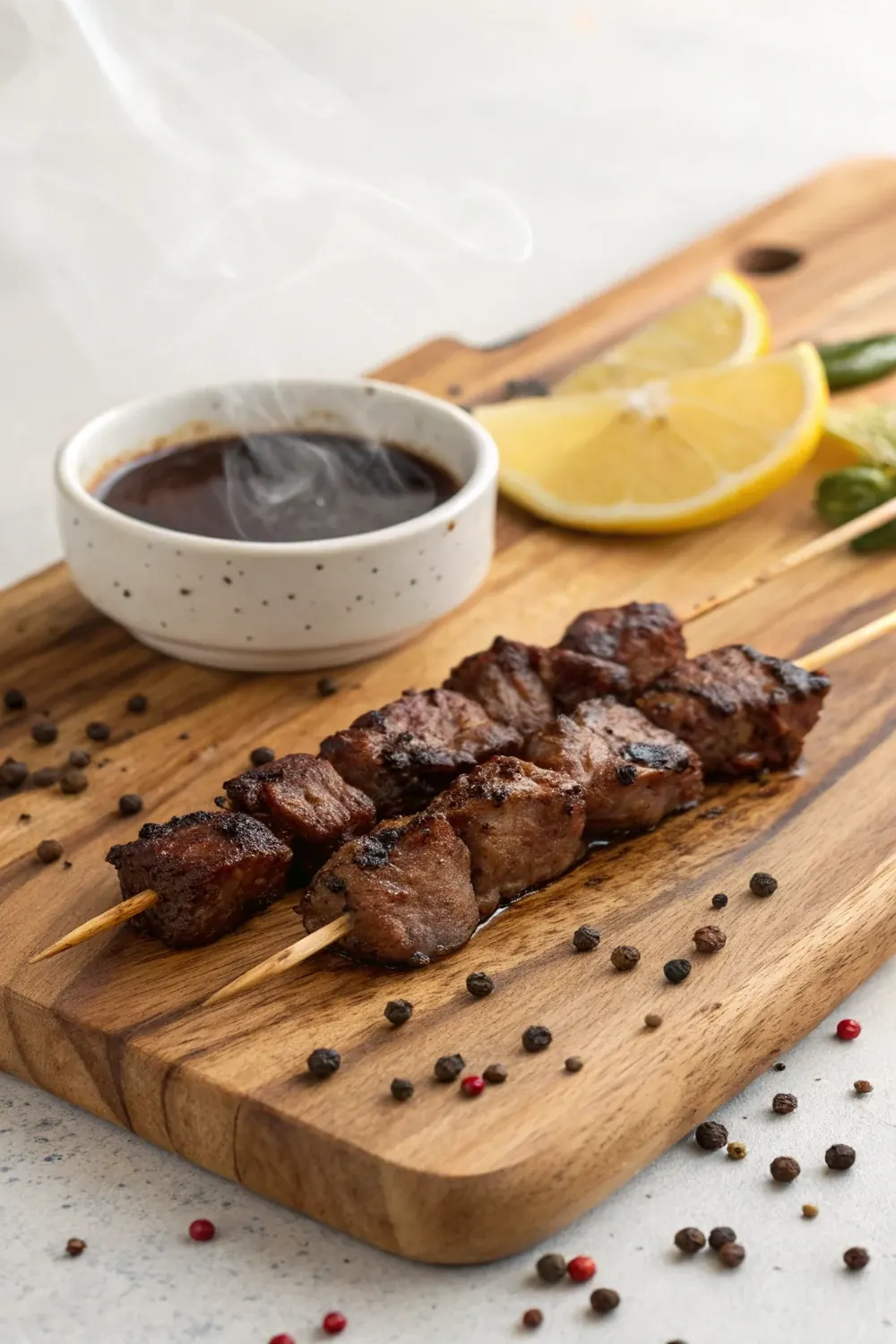
Texas BBQ
Texas Roadhouse Kabob Marinade
Chef Mia's Texas Roadhouse kabob marinade: soy, Worcestershire, lemon, honey, Dijon, garlic in exact ratios. 5 minutes to mix, 2 hours to tender sirloin.
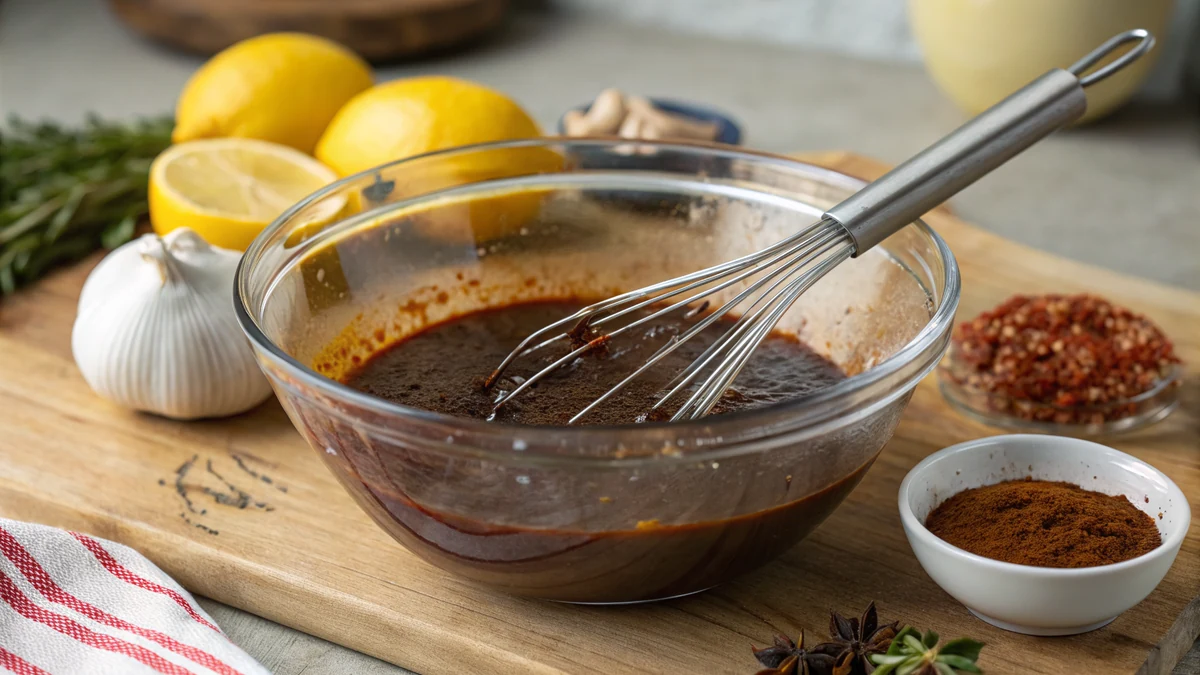
Quick answer: The Texas Roadhouse kabob marinade is a savory, garlicky, faintly sweet blend you can whisk together in 5 minutes: 1/3 cup olive oil, 1/4 cup low-sodium soy sauce, 3 tablespoons Worcestershire, 2 tablespoons fresh lemon juice, 1 tablespoon honey, 1 tablespoon Dijon mustard, 4 minced garlic cloves, 1 teaspoon coarse black pepper, 1 teaspoon smoked paprika, and 1/2 teaspoon kosher salt. That batch handles 2 pounds of cubed sirloin. Marinate 2 hours minimum and 8 hours maximum, then thread and grill hot. The soy and Worcestershire build the deep savory note, the honey and Dijon feed the char, and the lemon tenderizes without turning the beef mushy.
Every time I publish a kabob recipe, the same question lands in my inbox: can I get just the marinade? Fair enough. The marinade is the whole secret to the Texas Roadhouse steak kabob, the part that turns grocery-store sirloin into something you would pay steakhouse prices for, and it deserves its own page with the ratios, the timing, and the science spelled out. This is that page.
I have mixed this blend more times than any other marinade in my Lockhart kitchen, first to reverse-engineer the restaurant skewers and then because my family started requesting it for everything: chicken thighs, pork loin, a flank steak destined for tacos, even thick planks of zucchini. It earns the loyalty. Ten pantry ingredients, five minutes with a whisk, and a two-hour soak buy you beef that grills up charred outside, tender and seasoned all the way through. I will give you the exact ratio, why each ingredient is in there, how long different cuts should soak, and the food-safety rules for handling a marinade that has touched raw meat.
Why the Marinade Is the Whole Secret
Order the steak kabob at Texas Roadhouse and you are not really tasting a premium cut. You are tasting top sirloin, a good honest middle-shelf steak, transformed by two things: a savory marinade and a screaming-hot grill. Strip away the marinade and the same skewer is dinner, fine, forgettable. That is why this blend deserves its own page instead of living as a footnote in the steak kabob recipe.
A good kabob marinade has to do more work than a steak seasoning, because kabob meat is cubed. Cubing multiplies the surface area four or five times over, which means far more of every bite is exterior. On a whole ribeye, the outside is a crust and the inside is the show. On a kabob, the outside practically is the show, and the marinade is what makes that outside worth eating.
The profile this blend chases is savory first, garlicky second, faintly sweet at the end. Nothing exotic, nothing you have to order online. The magic is not any single ingredient, it is the ratio, and the ratio is the part most home cooks freelance until the balance tips salty or sour. Measure it properly once and you will understand why I keep insisting on it.
The Ratio, Ingredient by Ingredient
Olive oil, 1/3 cup. The carrier. Most of the flavor compounds in garlic, paprika, and pepper dissolve in fat, not water, so the oil is what actually distributes them across the meat and shuttles heat evenly into the sear. Plain olive oil is fine; save the peppery finishing bottle for salads.
Soy sauce, 1/4 cup, and Worcestershire, 3 tablespoons. The savory engine. Soy brings salt plus glutamates, the compounds your tongue reads as deeply meaty, and Worcestershire layers anchovy, tamarind, and molasses on top. Together they make cheap sirloin taste like it was aged longer than it was. Low-sodium soy matters here; full-salt soy plus the added kosher salt oversalts the blend.
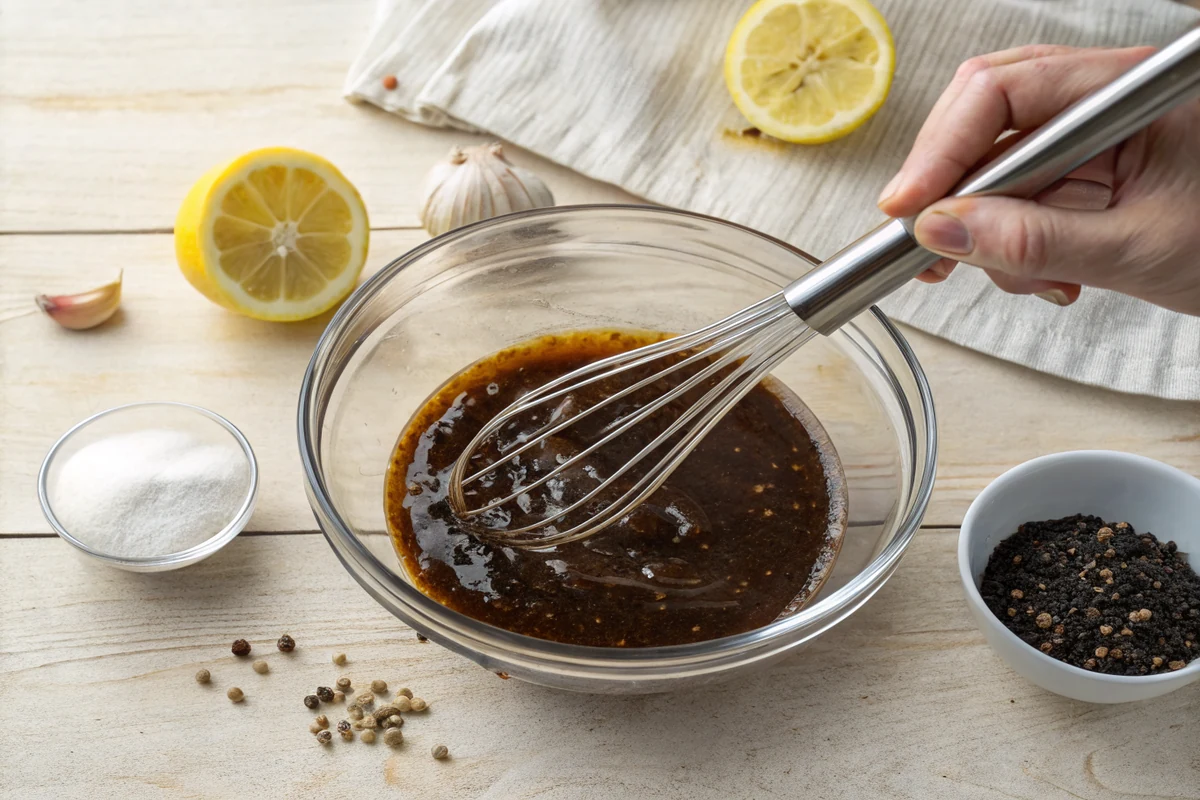
Lemon juice, 2 tablespoons: the tenderizer, covered in depth below. Honey, 1 tablespoon, and Dijon, 1 tablespoon: the char builders. Sugar and mustard proteins brown fast over open flame, which is where that lacquered steakhouse exterior comes from. Garlic, 4 cloves, plus 1 teaspoon each of coarse black pepper and smoked paprika, plus 1/2 teaspoon kosher salt round it out. The smoked paprika is quietly doing the work of a wood fire before the meat ever sees one.
Three Jobs: Flavor, Browning, Tenderness
Every marinade ingredient is on one of three payrolls, and knowing which is which lets you adjust the blend without wrecking it. Job one is flavor: soy, Worcestershire, garlic, pepper, paprika. These season the surface and, given a couple of hours, the outer few millimeters of the meat. Salt and its escorts travel inward slowly; nothing else really penetrates deep, which is fine, because a kabob is mostly surface anyway.
Job two is browning. The honey and the Dijon exist almost entirely for the grill's benefit. Sugars and proteins on the meat's surface caramelize and brown far faster than bare beef, so a marinated cube develops color in the short 8 to 12 minutes a kabob spends over the fire. Without them, cubes this small come off the grill gray and steamed-looking before they have time to char.
Job three is tenderness, and it belongs to the lemon juice alone. Acid unwinds the proteins at the surface of the beef so they hold moisture better and bite softer. It is powerful and it does not know when to stop, which is why timing has its own section below. If you take one thing from this page, take this: the acid is the ingredient you respect, not the one you double.
Timing: The 2-Hour Floor and the 8-Hour Ceiling
Two hours is the floor for beef cubes. Under that, you have seasoned the outside, which is pleasant but shallow; the salt has not had time to migrate and the acid has not done any meaningful tenderizing. If all you have is 30 minutes, the kabobs will still be good, just know you are eating a surface treatment rather than a marinade.
Eight hours is the ceiling, and I mean it. Past eight, the lemon juice keeps disassembling surface proteins until the texture goes from tender to mushy, and mushy beef takes on a chalky, almost cured exterior when it hits the grill. Overnight sounds convenient and it costs you texture. Every test I have run on cubed sirloin lands in the same place: 4 to 6 hours is the sweet spot, 8 is the edge.
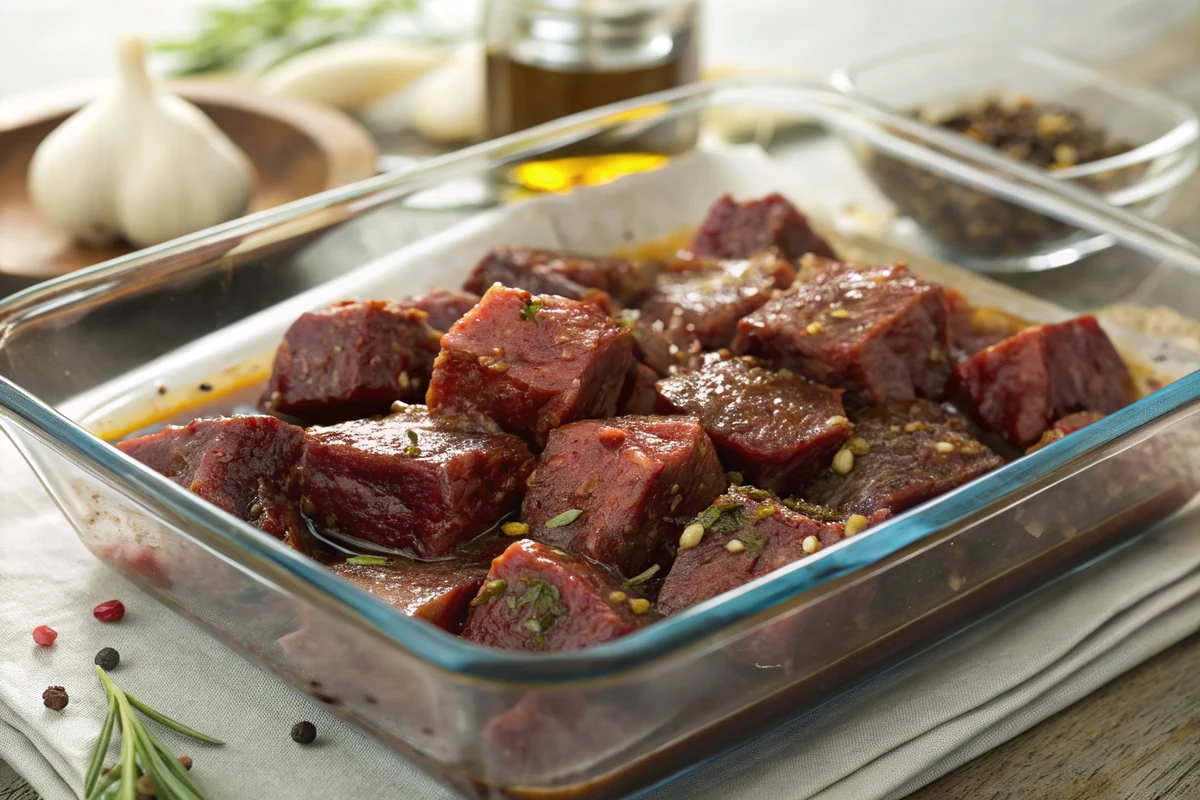
Always marinate in the refrigerator, never on the counter, and always in glass, ceramic, or a zip-top bag. The acid in the blend reacts with aluminum and cast iron, picking up a metallic taste and pitting the pan. A gallon bag with the air pressed out is my default because the marinade stays in full contact with every cube without needing to swim in double the volume.
Best Cuts to Marinate (and What to Skip)
Top sirloin is the kabob cut, full stop. It is beefy, affordable, and just tender enough that two hours of marinade carries it the rest of the way. Sirloin tip and tri-tip cubes behave similarly. Flank and skirt steak love this marinade too, left whole and sliced after grilling; the soy-Worcestershire profile is practically built for fajita-adjacent duty.
Chuck is the budget play. It brings the deepest beef flavor of anything on this list, and the marinade softens it enough for skewers if you cube it small, 1 inch instead of 1.25, and pull it at medium rather than medium-rare. Expect a chewier bite than sirloin, in exchange for roughly half the price and arguably more flavor per dollar.
Skip the expensive tender cuts. Ribeye, strip, tenderloin, and a proper Texas T-bone gain nothing from an acidic soak; they are already tender, and the marinade just mutes the expensive beef flavor you paid for. Those cuts want a dry rub and a hard sear, which is exactly the job of my Texas Roadhouse steak seasoning. Marinades rescue working-class cuts; rubs decorate aristocrats.
Beyond Beef: Chicken, Pork, and Vegetables
Chicken thighs are the best non-beef use of this marinade, and honestly it is close to a tie. Boneless thighs can soak 2 to 12 hours, longer than beef because chicken's texture holds up better against the acid, and they come off the grill lacquered mahogany from the honey and soy. Chicken breast works at 2 to 4 hours; past that the acid turns the surface stringy.
Pork loin, pork tenderloin, and thick pork chops take the blend beautifully at 4 to 8 hours. The honey and Dijon were made for pork. I skewer marinated pork loin cubes with pineapple chunks in the summer and it disappears faster than the beef version, which mildly offends me every time.
Vegetables need only 30 minutes. Zucchini planks, mushrooms, red onion petals, bell pepper squares: toss them in a few spoonfuls of marinade set aside before the meat went in, and grill. Mushrooms especially act like sponges for the soy-Worcestershire combination. For shrimp, cut the soak to 20 minutes flat; acid cooks shrimp the way it cooks ceviche, and grilled pre-ceviche is nobody's goal.
From Bag to Grill: Getting the Char
Marinated meat grills differently than dry meat, and the honey in this blend is the reason. Sugar chars fast, which is the point, but it tips into burnt if the cubes sit over roaring flame dripping wet. So drain properly: lift the cubes out, let them drip, pat them just shy of dry. You want a thin savory film on the surface, not a coating that runs off into the coals.
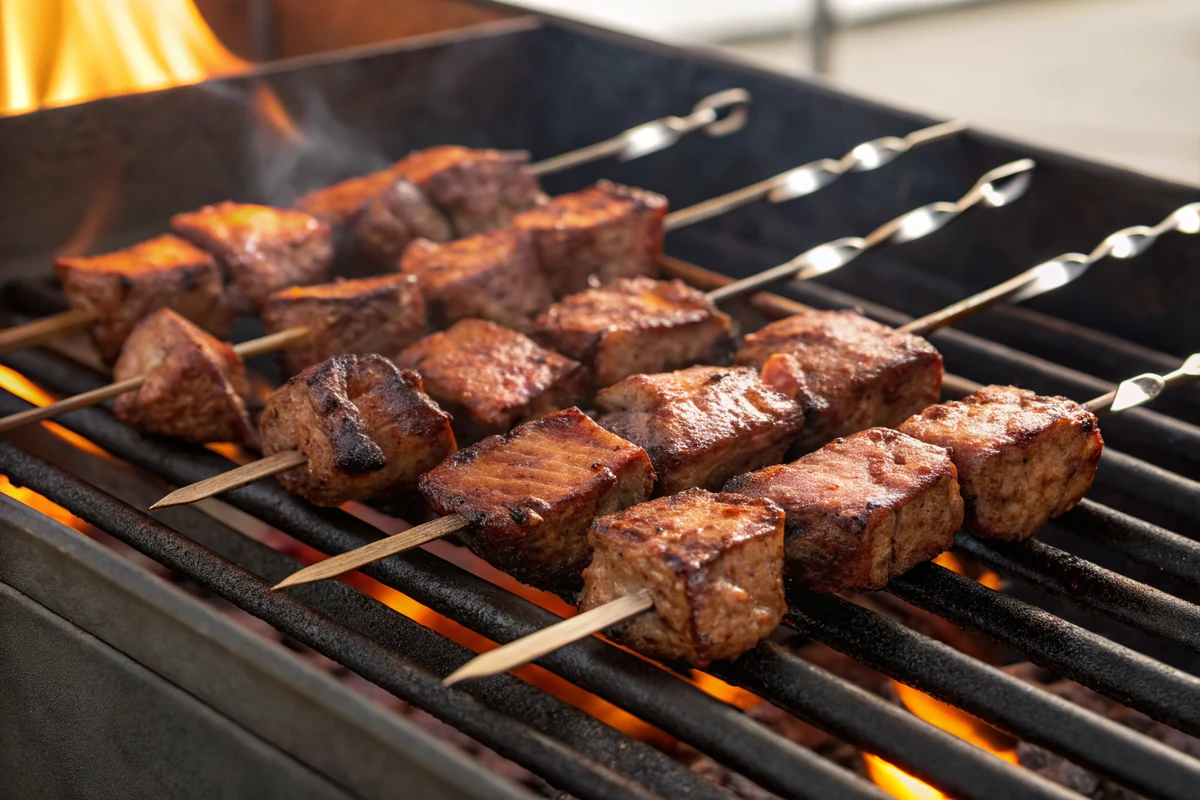
The grill setup is high direct heat, 450F or better at the grate, cubes threaded snug but not crammed, 8 to 12 minutes total with a quarter turn every 2 to 3 minutes. Pull the beef at 130F to 135F for medium-rare and rest the skewers 5 minutes. I keep this page about the marinade; the full build, skewer choice, vegetable threading, and doneness detail live in the complete steak kabob recipe.
If you reserved a quarter cup of clean marinade before the raw meat went in, brush it on during the last 2 minutes only. Painted on earlier, the honey in it blackens before the meat is done. Painted on at the end, it refreshes the glaze and makes the skewers look like the menu photo. A knob of cowboy butter melting over the finished skewers is the other finishing move worth knowing.
Marinade Food Safety: The Rules That Are Not Optional
Once raw beef goes into the marinade, that liquid is contaminated, and no amount of visual innocence changes it. Do not brush it on food that is nearly done cooking, do not spoon it over the finished platter, and do not save it in the fridge for next week. This is the mistake I see most at backyard cookouts, usually committed with total confidence.
There are two legitimate paths for used marinade. Throw it out, which is what I do nine times out of ten, or boil it in a small saucepan for a full 3 minutes at a rolling boil, which kills what raw meat left behind and incidentally thickens it into a decent glaze. Simmering until it looks hot does not count. Three minutes, rolling.
The cleaner habit is the reserve-first rule from the recipe card: pour off whatever you want for basting or serving before any meat touches the bowl. It costs nothing and removes the judgment call entirely. Marinated-in liquid touched raw beef; reserved liquid never did. Keep the two in separate containers and the whole safety question disappears.
Scaling, Storing, and Make-Ahead
The batch scales in a straight line: double everything for 4 pounds of meat, halve it for a single pound. The only ingredient to watch when scaling up is the salt if you switch soy brands, because full-sodium soy in a doubled batch stacks up fast. Taste the blend before the meat goes in; it should be assertive, not undrinkable.
Unused marinade, meaning it has never touched raw meat, keeps 5 days in a sealed jar in the refrigerator. The garlic fades a little by day three, so I sometimes stir in one fresh minced clove before using an older jar. Shake or whisk it back together first, since the emulsion settles.
It also freezes, and this is the real make-ahead play: pour a batch into a freezer bag, add the cubed beef straight away, and freeze the two together for up to 3 months. The meat marinates as it thaws overnight in the fridge, landing right in the proper time window by dinner. Label the bag with the date and contents, because every unlabeled freezer bag becomes a mystery by February.
Variations Worth Trying
Fajita-style: swap the lemon for lime, add 1 teaspoon ground cumin and a pinch of cayenne, and use it on skirt steak. It drifts toward the citrus-forward territory of my Pappasito's fajita marinade, which is the page you want if fajitas rather than kabobs are tonight's plan.
Spicy: add 1 to 2 teaspoons of your favorite hot sauce or 1/2 teaspoon of crushed red pepper to the base blend. Heat in a marinade stays polite because so little clings to the meat; even a tablespoon of hot sauce reads as background warmth rather than fire.
No-soy: substitute coconut aminos one for one and add an extra 1/4 teaspoon of salt, since aminos run sweeter and less salty. This version is the answer for gluten-free and soy-free tables, and the difference on grilled beef is honestly hard to detect. Tamari is the middle option, gluten-free but full soy flavor.
Herb-garden: add 1 tablespoon each of chopped fresh rosemary and thyme. This one leans steakhouse-classic rather than Roadhouse-copycat, and it is excellent on the chuck version or on lamb if your grocery run went ambitious.
Mistakes That Ruin a Kabob Marinade
Doubling the lemon. More acid does not mean more tender, it means mushy faster; the 2-tablespoon dose against a cup of marinade is deliberate. If you want brighter flavor, add lemon zest, which brings aroma without any additional acid, or squeeze fresh lemon over the finished skewers.
Marinating in a metal bowl. Acid plus aluminum or cast iron equals a faint metallic taste and a pitted pan. Glass, ceramic, or a zip-top bag, always. Stainless steel is technically safe but a bag still coats the meat better with less liquid.
Going straight from fridge to fire. Let the drained cubes sit at room temperature for 20 to 30 minutes before grilling. Ice-cold centers mean the outside chars while the inside lags, and the whole point of the marinade's browning agents is wasted on a cube you then have to overcook to finish.
Treating the marinade as the whole recipe. It seasons and tenderizes; it does not manage your fire. Cubes crammed touching on the skewer steam each other, a lukewarm grate cannot caramelize honey, and skipping the rest lets the juices you protected run out onto the cutting board. The marinade buys you the potential; the grill work cashes it.
Texas Roadhouse Kabob Marinade Recipe
Ingredients
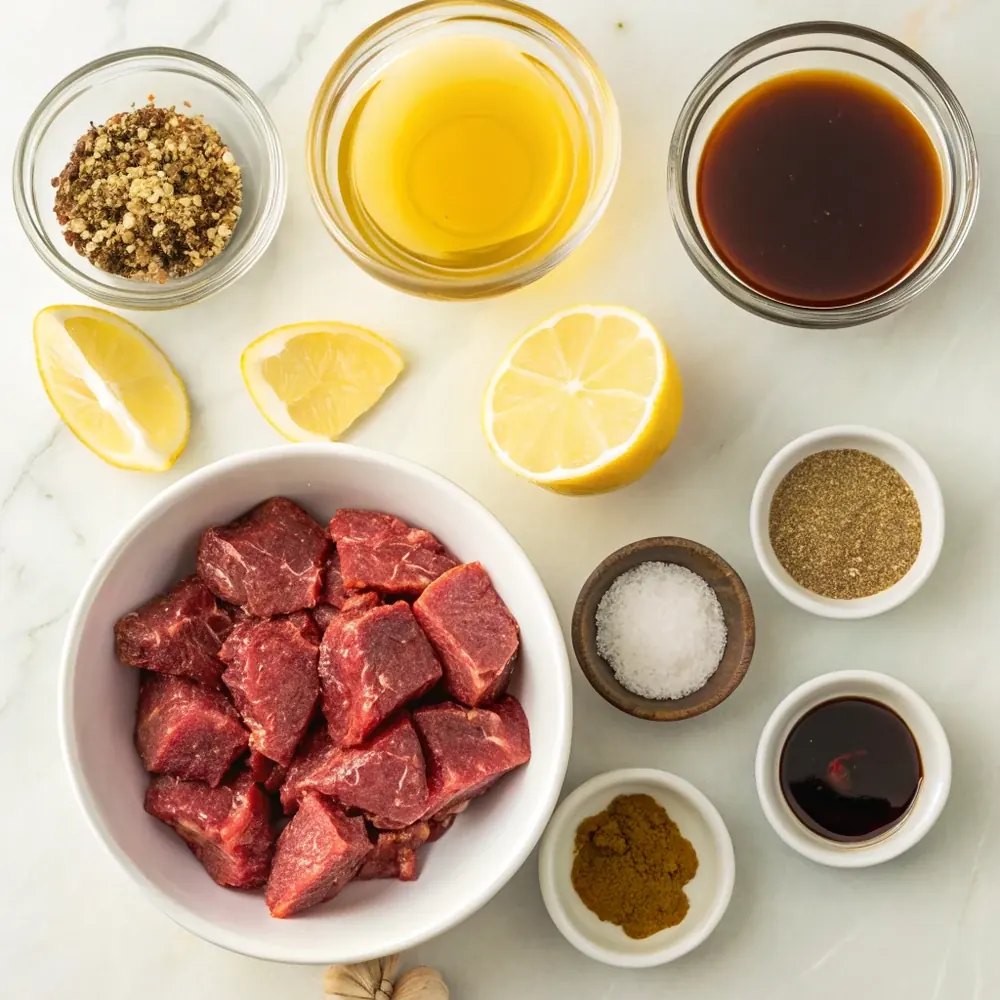
- 1/3 cup (80 ml) olive oil
- 1/4 cup (60 ml) low-sodium soy sauce
- 3 tablespoons (45 ml) Worcestershire sauce
- 2 tablespoons (30 ml) fresh lemon juice (about 1 lemon)
- 1 tablespoon (15 ml) honey or brown sugar
- 1 tablespoon Dijon mustard
- 4 garlic cloves, minced (about 1 tablespoon)
- 1 teaspoon coarse-ground black pepper
- 1 teaspoon smoked paprika
- 1/2 teaspoon kosher salt
- Makes about 1 cup, enough for 2 pounds (900 g) of cubed steak
- Equipment:
- Whisk and bowl, plus a gallon zip-top bag or glass dish for marinating
Instructions
- Whisk the wet ingredients. In a medium bowl, whisk together the olive oil, soy sauce, Worcestershire, lemon juice, honey, and Dijon until the honey fully dissolves and the mixture looks glossy and slightly thickened. The Dijon acts as an emulsifier here, holding the oil and the watery ingredients together instead of letting them split into layers.
- Add the aromatics. Whisk in the minced garlic, black pepper, smoked paprika, and salt. Give it a taste on a spoon: it should be aggressively savory and salty, noticeably more intense than you would want a sauce to be. A marinade has to overshoot, because only a fraction of it ends up flavoring the meat.
- Reserve some if you want a baste. If you plan to brush the kabobs during grilling, pour off 1/4 cup of the marinade now, before any raw meat touches it, and set it aside in the fridge. Marinade that has held raw beef cannot be reused as a baste or sauce unless it is boiled first.
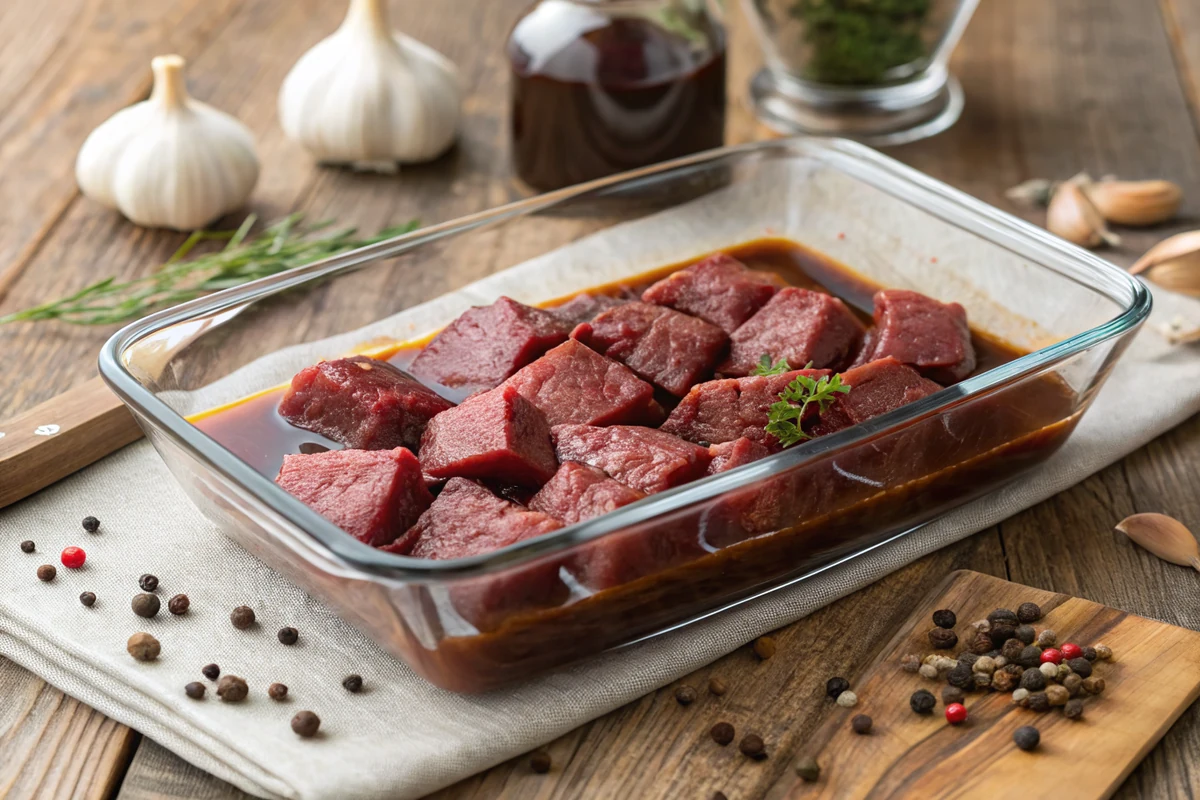
- Add the beef. Put 2 pounds of steak, cut into 1.25-inch cubes, in a gallon zip-top bag or a glass dish. Pour the marinade over, press out the air, and turn the bag a few times so every cube is coated. Cubes take marinade far better than whole steaks because you have multiplied the surface area.
- Marinate 2 to 8 hours in the fridge. Refrigerate at least 2 hours for real flavor and tenderizing, and do not go past 8 hours. The lemon juice loosens surface proteins, which is what you want, but given too long it keeps going and turns the outside of the beef soft and chalky. Flip the bag once at the halfway point if you think of it.
- Drain well before the grill. Lift the cubes out of the marinade and let the excess drip off; pat them lightly with paper towels if they look wet. Dripping-wet meat steams and flares instead of searing. Discard the used marinade or boil it 3 full minutes if you intend to serve it. Thread the cubes and grill hot; the full skewer method lives in my steak kabob recipe.
Frequently Asked Questions
What is the Texas Roadhouse kabob marinade made of?
The copycat blend is 1/3 cup olive oil, 1/4 cup low-sodium soy sauce, 3 tablespoons Worcestershire, 2 tablespoons fresh lemon juice, 1 tablespoon honey, 1 tablespoon Dijon mustard, 4 minced garlic cloves, 1 teaspoon coarse black pepper, 1 teaspoon smoked paprika, and 1/2 teaspoon kosher salt. Whisked together it makes about a cup, enough for 2 pounds of cubed sirloin. Soy and Worcestershire carry the savory depth, honey and Dijon build the char, lemon tenderizes.
How long should I marinate steak kabobs?
Two hours minimum, eight hours maximum, with 4 to 6 hours as the sweet spot for 1.25-inch sirloin cubes. Under two hours the marinade only seasons the surface. Past eight, the lemon juice over-tenderizes the exterior and the beef turns mushy and chalky on the grill. Always marinate in the refrigerator, in a zip-top bag or a glass dish, never in aluminum or cast iron.
Can I reuse marinade that touched raw steak?
Not as-is. Marinade that has held raw beef carries whatever bacteria the meat did, so it cannot be brushed on nearly-cooked food or served as a sauce. Either discard it or boil it in a saucepan at a rolling boil for a full 3 minutes, which makes it safe and reduces it into a glaze. The better habit is reserving a quarter cup for basting before any meat touches the bowl.
Does this marinade work on chicken?
Very well. Boneless chicken thighs are the best match: marinate 2 to 12 hours and grill; the honey and soy give the skin-side a deep mahogany lacquer. Chicken breast should stay in the 2-to-4-hour window because the acid turns lean breast stringy past that. Pork loin and thick chops take 4 to 8 hours. For vegetables, 30 minutes is plenty, and shrimp should soak no more than 20.
Why is there lemon juice in a steak marinade?
The lemon is the tenderizer. Its acid unwinds proteins at the surface of the beef so the meat holds moisture and bites softer after a hot, fast grill. Two tablespoons against a cup of marinade is a deliberately restrained dose; acid keeps working the entire time the meat soaks, and too much for too long turns the exterior mushy. If you want more lemon flavor, add zest instead of extra juice.
Can I freeze steak in this marinade?
Yes, and it is the best make-ahead move on this page. Combine the raw cubed beef and the marinade in a freezer bag, press out the air, and freeze up to 3 months. The meat marinates as it thaws overnight in the refrigerator, so it lands in the proper 2-to-8-hour exposure window by dinnertime. Thaw fully in the fridge, drain well, and grill as usual.
What can I use instead of soy sauce?
Coconut aminos substitute one for one and make the marinade both gluten-free and soy-free; add an extra 1/4 teaspoon of kosher salt because aminos run sweeter and less salty than soy. Tamari is the middle path, gluten-free with full soy flavor, swapped in equal measure. Avoid liquid smoke cocktails or straight salt water; you would lose the glutamate savoriness that makes the marinade work.
Should I use a marinade or a dry seasoning for steak?
It depends on the cut. Cubed kabob meat and working cuts like sirloin, flank, and chuck benefit from a marinade, which seasons the multiplied surface area and tenderizes. Premium tender steaks like ribeye, strip, and T-bone are better served by a dry rub such as a Texas Roadhouse-style steak seasoning, which builds a crust without muting the beef. Marinades improve modest cuts; rubs finish great ones.