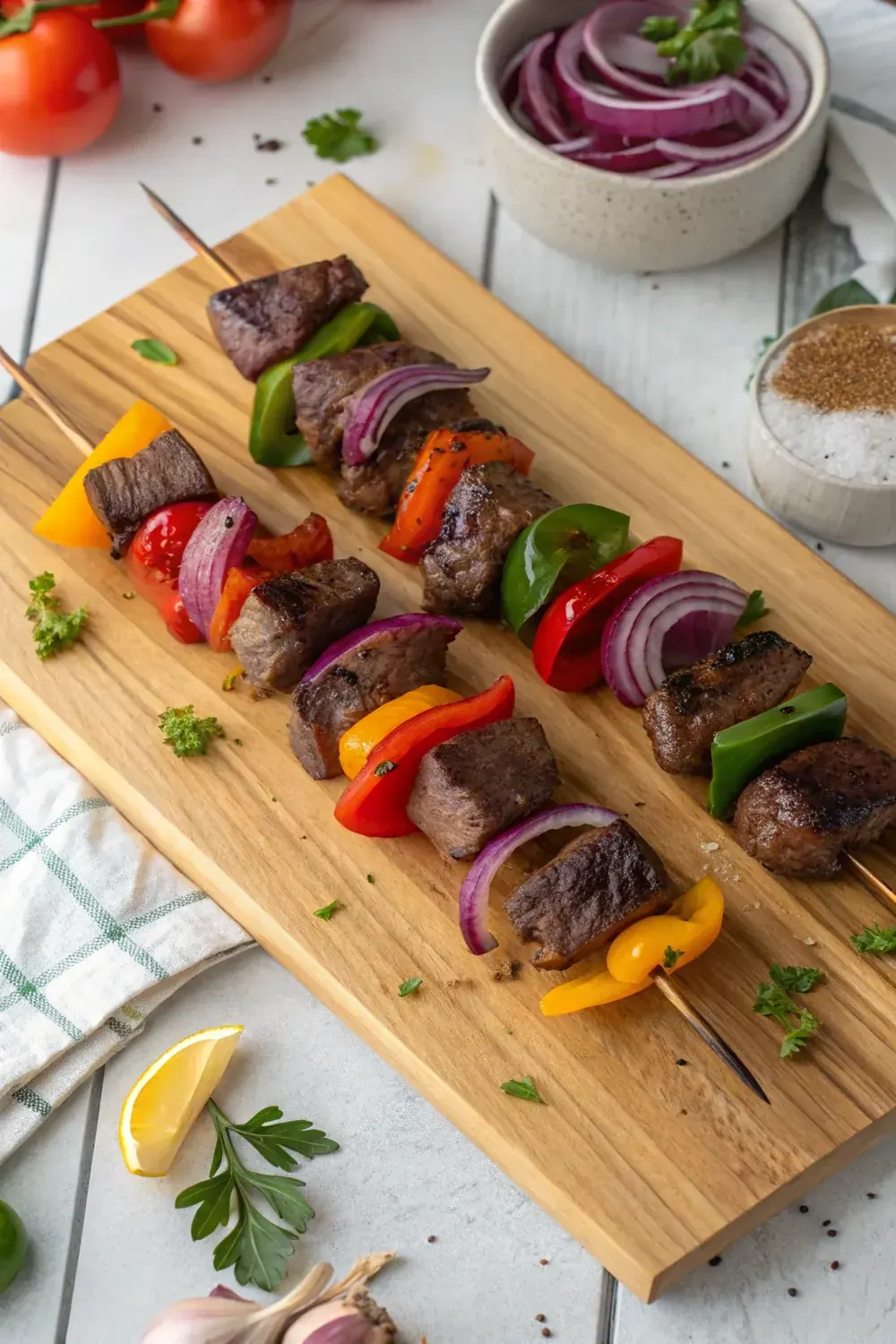
Texas BBQ
Texas Roadhouse Steak Kabob
Tender sirloin, peppers, and onion grilled over buttery seasoned rice - the secret soy-Worcestershire marinade nails this Texas Roadhouse steak kabob.
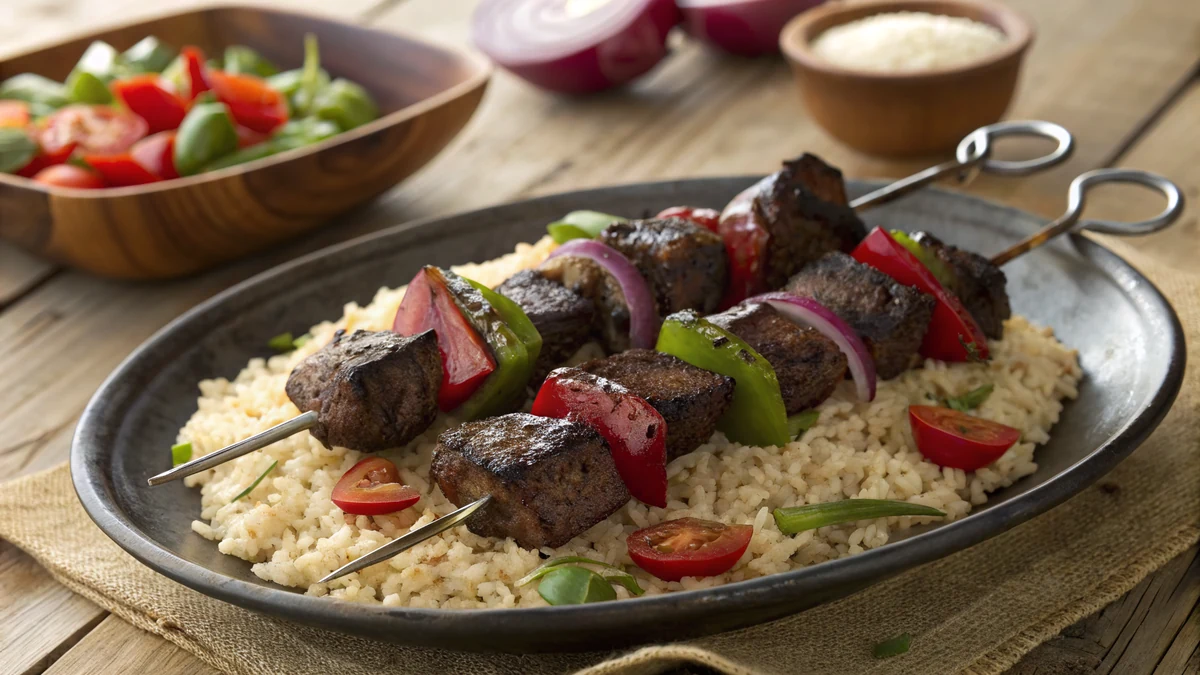
Quick answer: This copycat Texas Roadhouse steak kabob is cubed top sirloin marinated in olive oil, soy sauce, Worcestershire, garlic, and lemon, then threaded onto skewers with bell peppers and red onion and grilled hot for 8 to 12 minutes total. Pull the beef at 130F to 135F internal for medium-rare, rest 5 minutes, and serve over buttery seasoned rice. It tastes like the steakhouse version because the marinade and the high-heat grill give you that charred, savory, slightly sweet sirloin without paying restaurant prices.
I have ordered the steak kabob at Texas Roadhouse more times than I can count, usually when I want steak but not a whole 12-ounce ribeye sitting in front of me. It is sirloin cubes, peppers, and onion on a skewer over a pile of seasoned rice, and it scratches a very specific itch. After enough orders I started reverse-engineering it on my own grill here in Lockhart, and I have cooked some version of it most summers for the last decade. This is where I landed.
The thing people get wrong with kabobs is treating the marinade like an afterthought and the grill like a guessing game. Texas Roadhouse leans on a savory, garlicky, faintly sweet marinade and a screaming-hot grill, and that combination is what you are tasting. Get those two right and the rest is just threading skewers and not walking away. I will give you the cut that works, the marinade ratios, the skewer technique, and the exact temps to pull the beef so it is tender and pink in the middle.
Why This Tastes Like the Steakhouse Version
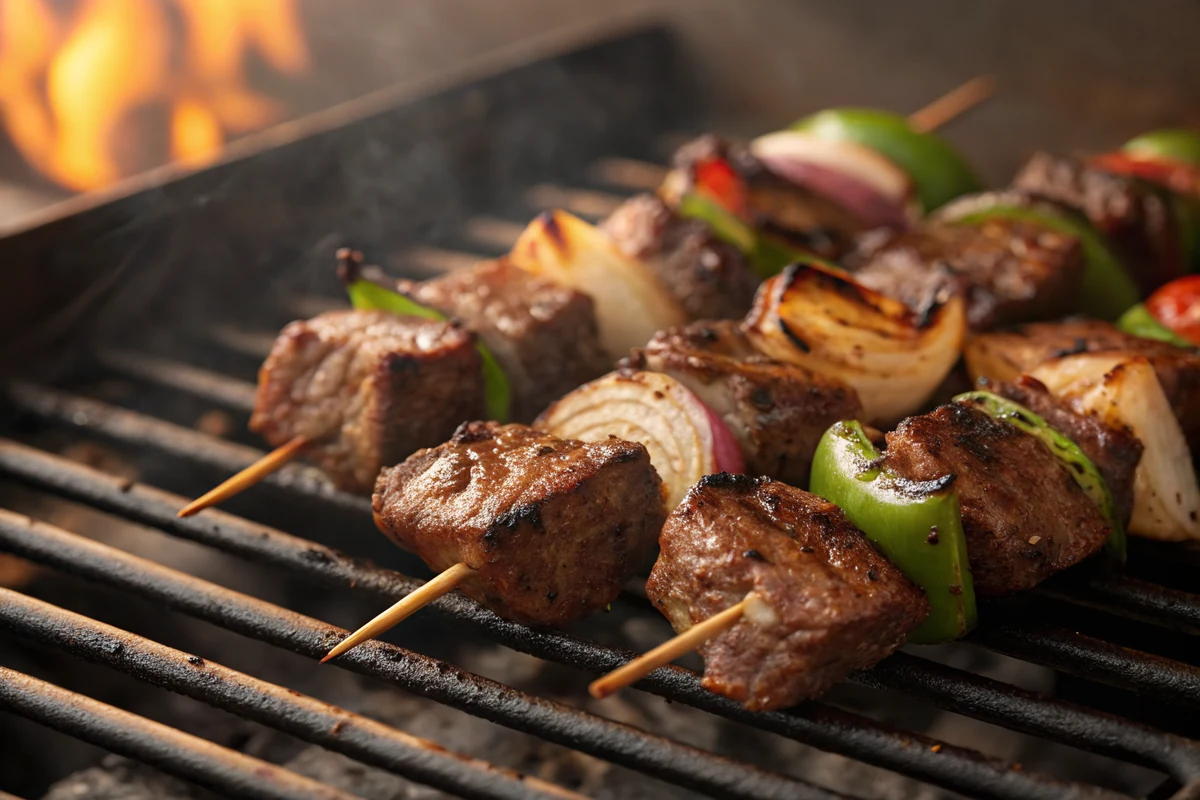
The steakhouse kabob is not fancy, and that is exactly why people love it and why it is so easy to nail at home. Two things carry it: a savory marinade built on soy, Worcestershire, and garlic, and a grill hot enough to put a real crust on the beef. Get those right and you are most of the way there. Everything else is detail.
I spent a few summers chasing this flavor and kept overcomplicating the marinade until I stripped it back. The honey and Dijon are there to help the surface caramelize and cling, not to make it sweet. The smoked paprika is my own touch for a little of that flame-kissed depth you get off a busy restaurant grill. If you already keep a jar of my Texas Roadhouse steak seasoning, a teaspoon stirred into the marinade pushes it even closer to the original.
Best Cut for Steak Kabobs: Sirloin vs Ribeye
Top sirloin is the right call and it is what the restaurant uses. It has real beef flavor, it is lean enough to cube cleanly, and it holds its shape on a skewer over high heat. It is also affordable, which matters when you are buying two pounds. Sirloin tip and tri-tip both work in a pinch, though tip is a touch chewier and wants a longer marinade.
Ribeye makes a luxurious kabob, but the heavy marbling drips fat into the fire and causes flare-ups that scorch the outside before the center is done. If you want that level of richness, I would rather you grill a whole cowboy cut ribeye and keep the kabobs to sirloin. Skip anything labeled stew meat or chuck for the grill; those cuts need low and slow braising, not three minutes over flame, and they will come out tough and gray no matter how long you marinate them.
The Marinade, Broken Down
Think of the marinade in three jobs: flavor, browning, and a little tenderizing. Soy sauce and Worcestershire bring salt and glutamate-rich savoriness that reads as deeply meaty. Garlic, black pepper, and smoked paprika layer in aroma. The olive oil carries fat-soluble flavor onto every surface and helps conduct heat for an even sear.
The acid does the tenderizing, and it is the part to respect. Lemon juice loosens the surface proteins so the beef takes flavor and bites tender, but too much for too long turns the outside mushy and chalky. Two hours is plenty for cubed sirloin and eight is my ceiling. Honey and Dijon round it out and, more importantly, give the surface sugars and proteins that caramelize fast under high heat for that lacquered, charred exterior. I broke the full blend down ingredient by ingredient, with soak times for every cut and the food-safety rules, on my dedicated Texas Roadhouse kabob marinade page.
Skewers: Metal vs Wood and How to Thread Them
Flat metal skewers are my first choice because the wide blade grips the meat and stops each cube from spinning when you flip the skewer. Round skewers and bamboo both let the pieces pivot freely, which is maddening on the grill. If you only have bamboo, soak them in water for at least 30 minutes so the exposed ends do not catch fire, and double them up side by side to lock the food in place.
Cut everything to a uniform 1.25 inches so the beef and vegetables finish together. Leave a pencil-width gap between pieces; crowding traps steam and you lose the char. Peel the onion into petals two or three layers thick rather than threading single flimsy rings, which tear and slip off. I like keeping some skewers all beef and others all vegetable so I can pull each at its own perfect moment.
Grill Heat, Zones, and Timing
This is a high-heat, fast cook. You want the grate at 450F to 500F so the beef sears before the inside overcooks. On charcoal I bank the coals to one side to make a hot zone and a cooler safety zone; on gas I run the main burners on high and leave one burner low. The cooler zone is where skewers go if a fat drip causes a flare-up.
Total time runs 8 to 12 minutes. Sear each of the four faces 2 to 3 minutes, turning a quarter at a time. Resist flipping early; the meat tells you it is ready by releasing cleanly from the grate. If your peppers and onions are not as charred as you like when the beef is done, slide the vegetable skewers over the hot zone for another minute or two while the meat rests.
Doneness: How to Get Tender, Pink Sirloin
Sirloin is lean, so the margin between juicy and dry is narrow. An instant-read thermometer takes the guesswork out. Pull the skewers at 130F to 135F for medium-rare or 140F for medium, then let carryover heat finish the job during the rest. Five degrees of climb is normal for cubes this size.
Always check the beef itself, not a pepper, and probe the center of a thick cube. If different cubes read wildly apart, your pieces were not cut evenly or your fire has cold spots. Rest the kabobs 5 minutes before serving. Cutting or biting in too soon dumps the juices the heat drove inward, and lean sirloin cannot spare them. The rest is the difference between tender and chewy.
What to Serve With Steak Kabobs
At the restaurant these come over seasoned rice, and that is how I plate them at home too: a savory, buttery pilaf that soaks up the resting juices and the lemon. A simple seasoned rice with garlic, butter, and a little soy is the move, and you can build it while the beef marinates. The rice plus the peppers and onion on the skewer basically make it a complete plate.
When I am feeding a crowd I round it out with the sides people actually ask for. Warm Texas Roadhouse rolls with cinnamon butter never last long, and a scoop of Texas Roadhouse mashed potatoes (or the loaded version piled with bacon and cheddar) turns it into a full steakhouse spread. For dipping the beef, a ramekin of warm cowboy butter is hard to beat and takes five minutes.
Vegetables That Hold Up on the Grill
Not every vegetable belongs on a kabob, and picking the wrong ones is why some skewers turn into a soggy mess. The winners are sturdy and a little sweet: bell peppers, red onion, and thick-cut mushrooms all char without falling apart in the eight to twelve minutes the beef needs. Cut them to the same 1.25-inch size as the sirloin so everything cooks at one pace.
Bell peppers bring color and a sweetness that plays off the savory marinade, and I use one red and one green for contrast. Red onion softens and caramelizes at the edges while keeping a little bite in the center, which is exactly what you want against the beef. Cremini mushrooms soak up marinade like little sponges and add an earthy, meaty note that makes the skewer feel more substantial.
Soft, watery vegetables are the ones to keep off the main skewer. Zucchini and yellow squash weep liquid and go limp, and cherry tomatoes burst and slide off if they go on early. If you love those, give them their own skewer and add it for only the last couple of minutes. That way the tender stuff blisters and warms through without collapsing into the fire while the beef finishes.
Make-Ahead, Storage, and Reheating
These are friendly to prep. You can cut the sirloin and start it marinating the morning of, and chop all the vegetables and store them in the fridge so the only evening task is threading and grilling. Do not marinate the beef longer than overnight, and keep raw beef and vegetables in separate containers. Bring the loaded skewers to room temperature for 20 minutes before they hit the grill so they cook evenly.
Leftover kabobs keep 3 to 4 days in an airtight container. The trick with reheating lean sirloin is to do it gently and briefly so it does not turn to leather. Slide the meat off the skewers and warm it in a covered skillet over medium-low with a splash of water or beef broth just until heated through. Leftover beef is also excellent cold, sliced over a salad or tucked into tacos the next day.
Texas Roadhouse Steak Kabob Recipe
Ingredients
- For the kabobs:
- 2 pounds (about 900 g) top sirloin steak, cut into 1.25-inch cubes
- 2 large bell peppers (1 red, 1 green), cut into 1.25-inch squares
- 1 large red onion (about 12 oz / 340 g), cut into 1.25-inch petals
- 8 oz (225 g) cremini or white button mushrooms, whole if small (optional)
- 12 cherry tomatoes (optional, added at the very end of grilling)
- For the marinade:
- 1/3 cup (80 ml) olive oil
- 1/4 cup (60 ml) low-sodium soy sauce
- 3 tablespoons (45 ml) Worcestershire sauce
- 2 tablespoons (30 ml) fresh lemon juice (about 1 lemon)
- 1 tablespoon (15 ml) honey or brown sugar
- 4 garlic cloves, minced (about 1 tablespoon)
- 1 tablespoon Dijon mustard
- 1 teaspoon coarse-ground black pepper
- 1 teaspoon smoked paprika
- 1/2 teaspoon kosher salt (plus more for finishing)
- Equipment:
- 6 metal skewers (12-inch) or 12 bamboo skewers soaked 30 minutes
- Instant-read thermometer
Instructions
- Mix the marinade. In a large bowl, whisk together the olive oil, soy sauce, Worcestershire, lemon juice, honey, minced garlic, Dijon, black pepper, smoked paprika, and 1/2 teaspoon kosher salt. Whisk for a full 30 seconds so the honey and Dijon emulsify into the oil instead of sitting at the bottom. Taste it on a spoon; it should read savory and garlicky with a faint sweet-tangy edge.
- Cut and marinate the sirloin. Trim the sirloin of any hard fat or silverskin and cut it into even 1.25-inch cubes so they cook at the same rate. Pour about two-thirds of the marinade over the beef in a zip-top bag or covered bowl, reserving the rest for the vegetables. Press out the air, seal, and refrigerate at least 2 hours and up to 8 hours. Do not go past 12 hours or the lemon and soy start turning the surface mushy.
- Marinate the vegetables separately. Cut the bell peppers and red onion into 1.25-inch pieces, peeling the onion into petals two or three layers thick so they hold on the skewer. Toss the peppers, onion, and mushrooms with the reserved marinade in a separate bowl. Keep them apart from the raw beef and let them sit 30 to 60 minutes at room temperature while the steak finishes marinating in the fridge.
- Build the skewers. Thread the beef and vegetables onto the skewers, alternating cube of sirloin, pepper, onion, mushroom, and repeat. Leave a small gap between pieces so heat can circulate and brown all sides; packed-tight skewers steam instead of sear. If you want the most evenly cooked beef, dedicate some skewers to all meat and others to all vegetables, since they finish at different times.
- Heat the grill to high. Light a charcoal grill for direct high heat or set a gas grill to high, aiming for 450F to 500F at the grate. Build a two-zone fire if you can: a hot side for searing and a cooler side to move skewers if they flare. Scrape the grates clean and oil them with a folded paper towel dipped in neutral oil and held with tongs.
- Sear the kabobs. Lay the skewers over the hot zone and let them sit undisturbed for 2 to 3 minutes. Do not fidget with them; the beef will release from the grate cleanly when it has formed a crust. Flip and repeat on each face, rotating the skewers a quarter turn at a time so all four sides get char, about 8 to 12 minutes total depending on your fire.
- Check the temperature. Pull a representative beef cube to the side and slide an instant-read thermometer into its center. For medium-rare pull at 130F to 135F, for medium pull at 140F. The temperature climbs another 5 degrees while resting. Per the USDA <a href='https://www.foodsafety.gov/food-safety-charts/safe-minimum-internal-temperatures'>safe minimum internal temperatures</a>, whole beef is safe at 145F with a 3-minute rest if you prefer it cooked through.
- Add tomatoes at the end. If you are using cherry tomatoes, thread them on a separate skewer and lay them over the heat only for the last 2 minutes. They blister fast and turn to mush if they go on at the start. The same goes for any extra-thin vegetable pieces; tuck them on late so they char without collapsing.
- Rest the skewers. Move the finished kabobs to a clean platter, tent loosely with foil, and rest 5 minutes. Resting lets the juices that the heat pushed to the center of each cube redistribute back out, so they stay in the meat when you bite in instead of running onto the plate. Hit the beef with a final pinch of flaky salt while it rests.
- Plate over seasoned rice. Spoon a bed of buttery seasoned rice onto each plate and lay one or two skewers across the top. Squeeze a wedge of lemon over everything and spoon any resting juices from the platter over the rice. Serve right away while the char is still crisp and the rice is hot.
Frequently Asked Questions
What cut of meat does Texas Roadhouse use for their steak kabob?
The kabob is made with sirloin steak, cubed and marinated before grilling. Top sirloin is the home cook's best match because it has strong beef flavor, holds its shape on a skewer, and stays affordable when you need two pounds. Avoid stew meat or chuck, which need slow braising rather than a fast grill.
How long should I marinate steak for kabobs?
Marinate cubed sirloin at least 2 hours and up to 8 hours in the fridge. Because the marinade has lemon juice and soy sauce, going much past overnight starts to break down the surface and turns the texture mushy and chalky. Two to four hours is the sweet spot for flavor without losing texture.
What temperature should steak kabobs be cooked to?
Pull the beef at 130F to 135F internal for medium-rare or 140F for medium, then rest 5 minutes while carryover heat adds about 5 degrees. Check the center of a thick beef cube with an instant-read thermometer. If you prefer it fully cooked, the USDA safe minimum for whole beef is 145F with a 3-minute rest.
Should I use metal or wooden skewers?
Flat metal skewers are best because the wide blade keeps each cube from spinning when you flip them, and they are reusable. If you use bamboo, soak them in water for at least 30 minutes so the ends do not burn, and run two side by side to stop the food from pivoting. Round single skewers are the most frustrating option.
Why are my steak kabobs tough?
Usually one of three things: the wrong cut (chuck or stew meat instead of sirloin), overcooking past medium on a lean cut, or skipping the rest. Use top sirloin, pull it at 130F to 140F, and let it rest 5 minutes before serving. Cutting it too soon lets the juices escape and lean beef dries out fast.
Can I cook steak kabobs in the oven instead of the grill?
Yes. Set an oven rack about 6 inches under the broiler, lay the skewers on a foil-lined sheet, and broil on high, turning every 3 to 4 minutes until the beef hits 130F to 135F. You can also use a grill pan or cast iron skillet over high heat on the stovetop. You lose a little of the open-flame char but the flavor still comes through from the marinade.
What rice does Texas Roadhouse serve with the kabob?
It is a savory seasoned rice, essentially a buttery pilaf with garlic and a little soy and broth rather than plain white rice. A simple homemade seasoned rice cooked with butter, garlic, and chicken or beef broth gets you there, and it does the important job of catching the resting juices and lemon from the skewers.
Can I make steak kabobs ahead of time for a party?
Absolutely. Cut and marinate the sirloin earlier in the day (no longer than overnight) and chop all the vegetables in advance, storing beef and vegetables separately. Thread the skewers an hour before guests arrive and keep them chilled, then grill to order. Pull the loaded skewers out 20 minutes ahead so they reach room temperature and cook evenly.