Texas BBQ
Cowboy Beans
Chef Mia's cowboy beans: ground beef and bacon browned together, three kinds of canned beans, sweet-smoky sauce. One skillet, 50 minutes, feeds ten.
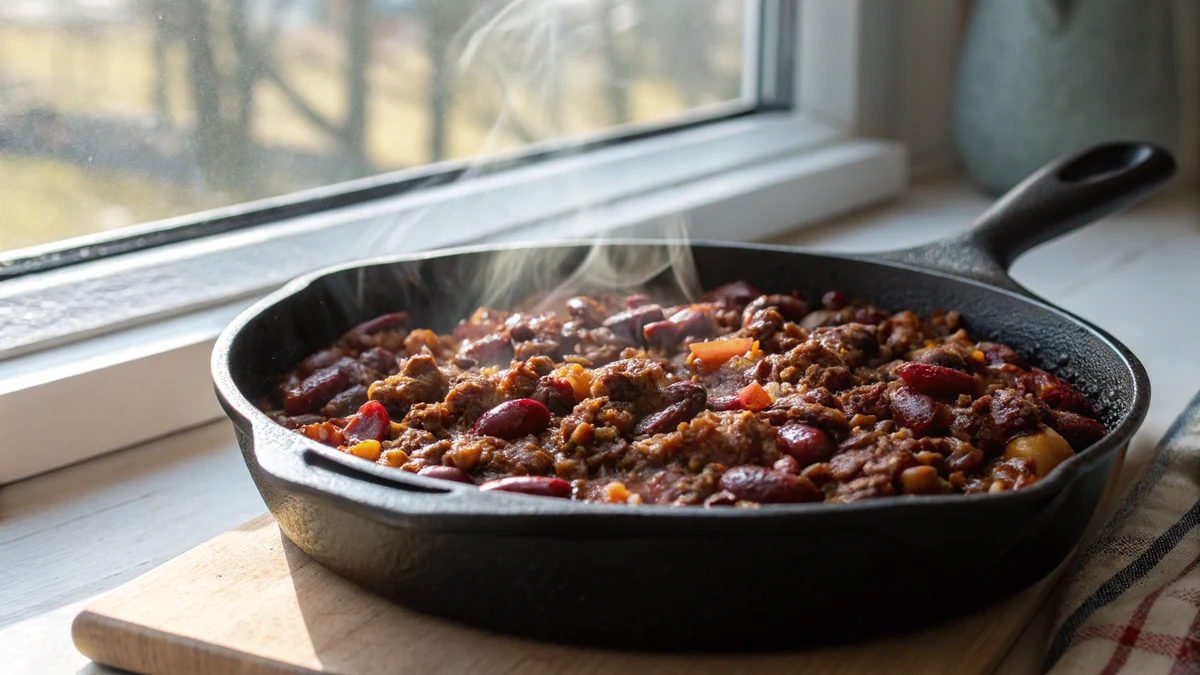
Quick answer: Cowboy beans are a hearty skillet bean dish built on ground beef and bacon browned in the same pan, three kinds of canned beans, and a sweet-smoky sauce of ketchup, brown sugar, molasses, and cider vinegar. Unlike slow-baked barbecue beans, this is a fast weeknight pot: the beans come from cans, the whole thing takes about 50 minutes, and it is substantial enough to serve as a main course in a bowl rather than a side on a plate. The two technical points that matter are browning the bacon and beef hard enough to leave fond on the pan, and using three different beans (pinto, kidney, and pork and beans) so the texture varies from bite to bite. Feeds ten. Bake it uncovered for the last 20 minutes if you want a lightly set top.
Cowboy beans are the potluck bean dish, the one that shows up in a foil pan at a church supper or a Little League fundraiser, and I want to be honest about what they are before we start. This is not a heritage recipe. Nobody was making this over a mesquite fire on a trail drive; canned pork and beans did not exist yet. This is a mid-century American casserole dish that borrowed a cowboy name, and it is genuinely, unapologetically great, which is why every family in Texas has a version of it.
What separates it from every other pot of beans is that there is real meat in it, in quantity, and that changes the job it does at a table. A pound of ground beef and half a pound of bacon in a pot that serves ten means every bowl has protein in it. You can eat this as supper with cornbread and nothing else, and people regularly do. Beans that are a side dish and beans that are dinner are different recipes, and this one is dinner.
I want to draw a hard line between this and my Texas BBQ baked beans, because the two get confused constantly. That recipe is dried pintos, soaked overnight, slow-baked three hours in cast iron with chopped smoked brisket until a dark crust forms on top. It is a barbecue side dish and it takes an afternoon. This one is canned beans, ground beef, and fifty minutes in a skillet. Different beans, different meat, different cooking method, different time commitment, different place on the table. If you have brisket to use up and an afternoon, go there. If it is Wednesday and people need feeding, stay here.
How Cowboy Beans Differ From BBQ Baked Beans
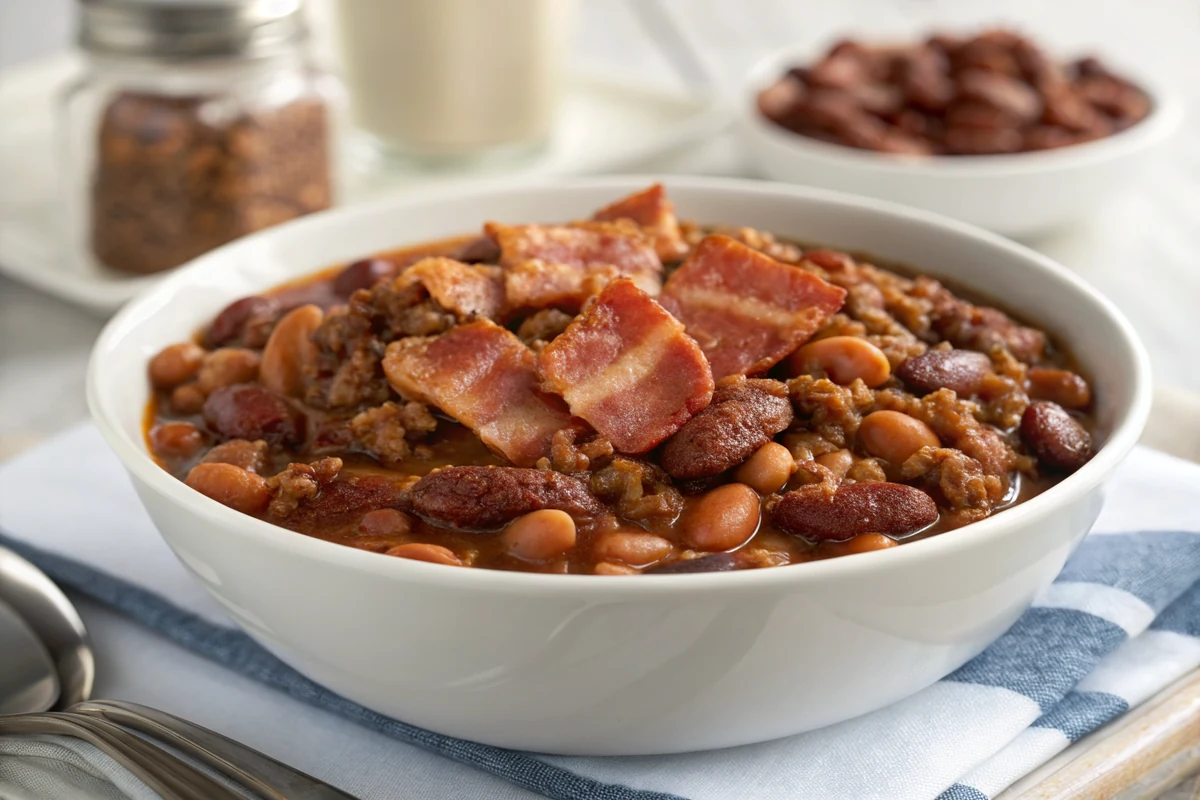
These two dishes get treated as interchangeable and they are not, so let me put the differences in one place before anything else, because choosing the right one for your situation matters more than any technique on this page.
Bean source. Cowboy beans use canned beans, three kinds, and that is not a shortcut being apologized for; the variety of textures is a feature. My Texas BBQ baked beans use dried pintos soaked overnight, because a slow bake needs a bean that can take three hours without disintegrating.
Meat. Cowboy beans use ground beef and bacon, browned into the base, distributed through every spoonful. The barbecue version uses chopped smoked brisket, which is a fundamentally different ingredient: it is already cooked, already smoky, and it stays in identifiable chunks. One is a weeknight protein, the other is a way to use up Sunday's leftovers.
Method and time. Cowboy beans are a stovetop skillet dish, fifty minutes start to finish, optionally finished in the oven for twenty minutes. Baked beans go into a covered pot at low heat and then uncovered at high heat for a total of three hours, specifically to build a dark crust on top. That crust is the entire point of the baked version and it cannot be rushed.
Role at the table. Cowboy beans go in a bowl and can be dinner. Baked beans go on a plate next to meat and are firmly a side. The calorie and protein loads reflect that: a serving of these carries about a quarter pound of meat's worth of substance, and a serving of the baked ones is mostly bean.
Pick accordingly. Weeknight, hungry family, pantry ingredients, no plan: this page. Weekend, leftover brisket, guests coming, an afternoon free: the baked ones. Both are good and they are not competing for the same slot.
Three Beans, and Why Not One
The three-can approach is what separates a memorable pot from a monotonous one, and it costs nothing extra since you are buying the same total volume either way.
Pork and beans go in undrained, and they are load-bearing. That can brings a soft, almost creamy bean plus a starchy, lightly sweetened sauce that thickens the whole pot. If you drain them you lose your thickener and the sauce stays thin. This is the only one of the three that stays undrained.
Pinto beans are the textural middle: firm skin, soft interior, neutral flavor that absorbs the sauce readily. Drain and rinse them, because canned bean liquid is salty and a little metallic, and you already have your starch from the pork and beans.
Kidney beans bring the firmest bite and hold their shape completely through the simmer, so you get something to chew against the soft ones. Also drained and rinsed. Some people find kidney beans too assertive; black beans are a reasonable swap and give you color contrast instead.
What you should not do is use three cans of the same bean. I have made that version when the store was picked over and it is noticeably duller. Every bite is identical, the pot reads as one texture, and the dish loses most of what makes people go back for a second bowl.
Browning the Meat Properly
The single largest quality difference between a good pot of cowboy beans and a mediocre one is how hard you browned the meat, and most home cooks under-brown by a wide margin.
Start the bacon in a cold pan. This sounds fussy and it is genuinely useful: fat renders out gradually as the pan heats, rather than the exterior seizing on contact with hot metal and trapping fat inside. You end up with more rendered fat to cook in and bacon pieces that are browned rather than boiled in their own grease.
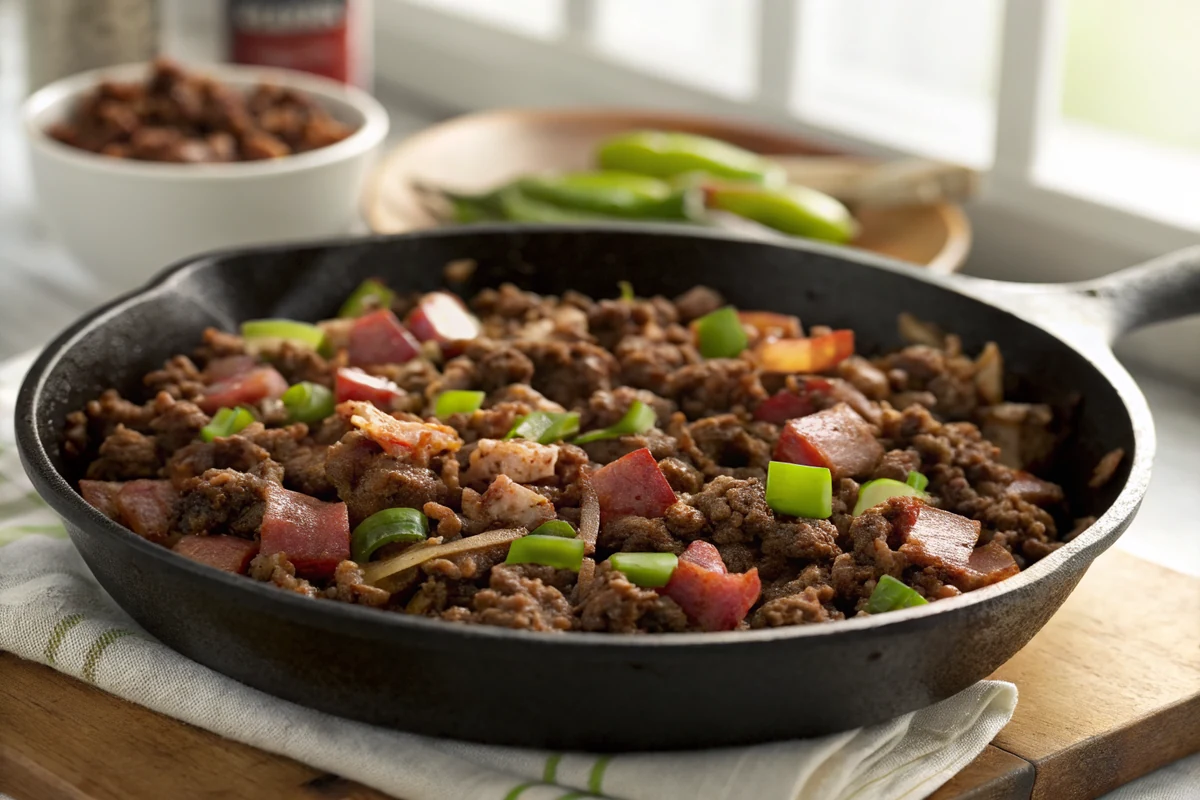
Then the beef, and here is where people go wrong. Add it to the hot bacon fat in one layer and do not touch it for four full minutes. Every instinct says to break it up immediately. Resist. That undisturbed contact with hot metal is what forms a crust, and the crust is where the beefy, roasted flavor lives. Beef that gets stirred from the moment it hits the pan releases its water, steams in it, and turns grey.
You want dark bits stuck to the pan bottom when the beef is done. That fond is concentrated flavor and the onions will release enough water to lift it right back into the dish. If your pan is clean after browning, you did not brown.
Then drain most of the fat. Half a pound of bacon and a pound of 80/20 beef will render a genuinely surprising amount, and a pot of beans with all of it left in has an oil layer on top and a heavy, greasy mouthfeel. Two tablespoons back is plenty. Save the rest in a jar for cornbread; it is excellent.
Balancing the Sweet-Smoky Sauce
This dish is sweet, and it is supposed to be. That is a legitimate flavor decision and not a flaw. What makes the difference between pleasantly sweet and cloying is the acid and the salt sitting underneath it.
Three tablespoons of cider vinegar sounds like a lot next to a third of a cup of brown sugar and it is calibrated deliberately. Without it, the sauce reads as candy over beans. With it, the sweetness has a counterweight and you can eat a full bowl without your palate quitting. If your batch tastes too sweet, the answer is almost always more vinegar rather than less sugar.
Yellow mustard does similar work from a different direction. Two tablespoons contributes tang and a faint bitterness that reads as savory depth, and nobody tastes it as mustard in the finished pot. It is doing the same structural job that mustard does in a barbecue sauce.
Use regular molasses, not blackstrap. Blackstrap is aggressively bitter and mineral, and two tablespoons of it will dominate the entire pot. If molasses is not in your pantry, an extra tablespoon of brown sugar plus a teaspoon of soy sauce covers the color and depth reasonably well.
Whisk the sauce separately before it goes in. This is a thirty-second step that pays off: the brown sugar dissolves completely, the chili powder disperses instead of clumping, and you can taste the sauce on its own and adjust before it is committed to a pot of beans. Taste it. It should be a touch too sharp on its own, because the beans will soften it considerably.
Skillet, Slow Cooker, or Oven
All three work and they give meaningfully different results, so pick based on what you need from the dish that day.
Skillet, which is how the recipe above is written, is the fastest and gives the best flavor concentration. Everything happens in one pan, the fond goes straight into the sauce, and you can watch the reduction and stop it exactly where you want. Cast iron is ideal because it holds heat evenly through a long simmer. This is my default.
Oven finish is the small upgrade. Do everything on the stovetop, then slide the uncovered skillet into a 350F oven for the last twenty minutes. The top sets lightly, the edges caramelize against the hot pan, and you get a bit of textural contrast. Be clear that this is not the same as a true baked bean crust, which needs hours of dry heat; it is a quick approximation and a good one.
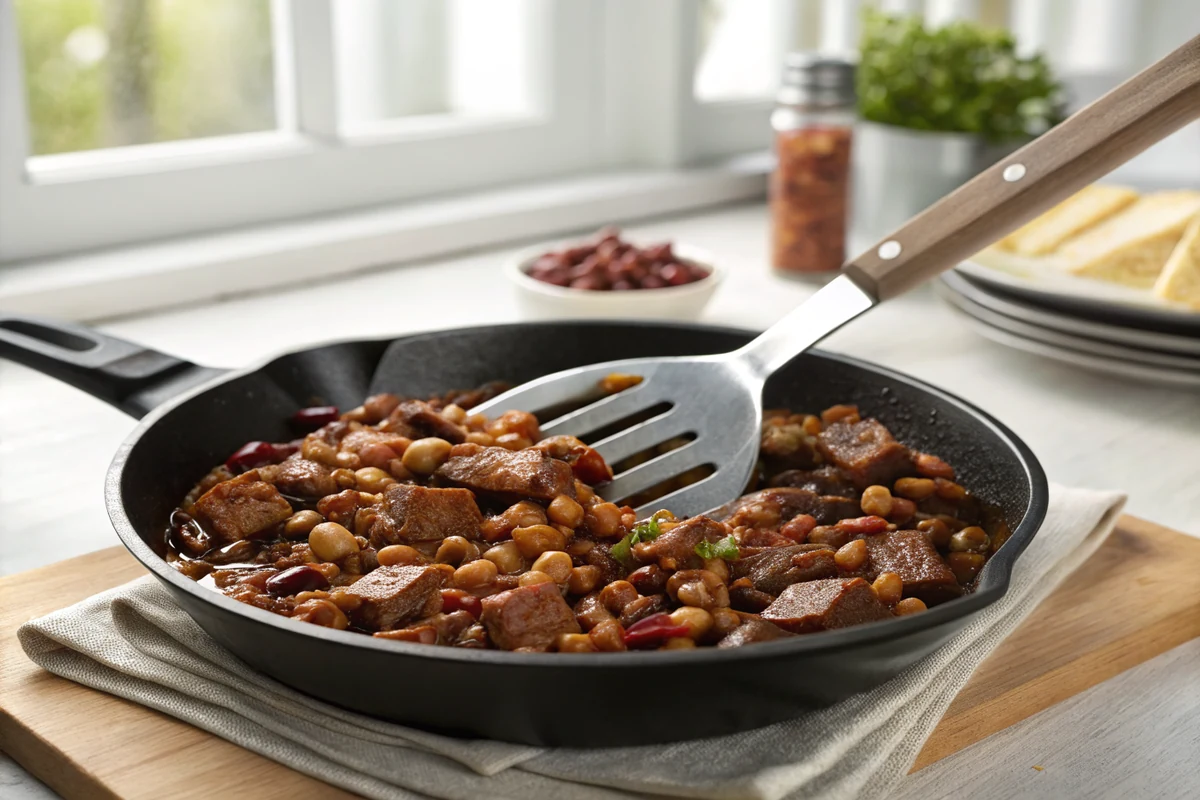
Slow cooker is the potluck route. Brown the bacon, beef, and vegetables in a skillet first, which you cannot skip, then scrape everything into the crock with the beans and sauce and run it on LOW for 4 hours or HIGH for 2. The sauce will be looser because a slow cooker does not evaporate, so either accept it or take the lid off for the last thirty minutes. The trade is that it holds on WARM for hours afterward without harm, which is exactly what a potluck needs.
What you cannot do is dump raw ground beef into a slow cooker with the beans. You get grey crumbles floating in sweet sauce with no browning flavor anywhere in the dish. If you only have time for one stovetop step, make it browning the meat.
Making It a Meal
Ten servings of a bean dish with a pound of beef and half a pound of bacon in it is genuinely supper for a family of four with leftovers, and treating it that way is how I actually cook it most often.
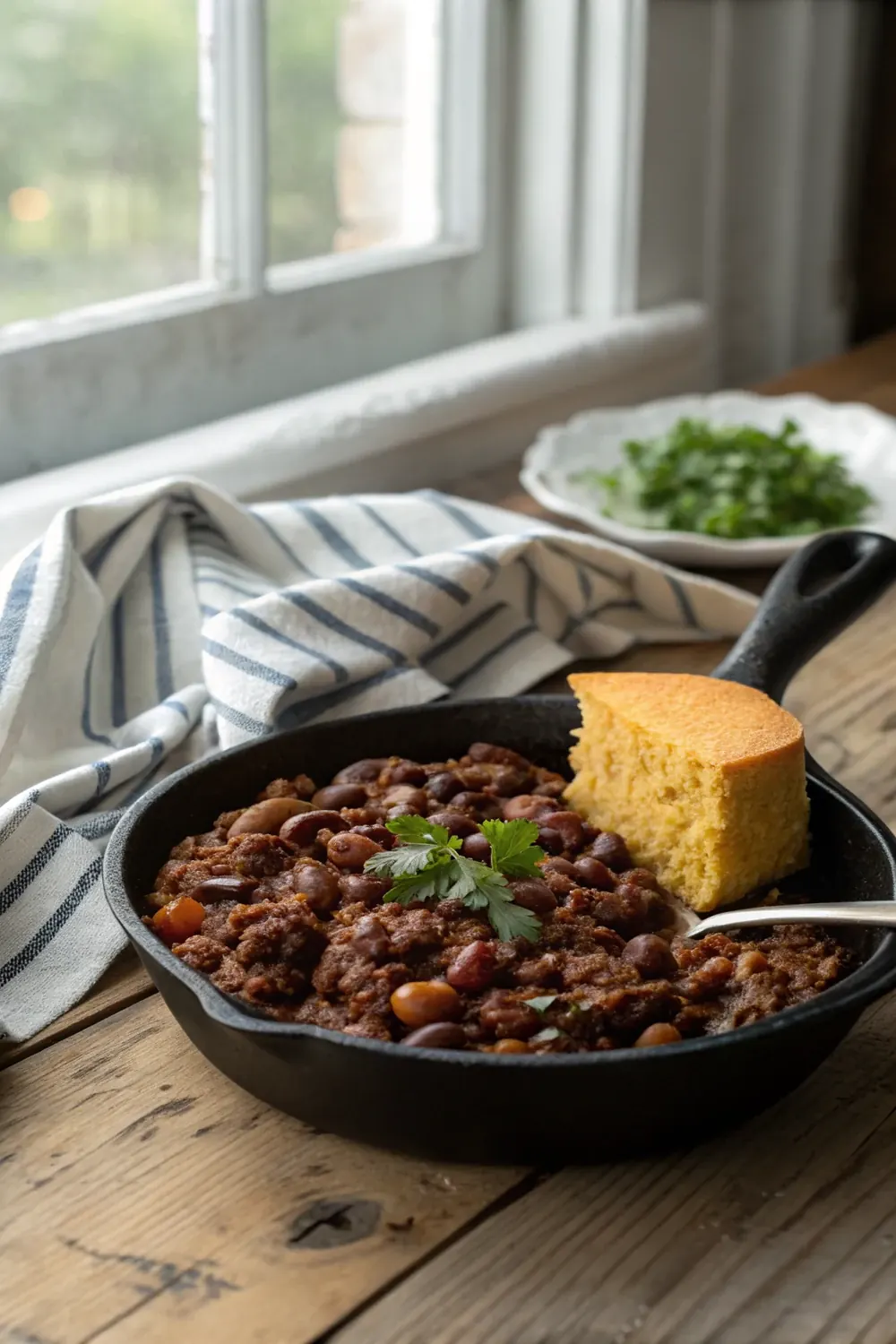
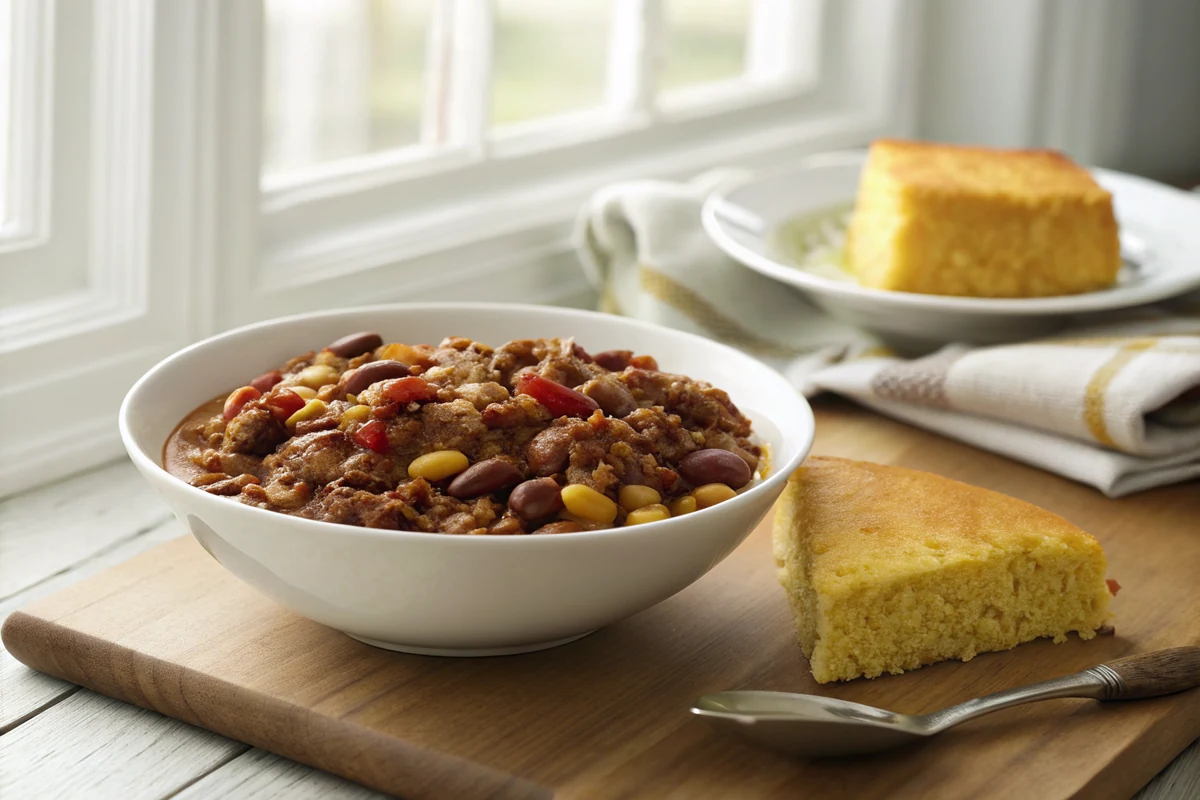
Cornbread is the natural partner and does most of the work of making it a complete plate. My cast iron skillet cornbread is the version I make for this, and the leftover bacon fat you saved is the ideal fat to preheat the skillet with. A wedge of cornbread, a bowl of these, and a few pickled jalapenos is a meal I would put in front of anyone.
For a side that cuts the richness, something sharp and cold works better than another warm dish. Texas caviar is the obvious Texas answer, and a plain vinegary coleslaw does the same job. Avoid pairing it with another sweet dish; the plate gets one-note fast.
If you are serving it as a side rather than the main, it belongs next to something plain and smoky rather than something already sauced. BBQ chicken thighs or hot links work. Putting sweet beans next to sweet-sauced ribs is too much of the same idea on one plate.
For a crowd, this is one of the easiest things to scale. Double it in a large Dutch oven with no adjustments beyond a slightly longer simmer, or triple it in a roasting pan finished in a 325F oven for an hour. It holds warm well and it is forgiving about timing, which is why it lives at potlucks.
Variations That Actually Work
Smoked sausage instead of ground beef. A pound of sliced smoked sausage or Texas hot links browned in the bacon fat gives you a smokier, coarser pot. Brown the slices on both sides and add them back with the beans rather than leaving them in through the whole simmer, or they get rubbery.
Add heat. A minced jalapeno or serrano with the onion, or a chopped chipotle in adobo plus a teaspoon of the sauce whisked into the ketchup mixture. The chipotle route is better because it adds smoke along with the heat, which suits the profile.
Leftover barbecue. If you have chopped brisket or pulled pork on hand, a cup of it folded in during the last ten minutes is excellent. At that point you are drifting toward the baked bean version, and honestly if you have a full afternoon and real brisket, go make those instead.
Cut the sweetness. Some people find the standard ratio too sweet for a main course. Drop the brown sugar to a quarter cup and hold the vinegar at three tablespoons; the result is more savory and pairs better with cornbread as a supper. I would not go below that or the sauce loses its body.
Beans only. Skip the ground beef, keep the bacon, and add a can of black beans. It is a decent side dish at that point, though it has stopped being cowboy beans and has become a sweeter cousin of my ranch style beans, which does the savory version of the same idea considerably better.
Mistakes to Watch For
Not draining the fat. The most common complaint about this dish is that it came out greasy, and this is always why. Two tablespoons back into the pan; the rest goes in a jar.
Under-browning the beef. Covered above and worth repeating because it is the biggest flavor lever in the recipe. Four minutes undisturbed, then break it up.
Draining the pork and beans. That can is your thickener. Drain it and the sauce stays thin no matter how long you simmer.
Stirring instead of folding. Canned beans are fully cooked and structurally fragile. Aggressive stirring over a thirty-minute simmer turns a third of them to paste and clouds the sauce. Use a spatula and fold from the bottom.
Judging the sauce at a boil. It always looks looser hot than it will be at the table. Take the pan off, wait ten minutes, then decide whether it needs more reduction. I have over-reduced plenty of pots by not waiting.
Salting early and heavily. Between the bacon, the ketchup, the Worcestershire, and the canned beans, there is a lot of salt already in play. Taste at the very end and adjust from there.
Blackstrap molasses. Bitter and overwhelming. Regular unsulphured molasses only.
Storage, Reheating, and Freezing
Refrigerated, cowboy beans keep four to five days and are arguably better on day two once the beans have fully taken on the sauce and the sweetness has settled. This is a genuinely good make-ahead dish for that reason.
Reheat on the stove over low heat with a splash of water or broth, since the beans keep absorbing sauce in the fridge and the pot tightens considerably. Stir gently and taste for salt afterward. A microwave works for single bowls but heats unevenly, so stir halfway.
They freeze for three months, with one caveat: the canned beans soften further through a freeze-thaw cycle and the texture contrast between the three types diminishes. It is still good, just less interesting. If you know you will freeze half, consider using all firmer beans and skipping the pork and beans, thickening instead with an extra two tablespoons of ketchup.
Cool completely before refrigerating or freezing. A hot covered pot of beans in the fridge cools slowly through the temperature range where bacteria are happiest, and a dish this dense holds heat for a long time. Spread it in a shallow container to speed it up.
For transporting to a potluck, make it the day before, refrigerate, and reheat in a slow cooker on LOW for about two hours before serving, then switch to WARM. It holds for three or four hours that way without turning to mush, which no other approach manages as reliably.
Cowboy Beans Recipe
Ingredients
- For the meat:
- 8 oz (227 g) thick-cut bacon, cut crosswise into 1/2-inch pieces
- 1 lb (454 g) ground beef, 80/20
- 1 large yellow onion, diced
- 1 green bell pepper, diced
- 3 garlic cloves, minced
- For the beans:
- 1 (28 oz / 794 g) can pork and beans, undrained
- 1 (15 oz / 425 g) can pinto beans, drained and rinsed
- 1 (15 oz / 425 g) can kidney beans, drained and rinsed
- For the sauce:
- 3/4 cup (180 ml) ketchup
- 1/3 cup (70 g) packed dark brown sugar
- 2 tablespoons molasses (not blackstrap)
- 3 tablespoons apple cider vinegar
- 2 tablespoons yellow mustard
- 1 tablespoon Worcestershire sauce
- 2 teaspoons chili powder
- 1 teaspoon smoked paprika
- 1/2 teaspoon black pepper
- Kosher salt, to taste
Instructions
- Render the bacon in a cold pan. Put the bacon pieces in a cold 12-inch cast iron skillet or Dutch oven and set it over medium heat. Starting cold lets the fat render out before the meat seizes. Cook 8 to 10 minutes, stirring, until the pieces are browned at the edges but still have some chew. Lift them out with a slotted spoon and leave the fat behind.
- Brown the beef hard in the bacon fat. Raise the heat to medium-high and add the ground beef to the bacon fat in one layer. Do not touch it for 4 minutes; let it develop a real crust on the bottom. Then break it up and cook another 5 minutes until it is browned throughout with dark bits stuck to the pan. Grey, steamed ground beef is the most common way this dish ends up bland.
- Drain most of the fat. Tip the pan and spoon off all but about 2 tablespoons of the accumulated fat. Half a pound of bacon plus 80/20 beef renders more fat than the dish can carry, and leaving it all in gives you a greasy pot with an oil slick on top. Leave enough to cook the vegetables in.
- Cook the onion and pepper. Add the diced onion and bell pepper to the pan and cook 6 minutes over medium heat, scraping the pan bottom as their moisture releases and lifts the fond. Add the garlic in the last 30 seconds. All those browned bits going back into the mix is where a large share of the flavor comes from.
- Whisk the sauce separately. In a bowl, whisk together the ketchup, brown sugar, molasses, cider vinegar, mustard, Worcestershire, chili powder, smoked paprika, and black pepper until smooth. Mixing it off-heat means the sugar dissolves fully and the spices distribute evenly; dumped in one at a time you get pockets of raw chili powder.
- Combine everything. Return the bacon to the pan. Add all three cans of beans, keeping the pork and beans undrained and the pinto and kidney beans drained and rinsed. Pour the sauce over and fold everything together gently with a spatula. Fold, do not stir; canned beans are soft and will break into mush under a spoon.
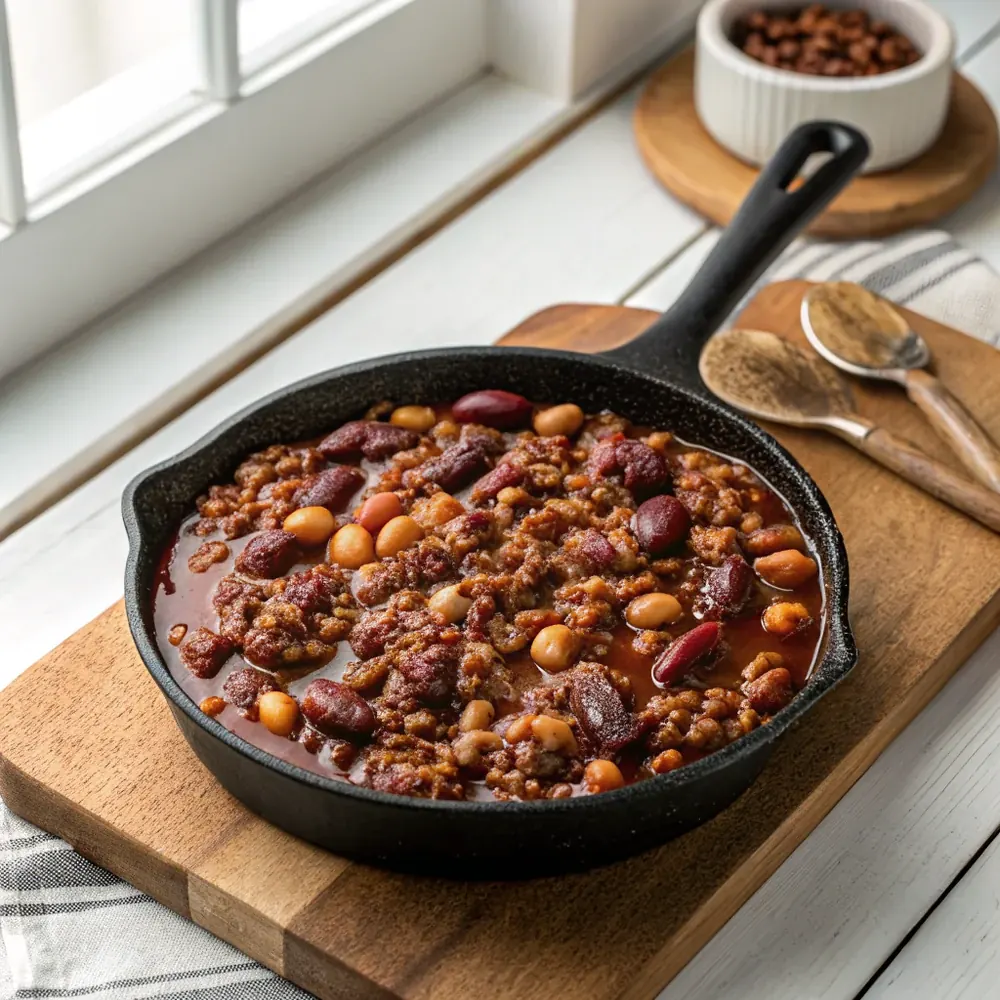
- Simmer to thicken. Bring to a gentle bubble, then drop to low and simmer uncovered 25 to 30 minutes, folding occasionally. The sauce should reduce until a spatula dragged across the bottom leaves a track that holds for a second. This is the step where the sauce stops being ketchup and becomes something integrated.
- Optional: finish in the oven. For a lightly set top and slightly caramelized edges, slide the skillet into a 350F oven uncovered for the last 20 minutes instead of finishing on the stove. This is not the same as a true baked bean crust, which takes hours, but it adds a pleasant textural contrast for almost no extra work.
- Season and rest. Taste for salt and add it now. Bacon, ketchup, and Worcestershire are all salty, so this often needs less than you would expect. Pull the pan off the heat and let it stand 10 minutes; the sauce tightens meaningfully as it drops below a simmer and the beans finish absorbing it.
- Serve in bowls. Serve hot in bowls with cornbread. If you want, scatter thinly sliced green onion or a little sharp cheddar over the top. The dish is rich enough that a sharp garnish earns its place, though it needs nothing at all to be good.
Frequently Asked Questions
What is the difference between cowboy beans and baked beans?
Cowboy beans are a fast stovetop skillet dish with ground beef and bacon and canned beans, ready in about 50 minutes and substantial enough to eat as a main course. Baked beans are slow-baked in the oven for hours, usually from dried beans, to build a dark crust on top, and serve as a side dish. My Texas BBQ baked beans use chopped smoked brisket and take three hours; this recipe uses ground beef and takes under one.
Why are they called cowboy beans?
The name is a mid-century marketing borrowing rather than a trail-drive heritage. Real chuck wagon cooks made plain simmered pintos with salt pork over a fire; canned pork and beans, ketchup, and ground beef in this combination are twentieth-century supermarket ingredients. The name stuck because the dish is hearty, meaty, and sweet-smoky, which reads as cowboy food even though the history does not support it.
Can you make cowboy beans in a slow cooker?
Yes, but brown the bacon, beef, onion, and pepper in a skillet first; that step cannot be skipped without losing most of the flavor. Then transfer everything to the crock with the beans and sauce and cook on LOW for 4 hours or HIGH for 2. The sauce will be looser since slow cookers do not evaporate, so remove the lid for the last 30 minutes if you want it thicker.
What beans are best for cowboy beans?
Three different kinds, which is the point. Pork and beans undrained for their starchy sauce and soft texture, pinto beans drained for a neutral middle, and kidney beans drained for a firm bite that holds through the simmer. Using three cans of the same bean gives you a monotonous pot. Black beans are a fine substitute for kidney if you prefer them.
Are cowboy beans supposed to be sweet?
Yes, moderately. Brown sugar and molasses are core to the profile, balanced by three tablespoons of cider vinegar and yellow mustard so it does not turn cloying. If your batch tastes too sweet, add more vinegar rather than removing sugar. To make a more savory version, drop the brown sugar to a quarter cup while keeping the vinegar the same.
Do you drain the beans for cowboy beans?
Drain and rinse the pinto and kidney beans, but leave the pork and beans undrained. That can's starchy, lightly sweetened liquid is the only thickener in the recipe, and draining it leaves you with a thin sauce that will not reduce properly no matter how long you simmer it.
Can you make cowboy beans ahead of time?
Yes, and they improve for it. Make them a full day ahead, refrigerate, and reheat gently with a splash of water or broth, since the beans absorb sauce overnight and the pot tightens. For a potluck, reheating in a slow cooker on LOW for two hours and then holding on WARM is the most reliable method.
How many people does this recipe feed?
Ten as a side dish, or about six as a main course with cornbread. It contains a pound of ground beef and half a pound of bacon, so a bowl of it is a genuine meal rather than an accompaniment. It doubles cleanly in a large Dutch oven with only a slightly longer simmer.