Texas BBQ
Gluten-Free BBQ Pulled Pork
Pork, salt and spices are naturally gluten free. Wheat sneaks in only via the sauce: soy sauce, malt vinegar or thickeners. Homemade sauce included.
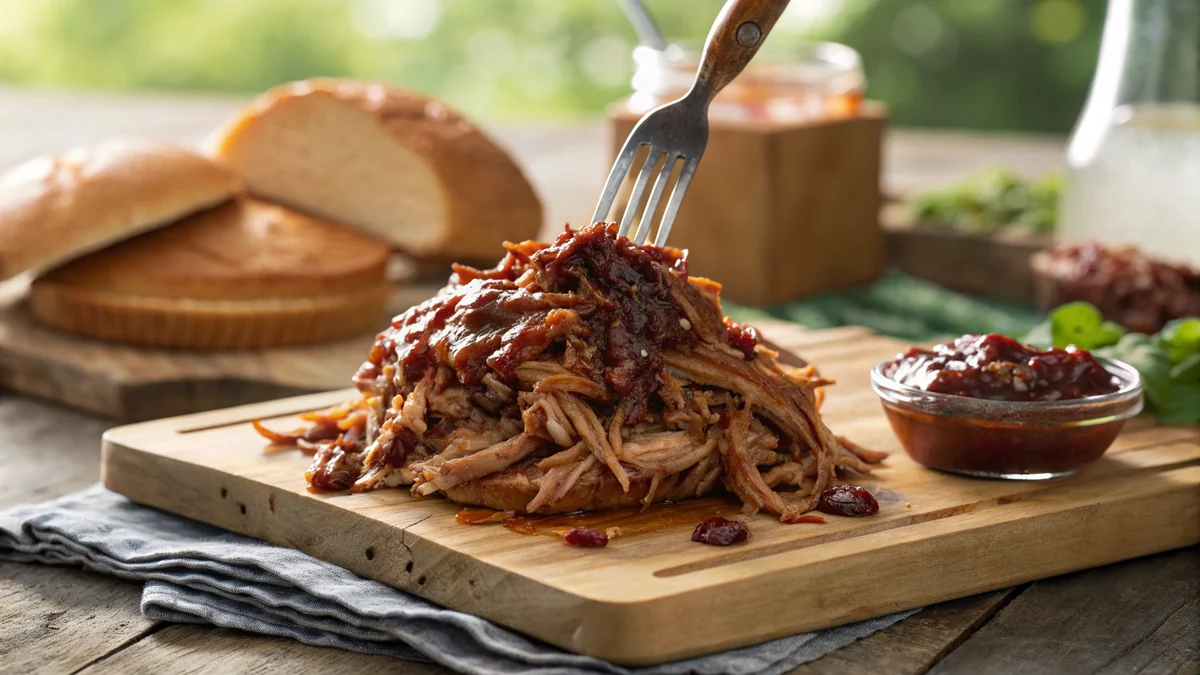
Quick answer: Gluten-free BBQ pulled pork is a pork shoulder rubbed with a naturally gluten-free spice blend, slow-cooked low until it shreds, then tossed with a homemade gluten-free barbecue sauce. The pork, salt, sugar, and spices are all naturally gluten free; the only place wheat sneaks into barbecue is the sauce, usually through soy sauce, malt vinegar, or thickeners. Make your own sauce from ketchup, brown sugar, cider vinegar, molasses, and spices and the whole dish is safe. Rub a 4 to 5 pound boneless pork shoulder, cook it at 250F in the oven or on low in a slow cooker for 8 to 10 hours until it pulls apart at 200F, shred it, and toss with the sauce. It feeds a crowd and keeps and freezes beautifully.
Pulled pork should be one of the easiest gluten-free dinners there is, and yet it trips people up constantly. The pork itself is just meat, and the rub is just spices, so where does the gluten come from? Almost always the sauce. I started making this version years ago for a niece with celiac, because I was tired of squinting at bottle labels at the store and second-guessing every barbecue I brought to a family gathering. Making the sauce myself solved it, and the pork came out better than the bottled-sauce version anyway.
What I want you to take away is that gluten-free barbecue is not a compromise. This is the same smoky, tender, pull-apart pork I would serve anyone, with a sauce that happens to skip the wheat. I will walk you through a naturally gluten-free rub, the slow cook that does the real work, and a five-minute homemade sauce that you control from the first ingredient. If you want the full rundown on which store-bought sauces are safe and why, I keep a separate guide on whether BBQ sauce is gluten free that pairs with this recipe.
Where Gluten Actually Hides in Pulled Pork
Here is the reassuring part: the pork shoulder, the salt, the sugar, and the spices in a rub are all naturally gluten free. There is no wheat in a pork butt. So when someone with celiac or gluten sensitivity reacts to barbecue, the culprit is almost never the meat. It is the sauce, and occasionally a seasoning blend with a wheat-based anti-caking agent or a marinade made with soy sauce.
Standard barbecue sauce is where wheat sneaks in, usually through one of three doors: soy sauce, which is brewed with wheat, malt vinegar or malt flavoring, which comes from barley, or a thickener or natural flavor that traces back to wheat. None of those are obvious from the front of the bottle, which is exactly why making the sauce yourself is the cleanest fix.
The other risk is cross-contact rather than ingredients: a shared smoker, a basting brush that touched a glutenous sauce, or buns crumbs in the serving area. If you are cooking for someone with celiac, use clean tools and serve the pork before anything wheat-based touches the table. For the full breakdown of brands and labels, see my guide on whether BBQ sauce is gluten free.
A Naturally Gluten-Free Rub
The rub here is built entirely from single-ingredient spices that are gluten free by nature: brown sugar, salt, smoked paprika, black pepper, garlic powder, onion powder, cumin, and a little cayenne. There is nothing to swap and nothing to worry about, as long as your spices are pure spices and not a pre-mixed blend with hidden fillers.
That last point matters more than people think. Some commercial seasoning blends and rubs use wheat starch or flour as an anti-caking or bulking agent, and a few list a vague natural flavor that can trace to gluten. If you buy a pre-made barbecue rub instead of mixing your own, read the label and look for a gluten-free certification. Mixing your own from the list above sidesteps the issue entirely.
Rub it on the night before if you can. An overnight rest in the fridge, uncovered, seasons the meat deeper and dries the surface so it takes on better color and bark during the cook. If you are short on time, even thirty minutes helps, but the overnight version is noticeably better.
Slow Cooker, Oven, or Smoker
All three work, and they all rely on the same principle: low heat for a long time to melt the collagen in a tough shoulder into tenderness. The slow cooker is the most hands-off, which is why it is my weeknight and feed-a-crowd default. Set it on low in the morning and it is ready by dinner with almost no attention.
The oven gives you a little more bark because the dry heat firms up the surface. A 250F oven with the shoulder in a covered Dutch oven runs about 8 to 9 hours and produces pork with more texture on the outside. I uncover it for the last hour when I want a firmer crust on the meat.
The smoker is the gold standard for flavor if you have one and the day to run it. The method is the same low and slow approach my Texas pulled pork uses, and as long as your wood is just wood and your sauce is gluten free, smoked pulled pork is naturally safe. Keep a dedicated clean brush for the gluten-free sauce and you are set.
The Homemade Gluten-Free BBQ Sauce
This sauce is the heart of the recipe, because it is the part that makes the whole dish trustworthy. It is built on ketchup, brown sugar, cider vinegar, molasses, and mustard, with smoked paprika and garlic for depth. Every one of those is gluten free, and the cider vinegar does the bright, tangy job that malt vinegar or soy sauce does in many bottled sauces, without the wheat.
Simmering it for ten minutes is what turns a raw mix into a real sauce. The heat softens the bite of the vinegar, melts the sugar and molasses together, and thickens it just enough to cling to the pork. Taste as it cooks and adjust: more brown sugar for sweet, more vinegar for tang, a pinch of cayenne for heat. You are in full control, which is the whole point.
If you would rather riff on other gluten-free sauce styles, my honey BBQ sauce and Texas BBQ sauce are both built from naturally gluten-free pantry staples, and my low-salt BBQ sauce is the one I reach for when watching sodium. Just confirm any add-ins like Worcestershire are gluten free, since traditional Worcestershire contains malt.
How to Tell When the Pork Is Done
Forget the clock and trust the texture. Pork shoulder is done when it shreds with almost no effort, which lines up with an internal temperature around 200 to 205F. That is well past the safe-to-eat point; you are cooking it that far to break down the connective tissue into gelatin, which is what makes pulled pork tender instead of just cooked.
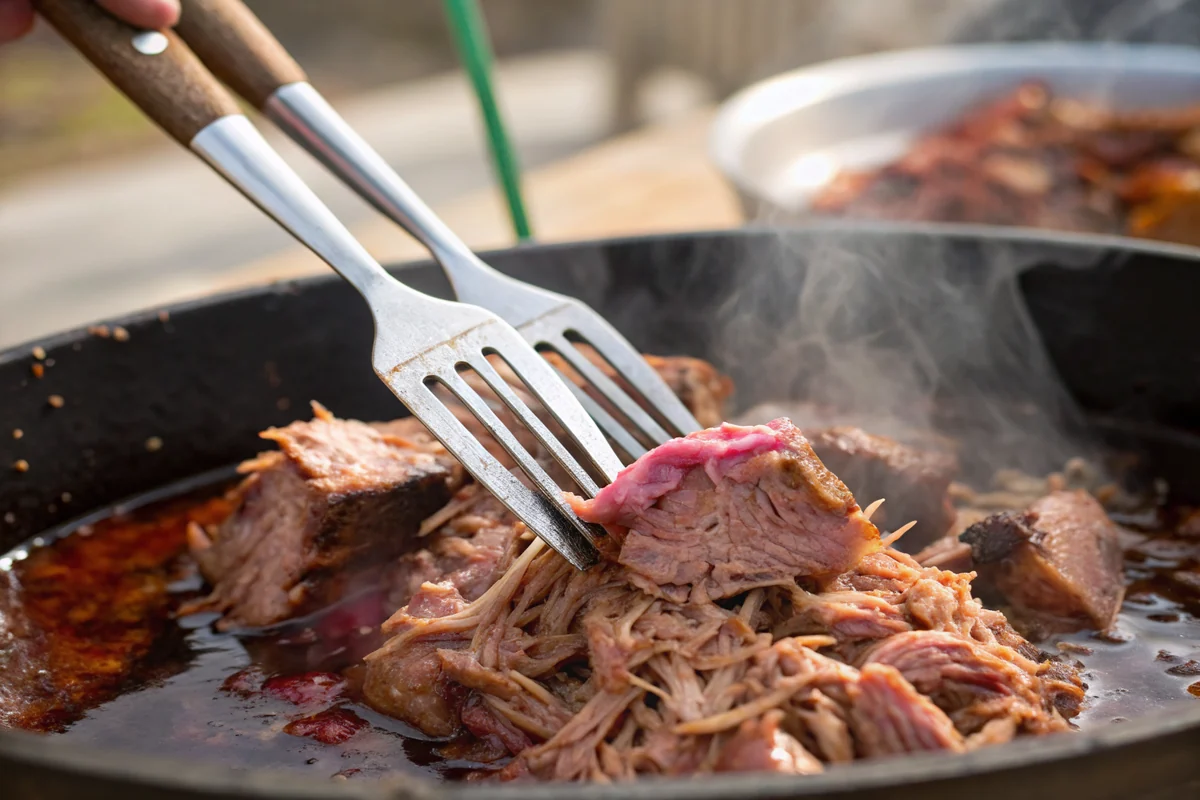
The fork test is the one I rely on. Stick a fork into the thickest part and twist. If it spins freely with no resistance, the pork is ready to pull. If it grips and resists, the collagen has not finished rendering, so give it another hour and check again. A shoulder pulled too early is tough and stringy, and no amount of sauce fixes that.
Every shoulder finishes on its own schedule, so build in a buffer. A pork butt that finishes early holds beautifully wrapped in a warm cooler for an hour or two, but a late one has no rescue when guests are hungry. I plan for the pork to be done an hour before I need it, every time.
Keeping the Pulled Pork Juicy
The single best trick for juicy pulled pork is to save the cooking juices. After the shoulder rests, skim the fat off the liquid left in the pot and keep the flavorful layer underneath. Toss the shredded pork with a few spoonfuls of that before you add any sauce, and it stays moist even after sitting on a buffet.
Add the sauce to coat, not to drown. Over-saucing makes the pork sloppy and buries the smoke and spice you worked for, and it is harder to fix than under-saucing. Start light, toss, taste, and add more in small amounts. Always keep extra sauce on the side so people can add their own.
If you are making it ahead, store the pork lightly moistened with juices and add most of the sauce when you reheat. Pork that sits overnight already sauced can turn pasty, while pork stored in its own juices reheats almost as good as fresh. This is the move for parties and meal prep alike.
Serving It Gluten Free, Start to Finish
Cooking the pork gluten free is only half the job; the plate around it has to be safe too. The obvious one is the bun. Use a certified gluten-free bun, or skip the bread entirely and serve the pork over rice, baked potatoes, or a pile of slaw. A lettuce wrap is the low-effort low-carb route and genuinely good with this pork.
Watch the sides, since that is where gluten quietly creeps back in. Cornbread made with wheat flour, baked beans thickened with flour, and mac and cheese are common traps. My keto BBQ sides and Texas BBQ sides roundups both flag which options are naturally gluten free, and classic BBQ baked beans are easy to keep safe when you control the pot.
Cross-contact is the last thing to mind at the table. Use separate serving spoons, keep the gluten-free buns away from regular ones, and do not let a brush that touched a wheat-based sauce near this pork. A little care at serving time protects all the work you put into cooking it clean.
Turning Leftovers Into New Meals
This recipe makes a generous amount on purpose, because pulled pork might be the best leftover there is. It reheats well, freezes well, and slides into a dozen other meals. I almost always cook a full shoulder even for a small dinner just to bank the extras for the week ahead. If you are scaling up for a party, my guide on how much pulled pork per person takes the guesswork out of how big a shoulder to buy.
My favorite second-day move is loaded nachos or a quick rice bowl: warm pork over rice with beans, cheese, and a little extra sauce. It also makes excellent gluten-free quesadillas with corn tortillas, stuffed sweet potatoes, or a topping for a baked potato bar. The smoky pork carries whatever you build around it.
For something closer to a sandwich, the same pork is wonderful piled with slaw, and if you keep cornbread or brisket in your rotation it plays well alongside dishes like my smoked brisket sandwiches at a bigger spread. Just keep the gluten-free and wheat components on separate boards if you are feeding a mixed crowd.
Make-Ahead, Storage, and Freezing
Cooked pulled pork keeps in an airtight container in the fridge for up to 4 days. Store it lightly moistened with the reserved cooking juices rather than fully sauced, so it does not turn pasty, and reheat it gently with a splash of broth or juice to bring it back to life. The flavor actually deepens by the next day.
It freezes as well as anything I make. Pack the cooled pork in freezer bags or containers, ideally with a little of its juices, press out the air, and freeze for up to 3 months. Thaw overnight in the fridge and reheat low and slow. Freezing the homemade sauce separately in a small jar means you can sauce it fresh when you serve.
Whether you are storing pork or sauce, follow the USDA cold food storage guidelines: get leftovers into the fridge within two hours, and reheat to 165F before serving. Pulled pork sitting warm on a buffet should not stay out longer than two hours either.
Gluten-Free BBQ Pulled Pork Recipe
Ingredients
- For the gluten-free rub:
- 1 boneless pork shoulder (Boston butt), 4 to 5 lb (1.8 to 2.3 kg)
- 2 tablespoons packed brown sugar
- 1 tablespoon kosher salt
- 1 tablespoon smoked paprika
- 2 teaspoons coarse-ground black pepper
- 2 teaspoons garlic powder
- 1 teaspoon onion powder
- 1 teaspoon ground cumin
- 1/2 teaspoon cayenne pepper (optional)
- For cooking:
- 1/2 cup (120 ml) gluten-free chicken or beef broth, or water
- For the gluten-free BBQ sauce:
- 1 cup (240 g) ketchup
- 1/3 cup (75 g) packed brown sugar
- 1/4 cup (60 ml) apple cider vinegar
- 2 tablespoons unsulphured molasses
- 1 tablespoon yellow or Dijon mustard
- 1 teaspoon smoked paprika
- 1/2 teaspoon garlic powder
- 1/4 teaspoon kosher salt
Instructions
- Mix and apply the rub. Pat the pork shoulder dry. Stir together the brown sugar, salt, smoked paprika, black pepper, garlic powder, onion powder, cumin, and cayenne, then rub the blend over every surface of the pork, pressing it into the cracks. Every spice here is naturally gluten free, so the rub is safe as written. For the best flavor, rub it the night before and chill it uncovered.
- Set up the slow cook. Place the pork fat-side up in a slow cooker or a Dutch oven and pour the broth or water around the base, not over the top, so you do not rinse off the rub. The small amount of liquid keeps the bottom from scorching and turns into a flavorful base you will use later. Do not drown the pork; it makes plenty of its own juice as it cooks.
- Cook it low and slow. Cook on low in a slow cooker for 9 to 10 hours, or covered in a 250F oven for 8 to 9 hours. You are not cooking to a clock but to texture. The shoulder is ready when it reads about 200F internal and a fork twists freely in the meat with no resistance. Rushing this on high heat gives you tough, stringy pork, so give it the time.
- Make the gluten-free sauce. While the pork finishes, whisk the ketchup, brown sugar, cider vinegar, molasses, mustard, smoked paprika, garlic powder, and salt in a small saucepan. Simmer over medium-low for 8 to 10 minutes, stirring, until it thickens slightly and the raw vinegar edge mellows. Every ingredient is gluten free, with cider vinegar standing in for the malt vinegar or soy sauce that hides wheat in many bottled sauces.
- Rest and shred. Lift the pork onto a board or sheet pan and let it rest 15 to 20 minutes; it is too hot and too loose to shred straight out of the pot. Skim the fat off the cooking juices and save the flavorful liquid underneath. Pull the pork apart with two forks or your hands, discarding any large pockets of fat.
- Sauce and serve. Moisten the shredded pork with a few spoonfuls of the reserved cooking juices first, which keeps it from drying out, then toss it with enough gluten-free sauce to coat, not drown. Taste and add more sauce or a pinch of salt. Serve it on gluten-free buns, over rice, or straight off the board, with extra sauce on the side.
Frequently Asked Questions
Is pulled pork gluten free?
Plain pulled pork is naturally gluten free, because pork, salt, sugar, and pure spices contain no wheat. The gluten almost always comes from the barbecue sauce, which can hide wheat in soy sauce, malt vinegar, malt flavoring, or thickeners. It can also come from a pre-mixed rub with wheat-based fillers or from cross-contact with buns and shared tools. Make your own sauce and rub, as in this recipe, and the dish is safe.
What makes BBQ sauce not gluten free?
Three ingredients are the usual offenders. Soy sauce, which most brewers make with wheat, is common in many barbecue sauces. Malt vinegar and malt flavoring come from barley and carry gluten. And some sauces use a thickener or a vague natural flavor that traces back to wheat. The homemade sauce in this recipe uses cider vinegar and skips soy entirely, so there is no wheat anywhere. For a deeper dive, see my guide on whether BBQ sauce is gluten free.
Can I use store-bought BBQ sauce instead?
Yes, but read the label carefully and look for a gluten-free certification, since formulas vary and change over time. Several mainstream brands make sauces with no gluten ingredients, but the only way to be sure is to check the label every time you buy, because manufacturers reformulate. If you are cooking for someone with celiac, the homemade sauce here removes all the guesswork and tastes better anyway.
What cut of pork is best for pulled pork?
Pork shoulder, sold as Boston butt or picnic shoulder, is the cut you want. It is well marbled with fat and connective tissue that melts into gelatin over a long, slow cook, which is what makes the meat tender and juicy enough to shred. Leaner cuts like pork loin dry out and will not pull. Boneless is easiest to handle, though bone-in adds a little flavor and is just as good.
How long does it take to cook gluten-free pulled pork?
A 4 to 5 pound shoulder needs about 9 to 10 hours on low in a slow cooker, or 8 to 9 hours covered in a 250F oven. The exact time depends on the size and thickness of the shoulder, so cook to texture rather than the clock. It is done when it reads about 200F internally and a fork twists freely in the meat with no resistance. Build in an extra hour as a buffer.
Can I make this in an Instant Pot?
Yes. Cut the shoulder into 3 or 4 large chunks, apply the rub, and pressure cook on high with a cup of gluten-free broth for about 60 minutes, then let the pressure release naturally for 15 minutes. The meat should shred easily; if it resists, cook another 10 to 15 minutes. The flavor is a touch milder than the long slow-cooked version, but it is fast and reliably tender, and the homemade sauce ties it together.
Is this pulled pork keto or low carb?
The pork and rub are very low in carbohydrate, so the meat itself fits a low-carb or keto plan. The carbs come from the sauce, which uses brown sugar and molasses. To keep it low carb, sauce the pork lightly, use a sugar-free sweetener in the homemade sauce, and serve it without a bun over greens or in a lettuce wrap. My keto BBQ sides roundup has matching low-carb sides.
How do I store and freeze pulled pork?
Refrigerate cooked pulled pork in an airtight container for up to 4 days, ideally moistened with a little of the reserved cooking juices rather than fully sauced. It freezes well for up to 3 months packed with some of its juices and the air pressed out. Thaw overnight in the fridge and reheat gently with a splash of broth. Following USDA guidance, refrigerate within two hours and reheat to 165F.