Southern Comfort Food
Shrimp and Grits
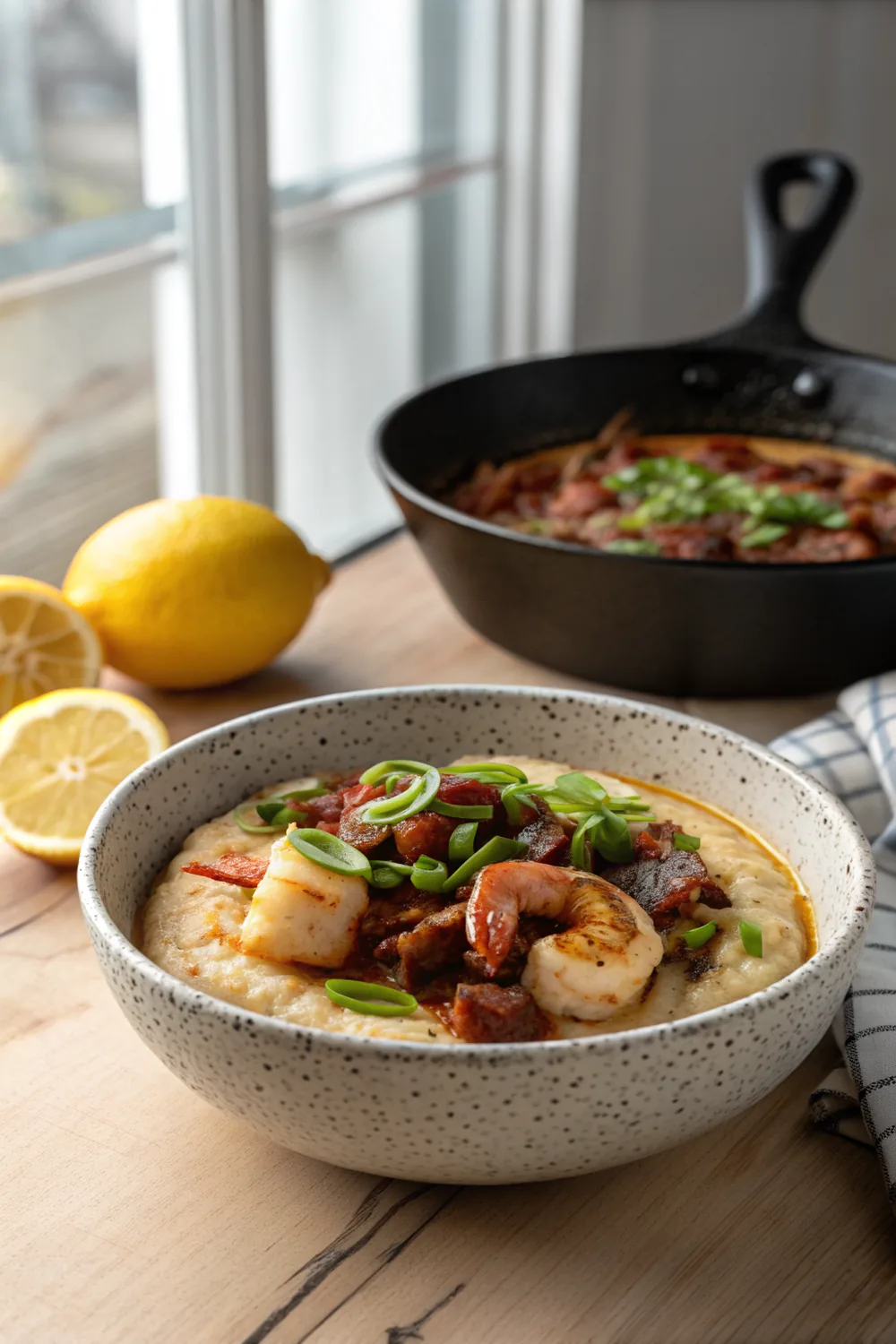
Chef Mia's shrimp and grits: stone-ground grits simmered 45 minutes with cheddar, Gulf shrimp seared in bacon fat, a pan gravy with lemon and hot sauce.
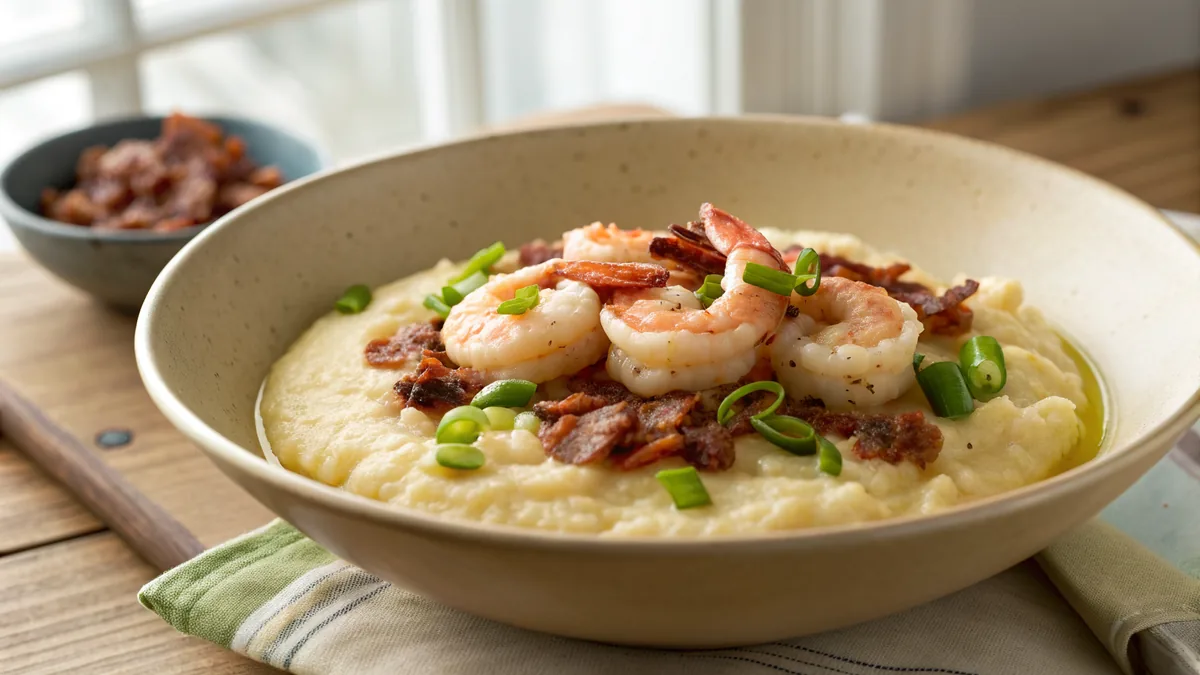
Quick answer: Shrimp and grits is a bowl of creamy stone-ground grits, simmered slowly for about 45 minutes in a mix of water, milk, and chicken stock at a four-to-one ratio and finished with butter and sharp cheddar, topped with large Gulf shrimp seared in rendered bacon fat and a quick pan gravy made from the bacon, garlic, a spoonful of flour, chicken stock, lemon juice, and hot sauce. The grits take the time; the shrimp and gravy take ten minutes at the end. It is a Lowcountry dish from the South Carolina coast, not a Texas one, but it belongs on any Southern table, and the Gulf shrimp make it feel at home here.
I will say the honest thing first: shrimp and grits is not Texan. It belongs to the South Carolina Lowcountry, to Charleston and the sea islands, where for generations it was a fisherman's breakfast of shrimp caught that morning cooked quickly in bacon fat and spooned over a bowl of grits. It became a supper dish, and then a restaurant dish, and then a dish that every Southern kitchen with a coastline and a sack of grits decided to claim. Texas has a coastline and some of the best shrimp in the country coming in at Galveston and Port Aransas, so I am claiming it too, with credit where it is due.
The dish is two recipes that happen at different speeds. The grits are slow: real stone-ground grits, not instant, not quick, simmered for the better part of an hour in enough liquid to turn them creamy, then enriched with butter and cheese. The shrimp are fast: five minutes in a hot skillet with bacon and garlic, a spoon of flour, a splash of stock and lemon to make a gravy, and done. Get the grits right and hold them, then cook the shrimp while someone sets the table. The two meet in the bowl and nowhere else.
Most bad shrimp and grits fail on the grits, not the shrimp. Instant grits from a packet make a gluey, flavorless paste that no amount of cheese saves. Quick grits are better and acceptable on a weeknight. Stone-ground grits, the whole kernel ground coarse with the germ still in it, are the dish, and they cost a few dollars more and forty extra minutes, both of which are worth it. This is the same lesson as the cornmeal on my hush puppies and cornbread pages: the corn is the flavor, and the grind decides everything.
Lowcountry First, Then Everywhere Else
Shrimp and grits started as breakfast. Along the South Carolina and Georgia coast, in the Gullah Geechee communities of the sea islands and the kitchens of Charleston, the morning's shrimp catch was cooked in bacon fat or butter and eaten over a bowl of hominy grits, the same grits that appeared at every other meal. It was plain, fast, and seasonal, a shrimp-season dish for the months when the creeks were full. Charleston cookbooks from the early twentieth century call it breakfast shrimp and treat it as nothing special.
The dish left the coast in the 1980s. Bill Neal, cooking at Crook's Corner in Chapel Hill, North Carolina, put a version with cheese grits, bacon, mushrooms, and a hit of lemon and hot sauce on his menu, and in 1985 Craig Claiborne wrote about it in the New York Times. That is the version most restaurants serve now, and it is the one this recipe follows in spirit: grits enriched with cheese, shrimp seared in bacon fat, a light pan gravy sharpened with lemon. Within a decade it was on menus from Atlanta to Houston and it has not come off since.
Texas has its own claim on the ingredients if not the dish. The Gulf shrimp fleet out of Galveston, Port Arthur, and Port Aransas lands some of the best wild shrimp in the country, and a bowl of grits with a pile of Texas brown shrimp on top is as honest a Gulf Coast supper as anything from the Carolinas. What Texas adds is usually heat, a little more cayenne, sometimes a spoon of diced tomato or a chopped jalapeno in the gravy, and the instinct to serve it at supper rather than breakfast. The rest of this table lives on the Southern comfort food hub, where the dish sits comfortably among cornbread, collards, and fried chicken.
Grits: Stone-Ground, and Why the Grind Decides the Dish
Grits are dried corn, ground. The word covers three very different products and the one you buy decides the bowl. Instant grits are precooked and dehydrated, and they reconstitute in a minute into a smooth, flavorless paste; they are not for this. Quick grits are ground fine and steel-cut, with the germ removed so they keep on the shelf, and they cook in five to ten minutes into something acceptable but thin in flavor. Stone-ground grits are the whole kernel, germ and all, ground coarse between stones, and they taste like corn in a way the other two never do.
The trade-off is time and attention. Stone-ground grits need 40 to 50 minutes of simmering and a stir every few minutes so they do not catch on the bottom, and because the germ is still in them they go rancid at room temperature, so store them in the freezer. A pound will make this recipe three times. Brands vary in grind; some cook in 30 minutes, some want an hour. The test is a spoonful: creamy, tender, with individual grains you can feel but nothing hard or chalky.
White or yellow is a preference. White grits, from white dent corn, are the Lowcountry standard, milder and more delicate. Yellow grits taste a little more like corn and look sunnier in the bowl under the shrimp. Both cook identically. Hominy grits, made from corn treated with lime, are what old Charleston recipes mean when they say grits and are worth trying if you find them, with a slightly deeper flavor.
Do not use polenta and call it grits. Polenta is Italian yellow corn ground for a firmer, more uniform texture, and it makes a fine bowl of something, but it is not this. The flavor is flatter and the texture more even. If it is genuinely all you can find, it works at the same ratio and time, and you will have shrimp and polenta, which is nothing to be ashamed of.
Four to One, 45 Minutes, Milk and Stock
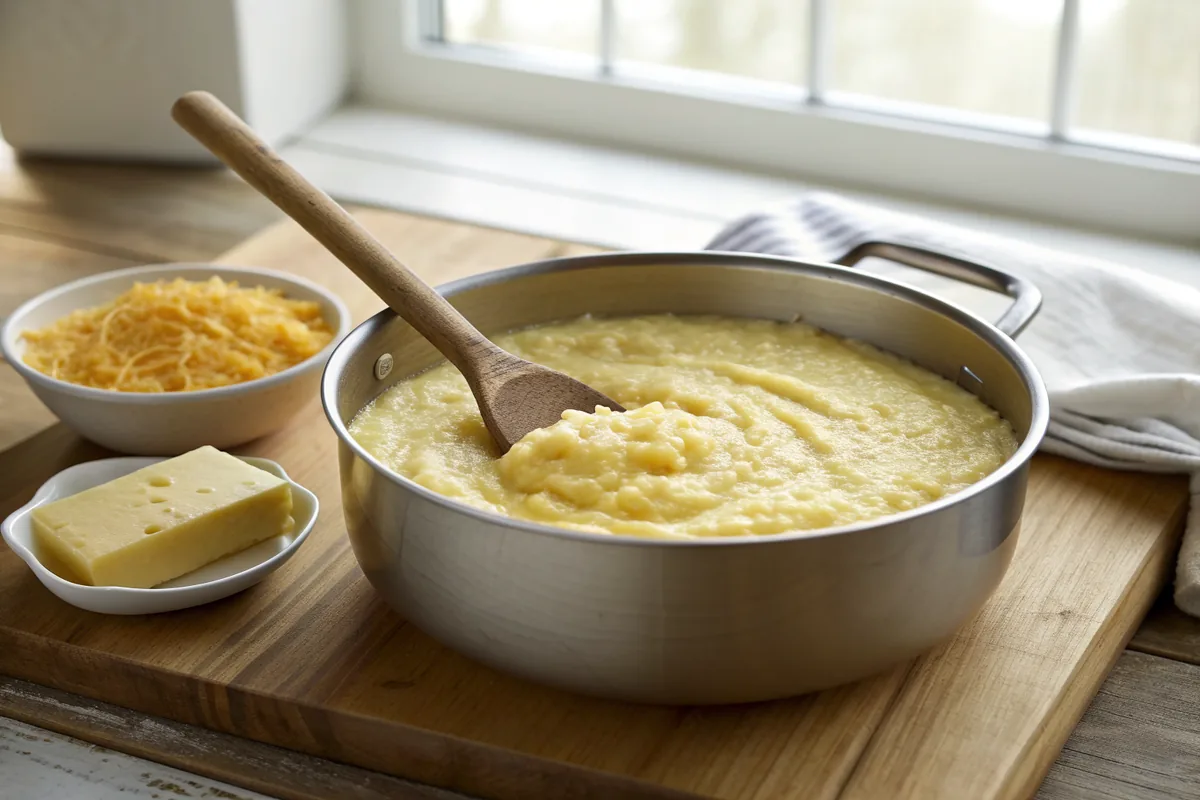
The ratio is four cups of liquid to one cup of stone-ground grits, and the liquid is where the flavor of the grits themselves is decided. All water gives you clean, plain grits that let the shrimp lead. All milk gives you rich, sweet grits that go grainy and scorch easily. Half water and a quarter each of milk and stock is my compromise: enough milk for creaminess, enough stock for savor, and enough water to keep them from catching. Some Charleston cooks use nothing but water and salt and finish with a lot of butter; that is a legitimate school.
Whisk the grits into boiling liquid in a slow stream, never dump them, and keep whisking until the pot returns to a simmer. This is the moment they clump if they are going to. Then the heat goes as low as the burner allows, the lid goes on partway, and you stir every five minutes, scraping the bottom, for the next 45. The grains swell, release starch, and the pot goes from soupy to thick and creamy somewhere around the 30-minute mark. Keep going until there is no chalkiness left in a spoonful.
Grits thicken as they cook and thicken more as they sit, and the fix is always the same: hot liquid, a quarter cup at a time. Hot water is fine; hot milk is richer. They should fall from a spoon in a slow, heavy ribbon when they are done, not stand up in a mound. A mound means they are too stiff and will set into a block by the time the shrimp are ready.
Salt goes in at the start, a teaspoon for four cups of liquid, and it needs to, because grits absorb salt slowly and undersalted grits are the second most common problem after instant ones. Taste at the end, after the cheese, and adjust. Black pepper, generously, at the finish.
Butter, Cheese, and Holding the Grits
Off the heat, three tablespoons of butter and a cup of sharp cheddar, stirred in until smooth. The butter gives the grits gloss and richness; the cheddar gives them the tang and salt that stand up to the bacon gravy. Grate the cheese yourself; the pre-shredded kind is coated in starch and melts grainy. Extra-sharp cheddar is the standard, and a white cheddar keeps the grits paler under the shrimp. A little Parmesan alongside the cheddar adds depth. Goat cheese or pimento cheese are the two Southern restaurant moves that work.
Cheese is a choice, not a rule. The old Lowcountry bowl had no cheese in it, just butter, salt, and pepper, and if you want the shrimp to be the whole show, leave it out and double the butter. I make them both ways. Cheese grits are the Bill Neal version and the one most people are picturing when they order the dish.
The grits will hold, covered, over the lowest heat or in a warm spot for 30 minutes while you cook the shrimp. They will tighten. Before serving, stir in a splash of hot milk or water to bring them back to a slow ribbon, and taste for salt again. If they have set into a block, a quarter cup of hot milk and a hard stir brings them back completely.
The Shrimp: Gulf, Large, Dry, and Fast
Wild Gulf shrimp are the right shrimp for this. Texas browns and whites, landed fresh or frozen on the boat, have a firm snap and a sweet, briny flavor that farmed imports do not. Buy them frozen unless you live on the coast; frozen at sea is fresher than a thawed pile that has been sitting on ice in a case for days. Twenty-one to twenty-five count per pound is the right size: big enough to sear without overcooking, small enough that a spoonful of grits holds two or three. A pound and a half feeds four with a generous hand.
Peel and devein them, and take the tails off for this dish, since nobody wants to fish a tail out of a bowl of grits. Then dry them completely on paper towels and season them just before they go in the pan. A wet shrimp steams in the skillet and turns rubbery and gray; a dry one sears and picks up a crust. This one step is most of the difference between restaurant shrimp and home shrimp.
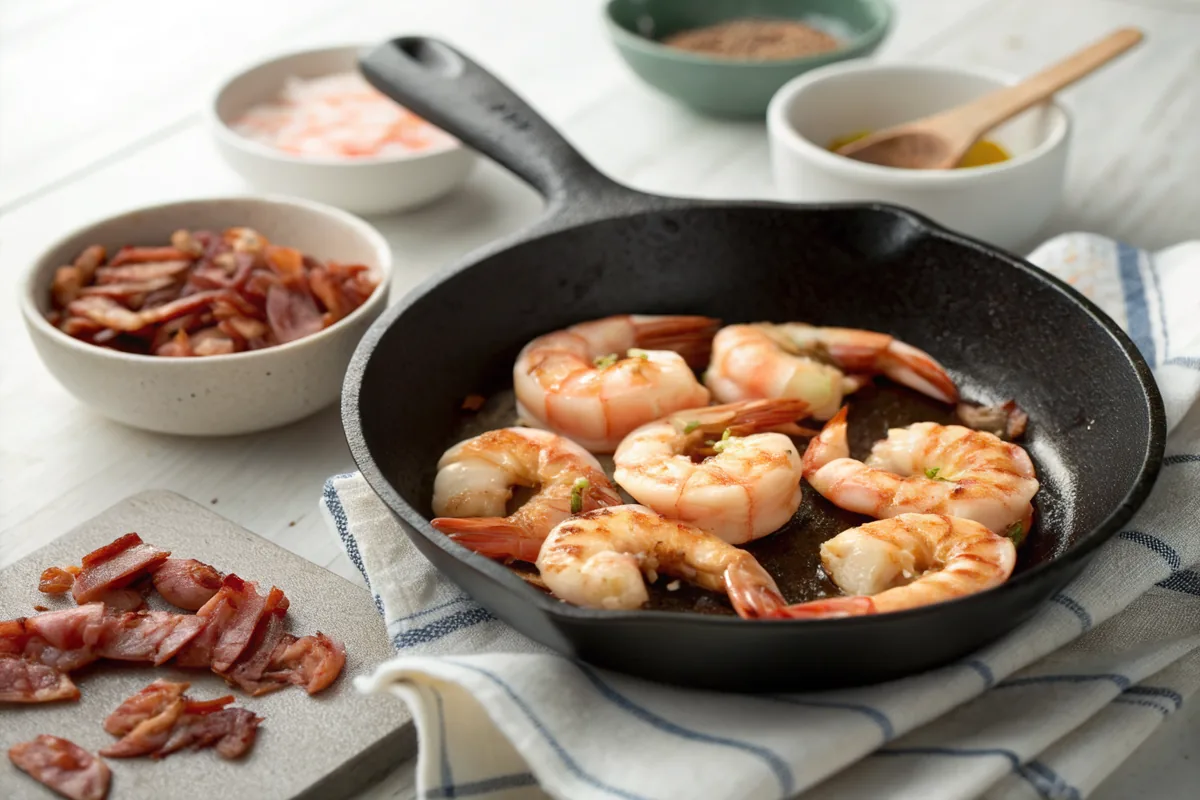
Ninety seconds per side in hot bacon fat, in a single layer, in two batches if they do not all fit with space between them. They should be pink at the edges and just starting to curl, with a little browning, and still slightly translucent in the thickest part. They are not done and should not be, because they go back into the gravy for another minute at the end. Overcooked shrimp is the failure of this dish that nobody blames on the cook and everybody notices.
The shells and tails, if you have them, make a stock in fifteen minutes: simmer them in two cups of water with a bay leaf and half an onion, strain, and use that in place of the chicken stock in the gravy. It is the difference between a good gravy and one that tastes like the sea, and it costs nothing. My Texas barbecue shrimp page uses the same trick for its sauce.
The Bacon Pan Gravy
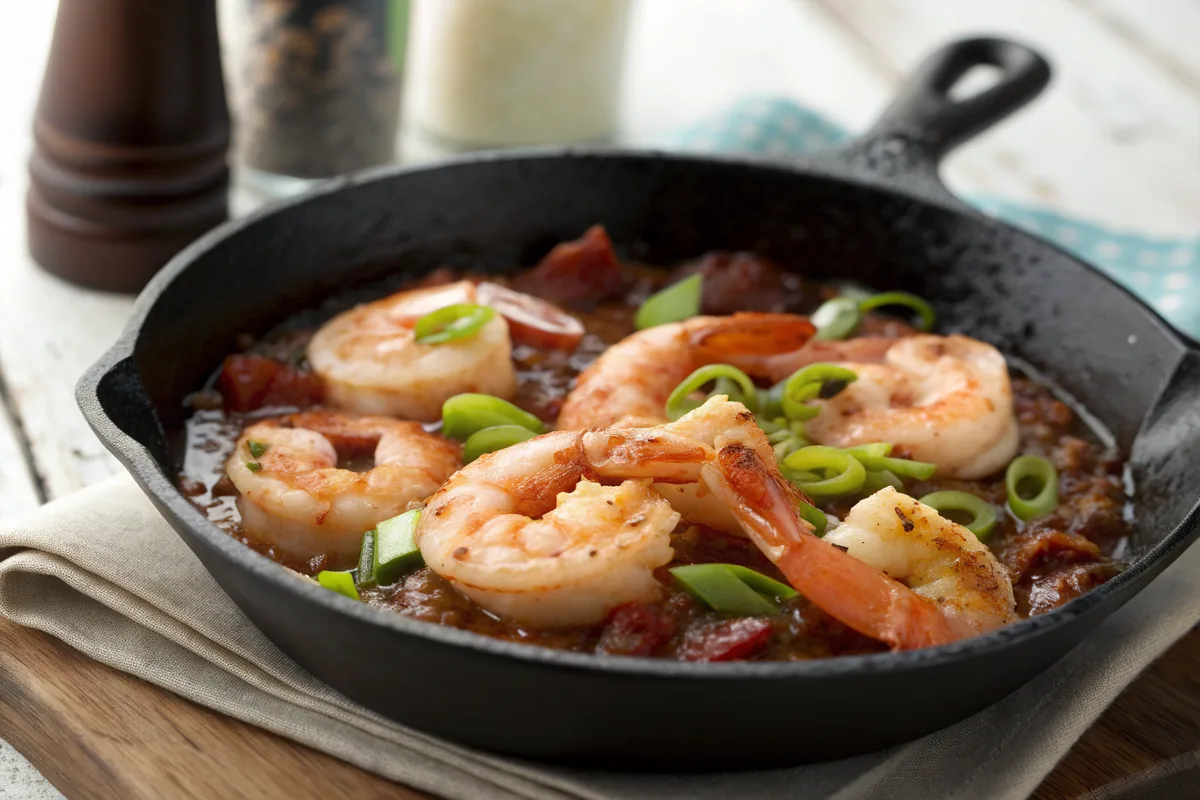
The sauce in a bowl of shrimp and grits is a pan gravy, and it is made in the same skillet in about five minutes once the shrimp come out. The bacon fat is the base. The garlic and the white parts of the green onions go in for a minute until fragrant. A single tablespoon of flour goes over them and cooks for a minute, which is enough to thicken three quarters of a cup of stock into a light, spoonable gravy without turning it into a paste. This is a thin gravy on purpose; it should coat the shrimp and pool into the grits, not sit on top of them like a blanket.
Stock goes in, scraping up the browned bits from the shrimp and bacon, and simmers for two minutes until it thickens. Then the finishing flavors: a tablespoon of fresh lemon juice, which is the note that keeps the whole bowl from tasting heavy, a teaspoon of hot sauce, and a tablespoon of butter swirled in for gloss. Taste it. It should be smoky from the bacon, sharp from the lemon, warm from the hot sauce, and salty enough to season the grits it lands on.
This is a different animal from the other gravies on this site, and it is worth knowing where it sits. It is thinner and brighter than the onion gravy on my smothered pork chops, it has none of the milk in a cream gravy, and it is made in five minutes rather than built from a long stock. Think of it as a pan sauce that borrowed a spoonful of flour.
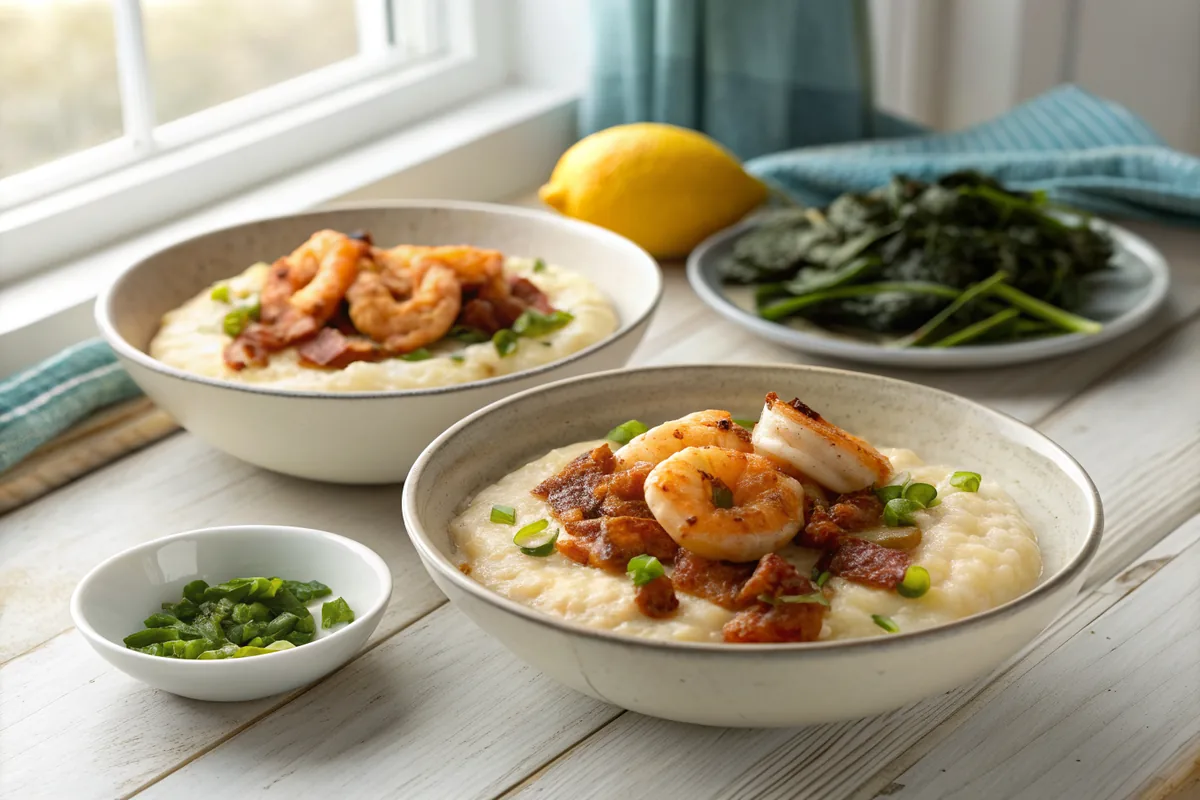
The shrimp go back in with any juices from the plate and half the bacon, and they toss in the gravy for one minute, no more, until they are just opaque through. Then the bowls. The rest of the bacon and the green onion tops go on top so they stay crisp and fresh rather than soggy in the sauce.
Assembly, Timing, and the Table
The order of operations is what makes this a 45-minute dish instead of a 90-minute one. Start the grits first. While they simmer and you stir every five minutes, peel and dry the shrimp, chop the bacon and green onions, mince the garlic, grate the cheese, and set the table. When the grits are ten minutes from done, start the bacon. When the grits are finished and enriched and covered, sear the shrimp, make the gravy, and serve. Nothing waits on anything else, and the shrimp are never more than three minutes from the bowl.
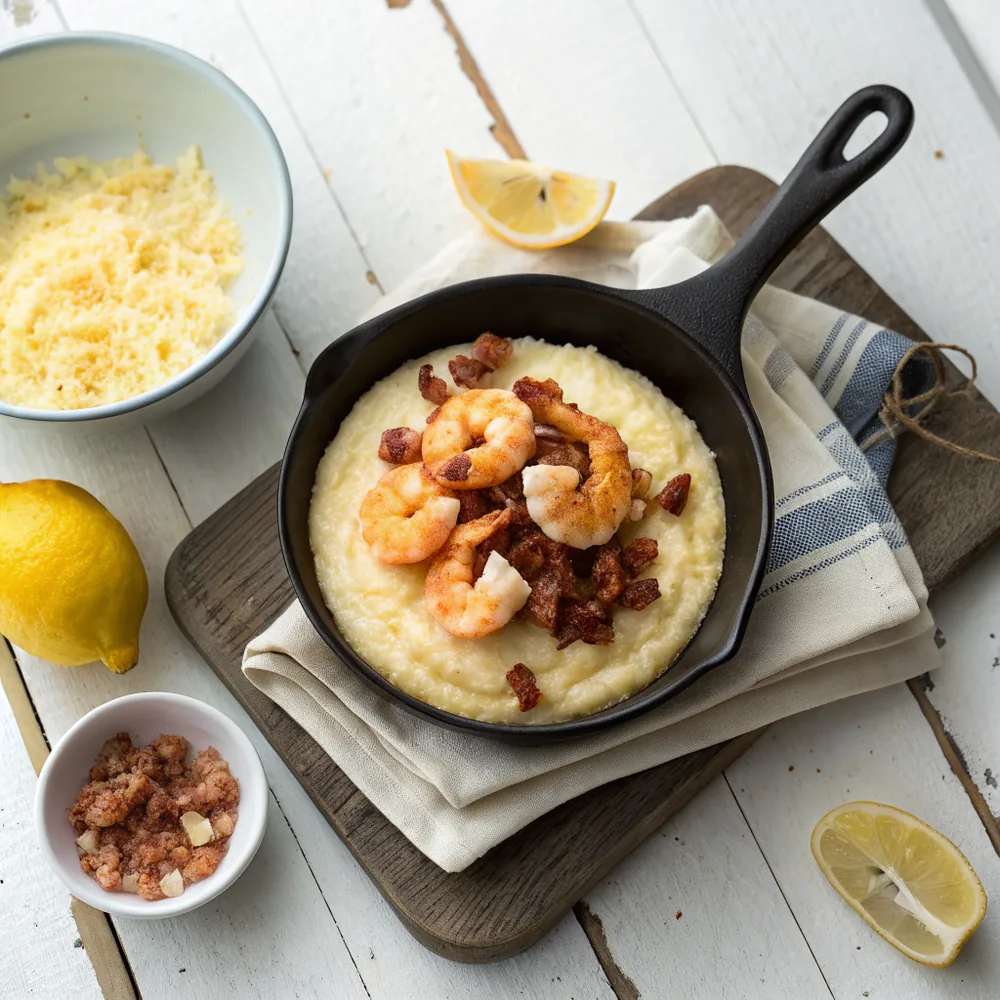
Wide, shallow bowls, warmed if you think of it. Grits first, a generous ladle, spread into a shallow well. Shrimp and gravy over the top, letting the gravy run into the grits. Bacon and green onions scattered over. A lemon wedge on the rim and hot sauce on the table. That is the whole presentation and it does not need anything else.
As a supper it is nearly complete on its own, but the plate likes something green and sharp beside it. A small bowl of collard greens with their vinegar is the Lowcountry choice. A basket of hush puppies from the same kitchen turns it into a fish-fry supper, and a few slices of fried green tomatoes on the side is the brunch version. Split buttermilk biscuits are the breakfast move, and shrimp and grits at nine in the morning with a biscuit is exactly how the dish started.
Variations Worth Making
Andouille or tasso. Replace the bacon with six ounces of diced andouille sausage or tasso ham, rendered the same way. Smokier, spicier, and closer to the New Orleans version. Cut the cayenne in half; the sausage brings its own.
Tomato gravy. Add a cup of diced canned tomatoes with the stock and simmer five minutes longer. This is the Georgia coast version and it makes a redder, tangier gravy that is wonderful with yellow grits.
Mushrooms. Eight ounces of sliced cremini, cooked in the bacon fat before the shrimp until browned. This is a nod to the Crook's Corner original and it adds an earthy depth the plain gravy does not have.
Texas heat. A minced jalapeno with the garlic, a heavier hand of cayenne, and a spoon of diced tomato. Serve with a wedge of lime instead of lemon. This is how it turns up in Houston.
Breakfast shrimp, the old way. Skip the cheese, skip the flour, skip the stock. Cook the shrimp in butter with a little onion, salt, and pepper, and spoon them over plain buttered grits with their pan juices. Five minutes, and it is the dish as Charleston ate it before anyone wrote it down.
Storage, Reheating, and Leftovers
Shrimp and grits do not hold together well as leftovers, but the parts store fine separately. Grits keep four days refrigerated and set into a firm block; reheat them in a saucepan over low heat with a generous splash of milk or water, stirring and mashing until they loosen back into a creamy porridge. They can also be sliced from the block and pan-fried in butter until crisp, which is a Southern breakfast on its own.
Cooked shrimp keep two days and reheat badly, going rubbery in anything more than a minute of gentle heat. If you know you will have leftovers, cook only the shrimp you will eat and refrigerate the rest raw, then sear them fresh the next day. The gravy keeps three days and reheats gently with a splash of stock.
Do not freeze the assembled dish. Cooked grits freeze acceptably in portions for up to 2 months and reheat with milk as above; cooked shrimp do not freeze well at all. Raw shrimp, if bought frozen, go straight back into the freezer in their bag.
Mistakes That Ruin Shrimp and Grits
Instant grits. A gluey paste with no corn flavor. Stone-ground, or quick grits on a weeknight at worst.
Too little liquid, or too little time. Grits at three to one are stiff and chalky; grits at 20 minutes are still raw at the center of the grain. Four to one and 45 minutes, with hot liquid on hand.
Undersalted grits. They absorb salt slowly and taste flat without it. A teaspoon at the start, taste at the end.
Wet shrimp. They steam instead of sear and turn rubbery. Pat them completely dry and season just before the pan.
Overcooked shrimp. Ninety seconds a side, out, and back in for one minute at the end. Pink and just opaque, not curled tight.
A gravy that is too thick. One tablespoon of flour to three quarters of a cup of stock. It should pool into the grits, not sit on top.
No acid. Without the lemon the bowl is rich and heavy and every bite tastes the same. A tablespoon of juice in the gravy and a wedge on the side.
Letting the grits set while you cook the shrimp. They tighten as they wait. Loosen with hot milk right before serving and stir hard.
Shrimp and Grits Recipe
Ingredients
- For the grits:
- 1 cup (5 1/2 oz / 160 g) stone-ground grits, white or yellow
- 2 cups (16 oz / 475 ml) water
- 1 cup (8 oz / 240 ml) whole milk
- 1 cup (8 oz / 240 ml) low-sodium chicken stock
- 1 teaspoon kosher salt
- 3 tablespoons (1 1/2 oz / 43 g) unsalted butter
- 1 cup (4 oz / 115 g) sharp cheddar, freshly grated
- Freshly ground black pepper
- For the shrimp and gravy:
- 1 1/2 pounds (680 g) large Gulf shrimp, 21 to 25 count, peeled and deveined, tails off
- 1/2 teaspoon kosher salt
- 1/2 teaspoon freshly ground black pepper
- 1/2 teaspoon smoked paprika
- 1/4 teaspoon cayenne
- 4 slices thick-cut bacon, chopped
- 3 garlic cloves, minced
- 4 green onions, sliced, whites and greens separated
- 1 tablespoon all-purpose flour
- 3/4 cup (6 oz / 180 ml) low-sodium chicken stock
- 1 tablespoon fresh lemon juice
- 1 teaspoon hot sauce, plus more for the table
- 1 tablespoon unsalted butter
- Lemon wedges, for serving
Instructions
- Start the grits. In a heavy saucepan, bring the water, milk, stock, and salt to a boil. Whisk in the grits in a slow stream, stirring constantly so they do not clump. When the mixture returns to a simmer, drop the heat to the lowest setting.
- Simmer 45 minutes, stirring often. Cook the grits partially covered at a bare simmer, stirring every 5 minutes and scraping the bottom, for 40 to 50 minutes, until they are thick, creamy, and tender with no raw grain left. If they get too stiff, add hot water a quarter cup at a time. They should fall slowly from a spoon.
- Finish with butter and cheese. Off the heat, stir in the butter and cheddar until melted and smooth. Season with black pepper and more salt if needed. Cover and keep warm; if they tighten while they wait, loosen with a splash of hot milk.
- Season the shrimp. Pat the shrimp dry and toss with the salt, pepper, paprika, and cayenne. Dry shrimp sear; wet shrimp steam.
- Render the bacon. In a 12-inch cast iron skillet over medium heat, cook the chopped bacon until crisp, 6 to 8 minutes. Lift it out with a slotted spoon and leave the fat in the pan, about 3 tablespoons.
- Sear the shrimp fast. Raise the heat to medium-high. Lay the shrimp in the bacon fat in a single layer, in two batches if needed, and cook 90 seconds per side until pink with a light crust. They will not be fully done. Move them to a plate.
- Make the pan gravy. Lower the heat to medium, add the garlic and the white parts of the green onions, and cook 1 minute. Sprinkle in the flour and stir 1 minute. Add the stock, scraping up the browned bits, and simmer 2 minutes until it thickens to a light gravy. Stir in the lemon juice, hot sauce, and butter.
- Return the shrimp and bacon. Add the shrimp with any juices and half the bacon to the gravy, and toss 1 minute until the shrimp are just cooked through and coated. Taste and adjust with salt, lemon, or hot sauce.
- Build the bowls. Spoon the grits into wide bowls, top with the shrimp and gravy, and scatter the remaining bacon and the green onion tops over each. Serve at once with lemon wedges and hot sauce.
Frequently Asked Questions
What kind of grits are best for shrimp and grits?
Stone-ground grits, the whole corn kernel ground coarse with the germ intact. They take 40 to 50 minutes to cook and need stirring, but they taste like corn in a way that quick and instant grits never do. Quick grits are an acceptable weeknight substitute and cook in about 10 minutes. Instant grits make a gluey, flavorless paste and should not be used. White grits are the Lowcountry standard and yellow grits taste slightly more of corn; both work. Store stone-ground grits in the freezer, since the germ turns rancid at room temperature.
What is the ratio of liquid to grits?
Four cups of liquid to one cup of stone-ground grits. The liquid can be all water, but a mix of two cups water, one cup whole milk, and one cup chicken stock gives creamy, savory grits that do not scorch the way all-milk grits do. Whisk the grits into boiling liquid in a slow stream, simmer on the lowest heat for 40 to 50 minutes stirring every 5 minutes, and add hot water or milk a quarter cup at a time if they get too stiff. Finished grits should fall slowly from a spoon in a heavy ribbon.
Is shrimp and grits a Texas dish?
No. It comes from the South Carolina Lowcountry, from the Gullah Geechee communities of the sea islands and the kitchens of Charleston, where it began as a fisherman's breakfast of shrimp cooked in bacon fat over hominy grits. Bill Neal's version at Crook's Corner in North Carolina, written up by Craig Claiborne in 1985, spread it to restaurants across the South. Texas has some of the best wild Gulf shrimp in the country, so it belongs on a Texas table, but it is a Southern dish that Texas has borrowed, with credit due.
What shrimp should I use for shrimp and grits?
Large wild Gulf shrimp, 21 to 25 per pound, peeled and deveined with the tails removed. Frozen-at-sea shrimp are fresher than thawed shrimp sitting on ice at the counter unless you live on the coast, so buy frozen and thaw them yourself. Dry them completely on paper towels before seasoning, because wet shrimp steam instead of searing and turn rubbery. Save the shells: simmered fifteen minutes in two cups of water, they make a stock that replaces the chicken stock in the gravy and tastes of the sea.
Do shrimp and grits have cheese in them?
Not originally, but usually now. The old Lowcountry bowl was plain grits with butter, salt, and pepper under the shrimp. The Crook's Corner version that most restaurants follow finishes the grits with sharp cheddar, and a cup of freshly grated extra-sharp cheddar stirred in off the heat with three tablespoons of butter is the standard today. Leave it out and double the butter if you want the shrimp to lead. Grate the cheese yourself, since pre-shredded cheese is coated with starch and melts grainy.
How do you keep grits from getting lumpy or stiff?
Whisk the grits into boiling liquid in a slow, steady stream while stirring, and keep whisking until the pot returns to a simmer; dumping them in all at once is how lumps form. Then cook on the lowest heat, partially covered, stirring every 5 minutes and scraping the bottom. Grits thicken as they cook and thicken more as they sit, so keep hot water or milk nearby and add a quarter cup at a time to bring them back to a slow ribbon. Right before serving, a splash of hot milk and a hard stir loosens grits that have tightened while waiting.
Can shrimp and grits be made ahead?
The grits can, and the shrimp cannot. Cook the grits fully, cool, and refrigerate up to 4 days; they set into a block and loosen again in a saucepan over low heat with a generous splash of milk or water, stirred and mashed until creamy. The gravy keeps 3 days and reheats gently with stock. Cooked shrimp turn rubbery when reheated, so cook only what you will eat and sear the rest fresh the next day. Do not freeze the assembled dish, though cooked grits freeze acceptably in portions.
What do you serve with shrimp and grits?
It is nearly a complete meal, but it wants something green and sharp beside it. Collard greens in their vinegary potlikker are the Lowcountry pairing. A basket of hush puppies makes it a fish-fry supper, fried green tomatoes make it a brunch, and split buttermilk biscuits make it the breakfast the dish started as. Keep lemon wedges and hot sauce on the table. Sweet tea or a cold lager alongside, and for dessert, something simple like banana pudding or peach cobbler.