Southern Comfort Food
Smothered Pork Chops
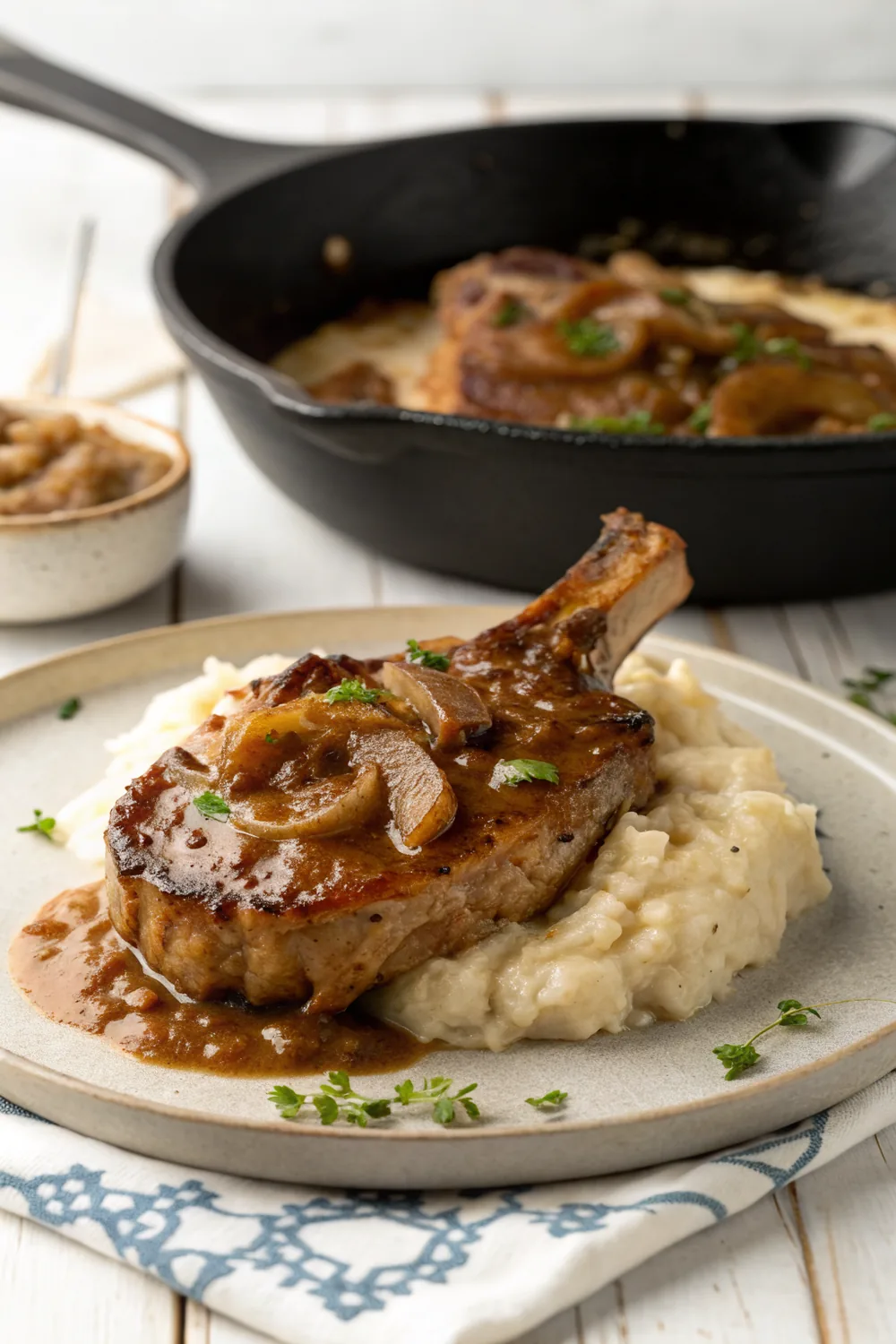
Chef Mia's smothered pork chops: bone-in chops dredged, seared in cast iron, braised 25 minutes under a slow onion gravy. Fork-tender, never grilled.
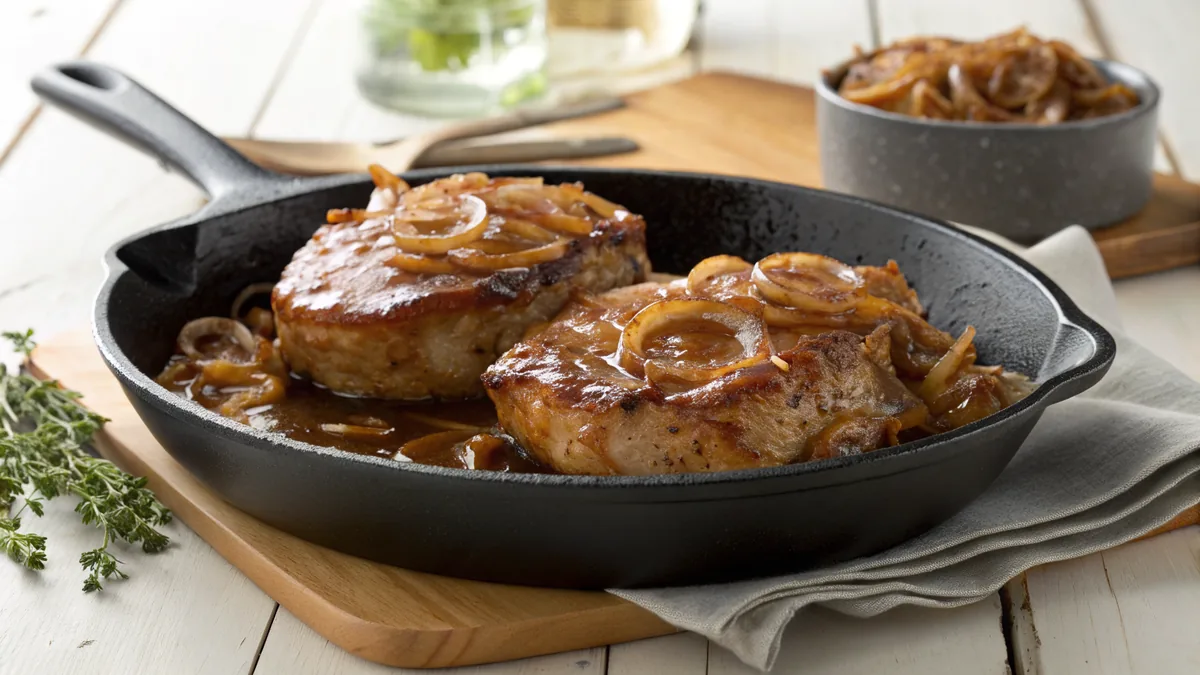
Quick answer: Smothered pork chops are bone-in pork chops, dredged in seasoned flour and seared hard in a cast iron skillet, then braised for about 25 minutes, covered, in a brown onion gravy built in the same pan from the drippings, two sliced onions cooked slow, a little of the dredging flour, and chicken stock. The flour on the chops thickens the gravy as they cook, the onions melt into it, and the chops come out fork-tender under a sauce the color of a pecan shell. This is the Southern braised version, not a grilled chop and not a chicken dish; serve it over rice or mashed potatoes with something green.
Smothered is a Southern verb before it is a dish. It means to cook something slowly, covered, under a blanket of gravy until the meat and the sauce stop being two things. Chicken gets smothered, pork chops get smothered, and in Louisiana so do okra and potatoes. The pork chop version is the one my grandmother made on Wednesdays, because a package of bone-in chops was cheap, two onions were always in the bin, and by the time the rice was done the chops had gone from tough to something you could cut with the side of a fork.
The confusion around the word is real, and it is worth clearing up before the skillet gets hot. The Texas Roadhouse smothered chicken is a grilled breast buried under sauteed mushrooms, onions, and melted Jack cheese, and their page says so plainly: no gravy at all, a steakhouse plate. The Texas Roadhouse pork chops are brined for an hour and grilled hot, and they are excellent, but they are the opposite of this in every way that matters. Nothing here is grilled. The chops go into a skillet, get a crust, and then spend twenty-five minutes under a lid drowning in onion gravy on purpose.
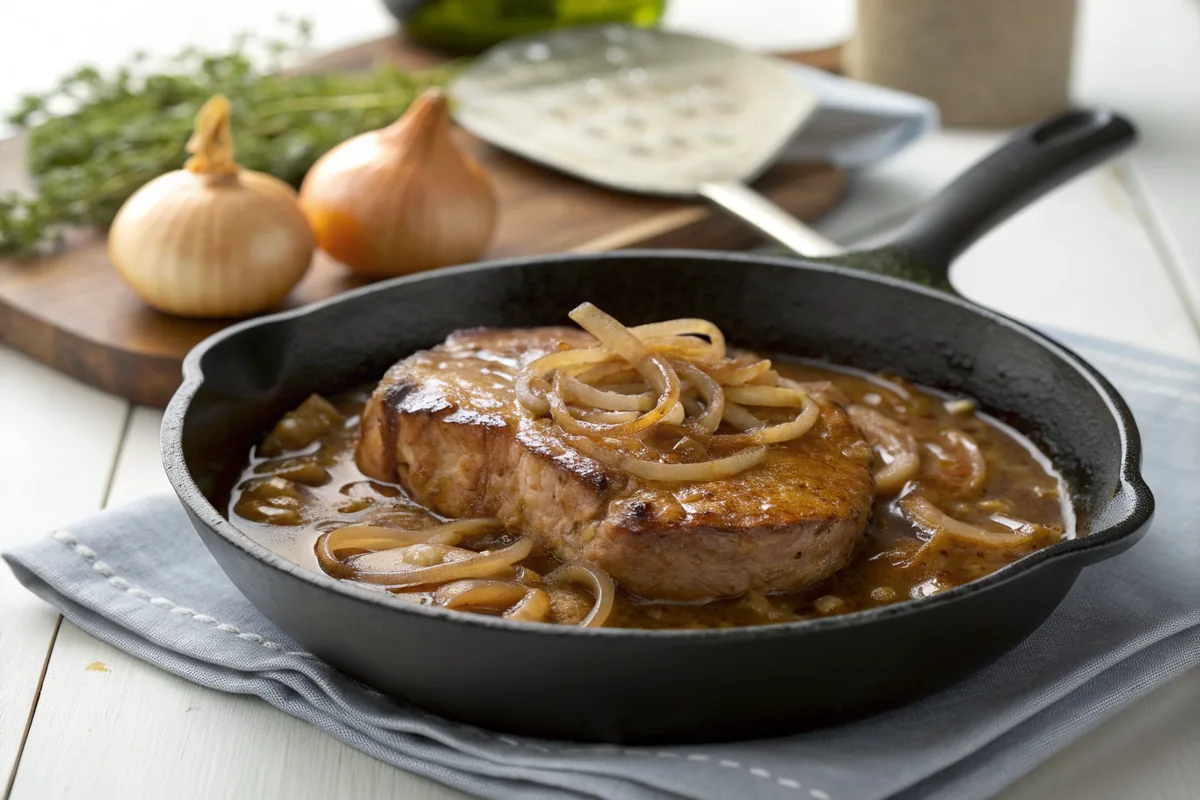
The gravy is the reason to make it. It is a brown pan gravy, built from the fond the chops leave behind and two onions cooked until they are soft and sweet, thickened by the seasoned flour that came off the chops during the sear. It is not the peppery white cream gravy that goes on chicken-fried steak, and it is not the roasted-bird gravy on my turkey gravy page either. It sits between them, darker than one and simpler than the other, and it is the best thing you will put on rice this month.
Smothered Means Braised, Not Grilled and Not Buried
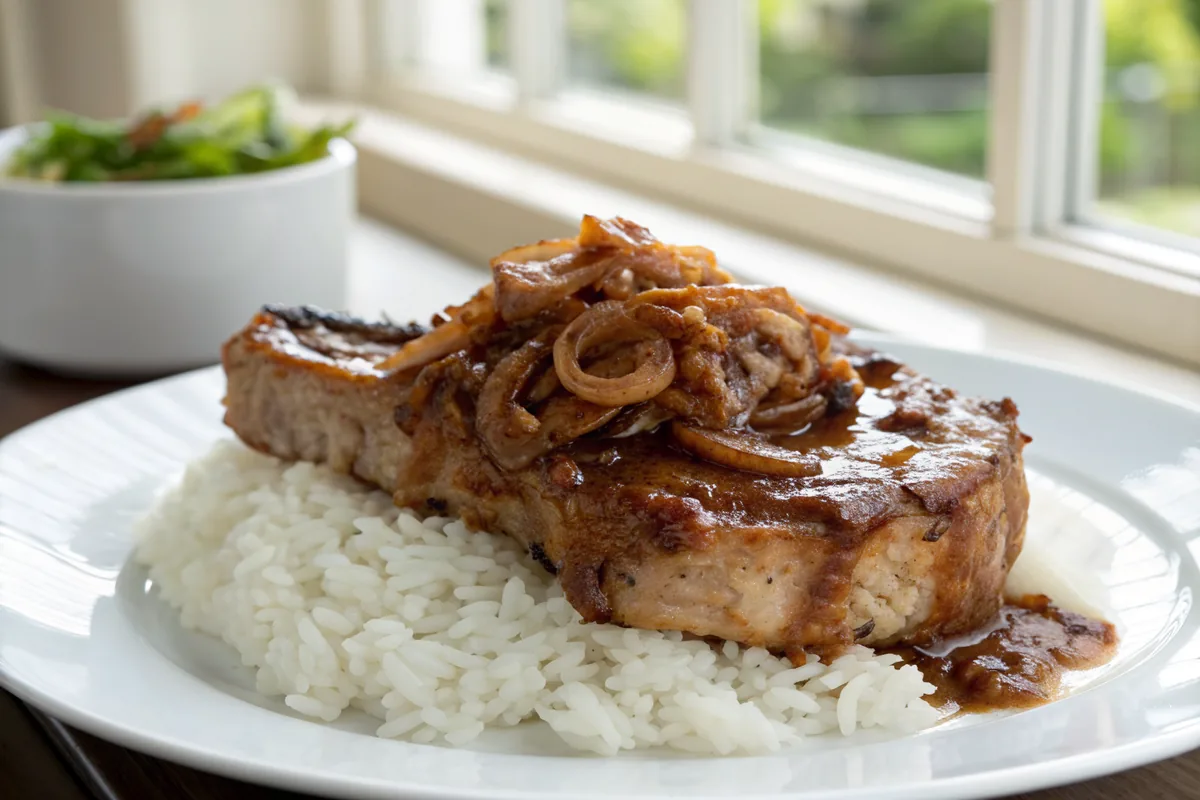
Three dishes in Texas share this word and only one of them is this recipe, so the map first. Southern smothered pork chops, this page, are seared and then cooked covered under a gravy until tender: a braise, in the technical sense, done in one skillet in under an hour. The gravy is the medium the meat cooks in, not a topping added at the end.
Texas Roadhouse smothered chicken uses the same word for a completely different plate: a grilled chicken breast topped with sauteed onions, mushrooms, and melted Jack cheese. The chain calls it smothered because the breast disappears under the topping, and the Roadhouse copycat page on this site is honest about the gap, describing Southern smothered chicken as braised slowly in a thick onion gravy and then saying that the restaurant version has no gravy at all. If that steakhouse plate is what you want, that page is the recipe. If you want the braise, you are in the right place, and the technique here works on chicken thighs exactly as it does on pork.
Texas Roadhouse pork chops are the third: boneless chops brined for an hour in salt and brown sugar, rubbed with pepper, and grilled over two zones to 145F with a blush of pink in the center. That is a fast, dry-heat method built to keep a lean chop juicy, and it is the right way to cook a thick boneless loin chop. It is the opposite of a braise. Here the chops go well past 145F on purpose, because the goal is not a pink center but collagen melted into gravy.
Knowing which dish you are cooking decides everything downstream: the cut of chop, the thickness, the pan, the temperature, and the time. A brined boneless loin chop braised for 25 minutes turns to cardboard. A bone-in blade chop grilled to 145F is chewy and mean. Match the cut to the method and both come out right.
The Chop: Bone-In, Fat On, Not Too Thick
The braise wants a chop with bone, fat, and connective tissue, which is the reverse of what the grill wants. The bone slows the cooking and keeps the meat near it moist, the fat cap renders into the gravy, and the collagen in the tougher cuts is what turns into the fork-tender texture the dish is known for. A lean, boneless, center-cut loin chop has none of those things and dries out under a lid no matter how much gravy is on top.
Blade chops, cut from the shoulder end of the loin, are the traditional choice and the best one. They are marbled, they have a strip of darker shoulder meat along one side, and they are often the cheapest chop in the case because they are tough when cooked fast. Braised, they are the most flavorful cut on the pig. They need 35 to 40 minutes under the lid rather than 25, and they are worth it.
Bone-in center-cut or rib chops are the other good option, more common in most grocery stores, and they cook in 20 to 25 minutes. Pick chops with a visible fat cap and some marbling. Sirloin chops, from the hip end, work as well and are often sold as pork steaks; they are irregular but they braise beautifully.
Three quarters of an inch to one inch thick is the range. Thinner chops, the half-inch ones sold in family packs, overcook before the gravy develops; if they are what you have, sear them faster and cut the braise to 12 minutes. Thicker than an inch and the sear-then-braise timing gets awkward; cut them down or plan on 45 minutes. Four chops of about ten ounces each is what fits a 12-inch skillet and feeds four.
The Dredge and the Sear
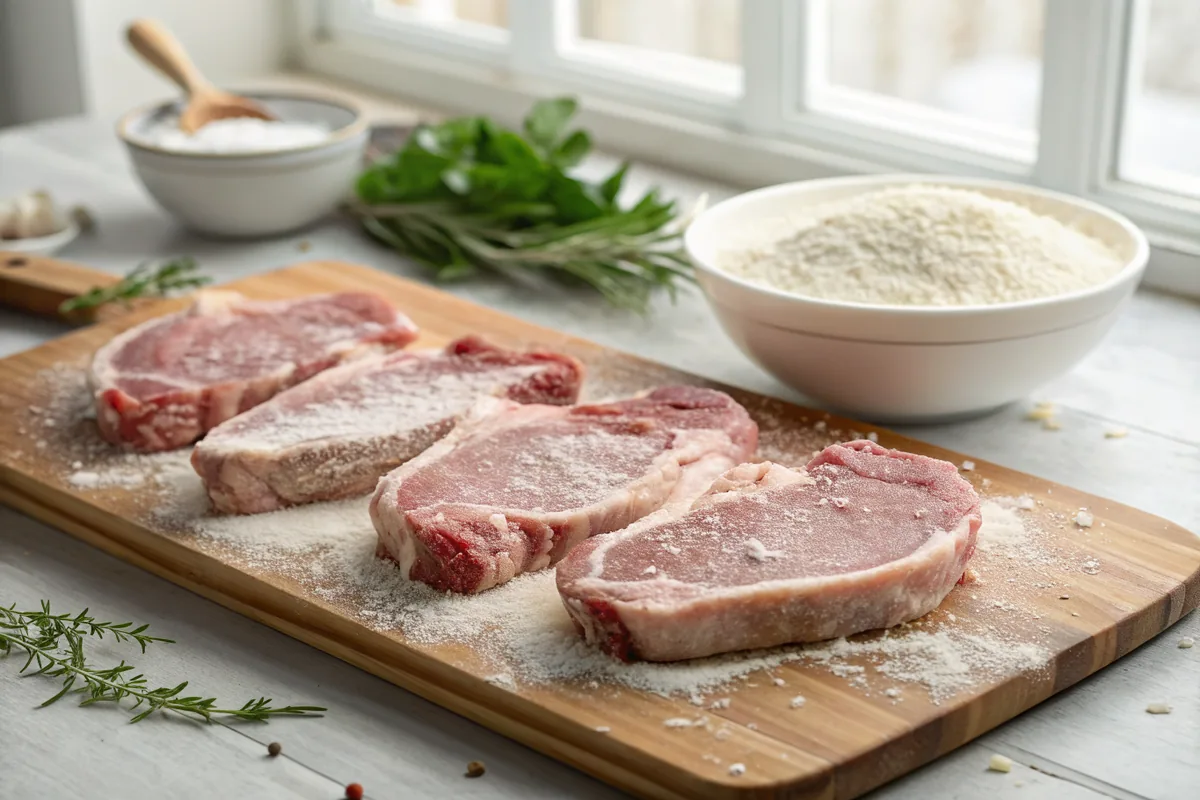
The flour dredge does two jobs and neither of them is a crust. First, it protects the surface of the chop during the hard sear so the meat browns without the outside toughening. Second, and more important, most of it dissolves into the pan during the braise and becomes the thickener for the gravy. That is why the chops are dredged lightly, a thin dusting shaken off hard, and why a couple of tablespoons of the leftover flour are saved for the roux. It is one ingredient doing its work in two places.
Season the chops before the flour, not the flour itself. Salt, black pepper, garlic powder, smoked paprika, and thyme rubbed directly onto the meat season it all the way through the braise. Seasoning only the flour leaves the pork underseasoned once the coating melts away. Both is fine, but the chop comes first.
The sear is hot and short. Three to four minutes a side in shimmering oil in a cast iron skillet, until the surface is deeply browned, the color of a pecan shell. The chops will not be cooked through, and they should not be, because they have 25 more minutes coming. What you are building is fond, the layer of browned flour and meat juices stuck to the pan, which is the flavor base of the gravy and the reason this dish cannot be made in a nonstick skillet. Do not crowd the pan; two chops at a time if four will not fit with space between them.
Bacon drippings in place of the oil is the traditional fat and adds a layer of smoke the finished gravy carries all the way to the table. If you have a jar by the stove, use it. Neutral oil works; butter alone burns at the sear temperature and should wait for the onions.
Onions Cooked Slow Are the Gravy
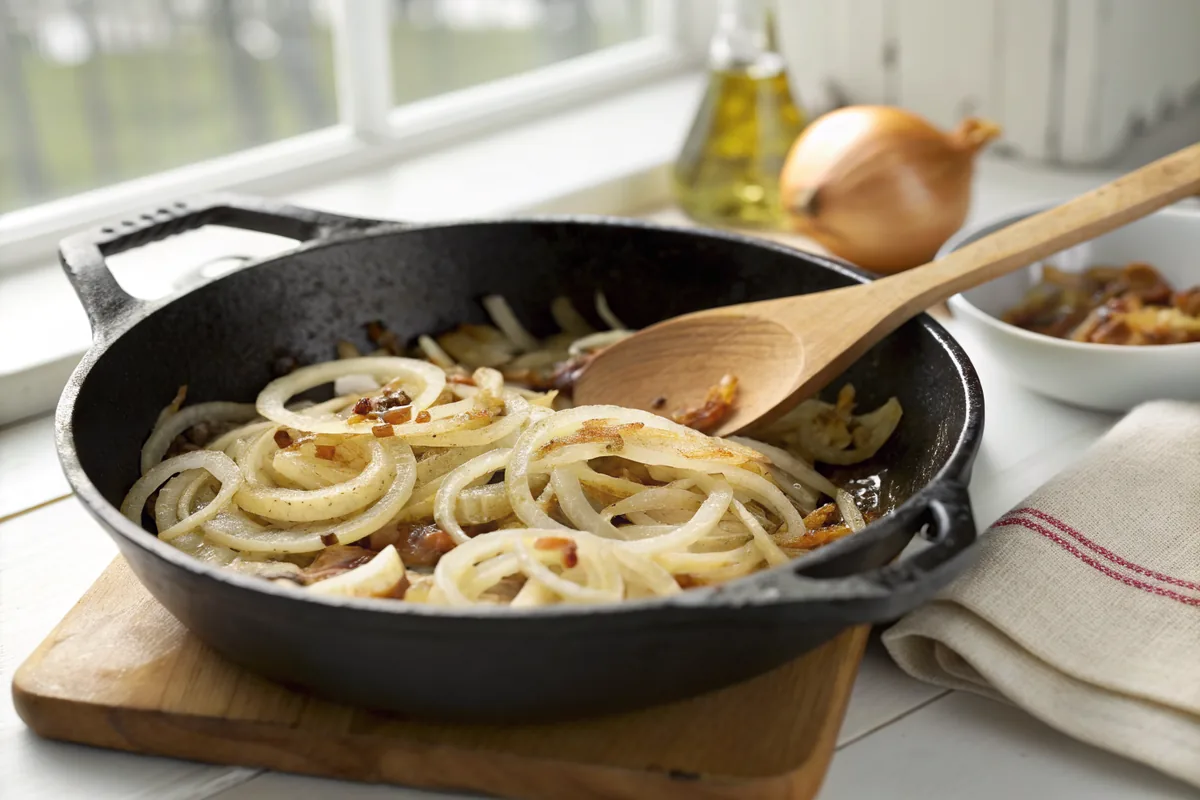
Two large onions look like too many. They are not. Over twelve to fifteen minutes on medium heat, stirring often and scraping the fond off the bottom of the pan as they release their water, they collapse to a third of their volume, turn golden, and go sweet in a way that no shortcut produces. That sweetness against the salt and smoke of the pork is the entire flavor of a smothered pork chop, and a pot of onions cooked for five minutes gives you a gravy that tastes like stock with raw onion in it.
Yellow onions are the right choice. Sweet onions, Vidalia or Texas 1015s, go sweeter still and are wonderful if that is what you want; white onions stay sharper; red onions turn the gravy an odd color. Slice them a quarter inch thick, pole to pole, so the strands hold their shape through the braise rather than melting entirely. Half-moon slices across the equator turn to mush, which some people prefer, and is a legitimate choice.
A pinch of salt on the onions at the start pulls their water out faster and helps them cook evenly. Keep the heat at medium, not high; the goal is soft and golden, not charred. If the pan gets dry and the fond starts to darken toward black, add a tablespoon of water and scrape. The browned bits from the sear should end up dissolved into the onions, not burned onto the pan.
Mushrooms are a common addition and a good one, eight ounces sliced, added with the onions. They release water and take about the same time. Bell pepper and celery turn the dish toward Louisiana, where smothered pork chops lean on the trinity, and that is a real regional version, not a mistake. For the Texas Wednesday supper, onions alone.
Building the Onion Gravy
Once the onions are soft, the gravy comes together in about five minutes and follows the same logic as every pan gravy: fat, flour, liquid in stages. The butter goes in and melts, the reserved two tablespoons of dredging flour go over the onions, and you stir for two full minutes until the flour loses its raw smell and turns the color of toast. This short cook is what keeps the gravy from tasting pasty.
Stock goes in a little at a time. The first half cup seizes into a thick paste around the onions, which is correct; stir it completely smooth, then add the next cup, then the last. Adding it all at once is how lumps happen, and lumps in an onion gravy are nearly impossible to strain out because of the onions. Chicken stock is the standard liquid; a mix of half chicken stock and half beef stock gives a darker, richer gravy that some Southern cooks swear by.
A teaspoon of Worcestershire adds depth and color without announcing itself. A bay leaf tucked in for the braise is traditional. Hot sauce goes in at the end, to taste. The gravy at this stage should be thinner than you want it to be at the table, because the flour still on the chops will thicken it further during the braise and it will reduce slightly under the lid.
Milk is the fork in the road. Stirring half a cup of whole milk or half-and-half into the finished gravy after the chops come out makes a lighter, tan-colored gravy that many Southern kitchens consider the correct one, closer to a cream gravy. Leaving it out keeps the gravy brown and glossy. I make it without on most Wednesdays and with when I am serving it over mashed potatoes, and I have never had a complaint either way. It is a family preference, not a rule.
The Braise: Lid On, 25 Minutes, Past 145F on Purpose
The chops go back into the skillet, into the gravy, with any juices they released on the plate. Spoon onions and gravy over the top so they are mostly covered, drop the heat until the surface barely trembles, and put the lid on. From here the skillet does the work. Steam trapped under the lid cooks the top of the chops, the gravy braises the bottom, and the flour on the meat slowly dissolves into the sauce.
Twenty to twenty-five minutes is right for bone-in center-cut chops about an inch thick, turned once halfway so both sides spend time submerged. Blade chops need 35 to 40 minutes because they have more collagen to break down; check them at 30. The test is a fork, not a thermometer: it should slide into the thickest part with no resistance, and the meat near the bone should be starting to pull away.
The internal temperature of a properly smothered chop is somewhere between 170F and 185F, well past the 145F that a grilled chop is pulled at, and that is not a mistake. A braise is a different kind of cooking. At 145F the collagen in a blade or rib chop is still intact and the meat is chewy; it takes the extra time and the higher temperature, in a wet environment, for it to convert to gelatin. The gravy keeps the surface from drying while that happens. This is the same reason a brisket is done at 203F and a steak at 130F.
Keep the simmer gentle. A hard boil under the lid toughens the outside of the chops and can scorch the flour in the gravy on the bottom of the skillet. If the gravy is reducing too fast, add a quarter cup of stock and lower the heat. If it looks thin when the chops are done, lift them out and simmer the gravy uncovered for a few minutes before serving.
Rice, Potatoes, and Something Green
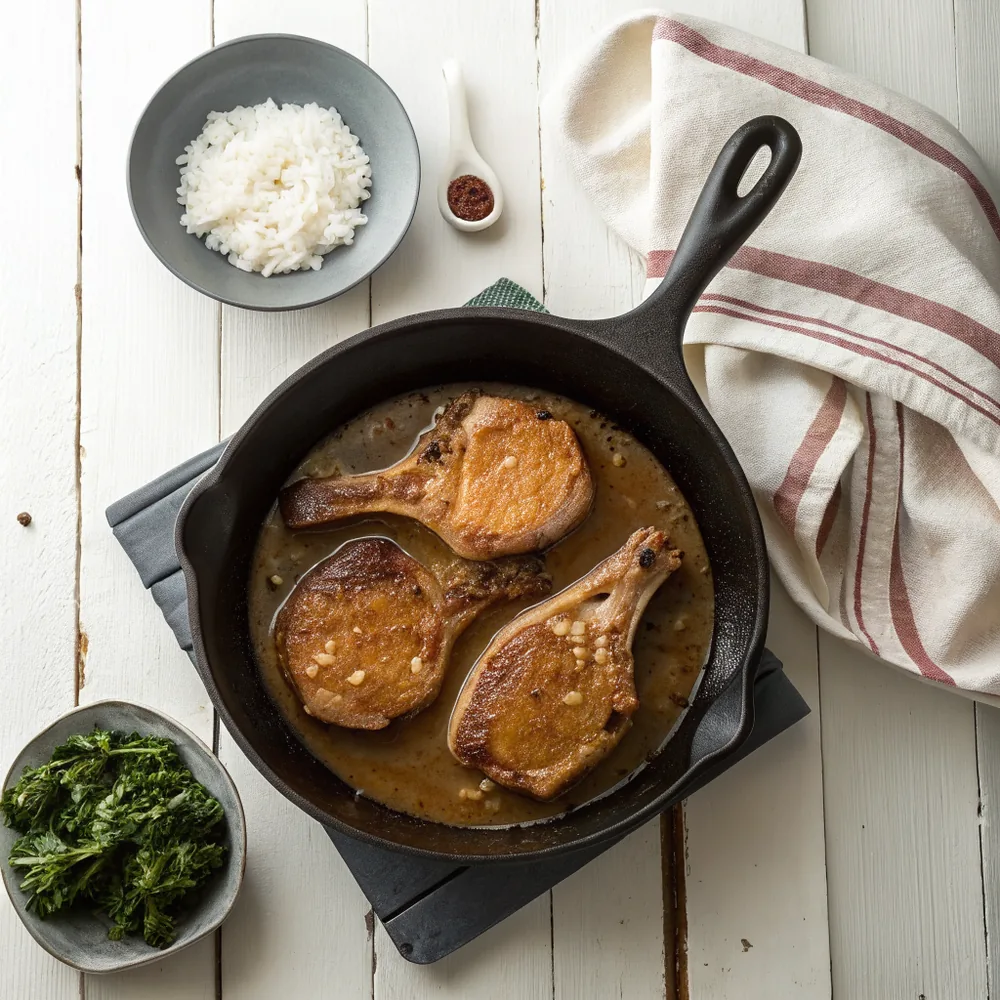
Smothered pork chops are served over something that soaks up gravy, and in Texas that is a toss-up between white rice and mashed potatoes. Rice is the older answer, the one from Louisiana and East Texas kitchens, and it is what I grew up on. A pile of mashed potatoes is the Sunday version and makes the plate heavier and more festive. Either way, the gravy should pool. Nobody has ever complained about too much onion gravy on a plate.
The green matters because the plate is rich. A bowl of collard greens in their potlikker is the classic partner, and the vinegar in the greens is what keeps the whole meal from feeling heavy. Green beans with bacon are the weeknight version. A wedge of cast iron cornbread or a soft roll for the last of the gravy, and sweet tea, and that is the table.
For the full Southern supper this belongs with the rest of the Southern comfort food collection, where it sits next to fried chicken and the bean pots. Leftover chops the next day, pulled off the bone and warmed in the gravy, go over a split biscuit for a breakfast that is better than the dinner was.
Variations That Hold Up
Smothered chicken thighs, the Southern kind. Bone-in, skin-on thighs, dredged and seared skin side down first, then braised 35 minutes in the same onion gravy. This is the dish the Texas Roadhouse smothered chicken is named after and does not resemble. Thighs only; a breast dries out under the lid.
Louisiana style. Add a diced green bell pepper and two ribs of celery to the onions, a bay leaf to the braise, and a heavier hand of black pepper and cayenne. Serve over rice, always. This is the version that turns up on plate-lunch boards from Beaumont to Lafayette.
Mushroom gravy. Eight ounces of sliced cremini with the onions. They add an earthy depth and are the most common addition in Texas cafes. Cook them until they have released their water and started to brown before adding the flour.
Slow cooker. Sear the chops and cook the onions and gravy in the skillet as written, then move everything to a slow cooker on low for 4 hours. The chops go softer, closer to pulled pork, and the gravy is thinner; thicken it at the end with a tablespoon of flour whisked into a quarter cup of cold stock.
Oven braise for a crowd. Double the recipe in a large Dutch oven, sear in batches, build the gravy, and finish covered in a 325F oven for 40 minutes. The oven heats more evenly than a burner and there is no risk of scorching the bottom of the pan.
Storage, Reheating, and the Second Day
Like most braises, smothered pork chops are better on the second day, once the gravy has soaked into the meat overnight. Store the chops in the gravy, covered, in the refrigerator for up to 4 days. Reheat gently in a covered skillet over low heat with a splash of stock to loosen the gravy, 10 to 12 minutes, turning once. The microwave works in a pinch at half power, covered, but the meat toughens at the edges.
They freeze well in the gravy for up to 3 months. Thaw overnight in the refrigerator and reheat as above. If the gravy has separated slightly, a hard whisk over low heat brings it back. Freeze without the rice or potatoes, which do not hold up.
Leftover onion gravy on its own is worth saving. It reheats over rice, over biscuits, or over a fried egg, and a spoonful stirred into a pot of pinto beans is a trick worth knowing.
Mistakes That Ruin Smothered Pork Chops
Using boneless loin chops. Lean, no fat, no collagen: they dry out under the lid no matter how good the gravy is. Bone-in blade, rib, or center-cut chops with a fat cap.
Pulling them at 145F. That is the grilling number. A braised chop needs to go well past it for the collagen to melt; the test is a fork, not a thermometer.
Rushing the onions. Five minutes gives you raw onion in stock. Twelve to fifteen minutes on medium, until golden and collapsed, is the gravy.
Skipping the sear or using nonstick. No fond, no flavor base. Cast iron or a heavy stainless skillet, hot oil, deep brown.
Adding all the stock at once. Lumps, and they cannot be strained out of an onion gravy. Half a cup, stir smooth, then the rest in two additions.
Boiling under the lid. A hard simmer toughens the meat and scorches the flour on the bottom. The surface should barely tremble.
A gravy too thick before the braise. The flour on the chops will thicken it further. Start it a little loose and reduce at the end if needed.
Serving it without something to soak up the gravy. Rice or mashed potatoes are not garnish. They are half the dish.
Smothered Pork Chops Recipe
Ingredients
- 4 bone-in pork chops, 3/4 to 1 inch thick (about 2 1/2 pounds / 1.1 kg), blade or center-cut
- 1 1/2 teaspoons kosher salt
- 1 teaspoon freshly ground black pepper
- 1 teaspoon garlic powder
- 1 teaspoon smoked paprika
- 1/2 teaspoon dried thyme
- 1/2 cup (2 1/4 oz / 65 g) all-purpose flour, for dredging
- 3 tablespoons neutral oil or bacon drippings
- 2 large yellow onions (about 1 1/2 pounds / 680 g), halved and sliced 1/4 inch thick
- 3 garlic cloves, minced
- 2 tablespoons unsalted butter
- 2 tablespoons of the reserved dredging flour
- 2 cups (16 oz / 475 ml) low-sodium chicken stock
- 1 teaspoon Worcestershire sauce
- 1/2 cup (4 oz / 120 ml) whole milk or half-and-half, optional, for a lighter gravy
- Hot sauce, to taste
- 2 green onions, sliced, for serving
- Cooked white rice or mashed potatoes, for serving
Instructions
- Season and dredge the chops. Pat the chops dry. Mix the salt, pepper, garlic powder, paprika, and thyme, and rub it over both sides of each chop. Put the flour in a shallow dish, press each chop into it on both sides, and shake off the excess. Reserve 2 tablespoons of the leftover flour for the gravy.
- Sear hard in cast iron. Heat the oil in a 12-inch cast iron skillet over medium-high until it shimmers. Lay in the chops without crowding, two at a time if needed, and sear 3 to 4 minutes per side until deeply browned. They will not be cooked through. Move them to a plate.
- Cook the onions slow. Lower the heat to medium. Add the onions to the drippings with a pinch of salt and cook, stirring often and scraping up the browned bits, until they are very soft, golden, and reduced by half, 12 to 15 minutes. Do not rush this; the onions are the gravy.
- Add garlic, butter, and flour. Stir in the garlic and cook 1 minute. Add the butter, let it melt, then sprinkle the reserved 2 tablespoons of flour over the onions and stir constantly for 2 minutes until the flour smells toasted and coats everything.
- Build the gravy. Pour in about half a cup of the stock and stir hard; it will seize into a thick paste around the onions. Add the rest of the stock in two more additions, stirring smooth each time, then the Worcestershire. Bring to a simmer. The gravy should coat a spoon; thin with a splash more stock if needed.
- Return the chops and cover. Nestle the chops back into the skillet with any juices from the plate, spooning gravy and onions over the top so they are mostly submerged. Lower the heat to a bare simmer and cover with a lid.
- Braise 25 minutes. Cook, covered, for 20 to 25 minutes for center-cut chops, turning once halfway, until a fork slides in with no resistance and the meat starts to pull from the bone. Blade chops need 35 to 40 minutes. The internal temperature will be well past 145F, which is correct for this dish.
- Finish the gravy. Move the chops to a platter. If using milk, stir it into the gravy now and simmer 2 minutes. Taste and adjust with salt, pepper, and a few dashes of hot sauce. If the gravy is too thick, loosen with stock; if too thin, simmer uncovered a few minutes.
- Serve over rice. Spoon the chops and a generous amount of onion gravy over white rice or mashed potatoes, scatter the green onions on top, and serve hot with something green alongside.
Frequently Asked Questions
What are smothered pork chops?
Smothered pork chops are a Southern braise: bone-in pork chops dredged in seasoned flour, seared hard in a skillet, then cooked covered for 20 to 40 minutes in a brown onion gravy built in the same pan from the drippings, slowly cooked onions, a little flour, and chicken stock. The gravy is the cooking medium, not a topping, and the flour from the chops dissolves into it as they braise. The result is fork-tender meat under a glossy onion gravy, traditionally served over white rice or mashed potatoes.
Is this the same as Texas Roadhouse smothered chicken?
No. The Texas Roadhouse dish is a grilled chicken breast topped with sauteed mushrooms, onions, and melted Jack cheese, with no gravy; the chain calls it smothered because the breast disappears under the topping. Southern smothered pork chops are braised in an onion gravy for a fork-tender result, and the same technique applied to bone-in chicken thighs is the Southern smothered chicken the Roadhouse plate is named after. They share a word and nothing else. The Roadhouse copycat is a 30-minute steakhouse plate; this is a one-skillet braise.
Why are my smothered pork chops tough?
Almost always one of two things: the wrong chop or too little time. Boneless loin chops have no fat or collagen and dry out under a lid no matter what. Use bone-in blade, rib, or center-cut chops with a visible fat cap. Then give them enough time: 20 to 25 minutes for center-cut, 35 to 40 for blade chops, at a bare simmer. A chop pulled at 145F, the grilling number, is still chewy in a braise; it needs to go well past that for the collagen to melt. The test is a fork sliding in with no resistance.
What cut of pork chop is best for smothering?
Bone-in blade chops, cut from the shoulder end of the loin, are the traditional choice and the best one: marbled, full of collagen, and cheap because they are tough when cooked fast. Bone-in center-cut or rib chops are the more common option and braise well in 20 to 25 minutes. Look for a visible fat cap and some marbling, three quarters to one inch thick. Avoid boneless loin chops, which are too lean for a braise, and very thin chops, which overcook before the gravy develops.
Should smothered pork chops have milk in the gravy?
It is a family preference, not a rule. Many Southern kitchens stir half a cup of whole milk or half-and-half into the finished gravy for a lighter, tan-colored sauce closer to a cream gravy. Others keep it a brown gravy with stock only, glossy and darker. Both are traditional. If you are serving the chops over mashed potatoes the milk version works beautifully; over rice, the brown version is the classic. Add the milk after the chops come out, and simmer two minutes.
Can I make smothered pork chops in a slow cooker?
Yes, with one condition: sear the chops and cook the onions and gravy in a skillet first, as written, then transfer everything to the slow cooker on low for about 4 hours. Skipping the sear loses the fond that gives the gravy its flavor and color. The chops will come out softer than the skillet version, closer to pulled pork, and the gravy will be thinner; thicken it at the end with a tablespoon of flour whisked into a quarter cup of cold stock and stirred in.
What do you serve with smothered pork chops?
Something to soak up the gravy first: white rice is the older Louisiana and East Texas answer, mashed potatoes the Sunday one. Then something green and sharp to cut the richness, ideally collard greens in their vinegary potlikker, or green beans with bacon on a weeknight. Cornbread or a soft roll for the last of the gravy, and sweet tea. Leftover chops pulled off the bone and warmed in the gravy over a split biscuit make a better breakfast than most dinners.
Can I make smothered pork chops ahead?
You should, because they are better on the second day once the gravy has soaked into the meat. Cook them fully, cool, and store the chops in their gravy in the refrigerator for up to 4 days. Reheat gently in a covered skillet over low heat with a splash of stock, 10 to 12 minutes, turning once. They also freeze in the gravy for up to 3 months; thaw overnight and reheat the same way, whisking the gravy if it has separated. Freeze without the rice or potatoes.