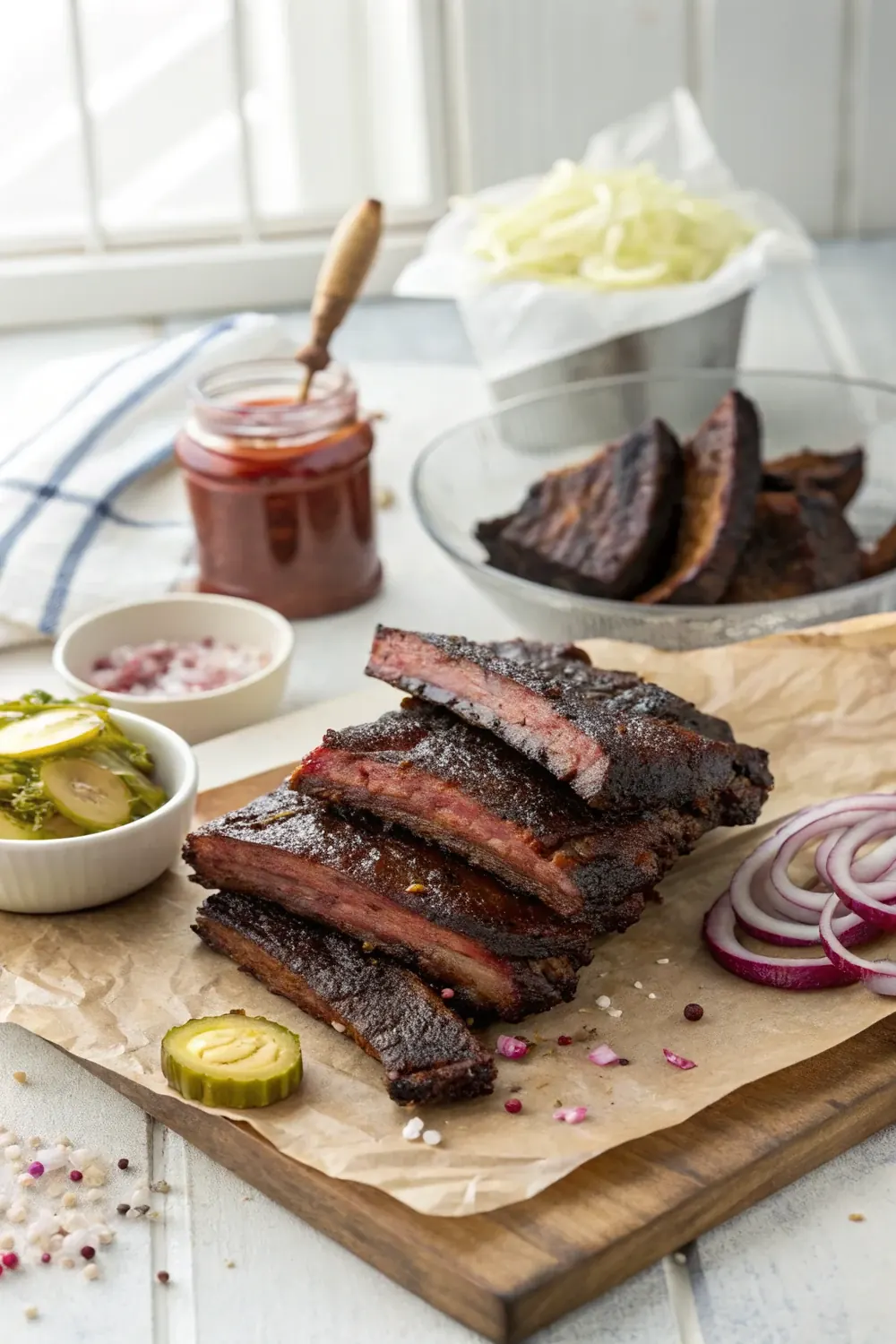
Texas BBQ
Smoked Venison Ribs
Smoked venison ribs: trim the tallow hard, smoke 2 hours at 225F, then foil-braise 2 more with broth until tender. The Texas deer camp method.
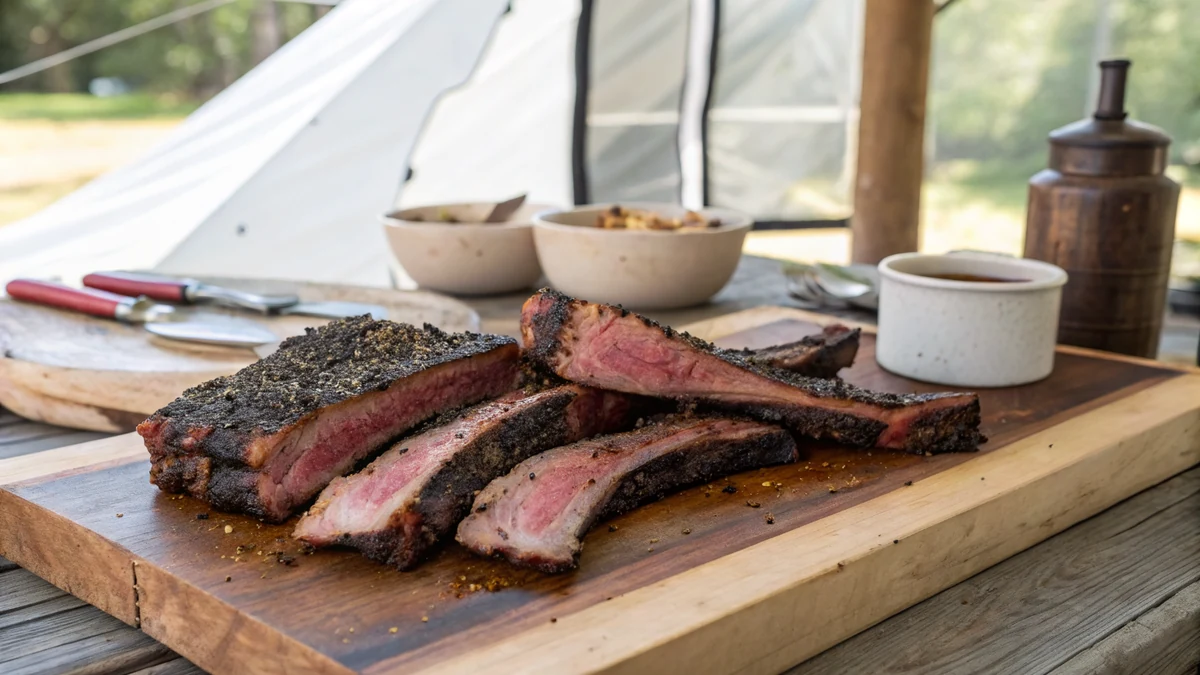
Quick answer: Venison ribs are far leaner than pork or beef ribs, so the Texas deer camp method smokes them in two acts: 2 hours of bare smoke at 225F (107C) for flavor, then 2 to 2.5 hours wrapped tight in foil with broth and butter until the meat pulls easily from the bone, around 200F. First, trim aggressively: deer fat, the waxy tallow that coats the ribs, does not render like pork fat and eats like candle wax, so strip it and the silverskin down to clean meat. Season simply, salt, coarse pepper, garlic, a little juniper if you have it, smoke bone side down over post oak or pecan, then wrap with a half cup of beef broth and butter per rack and finish until probe-tender. Glaze the last 20 minutes if you like. A whitetail rack feeds two as a main; axis ribs, the best-eating venison in Texas, run meatier. It is the cut most hunters leave at the processor, and it might be the best barbecue in the whole deer.
Every November, half the pickups in my county head west with rifles racked, and every December the same trucks come home with coolers of backstrap, hindquarter roasts, and grind, and no ribs. Ask where the ribs went and you get a shrug: too much work, too little meat, the processor keeps them or they go to the coyotes. I have been fighting that shrug for years, one plate at a time. Smoked right, venison ribs are deer camp's best-kept secret: deeper-flavored than pork ribs, wilder than beef, and attached to a story every Texan at the table wants to hear.
The reason they get abandoned is the reason they need their own method. Venison is radically lean, 3 to 5 percent fat against 20-plus for pork spares, and what fat a deer does carry is tallow that refuses to render at barbecue temperatures, setting waxy on the roof of your mouth if you leave it on. So the two crutches every pork rib method leans on, self-basting marbling and rendering fat, simply do not exist here. Run venison ribs through a naked six-hour smoke and you get jerky on bones. This cut demands the two-act structure: real smoke first, then a sealed, wet braise to carry lean meat to tenderness that its own fat never could.
With over 700,000 deer hunters taking to the field in Texas every season, the raw material for this recipe is riding home in coolers by the ton, mostly unclaimed. This guide is my case for claiming it: field and processor decisions that save the rack, the hard trim that makes or breaks the plate, the smoke-then-braise schedule, whitetail against axis expectations, and what to do when the rack comes off the pit. If you tagged out this season, this one is for you.
The Cut Everybody Leaves Behind
Somewhere between the field and the freezer, most Texas deer lose their ribs. Processors quote extra fees to saw and pack them, hunters doing their own work run out of daylight and patience by the time the quarters are hung, and the received wisdom says there is not enough meat on a deer rib to bother with. The received wisdom is measuring wrong. No, a venison rack will never out-muscle a pork spare; a whitetail rack runs 1.5 to 2 pounds with meat concentrated between the bones rather than piled on top. But that meat is some of the hardest-working, deepest-flavored muscle on the animal, and smoke treats it the way it treats beef plate ribs: as a canvas begging for oak.
Claiming the ribs starts before the cook. If a processor handles your deer, ask for the ribs cut into full racks, not sawed into stew chunks, and expect a small upcharge that is the best money of the season. Doing your own work, take the racks off with a saw or heavy shears after the quarters, keep them cold and dry, and freeze them flat in vacuum bags if the cook is not this weekend; venison keeps beautifully frozen for 8 to 10 months sealed well.
One field note that decides the whole dish: age and species matter more in ribs than in almost any other cut. A young whitetail or, best of all, an axis deer gives mild, clean racks. An old rutting buck carries his history in his fat and connective tissue, and his ribs are better ground into the chili pot; my Texas venison chili is exactly where that trim and those tougher cuts want to end up, and this recipe and that one together will use most of the deer between them.
Why Venison Cannot Be Cooked Like Pork Ribs
Every pork rib method ever written assumes marbling: internal fat that melts across the cook, basting the muscle from inside, forgiving your timing errors, carrying flavor. Venison brings almost none, 3 to 5 percent fat against pork's twenty-plus, and the difference is not a detail, it is the whole engineering problem. Lean muscle in dry smoke loses moisture with nothing to replace it; the same six-hour naked ride that makes a spare rib glorious makes a deer rib into a rawhide chew toy. In my experience, more good venison is ruined by pork-rib habits than by any mistake made in the field.
The second problem is the fat the deer does have. Deer tallow is saturated and high-melting; it does not render into juice at barbecue temperatures, it merely softens, then resets waxy on your palate the moment it cools. Pork rib wisdom says leave the fat, it is flavor. Venison wisdom says the opposite: the fat is the off-flavor, the source of most gamey complaints, and it comes off in the trim, not in the cook.
So the method inverts the usual Texas instincts. Where my no-wrap ribs argue against the crutch for fat-rich pork and beef, venison is the cut where the wrap is not a crutch but a prosthetic: the foil braise supplies from a broth carton the moisture the animal never grew. Smoke first for flavor, then seal and braise for texture. Two acts, no apologies, and the wild flavor lands on the right side of the line every time.
The Trim: Twenty Minutes That Decide the Plate
Set aside twenty unhurried minutes and work in good light, because the trim is where venison ribs are won. Strip the surface tallow first: the pale, waxy fat sheeting over the meat side peels and slices away in satisfying runs, and every bit you remove is a wax note that never reaches the table. Under it lies silverskin, the pearlescent connective membrane, and it comes off next, lifted with a fingertip and shaved away in strips. Be more thorough than feels polite; what looks like overkill on the board reads as clean, sweet meat on the plate.
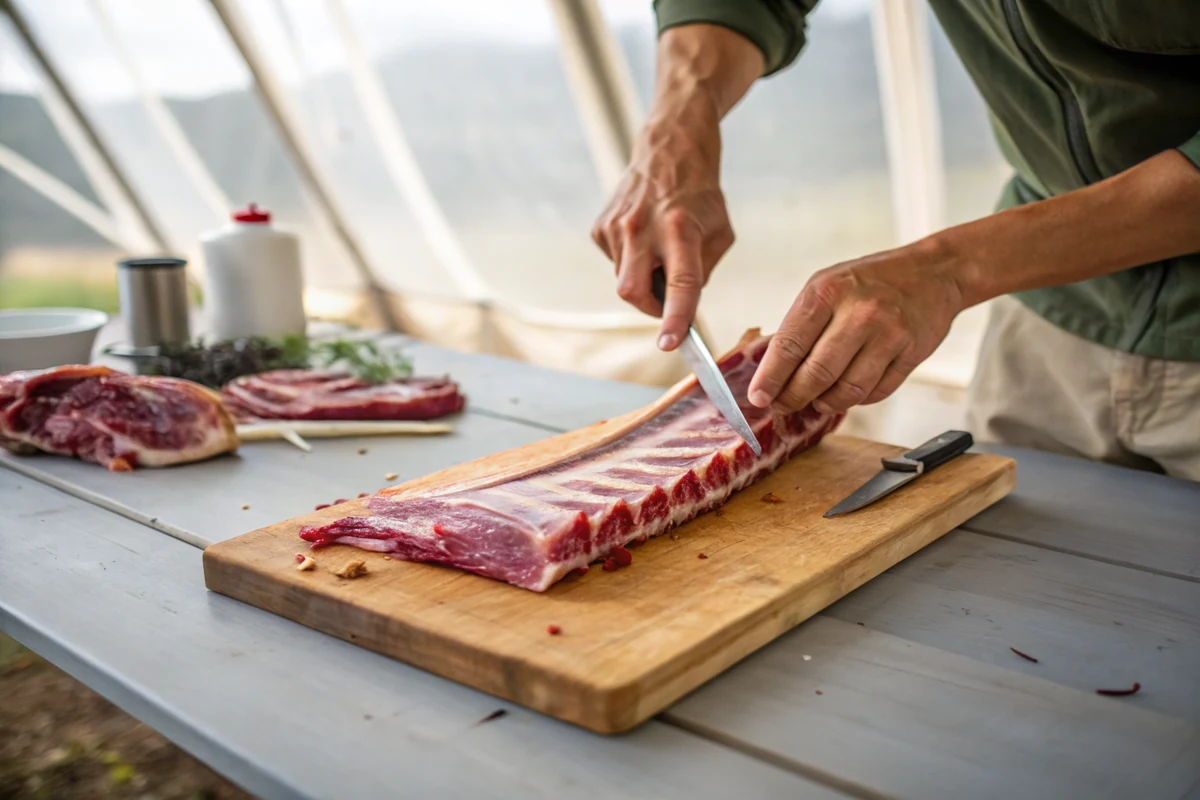
Then the bone side, exactly as with pork: corner of the membrane up with a spoon handle, grip with a paper towel, peel. Thin racks tear their membranes more readily than pork, so take it in patient pieces if it fights. When the trim is done the racks look almost alarmingly lean, deep red, spare, athletic, and that is correct. That leanness is what the braise act was designed for, and from here forward the method has your back.
Seasoning Wild Meat: Assertive but Simple
Venison flavor is a feature being marketed as a bug. That dark, mineral, faintly sweet wildness is the whole reason to eat the animal, and the seasoning's job is to frame it, not bury it. The base is Texas standard: kosher salt, coarse black pepper, garlic, a little smoked paprika for color and a rumor of extra fire. To that I add a half teaspoon of crushed juniper or dried rosemary, the classic European accents that agree with cervid meat the way sage agrees with pork sausage. That is the whole cabinet. Cumin-heavy or sugar-forward commercial rubs drag the rack toward tasting like anything else, which defeats the season's work.
Sugar deserves its own caution flag: with no fat layer to buffer the surface, a sugary rub on lean venison scorches earlier than it would on pork, so keep sweetness out of the rub entirely and save it for the optional late glaze, where you can watch it. A thin binder of olive oil or mustard helps the seasoning grip the trimmed, dry surface, and adds a whisper of the fat the meat lacks.
If you want a deeper insurance policy against dryness, a simple overnight wet brine, a quarter cup of salt to a quart of water, with a bay leaf and a few peppercorns, buys the lean muscle a moisture margin and seasons to the bone. It is optional on young whitetail and axis, and genuinely worth it on an older animal or any rack you suspect of a hard rut. Pat thoroughly dry before the rub either way; a wet surface takes smoke poorly.
Act One: Two Hours of Real Smoke
The smoke stage runs shorter than any pork schedule on this site, and the restraint is load-bearing. Thin, lean racks take on smoke fast, their modest thickness saturating with flavor in a fraction of the time a spare rib needs, and every minute spent bare past sufficiency is a minute of pure moisture loss with no fat to cover the bill. Two hours at a steady 225F is the number: long enough for real color and a proper smoke halo, short enough that the meat arrives at the wrap still supple.
Wood choice leans gentler than beef day. Post oak is never wrong in this state; pecan is my actual favorite here, its sweeter, rounder smoke flattering the meat's mineral edge; fruit woods work beautifully. Mesquite, tempting for the full Texas romance, is too loud for lean game over even this short stage; save it for fajitas. Keep the smoke thin and pale, bone side down the whole way, lid closed, and resist the spritz bottle for the first 90 minutes, the surface needs to dry enough to hold its seasoning and color.
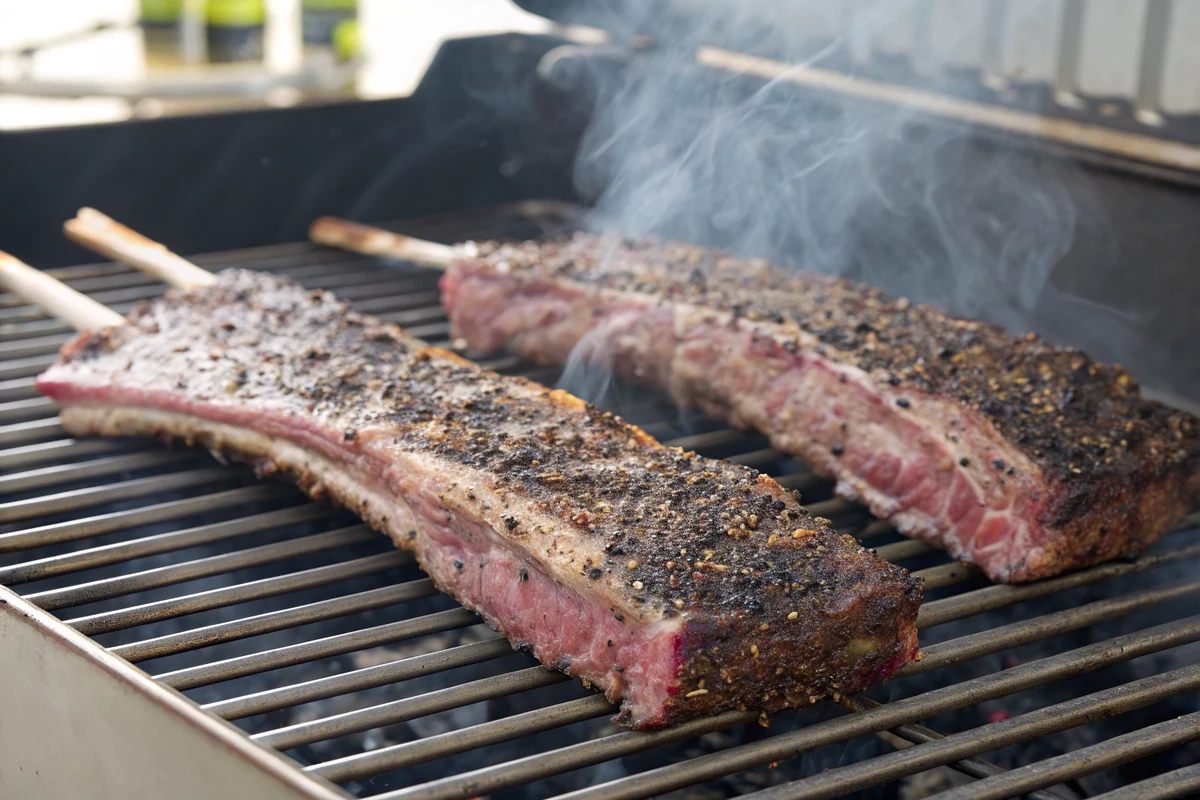
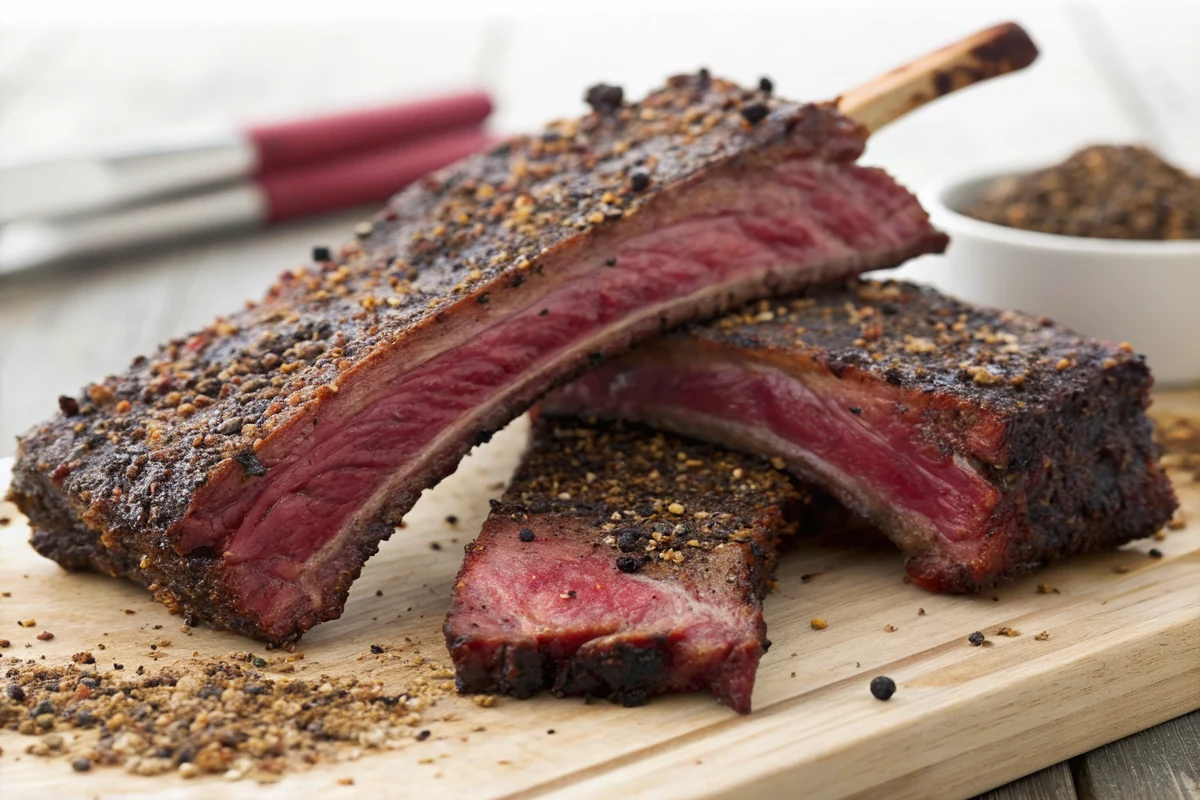
What you want at the end of act one is racks the color of old saddle leather, surfaces set and aromatic, meat still flexible when lifted. You are not chasing bark in the pork sense, lean meat builds crust, not true bark, and you are not chasing a number; two hours and the look is the call. Then it is time to give the meat what the deer could not.
Act Two: The Broth Braise
The foil packet is where venison ribs become tender against their nature, and building it right is simple mechanics. Double sheets of heavy foil per rack, meat side down, then the moisture payload: a half cup of beef broth, two tablespoons of butter, and a splash of cider vinegar per packet. The broth supplies what marbling would have; the butter is borrowed fat standing in for the render the meat cannot produce; the vinegar's acidity quietly works on the dense muscle and brightens the eventual packet juices. Seal tight, seams up, no leaks, and back onto the pit with the temperature nudged to 250F.
Two hours is the checkpoint, two and a half the common finish. Doneness is entirely by feel: a probe between the bones slides soft, and a rib tugged at its bone gives up the meat cleanly, right around 200F internal, though on racks this thin the thermometer is more ritual than referee. Whitetail racks run ahead of schedule; heavy axis racks and old bucks run behind. If the first packet check finds resistance, reseal and stop asking for 30 minutes.
The finishing fork in the road: for the camp-pure version, unwrap, rest, and serve glistening in packet juices, salt-pepper-smoke and nothing else. For a Sunday-dinner finish, brush the racks lightly with barbecue sauce thinned in broth, my Texas BBQ sauce thinned two-to-one is built for it, and give them 15 to 20 unwrapped minutes on the grate for the glaze to set tacky. Keep the glaze thin either way; heavy sweet sauce on lean game reads as apology, and this rack has nothing to apologize for.
Whitetail, Axis, and Managing Expectations
Texas offers the venison cook two very different deer, and the ribs show the difference more nakedly than the backstraps do. Whitetail, the state's native everywhere-deer, gives slender racks with modest meat between the bones and flavor that tracks its diet: mild and faintly nutty out of oak-mast Hill Country, louder and more resinous from cedar brake and South Texas brush. Axis, the exotic that has made itself thoroughly at home in the Hill Country, is simply the best-eating deer on the continent, and its ribs are meatier, milder, and almost beefy; if you have access to axis, this recipe performs its ceiling.
Calibrate the tables expectations to the animal, not to pork. A venison rib serves its meat between the bones, eaten close and gnawed honestly, more quail than tomahawk, and two whitetail racks feed two hungry adults as a main or four as the star appetizer of a larger spread. Axis racks stretch further. Elk and nilgai ribs, for the lucky, scale this method up beautifully with an extra half hour in the wrap; hog ribs off a feral sow are fattier and can lean back toward conventional pork schedules.
However the rack eats, it will eat wild, and that is the point. Guests who claim not to like venison have usually met only an unbled, untrimmed, overcooked version of it; a properly trimmed, brothbraised rib is the friendliest introduction the animal makes. I have converted more skeptics with these ribs than with any backstrap I have ever seared.
Serving at Camp and at Home
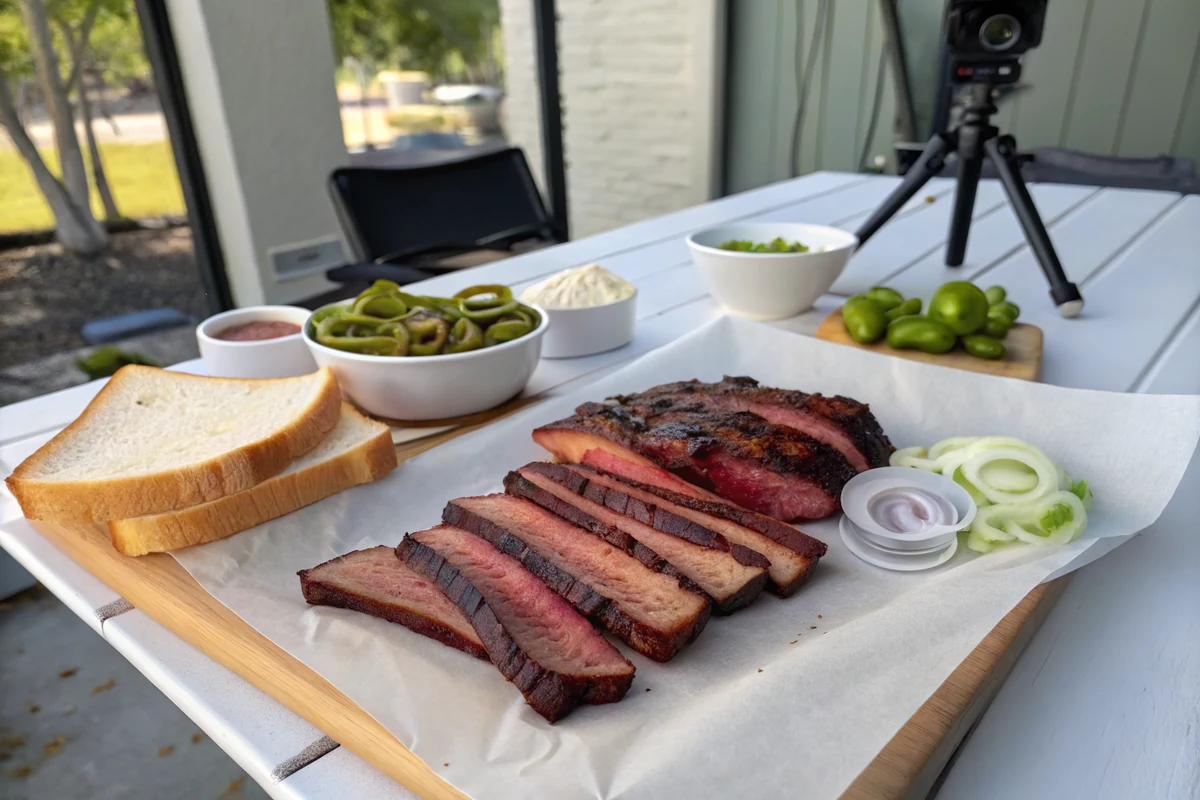
Venison ribs are camp food in their soul, and the canonical service is off the tailgate: racks sliced into single bones on a board, packet juices poured over, white bread, pickled jalapenos, raw onion, and whatever cold beer survived the afternoon. Lean meat drops temperature fast, so serve immediately and let the board go around twice rather than plating formally; a venison rib gone cold is a lesser creature, though a 200F oven holds wrapped racks happily for an hour if the timing gods misbehave.
At home, the ribs headline a full wild-game barbecue plate alongside pinto beans, cast iron cornbread, and a vinegar slaw, and they make a spectacular mixed board next to their domestic cousins from my smoked beef ribs, the tasting flight nobody forgets. Leftover rib meat, pulled from the bones and folded into the reserved packet juices, reheats into tacos, quesadillas, or a venison sandwich that outranks most brisket sandwiches I have been served in restaurants. And the bones, simmered an afternoon with onion and bay, give a dark game stock that turns the next pot of venison chili into something with a pedigree.
Feeding a camp is its own discipline, with people arriving at unpredictable hours and a kitchen that is usually one propane burner. My deer camp recipes guide covers the one-pot meals that handle that, along with the field care and ice-chest aging plan that matters more than any recipe.
Deer Season Math: Using the Whole Animal
A mature whitetail yields 40-odd pounds of boneless meat, and the hunters I respect most treat every pound as spoken for: backstraps for the skillet, hindquarters for roasts and steaks, shoulders and shanks for the braise, trim for the grinder, and, now, ribs for the smoker. Adding the rack to your keep-list costs one decision at the processor and repays it with the most interesting barbecue of the season. It is also, quietly, the ethical math of the hunt working itself out: the more of the animal that reaches the table, the easier the season sits on the conscience, and Texas Parks and Wildlife's own wild game cooking resources push the same whole-animal gospel for exactly that reason.
The ribs also solve a real freezer-management problem. By late season, most hunting households are drowning in grind and stew meat while the celebrated cuts vanish by New Year. Racks occupy the freezer's awkward middle ground, special enough for company, fast enough for a Saturday, and they thaw overnight flat in their vacuum bags, ready for a cook that runs shorter than any brisket.
So this is my standing ask of every hunter who reads this far: this season, bring the ribs home. Smoke two racks the weekend after the hunt while the story is still fresh, feed them to the people who helped you drag, quarter, and haul, and watch the cut nobody wanted become the one they request next November. That is how deer camp traditions actually start: one shrug at a time, reversed.
Smoked Venison Ribs Recipe
Ingredients
- 2 racks venison ribs (whitetail or axis), about 1.5 to 2 lb each
- 2 tablespoons olive oil or yellow mustard, as a binder
- 1 tablespoon kosher salt
- 1 tablespoon coarse black pepper
- 2 teaspoons garlic powder
- 1 teaspoon smoked paprika
- 1/2 teaspoon crushed juniper berries or dried rosemary, optional
- 1 cup beef broth, for the wrap
- 4 tablespoons butter, for the wrap
- 2 tablespoons apple cider vinegar, for the wrap
- 1/3 cup barbecue sauce thinned with a splash of broth, optional glaze
Instructions
- Trim without mercy. Strip the waxy surface tallow and every reachable run of silverskin from both sides of the racks; deer fat does not render and eats waxy, so clean meat is the goal. Peel the membrane off the bone side just as you would pork ribs. Expect the trim to take 20 minutes; it is the most important step of the cook.
- Season. Rub the racks with a thin film of oil or mustard, then season all over with the salt, pepper, garlic, paprika, and juniper. Venison takes seasoning politely; keep it assertive but simple so the wild flavor stays the headline.
- Smoke bare, 2 hours at 225F. Run the smoker at a steady 225F with post oak or pecan. Set the racks bone side down and smoke 2 hours, undisturbed, until the surface is deeply browned and the thin racks have drunk all the smoke they need. Do not stretch this stage; lean meat dries where fat would baste.
- Wrap with broth and butter. Lay each rack meat side down on a double sheet of heavy foil. Add half the broth, butter, and vinegar to each, seal the packets tight, and return to the smoker at 250F.
- Braise to tender, 2 to 2.5 hours. Cook wrapped until the meat between the bones probes soft and pulls cleanly from the bone with a gentle tug, around 200F internal, checking the first packet at the 2-hour mark. Thin whitetail racks finish sooner than heavy axis racks.
- Optional glaze. Open the packets, brush the meat side lightly with the thinned barbecue sauce, and set the racks back on the grate, unwrapped, 15 to 20 minutes so the glaze goes tacky. Skip this for a pure salt-pepper-smoke finish.
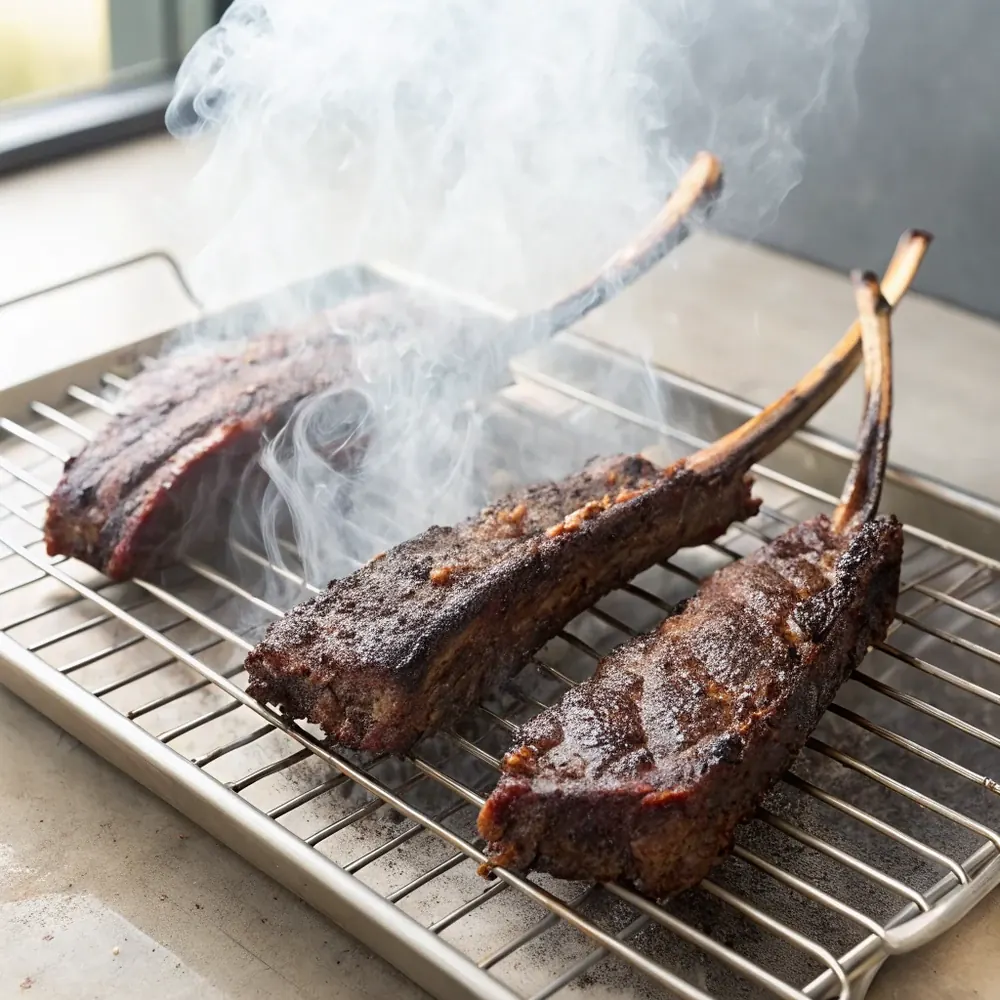
- Rest and serve. Rest 10 minutes loosely covered. Slice into individual ribs, pour any packet juices over the top, and serve hot; lean venison cools faster than pork, so this is not a rack that waits around.
Frequently Asked Questions
How long does it take to smoke venison ribs?
About 4.5 hours total: 2 hours of bare smoke at 225F for flavor and color, then 2 to 2.5 hours wrapped in foil with broth and butter at 250F until the meat probes tender and pulls cleanly from the bone, around 200F internal. Thin whitetail racks finish at the early end, meaty axis racks at the late end. Do not stretch the bare-smoke stage; lean venison loses moisture the whole time it rides unwrapped, and the thin racks absorb all the smoke they need inside two hours.
Are deer ribs worth cooking?
Emphatically, and the doubt is a self-fulfilling prophecy: they get skipped, so nobody learns to cook them, so they stay skipped. A whitetail rack carries 1.5 to 2 pounds with deep, mineral, hard-working muscle between the bones that takes smoke as well as any cut on the animal. They will never out-bulk pork spares, but treated with the right method, trimmed hard, smoked briefly, braised tender, they are among the best plates a deer provides, and the cheapest, since most processors practically give them away.
Why are my venison ribs tough and dry?
They were cooked like pork ribs. Venison carries 3 to 5 percent fat against pork's twenty-plus, so a long unwrapped smoke dehydrates the meat with no internal fat to baste it, and no amount of low-and-slow patience fixes what is not there. The method must supply the moisture: limit bare smoke to 2 hours, then braise sealed in foil with broth and butter until probe-tender. If a finished rack still fights back, reseal it with a splash more broth and give it another 30 to 45 minutes; the braise forgives what the smoker cannot.
Do you remove the fat from venison ribs?
Yes, nearly all of it, and this is the step that separates good venison from the gamey reputation. Deer tallow has a high melting point; it does not render into juice at smoking temperatures, it softens and then resets waxy on the palate, and it carries most of the off-flavors people blame on venison generally. Strip the surface tallow and silverskin from the meat side, peel the bone-side membrane as with pork ribs, and budget twenty minutes for the job. The trimmed rack looks stark and lean, which is exactly right.
What internal temperature are venison ribs done at?
Around 200F between the bones, but treat the number as a formality on racks this thin, where a clean probe reading is hard to get. The real tests are feel: a probe or toothpick slides into the meat between the bones with no resistance, and a rib tugged at the bone releases its meat cleanly. That tenderness arrives only through the foil-braise stage; venison ribs pulled unwrapped at a technically safe 145F would be safe, lean, and nearly inedible, because the connective tissue needs the long wet finish to surrender.
What wood is best for smoking venison?
Pecan is the quiet favorite: sweeter and rounder than oak, it flatters venison's mineral edge without shouting over it. Post oak, the Texas default, is never wrong and gives the cleanest classic profile. Fruit woods like apple and cherry work gently and add color. The one to skip is mesquite; its aggressive, oily smoke overwhelms lean game even across a two-hour stage. Whatever the wood, keep the smoke thin, pale, and clean; lean meat shows dirty smoke faster than fatty cuts do.
Can I cook venison ribs in the oven or slow cooker instead?
Yes; the two-act logic translates directly. Oven: roast the seasoned racks uncovered at 275F for 45 minutes for color, then add broth and butter, cover the pan tight with foil, and braise at 300F for 2 to 2.5 hours to fork-tender, finishing with a quick glaze under the broiler if you like. Slow cooker: sear or oven-brown first, then 4 to 5 hours on LOW with a cup of broth. You lose the smoke, so lean on smoked paprika and a drop of liquid smoke in the braise if you want the echo.
Are axis deer ribs better than whitetail?
Meaningfully, yes. Axis deer, the Hill Country's naturalized exotic, produce the mildest, meatiest venison in Texas, closer to lean beef than to the mineral wildness of whitetail, and their ribs carry noticeably more meat per bone. Whitetail ribs are still absolutely worth smoking; expect a slimmer rack whose flavor tracks the animal's diet, milder from oak country, stronger from cedar brush. Age matters as much as species: a young deer of either kind out-eats an old rutting buck every time, and the old boys serve the chili pot better than the smoker.