Texas BBQ
No-Wrap Smoked Ribs
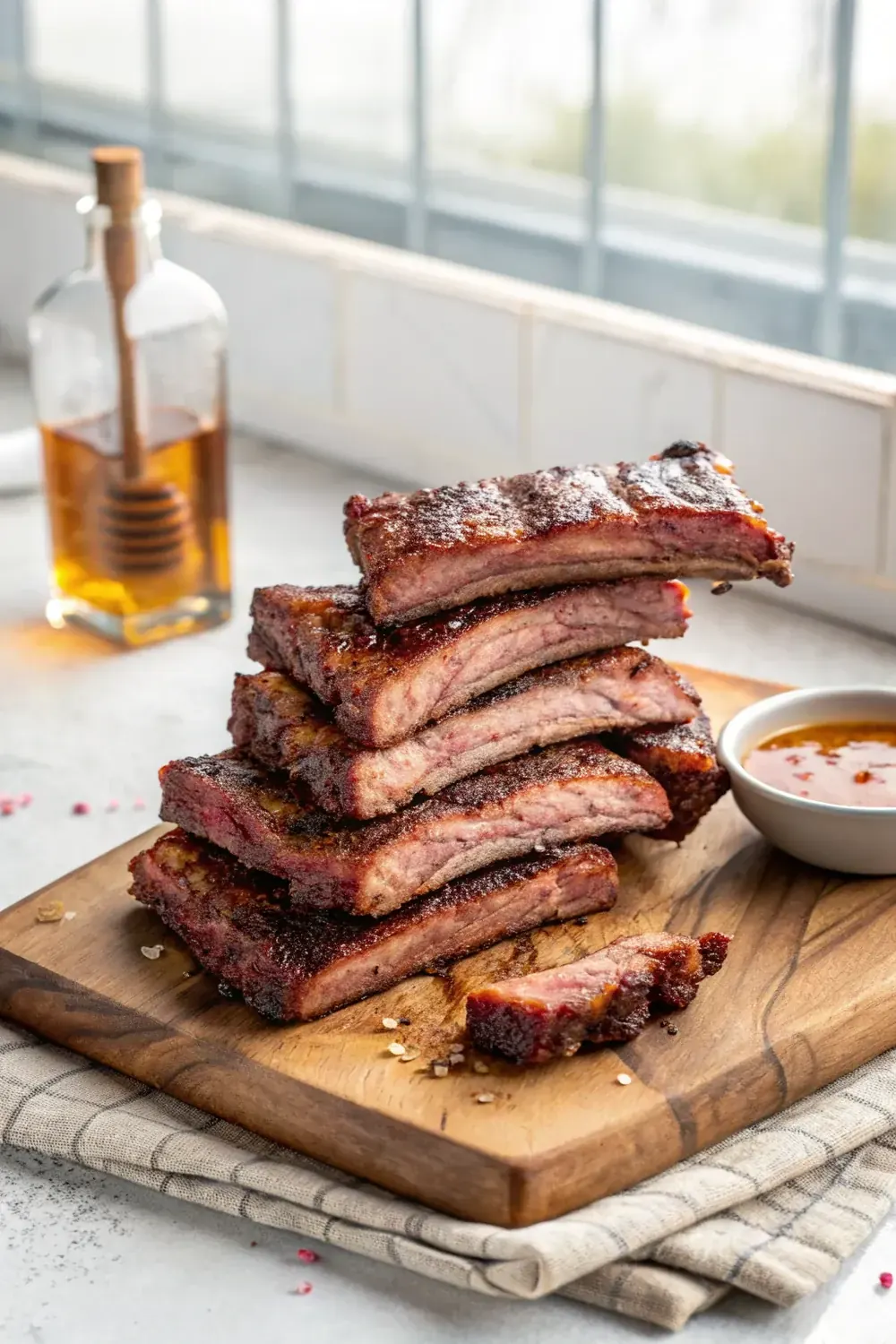
Smoked ribs with no wrap: 225 to 250F, water pan in, spritz from hour 2, ride the stall in open smoke to 200-203F. Add about an hour, get the best bark.
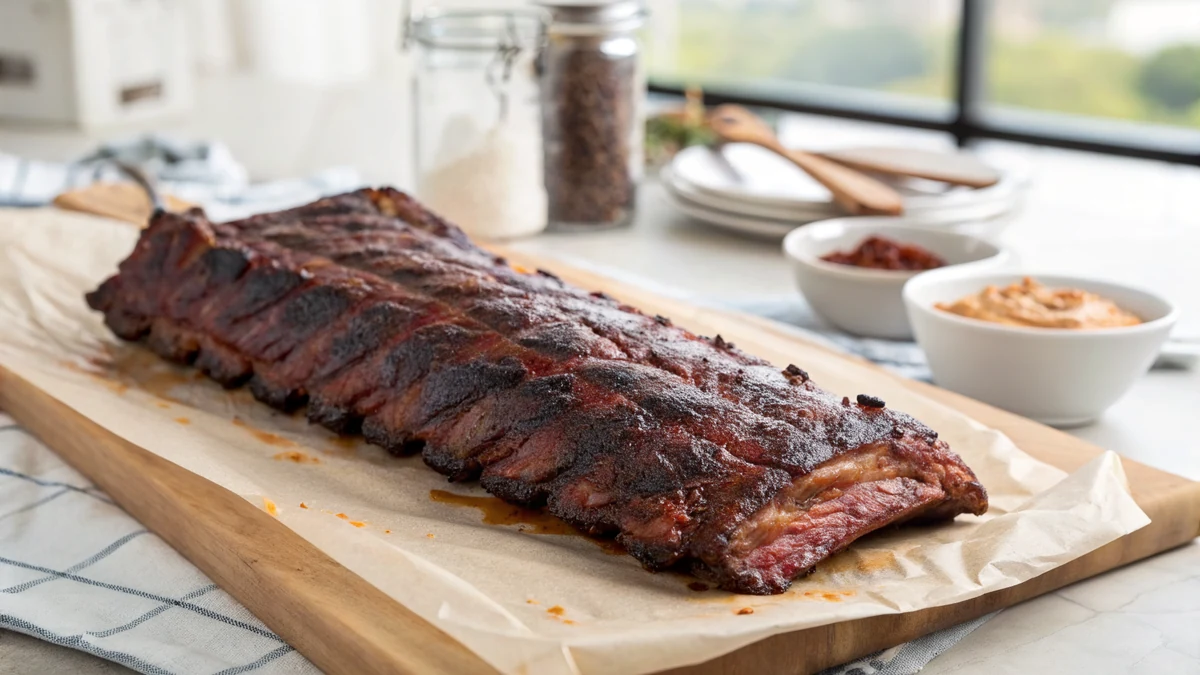
Quick answer: No-wrap ribs are smoked start to finish in open smoke, no foil, no butcher paper, no Texas crutch. Run the pit at 225 to 250F with a water pan, use a low-sugar rub, and leave the rack alone for the first 2 hours. From hour 2, spritz with water or diluted apple cider vinegar every 45 minutes to keep the surface from hardening past bark into jerky. The rack will stall longer than a wrapped one; ride it out. Expect 5.5 to 6.5 hours for St. Louis or spare ribs at 250F and about 5 hours for baby backs, roughly 45 to 90 minutes longer than the same rack wrapped. Done is done by feel: a probe slides between the bones like warm butter at 200 to 203F and the rack cracks across the top when lifted. The payoff is the deepest bark and cleanest smoke flavor a rib can carry, with a competition-style bite that stays on the bone.
There is a moment at every backyard cook where somebody asks when I am going to wrap the ribs, and I get to say, with more pleasure than the question deserves, that I am not. No foil on the counter, no paper roll on standby. The rack goes on the pit, the rack rides the whole cook in open smoke, and the rack comes off wearing the best crust barbecue knows how to make. That is the entire method, and this page is me showing you every detail of how to do it without drying a single bone.
Let me be straight about where this sits in the great wrap debate, because I have argued both sides of it across this site. Wrapping is a legitimate tool: it speeds the cook, guarantees tenderness, and rescues lean cuts, and I teach it without apology in my 3-2-1 ribs method. But the crutch costs you the two things a purist cooks ribs for in the first place: bark with real texture, and smoke that goes all the way to the last hour. Going naked is the harder, slower, prouder road. It demands a managed fire, a spritz bottle, and patience during a stall that feels personal. In exchange it produces ribs that need no sauce and accept no apologies.
What follows is the complete no-wrap playbook: the rub that will not scorch, the water pan that does the moisture work foil pretends to do, the spritz schedule hour by hour, what the stall looks like from inside an unwrapped cook, honest timing deltas for every cut and temperature, and the doneness calls that replace the timer. If you can already smoke a decent wrapped rack, everything here will transfer; the fire just stops forgiving you at hour four, and that is where the fun starts.
What No-Wrap Means, and What It Costs You
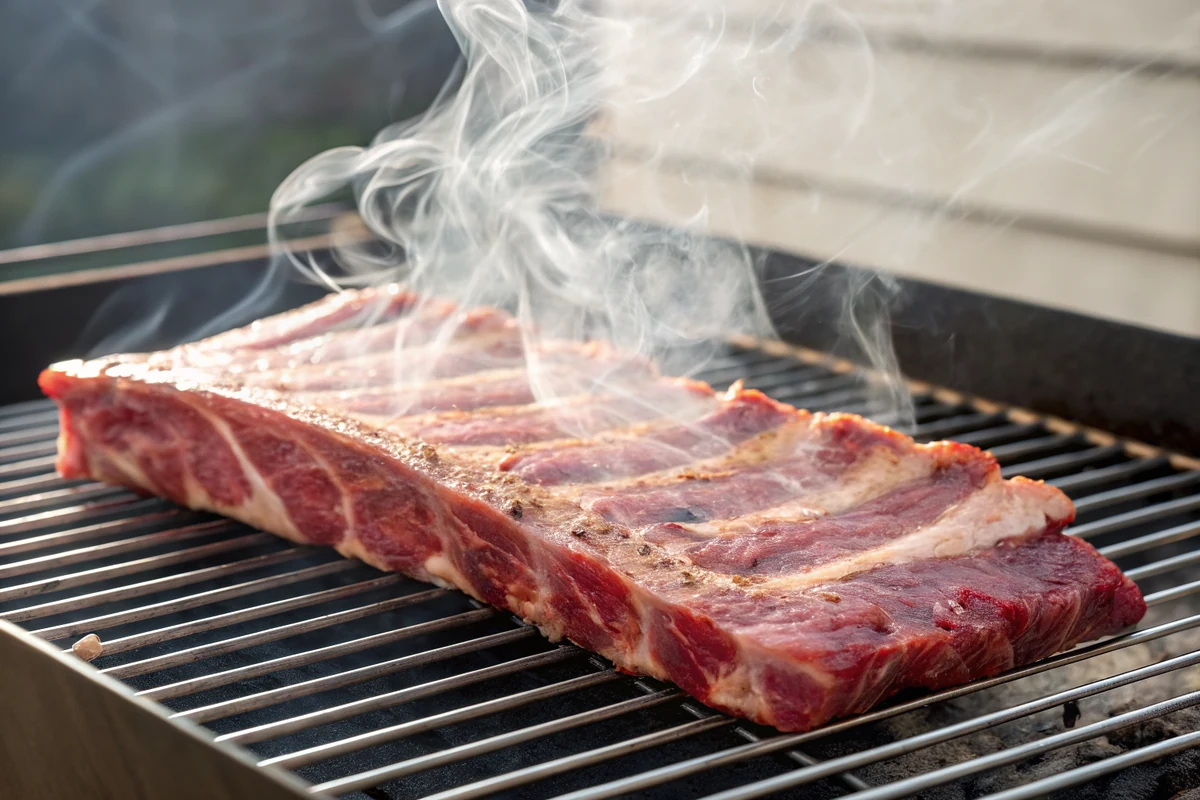
A no-wrap cook is exactly what it sounds like: the rack goes onto the grate raw and comes off done, and nothing touches it in between except smoke, spritz, and time. No foil braise, no butcher paper jacket, no crutch of any kind through the stall. Every hour of the cook is a smoke hour, and the surface never spends a minute steaming in its own trapped moisture.
The gains are concrete. Bark, first and most famously: an unwrapped surface dehydrates and browns continuously, building the thick, craggy, almost crunchy crust that foil dissolves and paper merely preserves. Smoke depth, second: flavor compounds keep bonding to the surface for the entire cook instead of stopping at the wrap. And bite: naked ribs finish with the competition-style texture that stays on the bone and pulls clean, tooth by tooth, rather than collapsing.
The costs are just as concrete, and pretending otherwise is how people ruin their first naked rack. The cook runs 45 to 90 minutes longer, because evaporative cooling never gets shut off. The window between perfectly tender and beginning-to-dry is narrower, especially at the thin end of the rack. And the method leans on your fire management: a pit that swings 50 degrees or belches dirty smoke has nowhere to hide when there is no foil to cover its sins. None of this is difficult. All of it demands attention.
The Great Wrap Debate, Settled the Texas Way
Wrapping partway through a cook, the Texas crutch, exists for good reasons: it punches through the stall, speeds service, and insures tenderness on lean racks. Foil does it fastest and softens bark most; butcher paper does it gentler and keeps most of the crust. I lay out that three-door decision for the St. Louis cut in my smoked St. Louis style ribs guide, and I stand by every word of it: on a well-managed pit with a water pan, naked is how I cook most racks, and it is the purest version of the craft.
So consider this page the long answer to the question that section raises. If wrapping is insurance, no-wrap is learning to not need insurance. The pitmasters whose ribs made Central Texas famous ran open pits and never reached for foil; the crutch is a competition-circuit import that earned its place but was never the point. Bark is the point. Smoke is the point.
And to be fair to the other road: when you want guaranteed fall-off-the-bone for a crowd that loves it, run my 3-2-1 method and enjoy the certainty. When your smoker is a sealed electric cabinet, the physics change completely, the box is already so humid that some wrap is actually the correct call, and my ribs in an electric smoker guide explains why naked cooking in one produces a different, gentler bark no matter what you do. Method should follow machine and table, not ideology. This page is for the open fire and the bark-first table.
A Rub Built to Go the Distance
An unwrapped surface spends six hours in direct radiant heat, and that changes what belongs in the rub. Sugar is the main casualty: a Kansas City-style rub with a heavy brown sugar base rides safely inside a foil wrap, but naked at 250F for six hours it crosses from caramelized into acrid somewhere around hour four. Keep sugar to a teaspoon across two racks, or run the full Central Texas answer: salt and coarse black pepper, roughly one part salt to one and a half parts pepper, with paprika for color and garlic because garlic.
Coarse grinds matter more on a naked cook too. Fine powders dissolve into the surface moisture and disappear; 16-mesh pepper and kosher salt sit proud of the surface and become the physical architecture of the bark, the gravel in the concrete. A thin binder of mustard or oil holds everything in place through the first hour before the surface tacks up on its own.
Season no more than an hour before the pit, or the salt starts pulling moisture faster than the fire can use it. If rub-building is a rabbit hole you enjoy, my Texas BBQ rubs guide ranks what is worth buying and what to mix at home; for a naked cook, filter everything in it through the low-sugar rule.
The Water Pan Is Not Optional
Foil manages moisture by trapping it against the meat. Take foil away and moisture management moves to the pit air itself, and the water pan is how you control it. A half-steamy environment slows surface evaporation, which does three jobs at once: it keeps the developing bark supple instead of case-hardened, it slows the stall from becoming an all-afternoon siege, and it keeps the thin end of the rack from finishing as jerky while the thick end catches up.
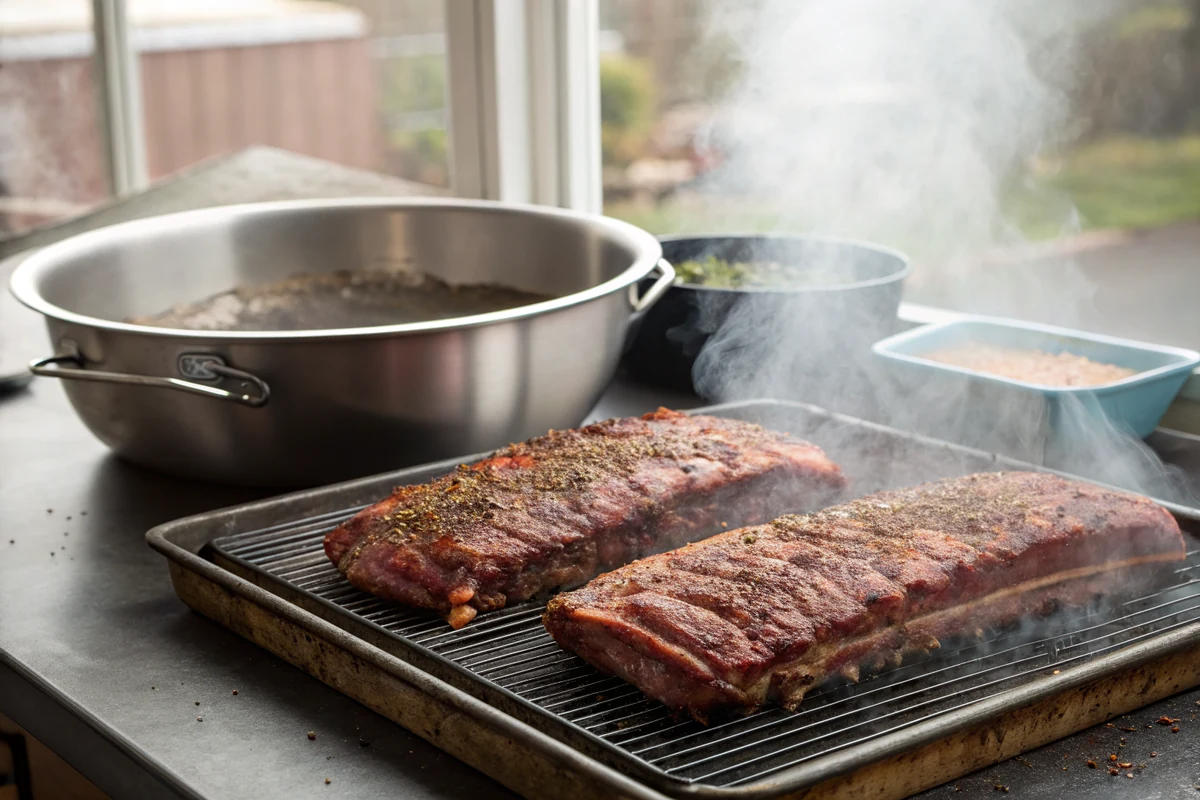
Placement depends on the pit. In an offset, the pan sits in the cook chamber near the firebox end, where it also evens out the hot spot. In a kettle or drum, it goes under or beside the meat on the lower grate. Kamados barely need one, their ceramic runs naturally humid, which is one reason the naked method feels almost easy on a Big Green Egg. Two rules regardless of pit: start with hot water, because a gallon of cold water flattens your pit temperature for most of an hour, and refill with hot water when it runs low around hour four. A dry pan mid-stall quietly turns your humid pit into a convection oven, and the bark pays for it.
The Spritz Schedule, Hour by Hour
The spritz bottle replaces the wrap as your moisture tool at the surface, and using it well is mostly about restraint. Nothing touches the meat for the first two hours, full stop. Spritzing a rack before its rub has set washes seasoning off in streaks and delays bark by an hour; the surface must pass the smear test first, dry enough that a knuckle dragged across it comes away clean.
From hour two, mist lightly every 45 minutes: water with a splash of apple cider vinegar is my house blend, apple juice if you want the faintest sweetness and a touch more color from its sugars. Aim for the edges, corners, and end bones, which dry soonest, and keep the pass quick, five seconds of open lid, not thirty. You are not soaking the rack; you are raising the surface humidity just enough that smoke keeps sticking and the crust keeps building instead of hardening.
What the spritz cannot do is add flavor to the interior or tenderize anything; that is marketing. Its whole job is surface management, and its whole risk is overuse. A rack spritzed every 20 minutes runs cold and pale and finishes an hour late wearing soft bark, which is the naked cook failing toward the exact texture you skipped the foil to avoid.
Riding the Stall Without a Crutch
Somewhere between 155 and 175F internal, the climb stops. The probe reads the same number for 40 minutes, then drops two degrees out of spite, and every instinct says the fire has died or the thermometer is broken. It is neither: the surface is now evaporating moisture as fast as the fire adds heat, a sweat-cooling equilibrium, and wrapped cooks never meet it head-on because foil shuts evaporation down by force. Naked, you get the whole stall, honest and unabridged: 60 to 100 minutes on a typical St. Louis rack at 250F.
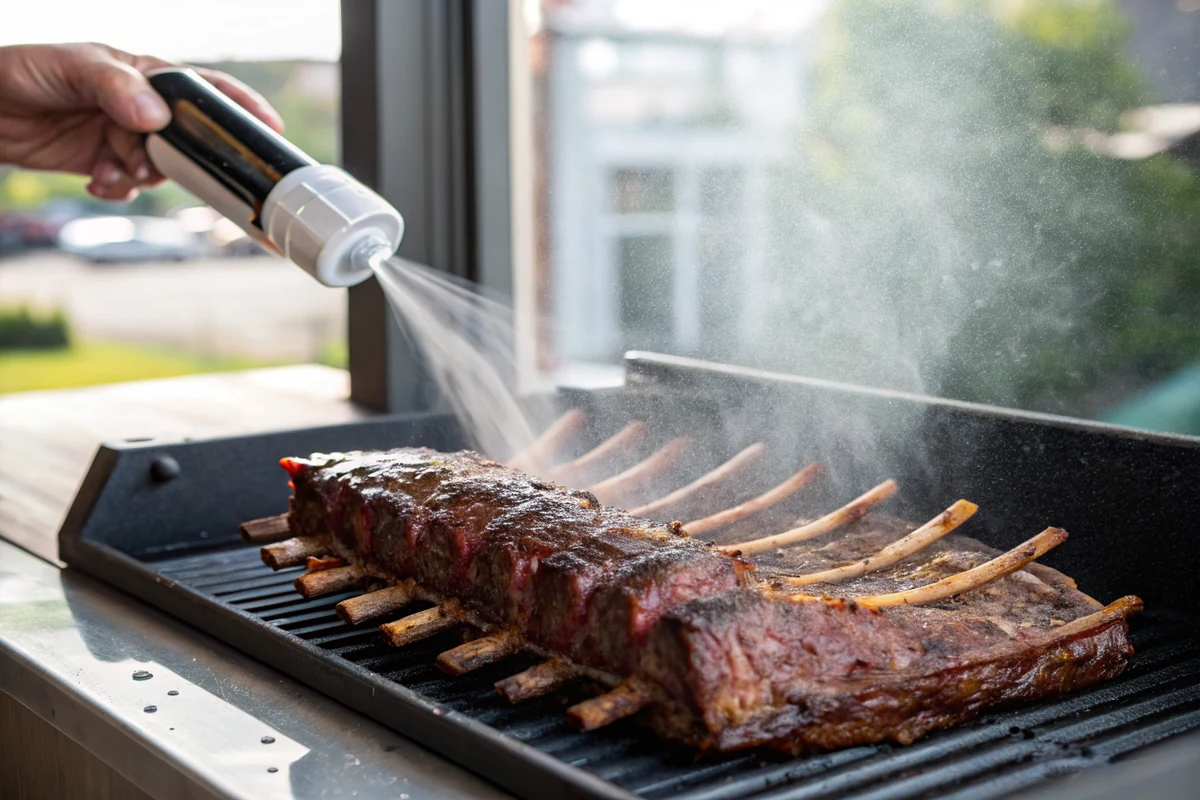
The playbook during the stall is deliberately boring. Hold pit temperature; resist the urge to run it hotter to force the number, which mostly just dries the surface faster. Keep the water pan wet and the spritz on its 45-minute clock. Trust that the stall is not lost time: those hours are exactly when bark does its deepest developing and rendered fat starts basting the surface from inside. If serving time is genuinely at risk, nudging the pit from 225 to 265F is the honest lever, and it shortens the back half of the stall without touching the meat. The dishonest lever is in the drawer next to the foil, and we both know this page is not going there.
Timing Deltas: What Naked Costs on the Clock
Plan the no-wrap cook with these deltas and nobody eats late. At 250F, a St. Louis or trimmed spare rack that wraps in 5 to 5.5 hours runs naked in 5.5 to 6.5. Baby backs, leaner and lighter, go about 4.5 to 5 hours naked at 250F, and they are the cut where naked demands the most attention, because less internal fat means less margin at the finish line. Untrimmed full spares add half an hour to the St. Louis numbers.
Temperature moves everything. At 225F, add roughly an hour across the board and expect a lazier, longer stall, the most bark-friendly track but a true all-afternoon commitment. At 275F, naked ribs finish surprisingly close to wrapped ones, 4.5 to 5 hours for spares, because the hotter pit muscles through the stall on its own; the surface needs a stricter spritz watch up there, and my ribs at 275F guide runs those hot-and-fast numbers in detail, wrapped and unwrapped both.
Weather is the last variable, and naked cooks feel it double. Wind and cold lengthen the stall specifically, because they accelerate the same evaporation that causes it. On a raw January cook, give the schedule an extra hour of slack, shield the pit from the wind if you can, and let the water pan carry more of the humidity load.
Cut Notes: Spares, St. Louis, Baby Backs, and Beef
Spares and St. Louis cut are the natural no-wrap ribs: enough internal fat and collagen to self-baste through the long open ride, and a broad flat surface that grows glorious bark. If I am cooking to convert a foil loyalist, it is always a St. Louis rack. Baby backs run naked beautifully too but on a shorter clock and a tighter finish window; start probing them a full hour before you expect doneness, and lean harder on the water pan since their leanness gives the pit less to work with.
Beef ribs deserve their own sentence, because they are the original no-wrap meat. The big plate ribs barely benefit from wrapping at all, that much internal marbling bastes the cook from inside, and Texas beef-rib tradition runs them naked as a matter of course; my smoked beef ribs guide is effectively this method scaled up to dinosaur size, and everything here about spritz and stall discipline transfers straight across.
Whatever the cut, the racks themselves should be chosen for the method: even thickness end to end matters more on a naked cook than a wrapped one, because there is no foil stage to rescue a thin, tapering rack from overcooking at its skinny end while the thick end finishes. At the butcher case, flat and uniform beats big and dramatic.
Doneness Naked: Feel First, Number Second
An unwrapped cook ends on evidence, not on a timer, and the evidence comes in threes. The bend test: lift the rack from one end with tongs; done ribs bow deep past 45 degrees and the bark cracks open across the top between the middle bones. The probe test: a thermometer probe or toothpick slid into the meat between two center bones should give way like warm butter, no squeak, no gristle grab. The number: 200 to 203F between the bones, taken shy of the bone itself, which always reads hot.
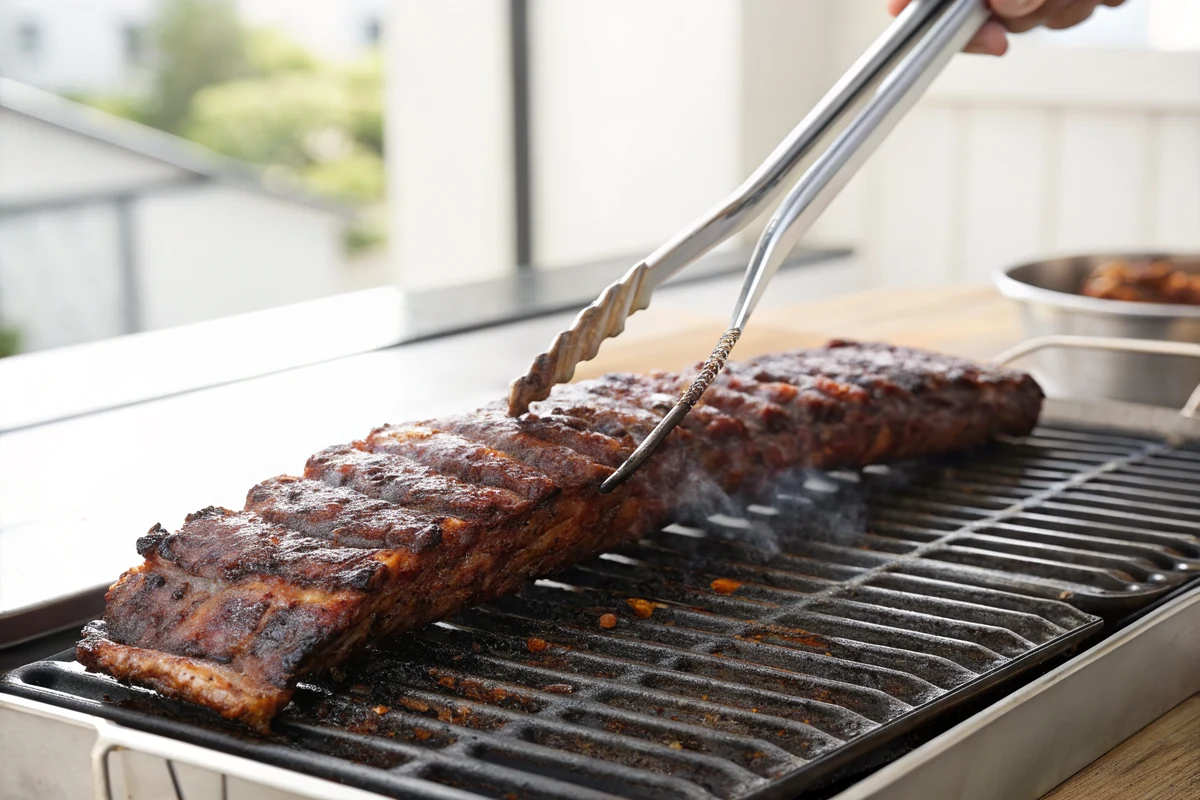
Watch the surface story too: meat drawn back a quarter to half inch from the bone ends, bark gone from red-brown to deep mahogany, surface fat glistening rather than waxy. What you are not chasing is fall-off-the-bone; a properly finished naked rack holds its bones with a gentleman's grip and gives up each bite clean. That firmer standard is the whole personality of the method, and it is also why naked racks slice into neat, composed ribs instead of collapsing on the knife.
Rest, Serve, and the Day-Two Bonus
Rest a naked rack 20 to 30 minutes, loosely tented on a board, and it repays you twice: the juices settle into the meat instead of the cutting board, and the bark, which comes off the pit at its most brittle, relaxes just enough to slice without shattering. Cut bone side up so you can see the lanes, one long stroke per rib.
Serve these dry and unapologetic: the bark is the sauce. A vinegar-thin table sauce on the side honors the style if you must; my Texas BBQ sauce leans that direction on purpose. Round the table out with pinto beans, slaw or any of the classic sides, pickles, onions, white bread.
And a quiet advantage nobody mentions: no-wrap ribs are the best leftover ribs. That sturdy bark survives refrigeration and reheating in a way foil-softened crusts never do; ten minutes in a hot oven and day-two racks eat at ninety percent of day one. The full technique, including the low-and-slow rewarm for a whole rack, lives in my guide to reheating smoked ribs.
No-Wrap Smoked Ribs Recipe
Ingredients
- 2 racks St. Louis cut or spare ribs, 3 to 3.5 lb each
- 2 tablespoons yellow mustard or neutral oil, as a binder
- 3 tablespoons coarse black pepper
- 2 tablespoons kosher salt
- 1 tablespoon smoked paprika
- 2 teaspoons garlic powder
- 1 teaspoon brown sugar (optional, keep it minimal)
- 1 cup water with 1/4 cup apple cider vinegar, for the spritz bottle
- Post oak or hickory splits or chunks, for the fire
- Hot water, for the water pan
Instructions
- Run the pit at 225 to 250F with a water pan. Light the smoker and stabilize between 225 and 250F with clean-burning post oak or hickory. Set a pan of hot water between the fire and the meat, or on the grate beside the ribs. Let the pit hold temperature for a full 30 minutes before the meat goes on.
- Trim and peel the membrane. Flip the racks bone side up, work a corner of the papery membrane loose with a spoon handle, grip it with a paper towel, and peel it off in a sheet. Trim loose flaps and any fat pocket thicker than a quarter inch so the surface cooks even.
- Season low-sugar. Rub a thin film of mustard or oil over both sides. Season generously with the salt, pepper, paprika, and garlic mix, meat side heavier. Keep sugar minimal or skip it entirely; an unwrapped surface rides open heat for six hours and sugar-heavy rubs darken toward bitter.
- Smoke bare, hands off, 2 hours. Set the racks bone side down, close the lid, and do not open it for 2 hours. The rub needs undisturbed time to set into the surface, and every peek costs heat and humidity.
- Spritz every 45 minutes from hour 2. Once the color is a solid red-brown and the rub no longer smears when touched, start spritzing: a light mist of the vinegar-water over the surface every 45 minutes, quickly, lid open for seconds not minutes. Spritz the edges and end bones hardest; they dry first.
- Ride the stall. Between roughly 155 and 175F internal the temperature will sit nearly still for an hour or more while evaporation fights the fire. Do nothing. Hold pit temperature, keep the water pan topped with hot water, keep spritzing on schedule. The stall breaks on its own.
- Test from hour 5. Start probing at hour 5 for baby backs, 5.5 for St. Louis or spares. Done is a probe sliding between the bones with almost no resistance at 200 to 203F, a rack that bends deep and cracks across the bark when lifted with tongs, and meat pulled back a quarter inch from the bone ends.
- Rest and slice. Rest the racks 20 to 30 minutes on a board, loosely tented. Slice between the bones with single long strokes. Serve dry, sauce strictly on the side; this bark earned the right to be tasted first.
Frequently Asked Questions
How long do no-wrap ribs take to smoke?
At 250F, plan 5.5 to 6.5 hours for St. Louis or spare ribs and 4.5 to 5 hours for baby backs, roughly 45 to 90 minutes longer than the same racks wrapped. At 225F add about another hour; at 275F naked spares finish in 4.5 to 5 hours because the hotter pit pushes through the stall on its own. Always finish on evidence rather than the clock: probe-tender between the bones at 200 to 203F with a deep bend and cracking bark.
Are ribs better wrapped or unwrapped?
They are different, not ranked. Unwrapped ribs build thicker, crunchier bark, deeper smoke flavor, and a firmer competition-style bite that stays on the bone, at the cost of a longer cook and a narrower doneness window. Wrapped ribs cook faster and finish more tender and forgiving, with softer bark, foil most of all, butcher paper less so. Cook naked when bark and smoke are the goal and you can tend the fire; wrap when the table wants fall-off-the-bone or the schedule is tight.
Do ribs dry out if you do not wrap them?
Not if the pit is managed. Dry naked ribs come from three fixable mistakes: no water pan, so the pit air turns desert-dry; no spritzing after the bark sets, so the surface case-hardens; and overshooting doneness, which squeezes moisture out of any rib, wrapped or not. Run a hot-water pan the whole cook, mist every 45 minutes from hour two, and pull the rack the moment a probe slides between the bones like warm butter at 200 to 203F.
Do you spritz no-wrap ribs?
Yes, and the schedule matters more than the liquid. Nothing for the first 2 hours while the rub sets, then a light mist every 45 minutes until done, aimed mostly at the edges and end bones that dry first. Water with a splash of apple cider vinegar is the classic; apple juice adds faint sweetness and color. Keep passes to a few seconds of open lid. Spritzing too early washes off rub, and spritzing too often chills the cook and softens the bark you skipped the wrap to build.
What temperature is best for no-wrap ribs?
250F is the sweet spot: hot enough to keep the stall from running away, gentle enough that the surface builds bark instead of scorching, and it lands spares in about 6 hours. At 225F you get the deepest, slowest-built bark and the longest stall, a great lazy-Saturday track. At 275F the cook compresses to under 5 hours but demands a low-sugar rub and a strict spritz watch, since the surface has less margin in a hotter, drier pit.
How do you get through the stall without wrapping?
You wait, and you manage the environment instead of the meat. The stall, usually between 155 and 175F internal, is evaporative cooling reaching equilibrium with your fire, and it breaks on its own once the surface moisture depletes, typically inside 60 to 100 minutes. Hold your pit temperature steady, keep the water pan full of hot water, and stay on the spritz schedule. If dinner is at risk, raise the pit toward 265F to shorten the back half of the stall honestly.
Should I use sugar in the rub for unwrapped ribs?
Very little or none. Inside a foil wrap, brown sugar is protected; on a naked rack it rides direct radiant heat for five or six hours, and most sugar-heavy rubs cross from caramel into bitter around hour four. Build the rub on kosher salt and coarse 16-mesh black pepper, with paprika for color and garlic powder for depth, and cap sugar at about a teaspoon across two racks. If you want sweetness on the finished rib, add it as a thin glaze in the final 30 minutes, where you can watch it.
Can you smoke no-wrap ribs in an electric smoker?
You can skip the foil in one, but you will not get the same bark, and it is not your fault. A sealed electric cabinet holds a humid, steamy environment that is wonderful for tenderness and hostile to crust; even a never-wrapped rack comes out with a softer, quieter bark than an open pit produces. The naked method as written belongs on offsets, kettles, drums, pellet grills, and kamados. For a cabinet smoker, the better play is the adapted short-wrap schedule built for that machine.
What is the Texas crutch?
The Texas crutch is wrapping meat partway through a smoke, in foil classically, butcher paper in the modern Texas style, to trap moisture, push through the stall, and speed tenderness. It earned its name in competition barbecue, where turn-in times are unforgiving. It works, and for lean cuts or tight schedules it is the right tool. What it costs is bark texture and late-cook smoke, which is exactly what the no-wrap method keeps. Most Central Texas beef-rib tradition never used the crutch at all.