Southern Comfort Food
Texas Roadhouse Baked Potatoes Copycat
Get the salt-crusted, crackly skin Texas Roadhouse baked potatoes are famous for - the one step home cooks skip - plus my loaded version. Easy copycat.
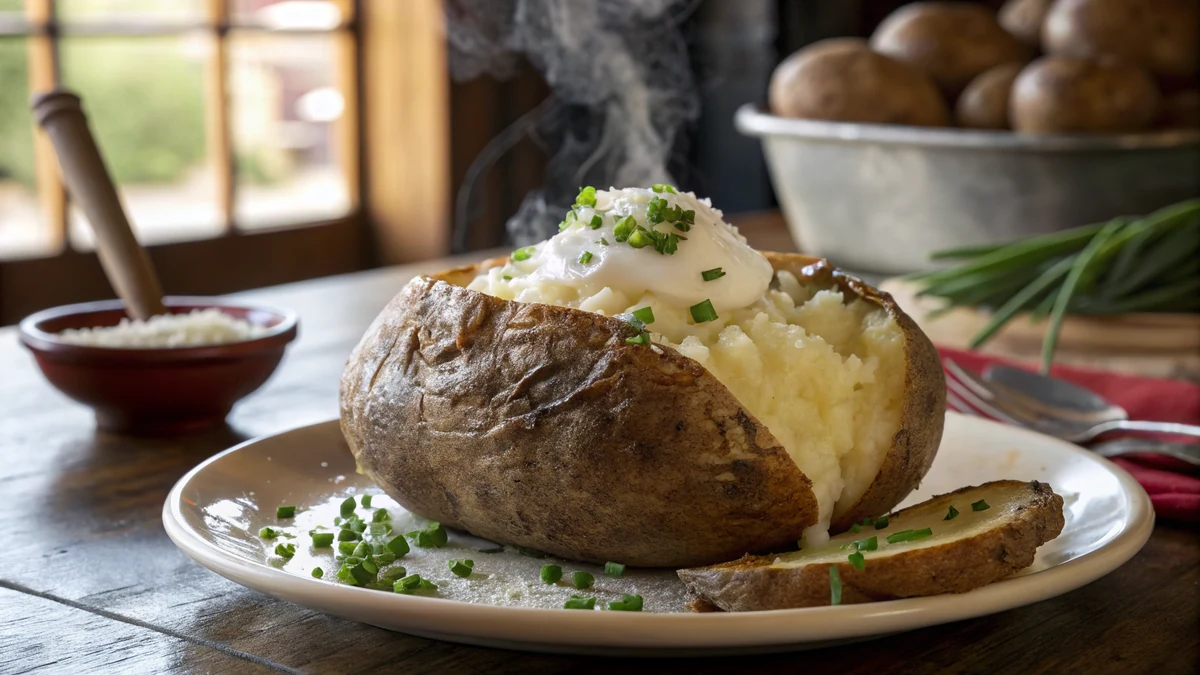
Quick answer: Texas Roadhouse bakes their potatoes the old-school steakhouse way: large russets rubbed with oil or melted butter, rolled in kosher salt, and baked hot and unwrapped, no foil, until the skin crisps and the inside steams itself fluffy. At home, that means scrubbed and dried russets, a light coat of oil, a generous crust of kosher salt, and a 425F oven for 55 to 65 minutes, until the center reads 205 to 210F and the potato gives easily when squeezed. Split it, fluff it with a fork, and load it with butter, sour cream, cheddar, and chives. The salt crust is the signature, and it costs nothing.
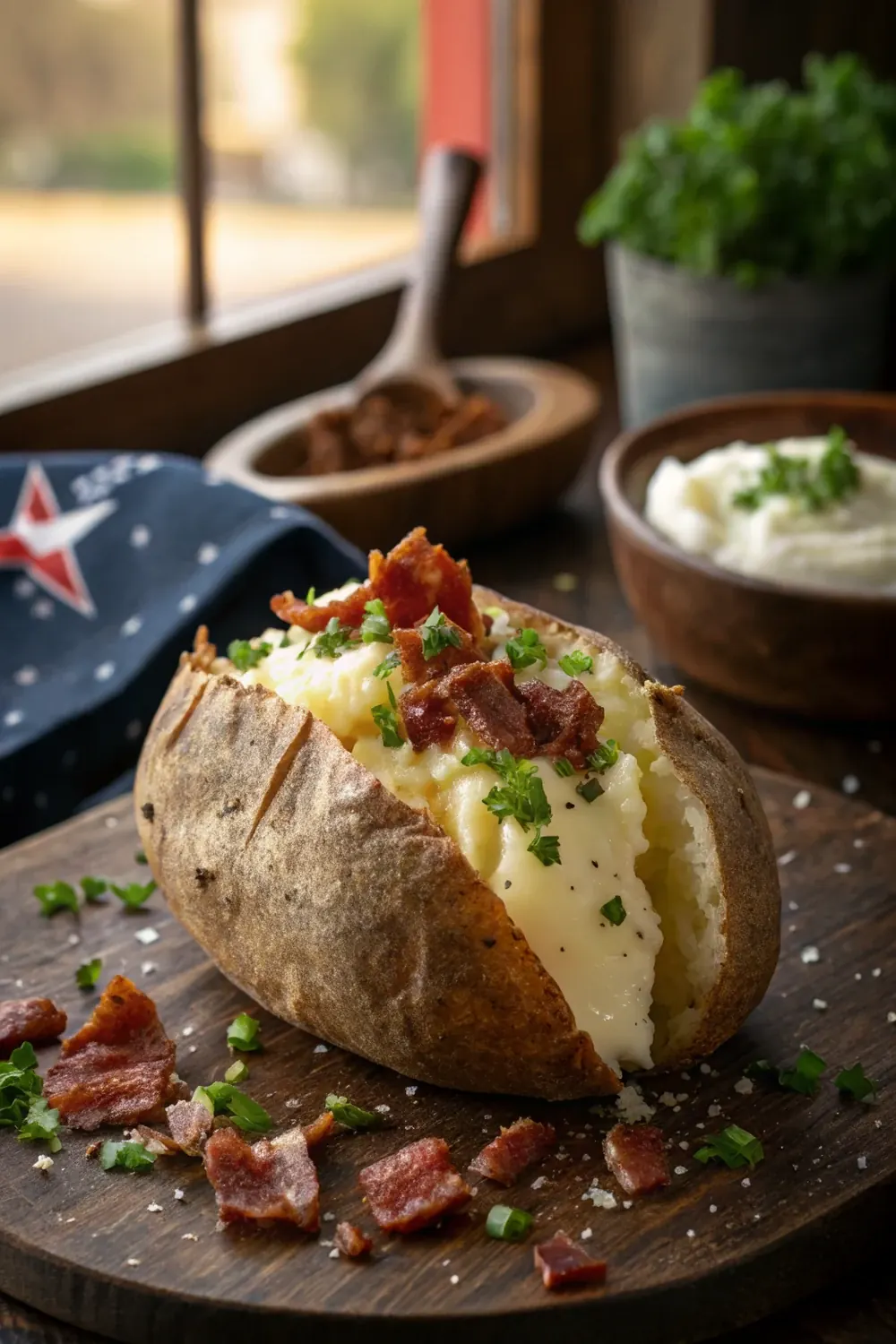
Ask anyone what they remember about a Texas Roadhouse baked potato and they will tell you about the skin. Salty, crackly, almost chip-like at the ridges, wrapped around an interior so fluffy it drinks butter like a sponge. For years I treated baked potatoes as the boring seat at the steakhouse table, and then one night I actually paid attention to what I was eating and realized the humble potato had been outcooking half the menu all along.
The good news for home cooks is that this is the cheapest copycat you will ever make. There is no secret ingredient, no special equipment, just a method the restaurant follows without compromise: real russets, a coat of fat, a serious crust of kosher salt, and a hot oven with no foil anywhere in sight. The foil part matters more than people think, and I will explain why. Get the method down once and you will never serve a pale, steamed, sad baked potato again.
How Texas Roadhouse Makes Their Baked Potatoes
The restaurant method is no mystery to anyone who has worked a steakhouse line: big russets get rubbed with fat, rolled in salt, and baked hot in convection ovens with the skins bare. No foil, no steam, no shortcuts. The salt draws moisture out of the skin while the fat fries it gently in place, and an hour later you have that signature crust that crackles when the knife goes through.
The other half of the secret is volume and timing. Steakhouses bake potatoes continuously through service so yours has usually finished within the hour, which is why the interior is still steamy-fluffy instead of dense. At home you replicate that by serving the potatoes promptly and splitting them open the moment they leave the oven, which vents the steam before it can compact the flesh.
Everything else, the butter, the sour cream, the bacon, is assembly. Nail the bake and the toppings take care of themselves. Fumble the bake, wrap it in foil or pull it early, and no amount of cheddar will rescue a gummy center. This is a method recipe, and the method is blessedly short.
Why Russets, and How to Pick Them
Russets are not a suggestion, they are the recipe. Their high starch and low moisture is what bakes up into that dry, fluffy, butter-absorbing interior; waxy potatoes like red or Yukon Gold turn dense and creamy instead, lovely in scalloped potatoes but wrong here. The potato industry's own type guide sorts this out plainly: russets are the baking potato.
Size matters for timing more than flavor. I buy 10-to-12-ounce potatoes, big enough to feel like the steakhouse but small enough to finish in an hour. Whatever size you choose, choose it consistently, because one 8-ounce and one 16-ounce potato on the same sheet will never agree on a finish time.
At the bin, look for firm, heavy potatoes with even brown skin and shallow eyes. Skip anything with green tinges, sprouts, or soft spots. Store them in a cool, dark, ventilated spot, never the fridge, where the cold converts their starch to sugar and bakes up oddly sweet and dark-skinned.
The Salt Crust, Explained
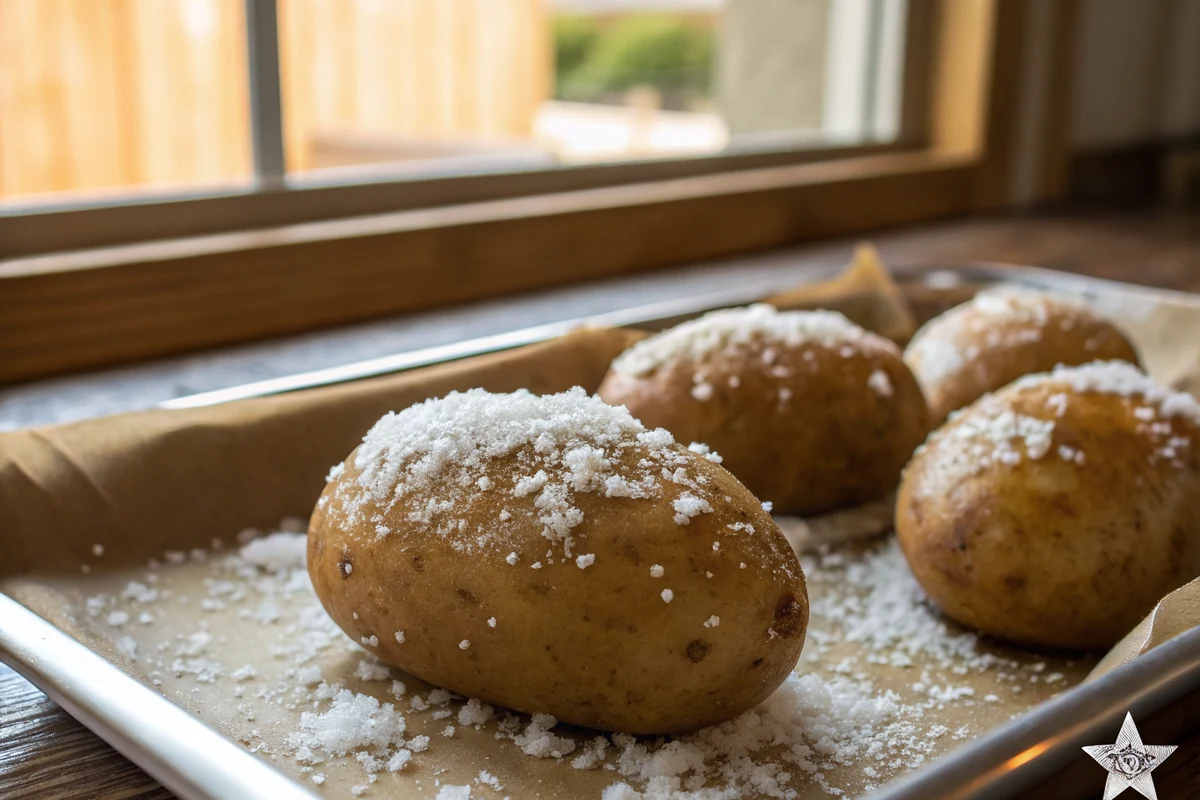
The salt crust is the signature move, and it is doing more than seasoning. A heavy coat of kosher salt pulls moisture out of the skin during the bake, and dry skin is crisp skin. The crystals also create a rough, insulating jacket that lets the surface get hotter than bare skin would, frying the exterior in its thin coat of oil.
Use coarse kosher salt, not table salt. The big crystals cling in a crust without dissolving into the potato, and most of the sodium stays on the surface rather than in your dinner; what reaches your tongue is a pleasant salty hit at the skin, then plain fluffy potato inside. Fine salt dissolves, over-seasons the skin, and disappears as texture.
How much is enough? More than feels polite. Roll the oiled potato through a plate of salt until it looks frosted. I promise the result is not too salty, because you control the rest at the table; and if you are watching sodium hard, you can crack the crust off after baking and still keep most of the crisp underneath.
Oil or Butter on the Skin
Both work, and the difference is small but real. Neutral oil has a higher smoke point and crisps the skin a shade better, with no flavor of its own. Melted salted butter browns the skin a little deeper and leaves a faint toasty flavor that reads more steakhouse to me. In my kitchen, butter wins by a nose for company and oil wins on a weeknight.
What you should not do is drown the potato. A thin, complete coat rubbed in with your hands is the goal; pooling fat on the sheet pan fries the bottom unevenly and smokes up the oven. Two tablespoons covers four large potatoes with a little to spare.
One upgrade worth knowing: bacon fat. If you are already crisping bacon for the toppings, a spoonful of the drippings rubbed on the skins is outrageous in the best way, smoky and savory before you have added a single topping. My grandmother would have considered using anything else a waste of good drippings.
Hot Oven, Naked Potato: the No-Foil Rule
Foil is the enemy of everything this recipe stands for. A wrapped potato cannot lose moisture, so it steams in its own jacket and comes out with soft, wet skin and a dense interior, closer to boiled than baked. The restaurant potato you are chasing has never met a sheet of foil in its life.
The myth persists because foil keeps a potato warm after baking, which is a catering trick, not a cooking method. If you need to hold finished potatoes, keep them loose in a warm oven, 200F, for up to 45 minutes, still unwrapped. They hold remarkably well that way, and the skin stays crisp.
425F is the sweet spot for temperature. Hot enough to crisp the crust and cook a big russet in about an hour, gentle enough that the skin does not scorch before the center hits 205F. If your oven runs convection, use it and start checking 10 minutes early; the moving air is exactly what the steakhouse ovens have going for them.
Doneness: 205F Is the Magic Number
Fluffiness is a temperature, not a time. Potato starch granules finish swelling and bursting around 205 to 210F, which is when the interior turns light and dry enough to absorb butter properly. Pull the potato at 195F and the center is waxy and tight no matter how long you let it rest; there is no carryover rescue from a real underbake.
An instant-read thermometer makes this foolproof, straight into the center of the biggest potato. No thermometer, no problem: squeeze the potato with a mitt, and a done one gives easily all the way through with no firm core. A skewer should slide in like the potato is not there.
Sizes vary, ovens lie, and that is fine, because the potato waits patiently. An extra 10 minutes in the oven will not hurt a russet at 425F; the skin just gets a shade crisper. When in doubt, leave it in. The only unforgivable result is pulling early and discovering the dense core at the table.
Loading It Like the Steakhouse
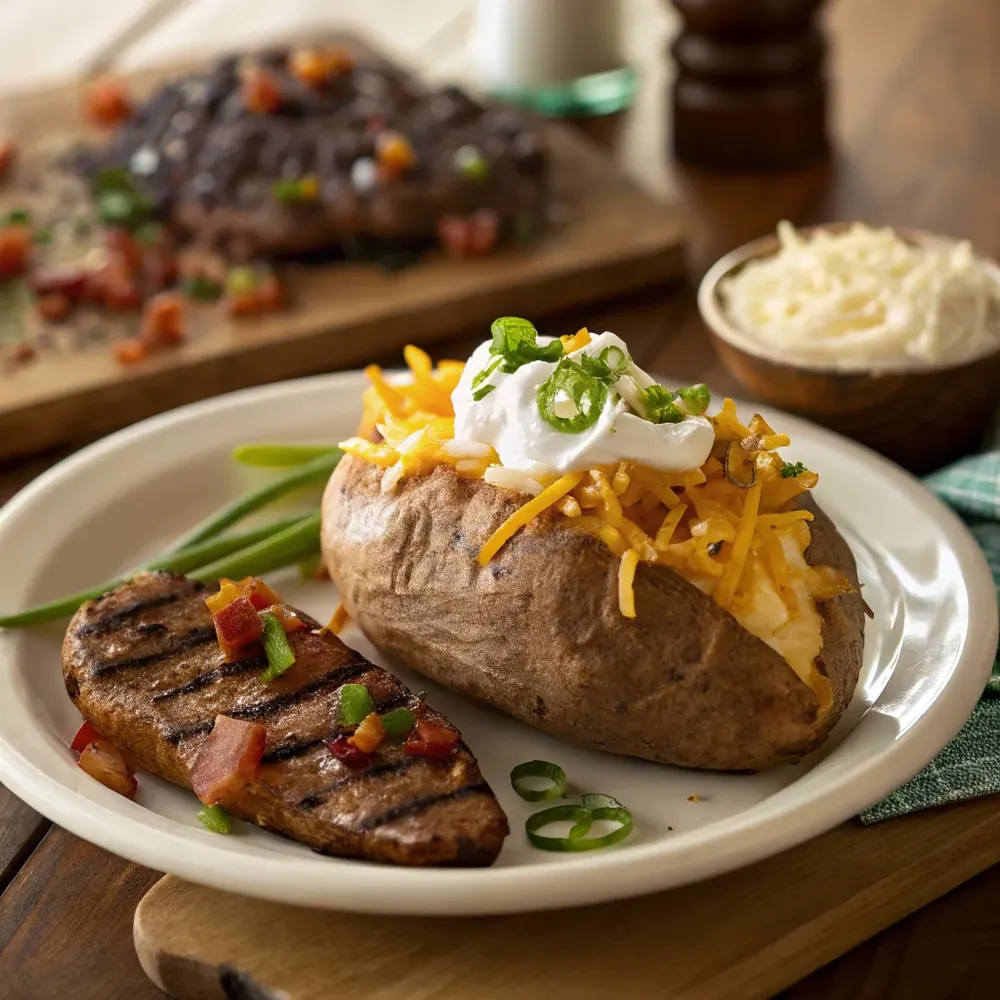
Order of operations matters. Butter goes in first, directly onto the fork-fluffed interior at maximum heat, so it melts completely into the flesh rather than sitting on top. Then sour cream, then cheese while there is still enough warmth to soften it, then bacon, chives, and pepper. It is a small ritual and it is correct.
If your table likes the fully loaded experience as the main event, that is exactly the angle of my loaded mashed potatoes, same toppings, creamier vehicle. The baked potato keeps things more honest: every scoop has crisp skin, salt, and steam in it, and everyone customizes their own.
A pinch of steak seasoning over the sour cream is my favorite quiet upgrade, tying the potato to whatever came off the grill next to it. Beyond that, chili, brisket chopped fine, or leftover pulled pork turn one big russet into a full supper with a green salad.
Common Baked Potato Mistakes
Wrapping in foil leads the list, as covered, and pulling the potato early runs second. The third classic is a cold start: putting potatoes into a still-preheating oven stretches the bake unpredictably and the skin spends too long at temperatures that leather it rather than crisp it. Let the oven finish preheating, every time.
Skipping the fork pricks is a quiet risk. A potato is a sealed pressure vessel, and while explosions are rare, cleaning superheated potato off oven walls once is enough for a lifetime. Six or eight stabs vent the steam. Related: do not bake potatoes crowded or stacked; air needs to reach all sides for an even crust.
On the serving end, the deadliest mistake is letting a perfect potato sit sealed and whole while the rest of dinner finishes. Steam trapped inside keeps cooking and compressing the flesh. Split and fluff within a couple of minutes of the oven, even if the toppings wait. A split potato holds its fluff; a sealed one densifies by the minute.
Finally, salt with intention. Fine table salt instead of kosher gives you a harsh, invisible crust, and salting an unoiled potato gives you salt on the sheet pan instead of the skin. Oil first, coarse salt second, pressed on by hand. The order is the recipe.
What to Serve With Salt-Crusted Baked Potatoes
A baked potato this good was built to sit next to meat. At my house that means grilled pork chops with garlic butter or a deeply seared steak, with the potato catching every stray juice on the plate. It is also the classic partner for green beans with bacon when you want the full steakhouse spread.
It moonlights beautifully under barbecue. A split salt-crusted potato piled with chopped brisket, cheddar, and a drizzle of sauce is a Texas institution in its own right, and a smart way to stretch a pound of leftover smoked meat into dinner for four. Pulled pork and chili do the same job.
For a lighter table, a crisp salad with a sharp vinaigrette plays against the rich potato, and honestly a great baked potato with butter, good salt, and black pepper needs nothing else at all on a quiet night. I have eaten exactly that for supper more times than I will admit in print.
Storage, Reheating, and Twice-Baked Leftovers
Leftover baked potatoes keep 3 to 4 days in the fridge in an airtight container, in line with the USDA cold food storage guidelines. Cool them within a couple of hours of baking, and never store a potato in its foil even if you ignored me and used some; the anaerobic environment is a genuine food-safety risk.
Reheat in a 375F oven or air fryer for 12 to 15 minutes, which revives the crisp skin surprisingly well. The microwave heats the inside fine but turns the skin soft, so if you go that route, finish with 3 or 4 minutes in a hot oven or skillet for the crust. Add fresh butter on the reheat; the potato will take it gladly.
The best fate for leftovers is twice-baked: halve the cold potatoes, scoop the flesh into a bowl, mash it with butter, sour cream, and cheddar, pile it back into the skins, top with more cheese, and bake at 400F until browned, about 20 minutes. I liked that move so much I gave it a full page: my Texas Roadhouse twice baked potatoes walk the whole method, from-scratch or from leftovers. They reheat from the fridge beautifully, which makes them my favorite make-ahead side for a cookout.
Texas Roadhouse Baked Potatoes Copycat Recipe
Ingredients
- For the potatoes:
- 4 large russet potatoes (10 to 12 oz / 280 to 340 g each), scrubbed and dried
- 2 tablespoons (30 ml) neutral oil or melted salted butter
- 2 tablespoons (24 g) coarse kosher salt, for the crust
- For loading (per potato, all optional):
- 1 tablespoon (14 g) salted butter
- 2 tablespoons (30 g) sour cream
- 2 tablespoons (14 g) shredded sharp cheddar cheese
- 1 slice bacon, cooked crisp and crumbled
- 1 teaspoon sliced fresh chives or green onion
- Freshly cracked black pepper, to taste
Instructions
- Heat the oven. Set a rack in the middle of the oven and preheat to 425F. Give it a full 15 minutes to come to temperature; a properly hot oven from the first minute is what starts crisping the skin before the inside finishes. There is no need for a baking stone or anything fancy, just honest heat.
- Scrub and dry the potatoes. Scrub the russets well under running water with a brush, then dry them completely with a towel. Dry matters: oil will not cling to a wet potato and salt will not cling to unoiled skin. Pick potatoes of similar size so they finish together, and avoid any with green patches or sprouts.
- Prick each potato. Stab each potato 6 to 8 times around with a fork, about a half inch deep. The holes vent steam as the interior cooks, which keeps the pressure from building and protects you from the rare but genuinely dramatic oven blowout. It takes ten seconds and skipping it is not worth the gamble.
- Oil the skins. Rub each potato all over with oil or melted butter, using your hands so every bit of skin gets a thin coat. The fat does two jobs: it conducts heat into the skin so it crisps rather than leathers, and it is the glue that holds the salt crust. Butter brings a little more flavor; oil crisps slightly better. Both are correct.
- Roll in kosher salt. Pour the kosher salt onto a small plate and roll each oiled potato through it, pressing gently so the crystals stick on all sides. The coating should look generous, almost excessive; most of it stays on the skin you may or may not eat, and what it seasons is every bite along the way. Coarse kosher salt is the right size, not fine table salt.
- Bake unwrapped. Set the potatoes directly on the oven rack, or on a wire rack over a baking sheet to catch stray salt, with space between them. No foil, ever; foil traps steam and gives you a boiled texture and soft skin. Bake 55 to 65 minutes depending on size, without opening the oven for the first 45.
- Check for doneness. A done potato reads 205 to 210F on an instant-read thermometer at the center, and the skewer or probe should slide in with no resistance. No thermometer? Squeeze gently with an oven mitt; the potato should give easily all the way through. If there is any firmness at the center, give it another 10 minutes. An underbaked center never fluffs.
- Split and fluff immediately. The moment the potatoes come out, cut a slit down the length of each, push the ends toward each other to pop it open, and rough up the inside with a fork. Doing this right away lets steam escape so the interior stays fluffy instead of compacting into density as it cools. Drop the butter in first while everything is at full heat.
- Load and serve. Build it the steakhouse way: butter melting into the fluffed interior, then sour cream, a handful of sharp cheddar, crumbled bacon, chives, and a crack of black pepper. Serve hot, with extra butter within reach. The salty skin against the rich toppings is the entire point, so make sure everyone eats at least one bite of crust.
Frequently Asked Questions
How does Texas Roadhouse make their baked potatoes?
Large russet potatoes are rubbed with fat, rolled in coarse salt, and baked unwrapped in hot ovens until the skin crisps and the center turns fluffy, then split and loaded to order with butter, sour cream, cheese, and bacon. There is no foil involved at any point. The salt crust on the skin is the signature, and the home method is identical: oil, kosher salt, and a 425F oven for about an hour.
How do you make Texas Roadhouse baked potatoes at home?
Scrub and dry large russets, prick them with a fork, rub them with oil or melted butter, and roll them in coarse kosher salt. Bake them directly on the rack at 425F for 55 to 65 minutes, no foil, until the center reads 205 to 210F and the potato squeezes soft. Split and fluff them immediately, then load with butter first, followed by sour cream, cheddar, bacon, and chives.
Why do restaurants put salt on the outside of baked potatoes?
The salt crust does three jobs: it pulls moisture out of the skin so it bakes up crisp instead of leathery, it seasons every bite of skin, and the rough crystal layer helps the surface crisp evenly in its coat of oil. Most of the salt stays on the outside, so the interior is not salty at all. Coarse kosher salt is the right choice because the crystals cling without dissolving in.
Should I wrap baked potatoes in foil?
No. Foil traps steam, and a wrapped potato essentially boils in its own moisture, giving you soft, damp skin and a dense interior. Bake potatoes bare on the oven rack so moisture can escape and the skin can crisp. Foil is only useful for keeping an already-baked potato warm in a catering setting, and even then a low oven does the job better without sacrificing the crust.
What temperature and how long for steakhouse baked potatoes?
Bake at 425F for 55 to 65 minutes for 10-to-12-ounce russets, directly on the middle rack. The potato is done when the center reaches 205 to 210F on an instant-read thermometer, or when it gives easily all the way through under a gentle squeeze. Bigger potatoes can take 75 minutes or more, so when in doubt leave them in; extra time only crisps the skin further.
Why is my baked potato not fluffy?
It was almost certainly pulled before the center finished, or it sat sealed and whole after baking. Potato starch needs to hit roughly 205F for the interior to turn light and dry; pull it at 195F and the core stays waxy and tight, no matter the rest. After baking, split and fluff the potato within minutes so steam escapes; trapped steam compresses the flesh as it cools. Foil makes both problems worse.
Can I bake potatoes faster in the microwave?
You can hybrid it: microwave the pricked, unsalted potatoes for 5 to 6 minutes to jump-start the interior, then oil, salt, and finish in a 425F oven for 20 to 25 minutes to build the crust and reach 205F at the center. Straight microwaving alone gives you a steamed texture and soft skin, which defeats the entire steakhouse point. The hybrid version is a respectable weeknight compromise.
What toppings go on a Texas Roadhouse style baked potato?
The classic load is butter first, melted into the fluffed interior, then sour cream, shredded sharp cheddar, crumbled bacon, fresh chives or green onion, and black pepper. From there it scales up however you like: chili and cheese, chopped brisket and barbecue sauce, or broccoli and cheese all turn the potato into a main course. A pinch of steak seasoning over the sour cream is a quiet favorite of mine.
How do you reheat a baked potato and keep the skin crispy?
Use a 375F oven or air fryer for 12 to 15 minutes, which re-crisps the salt-crusted skin almost back to fresh. The microwave alone softens the skin; if you must use it, give the potato a few finishing minutes in a hot oven or dry skillet afterward. Stored airtight in the fridge, baked potatoes keep 3 to 4 days, and leftover ones make outstanding twice-baked potatoes.