Southern Comfort Food
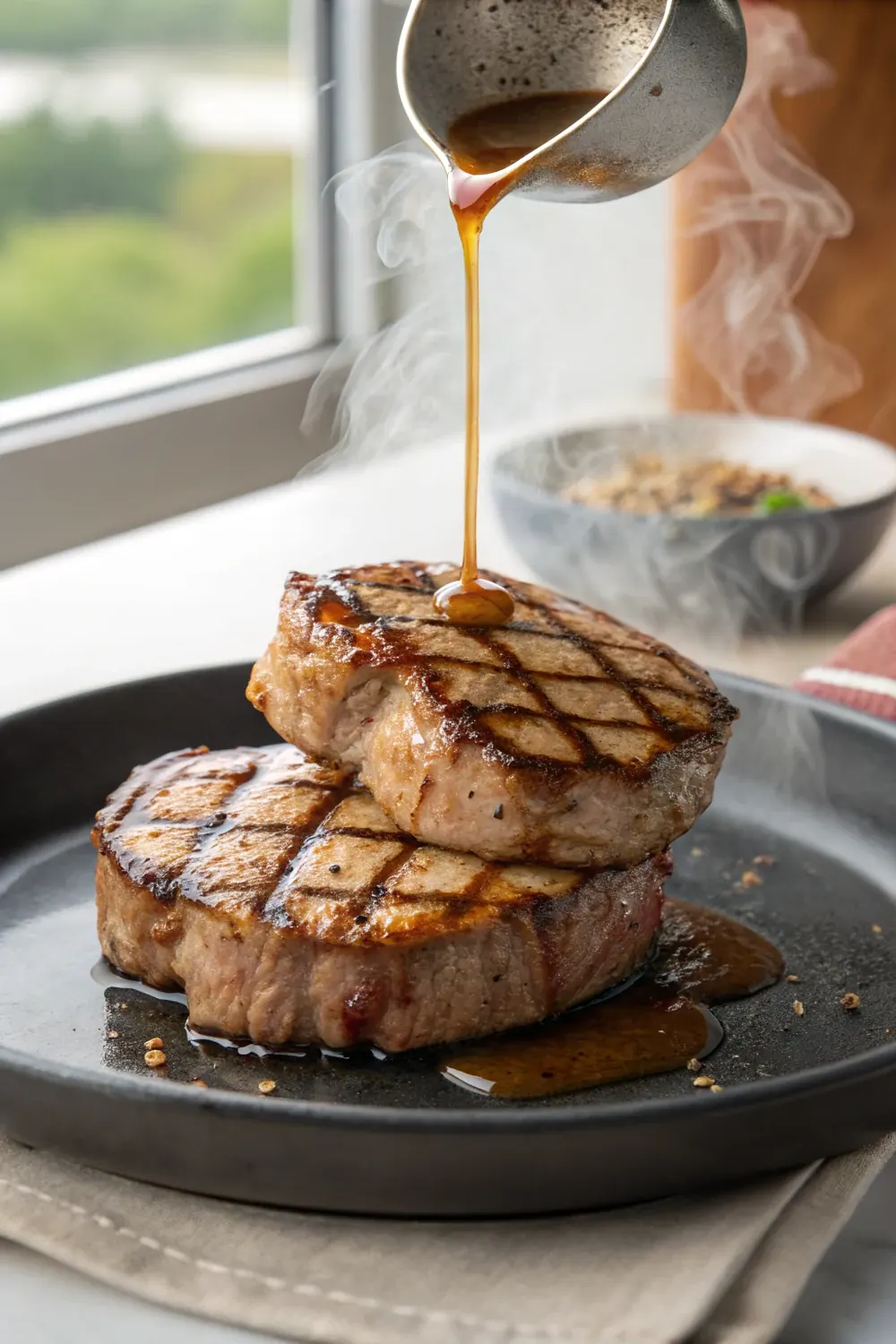
Texas Roadhouse Grilled Pork Chops Copycat
Juicy, peppery grilled Texas Roadhouse pork chops - the quick marinade most home cooks skip is the secret. Here's exactly how I make them at home.
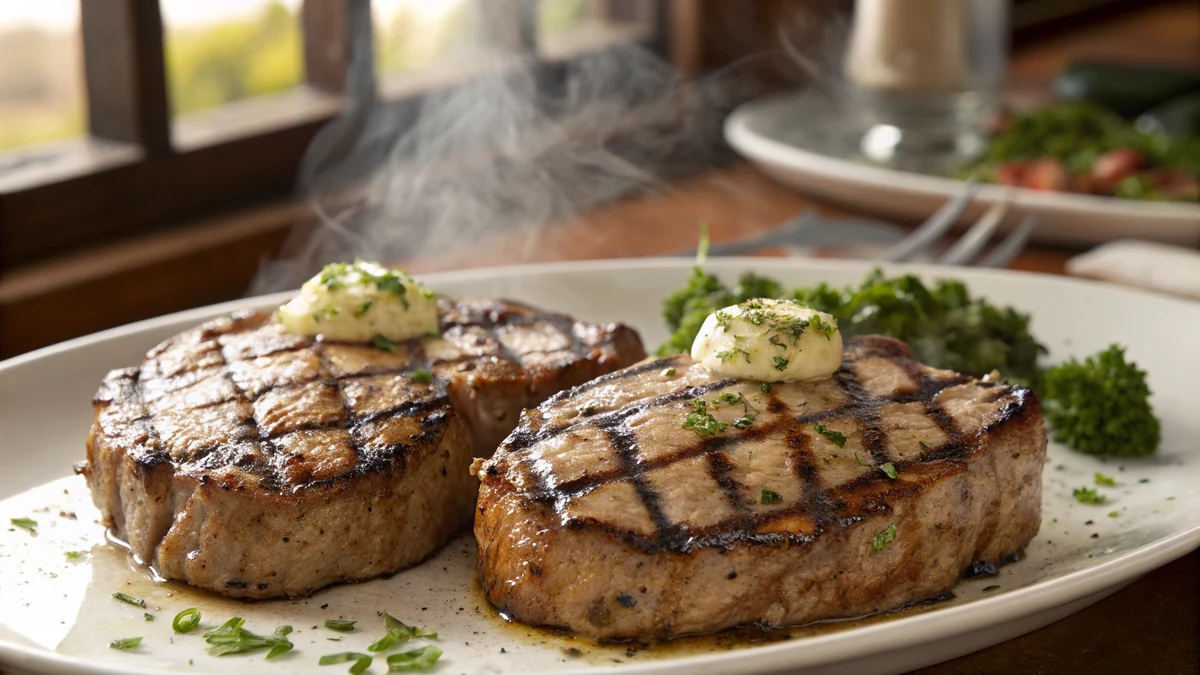
Quick answer: Copycat Texas Roadhouse grilled pork chops start with a quick one-hour brine of water, kosher salt, and brown sugar, which is the step that keeps the chops juicy the way the restaurant serves them. You pat the brined chops dry, rub them with a peppery steakhouse seasoning, and grill them over medium-high heat about 4 to 5 minutes per side until the center reads 145F. A five-minute rest under foil and a pat of garlic butter on top finish the job. Thick boneless center-cut chops, at least an inch and a quarter, are the right cut. Total active time is about 25 minutes plus the brine.
Everybody walks into Texas Roadhouse planning to order steak, and then somebody at the table gets the grilled pork chops and the whole table goes quiet when the plates land. Those chops show up thick, striped from the grill, and so juicy that you start questioning your ribeye. My husband is the pork chop orderer in our family, and after years of him sliding his plate toward me for one more bite, I decided to work out the recipe in my own backyard in Lockhart.
What I learned is that the restaurant is not doing anything magical with the pork itself. The magic is in the prep: a salty-sweet brine that seasons the meat all the way through and guards it against drying out, a bold peppery rub, and a properly hot grill. Most home pork chops fail because they skip the brine and cook the chop to gray. Get those two things right and you will put out a chop that holds its own against any steak on the table. Here is exactly how I do it. These are grilled chops, built for fast dry heat and a blush of pink at 145F. If what you want is a chop braised under an onion gravy until the meat relaxes off the bone, that is a different dish entirely, and it lives on my smothered pork chops page.
Why These Taste Like the Steakhouse Chops
The Texas Roadhouse pork chop has a reputation that sneaks up on people. It is not the headliner of the menu, but it might be the most consistently juicy thing that comes off their grill, and that consistency is the clue. You do not get pork that juicy night after night by being careful with a timer. You get it by seasoning the meat in advance with salt and a little sugar, which is exactly what a brine does.
My copycat is built on three pillars: a one-hour brine that seasons the chop to the middle, a peppery rub heavy on coarse black pepper and paprika, and a hot grill that puts a real crust on the outside before the inside has a chance to overcook. Each piece is simple. Together they produce a chop that tastes unmistakably like the restaurant plate, down to the butter melting over the grill marks.
If you have made my Texas Roadhouse steak seasoning, you already know the flavor profile this rub is chasing: pepper-forward, a little smoky, faintly sweet. A tablespoon of that blend works beautifully here in place of the rub below. Just skip any extra salt, because the brine has already done that work.
Buying the Right Pork Chops
Thickness matters more than anything else on the label. You want boneless center-cut loin chops at least 1.25 inches thick, and 1.5 inches is even better. Thin chops are nearly impossible to grill juicy because the center overshoots before the outside browns. If the meat case only has thin ones, ask the butcher to cut thick chops fresh from the loin; most will do it on the spot for nothing.
Bone-in rib chops work too and bring a little extra flavor and insurance, since the bone slows cooking around it. Add a minute or two per side and check the temperature away from the bone. What you do not want for this recipe is anything labeled thin-cut, breakfast chop, or sirloin chop, which run lean, ragged, and unforgiving on a hot grate.
Color is worth a glance while you are at the case. Look for chops that are reddish-pink rather than pale, with a little marbling threaded through. Pale, watery pork is a sign of a lean, fast-raised hog and it eats dry no matter what you do. A chop with some color and fat in it meets the brine halfway.
The One-Hour Brine Is the Whole Secret
Modern pork is bred lean, which is why the pork chops of most home cooks turn out dry and a little sad. A brine fixes that at the chemical level. The salt dissolves some of the muscle proteins and reseasons the meat from the inside, so the chop holds noticeably more of its juice through cooking. The brown sugar rounds the saltiness and helps the surface brown.
One hour is genuinely enough for a 1.25-inch boneless chop. I know brining sounds like an overnight project, but this is a quick soak, not a Thanksgiving turkey. Going much past two hours with this salt level starts to change the texture from juicy toward springy, the way cheap ham bounces. Set a timer and pull them.
Two practical notes. First, dissolve the salt fully in cold water; a minute of stirring does it, and you skip the heat-and-chill cycle most brine recipes put you through. Second, dry the chops hard after brining. A wet surface steams instead of searing, and the entire point of the grill is that crust.
The Peppery Rub, Steakhouse Style
The restaurant seasons its chops like it seasons its steaks: bold, peppery, with paprika doing quiet work in the background. My rub is coarse black pepper, smoked paprika, garlic powder, onion powder, and an optional pinch of cayenne. There is no salt in it on purpose, because the brine already seasoned the meat through. Salt on top of brine tips the chop over the edge.
Coarse-ground pepper is the texture of the crust, so grind it fresh if you can or buy a coarse cafe grind. The fine dust in a pre-filled shaker disappears on the grill. Smoked paprika gives you the faint cookfire note that reads as steakhouse even on a gas grill, and the cayenne is barely there, just enough warmth to keep the butter finish from being one flat rich note.
Press the rub on rather than sprinkling it from a height. You want an even, clinging layer over the thin film of oil, which acts as glue and helps the spices toast instead of scorch. Season right before the grill, not an hour ahead, or the pepper draws moisture back to the surface you just dried.
Grill Setup: Hot, Clean, and Two Zones
Medium-high is the number, around 425F at the grate. Hotter than that and the sugar the brine left in the surface starts to burn before the center catches up; cooler and you steam the chop gray without a crust. On a gas grill, that is usually all burners at medium-high with the lid down for 10 minutes before the meat goes on.
On charcoal, bank the coals to one side so you have a hot zone for searing and a cooler zone for finishing. Thick chops appreciate the option. If the outside is handsome but the center is reading 130F, slide them to the cool side, drop the lid, and let convection finish the job gently. That move alone has saved more pork chops at my house than any gadget.
Scrape the grates and oil them just before the chops go down. Pork has less surface fat than a ribeye, so it sticks more readily, and a torn crust takes the seasoning with it. A folded paper towel dipped in oil and dragged across the hot grate with tongs takes ten seconds and makes you look like a professional.
Cooking to 145F, Not to Gray
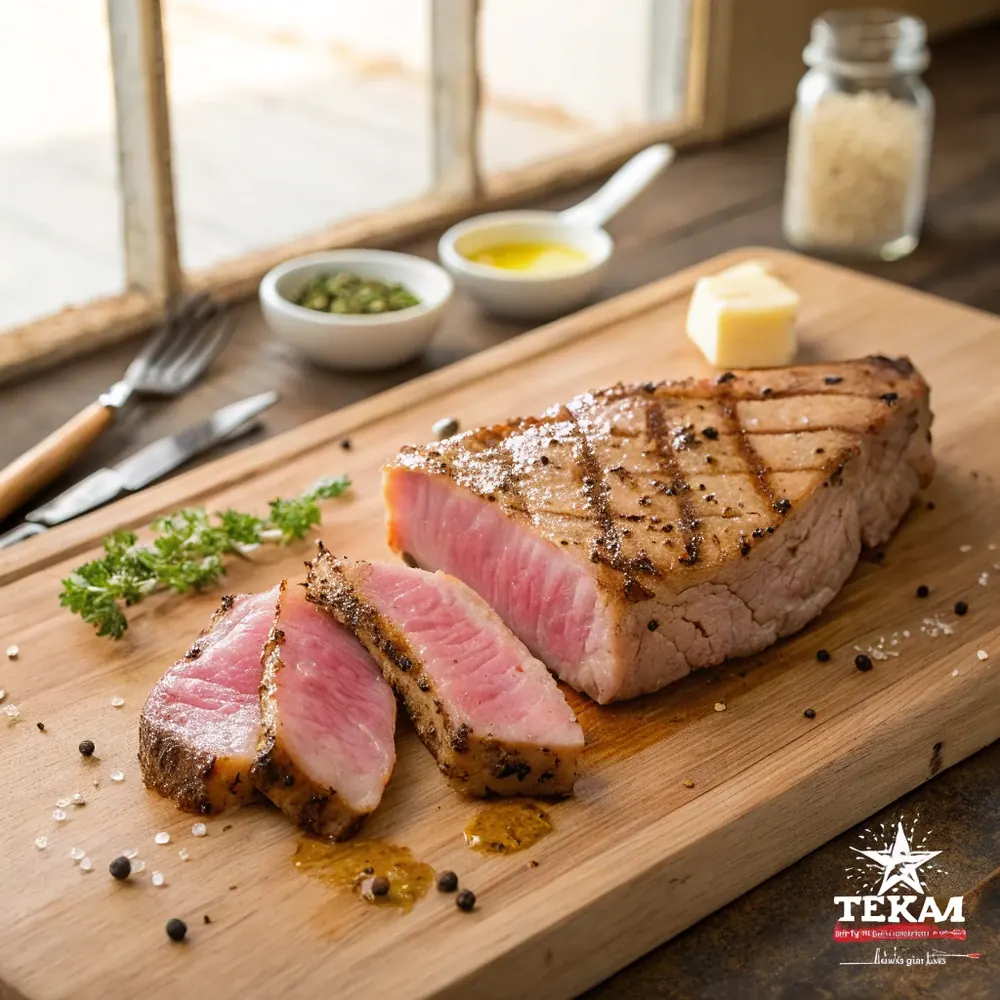
The single biggest upgrade you can make to your pork is a thermometer and the number 145. The USDA's safe minimum internal temperature for whole cuts of pork is 145F with a 3-minute rest, and at that temperature the center of the chop is juicy with a faint blush of pink. That blush is not undercooked. It is what properly cooked pork looks like.
Most of us were raised by cooks who took pork to 160F and beyond out of an old caution, and that habit is why pork chops have a dry reputation. The rules changed years ago. Pull the chops at 145F in the thickest part, rest them five minutes, and carryover heat will ease them a few degrees higher while the juices redistribute.
Check temperature from the side of the chop, probe parallel to the cutting board, so the tip sits in the true center rather than passing through it. On a 1.25-inch chop the difference between the center and a half-inch off center can be ten degrees, and ten degrees is the whole game here.
No Grill? Cast Iron Does It
A heavy cast iron skillet gets you remarkably close to the backyard version. Heat the dry skillet over medium-high until a drop of water skates, add a teaspoon of oil, and sear the chops 3 to 4 minutes per side. You will trade grill marks for an even, deep crust, which is honestly its own reward.
If the chops are thick and the crust is ready before the center, finish them in a 400F oven for 5 to 8 minutes right in the skillet. The pan-then-oven move is how most steakhouse kitchens actually cook thick cuts, so you are in good company. Add the garlic butter for the rest exactly as you would off the grill.
A grill pan on the stovetop splits the difference and gives you the stripes, though it browns less of the surface than flat cast iron. Whatever the vessel, run the vent fan and crack a window. A proper sear on a brined chop announces itself to the whole house.
Common Mistakes That Dry Out Pork Chops
Skipping the brine is the big one. Without it, a lean modern chop has no margin for error; thirty extra seconds on the grill is the difference between juicy and sawdust. The brine widens that window so much that even a slightly overcooked chop still eats moist. One hour of fridge time is the cheapest insurance in this recipe.
Cooking thin chops hot and fast is the second mistake, and it is really a shopping mistake. A half-inch chop is gray in the middle by the time the surface has any color at all. Buy thick, cook to temperature, and let the thermometer overrule the clock. Times in any recipe, including mine, are estimates; 145F is a fact.
Cutting into the chop straight off the grill is the third. All the juice the brine helped the meat hold will run straight out onto the board if you skip the rest. Five minutes under loose foil with the butter melting on top is not optional, and it is conveniently the exact amount of time it takes to carry the sides to the table.
And do not sauce or sugar the chops early. Any glaze with sweetness in it, honey, barbecue sauce, or the like, goes on in the last two minutes only. Sugar burns long before pork cooks through, and a bitter, blackened glaze will bury all the careful work underneath it.
Variations Worth Trying
The closest thing to the full restaurant experience is a peppercorn cream sauce. Soften a minced shallot in the chop drippings with a knob of butter, add a teaspoon of crushed peppercorns, deglaze with a splash of chicken stock, and finish with a half cup of heavy cream simmered until it coats a spoon. Spoon it over the rested chops and you have the upgraded menu version.
For a sweeter angle, brush the chops with a tablespoon of honey mixed with a teaspoon of Dijon during the last two minutes on the grill. The glaze caramelizes fast, so keep the chops moving and pull them the moment it turns deep amber. Skillet cinnamon apples on the side push the whole plate toward Sunday supper.
Smokers earn their keep here too. Run the brined, rubbed chops at 225F until they hit 130F inside, then sear them hard over direct heat or in screaming cast iron to finish at 145F. The reverse sear takes about 45 minutes longer and rewards you with smoke flavor all the way through the chop.
Building the Full Steakhouse Plate
At the restaurant the pork chops come with two sides, and recreating that plate at home is half the fun. My table votes for buttered corn and green beans with bacon, which give you sweet and smoky against the peppery chop. A salt-crusted baked potato is the other classic move, split open and loaded at the table, and the loaded mashed potatoes work just as well for a fork-and-knife plate.
Warm dinner rolls with cinnamon butter are not negotiable in my house, and honestly the leftover garlic butter from the chops is wonderful on them too. If you are feeding a crowd, make a double batch of rolls; they vanish at a rate that defies arithmetic.
Pour-wise, sweet iced tea is the traditional companion, and a cold lager or an amber ale stands up nicely to the pepper and char. The chop is rich enough that something with bubbles or acidity serves it better than a heavy red wine, though nobody at my table has ever filed a complaint either way.
Storage, Reheating, and Leftovers
Leftover chops keep 3 to 4 days in an airtight container in the refrigerator, per the USDA cold food storage guidelines. Let them cool before they go in, and stash any extra garlic butter right on top, where it will firm into a cap that bastes the reheat. Brined chops reheat far better than unbrined ones, which is one more argument for that hour of fridge time.
Reheat gently or not at all. My preferred method is a covered skillet over low heat with a tablespoon of water or stock, about 4 to 5 minutes, which steams the chop warm without recooking it. The microwave works at half power in short bursts, but full power turns leftover pork to rubber faster than any appliance in the kitchen.
Cold leftover pork chop is quietly excellent, and I will defend slicing it thin for sandwiches with sharp cheddar and a swipe of mustard, or fanning it over a salad. You can freeze cooked chops up to 3 months wrapped tight, though the texture gives back a little; if I know we will not finish four chops, I would rather freeze one raw and brine it fresh another week.
Texas Roadhouse Grilled Pork Chops Copycat Recipe
Ingredients
- For the brine:
- 4 cups (950 ml) cold water
- 1/4 cup (60 g) kosher salt
- 1/4 cup (50 g) packed brown sugar
- 2 garlic cloves, smashed
- 1 teaspoon whole black peppercorns
- For the chops:
- 4 boneless center-cut pork chops, 1.25 to 1.5 inches thick (about 8 oz / 225 g each)
- 1 tablespoon (15 ml) neutral oil or olive oil
- 2 teaspoons coarse-ground black pepper
- 1 teaspoon smoked paprika
- 1 teaspoon garlic powder
- 1/2 teaspoon onion powder
- 1/4 teaspoon cayenne pepper (optional)
- For the garlic butter finish:
- 3 tablespoons (42 g) salted butter, softened
- 1 garlic clove, finely grated
- 1 teaspoon chopped fresh parsley
Instructions
- Make the brine. Stir the kosher salt and brown sugar into the cold water in a large bowl or zip-top bag until fully dissolved, then add the smashed garlic and peppercorns. There is no need to heat the brine if you stir for a minute; cold water keeps the pork safely chilled from the start and saves you the cooling wait.
- Brine the chops. Submerge the pork chops in the brine, cover or seal, and refrigerate for 1 hour, up to 2 hours for very thick chops. Do not go longer than that with this salt concentration or the texture starts turning bouncy like deli ham. One hour is enough to season the chops through and buy you real insurance against drying out on the grill.
- Dry and season. Lift the chops out of the brine, discard the liquid, and pat them completely dry with paper towels. A dry surface is what browns. Rub each chop lightly with oil, then mix the black pepper, smoked paprika, garlic powder, onion powder, and cayenne and press the seasoning evenly onto both sides. No added salt in the rub; the brine already handled it.
- Rest while the grill heats. Let the seasoned chops sit at room temperature for 20 to 30 minutes while you heat the grill. Taking the deep chill off helps them cook evenly to the center instead of charring outside while the middle lags. Meanwhile, stir the softened butter, grated garlic, and parsley together for the finish and set it aside.
- Set up the grill. Heat a gas grill to medium-high, around 425F, or build a two-zone charcoal fire with the coals banked to one side. Clean the grates well and oil them with a folded paper towel held in tongs. A clean, hot, oiled grate is the difference between handsome crosshatch marks and a chop that tears when you turn it.
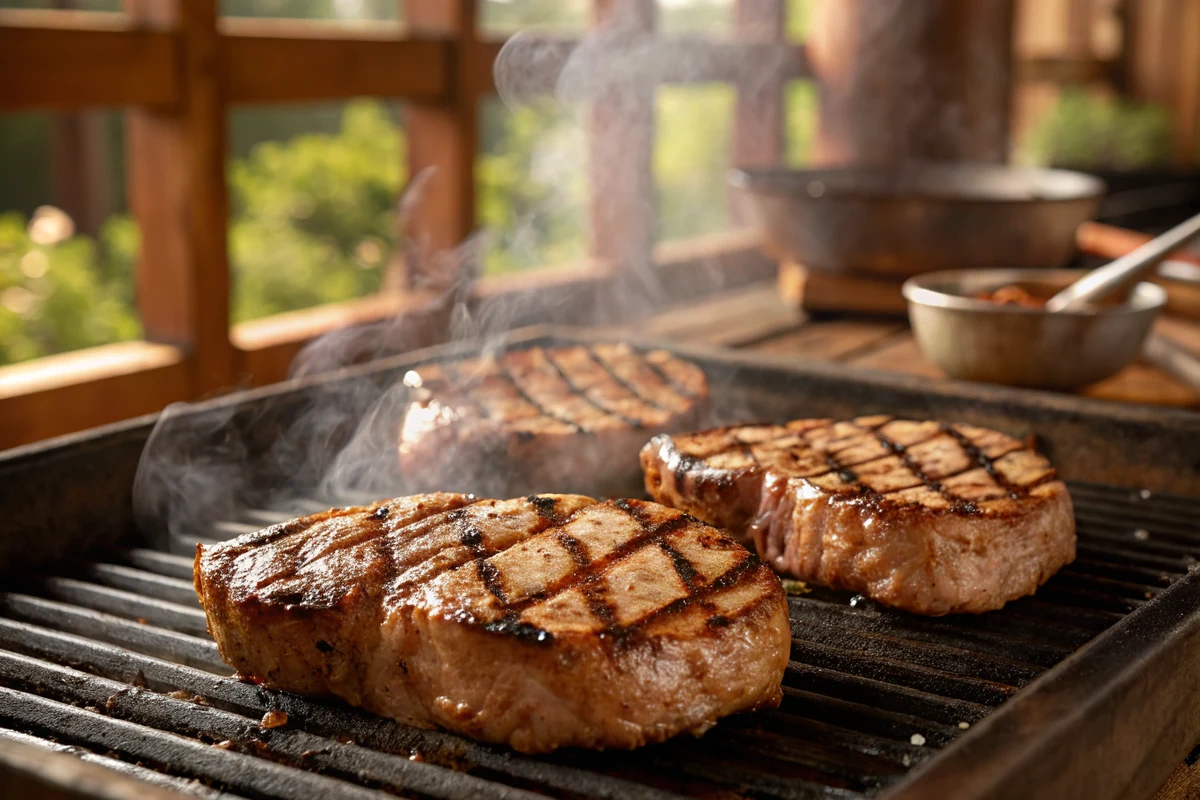
- Grill the first side. Lay the chops on the hot grate at an angle and leave them alone for 4 to 5 minutes. Resist the urge to slide or peek; the chop will release on its own once the crust sets. If you want restaurant crosshatch, rotate each chop 45 degrees after 2 minutes and finish the side without flipping.
- Flip and finish to 145F. Turn the chops and grill the second side another 4 to 5 minutes, then start checking with an instant-read thermometer in the thickest part. Pull them at 145F for a juicy chop with a faint blush of pink, which is the USDA-safe target for whole cuts of pork. If flare-ups chase the chops, slide them to the cooler zone and close the lid to finish.
- Rest under butter. Move the chops to a warm platter, top each one with a quarter of the garlic butter, and tent loosely with foil for 5 minutes. The rest lets the juices settle back into the meat instead of flooding the cutting board, and the butter melts down into the crust while you wait. Carryover heat will carry them a few degrees past 145F.
- Serve hot. Serve the chops whole or sliced thick against the grain, with the melted garlic butter spooned over the top. Plate them with your favorite steakhouse sides and eat while they are hot; a brined chop holds its juice, but no pork chop improves by sitting around. Expect quiet at the table for a few minutes.
Frequently Asked Questions
How does Texas Roadhouse make their pork chops so tender?
The restaurant starts with thick boneless chops and the meat is seasoned well ahead of the grill, which works like a brine: salt penetrates the chop, seasons it through, and helps it hold its juices over high heat. They cook to a juicy doneness rather than well-done and rest the chops before serving. This copycat recreates that with a one-hour brown sugar brine, a peppery rub, and a 145F pull temperature.
What is the marinade for Texas Roadhouse pork chops?
It is closer to a brine than a marinade: water, kosher salt, and brown sugar, with smashed garlic and peppercorns for aroma. One hour in that brine does more for juiciness than any oil-based marinade, because the salt actually changes how the meat holds moisture. After the brine, a dry rub of coarse pepper, smoked paprika, garlic powder, and onion powder supplies the steakhouse flavor.
What temperature should grilled pork chops be cooked to?
Pull them at 145F in the thickest part, then rest 5 minutes; carryover heat finishes the job. That is the USDA-safe temperature for whole cuts of pork, and the center will be juicy with a faint blush of pink, which is exactly what you want. Cooking to the old 160F standard is why pork chops have a reputation for being dry.
Why brine pork chops before grilling?
Modern pork is bred very lean, so the chops have little fat to protect them on a hot grill. A brine dissolves some of the muscle proteins and seasons the meat from within, which measurably increases how much juice the chop keeps through cooking. One hour is enough for a thick boneless chop, and it widens your margin of error so a minute too long on the grill no longer ruins dinner.
How long do you grill 1.5-inch pork chops?
Over medium-high heat, around 425F, figure 4 to 5 minutes per side and then verify with an instant-read thermometer, pulling at 145F. A full 1.5-inch chop may need 2 to 3 extra minutes; finish it on the cooler side of the grill with the lid down if the outside is browning faster than the center is climbing. Trust the thermometer over the clock every time.
Can I make Texas Roadhouse pork chops without a grill?
Yes. A heavy cast iron skillet over medium-high heat gives you an even, deep crust: sear 3 to 4 minutes per side, then finish thick chops in a 400F oven for 5 to 8 minutes until they reach 145F. A stovetop grill pan adds the stripes if you want them. Brine, season, and rest the chops exactly the same way as the grilled version.
Why are my grilled pork chops tough and dry?
Almost always one of three things: the chops were too thin, they were never brined, or they were cooked past 145F. Thin chops overshoot before they brown, unbrined lean pork has no moisture insurance, and every degree past 145F squeezes more juice out of the meat. Buy chops at least 1.25 inches thick, brine them an hour, and pull them on temperature, not on time.
What goes with grilled pork chops?
Steakhouse sides are the natural fit: buttered corn, green beans with bacon, a salt-crusted baked potato, or creamy mashed potatoes, plus warm rolls with cinnamon butter. The chop is peppery and rich, so at least one sweet or fresh side balances the plate. For drinks, sweet tea or a cold lager beats a heavy red wine against all that char and black pepper.
How long do leftover grilled pork chops last?
Stored in an airtight container in the refrigerator, cooked pork chops keep 3 to 4 days. Reheat them gently in a covered skillet over low heat with a spoonful of water or stock so they warm through without recooking, or eat them cold, sliced thin for sandwiches. You can freeze cooked chops up to 3 months, though the texture softens slightly on thawing.