Southern Comfort Food
Texas Roadhouse Country Fried Chicken Copycat
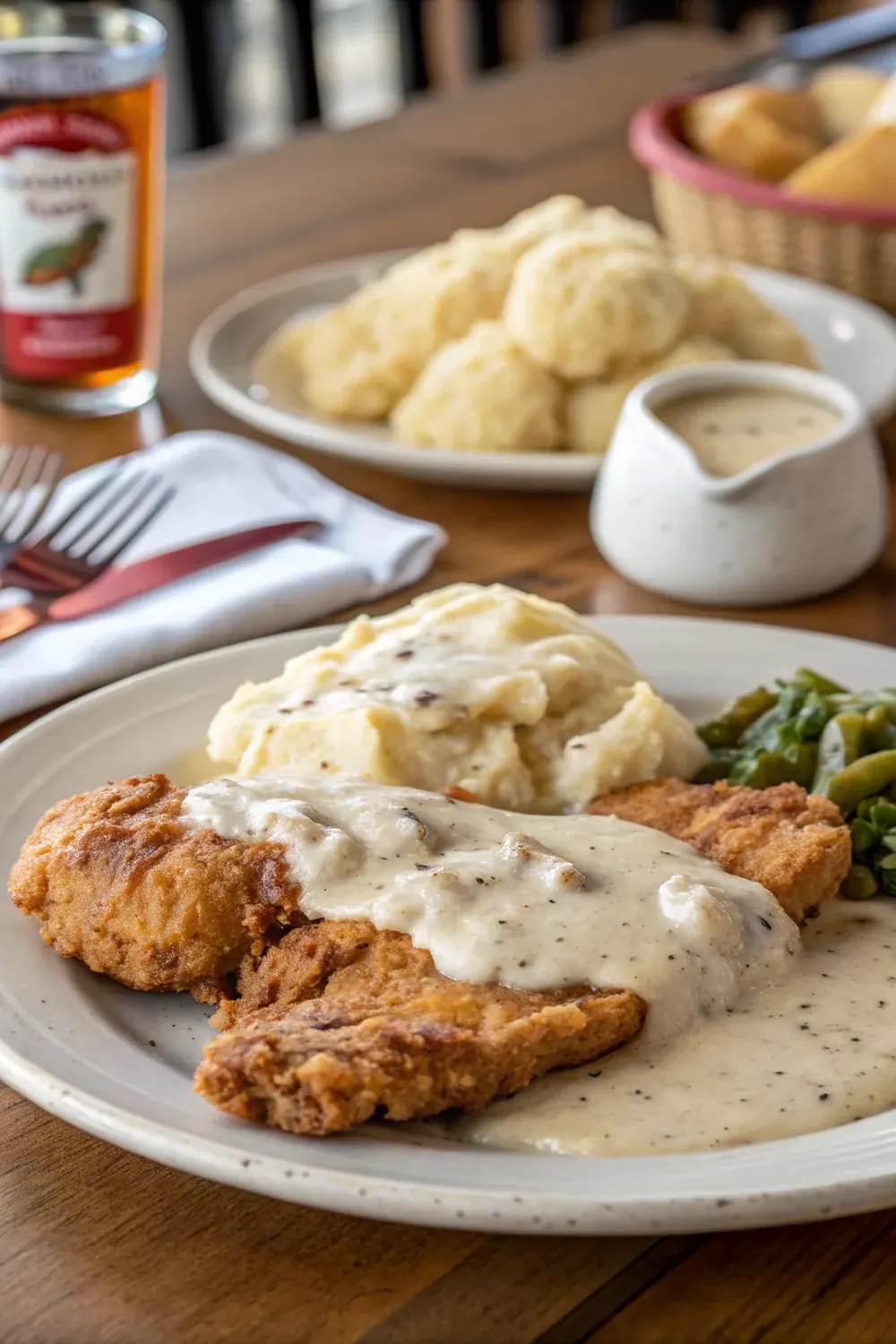
Chef Mia's Texas Roadhouse country fried chicken copycat: a pan-fried breaded breast smothered in peppery homemade country gravy. The old-school Southern plate.
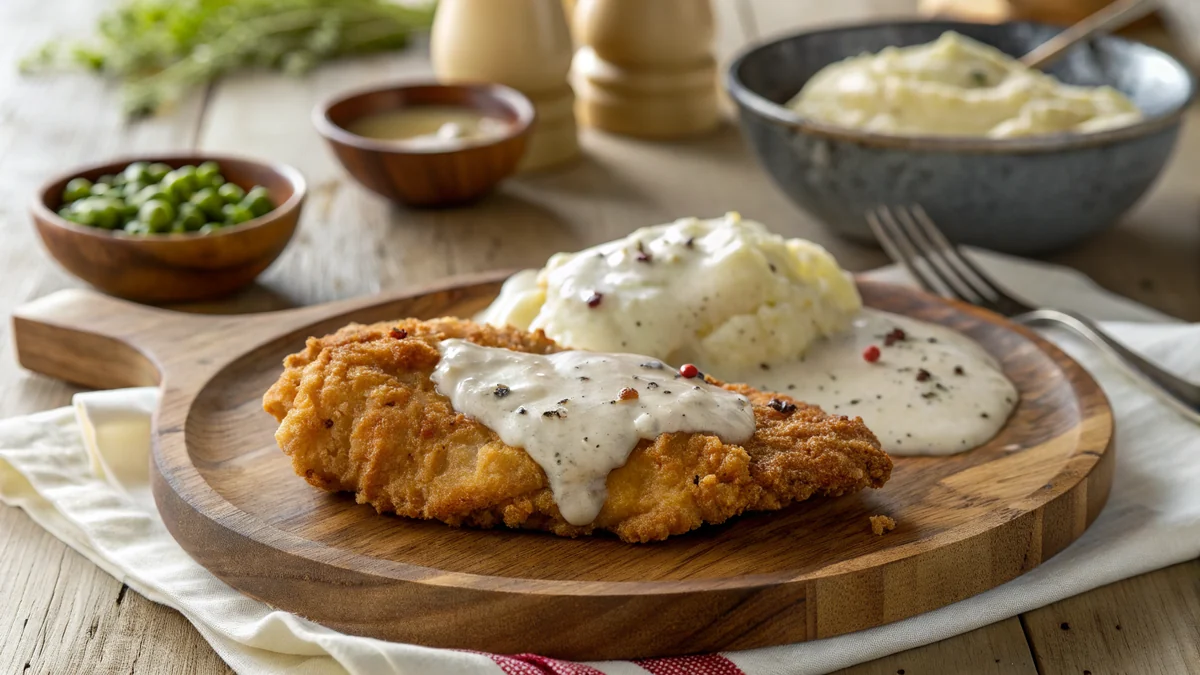
Quick answer: Texas Roadhouse country fried chicken is a boneless breast pounded thin, soaked in buttermilk, dredged in seasoned flour, and pan-fried in a skillet until golden, then smothered in a peppery white country gravy made from the pan drippings. What sets the country style apart is the gravy and the smother: instead of staying shatter-crisp under a ladle of sauce at the end, the chicken rests in the gravy so the coating softens into it, the way an old-school Southern country supper is built. You pan-fry the cutlets in about half an inch of oil, build the milk gravy in the same skillet, then spoon it over and let everything mingle. Total time is about 45 minutes and it feeds four.
Country fried chicken is the plate my grandmother would recognize, a cornerstone of Southern comfort food. It is a pounded chicken breast, breaded and pan-fried in a cast iron skillet, then smothered in a peppery white country gravy until the coating drinks some of it in. Texas Roadhouse does a version that tastes like Sunday at her table, and after a lot of skillets of my own here in Lockhart, I have it dialed in. The gravy is the whole heart of it, so that is where most of my attention goes.
People ask me how this is different from the chicken fried chicken on the same menu, and the honest answer is the technique and the gravy treatment. The crispy deep-fried version stays crunchy with the sauce ladled on at the very end. The country version is pan-fried and then smothered, so the crust goes tender and saucy rather than shattering, which is exactly the comfort I am after on a cold night. Below I will walk you through the buttermilk soak, the seasoned dredge, the skillet fry, and the country gravy that makes or breaks the plate.
Country Fried, Chicken Fried, or Herb Crusted
These three chicken plates get tangled up constantly, so let me sort them out, because the difference is the whole reason this recipe exists. Country fried chicken, the one here, is a breaded breast pan-fried in a skillet and then smothered in white country gravy so the crust turns tender and saucy. It is the old-school, gravy-forward, Sunday-supper version, and the peppery milk gravy is treated as the star of the plate, not a finishing touch.
The crispy cousin is my Texas Roadhouse chicken fried chicken, which leans into a craggy double-dredged crust, a deeper fry, and gravy ladled over the top at the last second so it stays shatter-crisp. If you want crunch above all, that is the one to make. Country fried is for when you want comfort and a softer, smothered bite instead of a loud crackle.
And if you would rather skip the breading entirely, my herb crusted chicken is the grilled, lighter take: no flour, no frying, just a grilled breast under a Parmesan herb crust. Same bird, three completely different plates. I rotate through all three depending on the night and the appetite at my table.
What Makes Country Gravy Different
Country gravy, sometimes called white gravy or sawmill gravy when sausage is added, is a simple peppered milk gravy built on a flour-and-fat roux. There is no broth and no browning of the flour to a dark color; it stays pale and creamy, and the flavor comes from the toasty drippings in the skillet, whole milk, salt, and a heavy hand of black pepper. That pale, peppery creaminess is the signature of a country plate.
It is worth knowing this is different from a brown gravy, which is built on darker drippings or stock and cooked to a deeper color and a meatier, savory flavor. Some restaurants pour brown gravy over fried chicken, but the true country style is white. The existing chicken fried chicken on the menu already uses a peppery white cream gravy too, and this country version is its close relative, just smothered rather than topped.
The reason I treat the gravy as the headline is that it carries the dish. A so-so cutlet under a great country gravy still tastes wonderful, while a perfect cutlet under a thin, bland, under-peppered gravy falls flat. Get the gravy peppery, well salted, and the right pourable thickness, and the rest of the plate falls into place around it.
Choosing and Pounding the Chicken
Boneless skinless chicken breasts are the cut for this, the same as the restaurant uses. Look for breasts of a similar size so they cook evenly, and plan on one per person. If all you can find are the giant warehouse-club breasts, do not fry them whole; slice each one in half horizontally into two thinner cutlets, which is faster and far more reliable to cook through.
Pounding is the step that makes or breaks the texture, and it is the one home cooks rush. A raw breast is thick at one end and thin at the other, so fried as-is the thin end dries out while the thick end stays underdone. Pound each cutlet to an even half inch between sheets of plastic wrap, working from the center out, and the whole piece finishes at the same moment.
There is a tenderness payoff too. Pounding lightly breaks down some of the muscle fibers, so the cooked cutlet is softer to the bite, which suits the smothered country style perfectly. Do not go thinner than about half an inch, though, or the chicken overcooks before the crust browns and you lose the contrast you want against the gravy.
The Buttermilk Soak and Seasoned Dredge
Buttermilk does double duty here. Its gentle acidity tenderizes the chicken so the cooked cutlet is soft instead of rubbery, and it is thick enough to cling to the meat and give the flour a surface to grab. Plain milk runs right off and takes the coating with it. Thirty minutes is the minimum; an overnight soak in the fridge is better if you can plan ahead.
The egg and hot sauce in the soak add richness and a quiet background warmth, not real heat. A tablespoon of hot sauce just deepens the savory flavor, so even kids will not flinch. If you are sensitive to spice, leave the cayenne out of the dredge and you will have a mild, family-friendly plate that still tastes seasoned.
For the dredge itself, season the flour boldly, because the crust is a large surface and bland coating drags the whole plate down. Whisk the spices through the flour, then rake in a spoonful of the wet buttermilk so the flour forms shaggy clumps. Press the cutlets firmly into that clumpy flour and let them rest ten minutes before frying so the coating sets and stays put.
Pan-Frying in a Skillet
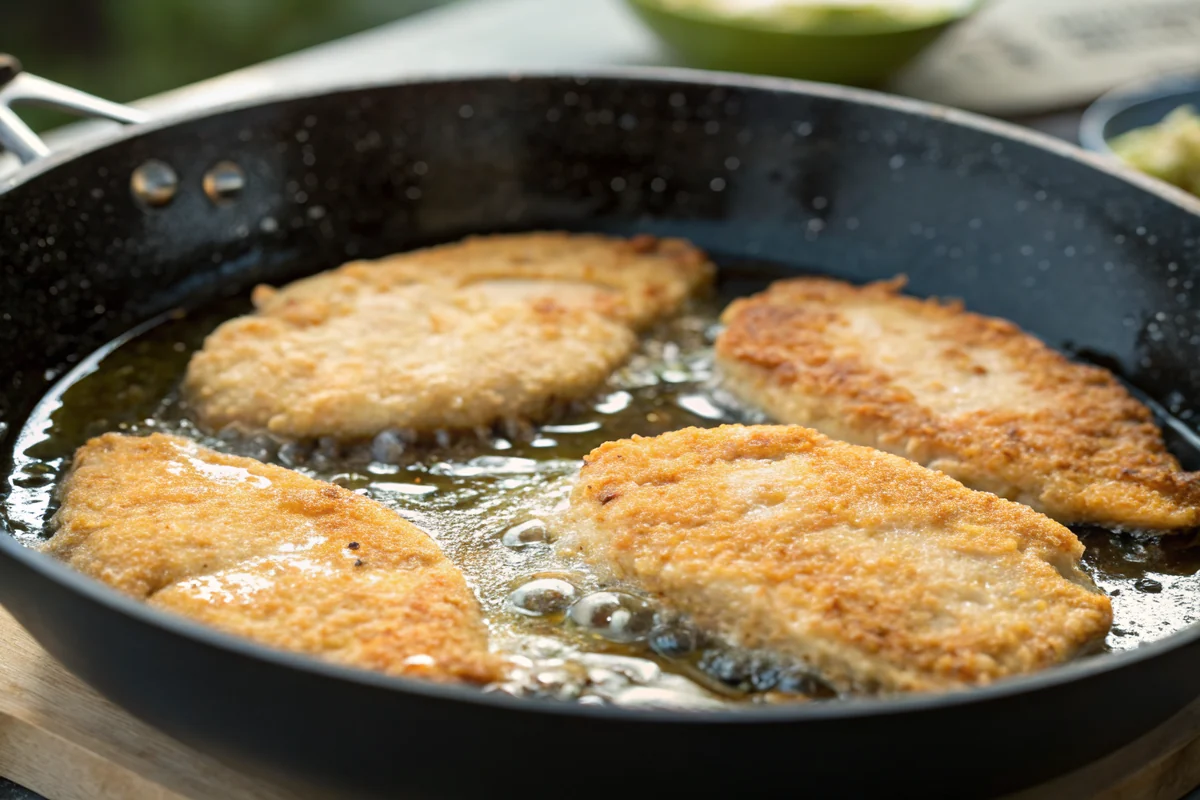
Country fried chicken is shallow-fried in a skillet, not deep-fried, and that is part of what gives it its homey character. About half an inch of oil in a heavy cast iron skillet is all you need. Cast iron holds heat steadily, which keeps the oil from crashing when the cold cutlets go in, and it gives the crust an even, golden color.
Temperature is everything. Heat the oil to 350F and keep it there; I clip a thermometer to the side of the skillet so I am never guessing. Too cool and the crust soaks up grease and turns heavy, too hot and the outside scorches before the chicken cooks through. Steady medium heat over a few minutes per side gets you a deep golden crust and a juicy center.
Fry in batches and resist the urge to crowd the pan. Two cutlets at a time is plenty for most skillets. Adding too many at once drops the oil temperature and steams the coating instead of crisping it. Let the oil climb back to 350F between batches, and rest the fried cutlets on a wire rack rather than paper towels so the bottoms do not steam soft before the gravy ever arrives.
Making the Country Gravy from the Drippings
Do not wash that skillet after frying; the browned bits left behind are pure flavor and the base of a great gravy. Pour off the oil but leave about three tablespoons of fat and all the toasty bits in the pan. That fat plus an equal amount of flour makes the roux that thickens the gravy and gives it a faintly nutty, fried-chicken depth you cannot fake with butter alone.
Cook the flour into the fat for a minute or two over medium heat, whisking, just until it smells nutty and turns pale gold. Do not let it brown, since this is a white gravy. Then add the milk slowly, a splash at a time, whisking constantly to keep it smooth. Warming the milk first helps it incorporate without seizing into lumps, and pouring slowly is the real secret to a silky gravy.
Once it simmers and thickens enough to coat a spoon, season hard. Country gravy wants a half teaspoon of salt and a full teaspoon or more of coarse black pepper, plus a pinch of garlic powder. Taste it; it should be peppery and well salted, because it has to season the bland flour crust beneath it. My ratio of three tablespoons fat, three tablespoons flour, and two and a half cups milk gives a pourable, clingy gravy every time.
The Smother: Letting the Gravy Soak In
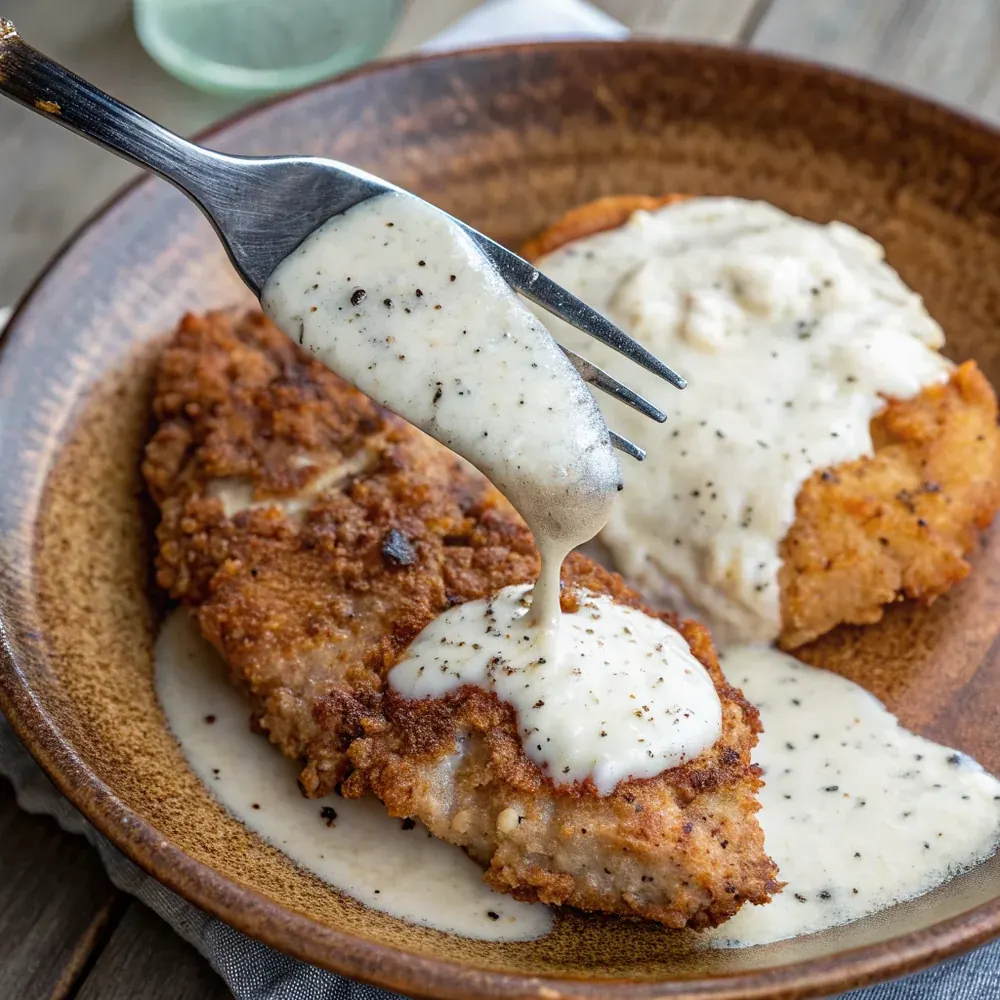
Here is the move that makes this country fried rather than chicken fried. Instead of ladling gravy over a crispy cutlet at the table and rushing to eat before it softens, you nestle the fried cutlets back into the skillet of gravy, or spoon a generous blanket over them on the plate, and let them rest a minute. The crust drinks in a little gravy and turns tender and saucy.
That softening is the whole point of the country style, so do not fight it. The texture you are after is comfort, a fork-tender bite where the crust and the gravy have become one thing rather than two. If you grew up on smothered chicken or smothered pork chops, this will taste like home. It is a different pleasure from a shatter-crisp crust, and on a cold night I want it every time.
If part of your table prefers crunch, it is easy to please both. Keep a couple of cutlets crisp on the rack and serve their gravy on the side, and smother the rest. Same skillet, same gravy, two textures. That is how I handle a mixed crowd, and nobody leaves wishing I had made the other version.
Doneness and Food Safety
Chicken is not a place to guess, so use an instant-read thermometer and check the thickest part of the cutlet. You are looking for 165F, which is the safe internal temperature the CDC lists for poultry. Because the cutlets are pounded thin, they reach that quickly, usually within three to four minutes per side, which is another reason the pounding step is worth the few minutes it takes.
Color is a helpful guide but not a guarantee; a deep golden crust can sometimes hide a center that is not quite there, especially on a thicker cutlet. If the outside is browning faster than the inside is cooking, nudge the heat down slightly and give it another minute rather than cranking it up. Let the thermometer reading settle for a couple of seconds before you trust it.
Good kitchen habits round it out. Keep raw chicken and its buttermilk soak away from anything that will not be cooked, wash your hands and tools after handling it, and refer to the FDA's safe food handling basics if you want a refresher. Once the chicken is fried and the gravy is made, serve it hot and refrigerate leftovers promptly.
Common Mistakes to Avoid
The most common mistake is a short or skipped buttermilk soak, which leaves the coating with nothing to grip so it slides off in the pan. Give it at least thirty minutes. The second is crowding the skillet, which crashes the oil temperature and gives you greasy, pale cutlets. Fry two at a time and let the oil recover to 350F between batches.
Under-seasoning is the quiet killer, on both the dredge and the gravy. The crust and the gravy together are a lot of surface area, and timid seasoning tastes flat once it meets the mild chicken. Taste a pinch of your seasoned flour before you dredge; it should taste a touch too salty on its own. Pepper the gravy harder than you think you should.
The last trap is a lumpy or pasty gravy. Lumps come from dumping cold milk in all at once, so warm the milk and add it slowly while whisking. Pastiness comes from too much flour or over-reducing; if your gravy turns gluey, just whisk in a splash more warm milk to bring it back to a pourable, clingy consistency. Gravy is forgiving once you know that one fix.
What to Serve With Country Fried Chicken
This is comfort food, so I build a comfort plate around it. Creamy Texas Roadhouse mashed potatoes are the non-negotiable partner, because any extra country gravy that does not fit on the chicken pools right onto the potatoes, and that is half the joy of the meal. A scoop of potatoes under a smothered cutlet is the plate I grew up wanting.
Buttered Texas Roadhouse green beans add a savory, slightly smoky green to cut the richness, and a basket of warm Texas Roadhouse rolls with cinnamon butter is perfect for swiping up the last of the gravy. That trio of sides turns this into the full steakhouse copycat spread for a fraction of the cost. To drink, a Jamaican Cowboy cocktail turns the copycat night into the full restaurant experience.
If you want to push the seasoning of the crust toward the restaurant's signature flavor, a light dusting of my Texas Roadhouse steak seasoning in the dredge ties the whole plate together. Use a gentle hand, since the dredge already carries salt and pepper and the gravy is doing plenty of seasoning of its own.
Make-Ahead, Storage, and Reheating
You can get a head start without sacrificing quality. Pound the cutlets and start the buttermilk soak in the morning so they are ready to dredge at dinner, and whisk the seasoned flour a day ahead and keep it covered. I would not dredge the chicken until just before frying, though, because a coated raw cutlet turns gummy if it sits too long.
Leftovers keep well for up to three days in the fridge, stored with the chicken and gravy in separate containers so the crust does not turn to paste overnight. To reheat the chicken and bring back some texture, warm it on a rack in a 375F oven or an air fryer rather than the microwave, which steams the coating soft. Rewarm the gravy gently on the stove with a splash of milk to loosen it.
For longer storage, freeze the fried cutlets without gravy for up to two months; cool them fully, wrap each one, and bag them. Reheat from frozen in a 375F oven until hot and crisp, then smother with fresh gravy. Per FDA guidance, refrigerate leftovers within two hours and reheat the chicken to 165F before serving.
Texas Roadhouse Country Fried Chicken Copycat Recipe
Ingredients
- For the chicken:
- 4 boneless skinless chicken breasts (about 6 oz / 170 g each)
- 1 1/2 cups (360 ml) buttermilk
- 1 large egg
- 1 tablespoon hot sauce
- 1 teaspoon kosher salt
- For the seasoned dredge:
- 2 cups (250 g) all-purpose flour
- 2 teaspoons garlic powder
- 2 teaspoons onion powder
- 2 teaspoons paprika
- 1 1/2 teaspoons kosher salt
- 1 teaspoon coarse-ground black pepper
- 1/4 teaspoon cayenne pepper (optional)
- For pan-frying:
- About 1 cup (240 ml) vegetable or canola oil, for shallow frying
- For the country gravy:
- 3 tablespoons reserved frying oil and drippings
- 3 tablespoons (24 g) all-purpose flour
- 2 1/2 cups (590 ml) whole milk, warmed
- 1/2 teaspoon kosher salt, plus more to taste
- 1 teaspoon coarse-ground black pepper, plus more to taste
- Pinch of garlic powder
Instructions
- Pound the breasts thin. Lay each breast between two sheets of plastic wrap and pound it to an even 1/2 inch thick with a mallet or the bottom of a heavy skillet. Even thickness means the whole cutlet cooks through at the same time, and thin cutlets are what country fried chicken is built on. If a breast is very plump, slice it in half horizontally into two cutlets first.
- Soak in buttermilk. Whisk the buttermilk, egg, hot sauce, and kosher salt in a wide bowl. Submerge the cutlets, cover, and refrigerate at least 30 minutes, or up to overnight. The buttermilk tenderizes the chicken and gives the flour something to grip. Do not skip this; it is the difference between a coating that clings and one that slides off in the pan.
- Mix the seasoned dredge. In a shallow dish, whisk the flour with the garlic powder, onion powder, paprika, salt, black pepper, and cayenne. Drizzle in a spoonful or two of the buttermilk soak and rake it with a fork so the flour forms small shaggy clumps; those clumps fry into a craggier, more textured crust that holds the gravy beautifully.
- Dredge the cutlets. Lift a cutlet from the buttermilk, let the excess drip off, and press it firmly into the seasoned flour on both sides, packing the coating on with your hand. Set the dredged cutlets on a rack and let them rest 10 minutes so the flour hydrates and adheres. This rest keeps the crust from peeling away once it hits the oil.
- Pan-fry in the skillet. Heat about 1/2 inch of oil in a large cast iron skillet over medium to medium-high until it reaches 350F. Fry the cutlets in batches, 3 to 4 minutes per side, until deep golden and the center reads 165F on an instant-read thermometer. Do not crowd the pan, and let the oil come back to temperature between batches. Drain the chicken on a wire rack.
- Build the country gravy. Carefully pour off the oil, leaving about 3 tablespoons of oil and the browned bits in the skillet. Set it over medium heat, whisk in the flour, and cook 1 to 2 minutes until it smells nutty and turns pale gold. Slowly pour in the warm milk while whisking constantly so it stays smooth, then simmer until it thickens enough to coat a spoon.
- Season the gravy. Stir in the salt, a generous teaspoon of coarse black pepper, and a pinch of garlic powder. Taste and adjust; country gravy should be peppery and well salted, so be bolder than feels natural. If it gets too thick, whisk in a splash more warm milk. You want it pourable but clingy, not pasty.
- Smother and serve. Set each cutlet on a plate or nestle them back into the skillet, then spoon the hot country gravy generously over the top. For the true country style, let the gravy-covered chicken sit a minute so the crust softens and soaks up some sauce. Serve right away with mashed potatoes, and pass extra gravy at the table.
Frequently Asked Questions
What is Texas Roadhouse country fried chicken?
It is a boneless chicken breast pounded thin, soaked in buttermilk, dredged in seasoned flour, and pan-fried until golden, then smothered in a peppery white country gravy. The country style means the gravy is the star and the fried cutlet is served blanketed in it, so the crust turns tender and saucy rather than staying shatter-crisp. This copycat recreates that old-school Southern comfort plate at home in about 45 minutes, and the homemade country gravy is what makes it taste like the restaurant version.
What is the difference between country fried chicken and chicken fried chicken?
They are very close cousins, and the difference is mostly technique and how the gravy is used. Country fried chicken is pan-fried in a skillet and smothered in white country gravy, so the crust softens into the sauce in an old-school, gravy-forward way. Chicken fried chicken leans into a craggy double-dredged crust and a deeper fry, with the gravy ladled over the top at the end so it stays crispy. Both use a breaded chicken breast and a peppery white gravy; the country version is the smothered, comfort-first take.
What is country gravy made of?
Country gravy, also called white gravy, is a simple peppered milk gravy. You make a roux from the fat and browned drippings left in the frying skillet plus an equal amount of flour, then whisk in whole milk and simmer until it thickens. Season it with salt, plenty of coarse black pepper, and a pinch of garlic powder. There is no broth and the flour is not browned, which keeps it pale, creamy, and peppery. Add cooked crumbled sausage and you have sawmill gravy.
Can I make country fried chicken without a deep fryer?
Yes, and you should; this dish is meant to be pan-fried, not deep-fried. A heavy cast iron skillet with about half an inch of oil is all you need. Clip a thermometer to the side and hold the oil at 350F, frying the thin cutlets a few minutes per side until golden and cooked through. Shallow frying in a skillet is traditional for country fried chicken and gives it its homey character, plus it leaves you the perfect drippings for the gravy.
What internal temperature should the chicken reach?
Chicken is safe at 165F measured at the thickest part of the cutlet, which is the temperature the CDC lists for poultry. Because the breasts are pounded to a half inch, they reach 165F quickly, usually within three to four minutes per side in 350F oil. Use an instant-read thermometer rather than relying on color, since a golden crust can occasionally hide an underdone center. Let the reading settle a couple of seconds before you trust it.
Why does the crust get soft, and is that a problem?
With country fried chicken, a softer crust is the point, not a flaw. Smothering the fried cutlet in country gravy is meant to let the coating drink in some sauce and turn tender, which is the comfort-food texture of the country style. If you would rather keep things crisp, fry the cutlets, hold them on a rack, and serve the gravy on the side so each person can sauce their own. For a fully crispy plate, make the chicken fried chicken version instead.
Can I make the country gravy ahead of time?
You can, though it thickens as it cools and forms a skin on top. Make it up to two days ahead and refrigerate it, then rewarm it gently on the stove with a splash of milk whisked in to loosen it back to a pourable consistency. Taste and add more black pepper before serving, since chilling dulls the seasoning. For the best flavor, though, I make the gravy fresh in the frying skillet so it picks up the toasty drippings.
Can I freeze country fried chicken?
Freeze the fried cutlets without gravy for up to two months. Cool them completely, wrap each piece, and bag them with the air pressed out. Reheat from frozen on a rack in a 375F oven for about 18 to 20 minutes until hot and crisp, then smother with fresh country gravy. I do not recommend freezing the assembled, gravy-covered dish, because the crust turns soggy and the gravy can separate when thawed. Make the gravy fresh when you serve.