Southern Comfort Food
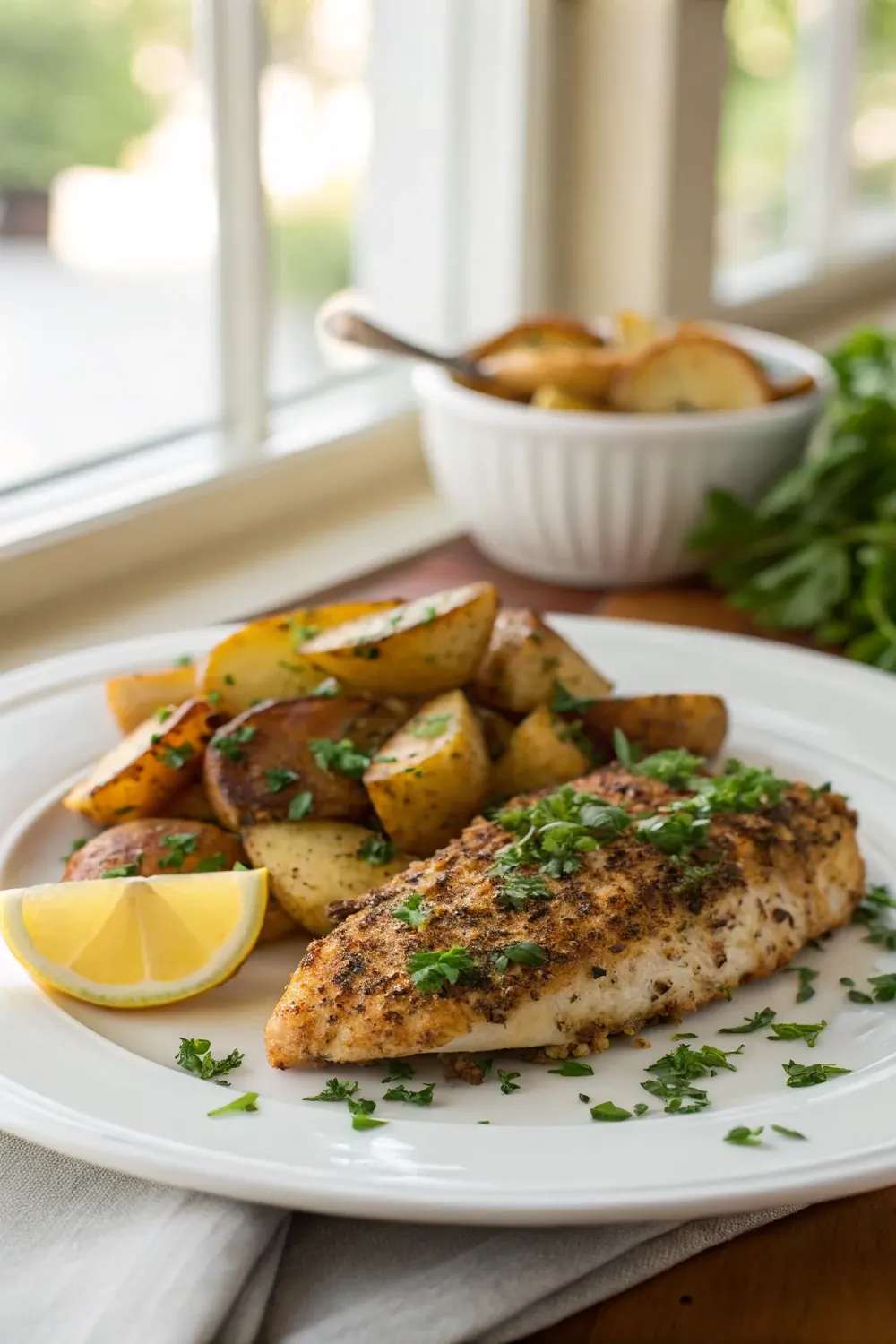
Texas Roadhouse Herb Crusted Chicken Copycat
Chef Mia's copycat Texas Roadhouse herb crusted chicken: a juicy seared breast under a dried herb rub, finished with pan-seared lemon, in about 25 minutes.
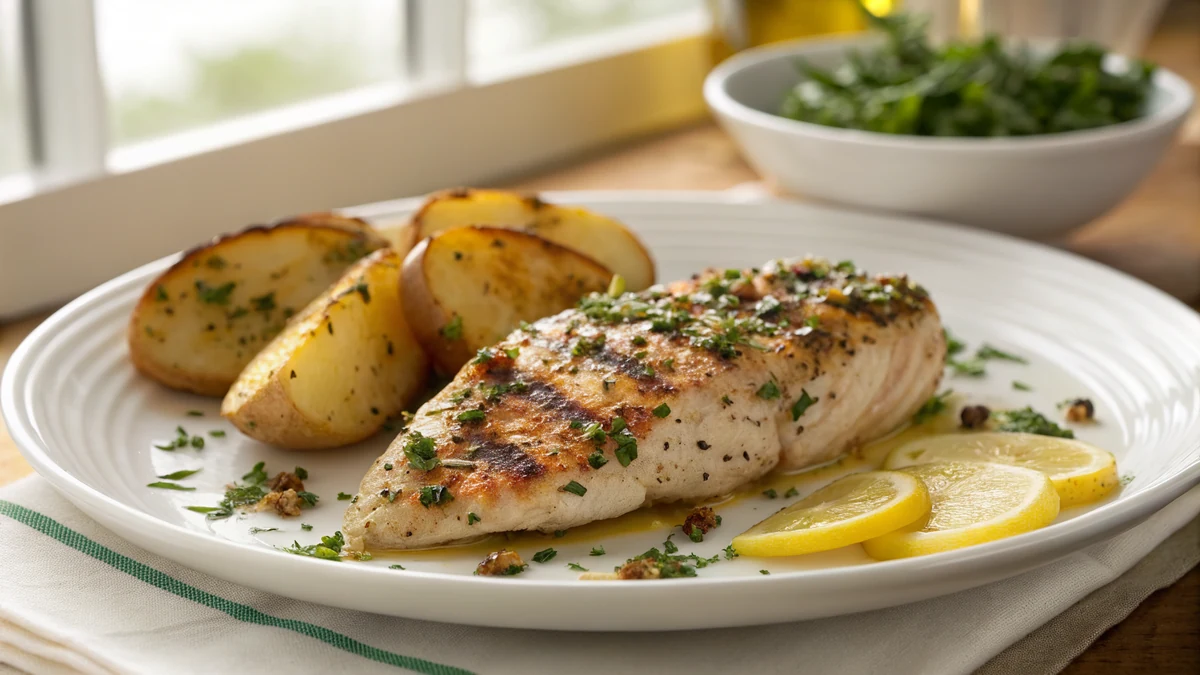
Quick answer: Copycat Texas Roadhouse herb crusted chicken is a boneless breast rubbed with a blend of dried herbs, dill, basil, and oregano, plus garlic powder, paprika, salt, and pepper, then seared in a hot skillet and finished with a squeeze of pan-seared lemon. You pound or butterfly the breasts to an even thickness, coat them in olive oil so the herb rub clings, and cook them 4 to 5 minutes per side over medium-high heat until they read 165F. While the chicken rests, you sear a lemon half cut-side down for 30 seconds and squeeze it over the top. The herbs char slightly against the hot pan and form a fragrant, savory crust, no breading and no broiler needed. Total time runs about 20 to 25 minutes.
The herb crusted chicken is the order I point first-timers to at Texas Roadhouse, because it is not the dry steakhouse chicken people expect. It is a juicy seared breast wearing a coat of dried herbs that toast against the hot pan into something fragrant and savory, finished with a hit of charred lemon. I cook for a houseful of mixed eaters here in Lockhart, half steak people and half chicken people, and this is the plate that keeps everybody happy on the same night without a lot of fuss.
It took me a few tries to understand that the restaurant is doing something simple, not fancy. There is no batter, no cheese crust, no breading to go soggy. The whole flavor comes from a generous rub of dried herbs and a hard sear that gives the outside color and a little crunch. Once I stopped overcomplicating it and just leaned on good dried dill, basil, and oregano with a hot skillet, it came together in about twenty minutes. Below I will walk you through pounding the breasts even, mixing the herb blend, searing for a juicy center, and the pan-seared lemon trick that ties it to the steakhouse plate.
Why This Tastes Like the Roadhouse Plate
The thing people get wrong about copying this dish is treating it like breaded or cheese-crusted chicken. It is neither. The restaurant seasons a plain breast with a heavy hand of dried herbs and sears it hard, the way they cook everything else on that line. That dried herb rub plus a hot pan is the entire reason the chicken comes out juicy with a fragrant, savory exterior instead of a pale, steamed cutlet.
The flavor is doing the heavy lifting, and it is all herbs and char. Dried dill, basil, and oregano toast against the hot surface and turn nutty and aromatic, while the garlic powder and paprika round everything out. A squeeze of pan-seared lemon at the end cuts the richness and wakes the whole plate up. It is honestly a smarter, lighter way to cook chicken at home than the deep-breaded route most recipes push, and it is naturally gluten free.
If you have already made my Texas Roadhouse grilled pork chops, you know how much this kitchen leans on a hot pan and a simple rub. The chicken uses the same backbone with an herb-forward twist, so once you have one down the other is easy. If you are after a breaded, gravy-smothered chicken instead, my country fried chicken is the comfort-food counterpart to this lighter seared version.
The Dried Herb Blend That Defines It
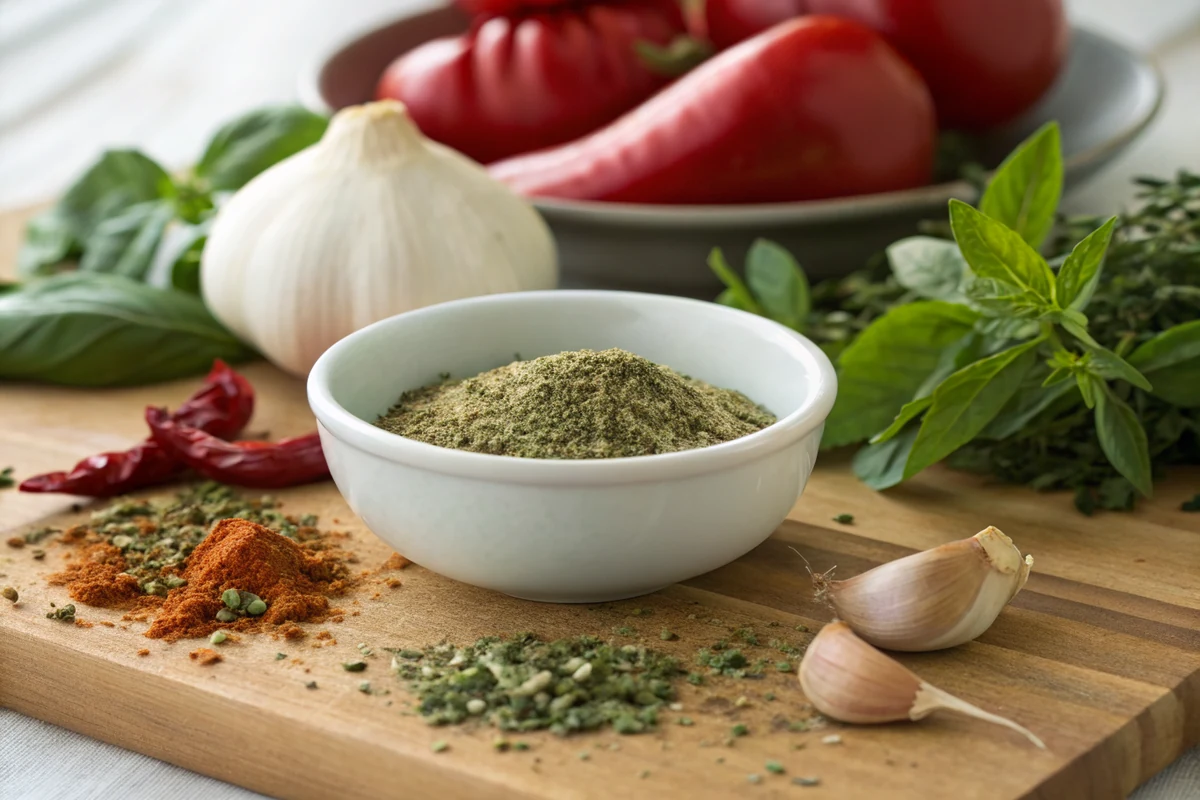
The blend is built on three dried herbs: dill, basil, and oregano. Dill is the one that surprises people, because it brings a bright, grassy, almost lemony note that you do not expect on steakhouse chicken, and it is the flavor that makes folks ask what is in the rub. Basil adds a sweet, round depth and oregano brings the earthy, savory backbone. Together they read as herby and fresh even though they come from the spice rack.
Garlic powder and paprika fill in around the herbs. The garlic powder gives a savory base note that makes the whole rub taste cooked and full, and the paprika adds a faint warmth and a little color so the seared crust looks as good as it tastes. Keep the paprika sweet, not hot, unless you want heat. Onion powder is optional but I like the extra savory layer it gives.
Use dried herbs that still smell like something. Old, faded dried herbs that have sat in the cabinet for two years will give you a dull, dusty crust no matter how much you use. Crush them between your fingers before they go on the chicken to release their oils. If all you have is fresh herbs, you can use them, but triple the amount and add them in the last minute of cooking so they do not scorch.
Choosing and Prepping the Chicken
Boneless skinless breasts are what the restaurant uses, and they are what you want at home for this. Look for breasts that are a similar size so they cook in the same amount of time, and skip the giant warehouse-club breasts unless you plan to butterfly them. A breast much over 8 ounces is too thick to cook evenly without the herb crust scorching before the center is safe.
Pounding is not optional, and it is the step most home cooks skip. A raw breast is thick at one end and thin at the other, so it cooks unevenly no matter how careful you are. Five minutes with a mallet gives you an even 1/2 to 3/4 inch slab that cooks through in the same few minutes across the whole breast. If you would rather not pound, butterfly each breast into two thin cutlets instead.
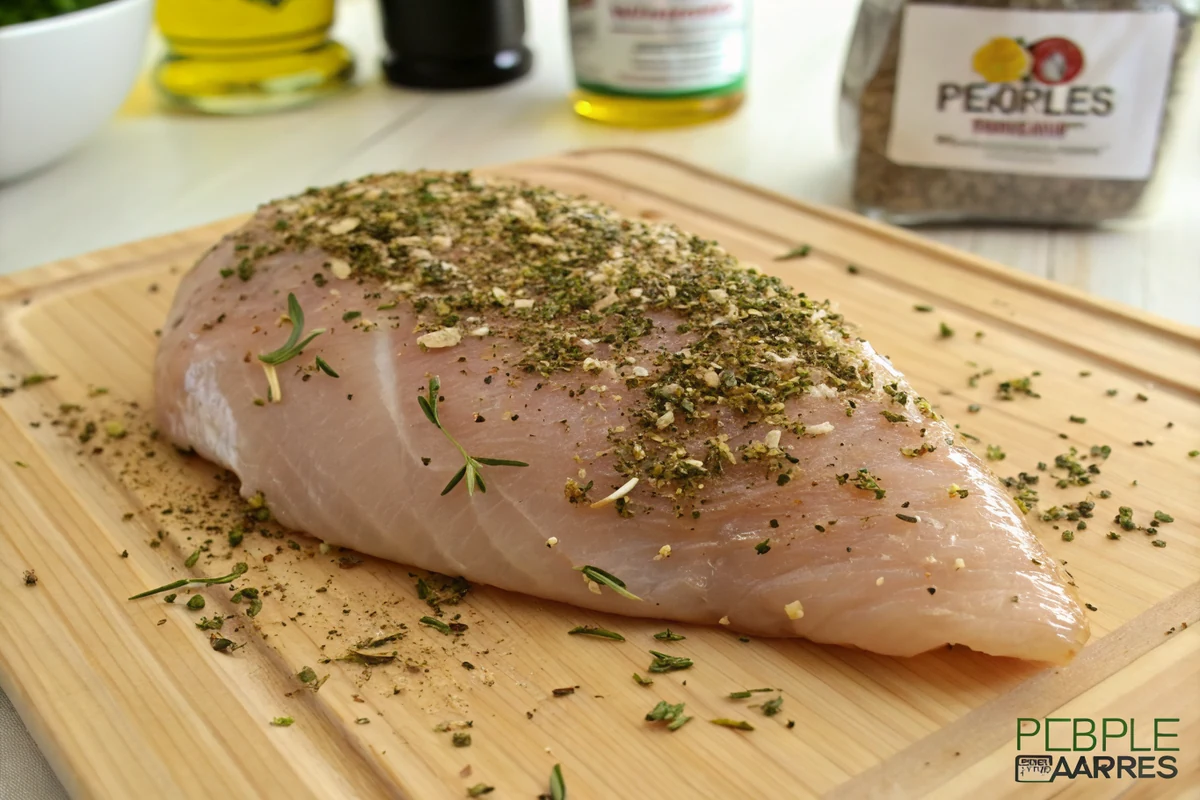
Pat the breasts dry before you oil and season them. Surface moisture is the enemy of browning, and a wet breast steams and goes gray where you want it to sear and color. A quick press with paper towels, then the oil and the herb rub, and you are set up for a proper sear that toasts the herbs instead of stewing them.
Searing for a Juicy Breast
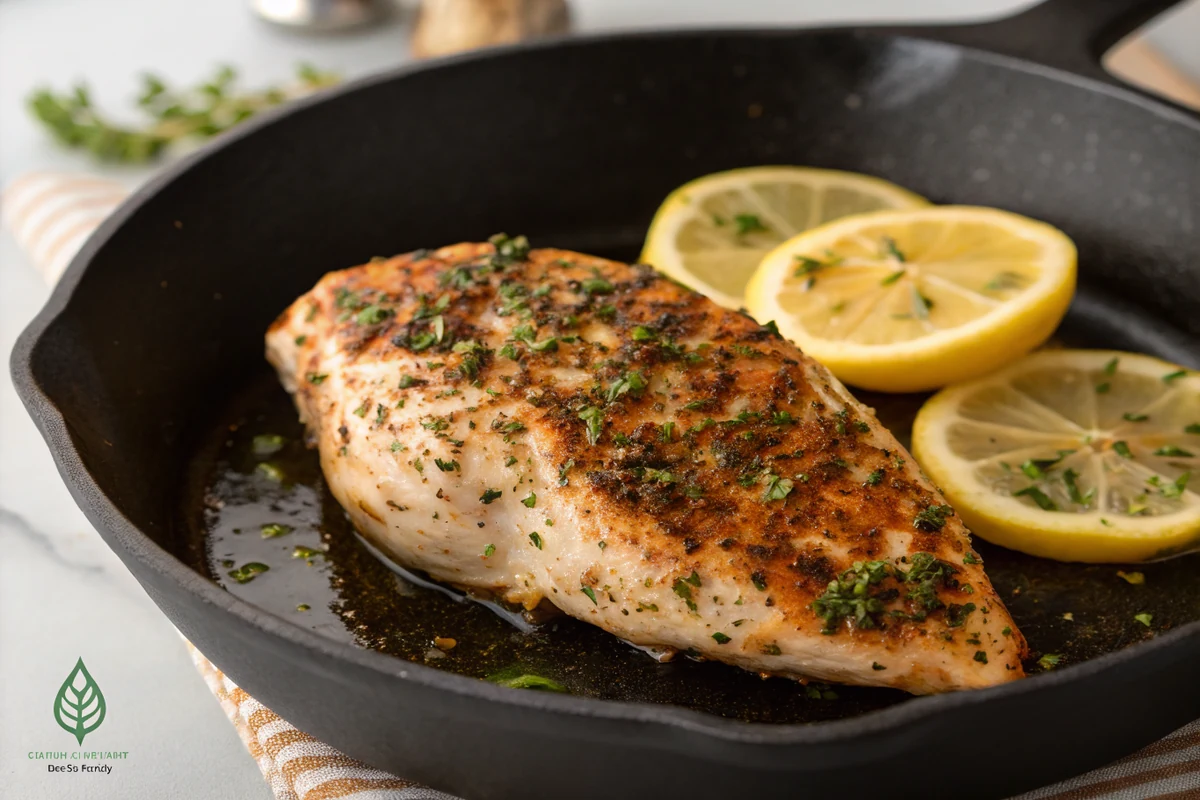
Here is the method in one sentence: get the pan hot, lay the herb-coated breasts down, and sear them hard on both sides until they hit 165F. A heavy skillet, cast iron above all, holds the high heat you need to toast the herbs and build color in the first two minutes. Get it hot before the chicken goes in, because a lukewarm pan steams the breast and the herbs slide off gray and sad.
Cook the breasts 4 to 5 minutes per side and resist the urge to move them around. They need to sit still against the hot surface so the herbs toast into a crust and the meat releases cleanly when it is ready to flip. If a breast sticks hard when you try to turn it, it usually needs another thirty seconds to finish browning, then it will lift off on its own.
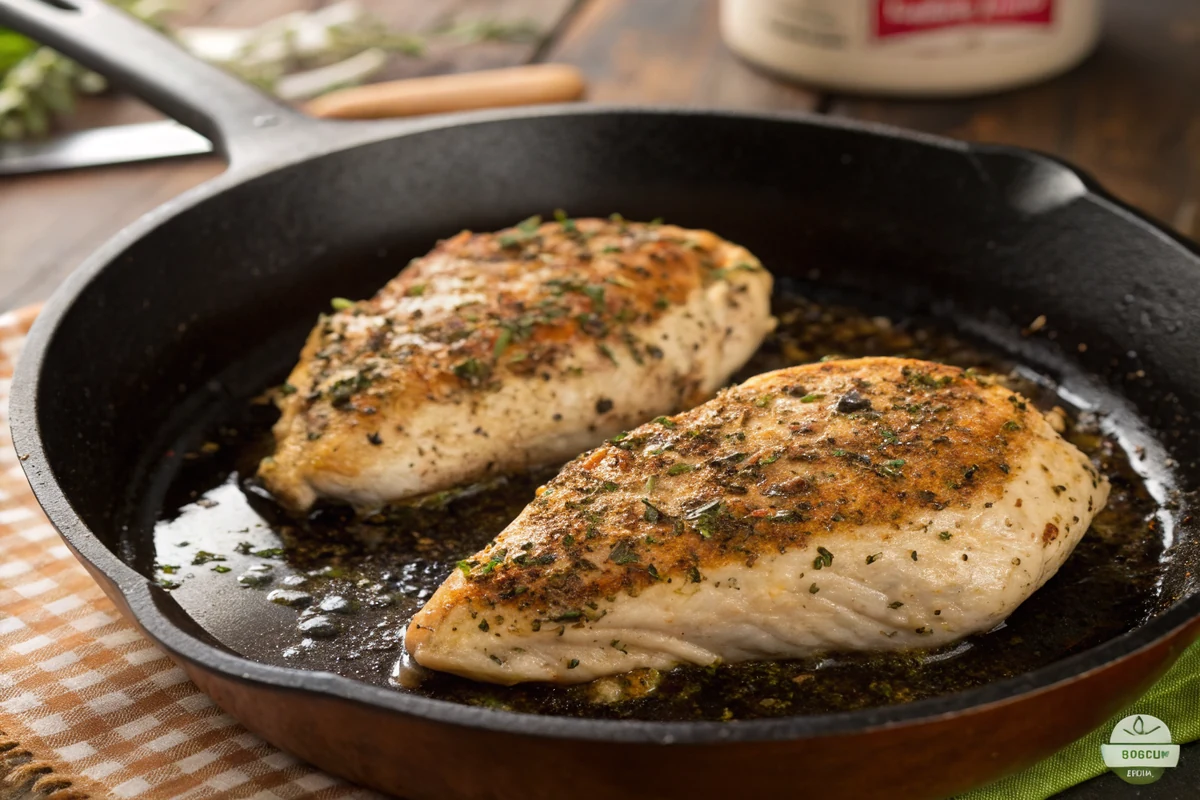
Because breasts vary in thickness and no two stovetops are the same, a thermometer is the only reliable way to know they are done. Poultry is safe at 165F measured at the thickest part. Pull the chicken the moment it reads 165 and let it rest, rather than cooking by the clock and guessing. A grill works the same way if you would rather cook outside in warm weather.
The Pan-Seared Lemon Finish
The little restaurant touch that ties this plate together is the seared lemon. Once the chicken is out of the pan, you lay a lemon half cut-side down in the hot skillet, often with a knob of butter, and let it caramelize for half a minute. The cut face browns, the juice concentrates, and the sharp raw-lemon edge mellows into something rounder and almost sweet.
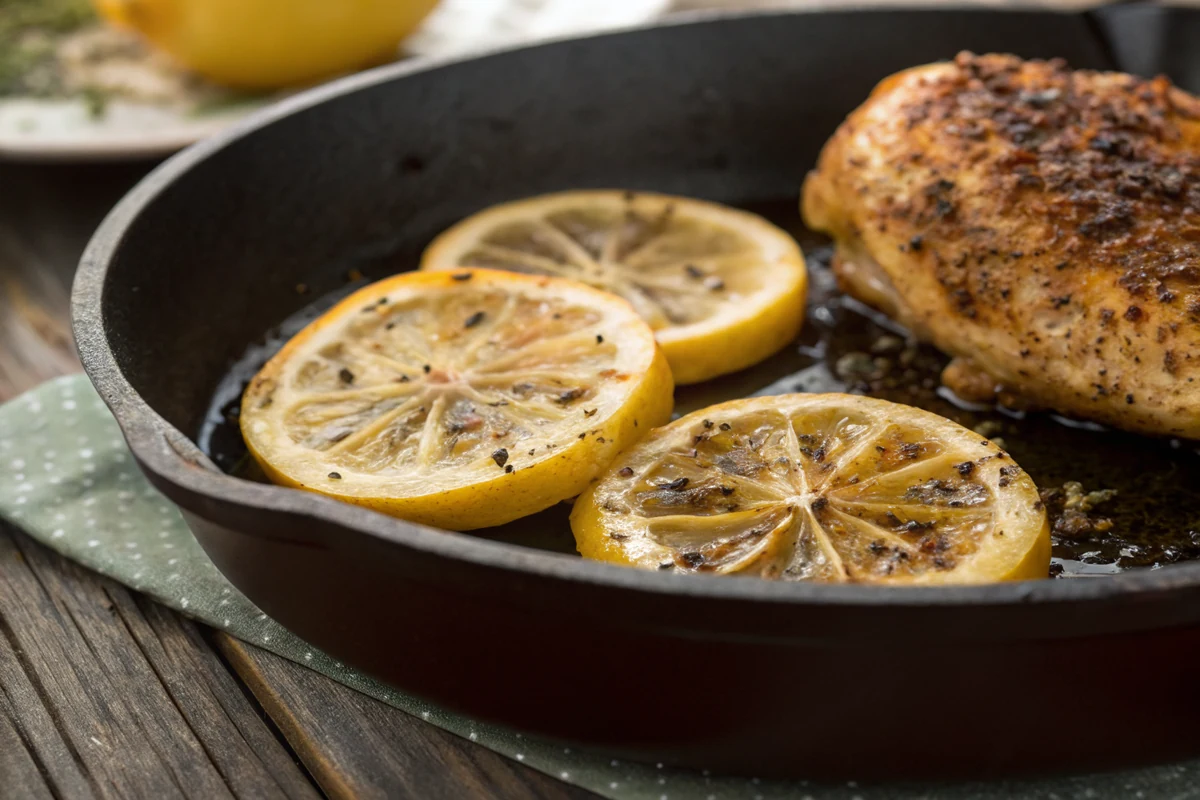
Squeezed warm over the rested chicken, that seared lemon does what a sauce would do without the heaviness. The acid cuts through the savory herb crust, brightens the whole bite, and pulls the flavors of the dill and basil forward. It is the difference between chicken that tastes good and chicken that tastes finished, and it takes thirty seconds.
If you want to lean further into steakhouse indulgence, spoon the browned herb butter from the pan over the top along with the lemon. The butter picks up the toasted herb bits left in the skillet and carries them back onto the chicken. Keep it light though, because the point of this dish is the herb crust, not a pool of sauce hiding it.
Getting Juicy Chicken Every Time
Chicken breast has a narrow window between juicy and dry, and a thermometer is the only reliable way to hit it. Poultry is safe at 165F, and a breast pulled right at 165 and rested is still juicy. Every degree past that squeezes out more moisture, which is why guessing by time or color leaves so many home cooks with chalky chicken.
Pounding the breasts even, which we did at the start, is half the battle, because an even slab hits 165F all the way across at the same moment instead of leaving you with a dry thin end and an underdone middle. The hard sear builds the crust fast so the inside does not overcook waiting for color. Those two steps together are what keep the breast juicy under the herbs.
The five-minute rest is the last piece of insurance. Slicing a breast straight off the heat dumps the juices onto the cutting board. A short rest lets them redistribute back through the meat so the first bite is as juicy as the last. Tent it loosely if your kitchen is cold, but do not cover it tight or the herb crust will steam and lose its toasted edge.
Herb Crusted Chicken Nutrition
A copycat serving of this herb crusted chicken, one 6 to 8 ounce breast with the herb rub and a squeeze of lemon, lands at roughly 300 to 340 calories, with about 45 grams of protein, 14 to 18 grams of fat, and only 2 to 3 grams of carbohydrate from the herbs and spices. Those are home-kitchen estimates based on the ingredients here, not official restaurant figures, and they will shift with breast size and how much oil and butter you use.
Because this version skips the breading and cheese, it is leaner and lower in carbohydrate than a crusted version, and it is naturally gluten free. The protein number is the headline: this is a genuinely high-protein, low-carb main. Most of the fat comes from the olive oil and the optional finishing butter, so you can trim calories further by going light on both.
The restaurant plate will run higher because of portion size and the butter the kitchen finishes with, plus whatever sides land next to it. If you are tracking macros closely, weigh your own portion and build the numbers from your actual ingredients rather than trusting a single posted figure. Whole-cut chicken makes this easy to estimate honestly.
Variation: Crispy Parmesan Herb Crust
If you want a richer, restaurant-indulgent version, you can add a crispy Parmesan herb crust on top of the seared breast. This is the twist a lot of home copycats reach for, and it is delicious, but think of it as an optional upgrade rather than the everyday method. The dried herb rub above is the true steakhouse plate; this one gilds it.
To do it, sear and season the chicken exactly as above but pull it from the pan a few degrees early, around 155F. Mix 3/4 cup panko, 1/2 cup finely grated Parmesan, 3 tablespoons melted butter, 2 tablespoons chopped parsley, and a teaspoon of dried Italian herbs until the crumbs clump like damp sand. Press that mixture onto the top of each breast in an even, firm layer so it stays put under the heat.
Move the crusted breasts to a foil-lined sheet pan and broil 6 inches under a high broiler for 2 to 3 minutes, watching the whole time, until the crust turns deep golden brown and the chicken reads 165F. Broilers run hot and fast, so do not walk away; the line between golden and burnt is about thirty seconds. Rest five minutes before serving.
Just know that the panko makes this variation no longer gluten free, and the crust softens faster as leftovers than the plain herb version does. For a weeknight, I stick with the dried herb rub and the seared lemon. For a special dinner when I want the wow factor, the Parmesan crust is a fun way to dress the same bird up.
Grill, Skillet, or Oven
A heavy skillet, cast iron above all, is my default for this chicken because it gives the best, most even sear and toasts the herbs beautifully. Get it ripping hot, add a little oil, and cook the herb-coated breasts 4 to 5 minutes a side. The bonus is that you can sear the lemon and build a quick herb butter right in the same pan once the chicken comes out.
The grill is a great warm-weather option and adds a little smoke and char to the herb crust. Use medium-high heat, a clean oiled grate, and the same 4 to 5 minutes a side to 165F. Keep an eye out for flare-ups, since the oil on the chicken can catch, and move the breasts to a cooler zone if the herbs start to blacken too fast.
If you would rather use the oven, sear the herb-coated breasts in an oven-safe skillet for 2 minutes a side to set the crust, then slide the pan into a 425F oven for 8 to 10 minutes until the chicken hits 165F. You trade a little of the stovetop char for a hands-off finish, which is handy when you are cooking the rest of the plate at the same time.
Common Mistakes That Ruin It
The biggest mistake is a pan that is not hot enough. A lukewarm skillet steams the breast, the dried herbs go gray and slide off, and you miss the toasted crust that makes the dish. Get the pan good and hot before the chicken goes in, and do not crowd it, because four cold breasts in a small pan drop the temperature and steam instead of sear.
The second mistake is skipping the thermometer and going by time. Breasts vary in thickness and your stove is not my stove, so a clock is a guess. Pull the chicken the moment it reads 165F at the thickest part and you take all the luck out of it. An instant-read thermometer is the cheapest upgrade a home cook can make.
The third is faded dried herbs and a dry breast. Old herbs give a dull, dusty crust, and a breast that was not patted dry and oiled will not hold the rub. Use herbs that still smell bright, oil the chicken so the rub clings, and press the seasoning on firmly. Those small steps are the difference between an herb crust and a sprinkle that ends up in the pan.
What to Serve With Herb Crusted Chicken
This chicken is built for the full steakhouse spread, and that is how I plate it most nights. A scoop of Texas Roadhouse mashed potatoes, a side of Texas Roadhouse green beans, and a helping of Texas Roadhouse seasoned corn turns it into the exact plate you would order out, for a fraction of the price.
For a heartier table, swap in steakhouse baked potatoes and a basket of warm Texas Roadhouse rolls with cinnamon butter. The rolls are the thing my kids reach for first, and they are perfect for mopping up the seared lemon and herb butter that pools on the plate.
If honey mustard is your thing, my copycat Texas Roadhouse honey mustard is a classic dipping partner for steakhouse chicken and a nice tangy contrast to the herbs. Keep it on the side rather than smothering the breast, since the herb crust and the bright lemon are really the stars of this plate.
Make-Ahead, Storage, and Reheating
You can get ahead of dinner by mixing the dried herb rub days in advance and keeping it in a small jar, then seasoning the breasts right before cooking. The blend keeps for months like any spice mix. You can also oil and season the breasts in the morning and chill them covered, which actually lets the herbs settle into the meat a little before they hit the pan.
Leftover cooked chicken keeps in an airtight container in the fridge for up to 3 days. Unlike a breaded crust, the dried herb rub holds up well overnight and does not go soggy, which makes this version great for slicing cold over a salad or a grain bowl the next day. The flavor stays bright and the meat reheats cleanly.
To reheat without drying the breast out, warm it gently in a 350F oven or a covered skillet with a splash of water for 6 to 8 minutes, rather than the microwave, which can make the meat rubbery. Per food-safety guidance, refrigerate leftovers within two hours and reheat to 165F before serving. A fresh squeeze of lemon over reheated chicken brings it right back to life.
Texas Roadhouse Herb Crusted Chicken Copycat Recipe
Ingredients
- For the chicken:
- 4 boneless skinless chicken breasts (6 to 8 oz / 170 to 225 g each)
- 2 tablespoons (30 ml) olive oil
- For the dried herb rub:
- 2 teaspoons dried dill
- 2 teaspoons dried basil
- 2 teaspoons dried oregano
- 1 1/2 teaspoons garlic powder
- 1 teaspoon paprika
- 1 teaspoon kosher salt
- 3/4 teaspoon coarse-ground black pepper
- 1/2 teaspoon onion powder
- To finish:
- 1 lemon, halved
- 1 tablespoon butter (optional, for the pan)
Instructions
- Pound the breasts even. Lay each chicken breast between two sheets of parchment or plastic and pound the thick end with a flat mallet or the bottom of a skillet until the whole breast is an even 1/2 to 3/4 inch thick. Even thickness is what lets the breast cook through without the thin end drying out. If a breast is very large, butterfly it into two thinner cutlets instead.
- Mix the dried herb rub. In a small bowl, stir together the dried dill, basil, oregano, garlic powder, paprika, salt, black pepper, and onion powder. Crush the herbs a little between your fingers as you add them to wake up their oils. This blend is the whole flavor of the dish, so taste a pinch and adjust the salt or pepper to your liking before it goes on the chicken.
- Coat the chicken. Pat the breasts dry, then rub them all over with the olive oil so the surface is lightly slick. Sprinkle the herb rub evenly over both sides, pressing it into the meat so it sticks. A dry breast will not hold the herbs, so the thin film of oil is what makes the rub cling and toast instead of falling off in the pan. Let them sit 10 minutes while you heat the skillet.
- Sear the chicken. Heat a heavy skillet or grill to medium-high until it is good and hot. Add a little oil, lay the breasts down, and sear 4 to 5 minutes per side without moving them, so the herbs toast and the surface browns. The herbs will darken at the edges and smell fragrant. Cook until an instant-read thermometer shows 165F at the thickest part, the USDA-safe temperature for poultry.
- Sear the lemon. Push the chicken to one side or pull it onto a plate, add the butter if using, and lay the lemon halves cut-side down in the hot pan. Sear them 30 to 60 seconds until the cut face is browned and caramelized. Searing concentrates the juice and tames the sharp acid, giving you a rounder, almost sweet lemon to finish the plate.
- Rest and finish. Let the chicken rest on a plate for 5 minutes so the juices settle back into the meat instead of running out when you slice. Squeeze the warm seared lemon over the top, spoon any herb butter from the pan over the breasts, and serve right away while the herb crust is still fragrant and the chicken is juicy.
Frequently Asked Questions
What is Texas Roadhouse herb crusted chicken?
It is a seared boneless chicken breast rubbed with a blend of dried herbs, mainly dill, basil, and oregano, plus garlic powder and paprika, and finished with a squeeze of pan-seared lemon. This copycat recreates it at home by pounding the breast even, coating it in oil and the herb rub, and searing it hard in a hot skillet to 165F. There is no breading and no cheese crust in the classic version, just toasted herbs and a juicy interior, which is the contrast that makes it so popular.
What herbs are in Texas Roadhouse herb crusted chicken?
The signature blend is dried dill, dried basil, and dried oregano, rounded out with garlic powder, paprika, salt, black pepper, and a little onion powder. The dill is the flavor that stands out and surprises people, giving the rub a bright, grassy note you do not expect on steakhouse chicken. Use dried herbs that still smell fresh, and crush them between your fingers before they go on the chicken to wake up their oils.
What is the herb crusted chicken Texas Roadhouse nutrition?
A home copycat serving, one 6 to 8 ounce breast with the herb rub and lemon, runs roughly 300 to 340 calories with about 45 grams of protein, 14 to 18 grams of fat, and only 2 to 3 grams of carbohydrate. These are estimates from the ingredients in this recipe, not official restaurant numbers, and they shift with breast size and how much oil and butter you use. The restaurant plate will read higher because of portion size and added butter, plus the sides.
Is herb crusted chicken gluten free?
The classic dried herb version on this page is naturally gluten free, because it is just chicken, oil, dried herbs, and lemon, with no breading or flour. Always check that your individual spices are certified gluten free if you are highly sensitive, since formulas vary by brand. Note that the optional Parmesan crust variation uses panko breadcrumbs, which contain wheat, so skip that twist or swap in gluten-free panko if you need the dish to stay gluten free.
What internal temperature should the chicken reach?
Chicken is safe at 165F measured at the thickest part, and that is your target. Because breasts vary in thickness, an instant-read thermometer is far more reliable than cooking by the clock. Sear the breasts 4 to 5 minutes per side over medium-high heat, check the temperature at the thickest point, and pull them the moment they read 165F. Resting them five minutes keeps the breast juicy while carryover heat settles.
Can I use chicken thighs instead of breasts?
Yes, boneless skinless thighs work and are even harder to dry out, which makes them forgiving. They cook a little differently because of the extra fat, so sear them until they read about 170 to 175F, which is where thighs are most tender. The dried herb rub and the searing method stay exactly the same; just expect a richer, slightly more forgiving result than breast, and a little more rendering fat in the pan.
How do I keep the herb rub from falling off?
Two things: oil the chicken first and use a hot pan. Patting the breast dry, then rubbing it with a thin film of olive oil, gives the dried herbs something to cling to so they do not slide off into the skillet. Press the rub on firmly. Then sear in a properly hot pan and leave the breast alone for the first few minutes, so the herbs toast and set into a crust rather than getting knocked loose by stirring or flipping too early.