Texas BBQ
Beef Cross Rib Steak
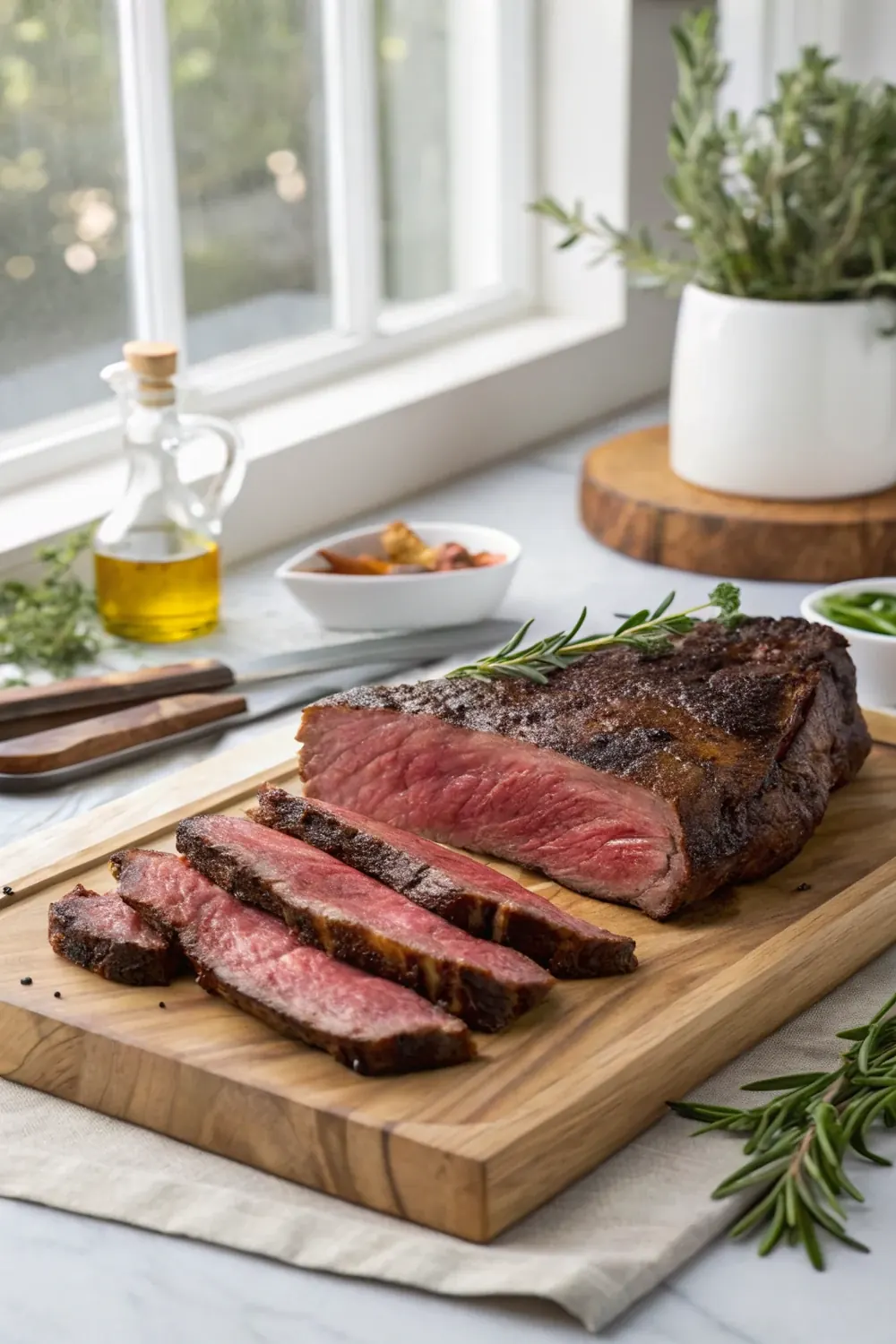
Cross rib steak is a chuck shoulder cut that grills beautifully: dry brine 2 hours, two-zone fire, pull at 130F, slice thin against the grain. Full method.
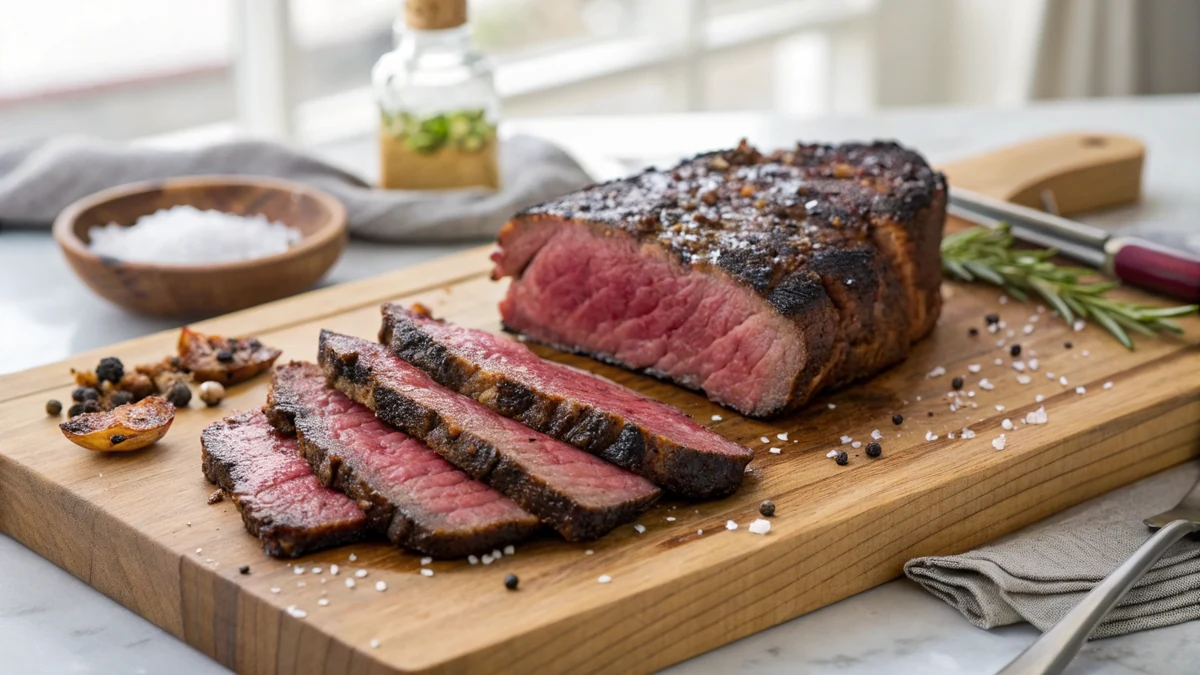
Quick answer: A beef cross rib steak is cut from the shoulder clod in the chuck, not from the rib, despite the name: it is a well-marbled, big-flavored, inexpensive steak that rewards three specific habits. First, dry brine: 2 teaspoons of kosher salt over 2.5 pounds of steak, uncovered in the refrigerator for 2 hours or up to overnight. Second, a two-zone fire: sear 2 to 3 minutes per side over direct heat, then slide to the cool side and finish to 125 to 130F (52 to 54C) internal, never past medium. Third, the knife: rest 10 minutes, then slice thin against the grain on a bias. Cooked and cut this way, cross rib delivers ribeye-adjacent beef flavor at half the price. Cooked past medium or sliced thick, it turns into the chewy pot-roast steak its label price suggests, because this is a working shoulder muscle: treat it like skirt steak royalty, not like a filet.
There is a steak at the grocery store that costs less than ground brisket, carries more flavor than most ribeyes I have audited, and gets ignored by nearly everyone walking past it, and the reason is the name. Cross rib steak sounds like a rib cut having an identity crisis, and the label helps nobody: depending on the store it also answers to shoulder steak, English steak, arm steak, or Boston cut. It is not from the rib at all. It comes off the shoulder clod in the chuck, the hardworking front end of the steer, and it is the best value-per-flavor purchase in the beef case for the cook who knows its two rules.
I learned those rules the honest way, by breaking them. My first cross rib steaks went on a screaming grill like ribeyes, got pulled at a proud medium-well, sliced thick, and chewed like a well-seasoned work glove; the cut got blamed, as it always does. The steak is not the problem. The handling is. A working shoulder muscle wants salt and time before the fire, a gentle two-zone cook that never crosses medium, and a knife that crosses the grain in thin, biased slices. Give it those three courtesies and cross rib steps out of the pot-roast aisle and onto the steak plate, at a price that lets you feed four people what tastes like a special occasion.
What a Cross Rib Steak Actually Is
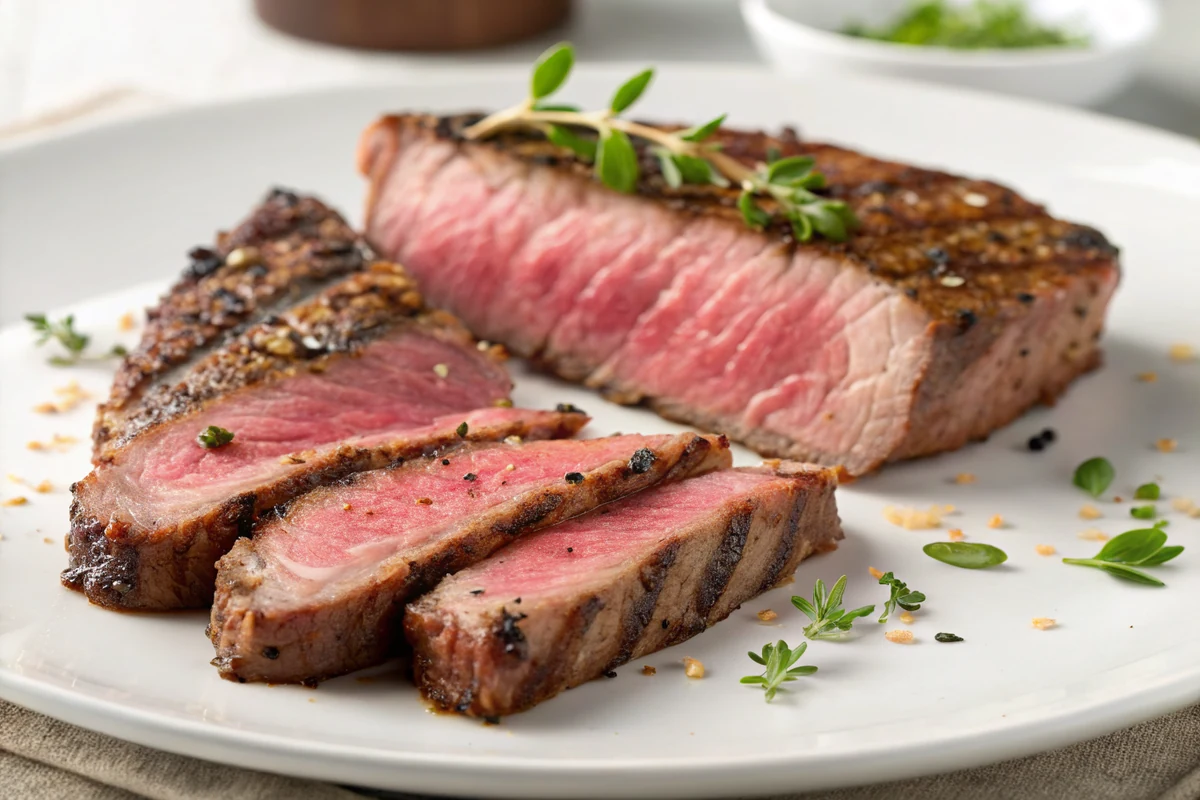
Start with the anatomy, because the name actively lies. The cross rib steak comes from the shoulder clod, one of the two big muscle systems in the chuck primal, the shoulder and neck section at the front of the steer. It sits across from the upper ribs, which is the most charitable explanation anyone offers for the name; it contains no rib and does not touch the rib primal. The clod is a hardworking group of muscles, which means two things at once: deep, loud beef flavor from all that exercise, and connective tissue that punishes careless cooking.
The label chaos is half the reason this steak stays cheap. Depending on the store and the state, the same cut sells as cross rib steak, cross rib roast sliced into steaks, shoulder steak, arm steak, English steak, English roast, or Boston cut. In Canada it is common enough to be a default grilling steak; in Texas it hides between the chuck roasts, priced like them. What you are looking for on the label is any of those names plus the word shoulder or clod, steaks 1 to 1.25 inches thick, and the marbling notes below. The confusion is your discount.
One boundary worth drawing immediately: the cross rib is not the cowboy cut. A cowboy cut ribeye is a thick bone-in ribeye from the rib primal, a luxury steak with luxury marbling and a luxury price, and that page covers the whole cowboy cut territory, bone, butter baste, and all. The cross rib is the working-class cousin from one primal forward: more flavor per dollar than the entire steak case behind it, in exchange for the specific handling this page teaches. Different animal parts, different rules, and the rules are everything here.
Why This Cut Rewards the Careful and Punishes the Casual
Every steak conversation is secretly a conversation about muscle biography, and the shoulder clod worked for a living. Working muscles run darker, beefier, and more mineral than lazy ones, which is why chuck flavor outclasses loin flavor in any blind taste test that controls for tenderness. The tax is structure: more connective tissue sheathing the fibers, and fibers with more attitude. A ribeye forgives an overcooked minute because fat bastes it and its fibers barely notice. The cross rib keeps score. At 130F it is juicy, expansive, almost sweet with beefiness; at 150F it is a clenched fist.
The physics are worth one paragraph because they drive every step in this recipe. Between roughly 140 and 150F, muscle fibers contract sharply and wring out their moisture, and in a cut with this much connective tissue the squeeze is severe; meanwhile the collagen that could compensate does not begin dissolving meaningfully until the high 100s, hours into a braise. That leaves a canyon between medium and pot roast where the cross rib is at its worst, and a narrow sunny ledge at 125 to 135F where it is at its spectacular best. This recipe simply refuses to leave the ledge.
This is also why the cut has a split reputation across recipe sites: half the internet braises cross rib like the roast it is labeled as, and half grills it and reports chewiness. Both camps are half right. Braised low and slow, the clod makes a fine pot roast, and that fallback lives at the end of this page. But the braise erases exactly what makes the cut special, the big mineral steak flavor, and turns it into generic tender beef. The grill keeps the flavor and demands precision. I think the precision is a fair price, and it amounts to owning a thermometer and a decent knife.
Buying: Reading the Clod at the Meat Case
Thickness first: 1 to 1.25 inches is the working range for the two-zone method, thick enough to build crust without overshooting the center, thin enough to finish before the exterior overcooks. Many stores slice cross rib thin, at a half inch or so, for quick pan work; those thinner steaks are fine, but they cook like the marinated variation below, not like the main method. If the case only holds a cross rib roast, ask the counter to slice steaks from it at an inch and a quarter; it is a 2-minute favor and the roast price usually rides along.
Marbling on the clod reads differently than on a ribeye, so recalibrate your eye. You will not see the snowy lacework of the rib primal; you are looking for fine threads of white within the dark red, a few honest seams of fat between muscle sections, and no huge glassy knots of hard fat, which never render on a fast cook. Deep red color and moisture without pooling round out the checklist. Grades still mean something here: a choice cross rib eats notably better than select, and the price gap on this cut is pocket change compared to the same gap on strips.
One structural note to check at the counter: some cross rib steaks carry a visible line of connective tissue crossing partway through, an old seam between shoulder muscles. It is not a defect, but steaks where that seam runs thick through the middle are better candidates for the braise route; pick steaks where the face is mostly open muscle. And per-person math runs generous, a bit over a half pound raw per eater, because this steak slices thin and disappears faster than its weight suggests. The leftovers, should any survive, make the best steak tacos in the budget category.
The Dry Brine: Two Hours of Free Tenderness
Salt, time, and refrigerator air are the cheapest steak upgrade in existence, and no cut appreciates them more than a dense shoulder muscle. Two teaspoons of kosher salt over 2.5 pounds, applied at least 2 hours ahead, works in two directions at once: the salt migrates inward, seasoning the interior and loosening the protein structure so it holds more moisture through the cook, while the surface dries into the taut, tacky skin that browns instantly on a hot grate. A cross rib salted at the grill is seasoned wallpaper over bland walls; a dry-brined one is seasoned to the middle.
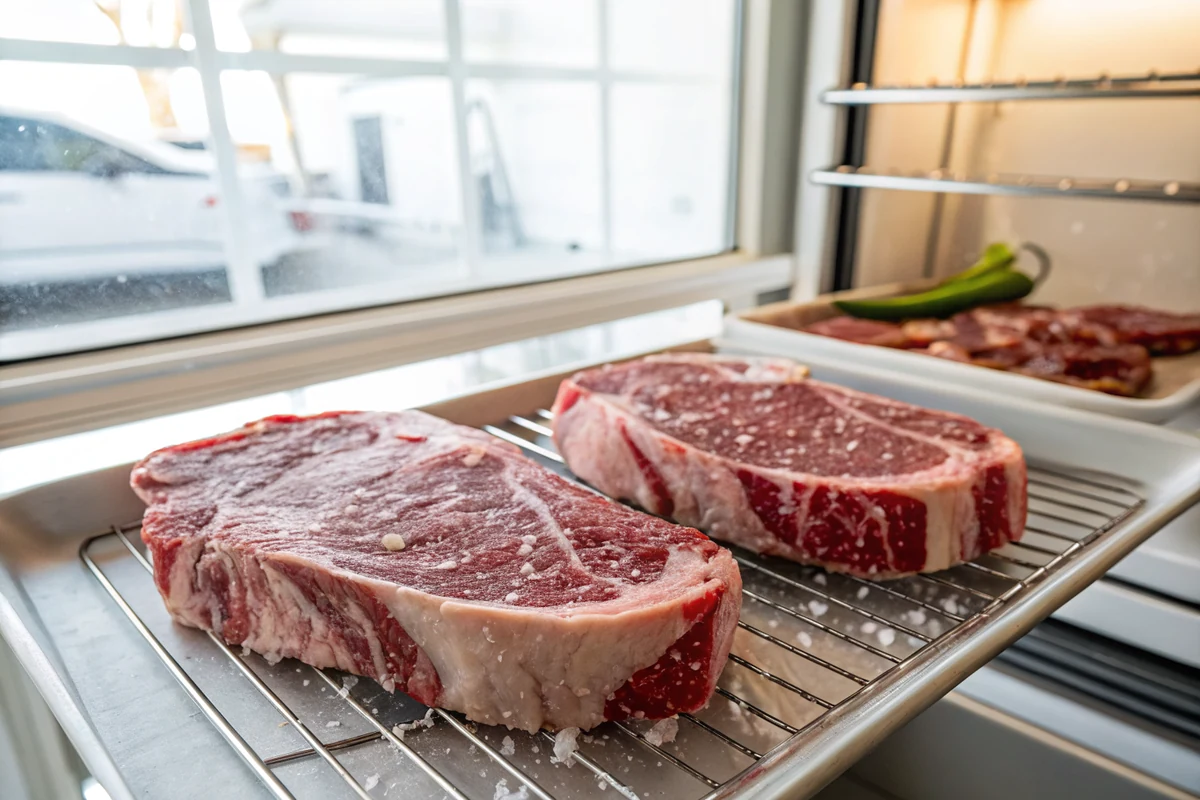
Overnight is better than 2 hours if the calendar allows, and the difference is visible before it is tasteable: a steak brined 18 hours emerges with a dry, almost suede surface that sears a full shade darker in the same time over the same coals. There is no practical upper limit inside 48 hours for a steak this thick. The rack matters more than people think, letting air reach all faces so no side sits wet against a plate; a cooling rack over a sheet pan is the standard rig, and the refrigerator's dry air does the rest of the work unsupervised.
The rub stays minimal and goes on late: coarse 16-mesh pepper and granulated garlic bound with a film of oil, applied when the steaks come out to temper. Pepper applied overnight can turn bitter, and fine-ground pepper burns over direct fire, which is why the coarse grind earns its shelf space. If your pantry runs toward the ready-made, my Texas Roadhouse steak seasoning copycat is built for exactly this kind of steak, its sugar-free profile safe over live fire. Salt early, spice late, and the fire meets a steak already half cooked in the ways that count.
The Two-Zone Cook: Sear, Slide, and Stalk the Thermometer
A single raging fire is the wrong tool for a thick working muscle, because the crust finishes long before the center arrives and the outer half overshoots while you wait. Two zones solve it: a hot side with a full chimney of coals banked under half the grate, a cool side with nothing, lid handy. The steak sears 2 to 3 minutes per side over the coals, building the dark crust the dry brine prepared it for, then slides to the quiet side to finish gently, lid down, in the 300F convection of the covered grill. Sear for the crust, indirect for the center, thermometer for the truth.
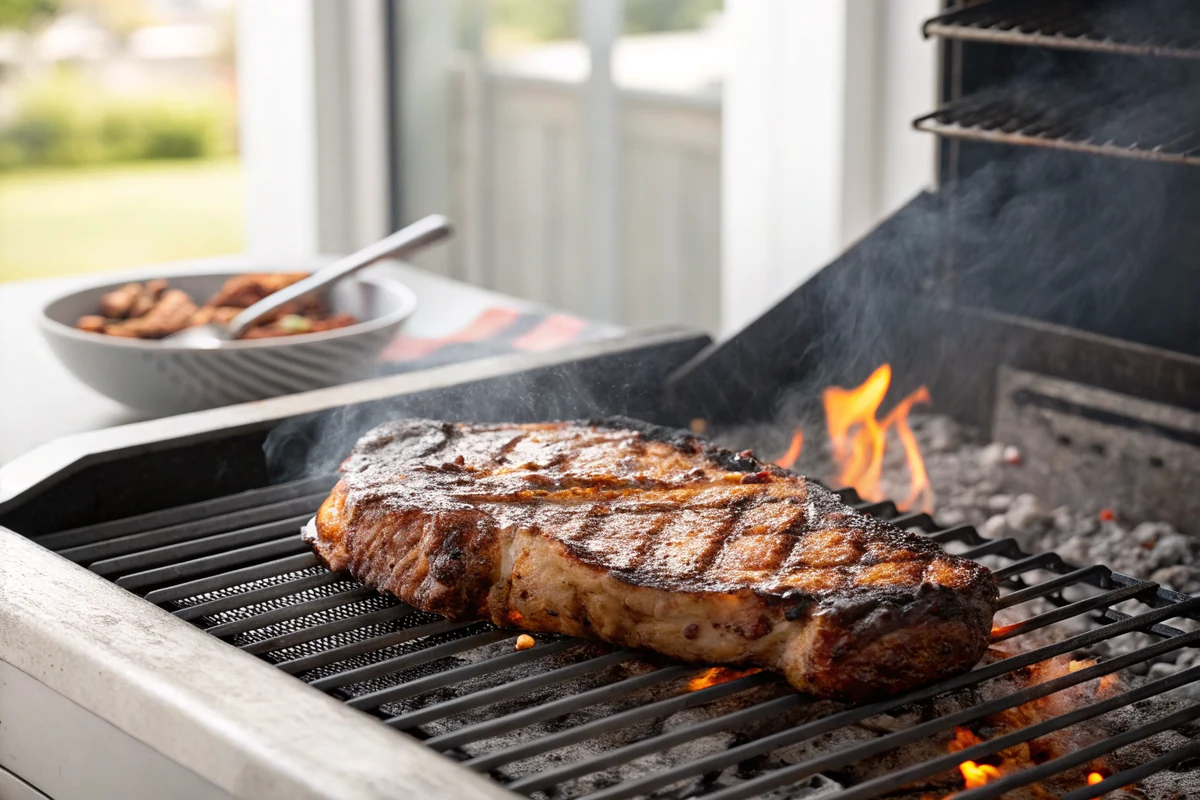
The numbers to hold: pull at 125 to 130F internal for medium-rare after carryover, checking the thickest point from the side with an instant-read. The indirect leg runs 6 to 10 minutes depending on thickness and how hot the covered side runs, with one flip at the midpoint for evenness. Gas grills run the same play with half the burners off. And for the cooks whose kitchens outnumber their grills, a heavy cast-iron skillet does a fine impression: hard sear in a lightly oiled pan, then the pan into a 300F oven to finish, same targets, same rest.
Reverse sear also works handsomely on cross rib and suits the patient: start the steaks on the cool side at 275F until they read 110F internal, then finish with a short violent sear over the coals. The crust comes out slightly more even, the doneness gradient nearly disappears, and the cook takes 15 minutes longer. Either direction, the non-negotiables are identical, and they are the whole religion of this cut: a real crust, a center that never passes medium, and a thermometer doing the deciding instead of a clock or a thumb-poke folk test.
Rest, Grain, and the Knife: Where Tenderness Is Manufactured
The rest is 10 minutes and it is not a suggestion. A steak straight off the fire is a pressurized system, juices thin and mobile; cut it immediately and the board floods with what should have been the third bite. Ten minutes lets the temperature gradient relax and the juices thicken back into the muscle, and the carryover finishes the center to its final number. Loose foil if the evening is cold, nothing if it is not, and use the window to melt the butter or warm the tortillas, because this steak's last act moves fast once the knife starts.
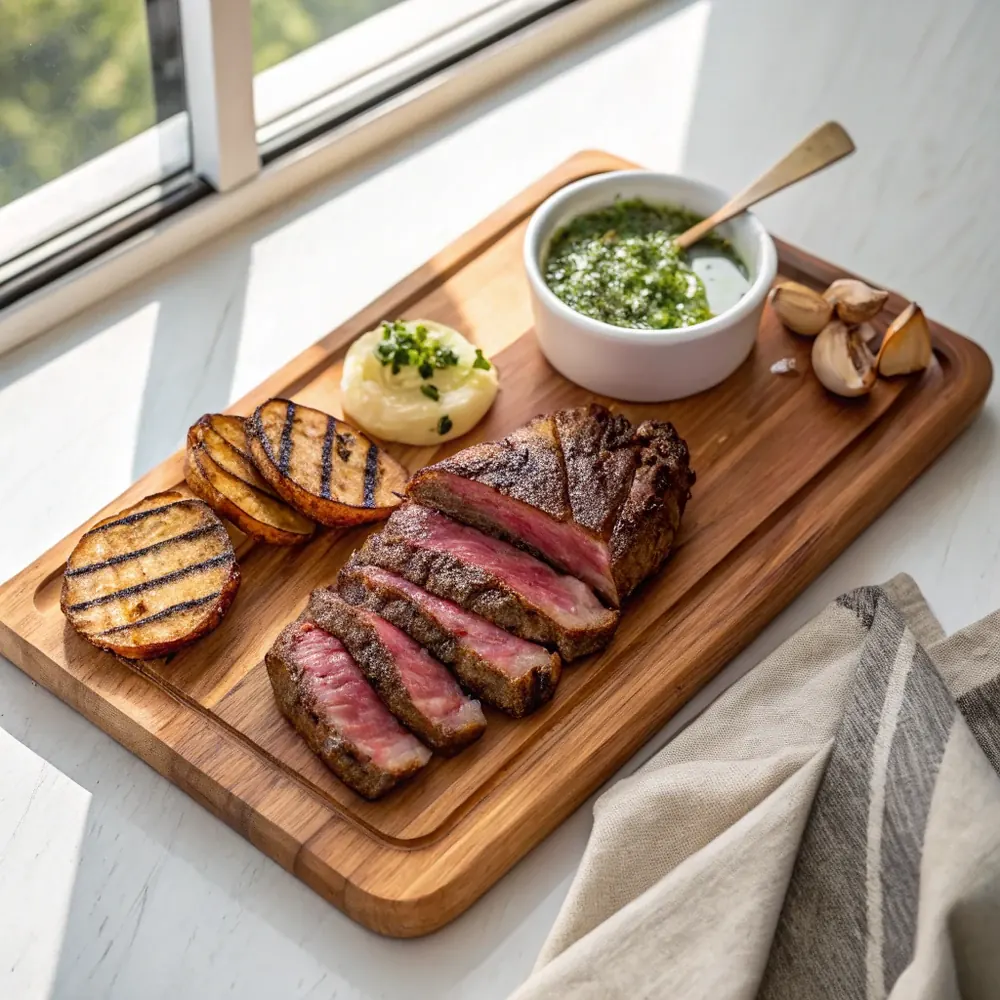
Now the manufacturing step. Look at the rested steak and find the grain, the visible parallel direction of the muscle fibers, easy to read on a shoulder cut. Your knife's entire job is to cross those fibers at a right angle, in slices a quarter inch thick, laid over at a slight bias so each slice is wider and handsomer. Every slice shortens the fibers to lengths your teeth handle without effort; this is the same mechanical trick that makes brisket and skirt steak possible, and on cross rib it is worth a full grade of perceived tenderness. Thick slices with the grain waste everything the fire just did.
The clod's ambush is that the grain changes direction partway across some steaks, where two muscles meet at that connective seam. Watch for the fiber lines to pivot, stop, rotate the piece, and keep cutting across. It costs 10 seconds. Slice only what the table will eat in the first round, because cut surfaces dry fast and a half steak holds better whole; and when the plates come back for seconds, cut fresh. The board juices, poured over the fanned slices with a pinch of flaky salt, are the sauce the steak made for itself.
Serving: Butter, Tacos, and the Steak-Night Plate
Cross rib slices arrive deeply beefy and lean-edged, and the classic finishers all work by adding fat or acid. The house move is a round of cowboy butter softening over the warm fan of slices, its garlic and herbs riding the residual heat; chimichurri does the acid version of the same job, and a plain hard squeeze of lime with flaky salt is the weeknight minimum that still counts. Whatever you choose, apply it to the slices rather than the whole steak, so every surface gets its share.
The taco destiny of this cut deserves open acknowledgment. Thin bias slices, warm corn tortillas, white onion, cilantro, salsa verde: cross rib was built for this service, delivering carne-asada satisfaction with more marbling than the flank and skirt cuts that usually work the job. Two and a half pounds makes a taco night for six with a pot of pinto beans alongside. The steak also cuts beautifully into a Tex-Mex rice bowl, and cold leftover slices on white bread with mayonnaise and black pepper constitute one of the great quiet sandwiches of my life.
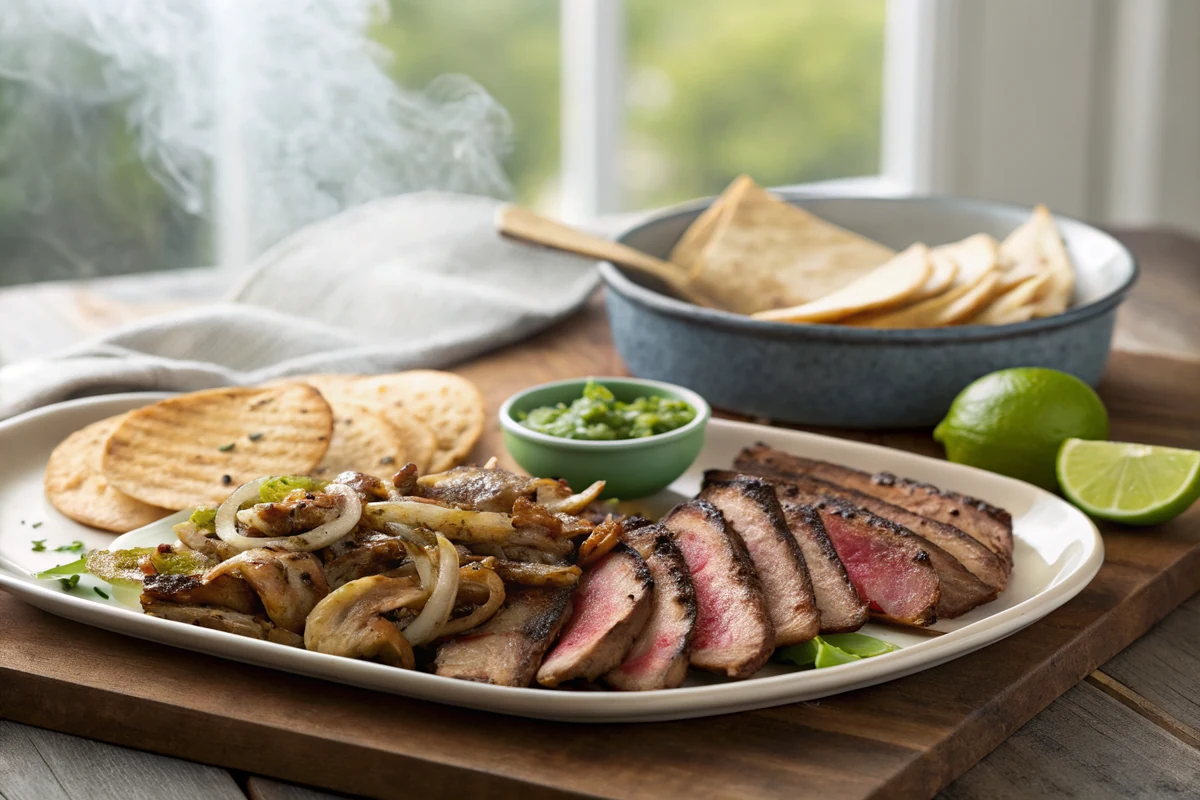
For the traditional steak-night plate, the supporting cast follows steakhouse logic scaled to a Tuesday: baked potatoes or mashed potatoes, something green with acid in it, grilled onions if the coals are still going. The whole meal lands under the cost of one mid-tier restaurant ribeye, which is the quiet arithmetic that makes this cut a keeper. Feed it to guests without announcing the price point and collect the compliments; announce it afterward and collect the disbelief. Both halves of that evening are the point.
The Braise Fallback: When the Steak Wants to Be a Roast
An honest page about a chuck cut owes you the other road. If the steaks you brought home run thin, carry a heavy connective seam through the middle, or the evening simply calls for something spoon-soft, the cross rib braises as well as any cut in the chuck, because it is, anatomically, pot roast that got sliced ambitious. Sear the steaks hard in a Dutch oven, then braise with broth, onion, and a spoon of tomato paste at 300F for 2.5 to 3 hours until fork-tender. The flavor that makes it a great steak makes it a great braise; only the texture changes teams.
That fork in the road is worth internalizing as a shopping skill, because the chuck rewards cooks who sort its cuts by destiny. Within one glass case, the clod gives you this steak; the chuck eye gives strips that my smoked beef country style ribs take to the pit; and the boneless short ribs next to them run the braise in my slow cooker boneless short ribs. Same neighborhood of the steer, three different correct answers. The label prices barely distinguish them; the methods absolutely do.
The half-measure to avoid is the one the cut's reputation was built on: grilling to well-done and hoping, which lands in the canyon between steak and braise where nothing good lives. If doneness preferences at your table run past medium, do not fight it with more grill time; switch roads entirely and braise, or slice the medium-rare steak extra thin and let the searing-hot board juices warm the slices to compromise. A cross rib respects a cook who commits to one method. It has nothing but chew for the cook who hedges.
Cross Rib vs. the Steak Case: An Honest Comparison
Against the ribeye and its cowboy cut big brother, the cross rib loses the tenderness contest outright and wins the flavor-per-dollar one going away. The rib primal's marbling delivers a lush, buttery chew no shoulder cut matches, and on a celebration night that texture is worth its invoice. But tasted side by side for pure beef flavor, the clod is louder, more mineral, more interesting, and it costs less than half. My rotation runs cowboy cuts for occasions and cross rib for the Tuesdays that outnumber them, which is roughly the ratio of Tuesdays to occasions.
Against its fellow value cuts, the comparison turns friendlier. Flank and skirt share the thin-slice-against-the-grain contract and cost more these days, having been discovered by fajita economics; the cross rib runs thicker, beefier, and cheaper, though skirt still wins on sheer marinade absorption. Flat iron, the clod's own tender neighbor, beats it on texture and loses on size and price. Chuck eye steak, the poor man's ribeye one muscle over, is the closest cousin in spirit: both are chuck cuts pretending toward the premium case, and buying whichever looks better-marbled that day is a legitimate strategy.
The summary I would tape to the meat case if they let me: cross rib is the best steak in the store for a cook who owns a thermometer and the worst one for a cook who does not. Its two failure modes, overcooking and lazy slicing, are both free to avoid, and its ceiling, dry-brined, two-zone grilled, butter-finished, sliced on the bias, embarrasses steaks at three times the price. Cuts like this are why I tell people the meat case rewards literacy over budget. Read the shoulder correctly and it will feed you like the rib section all year.
The Five Mistakes That Ruin a Cross Rib Steak
Mistake one is treating it like a ribeye: straight from package to screaming grill, no salt lead time, cooked by instinct. The ribeye's fat forgives all of that; the clod forgives none of it. Mistake two is the doneness overshoot, the cut's cardinal sin: past about 140F the working fibers clench and wring themselves dry, and the canyon between 140F and braise-tender cannot be crossed on a grill. Pull at 125 to 130F, let carryover finish the job, and hold the line politely when the table lobbies for well-done; the braise road exists for exactly that negotiation.
Mistake three is a one-zone fire, which forces the false choice between charred-outside-raw-inside and gray-throughout; the two-zone setup costs nothing and dissolves the dilemma. Mistake four is the impatient knife: no rest, thick slices, or slices run with the grain, each of which independently squanders a correctly cooked steak. Ten minutes of rest, quarter-inch slices, across the fibers, rotating when the grain shifts at the muscle seam. The knife work is a third of this recipe's result and the only part with no equipment excuse.
Mistake five is buying blind: grabbing the thinnest, palest package because the label price already felt like winning. Spend the extra ninety seconds choosing choice grade, real thickness, and honest marbling, and ask the counter to cut from the roast when the pre-cut steaks disappoint. And the bonus mistake, the meta one: cooking this cut once without the thermometer, landing at 155F, and reporting to the neighborhood that cross rib is tough. The steak keeps the receipts. Cook it to the number, slice it across, and it will argue its own case better than this page ever could.
Beef Cross Rib Steak Recipe
Ingredients
- For the steaks:
- 2.5 pounds (1.1 kg) cross rib steak, 2 steaks about 1 to 1.25 inches (2.5 to 3 cm) thick
- 2 teaspoons kosher salt
- For the rub:
- 2 teaspoons 16-mesh coarse black pepper
- 1 teaspoon granulated garlic
- 1 tablespoon (15 ml) neutral oil
- For serving:
- Flaky salt
- Cowboy butter, chimichurri, or a squeeze of lime, optional
- Equipment:
- Charcoal or gas grill set up for two zones, instant-read thermometer, tongs, and a long slicing knife
Instructions
- Dry brine 2 hours or overnight. Pat the steaks dry and salt every face evenly with the kosher salt. Set them on a rack over a plate, uncovered, in the refrigerator for at least 2 hours and up to 24. The salt seasons the interior of a thick working muscle and dries the surface for a better crust. This step carries more of the final result than any grill technique.
- Rub and temper. Thirty minutes before cooking, pull the steaks out, pat them dry again, and rub with the oil, coarse pepper, and granulated garlic. Letting the meat lose its refrigerator chill helps a thick steak cook evenly to the center.
- Build a two-zone fire. Bank a full chimney of coals under one half of the grill, leaving the other half empty, or set a gas grill with half the burners on high and half off. You want a hot side around 500F for the sear and a cool side around 300F for the finish. Clean and oil the grate.
- Sear 2 to 3 minutes per side. Lay the steaks over direct heat and sear 2 to 3 minutes per side, until both faces carry a deep brown crust with dark edges. Expect flare-ups from rendering fat; shift the steaks a few inches rather than pulling them off. Do not chase a crust past 3 minutes a side; the interior needs its budget.
- Finish on the cool side. Slide the steaks to the indirect side, close the lid, and cook 6 to 10 minutes more, flipping once, until an instant-read thermometer in the thickest part shows 125 to 130F (52 to 54C) for medium-rare. A 1-inch steak lands near the short end, a 1.25-inch steak near the long end.
- Never pass medium. If your table demands more doneness, stop at 135F and no further. Past about 140F the shoulder fibers contract hard, squeeze out moisture, and no slicing technique fully recovers the texture. Medium-rare is this cut's home field.
- Rest 10 minutes. Move the steaks to a cutting board and rest them 10 full minutes, uncovered or under loose foil. The juices redistribute and carryover lifts the center a few degrees. Pour any board juices back over the slices at the end; that is seasoning, not mess.
- Slice thin, against the grain, on a bias. Find the direction of the muscle fibers, turn the steak so your knife crosses them, and slice at a quarter inch on a slight angle. Cross rib grain can shift partway across the steak; rotate as needed so every slice cuts across the fibers. Finish with flaky salt and serve immediately.
Frequently Asked Questions
What is a beef cross rib steak?
A steak cut from the shoulder clod in the chuck primal, the shoulder section of the steer, despite the misleading name; it contains no rib. It also sells as shoulder steak, arm steak, English steak, or Boston cut depending on the store. As a hardworking muscle, it carries deep, mineral beef flavor stronger than most premium steaks, along with more connective tissue, which is why it stays inexpensive. Cooked medium-rare with a hard sear and sliced thin against the grain, it eats remarkably like a budget ribeye; cooked past medium or sliced thick, it turns chewy. It is a technique-dependent steak, and the technique is simple.
Is cross rib steak good for grilling?
Yes, with the two-zone method: sear 2 to 3 minutes per side over direct heat, then finish over indirect heat with the lid down to an internal 125 to 130F, rest 10 minutes, and slice thin against the grain. The two-zone fire lets a 1 to 1.25 inch steak build a real crust without overshooting the center. What it is not good for is casual high-heat grilling to well-done, which makes the shoulder fibers contract and turn tough. A dry brine of 2 hours to overnight before grilling makes a large difference in both seasoning and crust. Treat it precisely and it grills as well as steaks at twice the price.
Is cross rib steak the same as a cowboy cut or ribeye?
No. The cowboy cut is a thick bone-in ribeye from the rib primal, a heavily marbled premium steak; the cross rib comes from the shoulder clod in the chuck, one primal forward, and only the name overlaps. The ribeye family wins on tenderness and buttery texture. The cross rib wins on beef flavor per dollar, usually costing less than half as much, and demands more careful handling: never past medium, always sliced thin across the grain. They are complementary steaks rather than substitutes: the cowboy cut for occasions, the cross rib for the weeknights in between.
What temperature should cross rib steak be cooked to?
Pull it at 125 to 130F (52 to 54C) internal for medium-rare after resting, measured with an instant-read thermometer in the thickest part, and treat 135F as the ceiling if your table insists on medium. This cut lives or dies by that window: past about 140F the working shoulder fibers contract sharply and squeeze out their moisture, and the steak turns tough in a way no sauce or slicing fixes. If you want it more done than medium, the honest answer is to change methods entirely and braise it like the pot roast its muscle group also produces, rather than pushing the grill past the cut's limits.
How do you make cross rib steak tender?
Three habits, all free. First, dry brine: salt the steak 2 hours to overnight ahead, uncovered in the refrigerator, which seasons the interior and helps it retain moisture. Second, control doneness: two-zone grill to 125 to 130F and never past medium, because overshooting is what makes this cut chewy. Third, the knife: rest 10 minutes, then slice a quarter inch thick against the grain on a bias, rotating the steak when the fiber direction shifts at the muscle seam. A marinade is optional flavor insurance on thinner steaks, but it cannot substitute for the doneness and slicing rules.
Can I cook cross rib steak in a pan or oven instead of a grill?
Yes, the two-zone logic transfers directly indoors. Sear the dry-brined steak hard in a lightly oiled cast-iron skillet over high heat, 2 to 3 minutes per side, then move the whole pan to a 300F oven and finish to 125 to 130F internal, about 6 to 10 minutes depending on thickness. Rest 10 minutes and slice thin against the grain as always. The reverse sear also works: 275F oven until the steak reads 110F inside, then a short violent sear in the skillet. You lose the fire flavor and keep everything else, including the price-to-plate math that makes this cut worth knowing.
What should I serve with cross rib steak?
Follow one of two roads. Steak night: fan the slices under melting cowboy butter or chimichurri, with baked or mashed potatoes, grilled onions, and something green and sharp; the whole plate costs less than one restaurant ribeye. Taco night: thin bias slices on warm corn tortillas with white onion, cilantro, lime, and salsa verde, which turns 2.5 pounds into dinner for six alongside a pot of pinto beans. Either way, pour the resting-board juices back over the slices with a pinch of flaky salt. Leftover slices make exceptional cold steak sandwiches and next-day rice bowls.