Texas BBQ
Smoked Beef Country Style Ribs
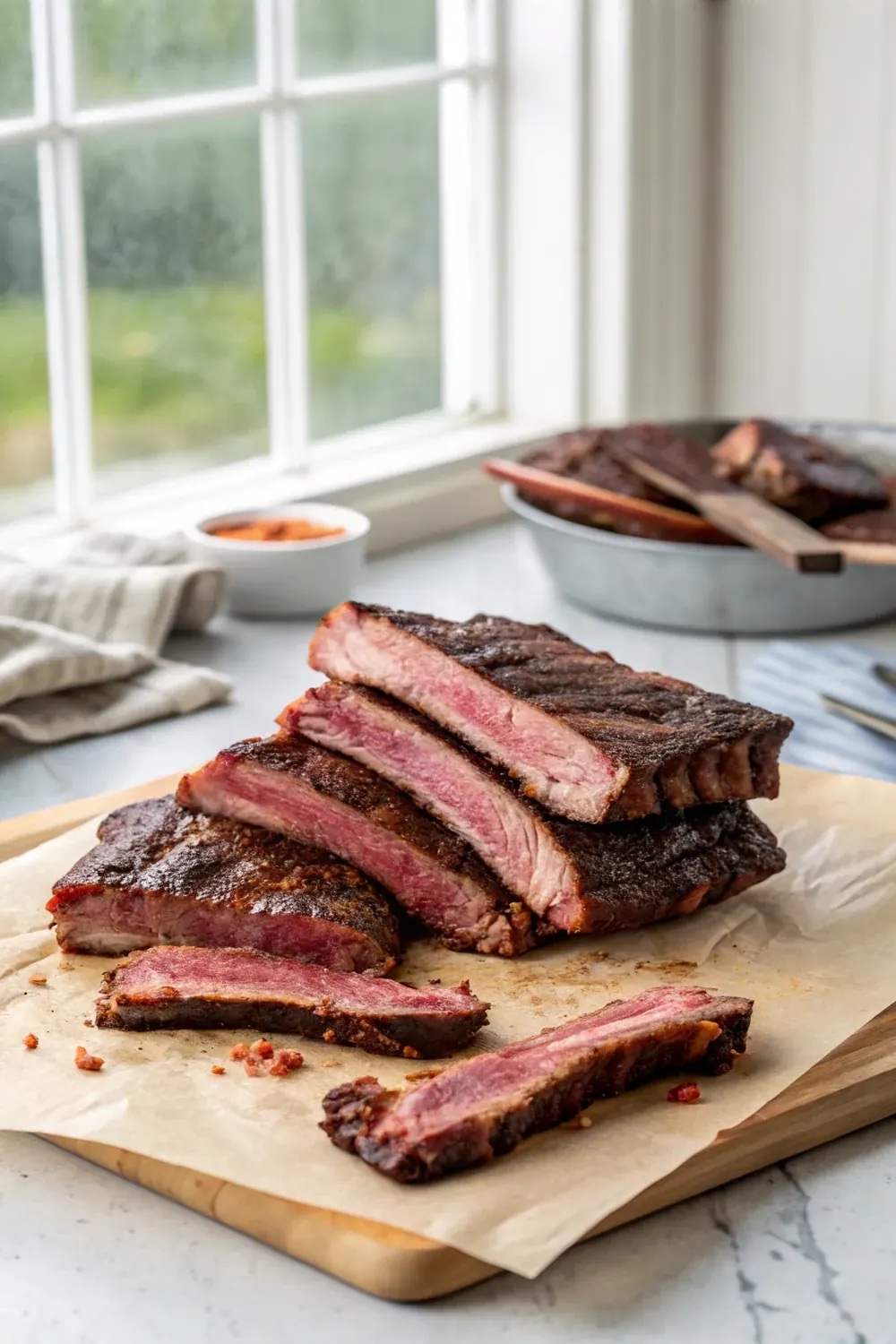
Smoke beef country style ribs at 250F over post oak: 3 hours to set the bark, foil wrap with broth to 203F, rest 30 minutes. Boneless chuck, huge flavor.
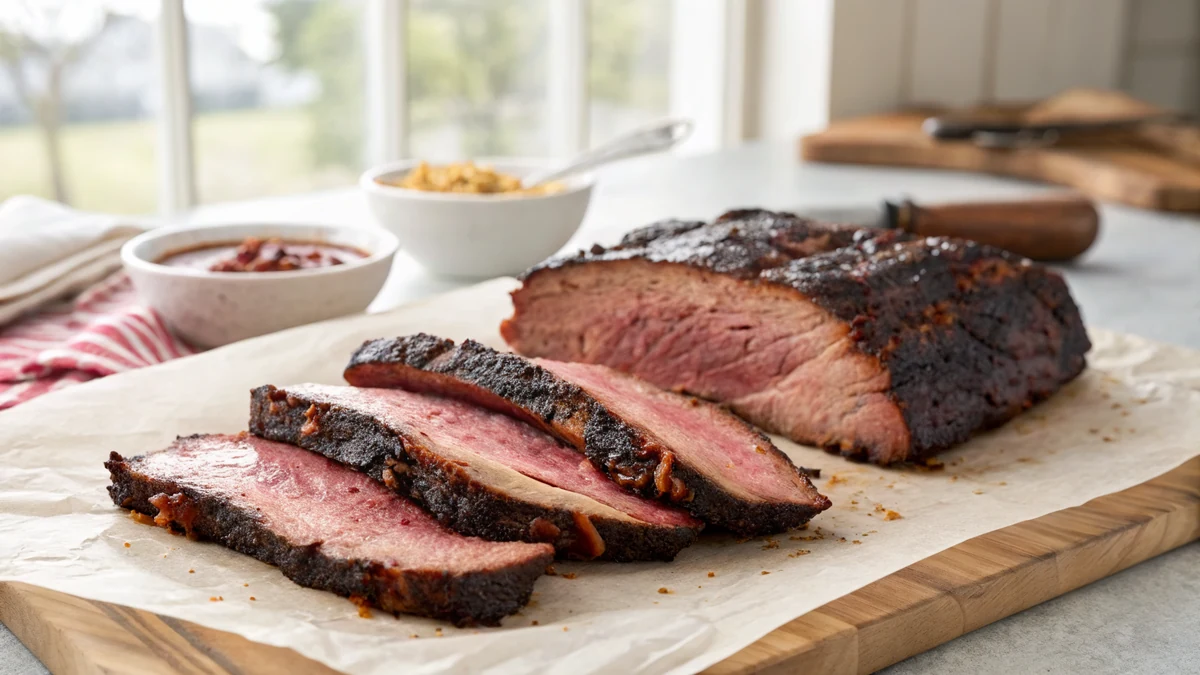
Quick answer: Beef country style ribs are not ribs at all: they are thick boneless strips cut from the chuck, the same collagen-rich shoulder territory as boneless short ribs, which makes them outstanding smoker meat. The method: trim heavy silverskin from 4 pounds of strips, season with 2 tablespoons of coarse black pepper, 1.5 tablespoons of kosher salt, and 2 teaspoons of granulated garlic, and smoke at 250F (121C) over post oak for about 3 hours, until the bark sets dark mahogany and no longer smears under a thumb. Wrap in foil with 1/2 cup of beef broth and continue 1.5 to 2 hours more, until a probe slides into the thickest strip like warm butter, usually around 200 to 205F internal. Rest 30 minutes in the foil, then slice thick against the grain and spoon the foil juices over the top. Total ride about 5 hours, and the result eats like individual boneless short ribs with bark on every face.
The label country style ribs might be the most successful piece of fiction in the American meat case. There is no rib in the package: the beef version is thick strips cut from the chuck, shoulder meat wearing a rack's name, priced like a roast and marbled like something twice the money. For years the only advice anyone gave these strips was the oven braise, and the braise is fine. But hand them to a smoker and something better happens: every strip is its own little boneless short rib with bark on all four faces, done in an afternoon instead of a Saturday, at a price that lets you feed six people serious smoked beef without consulting the budget.
This page is the pit method I settled on after a couple of seasons of treating country style strips as the practice squad for plate ribs, and then noticing the practice squad kept winning. The play is the classic Texas two-act: naked smoke at 250F over post oak until the bark sets, then a foil wrap with a splash of broth to carry the collagen the rest of the way to surrender. If you have cooked my beef finger ribs, the rhythm will feel familiar; the country style strips are their bigger, thicker cousins from one section over, and they reward the same patience with twice the slice.
What Beef Country Style Ribs Actually Are
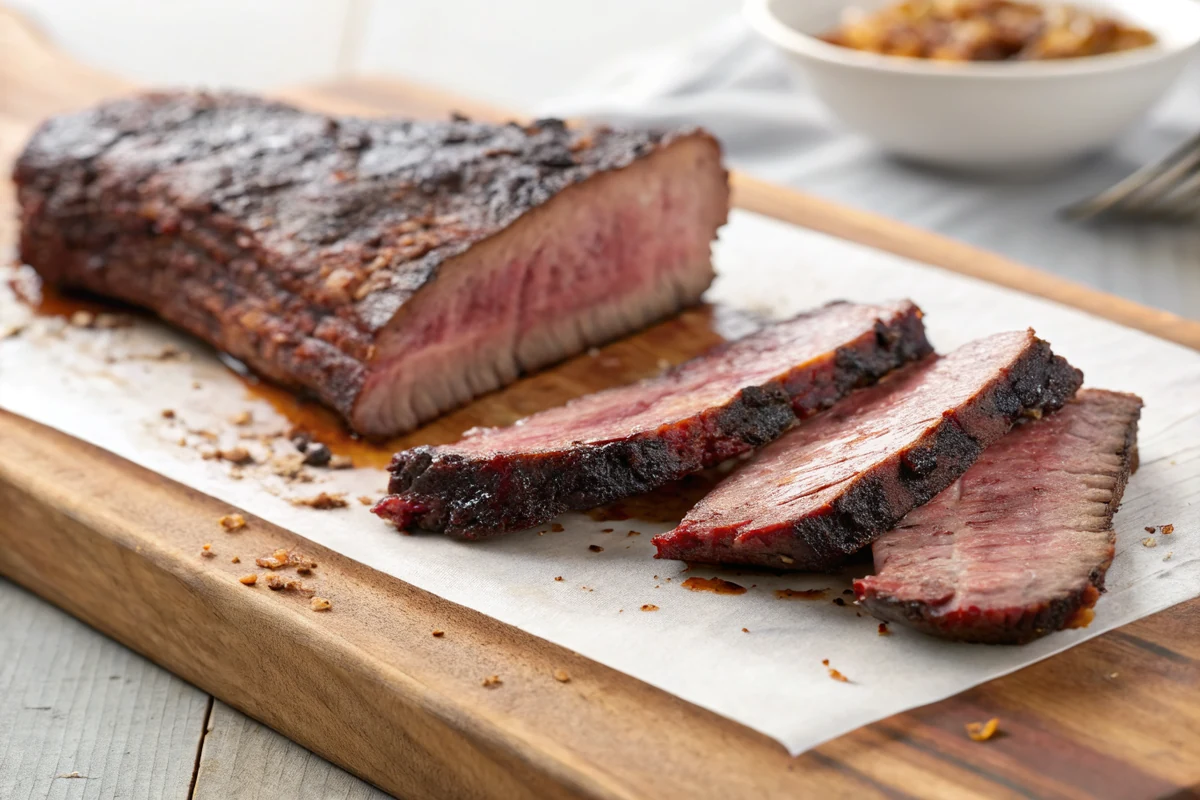
Clear the fiction first: no ribs were involved. Beef country style ribs are thick boneless strips cut from the chuck, most often from the chuck eye roll or the meat over the first few rib positions of the shoulder, sliced into pieces the shape of very ambitious steak fries. The name migrated over from the pork world, where country style ribs are shoulder-end pieces sold the same way, and grocery marketing kept it because rib outsells strip of chuck by a comfortable margin. What the label actually promises, and delivers, is chuck: deeply marbled, collagen-rich working muscle at one of the lowest prices in the beef case.
That anatomy is why this cut and the smoker were made for each other. Chuck carries the same connective-tissue-and-fat construction that makes plate short ribs and brisket the kings of barbecue, just portioned into strips a fraction of the size. Collagen needs hours of low heat to melt into gelatin, and marbling needs the same hours to render and baste from within; the strips have both in abundance. Every rule that governs the big cuts governs these, scaled down: bark first, wrap second, probe tender always. They are barbecue's training weights that turn out to taste like the real event.
One label note before the store: packages vary in their source muscle, and it genuinely matters less than the shape. What you want is strips 1.5 to 2 inches thick with visible marbling, whatever chuck neighborhood they left. Some stores sell the identical product as boneless beef ribs or boneless country ribs; a few slice bone-in chuck steak into strips and keep the name, and those work too, bones and all, with 30 extra minutes. The one imposter to dodge is anything labeled from the round: lean rear-leg meat in a strip costume, and no amount of foil will braise it into generosity.
The Chuck Family Tree: Where These Strips Sit
Regular readers of this site's beef pages will recognize the neighborhood, so here is the map with the new address on it. Boneless short ribs, the stars of my slow cooker boneless short ribs, come from this same chuck section, and the labels overlap so much that country style boneless short ribs appears on packages of both. The honest difference is geometry more than genetics: short rib blocks run squat and thick, country style strips run long and slightly leaner, and either name may be attached to either shape depending on which butcher was working that morning.
The distinction that does hold: country style strips are not finger ribs. My beef finger ribs are the thin intercostal strips carved from between the bones of a rib plate, an inch thick at best; country style strips are cut from the muscle itself and run twice that. On the pit the difference is 45 to 60 extra minutes and a heartier final slice, closer to a small pot roast with bark than to a burnt-end bite. And neither is flanken, the cross-sawed quick-grilling cut with its rows of bone coins, which cooks in minutes over flame at my flanken beef short ribs and would turn to jerky on a 5-hour smoke.
Completing the family portrait: the giant of the lineage is the full plate short rib, the dinosaur-scale centerpiece of my smoked beef short ribs, three bones and 8 hours of ceremony. The country style strip is that animal's weeknight-adjacent cousin: same flavor chemistry, one-third the cook, no bone, and a per-pound price that reads like a typo next to the plate ribs. When the craving is short-rib-shaped and the calendar is not, these strips are the correct answer, and the smoker treats them with exactly the respect the label never earned.
Buying and Trimming: Reading the Strips
At the case, shape and interior outrank everything on the sticker. You want strips 1.5 to 2 inches thick and roughly even end to end, because a strip that tapers to a thin tail will finish its tail an hour early and dry. Marbling should be visible as fine white threading through deep red meat, with a few honest seams of fat between muscle sections; chuck marbles generously, so a pale, lean-looking package means the meat came from somewhere less friendly, likely the round, and should stay in the case. Four pounds feeds six with the leftovers this cut deserves.
Trimming is a 10-minute courtesy with two targets. First, silverskin: the pearly, iridescent membrane bands that never render and bake into chewy ribbons under the bark; slide a knife tip under each band and shave it off. Second, hard exterior fat thicker than a quarter inch, the waxy kind that sits in lumps rather than threading through muscle; a 5-hour cook will soften but not dissolve it. Everything else stays. The interior fat seams are the self-basting system, and thin surface fat crisps into some of the best bites on the strip.
Squaring matters more here than on big cuts because every strip is its own serving. Trim ragged edges and fold-under tails so each piece presents an even face to the smoke, and sort the strips by thickness as you season: the beefier ones will take the hotter, closer positions on the grate and the extra half hour if they need it. This small sorting habit, learned from cooking these next to finger ribs, is the difference between a tray where everything finished together and a tray with two perfect strips standing over four dry ones.
The Rub and the Wood: Texas Rules Apply
The rub is Central Texas scripture with the garlic amendment: 2 tablespoons of 16-mesh coarse black pepper, 1.5 tablespoons of kosher salt, 2 teaspoons of granulated garlic, over a thin mustard or oil binder. Coarse pepper is doing structural work, building the craggy bark that fine grind physically cannot, and the ratio runs pepper-forward because chuck's big flavor stands up to it. No sugar: these strips ride 5 hours of direct low heat, and sugar rubs cross from caramel to carbon somewhere around hour 3. The beef sweetens itself as the fat renders, same as its bigger cousins.
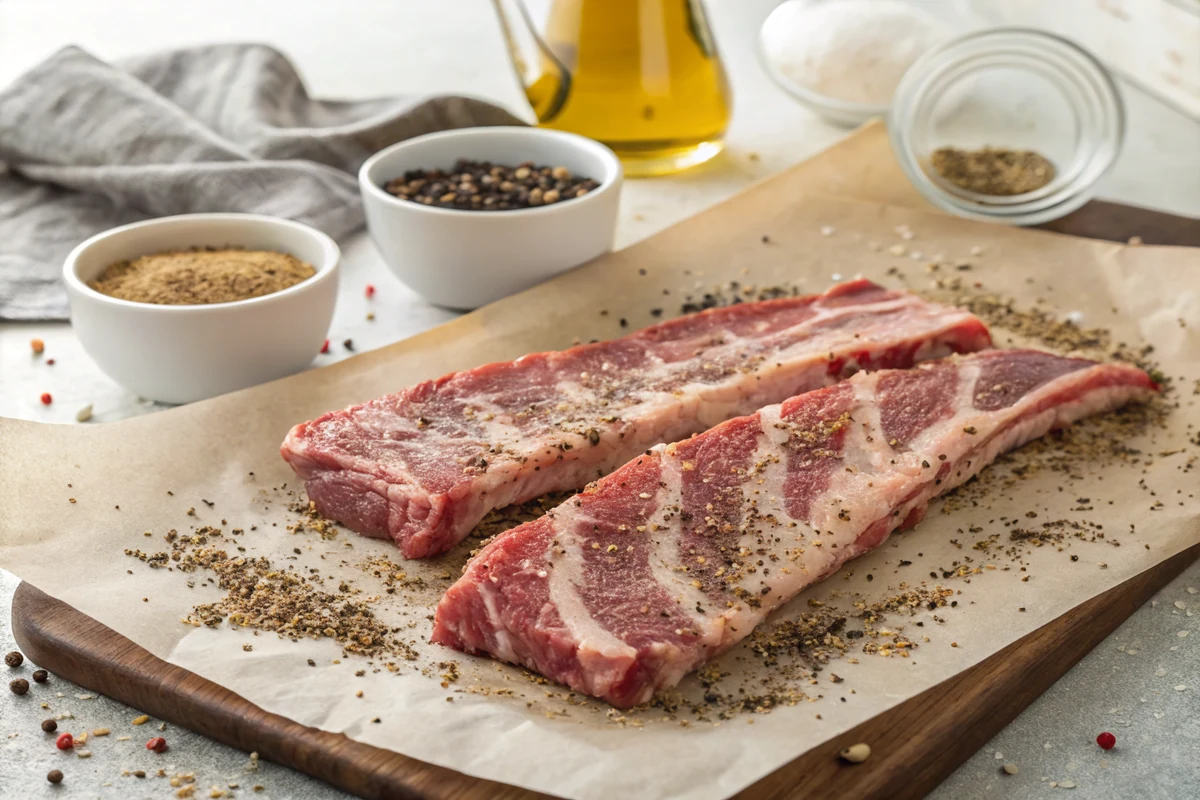
Seasoning strips differs from seasoning a roast in one happy way: there is no bottom. Every face of every strip is future bark, so season all four sides and the ends, from a foot above so the rub falls evenly, and let the salt go to work during the half hour the pit spends coming up. That surface-to-volume ratio is the cut's superpower; a pound of country style strips carries triple the bark of a pound of chuck roast. It is also why the rub quantity above reads generous. It is not generous. It is proportional.
Post oak is the wood, no surprise to anyone who has read this site's rib pages: clean, nutty, medium smoke that flavors beef for hours without turning acrid. White oak substitutes nearly invisibly, hickory works at half strength blended with a fruit wood, and mesquite stays home, too sharp for a 5-hour exposure on pieces this small. Pellet cooks should run oak pellets and expect a slightly politer smoke profile, and my BBQ wood pairing tool sorts the substitutions for whatever the woodpile actually holds. Thin blue smoke, always; white billow means a smothered fire and bitter strips.
Act One: Three Naked Hours at 250F
The strips go on at 250F with an inch of air between them, because smoke and dry heat need a route around every face to build bark on every face. Thicker strips take the positions nearer the fire. Then the hardest technique in barbecue: leave them alone. The first 90 minutes are when the smoke ring sets, the rub fuses, and the surface begins its slow trade of moisture for crust; every lid-lift costs 10 minutes of recovery and gains nothing. These strips are small enough to cook fast and small enough to check obsessively, and only one of those is a good idea.
From the 90-minute mark, a light spritz of water or half-strength cider vinegar every 45 minutes keeps the edges and ends from outrunning the middles. Spritz means mist: a soaked surface sheds its rub and stalls its bark, while a lightly dampened one holds smoke better and browns evenly. Watch the color march from red-brown at hour 1 through deep mahogany at hour 2 toward near-black at hour 3, which is not burning; that is pepper, beef crust, and smoke doing exactly what they do on a brisket, on a piece sized for one plate.
The wrap decision is a bark decision, made by thumb rather than clock. Somewhere around hour 3, with internals typically in the 160s and the strips entering the stall, press a knuckle into the crust: if the bark holds firm and dry, it is set and ready for foil; if it smears like wet rub, it needs another 30 minutes naked, whatever the schedule says. Bark set too soft going into the wrap dissolves into the braise, and there is no recovering it afterward. The foil forgives nearly everything else. It does not forgive impatience here.
Act Two: The Foil Wrap and the Probe-Tender Finish
The wrap is where the strips stop being smoked steak and become barbecue. Snug them side by side in a double layer of heavy foil, pour the half cup of beef broth around their ankles, and seal the packet tight enough that steam cannot wander off. Back on the pit at the same 250F. Inside, the environment flips from dry to wet: the broth and rendering fat braise the strips through the collagen melt, temperatures climb out of the stall, and the meat crosses from tight to yielding over the next 1.5 to 2 hours without surrendering the moisture a naked finish would cost pieces this small.
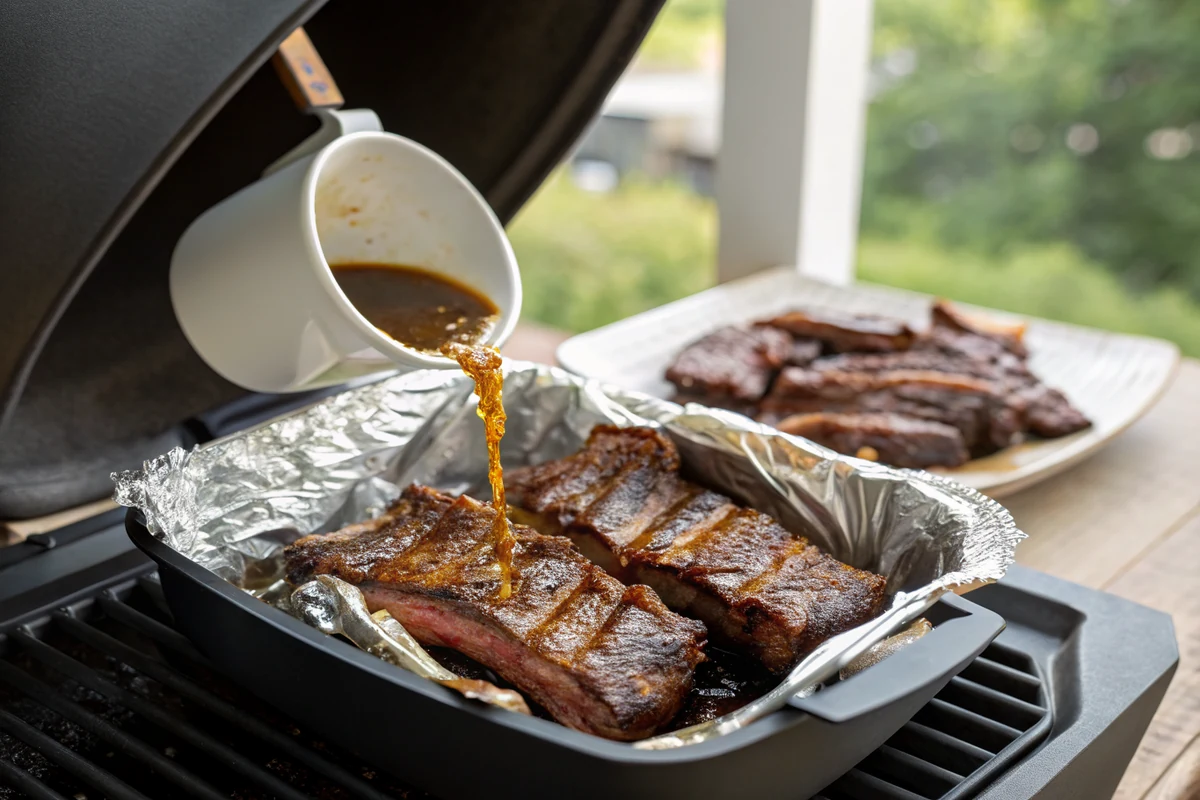
Doneness is a feel with a number attached, in that order. From 90 minutes into the wrap, open a corner and slide a probe into the thickest strip: done is warm-butter, no-resistance, the probe falling in rather than pushing in, and it usually coincides with 200 to 205F internal. But the number is the deputy, not the sheriff; strips can probe perfect at 198F or hold out until 207F depending on the day's chuck. Any rubbery push-back or squeak means reseal and give it 30 more minutes. Undercooked chuck is the only mistake the foil cannot fix retroactively.
The rest is short but load-bearing: 30 minutes in the sealed packet, on the counter or in a dry cooler, while the temperature falls out of the danger zone for juices and the gelatin thickens from broth-thin to glaze. Open the foil at minute 5 instead and the strips weep their moisture onto the board and firm up a full grade tougher; the difference is embarrassing and repeatable, which is how it became a rule. Use the half hour on the sides and the sauce. The packet is doing its best work while you are not watching.
Slicing, Saucing, and the Burnt End Option
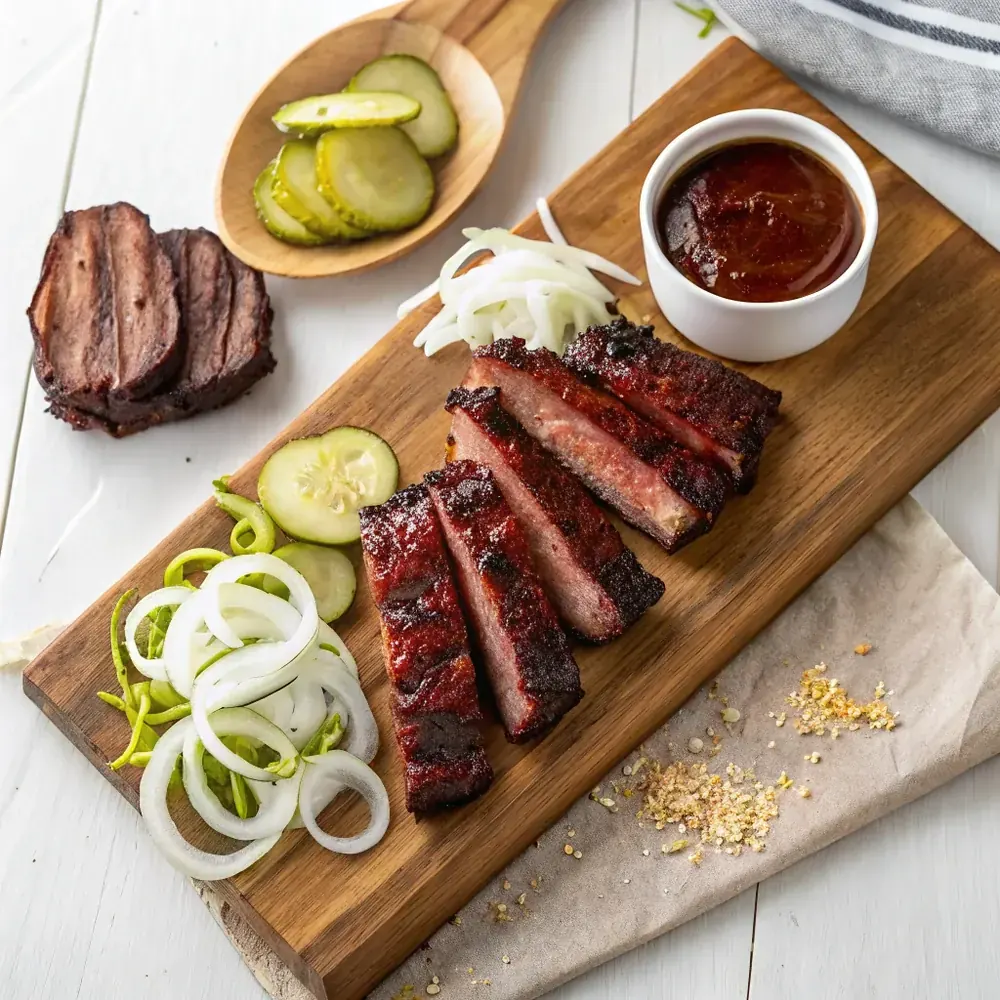
Slice thick and against the grain: 3/4-inch pieces cut across the fiber direction, which on most strips runs the long way, so you are mostly making handsome crosscuts of bark ringing tender centers. Thin slices, correct on a cross rib steak, are wrong here; braise-tender meat wants width to hold together. Spoon the foil juices, now a peppery beef glaze, over every cut face, and add a pinch of flaky salt if the broth ran low-sodium. What is on the board at this point is functionally sliced boneless short rib with quadruple the bark, and it needs nothing else.
It can, however, be improved into a party. The burnt end treatment from my finger ribs works even better on these bigger strips: cube the rested meat into 1.5-inch pieces, toss with a half cup of warmed Texas BBQ sauce cut with a few spoonfuls of the foil jus, and return the cubes to the pit uncovered for 20 to 30 minutes until the glaze goes tacky and the corners re-crisp. Toothpicks, napkins, and a warning that they disappear at a rate of roughly one pound per four minutes. This is what I bring when someone else is cooking the main.
Sauce philosophy otherwise follows Lockhart law: on the side, warmed, thin and vinegar-forward, for dipping by those who choose it. The bark on these strips cost 3 undisturbed hours and deserves to be tasted before it is dressed. Leftovers keep 4 days refrigerated with the jus poured over them, where it sets into a savory jelly that remelts into a self-basting glaze on reheat, and my how to reheat smoked ribs guide's covered low-oven method, 275F with a splash of broth, brings them back at 95 percent of day-one form. Chopped, they also make the best beans of your month.
Pellet, Charcoal, and Oven Translations
Pellet smokers run this recipe with the least supervision and one adjustment: their convection air runs drier, so spritz on schedule from 90 minutes and consider wrapping at bark-set even if that arrives 20 minutes early. Oak pellets, same 250F, same probe-tender finish. Charcoal kettles do it with a two-zone bank: coals and two post oak chunks on one side, strips on the other, lid vent over the meat, and a watchful hand on the intake vent; expect to add fuel once around hour 2.5. The recipe is genuinely pit-agnostic, because the strips care about temperature and smoke, not the badge on the door.
The no-smoker translation is worth writing down honestly, because the strips braise brilliantly and pretending otherwise would be marketing. Sear the seasoned strips hard on all faces in a Dutch oven, add the broth plus a teaspoon of smoked paprika, and run them covered at 300F in the oven for 2.5 to 3 hours to the same probe-tender feel. What you lose is the bark and the ring; what you keep is everything the chuck brought to the table. It is the same fork-in-the-road these muscles always offer, and the braise road is well paved on this site by the slow cooker short rib method.
For the cook with a smoker but not an afternoon, the hybrid compresses honestly: 2 hours of real smoke at 250F for the ring and a young bark, then the foil packet finishes in a 300F kitchen oven for roughly 90 minutes to probe tender. The oven leg is pure braising and the pit never needed to know. I use the hybrid on weeknights when the light runs out before the collagen does, and the only tell is a slightly politer bark. The reverse hybrid, oven first and smoke last, does not work; smoke adheres to cool raw surfaces, not to cooked ones, and the order is the whole trick.
The Plate: Sides, Drinks, and Portions
Serve these the way Lockhart serves everything: butcher paper or a board, thick slices or cubes, pickles and raw white onion for acid and crunch, white bread for the juices, warmed sauce within reach and under no obligation. The richness wants counterweights, and the classics all apply: vinegary slaw, pinto beans simmered plain, potato salad with mustard in its spine. My full Texas BBQ sides lineup ranks the field, and the top of that list was effectively designed for a tray like this one.
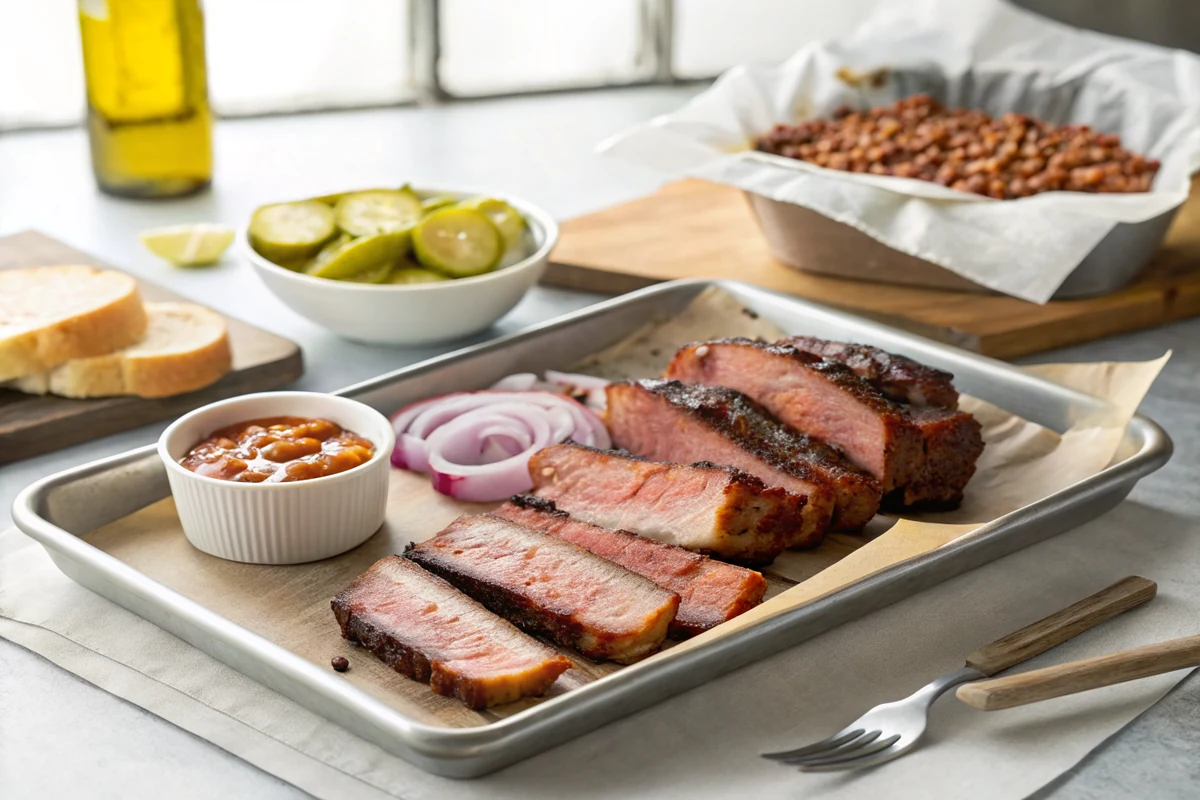
Portion math runs 2/3 pound raw per adult, which lands at 4 pounds for six with respectable leftovers, and the strips scale down as gracefully as they scale up; two pounds smokes identically for a family Tuesday, same times, same temps, one smaller foil packet. Drinks lean cold and simple: sweet tea holding the family flank, a cold lager, or a lime-forward glass from the Texas cocktails guide for the porch crowd, where the ranch water faction and the margarita faction can settle it among themselves. Dessert, if anyone still qualifies, should be sheet-cake modest.
And a scheduling endorsement, cook to cook: this is the best beginner beef cook on the site. Five hours instead of twelve, twenty dollars of meat instead of eighty, every technique of the big leagues, bark, stall, wrap, probe, rest, at approachable scale and stakes. A cook who runs these strips twice is ready for plate ribs, and a cook who runs them ten times will keep making them anyway, because the ceiling turned out to be higher than the label ever admitted. The pit does not check the price tag. It just rewards the collagen.
The Five Mistakes That Ruin Country Style Beef Ribs
Mistake one is trusting the name and grilling them like ribs or steaks: 20 minutes over direct fire leaves the collagen untouched and the strips somewhere between chewy and structural. These are braise-or-smoke muscles, full stop. Mistake two is buying blind and taking home strips cut from the round: lean, pale, unmarbled meat that no method rescues. Read the package for chuck, read the meat for marbling. Mistake three is wrapping early, before the bark sets, usually out of schedule anxiety; soft bark dissolves in the foil braise and the strips come out gray-jacketed. The knuckle test decides, not the clock.
Mistake four is chasing a number instead of a feel at the finish. Strips pulled at a dutiful 195F because a chart said so can still carry unmelted collagen and eat rubbery; strips ridden to probe-tender, wherever between 198 and 207F that lands on the day, eat like the short ribs they secretly are. The probe is the verdict and the thermometer is the witness. Mistake five is the impatient rest, opening the foil at 5 minutes and watching the juices abandon ship. Thirty minutes sealed. Set a timer, make the slaw, and let the gelatin do its quiet work.
The bonus mistake is one of ambition: skipping the spritz and the spacing because the strips are small and surely low-maintenance. Small is exactly why they need the humidity and the airflow; the surface-to-volume ratio that makes all that glorious bark also makes drying out the default outcome of neglect. An inch between strips, a mist from 90 minutes on, thin blue smoke throughout. Give the little cuts the big-cut respect, and they will keep pretending to be ribs so convincingly that nobody at the table files a complaint about the fiction.
Smoked Beef Country Style Ribs Recipe
Ingredients
- For the ribs:
- 4 pounds (1.8 kg) boneless beef country style ribs, strips 1.5 to 2 inches (4 to 5 cm) thick
- 1 tablespoon (15 ml) yellow mustard or neutral oil, as a binder
- For the rub:
- 2 tablespoons (14 g) 16-mesh coarse black pepper
- 1.5 tablespoons (14 g) kosher salt
- 2 teaspoons (6 g) granulated garlic
- For the wrap:
- 1/2 cup (120 ml) beef broth
- For serving, optional:
- Warmed barbecue sauce
- Pickles, sliced white onion, and white bread
- Equipment:
- Smoker (offset, pellet, or charcoal with a two-zone setup), post oak splits or chunks, heavy-duty foil, a food-safe spray bottle with water or cider vinegar, and an instant-read thermometer
Instructions
- Trim the strips. Pat the strips dry and look them over. Trim any pearly silverskin bands and any hard surface fat thicker than a quarter inch; neither renders in a 5-hour cook. Leave the marbling and thin fat seams alone. Square off ragged thin tails so each strip is roughly even in thickness.
- Season all four faces. Rub a thin film of mustard or oil over the strips as a binder, then season every face and the ends with the salt, coarse pepper, and granulated garlic mixed in a bowl. These strips are all exterior, which is their gift: more bark per pound than any big cut. Let them sit at room temperature while the pit comes up, about 30 to 45 minutes.
- Run the smoker to 250F. Settle the smoker at 250F (121C) at grate level with clean, thin blue smoke, burning post oak splits or a charcoal bed with two or three post oak chunks. A water pan near the fire evens out swings and keeps the cooking air moist.
- Smoke naked about 3 hours. Lay the strips on the grate with an inch of air between them, thicker strips toward the fire. Close the lid and leave them alone for the first 90 minutes, then spritz with water or diluted cider vinegar every 45 minutes if the edges look dry. You are building bark, and bark needs undisturbed time.
- Check the bark at hour 3. The strips are ready to wrap when the surface is deep mahogany to near-black and the bark does not smear when you press it with a knuckle, usually right around 3 hours with internal temperatures in the 160s. If the bark still smudges, give it another 30 minutes; the wrap can wait, the bark cannot be rebuilt.
- Wrap with broth. Lay the strips snugly in a double layer of heavy foil, pour the beef broth around them, and seal the packet tight. Back on the pit at 250F. The wrap traps steam and braises the strips in their own rendering fat and the broth, pushing the collagen through its surrender phase without drying the meat.
- Cook to probe tender, about 200 to 205F. Start checking after 1.5 hours in the wrap. A thermometer probe or skewer should slide into the thickest strip with almost no resistance, like warm butter; that feel matters more than the number, which usually reads 200 to 205F (93 to 96C). Any squeak or push-back means 30 more minutes.
- Rest 30 minutes, slice, and sauce lightly. Rest the sealed packet 30 minutes in a dry cooler or on the counter. Slice the strips thick against the grain, 3/4 inch or so, and spoon the foil juices back over every cut face. Serve with warmed sauce on the side, pickles, onion, and white bread, and stand back.
Frequently Asked Questions
What are beef country style ribs?
Thick boneless strips cut from the chuck, the shoulder section of the steer, sold under a name borrowed from the pork world; there is no actual rib in the package. Most come from the chuck eye roll or nearby shoulder muscles, which makes them close relatives of boneless short ribs: heavily marbled, collagen-rich meat that needs long, slow cooking and rewards it enormously. Some stores label the identical strips boneless beef ribs or country style boneless short ribs. The one version to avoid is strips cut from the round, which are lean rear-leg meat and turn dry and tough under any rib treatment.
How long does it take to smoke beef country style ribs?
About 5 hours total at 250F (121C): roughly 3 hours naked over post oak until the bark sets dark and no longer smears under a thumb, then 1.5 to 2 hours wrapped in foil with 1/2 cup of beef broth until probe tender, plus a 30-minute rest in the sealed packet. Internal temperature at the finish usually reads 200 to 205F, but the probe feel is the real test: it should slide into the thickest strip like warm butter. Thinner strips can shave 45 minutes off the ride and a cold, windy day can add it, so cook to feel, not to the clock.
Are beef country style ribs the same as boneless short ribs?
Nearly, and the labels overlap constantly: both come from the same chuck section, and packages marked country style boneless short ribs sit in both camps at once. The practical differences are shape and consistency. Short rib blocks run squat and thick; country style strips run longer and sometimes slightly leaner, depending on which muscle the butcher was working. On the smoker they behave almost identically, and this recipe treats them interchangeably. They are not the same as beef finger ribs, the thinner strips from between the rib bones, or flanken, the cross-sawed quick-grilling cut with bone coins.
What temperature are country style beef ribs done?
When a probe slides into the thickest strip with almost no resistance, which usually lands at 200 to 205F (93 to 96C) internal. The feel outranks the number: chuck strips can probe perfectly tender at 198F or need 207F depending on the day's meat, because doneness here means the collagen has finished melting into gelatin, not that a temperature was reached. Beef is technically safe far earlier, at 145F, but at that point these strips eat like rubber; the tenderness only arrives at the top of the climb. Any squeak or push-back on the probe means reseal the foil and give it 30 more minutes.
Should I wrap beef country style ribs in foil?
Yes, and the timing is the whole skill. Run them naked at 250F for about 3 hours first, until the bark is set dark mahogany and does not smudge when pressed; then wrap tightly in a double layer of foil with 1/2 cup of beef broth for the final 1.5 to 2 hours. Strips this size lack the mass to survive a full naked cook the way a big plate rib can, and the foil braise is what carries them to short-rib tenderness without drying. Wrapping too early is the common failure: soft, unset bark dissolves in the steam, and no finishing step brings it back.
Can I make country style beef ribs without a smoker?
Yes, two honest routes. The braise: sear the seasoned strips hard in a Dutch oven, add 1 cup of beef broth and a teaspoon of smoked paprika, and cook covered at 300F for 2.5 to 3 hours to probe tender; you lose the bark and smoke ring, keep all the chuck richness. The hybrid, if you have any smoker time at all: 2 hours of real smoke at 250F for the ring and a young bark, then finish the foil packet in a 300F oven about 90 minutes. Smoke must come first either way, because smoke only adheres properly to a raw, cool surface.
What do you serve with smoked beef country style ribs?
Run the classic Texas tray: thick slices on butcher paper with dill pickles, raw white onion, and white bread for the juices, plus warmed vinegar-forward barbecue sauce strictly on the side. The richness wants acid and plainness against it, so vinegary slaw, simple pinto beans, and mustardy potato salad are the front-line sides. For a party, cube the rested strips, toss them in sauce thinned with the foil juices, and crisp them 20 minutes on the pit as boneless burnt ends with toothpicks. Leftovers keep 4 days with the jus poured over and reheat best covered in a 275F oven with a splash of broth.