Tex-Mex Recipes
Restaurant-Style Salsa
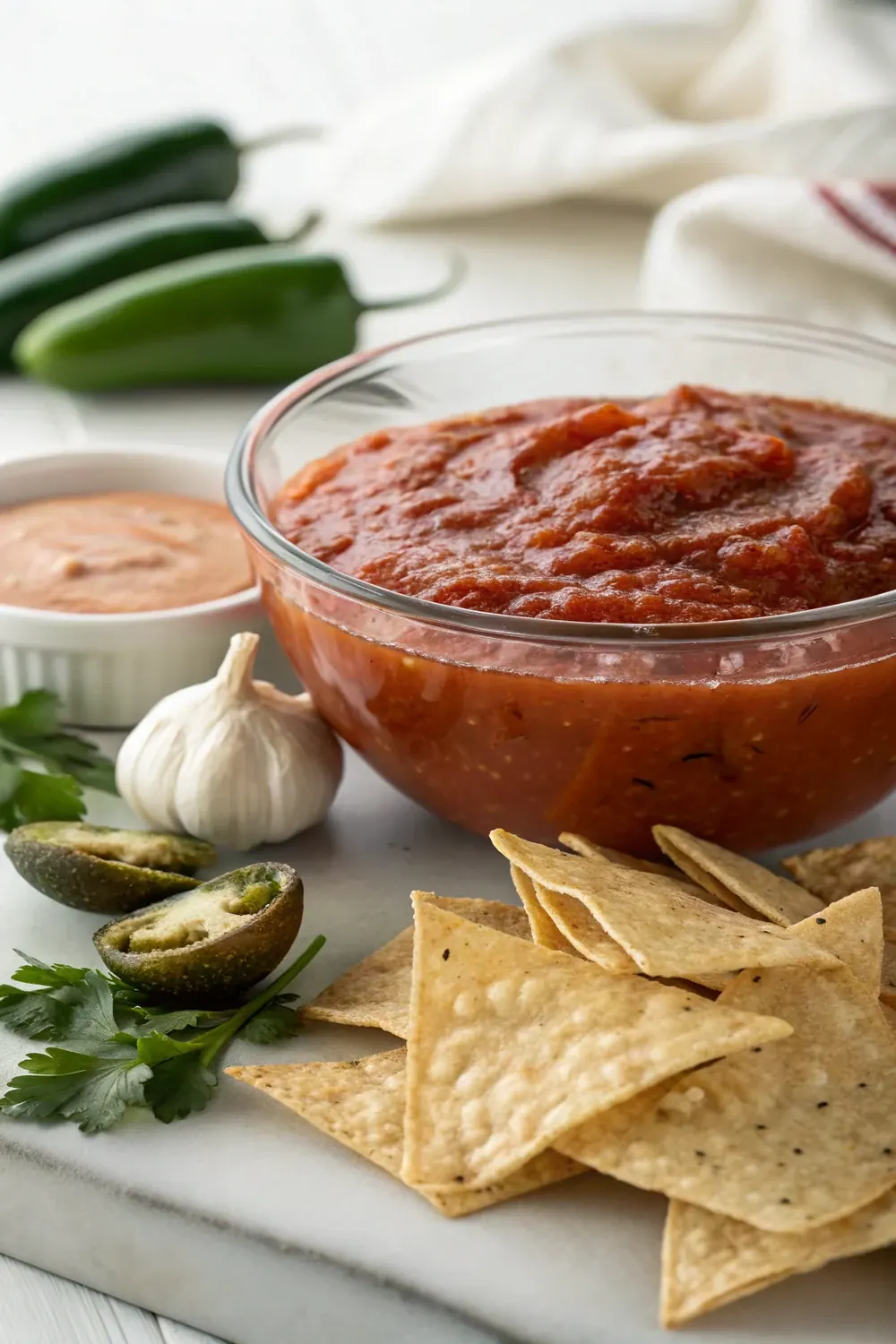
Chef Mia's restaurant-style salsa: fire-roasted tomatoes, charred jalapeno and garlic, 30 seconds of pulsing, one hour of rest. Smoky and chip-ready.
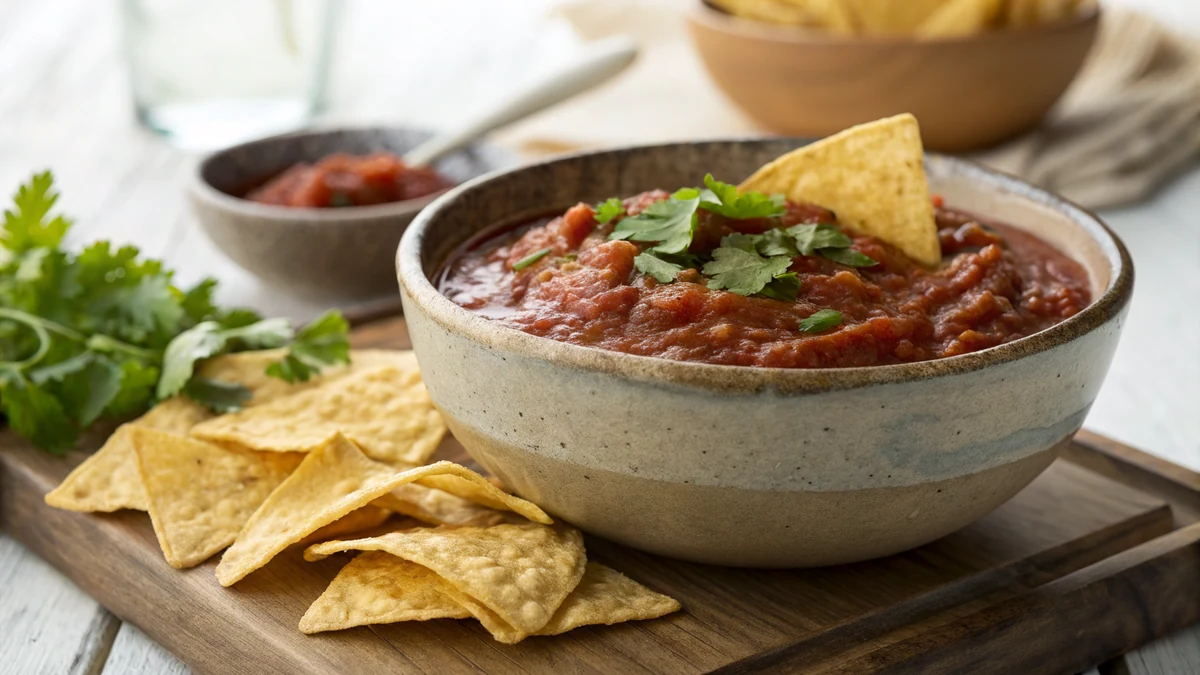
Quick answer: Restaurant-style salsa is the smooth, pourable, smoky red salsa that lands on every Tex-Mex table with a basket of chips, and it is a blender dish, not a knife dish. The version that tastes like the restaurant uses canned fire-roasted tomatoes as the base, chars the fresh aromatics, jalapeno, garlic, and a chunk of onion, in a dry skillet until blistered, then pulses everything in the blender for about 30 seconds total, stopping while flecks are still visible. Two things make or break it: pulsing instead of pureeing, since a running blender whips in air and turns salsa pink and foamy, and a one-hour rest in the fridge, which melds the sharp edges into one deep flavor. Ten minutes of work, 4 cups, costs about two dollars.
The salsa that arrives free at a Tex-Mex restaurant before you have ordered anything is a genre of its own. It is not pico, it is not ranchera, it is not anything with a proud regional name. It is thin enough to ride a chip without breaking it, smoky in a way no raw tomato explains, cold, a little tangy, and absolutely bottomless. I have watched tables of grown adults go through three baskets of chips and a pint of it before the fajitas landed.
The first time I tried to reproduce it at home I did what seemed logical and blended beautiful fresh tomatoes, and produced something pink, frothy, and weirdly sweet, like a tomato smoothie with onions in it. It took an embarrassing conversation with a line cook in San Antonio to learn the two secrets, and they are the opposite of fancy: the base is canned tomatoes, and the blender runs for seconds, not minutes.
Canned is not the compromise here, it is the point. Restaurant salsa is built on tomatoes that were cooked in the can, which is why it has that deep, slightly concentrated tomato flavor that fresh Romas cannot deliver in January or July. Start with fire-roasted canned tomatoes, char the fresh aromatics hard in a dry skillet, pulse it all briefly, rest it an hour, and you will put a bowl on the table that tastes more like the restaurant than the restaurant, for about the price of the tip.
Why Canned Fire-Roasted Tomatoes Beat Fresh Here
This is the counterintuitive heart of the recipe, so it deserves the full argument: for this specific salsa, canned tomatoes are not the budget substitute for fresh, they are the correct ingredient, and the restaurants you are trying to copy agree.
Restaurant table salsa has a deep, dense, slightly cooked tomato flavor. Fresh tomatoes, blended raw, taste bright, thin, and watery by comparison, and out of season they taste like nothing at all. Canned tomatoes were ripened fully, then heat-processed in the can, which concentrates sugars and drives the flavor toward exactly the cooked-tomato register this salsa lives in. You cannot get there from a raw Roma without simmering the salsa yourself, which is a different dish and an extra half hour.
Fire-roasted cans, where the tomatoes are charred over open flame before canning, layer smoke on top of that depth, and smoke is the signature note of good table salsa. Between a fire-roasted can and the dry-skillet char on the aromatics, you get two strata of roast flavor in a salsa that never sees your stove for more than ten minutes.
Consistency is the quiet third argument. A January batch and a July batch of this salsa taste identical, because canned tomatoes do not have a bad season. That is precisely why restaurants use them; the second basket of chips has to taste like the first, in February.
Brand notes, briefly: Muir Glen fire-roasted are the benchmark, store-brand fire-roasted are nearly always fine, and if all you can find is plain diced, add a quarter teaspoon of smoked paprika and let the skillet char carry the smoke alone. Whole peeled San Marzanos are lovely tomatoes and wrong here; they are bred sweet for sauce, and this salsa wants tang.
The Dry-Skillet Char on the Aromatics
The canned tomatoes bring cooked depth, but the fresh aromatics bring the live wire, and charring them raw in a dry skillet is what keeps this from tasting like doctored canned sauce.
The method is as primitive as cooking gets: a screaming-hot dry cast iron surface, whole jalapenos, unpeeled garlic cloves, a thick slab of onion, and patience while they blister and blacken in patches. No oil, because oil fries the surface instead of charring it and smokes out your kitchen at this temperature. This is the same tarnished-vegetable technique behind every serious taqueria salsa, and it is the direct sibling of the tomatillo char in my salsa verde, where the broiler does the same job from above.
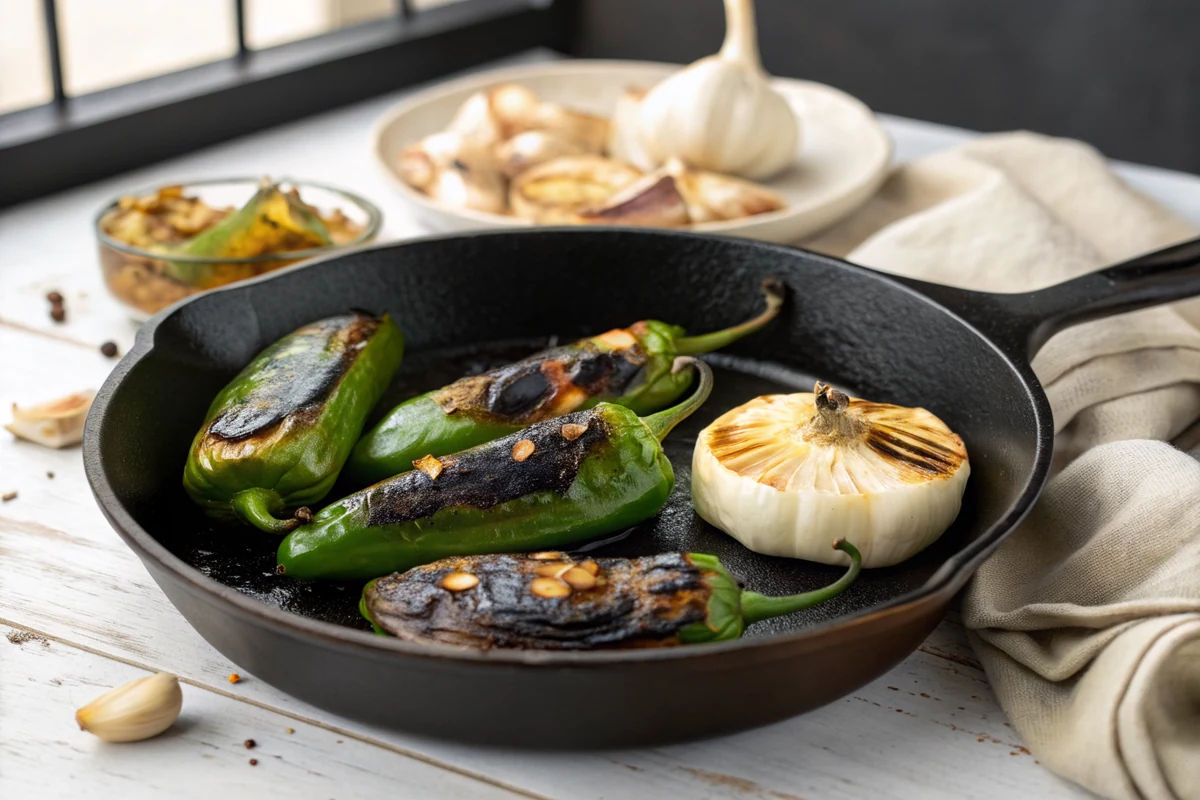
What the char does chemically is worth knowing because it tells you when to stop: the surface sugars caramelize and partially carbonize, the pepper and onion flesh just under the skin steams soft and sweet, and the garlic roasts inside its jacket into something nutty and mild, nothing like its raw self. You are done when everything is blistered and spotted black but not ashed gray. Char is a seasoning; carbon is a bitterness.
The garlic skins matter: unpeeled cloves roast gently inside their paper instead of scorching bitter on the bare metal. They slip out of the skins with a pinch once cooled. And leave every fleck of black on the jalapeno and onion; rinsing the char off, which some tidy cooks are tempted to do, is rinsing away the point.
Thirty Seconds in the Blender, Not Three Minutes
The blender is where most homemade salsa dies, and it dies of enthusiasm. The difference between salsa and tomato foam is about ninety seconds of extra blade time.
A blender running continuously does two destructive things. It whips air into the liquid, aerating the salsa into a lighter-colored, foamy texture that reads instantly as homemade-in-the-bad-way; the pink color of over-blended salsa is literally trapped air bubbles scattering light. And it ruptures the tomato flesh so completely that the salsa becomes a single smooth slurry with no evidence of its ingredients, closer to a canned pasta base than a table salsa.
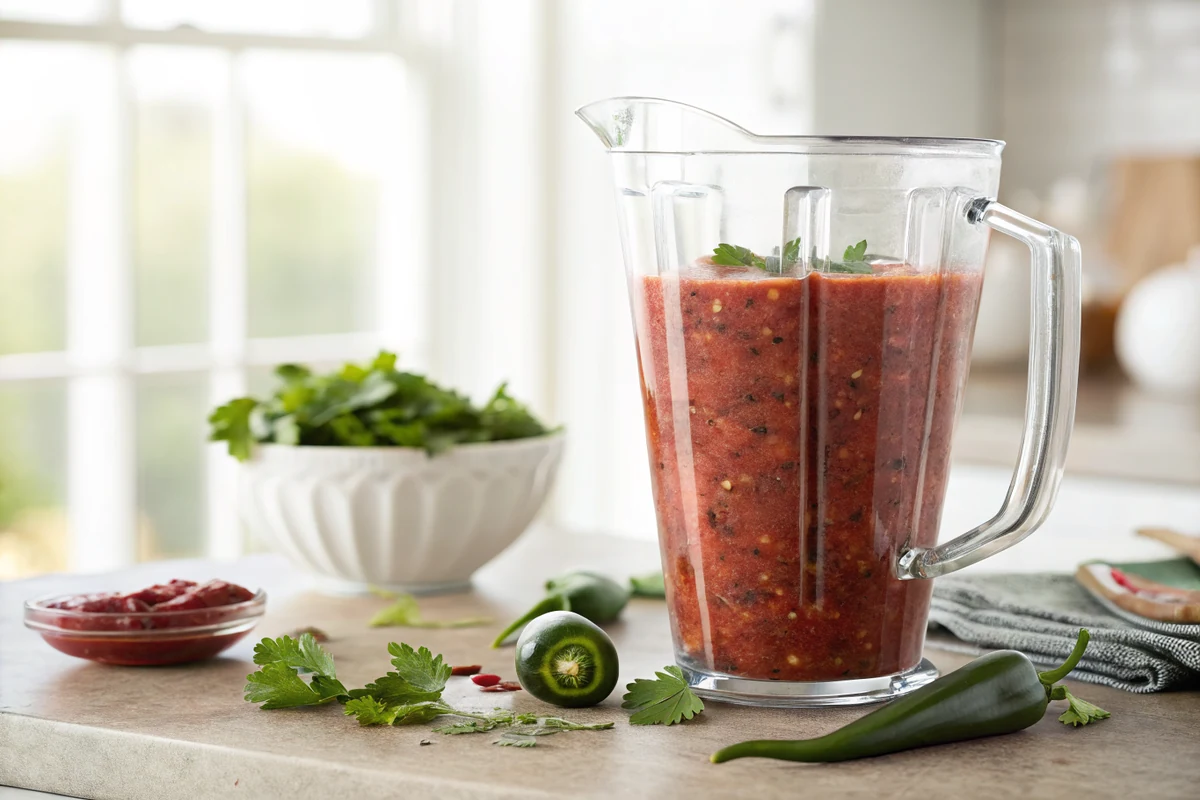
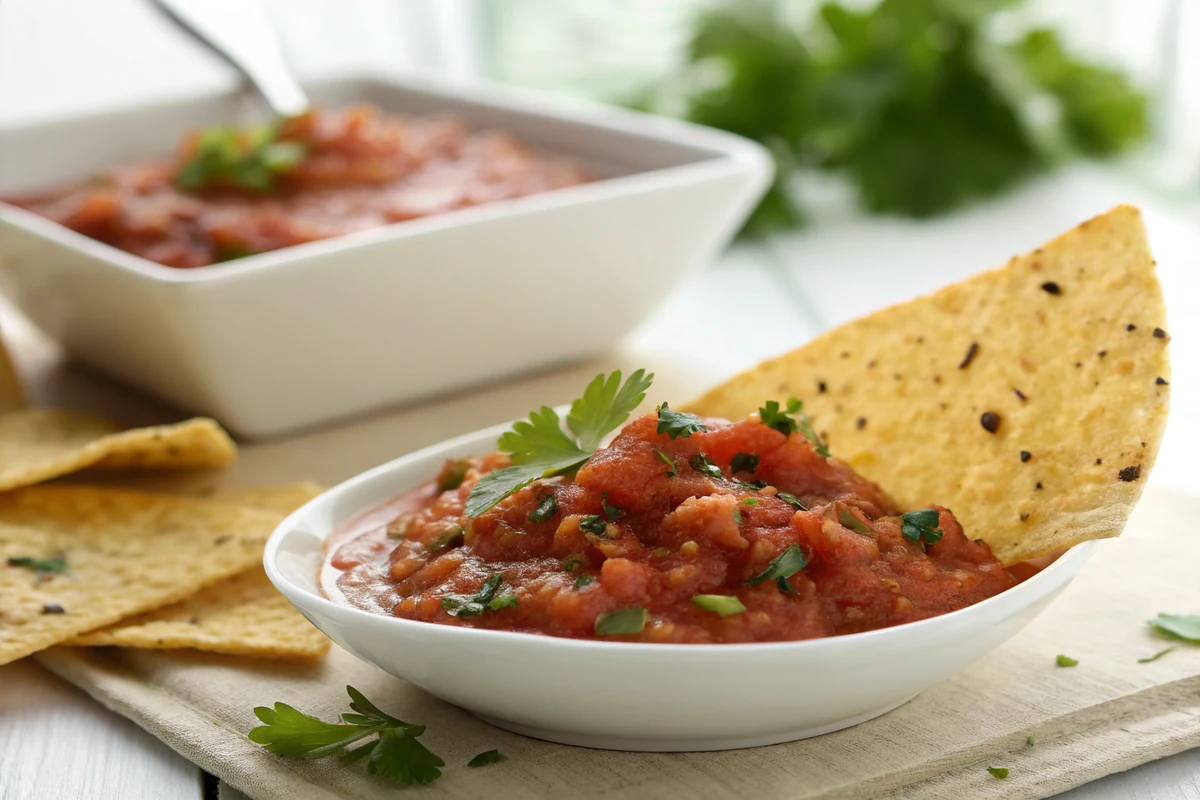
Pulsing solves both problems mechanically. Two-second bursts chop rather than whip; the contents settle between pulses instead of holding a vortex that drags air down into the blades. Ten to fifteen pulses lands the texture this salsa wants: pourable, cohesive, but visibly flecked with char, cilantro, and tomato, the texture restaurants achieve on purpose with immersion blenders used sparingly.
The color check is the most reliable doneness test. Correct salsa is deep brick red, the color of the canned tomatoes plus char. The moment it lightens a shade toward orange-pink, air is in and you have gone too far. It is still edible over-blended, and an hour in the fridge deflates some of the foam, but the silky-slick texture never fully recovers, so err early. A food processor, for what it is worth, is more forgiving than a blender here because it chops without pulling a vortex; if your only blender is a high-powered one with no gentle setting, the processor is the better tool.
The One-Hour Rest Is Not Optional
Every element of this salsa can be rushed except this one, and it is conveniently the one that requires zero effort.
Straight from the blender, the salsa tastes like a list of its ingredients read aloud: sharp tomato, hot pepper, raw-edged lime, cumin standing awkwardly to one side. An hour cold in the fridge and the same jar tastes like one thing, a single unified salsa flavor with smoke in the middle and lime at the end. Two hours is better. Overnight is best of all, which is why the day-before batch always outperforms the day-of batch at my table.
Part of this is simple temperature: table salsa is meant to be served cold against warm salty chips, and fridge-cold mutes acid and sharpens the perception of salt, which is why the recipe has you salt to taste against a chip and then re-check after the rest. Part of it is genuine chemistry, acid slowly penetrating the pepper and onion pieces, capsaicin dispersing evenly through the liquid instead of clustering, the cumin blooming out of its raw dustiness.
Practical consequence: if you are making salsa for tonight, make it the moment you walk into the kitchen, before anything else, and let it ride in the fridge while you cook. If you are making it for a party, make it yesterday. It holds a full week refrigerated in a sealed jar, and days two through four are its peak.
Heat Control: The Two-Jalapeno System
The recipe calls for two jalapenos, one seeded and one whole, and that split is a deliberate dial you should adjust to your table rather than a fixed formula.
The math of jalapeno heat: nearly all the capsaicin lives in the white ribs, with the seeds guilty mostly by contact. A seeded, de-ribbed jalapeno contributes pure green pepper flavor with barely a whisper of warmth. A whole one brings its full charge. One of each, in two cans of tomato, lands the salsa at the gentle-medium heat of a mainstream Tex-Mex table bowl: present, felt on the third chip, threatening nobody.
To move the dial down, seed both peppers; you keep all the charred pepper flavor and lose nearly all the burn. To move it up, leave both whole, or swap one jalapeno for a serrano, which runs two to five times hotter and brighter. Past that, you are into adding a second serrano, and you should tell your guests.
The chipotle-in-adobo option deserves its own note because it changes the salsa's character, not just its temperature. One chipotle pulsed in adds real heat plus a deep, raisiny smoke that pushes the salsa toward the dark end of the table-salsa spectrum, closer to what some San Antonio joints serve as their spicy bowl alongside the mild. If your household splits on heat, make the base batch mild, pour off half, and blend the chipotle into the rest: two salsas, one blender.
Whatever you do, adjust heat before the rest, not after, because the rest spreads and slightly softens the burn. A salsa that seems aggressive at the blender settles into itself by hour two.
When You Want a Different Bowl Entirely
This is the salsa for chips, and it is worth being clear about when the table actually wants one of its three siblings instead.
If the job is topping rather than dipping, tacos that need freshness, grilled meat that needs a cold crunchy counterpoint, you want pico de gallo, the hand-chopped raw one where every quarter-inch cube stays separate and there is almost no liquid to soak a tortilla. Pico on a chip is lovely but falls off; this salsa on a taco makes it soggy. They are opposite tools. If you want the tangy green version, brighter and sharper than any red can be, that is my tomatillo salsa verde, built on broiler-charred tomatillos whose green-apple acidity cuts rich food in a way tomatoes cannot. And if the bowl should be rich instead of sharp, it is guacamole, fork-mashed avocado over a pounded serrano-lime base, the one bowl of the four that adds fat instead of cutting it.
The full condiment bar, if you are going for it: this salsa and the verde as the two dips, red and green, mild and tangy; pico as the topping; guacamole as the luxury. Between the four, every chip, taco, and plate of fajitas on the table is covered.
Serving It Like the Restaurants Do
A few service details separate a bowl of good salsa from the full restaurant experience, and they cost nothing.
Cold salsa, warm chips, shallow bowl. The temperature contrast is doing real work; salsa at room temperature tastes flatter and saltier than the same salsa cold. The shallow bowl matters because table salsa is a communal high-traffic dish, and a deep narrow bowl means broken chips and knuckles by the second round. Restaurants use wide shallow bowls for a reason.
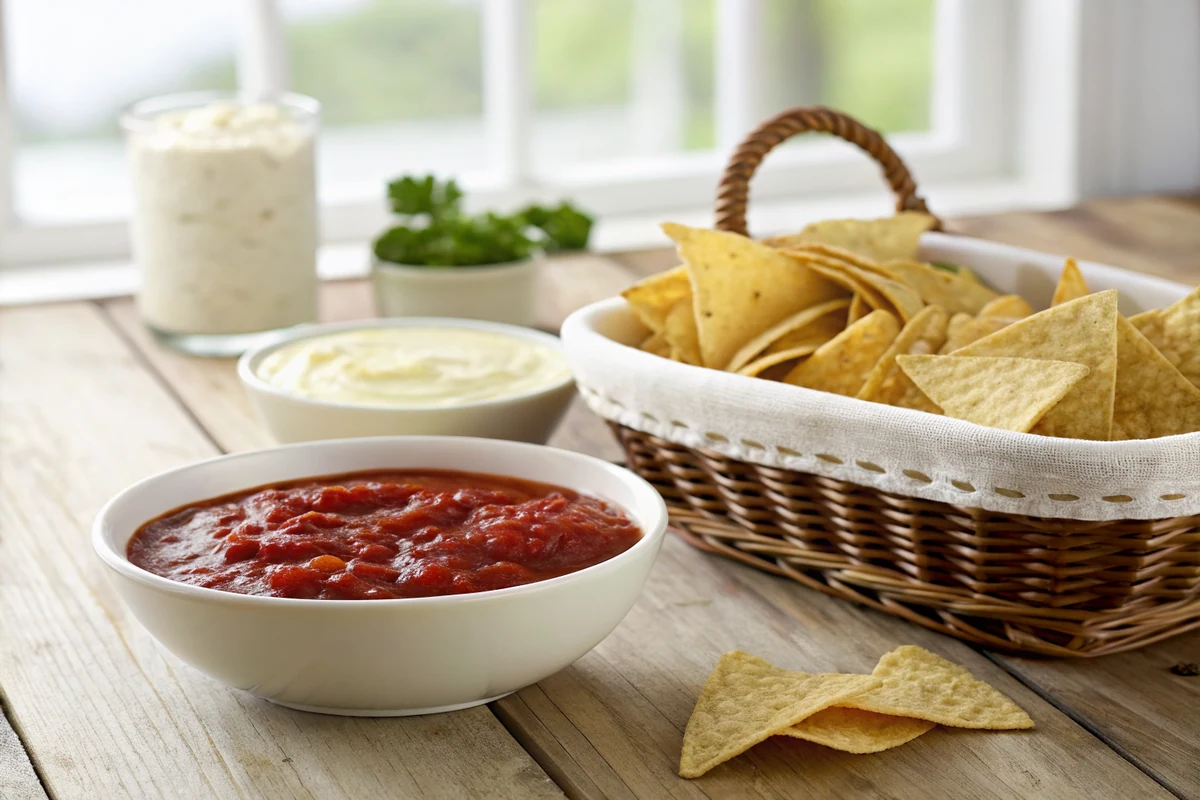
The canonical Tex-Mex opener is this salsa next to a warm queso, and the pairing is genuinely better than either alone, the sharp cold red against the rich hot cheese. My white queso is the classic partner; my smoked chorizo queso is the showoff version for cookouts where the smoker is already running. Chips, salsa, queso, and a round of margaritas is a complete first act, and everyone knows it.
Beyond the chip bowl, this salsa is the house red sauce for breakfast: spooned warm or cold over breakfast tacos, laced through migas at the table, pooled beside eggs where its acidity does the work a hollandaise never could. It simmers into a fast huevos rancheros sauce, loosens into a marinade base, and folds into beans. The pint that survives chip night rarely survives the weekend.
Storage, Scaling, and the Day-Two Peak
This salsa is one of the rare fresh condiments where the leftovers outrank the original, so make more than you need on purpose.
Refrigerated in a sealed jar it holds a full week. Day one is good; days two through four are the peak, deeper and more unified as the rest continues; days five through seven are still better than any jar from the store. A little liquid separation on top is normal and stirs back in; it is evidence you pulsed instead of pureed. The salsa never sees raw egg, dairy, or oil, so it degrades gracefully rather than dangerously.
It also freezes, which surprises people. Because the texture is already blended, freezing costs it almost nothing; thaw a pint container overnight in the fridge, stir hard, and it returns to service at maybe 95 percent of fresh. I keep a quart in the freezer as taco-night insurance. This is the single biggest practical difference from pico and guacamole, neither of which survives the freezer even slightly.
Scaling up for a crowd is linear and easy, two cans becomes eight, one blender round becomes three, with a single caution: salt at three-quarters strength when scaling, then correct after the rest, because salt error multiplies with volume and is much easier to add than to fix. For a party of twenty, a triple batch made the day before, served in two shallow bowls swapped out rather than one large one, keeps the salsa cold and the chips whole all night.
Mistakes That Ruin Restaurant Salsa
Blending on high until smooth. The cardinal sin. Pink, foamy, slick salsa is over-blended salsa, and no rest fully rescues it. Pulse, peek, stop early.
Fresh out-of-season tomatoes. Raw January Romas blend into thin, pale, sour salsa. The restaurants use canned for depth and consistency; so should you.
Skipping the char. Boiled-tasting salsa is salsa whose aromatics went in raw. Eight minutes in a dry skillet is the entire smoke budget of this recipe; spend it.
Oiling the skillet. Oil at charring temperature fries and smokes instead of blistering. The vegetables go in dry, on dry metal, no exceptions.
Serving it at room temperature straight from the blender. Unrested, unrefrigerated salsa tastes like arguing ingredients. The hour in the fridge is where the dish actually forms.
Rinsing the char off the vegetables. Those black blisters are the flavor you cooked for. Peel the garlic, stem the peppers, and leave everything else alone.
Bottled lime juice and pre-ground stale cumin. Two small cheats that read loud in a dish this simple. Fresh limes, and toast whole cumin if you have it.
Restaurant-Style Salsa Recipe
Ingredients
- For the salsa:
- 2 cans (14.5 oz each) fire-roasted diced tomatoes, undrained (Muir Glen or store brand)
- 2 jalapenos, stemmed (1 seeded, 1 whole with seeds)
- 3 garlic cloves, unpeeled
- 1/2 medium white onion, in one thick slab
- 1/2 packed cup fresh cilantro, leaves and stems
- 2 tablespoons fresh lime juice
- 1 teaspoon kosher salt, plus more to taste
- 1/2 teaspoon ground cumin
- 1/4 teaspoon dried Mexican oregano
- Optional:
- 1 chipotle in adobo for a smokier, hotter bowl
- 1/2 teaspoon sugar, only if your tomatoes taste sharply acidic
Instructions
- Char the aromatics in a dry skillet. Set a dry cast iron skillet over high heat for 3 minutes. Lay in the jalapenos, unpeeled garlic cloves, and the onion slab. No oil. Turn with tongs every 2 minutes until everything is blistered and blackened in patches, about 8 minutes total; the garlic finishes first, around 5-6 minutes, so pull it early. This dry char is where the restaurant smokiness comes from.
- Peel the garlic, stem the jalapenos. Let the charred vegetables sit 2 minutes until you can handle them. Slip the garlic out of its papery skins, which will be spotted brown and smell like roasted nuts. Leave the char on the jalapeno and onion; those blackened patches are seasoning, not debris. Do not rinse anything.
- Load the blender in the right order. Pour in both cans of tomatoes with all their juice first, then the charred onion, garlic, and jalapenos, then cilantro, lime juice, salt, cumin, and oregano. Liquid on the bottom lets the blades catch immediately instead of cavitating under a dry pile of vegetables.
- Pulse, do not puree. Pulse in 2-second bursts, 10 to 15 of them, scraping down once. Stop while the salsa still shows flecks of char, cilantro, and tomato, roughly the texture of a coarse applesauce. A blender left running whips air into the salsa, lightening it to pink foam and breaking the tomato into a slick, homogenous baby food. Thirty seconds of total blade time is the ceiling.
- Taste against a chip. Dip an actual chip, since the chip brings salt of its own. The salsa should lead with tomato and smoke, then heat, then lime at the finish. Flat means more salt. Dull means more lime. Thin heat means drop in the second jalapeno stem-end or a chipotle and pulse twice more. Sharp and acidic means a half teaspoon of sugar, the only time sugar belongs anywhere near salsa.
- Rest it one hour, minimum. Pour into a container and refrigerate at least an hour, ideally two. Fresh from the blender the flavors sit side by side: tomato, then garlic, then cumin, each shouting separately. The rest is where they merge into one deep salsa flavor, and the texture tightens slightly as the pectin cools. Every restaurant makes it in the morning for the evening tables. This step has no shortcut.
- Loosen and serve cold. Stir before serving; a little separation is normal and means you did not over-blend. If it has set thicker than pourable, loosen with a tablespoon of cold water. Serve genuinely cold in a bowl shallower than it is wide, with sturdy salted chips. The cold-salsa-warm-chip contrast is half the restaurant experience.
- Scale it like the restaurants do. The recipe doubles and quadruples without adjustment except the salt, which you should add at three-quarters strength and correct after the rest. A double batch fits a standard 64 oz blender jar in one round. For a party, make it the day before; it is measurably better on day two.
Frequently Asked Questions
What is restaurant-style salsa?
Restaurant-style salsa is the smooth, pourable red table salsa served free with chips at Tex-Mex restaurants: blended rather than chopped, built on cooked (usually canned fire-roasted) tomatoes with charred jalapeno, garlic, onion, cilantro, lime, and cumin, and served cold. The texture is thin enough to scoop with a chip without breaking it, and the flavor leads with deep tomato and smoke rather than raw vegetable brightness.
Why do restaurants use canned tomatoes for salsa?
Because the target flavor is deep, concentrated, cooked tomato, and canning delivers exactly that: fully ripened tomatoes heat-processed in the can. Raw fresh tomatoes blend into something thin, watery, and pale by comparison, and their quality collapses out of season. Canned fire-roasted tomatoes add char on top of the depth and taste identical in January and July, which is why restaurant salsa never has an off month.
How do I keep blender salsa from turning pink and foamy?
Pulse instead of running the blender. Continuous blending pulls a vortex that whips air into the salsa, and the trapped bubbles lighten it from brick red toward pink while the texture goes foamy and slick. Use 2-second pulses, 10 to 15 of them, and stop while the salsa is still visibly flecked. A food processor is more forgiving because it chops without aerating. If you overshoot, an hour in the fridge deflates some foam, but the texture never fully returns.
How spicy is restaurant-style salsa supposed to be?
Mild to gentle-medium: present but not challenging, since it is built for the whole table. One seeded and one whole jalapeno in two cans of tomato lands there. Seed both peppers for mild, leave both whole for medium, or swap a jalapeno for a serrano for genuinely spicy. One chipotle in adobo adds smoke along with heat and pushes the salsa toward the darker style some restaurants serve as their hot bowl.
What is the difference between restaurant-style salsa and pico de gallo?
Opposite construction. Restaurant-style salsa is blended smooth and pourable, made from cooked tomatoes with charred aromatics, and served cold as a chip dip. Pico de gallo is raw and hand-chopped into distinct quarter-inch dice with almost no liquid, and it works as a topping for tacos, eggs, and grilled meat. Salsa erases the knife cuts; pico is the knife cuts. Most Tex-Mex tables benefit from having both.
How long does homemade restaurant-style salsa last?
A week refrigerated in a sealed jar, and it improves for the first several days: the one-hour minimum rest continues working, and days two through four are the flavor peak. Some liquid separation on top is normal; stir it back in. It also freezes well, unlike pico or guacamole, because the texture is already blended. Thaw overnight in the fridge and stir hard before serving.
Can I make restaurant-style salsa without a blender?
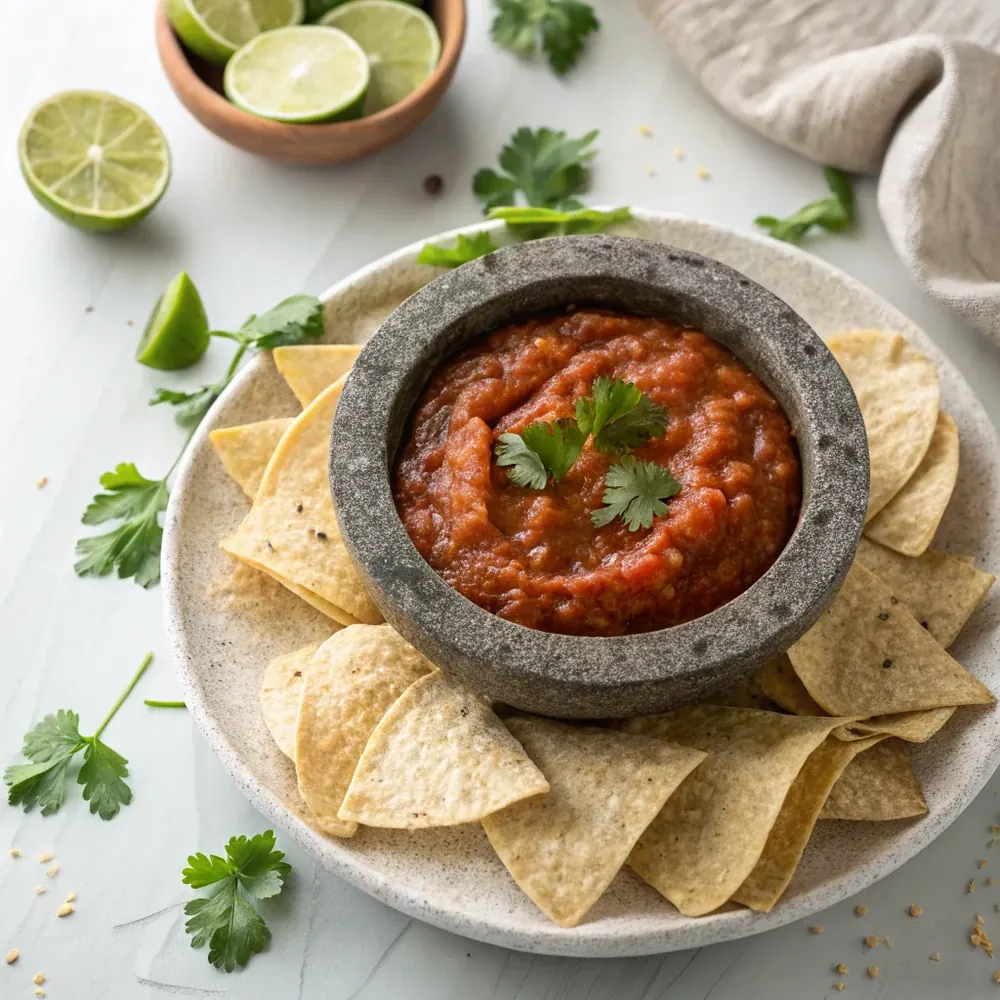
A food processor works at least as well as a blender, chopping without whipping in air; pulse it the same way. With neither machine, you can hand-chop everything fine and stir into crushed canned tomatoes for a chunkier salsa casera, which is delicious but a different texture. A molcajete grinds a superb rustic version if you have the patience. What you cannot do is reach the smooth pourable restaurant texture by knife alone.
Why does my homemade salsa taste flat compared to the restaurant?
Almost always one of three gaps: no char (the aromatics went in raw, so there is no smoke), no rest (it was served straight from the blender, before the flavors merged), or under-salting (restaurant salsa is salted more assertively than home cooks expect, calibrated against salted chips). Fix all three, and taste with a chip rather than a spoon when adjusting; the chip changes the math.