Tex-Mex Recipes
Guacamole
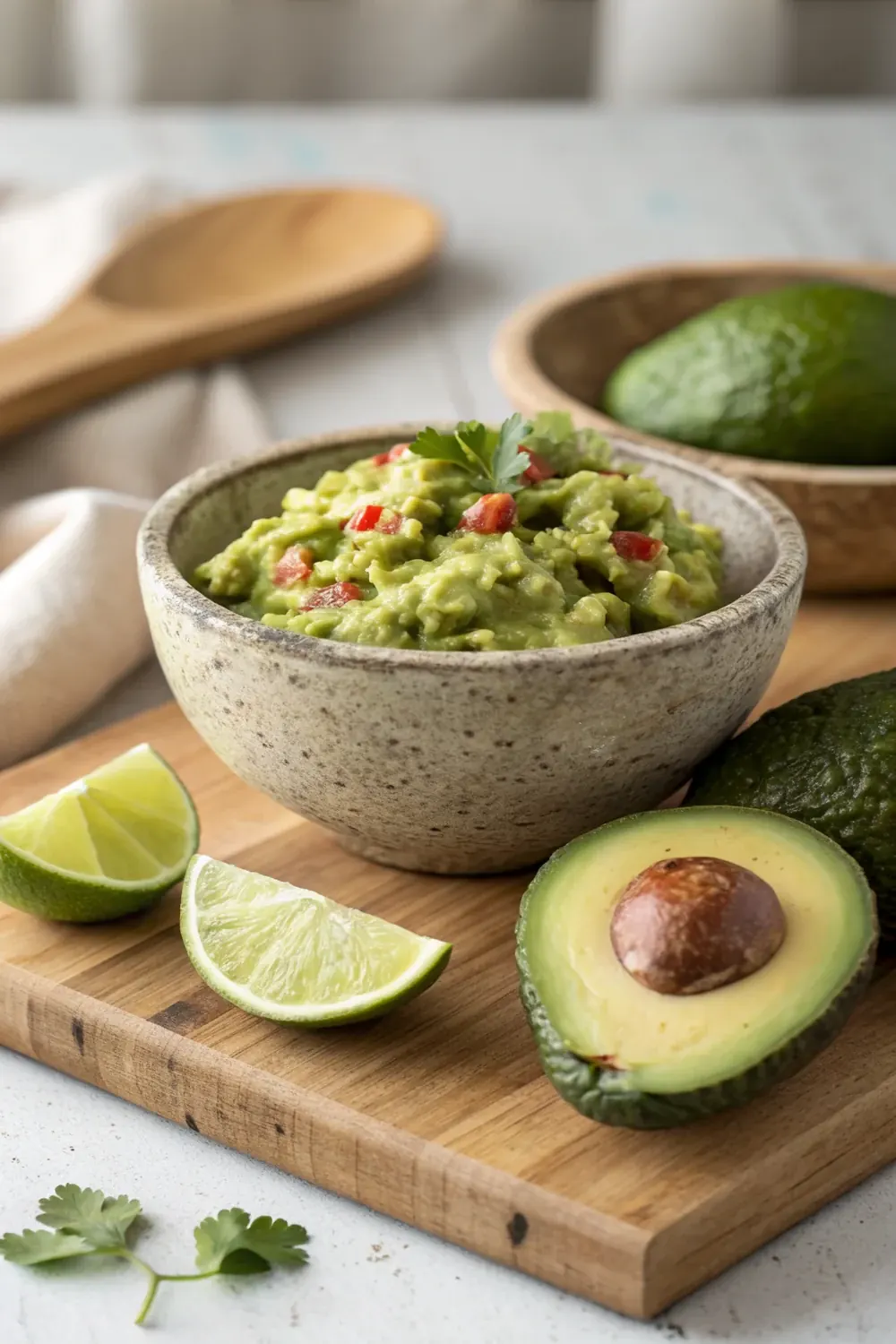
Chef Mia's guacamole: serrano, onion, cilantro and salt ground to a paste before the avocado goes in, then fork-mashed chunky. Plus the real browning fix.
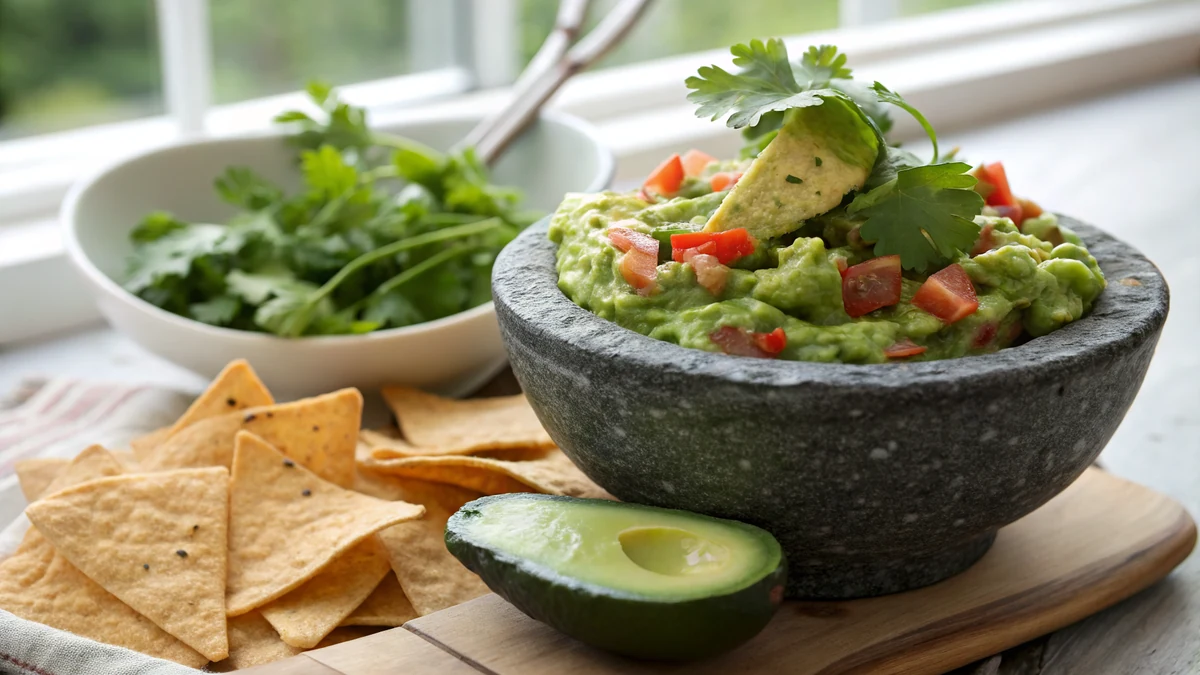
Quick answer: Guacamole is mashed ripe avocado seasoned in the Mexican tradition, and the difference between great and merely green is the order of operations: grind the serrano, onion, cilantro, and salt into a rough paste first, in a molcajete or with the flat of a fork against the bowl, then fold in the avocado and mash it coarse with a fork, never a blender or food processor. The paste distributes the aromatics evenly through the fat so no bite is bland, while the avocado itself stays in luxurious chunks. Use ripe Hass that yield to gentle pressure, one lime for every two avocados, and salt more than feels polite. Fifteen minutes, no cooking, serves six, and it does not survive to tomorrow, so make it the hour you eat it.
Guacamole is the most expensive thing on the Tex-Mex condiment table and the most frequently ruined, usually in one of two directions. Either it is under-seasoned, a bowl of plain mashed avocado with a rumor of lime that tastes like green butter and nothing else, or it is over-processed, whipped smooth in a food processor into something you could pipe through a pastry bag. Both fail the same test: guacamole should taste loudly of avocado and clearly of its seasonings, in the same chunky bite.
The fix I learned came from watching a cook in a Rio Grande Valley kitchen make it tableside in a molcajete, and the revelation was not the lava rock, it was the order. She did not touch an avocado until a spoonful of serrano, white onion, cilantro, and coarse salt had been ground into a rough green paste in the bottom of the bowl. Then the avocado went in and got folded and barely mashed, coating the chunks in that paste. Every bite was seasoned; no bite was mush.
You do not need the molcajete, though it remains the best guacamole tool ever made. The flat of a dinner fork and thirty seconds of deliberate smearing against the side of a bowl produces ninety percent of the same result. What you need is the sequence: paste first, avocado second, fork always, blender never. The rest of this page is the details that protect that bowl, from picking avocados that are actually ripe to the storage trick that genuinely slows the browning.
The Paste Base Is the Whole Secret
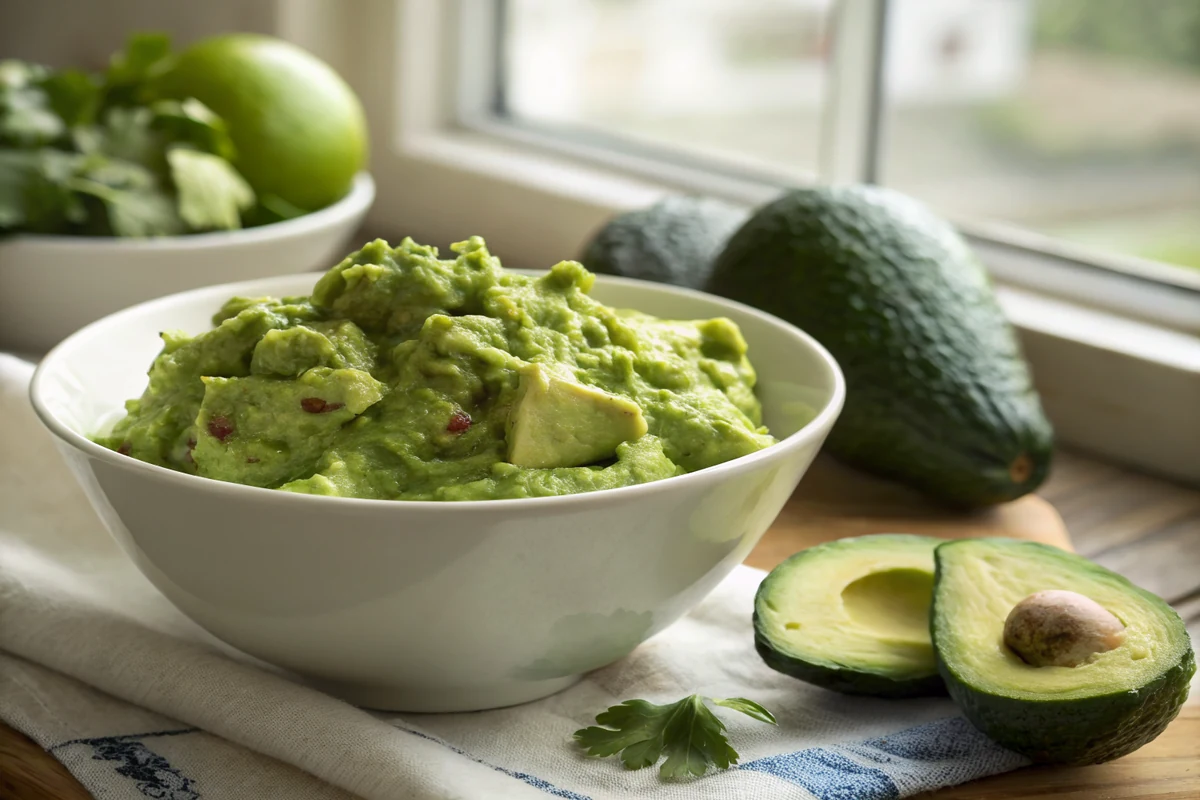
Every disappointing guacamole I have ever been handed shared one flaw: the seasoning sat in pockets. A bite of plain avocado, then a bite with a shard of raw onion, then one with a surprise wall of chile. That is what happens when you mash the avocado first and stir the aromatics in after, because chunky mashed avocado is a terrible mixing medium; the pieces just push whole bits of onion and pepper around the bowl.
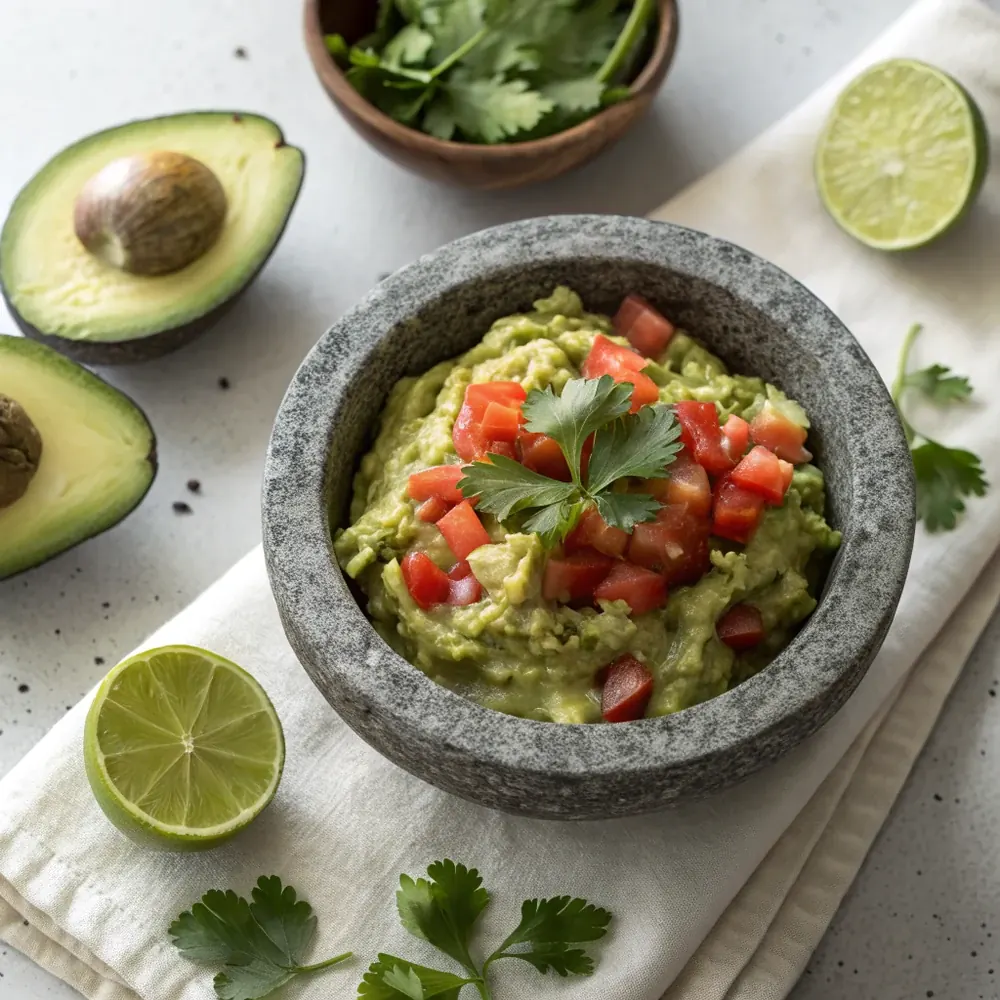
The traditional molcajete method solves it by inverting the order. Chile, onion, cilantro, and salt go into the empty bowl first and get ground into a paste, the salt working as an abrasive that breaks down cell walls and pulls the juices out of the onion and serrano into a kind of instant aromatic slurry. That paste then coats every piece of avocado that enters the bowl. The seasoning is everywhere at once, at the exact same intensity in the first bite and the last.
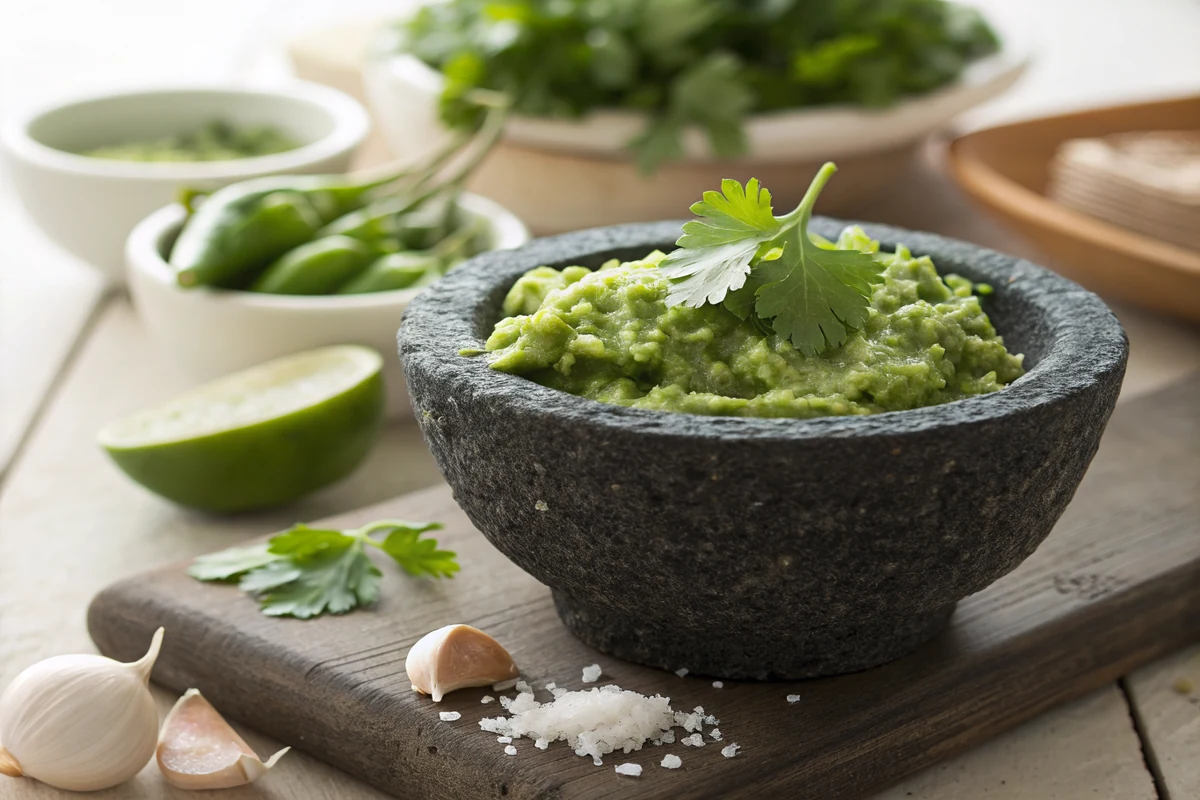
A molcajete, the Mexican volcanic-rock mortar, does this best and doubles as the serving bowl, staying cool and looking spectacular on a table. But the technique transfers to any bowl and a dinner fork: pile the minced aromatics with the salt in the bottom and smear them repeatedly against the side with the flat of the tines for thirty seconds to a minute. You will smell the moment it becomes a paste rather than a pile; the raw onion sharpness rounds into something juicier and greener.
This is also why the recipe minces the aromatics finer than seems necessary for a rustic dip. Fine mincing is what makes the paste possible with hand pressure. Quarter-inch onion dice will never become paste with a fork, which is how you end up back at seasoning-in-pockets.
Buying and Ripening: The Avocado Is the Recipe
Guacamole is one ingredient wearing seasoning, so the avocado decision is the quality ceiling. Nothing done in the bowl can beat a bad one or waste a great one.
Hass is the variety, full stop, for guacamole in Texas. The pebbled black-skinned ones have the highest oil content of any commercial avocado, which is what gives guacamole its buttery density; the big smooth-skinned green varieties are watery and lean by comparison and make thin, slick guac. Size does not signal quality; medium eight-ounce fruit is the sweet spot for even ripening.
Ripeness is palm pressure plus the stem test. Cradle the fruit in your whole palm and squeeze gently; ripe yields evenly like cool butter, with no localized soft craters, which signal bruising or rot rather than ripeness. Then flick off the dry stem button at the top: bright green or yellow underneath means ripe now, brown means past peak, and a stem that will not budge means the fruit is days out. Do both tests; either alone lies occasionally.
Grocery reality: truly ripe avocados are rare on shelves because they bruise in transit, so shop two to four days ahead and ripen hard fruit at home on the counter, in a paper bag with a banana or apple if you need to compress the timeline; the trapped ethylene genuinely accelerates it by a day or more. Once ripe, the refrigerator becomes your friend, holding a ripe avocado in suspension for three or four extra days. Buy hard, ripen on the counter, hold in the fridge: that pipeline means never facing a party with rocks.
Quantity math: one eight-ounce Hass yields roughly three-quarters of a cup of guacamole. Four avocados serves six people as a starter alongside other dips, or four people who like guacamole the way most people who make it from scratch like guacamole.
Fork-Mashed, Never Blended: The Two-Texture Rule
Great guacamole has two textures living together, a creamy seasoned base and soft intact chunks of avocado, and every tool decision in this recipe exists to protect that pair.
The fork is the correct tool, and it is used less than instinct suggests: eight to ten pressing strokes after the fold, mashing pieces against the wall of the bowl, then stop. The scored cubes from the scoop-out step mean you start at the right size, so the fork's job is merely to cream the outer surfaces of the cubes into the paste while their centers stay whole. If it looks slightly under-mixed in the bowl, it is exactly right on the chip, and every scoop continues to mash it slightly, so it arrives at the table trending creamier.
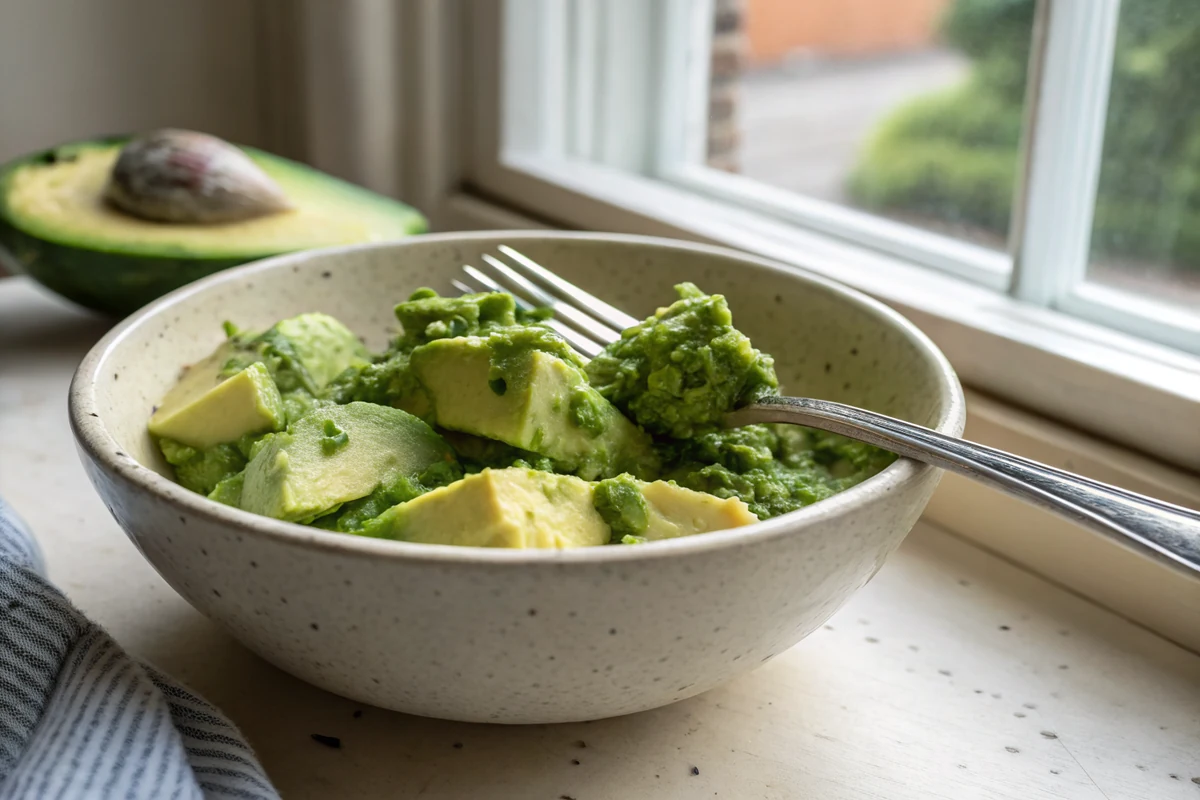
The blender and food processor are banned for a mechanical reason, not snobbery. Blades rupture the avocado cells completely and whip in air, producing a light, whipped, homogenous mousse, the texture of the pale green stuff at gas station taquerias, which has its uses but is not guacamole. Once whipped, no amount of folding brings the chunks back. The distance between guacamole and avocado crema is about twenty seconds of blade time.
One texture variant is legitimate and worth knowing: for a silkier, richer bowl, mash one avocado of the four almost completely smooth in the paste before folding the remaining three in as barely-mashed cubes. The deliberately smooth fraction binds the chunks in a creamier matrix, closer to some restaurant styles, without any machine involved.
Lime Math and the Truth About Browning
Lime plays two roles in guacamole and gets blamed for a third it cannot perform, so it is worth separating the jobs.
Flavor first: one lime for every two avocados, about a tablespoon of juice each, added before mashing so it coats the maximum surface. That level brightens the fat without picking a fight with it. Doubling the lime to fight browning, an internet-favorite move, just makes sour guacamole; acidity slows the enzymatic browning slightly at the surface it touches, but the effect is minor compared to what people expect of it.
Browning is oxygen chemistry: cut avocado cells release polyphenol oxidase, which builds brown pigment wherever flesh meets air. It is cosmetic, not spoilage; hour-old brown-tinged guacamole is safe and tastes nearly identical, it just looks tired. But the fix is physical, not chemical. Exclude the air and the reaction cannot run.
In practice that means one technique worth doing: press plastic wrap or parchment directly onto the surface of the guacamole, smoothing out every air bubble to the edges of the bowl, then refrigerate. Done well, the surface stays green for a day, occasionally two. The alternate version, floating a quarter inch of lime water or plain water on the surface and pouring it off before serving, works on the same air-exclusion logic and suits containers with straight sides; it costs a slightly diluted top layer.
The pit-in-the-bowl trick, for the record, protects exactly the circle of surface the pit physically covers and nothing else. It is a coaster, not a preservative.
When some browning happens anyway, stir the top inch into the body of the guacamole and the color evens right back out. This is also the argument for serving guacamole in a deeper, narrower bowl than the other dips: less surface area per cup, less oxygen frontage to defend.
Tomato, Garlic, Cumin: The Contested Additions
Guacamole arguments are a Texas tradition, so here is my honest position on the big three add-ins, with the reasoning attached.
Tomato: yes at parties, no for purists, and always seeded, diced small, and drained if it goes in. Ripe tomato brings color and a fresh acid pop that reads beautifully against the fat, but tomato water is the enemy of texture; an undrained tomato thins a bowl of guacamole to sauce inside twenty minutes. Fold it in last, gently, as the final act, so the pieces stay whole. Out of season, skip it entirely; a pale January tomato subtracts more than it adds.
Garlic: half the great taquerias in Texas would gasp, and half the great home cooks in Texas would not make it any other way. A single clove, grated to paste so it joins the base rather than lurking in chunks, pushes the flavor toward Tex-Mex and away from Michoacan. I add it when the guacamole is headed for a cookout table next to smoked meat, and leave it out when the avocados are perfect enough to star alone.
Cumin: a pinch, and I mean a genuine pinch, adds a warm earthy floor that flatters everything else on a Tex-Mex table. More than a pinch and the whole bowl tastes like taco seasoning. This is the most dangerous of the three because the failure is gradual.
Things I rule out entirely: mayonnaise and sour cream, which belong to a different, paler dip tradition; peas, famously; and pre-made guacamole seasoning packets, which exist to sell dehydrated onion at a markup. The paste base is the seasoning packet, and it takes ninety seconds.
Where Guacamole Sits Among the Four Bowls
Guacamole is the rich one. That is its job in the quartet of Tex-Mex table condiments, and knowing the roles keeps you from making three dips that all do the same thing.
The other three are all sharp where this one is plush. Pico de gallo is the fresh crunchy topping, raw diced vegetables with lime, that adds acid and texture with zero richness; it is also, not coincidentally, nearly the same ingredient list as this page's paste base plus tomato, which is why the two feel like cousins. Want something pourable and smoky to keep the chip basket busy? That is the restaurant-style salsa, blended and fire-roasted, the highest-traffic bowl on the table. Want green brightness with real tang to cut through cheese and fat? My tomatillo salsa verde does with roasted tomatillos what no avocado can, and, in a lovely bit of circularity, blending a spoonful of this guacamole into that verde makes the creamy avocado-verde sauce taquerias ladle over tacos.
On a full spread I place guacamole physically between the salsas and the queso: it bridges the fresh cold end of the table and the rich hot end. If the budget or the avocado supply limits you to two bowls, the strongest pairing is guacamole plus the restaurant-style salsa, rich against sharp, and let pico and verde wait for the next occasion.
Serving Guacamole Beyond the Chip
A bowl of guacamole with good chips needs no justification, but guacamole as an ingredient earns its keep across the whole Tex-Mex menu, especially anywhere something rich and cool needs to land on something hot and spiced.
Tacos are the obvious first stop, and the pairing logic is fat-against-crisp: a spoonful inside crispy chicken tacos or alongside San Antonio puffy tacos cools the fried shell and binds the fillings. On breakfast tacos it is the upgrade that turns bacon-egg-cheese into something you would stand in line for; Austin taquerias know this, which is why avocado is the most common add-on in the city.
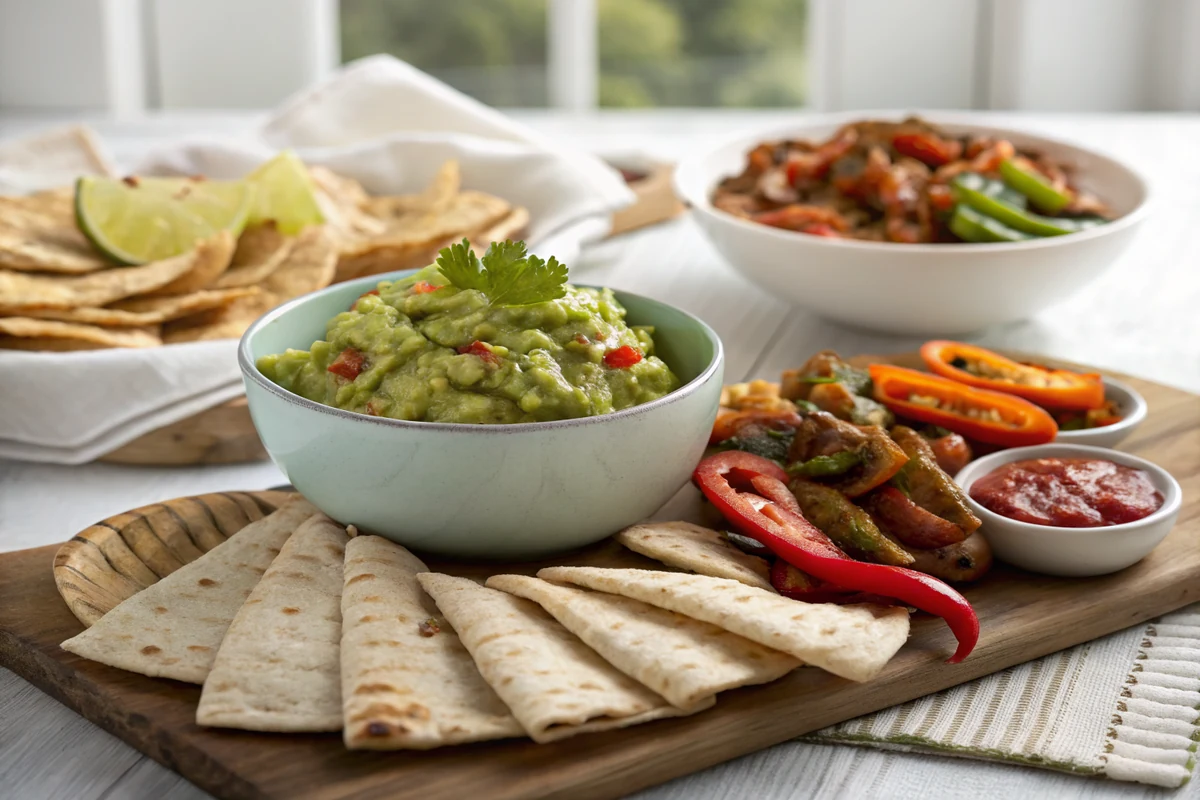
Next to fired-up mains it works as the cooling system: alongside fajitas it is practically contractual, and it does honest work beside a bowl of Texas chili or on top of Frito pie, where a cool spoonful against the hot chili is the best bite of the bowl. A thinned version, loosened with a little lime and water, makes a respectable drizzle for grilled corn when you want the effect of my street corn coating without the mayo.
Portion planning for parties: figure half a cup per person as a starter when other food is coming, a full cup per person if the guacamole is sharing top billing with the queso. It always runs out before the salsa does. Always.
The Two-Hour Dish: Timing and Storage Reality
Guacamole is the most time-sensitive thing on the Tex-Mex table, and working with its clock instead of against it is the difference between serving it proudly and apologizing for it.
The peak window is the first two hours at cool room temperature, surface protected between servings. This is not superstition: beyond browning, mashed avocado slowly weeps moisture and the aromatics keep sharpening, so an evening-old bowl is wetter, flatter, and oniony in a way the fresh bowl was not. The rule at my table is simple: guacamole is made after the meat comes off, while it rests.
Make-ahead, done right, is component prep rather than early assembly. The paste base holds beautifully in a sealed container in the fridge for a day, even improving slightly as the salt works. Ripe avocados hold in the fridge whole. Fifteen minutes before guests arrive, it is scoop, fold, mash, done: fresher than anything you could have made that morning, with no defensive plastic wrap required.
If assembled guacamole must hold, the direct-surface-contact wrap in the fridge buys you until the next day at full quality and the day after that at plausible quality. Freezing is a hard no: thawed guacamole separates into watery, grainy layers, because ice crystals do to avocado cells what the food processor does, just slower.
Leftovers past their looks still have a career: fold them into scrambled eggs, spread them under the beans on a tostada, or thin with lime juice into a sauce for tacos. Brown-edged guacamole is an ingredient, not a loss.
Mistakes That Ruin Guacamole
Mashing avocado first and stirring seasonings in after. The root cause of pockets of onion and stretches of bland. Paste first, always.
Hard avocados, softened by force. Microwaved or oven-warmed avocado turns bitter and squeaky and never develops oil-ripeness. If they are rocks today, guacamole is tomorrow's dish.
The food processor. Twenty seconds of blades turns guacamole into avocado mousse, permanently. The fork is not the rustic option; it is the correct one.
Under-salting. Avocado fat swallows salt, and a spoon-taste lies to you. Taste on a chip and add the pinch you are hesitating about.
Drowning it in lime. Two tablespoons for four avocados, for flavor. Browning is solved with plastic wrap and air exclusion, not acid, and a sour bowl helps no one.
Undrained tomato. Twenty minutes later the bottom of the bowl is green water. Seed it, dice it, drain it, fold it last, or leave it out.
Making it at noon for a seven o'clock party, unprotected. Guacamole is a two-hour dish. Prep the paste at noon; mash at six forty-five.
Guacamole Recipe
Ingredients
- For the paste base:
- 1 serrano chile, stemmed and minced (or 1 jalapeno for milder)
- 3 tablespoons finely minced white onion
- 1/4 packed cup fresh cilantro, finely chopped, plus more to finish
- 3/4 teaspoon kosher salt, plus more to taste
- For the guacamole:
- 4 ripe Hass avocados (about 8 oz each)
- 2 tablespoons fresh lime juice, from about 1 large lime
- Optional additions:
- 1 small Roma tomato, seeded, diced small, and drained
- 1 garlic clove, grated (Tex-Mex leaning, divisive, delicious)
- Pinch of ground cumin
Instructions
- Make the paste base first. Put the minced serrano, onion, chopped cilantro, and salt in your serving bowl or molcajete. Grind with the pestle, or smear with the flat of a fork against the bowl, for a solid 30 to 60 seconds until it becomes a rough, wet, fragrant green paste. The salt acts as an abrasive and pulls juice from the onion and chile. This paste is the seasoning engine of the entire bowl.
- Check your avocados honestly. A ripe Hass is nearly black with pebbled skin and yields to gentle palm pressure like a stick of cool butter, without soft spots or hollows. Flick the little stem button: green underneath means go, brown means overripe, and if it will not flick off, the avocado is days away. Hard avocados make chunky bland guacamole no amount of seasoning can rescue; plan two to four days of counter ripening.
- Halve, seed, and score. Cut each avocado lengthwise around the seed, twist apart, and tap the seed out with a spoon, not a blade toward your palm. Score the flesh into a rough half-inch crosshatch right in the skin, then scoop the cubes out with a spoon directly into the paste. The pre-scored cubes are what let you mash minimally in the next step.
- Add lime before mashing. Squeeze the 2 tablespoons of lime juice over the avocado cubes now, before any mashing, so the acid coats the maximum surface area while the pieces are still distinct. One lime for two avocados is the ratio; guacamole should taste of avocado brightened by lime, not of lime thickened with avocado.
- Fold and mash with a fork, briefly. Fold the cubes through the paste with the fork, then mash with maybe eight to ten deliberate strokes, pressing pieces against the side of the bowl rather than stirring in circles. Stop while the texture is clearly two things: a creamy seasoned base and soft distinct chunks. It will look under-mixed; it is correct. It keeps creaming itself every time a chip drags through it.
- Fold in the tomato last, if using. If you want tomato, fold in the seeded, diced, drained Roma now, gently, as garnish-within-the-dip rather than a structural ingredient. Undrained tomato is the fastest way to water down a good bowl. Skip it entirely for the purist version; add it for color and a fresh acid note at a party.
- Taste with a chip and re-salt. Taste on an actual chip. Avocado fat mutes salt aggressively, which is why almost all homemade guacamole is under-seasoned: what tastes right on a spoon disappears on a chip alongside beer and conversation. It almost certainly needs another pinch or two of salt, and possibly a last squeeze of lime. Adjust until the flavor arrives immediately, not on a delay.
- Serve within the hour, stored right if not. Guacamole peaks the hour it is made. If it must wait, press plastic wrap or parchment directly onto the entire surface, excluding every bubble of air, and refrigerate up to a day; browning is oxygen contact, and surface contact is the only trick that genuinely works. The thin lime-water layer method also works but slightly dilutes the top. Stir the top inch before serving and it revives fully.
Frequently Asked Questions
What is authentic guacamole made of?
The traditional core is ripe Hass avocado, chile (serrano traditionally, jalapeno for milder), white onion, cilantro, lime juice, and salt, with tomato as a common but optional addition. In the classic molcajete method, the chile, onion, cilantro, and salt are ground into a paste before the avocado is folded in and coarsely mashed. Garlic and cumin appear in Tex-Mex versions; mayonnaise, sour cream, and peas do not belong to the tradition.
Why do you make a paste before adding the avocado?
Because chunky mashed avocado cannot distribute seasonings evenly; stirring aromatics into it leaves onion and chile sitting in pockets while other bites taste bland. Grinding the serrano, onion, cilantro, and salt into a rough paste first, in a molcajete or with a fork, turns the seasonings into a coating that clings to every piece of avocado. Every bite arrives at the same seasoning intensity, which is the single clearest difference between homemade-good and taqueria-great.
How do you keep guacamole from turning brown?
Exclude air, physically. Press plastic wrap or parchment directly onto the entire surface, smoothing out every air bubble, and refrigerate; done well, it stays green for a day or more. Browning is an enzyme reaction that needs oxygen, so surface contact is the only method that genuinely works. Extra lime helps only slightly and makes it sour, and the pit-in-the-bowl trick protects only the flesh it physically covers. If the top browns anyway, stir it into the body; it is cosmetic, not spoilage.
How ripe should avocados be for guacamole?
Yielding evenly to gentle palm pressure, like a stick of cool butter, with no hard core and no sunken soft spots. Confirm with the stem test: flick off the dry stem button, and green underneath means ripe, brown means overripe, stuck means underripe. Hard avocados make bland, chunky, squeaky guacamole that no seasoning can fix. Buy two to four days ahead, ripen on the counter (paper bag with a banana to speed it), then hold ripe fruit in the fridge up to four days.
Can you make guacamole ahead of time?
The smart version of ahead is components: the ground paste base keeps a day in the fridge and ripe avocados keep whole, so final assembly is a fifteen-minute job just before serving. Fully assembled guacamole holds to the next day under direct-contact plastic wrap in the fridge at nearly full quality. Never freeze it; thawing separates the texture into watery grain. If serving a crowd, mash a second batch mid-party instead of doubling the first bowl; it takes five minutes with the paste ready.
Is guacamole supposed to be chunky or smooth?
Chunky, with a two-texture structure: a creamy seasoned base holding soft, distinct pieces of avocado. That is what fork-mashing scored avocado cubes produces in eight to ten strokes. Machine-smooth guacamole is a different dip, whipped and mousse-like. For a middle path, mash one avocado fully smooth into the paste and fold the rest in as barely-crushed cubes; you get a creamier matrix with the chunks intact, no blender involved.
What chile goes in guacamole, serrano or jalapeno?
Serrano is the traditional choice: hotter, brighter, more grassy-green in flavor, and it grinds into the paste base beautifully. One serrano across four avocados gives a present but civilized warmth. Jalapeno is the milder substitute, using one for the same batch; seed it for gentler still. Whichever you use, mince it fine before grinding so the heat spreads evenly through the paste instead of landing in hot pockets.
How much guacamole per person for a party?
Half a cup per person when it is one of several starters, a full cup when it shares top billing with queso and salsa as the main spread. One eight-ounce Hass yields about three-quarters of a cup, so the four-avocado batch on this page serves six as a starter. It reliably disappears faster than every other dip, so round up, or better, keep extra paste and ripe avocados ready and mash a fresh second bowl in five minutes when the first empties.