Tex-Mex Recipes
Tomatillo Salsa Verde
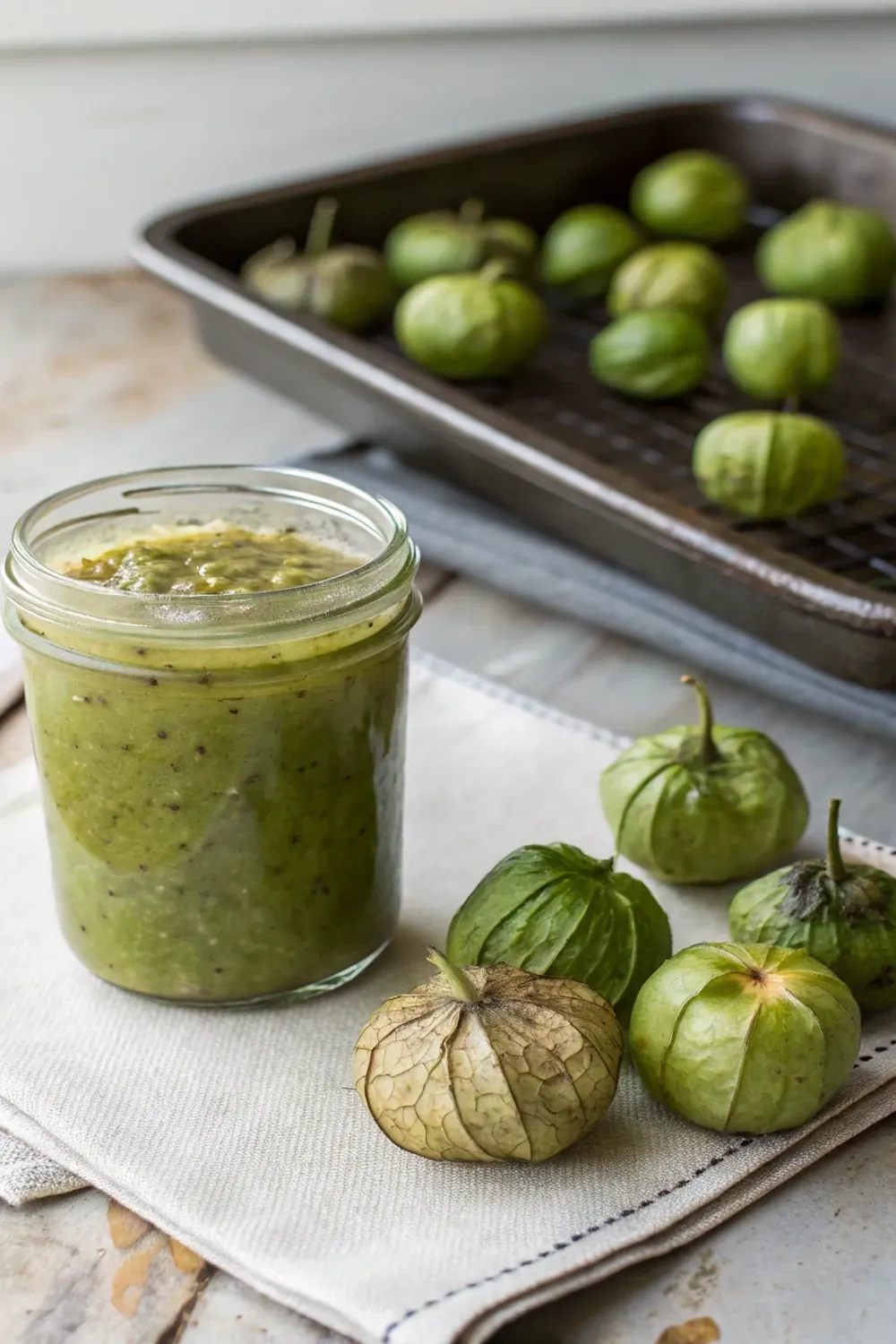
Chef Mia's salsa verde: tomatillos, serrano, garlic and onion charred under the broiler, blended warm with cilantro. Tangy, green, better after 30 minutes.
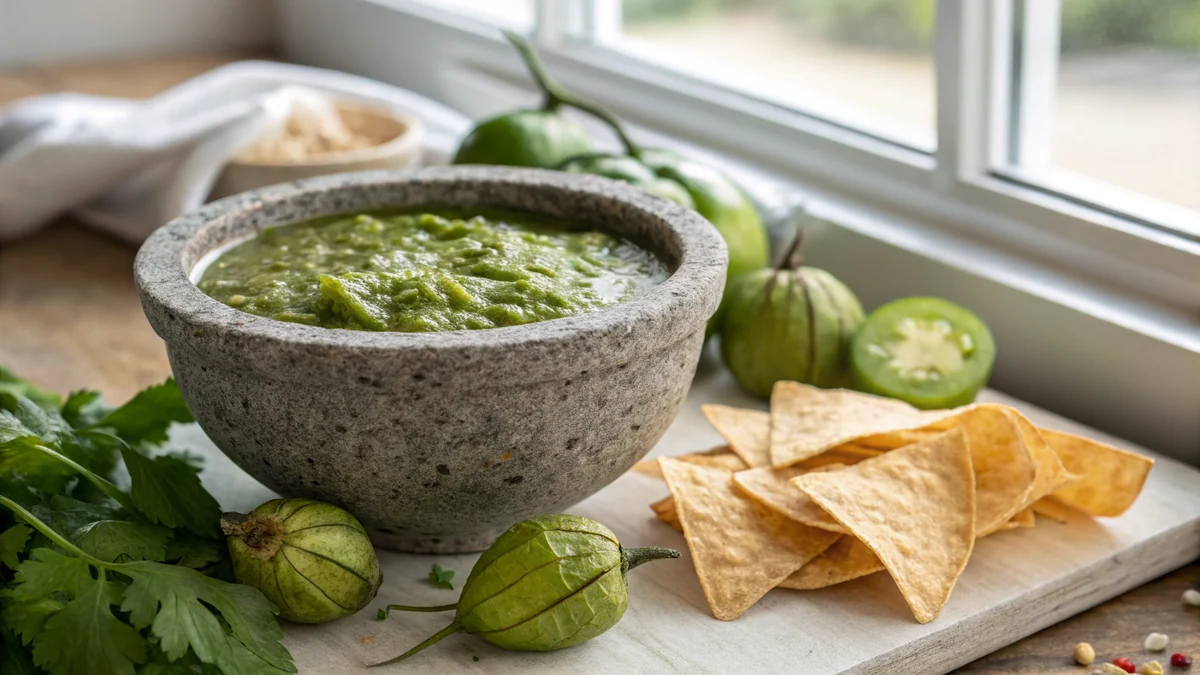
Quick answer: Tomatillo salsa verde is the tangy green salsa of Mexican and Tex-Mex tables, and its identity comes from one fruit: the tomatillo, a firm, husk-wrapped relative of the gooseberry whose bright, green-apple acidity no red tomato can imitate. The method that gets the most out of it takes 12 minutes under the broiler: husk and rinse the tomatillos, char them whole on a sheet pan with serrano, onion, and unpeeled garlic until blistered and collapsing, then blend everything warm with cilantro and salt, briefly, so it stays a little rustic. No lime needed; the tomatillos bring their own acid. It thickens as it cools and tastes noticeably better after a 30-minute rest. Makes 3 cups, keeps a week, freezes well.
The first thing to understand about salsa verde is that it is not green salsa in the sense of being a color swap on the red stuff. It is built on a different fruit with a different chemistry. A tomatillo is not an unripe tomato; it is a separate plant, wrapped in a papery husk, sticky underneath, firm like a plum, and loaded with malic and citric acid, the same acids that make a green apple snap. That acidity is the whole personality of the salsa.
I came to verde the way most Texans do, through enchiladas and through the little plastic cups of green sauce at taquerias that turn out to be the thing you remember about the meal. When I finally started making it at home, the surprise was how little technique it wanted. The red restaurant salsa needs a skillet char and a resting protocol; verde is nearly self-seasoning. Char tomatillos until they slump, blend with chile and a handful of cilantro, salt it, done. The tomatillo does the balancing act that takes three ingredients in a red salsa.
The one decision that matters is raw versus roasted, and this page plants its flag on roasted, under the broiler, whole, until the tomatillos blister black in spots and just start to collapse. Roasting rounds the raw green edge into something deeper and slightly sweet while keeping all the tang, and the broiler does it in twelve minutes with no added fat and one sheet pan. It is the highest ratio of flavor to effort of any salsa on this site.
Tomatillos Are Not Green Tomatoes
The single most common verde mistake happens in the produce aisle, not the kitchen, so it is worth being precise about what a tomatillo is.
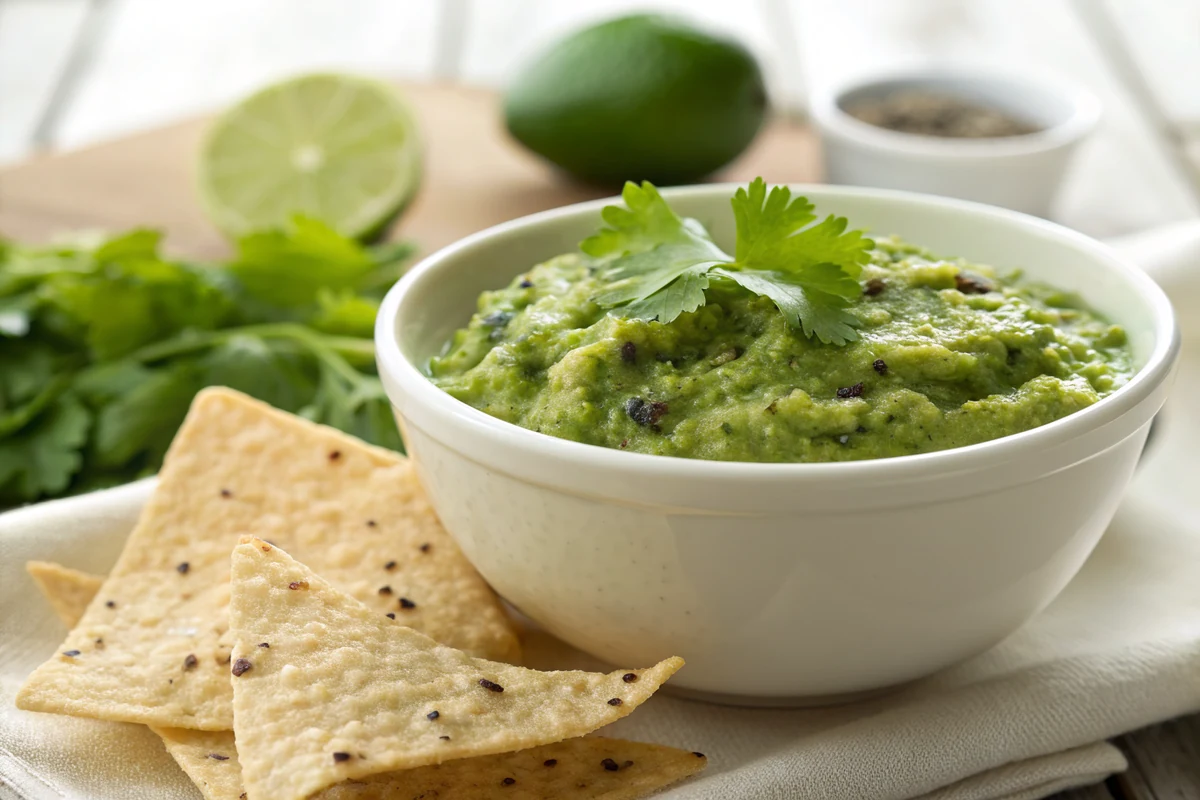
Tomatillos and tomatoes are cousins in the nightshade family, but the tomatillo is its own species, closer in spirit to the cape gooseberry it resembles when you peel back the papery husk. The fruit inside is firm, dense, waxy-skinned, and sticky with a natural film that rinses off under warm water. Where a ripe tomato is sweet with gentle acidity, a tomatillo is emphatically tart, driven by malic acid, the green-apple acid, with citric close behind. That tartness survives roasting, blending, and even canning, which is why verde stays bright in ways red salsa cannot.
Buying them: look for fruit that fills its husk tightly, feels heavy and firm like an underripe plum, and shows saturated green skin under the papery wrap. Splitting husks with fruit bulging out is fine; loose rattling husks around small hard fruit means they were picked too early. Pale yellowing tomatillos are overripe, trending sweet and mealy, wrong for salsa though fine for stewing. Size is inverse to intensity; the small ones are usually tarter.
Actual green tomatoes, unripe reds, are not a substitute. They bring sour without the fruity malic snap, plus a raw solanine bitterness that roasting does not fix. If tomatillos are truly unavailable, canned tomatillos make a serviceable verde, better than fresh green tomatoes ever will; drain them, skip the broil, and lean on the raw garlic and chile for structure.
In Texas, fresh tomatillos are a year-round given at any H-E-B or Fiesta, usually next to the chiles, and they keep loose in the fridge, husks on, for two to three weeks, which is longer than nearly any other fresh produce in the salsa aisle. There is no excuse for the jarred stuff.
The Broiler Is the Right Tool
Verde tradition offers three cooking paths, raw, boiled, and roasted, and the broiler version this page teaches is roasted verde tuned for a home kitchen: maximum char, minimum equipment, no fat, one pan.
The broiler wins on physics. Charring tomatillos wants intense radiant heat from close range, hot enough to blister the waxy skin and caramelize the sugars at the surface before the interior overcooks into mush. A broiler element four inches away delivers exactly that, both sides in twelve minutes. A skillet chars only where fruit touches metal, awkward for round tomatillos; a grill works beautifully when it is already lit but is a lot of charcoal for a salsa; the oven at 425F roasts gently but never really chars.
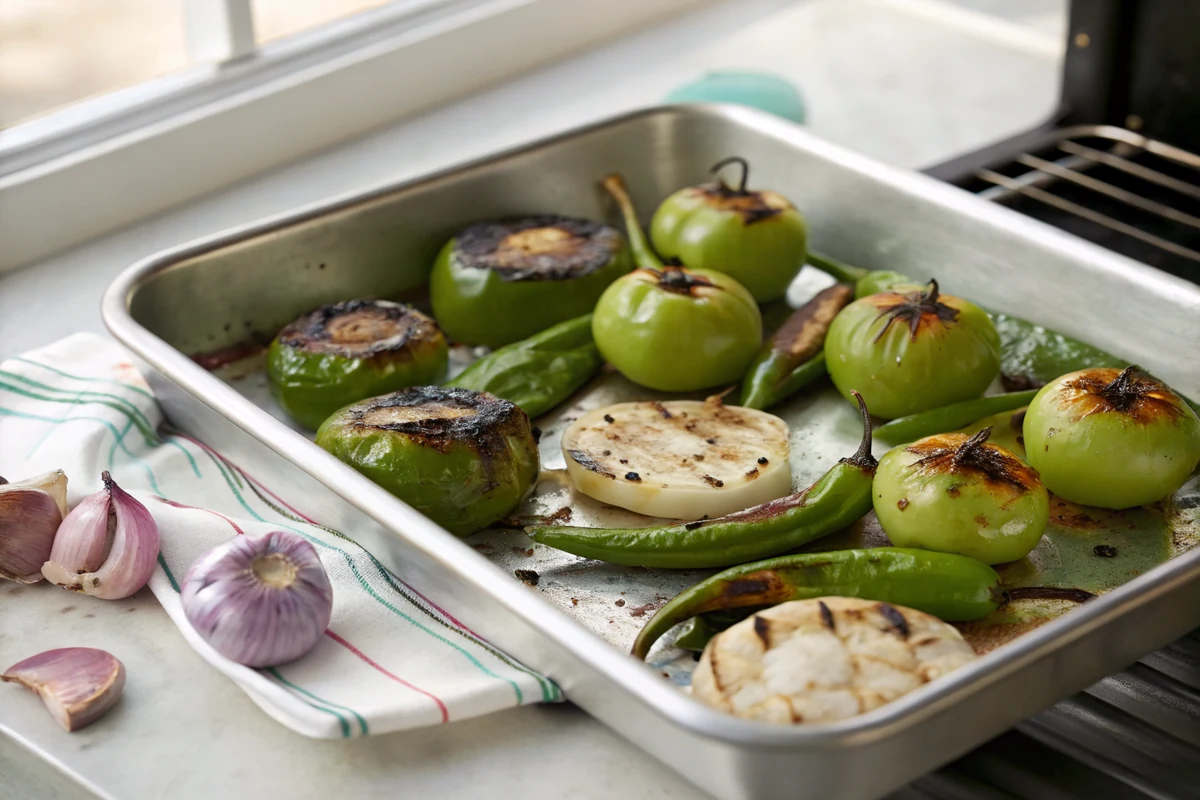
What roasting changes is the argument for doing it at all. Raw blended verde, salsa verde cruda, is sharp, grassy, almost aggressive, wonderful in small doses on rich tacos. Boiled verde, the other traditional method, simmers the tomatillos soft for a smooth, mellow, cooked-tasting sauce, the one many enchilada kitchens use. Roasted sits above both for table salsa: the char adds a smoky, faintly sweet roasted layer, the interior keeps most of its fresh acidity, and the color lands at a deeper, olive-flecked green. You get complexity without losing the tang that is the whole point of the fruit.
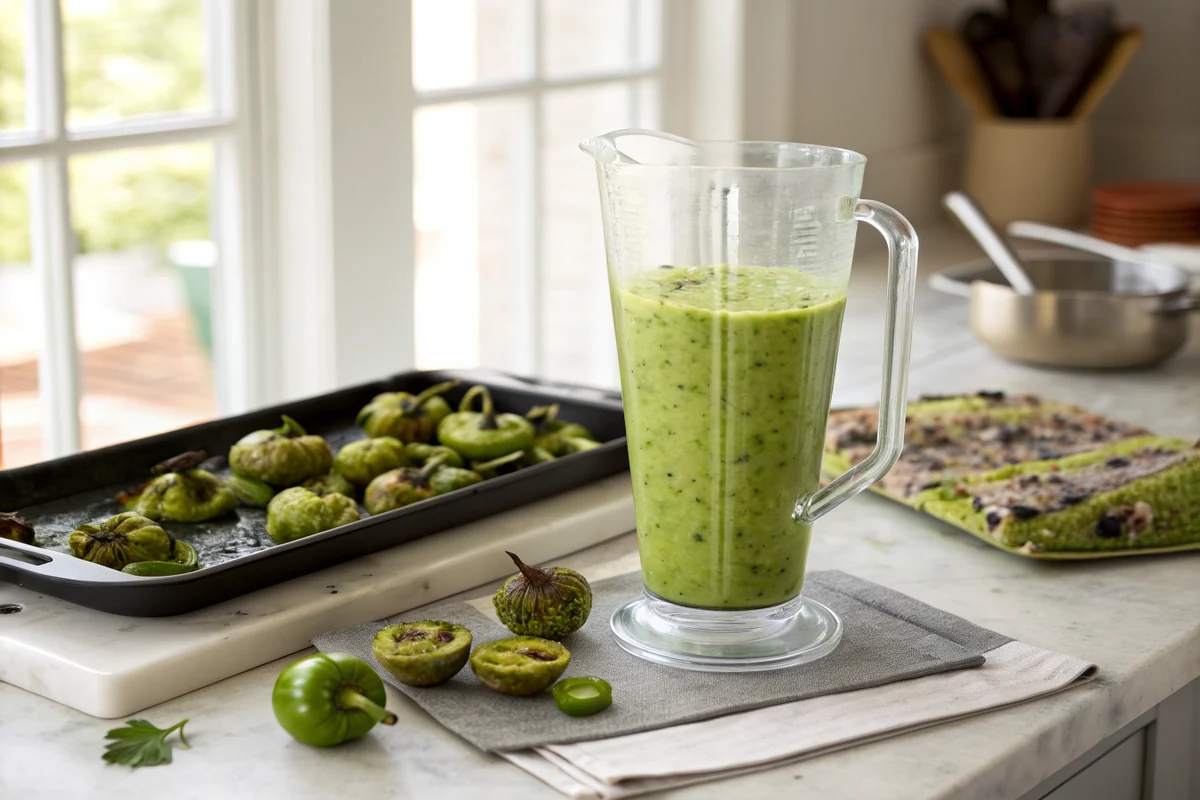
Watch the two visual cues rather than the clock: skins blistered and spotted black, and the fruit beginning to slump as the flesh collapses from bright to olive green. Slumping is the moment; fully burst and flattened means thirty seconds too long, still usable but wetter. And keep every drop of what leaks onto the foil; those sizzled juices carry concentrated tomatillo sugar and go straight into the blender.
Blend Warm, Stop Early, Salt Late
The blender step in verde has three rules, and each one exists because tomatillos behave differently from tomatoes.
Blend warm, first. Straight-from-the-broiler tomatillos are soft, juicy, and at their most extractive; the residual heat pulls flavor out of the raw cilantro and rounds the garlic and chile into the sauce as it cools. Warm blending is also mechanically gentler, needing fewer pulses to reach texture, which matters because of rule two.
Stop early. Eight to ten pulses, coarse and flecked, visibly rustic. Verde turns dull when over-blended, going from vivid green-with-dark-flecks to a homogenous pea-soup paste, and the aeration problem that plagues red blender salsa applies here too. The dark roasted flecks suspended in bright green are both the look and the taste of a proper roasted verde; erase them and you have erased the broiler step.
Salt late and generously, third. Tomatillo acidity masks salt the way avocado fat does, from the opposite direction; an under-salted verde tastes merely sour, and the same salsa properly salted suddenly tastes roasted, fruity, and complete. Salt in quarter-teaspoon steps on a chip until the flavors snap into place. You will likely use more than the red salsa takes.
Note what is absent: lime. Tomatillos carry more acid than lime juice could add, already integrated into the fruit. Lime in verde is doubling down on the one thing the salsa cannot run short of. Save the limes for the margaritas.
Heat: Serrano Math in a Tart Salsa
Verde runs hotter than red salsa at the same pepper count, and the reason is worth understanding before you load the blender.
Acidity sharpens heat perception. The same serrano reads hotter suspended in tart tomatillo than in sweet-deep tomato, because the acid keeps the palate alert where sugar and richness would buffer it. This is why the recipe blends ONE serrano first and holds the second for a taste-and-decide round, and why taqueria verde so often outguns the red bowl beside it.
Serrano is the traditional and correct chile here: clean, bright, grassy heat that matches the fruit. One roasted serrano in a pound and a half of tomatillos is a genuine medium; two is honest taqueria hot. Jalapeno substitutes at about half strength with a slightly duller flavor. Beyond serrano, a roasted poblano alongside one serrano adds dark-green depth with almost no extra heat, a lovely variation for enchilada sauce.
Roasting the chile whole alongside the tomatillos, rather than adding it raw, keeps its heat but mellows its bite and folds its flavor into the roast register of the whole salsa. Raw-chile verde is brighter and meaner, a legitimate style, but mixing raw chile into roasted salsa reads disjointed; pick one register and stay in it.
If a batch comes out hotter than the table can take, the classic rescue is the avocado: blend in the optional half, or a whole one, and the fat rounds the burn while turning the salsa into the creamy pale-green taqueria pour. A spoonful of the salsa into sour cream achieves the same diplomacy at the individual-serving level.
The Green One Among the Four Bowls
Verde is the acid specialist of the Tex-Mex condiment quartet, and choosing it deliberately, rather than as a color variation, is what the four-bowl logic is about.
Its red counterpart, my restaurant-style salsa, is smoky, deep, and tomato-round: the crowd-pleasing bottomless chip dip. Verde is sharper and brighter, and it is the one you want anywhere fat and cheese dominate, because tomatillo acid cuts where tomato depth just accompanies. Want fresh crunch instead of a sauce at all? Pico de gallo is the hand-chopped raw topping that brings texture no blended salsa can. Want richness instead of acid? Guacamole is the plush one, and it happens to be verde's best collaborator: a spoonful of guacamole blended into this salsa produces the creamy avocado-verde that the best taco trucks ladle from a squeeze bottle, silkier than either parent.
Red and green together, served side by side with one bag of chips, is the classic two-bowl table for a reason: between smoke and tang they bracket the entire salsa spectrum, and watching which bowl empties first tells you what to make more of next time. At my table, verde loses the chip race and wins the food race; it is the one that ends up on the actual dinner.
Verde Is a Sauce, Not Just a Dip
The red salsa mostly lives next to chips. Verde has a second, arguably bigger, life as a cooking sauce, and this is where a batch justifies itself even if nobody opens a chip bag.
Enchiladas verdes are the flagship. Warm the salsa gently, dip softened corn tortillas, fill with shredded chicken, top with crema and queso fresco: a lighter, sharper enchilada than any red gravy version. It is the exact green-sauce direction I point to in the verde variation on my poblano chicken enchiladas, and this page is the from-scratch sauce that variation assumes.
Breakfast is verde territory across Texas. Spooned over migas it does what hot sauce cannot, adding acid with body; laced into breakfast tacos it is the sanctioned upgrade, and a skillet of eggs poached directly in simmering verde is huevos ahogados, the fastest impressive breakfast I know. On the breakfast casserole it is the recommended finishing sauce for exactly this reason.
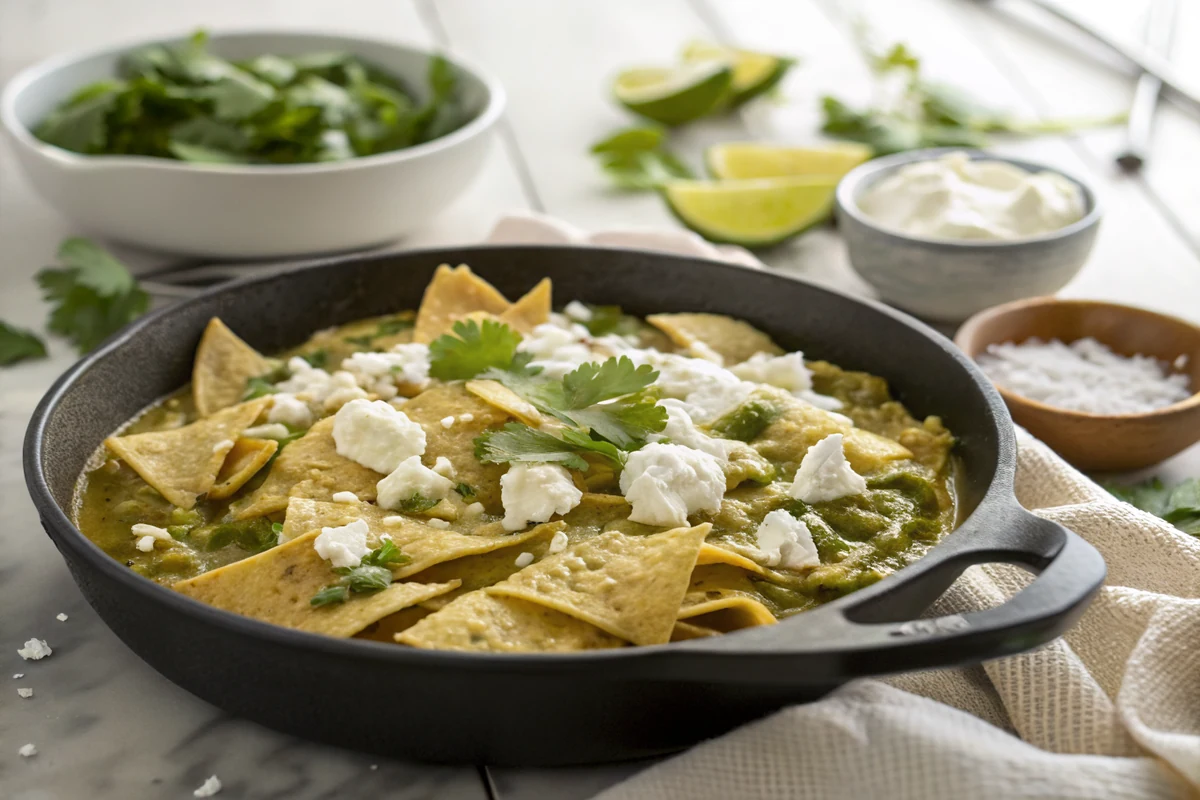
The endgame for any surviving verde is chilaquiles: simmer the salsa in a skillet, fold in tortilla chips until they just begin to soften, top with crema, cheese, and whatever protein the fridge offers. And on smoked meat, a drizzle over rich cuts, pulled pork especially, works the way pickles work on barbecue, acid resetting the palate between bites. A jar in the fridge quietly improves a full week of meals.
Storage, Freezing, and the Pectin Thickening
Verde is the best-keeping fresh salsa on this site, another gift of the tomatillo, and its storage behavior has one quirk worth expecting.
The quirk: it thickens. Tomatillos are loaded with pectin, the same stuff that sets jam, and a verde that pours from the blender will be spoonably thick after a night in the fridge, sometimes nearly a gel at the top. Nothing is wrong. Stir, and loosen with a spoonful of cold water if the job calls for pourable; for enchilada dipping, the thickened body is exactly what you want, clinging to tortillas the way a thin salsa cannot.
Refrigerated in a sealed jar, verde holds a solid week with its acidity as a natural preservative, and like the red, it deepens over the first days; the roast flavor comes forward as the raw cilantro edge settles. The color dulls slightly from vivid to olive over the week, faster if over-blended, which is one more argument for stopping the blender early.
It freezes better than any other salsa here. The blended texture and high pectin mean it thaws nearly indistinguishable from fresh: freeze in pint containers or in an ice cube tray for single-serving sauce cubes, thaw overnight in the fridge, stir hard. The avocado-creamy version does not freeze; add avocado after thawing, always.
One food-safety note for the canning-curious: tomatillos are high-acid enough that verde takes to water-bath canning better than most salsas, but tested-recipe proportions matter once jars enter the picture; for the fridge-and-freezer scale this page works at, none of that applies. Make it, jar it, eat it inside a week or freeze it. Simple.
Mistakes That Ruin Salsa Verde
Buying by color alone and taking home unripe green tomatoes. Different fruit, different chemistry, bitter result. Husks are the badge; no husk, no verde.
Skipping the rinse. The sticky film under the husk tastes soapy-bitter in a way that survives roasting. Warm water and thirty seconds of rubbing removes it entirely.
Oiling the pan or the fruit. Oil fries and smokes under a broiler and interferes with the dry blister you are after. Dry fruit, dry foil, high heat.
Pulling the pan too early. Blistered skin on still-firm bright-green fruit is stage one, not done. Wait for the olive shift and the slump; the collapse is where the roasted sweetness lives.
Blending to a puree. Dull color, dull flavor, lost roast flecks. Eight to ten pulses and out.
Adding lime on autopilot. The fruit is the acid. Lime on top of tomatillo is sour math, and it flattens the roast notes you built under the broiler.
Under-salting and calling it too sour. Verde without enough salt reads as pure tang; the same jar, salted properly, suddenly tastes complete. Fix the salt before you judge the salsa.
Freezing the avocado version. The tang survives; the texture does not. Freeze verde plain, add avocado on the other side.
Tomatillo Salsa Verde Recipe
Ingredients
- For the salsa:
- 1 1/2 lbs (680 g) tomatillos, about 10-12 medium, husked and rinsed
- 1-2 serrano chiles, stemmed (or 1 jalapeno for milder)
- 1/2 medium white onion, in one thick slab
- 3 garlic cloves, unpeeled
- 1/2 packed cup fresh cilantro, leaves and stems
- 3/4 teaspoon kosher salt, plus more to taste
- Optional:
- 1/2 ripe avocado, for a creamy taqueria-style verde
- Pinch of sugar, only if the tomatillos are punishingly tart
Instructions
- Husk, rinse, and dry the tomatillos. Peel off the papery husks and rinse the fruit under warm water, rubbing to remove the sticky film underneath; it is natural but tastes faintly soapy if left on. Dry them well. Choose firm, bright green tomatillos that fill their husks; pale yellow ones are overripe and sweet in the wrong direction for salsa.
- Arrange the sheet pan. Set an oven rack 4 inches from the broiler element and heat the broiler on high for a full 5 minutes. Line a rimmed sheet pan with foil and arrange the whole tomatillos, serranos, onion slab, and unpeeled garlic cloves in a single layer with a little space between pieces. No oil; this is a dry char, same philosophy as a skillet-charred red salsa.
- Broil until blistered and slumping. Broil 5 to 6 minutes until the tops are blistered and blackened in patches, then flip everything with tongs and broil 5 to 6 minutes more. Pull the garlic when its skin is deeply spotted, usually at the flip. The tomatillos are done when the skins are charred, the flesh has gone from bright to olive green, and they are visibly softening and starting to slump. A little leaked juice sizzling on the foil is flavor, not failure.
- Rest 5 minutes, peel the garlic. Let the pan sit 5 minutes so the tomatillos finish collapsing and become handleable. Slip the roasted garlic from its skins. Leave every bit of char on the tomatillos, chile, and onion; the blackened patches are the roast flavor you just spent twelve minutes building.
- Blend warm, chile-cautious. Tip the tomatillos with all their pan juices into the blender, add the onion, garlic, cilantro, salt, and ONE serrano. Pulse 8 to 10 times to a coarse, flecked, pourable texture; verde should stay slightly rustic, never baby-food smooth. Warm blending extracts more from the aromatics and lets the flavors fuse as it cools.
- Taste, then decide on the second chile. Taste on a chip once the salsa has cooled enough to judge. If you want more fire, add the second serrano in halves, pulsing and tasting; roasted serrano heat varies enormously pepper to pepper. Salt in quarter-teaspoon steps until the tang and the roast flavor both step forward; verde swallows more salt than its brightness suggests.
- Rest 30 minutes and expect it to thicken. Pour into a jar and rest at least 30 minutes, at room temperature if serving soon or in the fridge otherwise. Tomatillos are rich in pectin, so the salsa will thicken noticeably as it cools, from pourable to spoonable. That body is a feature; loosen with a spoonful of water only if you want a thinner table salsa. The flavor rounds and deepens across the rest.
- Serve green-side out. Serve cool or at room temperature with chips, or warm it gently as a sauce for enchiladas, eggs, and grilled meat. For the creamy taqueria version, blend in the optional half avocado at the end; it turns the salsa pale, silky, and rich while keeping every bit of the tang.
Frequently Asked Questions
What is salsa verde made of?
Mexican salsa verde is built on tomatillos, husk-wrapped tart green fruit, blended with chile (traditionally serrano), white onion, garlic, cilantro, and salt. This version chars the tomatillos, chile, onion, and garlic under the broiler for 12 minutes first, which adds a roasted, faintly smoky layer over the tomatillo tang. No lime is needed; tomatillos carry more natural acid than lime could add. An optional half avocado blends it into the creamy pale-green taqueria style.
Are tomatillos just green tomatoes?
No. The tomatillo is a different species in the nightshade family, wrapped in a papery husk with a sticky film on the fruit, dense and firm like an underripe plum, and intensely tart with green-apple malic acid. Unripe green tomatoes have sourness without that fruity snap plus a raw bitterness that cooking does not fix, and they are not a substitute. If fresh tomatillos are unavailable, canned tomatillos make a better verde than green tomatoes ever will.
Do you have to roast tomatillos for salsa verde?
No, but roasting is the highest-reward path. Raw verde (cruda) is sharp, grassy, and aggressive, best in small doses on rich tacos. Boiled verde is smooth and mellow, the classic enchilada-kitchen sauce. Broiler-roasted, the method here, chars the skins and caramelizes the surface in 12 minutes, adding smoky depth while keeping most of the fresh tang, which makes it the best all-purpose version for both chips and cooking.
Why did my salsa verde get thick in the fridge?
Pectin. Tomatillos are rich in it, the same molecule that sets jam, so blended verde thickens as it cools, sometimes to nearly a soft gel overnight. Nothing is wrong and nothing has spoiled. Stir it and, if you want it pourable for chips, loosen with a spoonful of cold water. For enchiladas and chilaquiles the thickened body is an asset, clinging to tortillas instead of running off.
How spicy is salsa verde compared to red salsa?
At equal pepper counts, verde reads hotter, because tomatillo acidity sharpens heat perception where tomato sweetness buffers it. One roasted serrano per pound and a half of tomatillos is a true medium; two is taqueria-hot. Use jalapeno at the same count for roughly half the heat. If a batch overshoots, blend in half an avocado; the fat rounds the burn and produces the creamy verde taquerias serve, with the tang intact.
What do you eat salsa verde with?
Chips, to start, but verde is the salsa that cooks. It is the sauce for enchiladas verdes, the base for chilaquiles, the standard upgrade on breakfast tacos and migas, and a poaching medium for eggs (huevos ahogados). Its acidity also cuts rich smoked meat the way pickles cut barbecue, so a drizzle over pulled pork or brisket tacos earns its place. A jar in the fridge upgrades a week of meals beyond the chip bowl.
How long does homemade salsa verde last?
A week refrigerated in a sealed jar, its natural acidity working as a preservative, and the flavor deepens over the first few days as the roast notes come forward. It also freezes exceptionally well for a fresh salsa, thanks to the blended texture and pectin: pint containers or ice-cube portions, thawed overnight, come back nearly indistinguishable. Freeze it plain, though; the avocado-creamy version separates, so add avocado after thawing.
How do I make creamy salsa verde like the taquerias?
Blend ripe avocado into finished verde: half an avocado per 3 cups for a silky pourable sauce, a whole one for the thick pale-green style that comes from squeeze bottles onto tacos. The fat rounds the tomatillo acidity and the serrano heat without burying them. Make it the day you serve it and do not freeze the creamy version. A spoonful of chunky guacamole blended in works the same way when ripe avocados are already on the counter.