Southern Comfort Food
Turkey Gravy
Chef Mia's turkey gravy: giblet stock made ahead, drippings defatted, a real roux, and salt at the very end. Lump-free in 10 minutes while the bird rests.
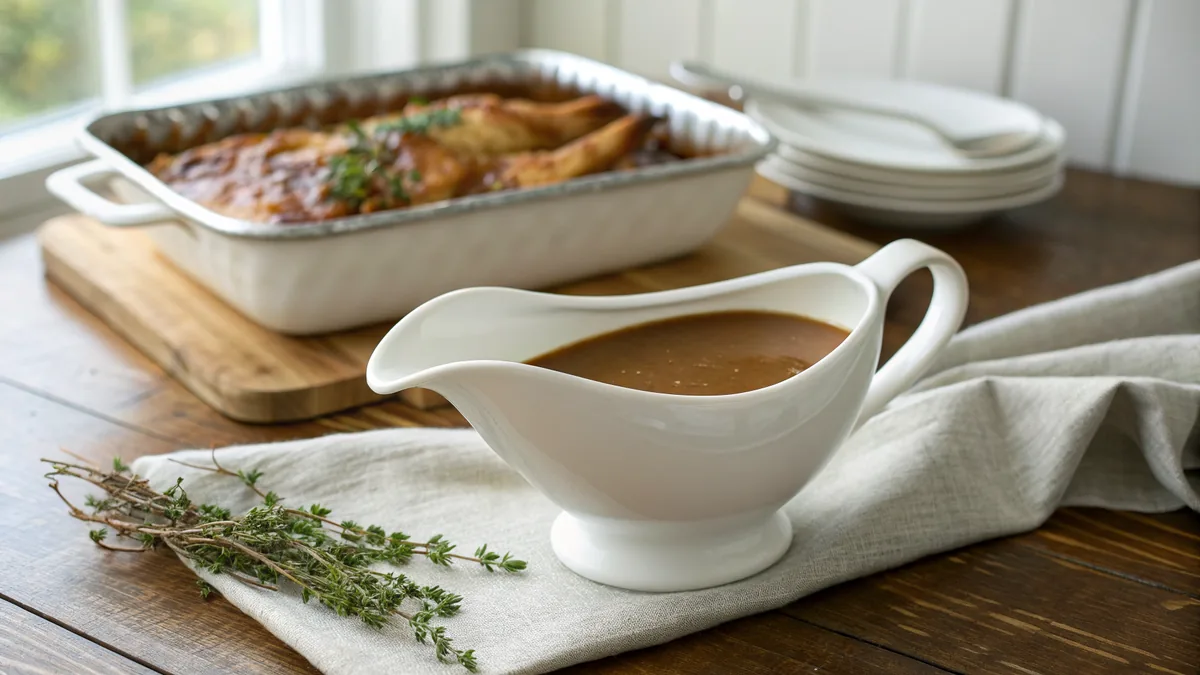
Quick answer: Turkey gravy is a brown pan gravy built in three parts: a giblet stock simmered ahead from the neck and gizzards, the defatted roasting-pan drippings with all the browned fond scraped up, and a roux of equal parts turkey fat and flour cooked until it smells like toast. The working ratio is 1/4 cup fat plus 1/4 cup flour per 2 cups of liquid, which gives a gravy that coats a spoon without turning to paste. Lumps come from one thing only, cold flour meeting hot liquid too fast, so the fix is to add the liquid in stages, whisking each addition smooth before the next. Salt goes in at the very end and only after tasting, because a brined bird leaves salty drippings that will ruin an otherwise good gravy if you season early. The whole finish takes 10 minutes and happens while the turkey rests, which is exactly the window you have. Makes about 4 cups, enough for 10 to 12 people.
Gravy is the last thing you cook on Thanksgiving and it is the thing most likely to go wrong, which is a cruel piece of scheduling. Everything else has been resting, holding, or reheating for an hour. The bird is out, the kitchen is full of people who want to help and cannot, and you have about twenty minutes and one pan of hot brown liquid to turn into the sauce that half the meal depends on. It is not a good moment to be learning a technique.
So the real secret of turkey gravy is that most of it should already be done. The stock gets made Sunday, out of the neck and giblets nobody wants, while you are doing something else. The roux can be cooked days ahead and kept in the refrigerator. What happens in that frantic twenty-minute window is only the last step: fat off the drippings, fond scraped up, liquid whisked in, taste, salt, serve. Ten minutes of actual work, done calmly, because the hard part happened four days ago.
This is a brown gravy, built on roasted poultry and its own fat, and it is a different sauce from the white cream gravy Texans put on chicken fried steak and biscuits. People use the same word for both and then get confused about why their recipes contradict each other. I will sort that out below, because getting the categories straight is most of the battle, and once you know which sauce you are making the method stops being mysterious.
Three Gravies, One Word
American cooks use the word gravy for at least three different sauces, and the recipes for them contradict each other so completely that following the wrong one is the single most common reason a gravy fails. Sorting them out takes one paragraph each and saves a lot of grief.
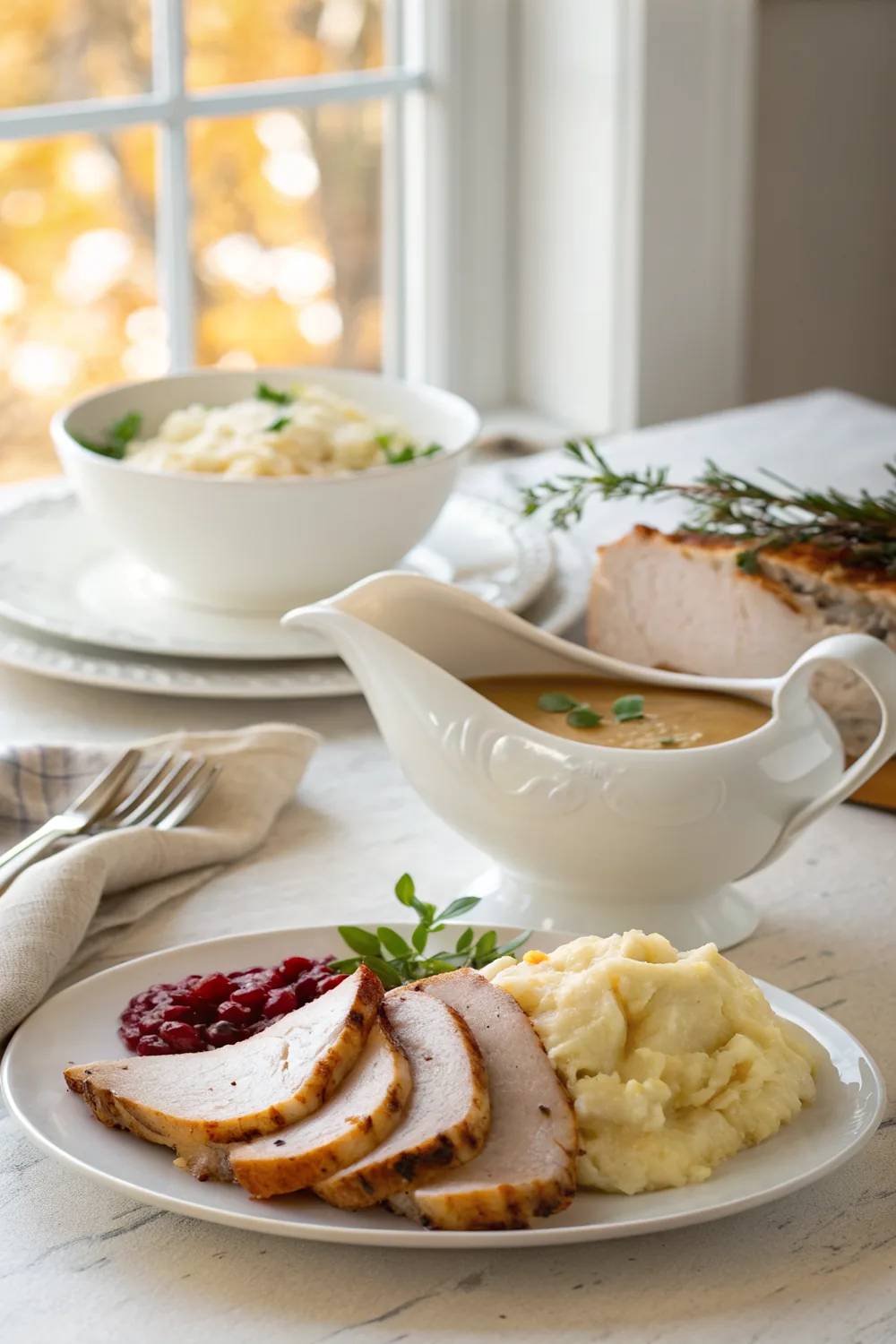
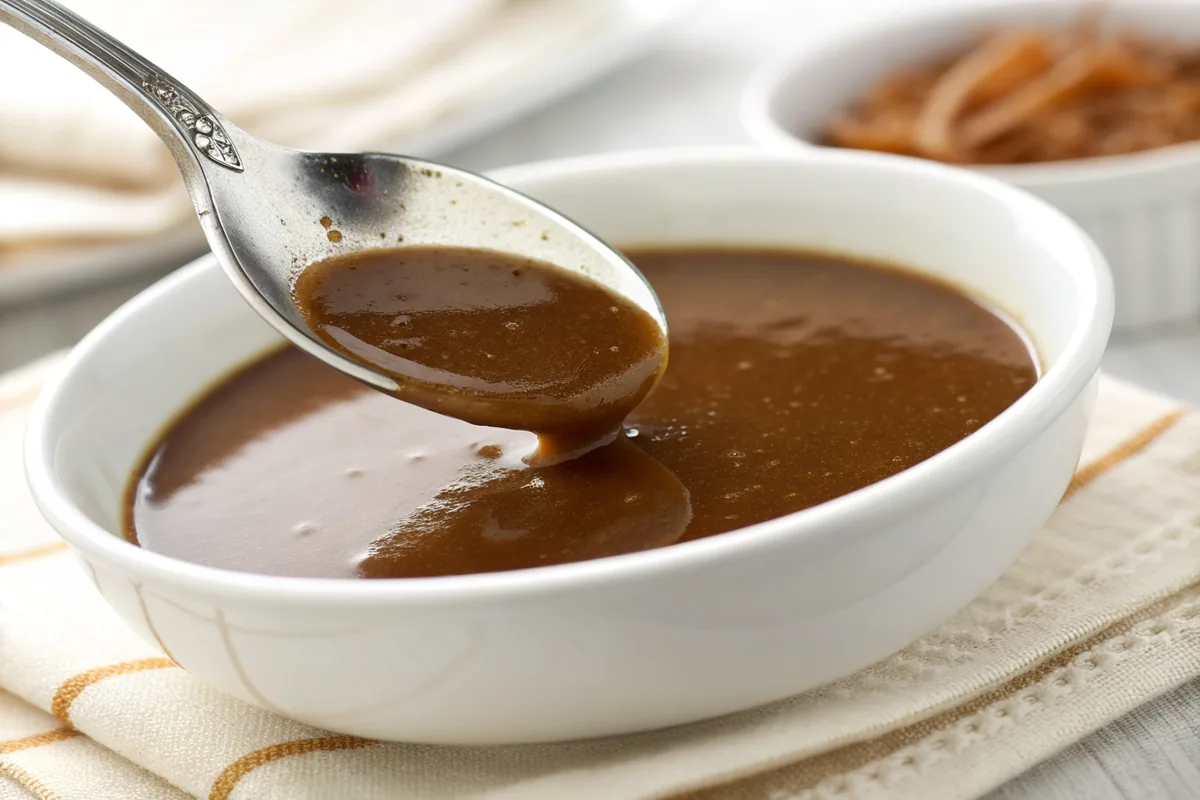
Brown pan gravy, which is this recipe, is built on roasted meat: its rendered fat becomes the roux, its concentrated pan drippings and a stock made from its own bones become the liquid. There is no dairy in it at all. It is savory, deeply colored, glossy, and it tastes like the thing it came from. This is what belongs on turkey, on the dressing, and on the mashed potatoes at Thanksgiving.
Cream gravy, sometimes called country gravy or white gravy, is the Texas roadside sauce, and it is milk-based. The roux is made from the fat left in a skillet after frying something breaded, the liquid is whole milk, and the seasoning is mostly black pepper. It is pale, opaque, and mild, and it exists to go over fried food. My chicken fried steak page walks the cream gravy in full detail, and the important thing to understand is that it is not a weaker version of turkey gravy, it is a different sauce with a different purpose. Pouring cream gravy over a turkey plate is a genuine mistake, and so is trying to build this gravy with milk.
Brown gravy from beef is the third, the steakhouse sauce built on beef drippings or beef base with a darker roux and a heavier black pepper hand. It is what goes over a mound of Texas Roadhouse style mashed potatoes, and it is closer in technique to this recipe than cream gravy is, but the flavor base is entirely different. Beef base in a turkey gravy tastes exactly like beef base in a turkey gravy: obvious and wrong. The onion gravy under my smothered pork chops is a cousin of this one, built in the skillet from pork drippings and slow-cooked onions rather than from a stock, and it is the closest thing on this site to a brown gravy you can make on a Wednesday.
There is a fourth in Texas worth naming, the Tex-Mex chili gravy that goes over enchiladas, which is a chile-and-cumin sauce thickened with a roux and has nothing to do with any of the above except the technique. Once you know which of these you are cooking, every instruction in every recipe suddenly makes sense.
Giblet Stock: The Part You Make on Sunday
Every turkey comes with a paper bag of parts in the cavity, and most of them go in the trash. That bag is the difference between an adequate gravy and a good one. The neck in particular is a genuinely excellent stock bone: it is almost all collagen and connective tissue, which converts to gelatin over a long simmer and gives the finished gravy a body and a mouth-coating quality that flour alone cannot produce.
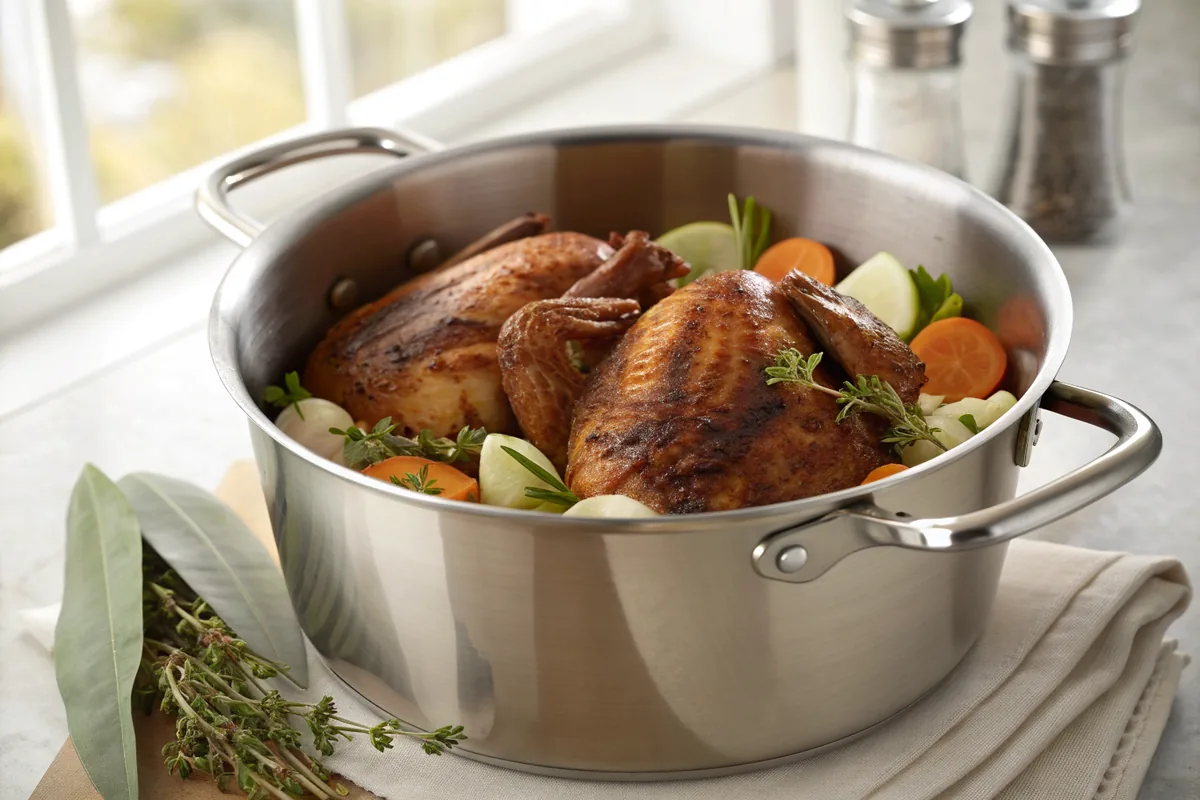
Brown the parts hard before any water goes in. This is not optional if you want a stock with color and depth. Raw giblets simmered in water make a gray, weak broth; browned giblets make something amber and savory, because the Maillard reaction on the surface of the meat creates hundreds of flavor compounds that simply do not exist otherwise. Six to eight minutes in a hot pot, turning them, until they are properly colored and the pot bottom has a brown film.
The liver is the exception and it deserves its own sentence: leave it out of the stock. Liver is high in iron and in compounds that turn bitter and metallic over a long simmer, and one liver can dominate eight cups of stock. If you love giblet gravy in the classic sense, cook the liver separately, chop it very fine, and stir it into the finished gravy in the last minute along with the chopped gizzard and neck meat. Some families consider that the only real giblet gravy, and they are entitled.
Simmer, do not boil. A rolling boil physically emulsifies fat droplets into the liquid, and once they are in there you cannot get them out; the stock goes cloudy and tastes greasy. Ninety minutes to two hours at a lazy simmer, uncovered, is the target. Strain, chill, and lift the fat cap off the next day, and that fat goes straight into the roux, which is a small piece of thrift that also happens to make the gravy taste better.
The Drippings, and Getting the Fat Off Them
What is in the roasting pan when the bird comes out is two very different substances that happen to be sitting in the same place. On top is rendered turkey fat, which is useful but flavor-thin. Underneath is a dark, concentrated liquid of meat juices, browned proteins, and whatever aromatics were in the cavity, and that layer is the most flavorful thing in your kitchen. Keeping them separate is the whole job.
A fat separator, the pitcher with the spout that draws from the bottom, does this in five minutes and costs about fifteen dollars. Without one, pour everything into a tall narrow container, put it in the freezer for ten minutes, and the fat sets enough at the top to spoon off cleanly. Do not try to skim it hot with a ladle; you will get maybe half of it, and the excess fat will break out of the finished gravy into a greasy slick on the surface.
The fond is the other half of the pan's value: the browned, almost lacquered patches welded to the bottom and the corners. That is caramelized protein and sugar, the concentrated result of several hours of roasting, and pouring the liquid off and washing the pan throws it away. Set the pan over two burners on medium, add wine or stock, and scrape with a flat-edged wooden spoon until every patch has released. Dry white wine, dry sherry, or plain stock all work; sherry is my preference for turkey because its nuttiness sits well with the roasted flavor.
Two warnings about the pan. If the fond is black rather than brown, taste the deglazing liquid before committing it: burnt fond makes an acrid gravy, and it is better to lose that flavor than to poison four cups of sauce with it. And if the bird was cooked on a rack over vegetables and stock, as many roast turkey methods call for, the pan liquid is already diluted, so expect less concentration and lean harder on the giblet stock. My Texas BBQ style turkey page covers what a pit-cooked bird gives you instead, which is a different problem.
Roux Ratios and the Lump Problem
The working ratio is 1/4 cup fat and 1/4 cup flour per 2 cups of liquid, which produces a gravy at coating consistency, thick enough to sit on mashed potatoes without running off the plate and loose enough to pour. Scale it directly: this recipe uses a half cup of each against about four and a half cups of total liquid, drippings included, and lands right in that range. For a thinner gravy, keep the roux and add more stock. For a thicker one, add roux, not flour.
How long you cook that roux changes the sauce twice over. At two minutes it is white, has maximum thickening power, and tastes faintly of raw flour. At four to six minutes it is the color of peanut butter and smells like toast, with slightly less thickening power and much better flavor. Past ten minutes it darkens toward chocolate and its thickening power falls off a cliff, which is why Louisiana dark roux recipes use so much of it. For turkey gravy, four to six minutes is the sweet spot.
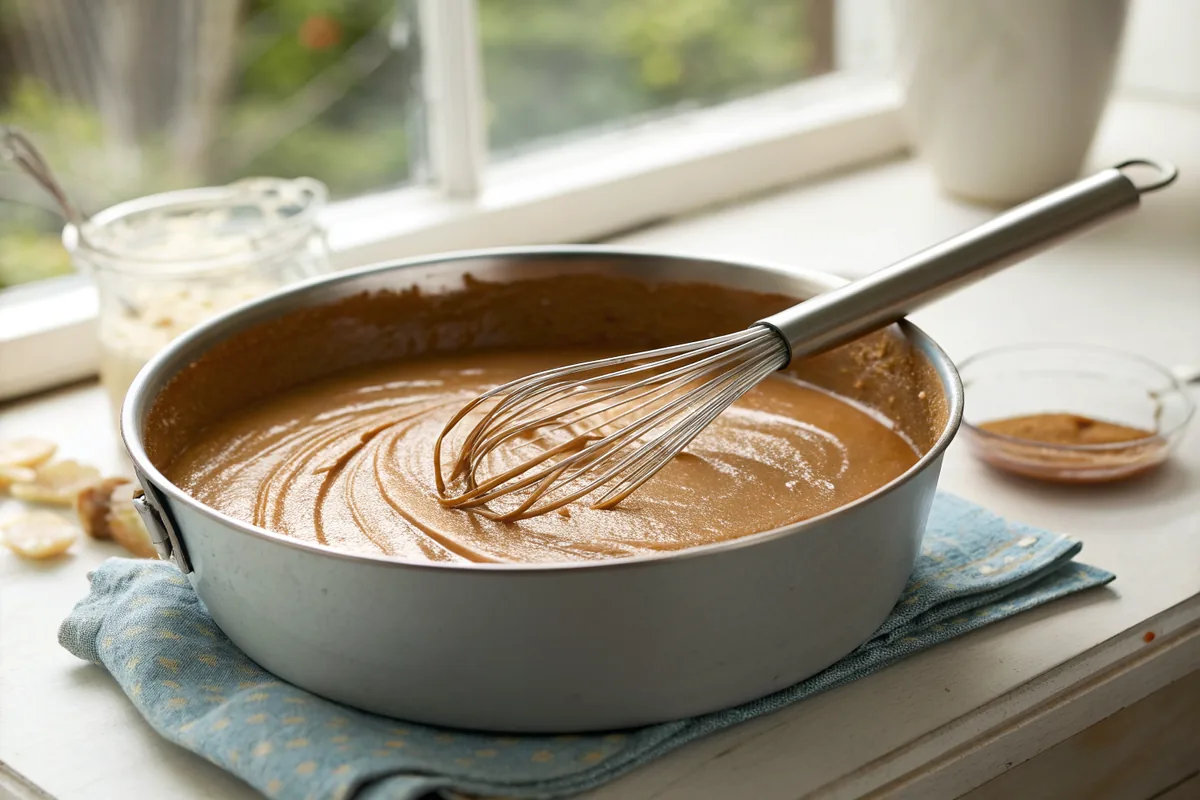
Lumps have exactly one cause: flour granules that clump together before they hydrate, so the outsides gelatinize into a shell and seal dry flour inside. Prevent it by adding the liquid in stages. The first cup seizes the roux into a thick paste and that is correct; whisk it perfectly smooth, then add the next. By the third addition the starch is fully dispersed and you can pour the rest in freely. Warm liquid into a warm roux is easier than cold into hot, though either works if you go in stages.
If you get lumps anyway, they are not fatal. Whisk hard first, since most lumps are soft and will break up. If they persist, pour the gravy through a fine mesh sieve, pressing with a spoon, and nobody will ever know. An immersion blender also works and takes four seconds. I would rather strain than serve lumps, and I would rather serve lumps than serve nothing, which is the correct order of priorities at four in the afternoon on Thanksgiving.
Salt Comes Last, Especially After a Brine
This is the rule I would tattoo on a gravy whisk. Do not add any salt until the gravy is finished, simmered to consistency, and tasted. Everything going into the pot has already been salted by somebody: the bird was seasoned or brined, the drippings concentrate that salt as they reduce, and any commercial broth you topped the stock up with brought its own. Gravy also reduces while it simmers, which concentrates whatever salt is in there further.
Brined birds are the specific trap. A wet brine leaves the drippings genuinely salty, and my Texas turkey brine is no exception. If you brined, expect to add little or no salt at all, and taste before every single addition. A dry-brined bird is milder but still contributes. The cook who salts the roux out of habit and then reduces the gravy for eight minutes is the cook who ends up pouring the whole thing out.
There is no real fix for an over-salted gravy. Adding more unsalted stock dilutes everything else along with the salt and you end up with a thin, bland, still-salty sauce. The potato trick does not work, whatever you have read; a potato absorbs salty liquid, not salt selectively. The only genuine rescue is to make a second small batch of unsalted gravy and blend the two, which requires spare stock and spare time, neither of which you have at that moment.
Pepper is a different matter and should be generous. Black pepper is one of the defining flavors of American gravy, and turkey gravy in particular can taste flat without a firm hand. Grind it fresh, add it before you salt, and use more than feels comfortable. If the gravy tastes hollow rather than under-salted, the answer is often a teaspoon of soy sauce or Worcestershire, both of which add glutamates and a little color without reading as their own flavor.
When the Pan Does Not Give You Enough
Two situations leave you short on drippings, and both are common. The first is a spatchcocked or high-heat roast, which is faster and gives crispier skin but renders less into the pan. The second is a smoked turkey, where most of the drippings either evaporate in the pit or land in a water pan mixed with whatever was in it. If you cooked your bird on the pit, assume you will get very little usable liquid and plan accordingly.
The answer in both cases is to lean on the giblet stock, which is precisely why making a real one is worth two hours of a Sunday. A gravy built on well-browned giblet stock with only a half cup of drippings is still an excellent gravy. A gravy built on water and a bouillon cube with a cup of drippings is not. The stock is the foundation; the drippings are the top note.
You can also build a complete turkey gravy with no bird involved at all, days in advance, which is the professional move for a large holiday. Buy two pounds of turkey wings, roast them at 425F until deeply browned, then make stock from them exactly as you would from the giblets. Use the rendered wing fat for the roux. Make the gravy fully, cool it, refrigerate it, and on the day reheat it gently and whisk in whatever drippings the bird does produce. It is better than most gravies made in a panic, and it removes the single worst bottleneck from the schedule.
For a smoked bird specifically, be careful about how much smoke flavor you carry into the sauce. A little is wonderful, a lot is acrid. If you are using a water pan liquid that has sat under smoke for six hours, taste it hard before it goes anywhere near the gravy, and consider using half of it. Smoke concentrates as gravy reduces, the same way salt does.
Make-Ahead, Holding, and Reheating
The stock keeps four days in the refrigerator and three months in the freezer, and this is the piece worth doing early. The roux can also be made completely ahead: cook it, scrape it into a jar, and refrigerate up to a week, where it sets into a solid paste. Warm it in the saucepan and proceed as normal. Between those two, the day-of work is under ten minutes.
A fully made gravy holds beautifully. Refrigerate up to three days or freeze up to three months. It will set into something close to a solid when cold, which is a good sign, since that is the gelatin from the neck doing its job. Reheat gently over low heat, whisking, and thin with a little stock as it loosens. Do not boil a reheated flour-thickened gravy hard, as prolonged high heat can break the starch structure down and thin it permanently.
On the day, once the gravy is finished, keep it in a small saucepan over the lowest possible heat with a lid slightly ajar, whisking every few minutes, or transfer it to a small slow cooker on warm. A skin will form on gravy left uncovered, which is harmless and whisks back in, but a piece of buttered parchment laid directly on the surface prevents it entirely. Warm the gravy boat with hot water before you fill it, because a cold ceramic boat will drop the temperature of four cups of gravy fast.
Leftover gravy is one of the most useful things in the refrigerator on Friday. It goes over reheated dressing, into a turkey pot pie, over an open-faced sandwich, and into the pan when you are crisping up leftover meat. My cornbread dressing in particular is a dish that improves under a ladle of leftover gravy, and the two of them together on Friday are arguably better than they were on Thursday. The rest of the week's plan is in my Texas Thanksgiving guide.
Two related cases. If the bird was fried, there are no drippings at all, and the giblet stock method above is the entire gravy; my deep fried turkey sends you here for that reason. And the best use of the last cup of gravy is the pot pie that opens my leftover turkey recipes, where it becomes the sauce for the filling.
Mistakes That Ruin Turkey Gravy
Salting early. The most expensive mistake on this page. The drippings are already salty, especially from a brined bird, and the gravy concentrates as it simmers. Taste at the end, then salt a quarter teaspoon at a time. There is no reliable rescue for an over-salted gravy.
Skipping the fond. Pouring the drippings off and putting the roasting pan in the sink throws away the single most concentrated turkey flavor you will ever have. Deglaze the pan while it is still hot and scrape until the bottom is clean.
Adding all the liquid to the roux at once. This is the entire lump problem in one action. First cup, whisk to a smooth paste; second cup, whisk smooth; then pour the rest freely.
An undercooked roux. Two minutes is not enough. Raw flour taste survives everything you do to it afterward and reads as a chalky, pasty note under the meat flavor. Four to six minutes to peanut butter color and a toasted smell.
Putting the liver in the stock. One liver will make eight cups of stock bitter and metallic. Cook it separately and chop it into the finished gravy if you want it, or leave it out.
Boiling the stock. A hard boil emulsifies fat into the liquid and gives you a cloudy, greasy stock that produces a cloudy, greasy gravy. Lazy bubbles, uncovered, for 90 minutes.
Trying to fix thin gravy with raw flour. Sprinkling dry flour into hot liquid produces instant lumps and a raw taste. Either simmer it down longer, or cook a small extra roux in a separate pan and whisk that in.
Turkey Gravy Recipe
Ingredients
- For the giblet stock, made ahead:
- Turkey neck, gizzard, and heart from the bird (reserve the liver separately or discard)
- 1 tablespoon neutral oil
- 1 yellow onion, quartered, skin on
- 2 carrots, cut into chunks
- 2 celery stalks, cut into chunks
- 2 bay leaves
- 6 black peppercorns
- 4 sprigs fresh thyme
- 8 cups (64 oz / 1.9 L) water, or low-sodium chicken broth for a richer stock
- For the gravy:
- 1/2 cup (4 oz / 120 ml) turkey fat skimmed from the drippings, topped up with unsalted butter if short
- 1/2 cup (2 1/4 oz / 65 g) all-purpose flour
- Defatted pan drippings, whatever the roasting pan gave you
- 4 cups (32 oz / 950 ml) giblet stock, warm, plus more to thin
- 1/2 cup (4 oz / 120 ml) dry white wine or dry sherry, optional, for deglazing
- 1 teaspoon soy sauce or 1 teaspoon Worcestershire, optional, for depth and color
- Freshly ground black pepper
- Kosher salt, at the very end and only after tasting
Instructions
- Brown the giblets first. Days ahead, or the morning of, heat the oil in a heavy pot over medium-high and brown the neck, gizzard, and heart hard on all sides, 6 to 8 minutes, until they are deeply colored and the bottom of the pot has a brown film on it. Skip this and your stock will be pale and thin. Set the liver aside; it turns a stock bitter and metallic, and it is better chopped fine and stirred into the finished gravy at the end if you like that flavor.
- Simmer the stock low and long. Add the onion, carrots, celery, bay leaves, peppercorns, thyme, and water to the pot, scraping the browned bits off the bottom. Bring it up to a bare simmer, never a boil, and hold it there uncovered for 90 minutes to 2 hours. A hard boil emulsifies fat into the liquid and turns the stock cloudy and greasy. You want lazy bubbles breaking the surface once or twice a second.
- Strain, cool, and refrigerate. Strain through a fine sieve, discard the solids, and cool the stock quickly in a shallow container. Refrigerate up to 4 days or freeze up to 3 months. Any fat will set into a solid cap on top overnight, which lifts off with a spoon and can go straight into the gravy fat. You should have 5 to 6 cups; if you have less, top it up with low-sodium chicken broth.
- On the day: get the fat off the drippings. When the turkey comes out, tip the roasting pan contents into a fat separator and let it sit 5 minutes, or pour it into a tall narrow container and put it in the freezer for 10. Fat rises and sits in a clean layer. Pour off and reserve 1/2 cup of the fat, then keep the dark liquid underneath, which is the concentrated drippings and the most valuable thing in the pan.
- Deglaze the roasting pan. Set the empty roasting pan across two burners over medium heat, pour in the wine or a cup of the stock, and scrape every browned patch off the bottom and the corners with a flat wooden spoon or a whisk. That layer, the fond, is roasted turkey flavor made solid, and leaving it welded to the pan is the most common way people end up with bland gravy. Pour this liquid in with the drippings.
- Cook the roux until it smells like toast. In a wide saucepan over medium heat, whisk the 1/2 cup of turkey fat together with the flour until smooth. Keep whisking and let it cook 4 to 6 minutes, until it turns the color of peanut butter and smells nutty rather than raw. This is a blond-to-light-brown roux. Undercooked roux tastes like flour paste no matter what else you do to the gravy.
- Add the liquid in stages, whisking. Pour in about a cup of the warm stock and whisk hard; it will seize into a thick paste, which is correct and expected. Whisk it completely smooth, then add another cup and repeat. After the third addition it stops seizing and you can pour the rest in freely, along with the drippings and the deglazing liquid. Adding all the liquid at once is exactly how lumps happen.
- Simmer to coating consistency. Bring the gravy to a gentle simmer and cook 5 to 8 minutes, whisking often, until it coats the back of a spoon and a finger drawn through leaves a line that holds for a second or two. It will thicken a little more as it cools. If it goes too thick, whisk in more warm stock a splash at a time; if it stays too thin, simmer a few minutes longer.
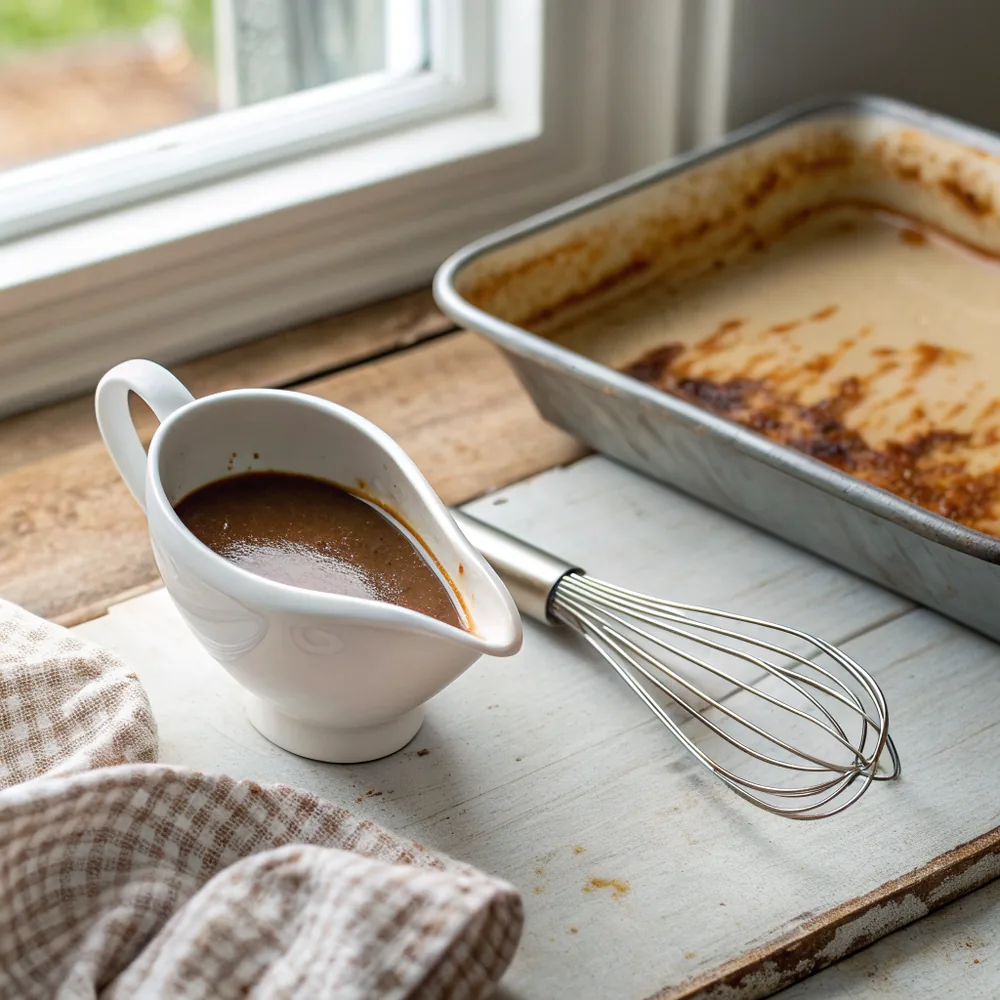
- Taste, then season, then strain. Now, and not before, taste it. Add black pepper generously, the soy sauce or Worcestershire if it needs depth or color, and only then salt, a quarter teaspoon at a time. Drippings from a brined bird can be salty enough that the gravy needs no salt at all. For a silky finish, pour it through a fine sieve into a warmed gravy boat, pressing on any solids.
Frequently Asked Questions
What is the difference between turkey gravy and cream gravy?
They are different sauces that share a word. Turkey gravy is a brown pan gravy: the roux is made from rendered turkey fat, the liquid is pan drippings plus a stock made from the bird's own neck and giblets, and there is no dairy in it at all. Cream gravy, the Texas white gravy on chicken fried steak and biscuits, is milk-based, built from the fat left in a frying skillet and seasoned mostly with black pepper. Neither is a substitute for the other, and building a turkey gravy with milk gives you a pale, mild sauce that fights the plate.
Can I make turkey gravy ahead of time?
Yes, and you should make most of it ahead. The giblet stock keeps four days refrigerated and three months frozen. The roux can be cooked, jarred, and refrigerated for a week. You can even make a complete gravy days early using roasted turkey wings instead of the bird, then reheat it on the day and whisk in whatever drippings the roasting pan produces. A finished gravy keeps three days in the refrigerator and reheats gently over low heat, thinned with a splash of stock as it loosens.
Why is my gravy lumpy and how do I fix it?
Lumps happen when flour granules clump before they hydrate, so the outside gelatinizes into a shell around dry flour inside. The cause is nearly always adding all the liquid to the roux at once. Add it in stages instead: one cup, whisk completely smooth even though it seizes into a paste, then the next. To fix lumps you already have, whisk hard first, since most are soft. If they persist, pour the gravy through a fine mesh sieve or hit it with an immersion blender for four seconds.
Do I have to use the giblets?
No, but the neck in particular is worth using, because it is mostly collagen and gives the finished gravy a body that flour alone cannot. If giblets are not your thing, roast two pounds of turkey wings until deeply browned and make stock from those instead, which is arguably better and can be done a week ahead. What you should skip is the liver: it is high in compounds that turn bitter and metallic over a long simmer, and one liver can dominate eight cups of stock. Cook it separately and chop it in at the end if you want it.
How much gravy do I need per person?
Plan about a third of a cup per person, which for 12 people means roughly 4 cups, and that is what this recipe makes. That figure assumes gravy is going on turkey, dressing, and mashed potatoes, which is the standard Thanksgiving distribution and the reason gravy runs out more often than any other dish on the table. If your crowd is enthusiastic, or if you want the leftovers, make one and a half times the recipe. Leftover gravy is genuinely useful all week and freezes for three months.
What if my turkey did not produce enough drippings?
Lean on the stock, which is exactly why it is worth making properly. Spatchcocked birds, high-heat roasts, and smoked turkeys all give up far less pan liquid than a conventional roast. A gravy built on a well-browned giblet or turkey-wing stock with only half a cup of drippings is still excellent. Do not compensate with bouillon cubes, which taste like bouillon cubes. If you need more depth, a teaspoon of soy sauce or Worcestershire adds glutamates and color without announcing itself.
My gravy is too salty. Can I save it?
Honestly, usually not. Diluting with unsalted stock lowers the salt but also thins the flavor and the body, so you trade one problem for two. The potato trick does not work, because a potato absorbs salty liquid rather than salt selectively. The only real rescue is making a second small batch of unsalted gravy and blending the two, which needs spare stock and spare time. The prevention is simple and absolute: add no salt until the gravy is finished and you have tasted it, especially if the bird was brined.
Should turkey gravy be thick or thin?
Coating consistency, which means it clings to the back of a spoon and a finger drawn through leaves a line that holds for a second or two before closing. That is thick enough to sit on mashed potatoes without running to the edge of the plate and loose enough to pour from a boat. The ratio that gets you there is a quarter cup each of fat and flour per two cups of liquid. It thickens slightly as it cools, so aim for very slightly loose in the pan, and keep warm stock nearby to thin it at the table.