Tex-Mex Recipes
Charro Beans
Chef Mia's charro beans: pintos simmered brothy in stock with bacon, chorizo, tomato, and jalapeno. Plus the borracho variation with beer. 2.5 hours.
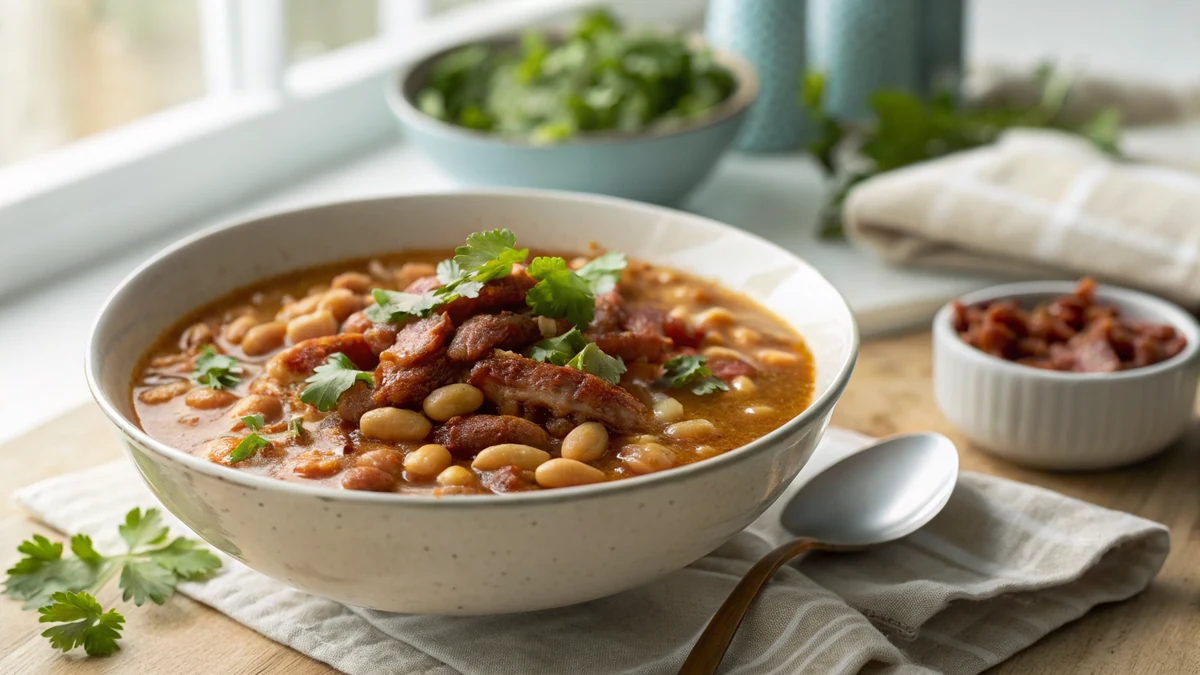
Quick answer: Charro beans are pinto beans simmered loose and brothy in stock rather than water, built on a double pork base of bacon and Mexican chorizo, with onion, garlic, tomato, jalapeno, and a heavy finish of fresh cilantro. The word charro means horseman, and the dish belongs to northern Mexico and the Rio Grande Valley, where it is served in a bowl with a spoon, not scooped onto a plate. The single thing that separates charro beans from every other Texas pot of pintos is the ratio: you want the beans swimming, roughly two parts liquid to one part bean when it comes off the heat, because the broth is the point. Render the bacon first, brown the chorizo in that fat, and build everything else on top. Total time about 2.5 hours after an overnight soak. Swap 12 ounces of the stock for a bottle of Mexican lager and the same pot becomes borracho beans.
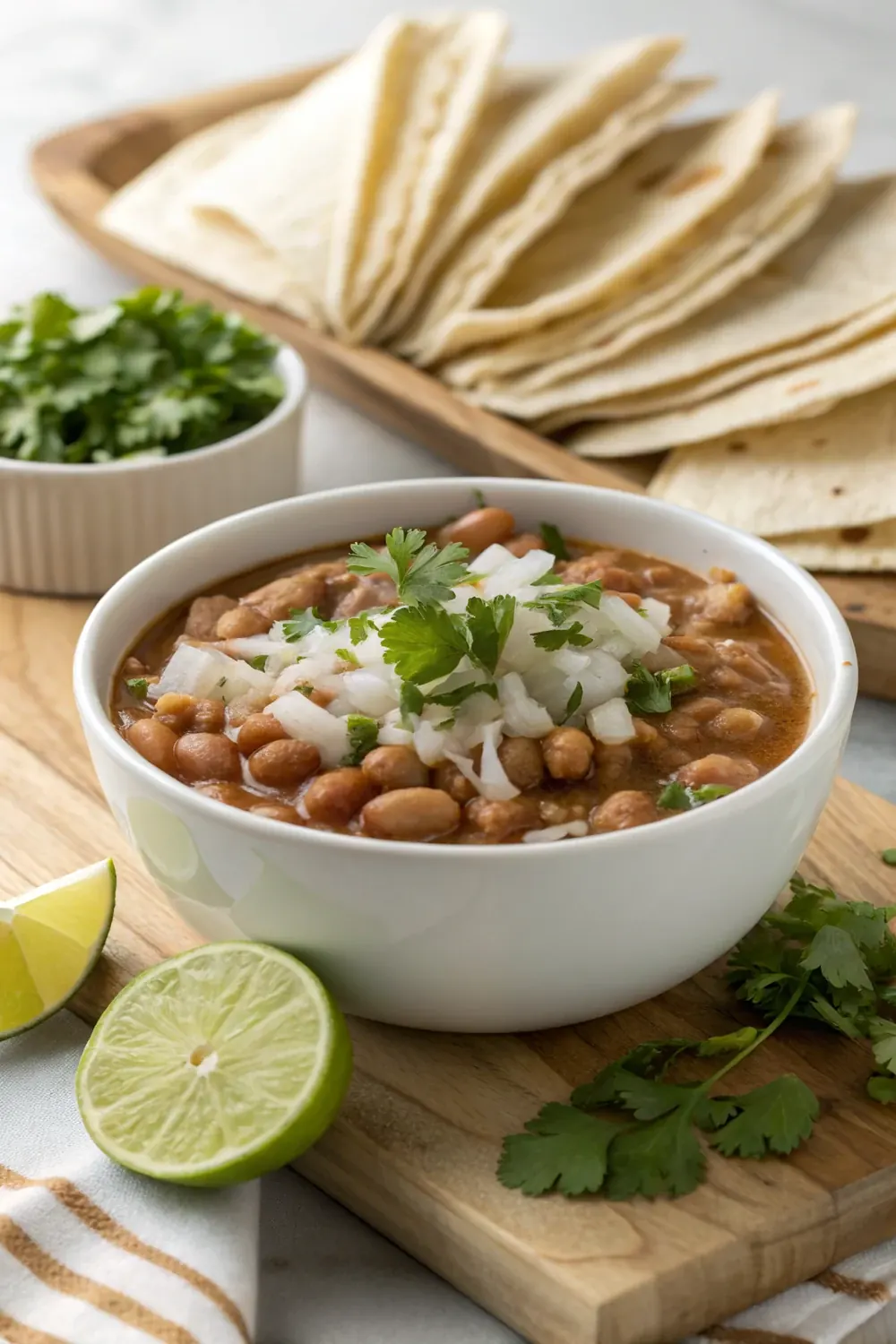
There is a bowl of beans in the Rio Grande Valley that would confuse most people who grew up on Texas pinto beans, and the confusion is entirely about liquid. You order frijoles charros at a place in McAllen or Brownsville and what arrives is a bowl, not a plate. There is a spoon. The beans are down in there somewhere, but what you notice first is a rust-colored broth with bacon and chorizo and cilantro floating in it, and you understand within one spoonful that this soup-adjacent thing is the actual dish and the beans are just the most solid part of it.
I learned that lesson embarrassingly late. For years I cooked pintos the way my granny did in Lockhart, low and slow until the pot liquor thickened up creamy and the beans held their shape on a spoon next to brisket. That is a legitimate and wonderful pot, and I have written the whole method down in my Texas pinto beans. But it is not charro beans, and calling it charro beans is the mistake I made for a decade. Charro is looser, brothier, meatier, and far more aggressively seasoned. It is closer to a soup than a side dish, and treating it like a side dish is why most home versions come out wrong.
So this page is the brothy version, done properly. The double pork base that gives it body without thickening it, the stock-not-water rule that most recipes skip, why the tomato goes in late, how to keep the cilantro from cooking to nothing, and the borracho variation, which is the same pot with a bottle of beer in it and does not need a page of its own no matter what the internet tells you. If you have made pintos before, nothing here is technically hard. It is a set of small decisions that all push in the same direction: toward broth.
What Charro Beans Actually Are
Charro means horseman in Spanish, and the charro is the traditional Mexican horseman of Jalisco and the northern ranch country, the figure in the wide hat and the fitted suit you see at a charreada. Frijoles charros are ranch-hand beans, food cooked in quantity over a fire for people who had been working since before dawn. That origin explains the composition exactly: cheap dried beans stretched with whatever cured pork was around, kept loose with liquid so a pot fed more people, and seasoned hard because it had to stay interesting eaten five days a week.
The dish crossed the Rio Grande with the ranching culture itself and settled into South Texas so completely that most Texans think of it as ours. In the Valley, in Laredo, in San Antonio, frijoles charros is a default. It shows up at the taqueria in a foam cup alongside the tacos, at the barbecue joint in a bowl, at the carne asada in a pot on the edge of the grill where somebody keeps ladling from it all afternoon.
What makes it a distinct dish rather than a regional accent on pinto beans is the intended eating format. Charro beans are eaten with a spoon, from a bowl, often as a course of their own or with a tortilla as the utensil. That single fact drives every technical decision: the broth has to be worth spooning, so you build it from stock and rendered pork rather than water and bean starch, and you stop before it thickens.
You will also see the term frijoles a la charra, which is the same thing. And you will see charro beans made with a hundred different meat combinations, because the ranch-hand logic was always use what you have. Bacon and chorizo is my standard because the two do different jobs. Bacon brings smoke and clean rendered fat; chorizo brings paprika, vinegar tang, and the orange color that makes the broth look like charro beans instead of murky bean soup.
The Broth Is the Dish: Stock, Not Water
Here is the decision that separates a real pot of charro beans from a pot of pintos somebody added cilantro to. You cook the beans in stock. Not water, not water with a bouillon cube dissolved in it at the end, but eight full cups of actual chicken stock going in at the start and cooking down with the beans for two hours.
The reasoning is structural. In a thick Texas pinto pot, the liquid gets its character from the beans themselves; you cook it long enough that released starch bodies up the pot liquor into something creamy and substantial. That works precisely because there is not much liquid relative to bean. In a charro pot you are running roughly twice the liquid, which means bean starch alone cannot possibly flavor it. Cook charro beans in water and you get pale, thin, sad broth with well-seasoned beans sitting in it. The seasoning stays in the solids and the liquid stays empty.
Low-sodium is the only kind to buy for this, and it is not a health note. You are reducing eight cups down over two and a half hours while also adding bacon and chorizo, both of which are cured and salty. Regular stock plus that pork will land somewhere past edible, and there is no way back. Salt at the end, once, when the reduction has finished and you can actually taste the final concentration.
Homemade stock is better and I use it when I have it, but honestly the gap here is smaller than usual because the pork base is doing so much of the heavy lifting. A decent boxed low-sodium chicken stock plus properly rendered bacon and properly browned chorizo will beat homemade stock with lazily cooked meat every time. Spend your effort on the browning.
Double Pork: Why Bacon and Chorizo Together
Most charro recipes name one pork product and move on. I use two, and they are not interchangeable, because they occupy different parts of the flavor.
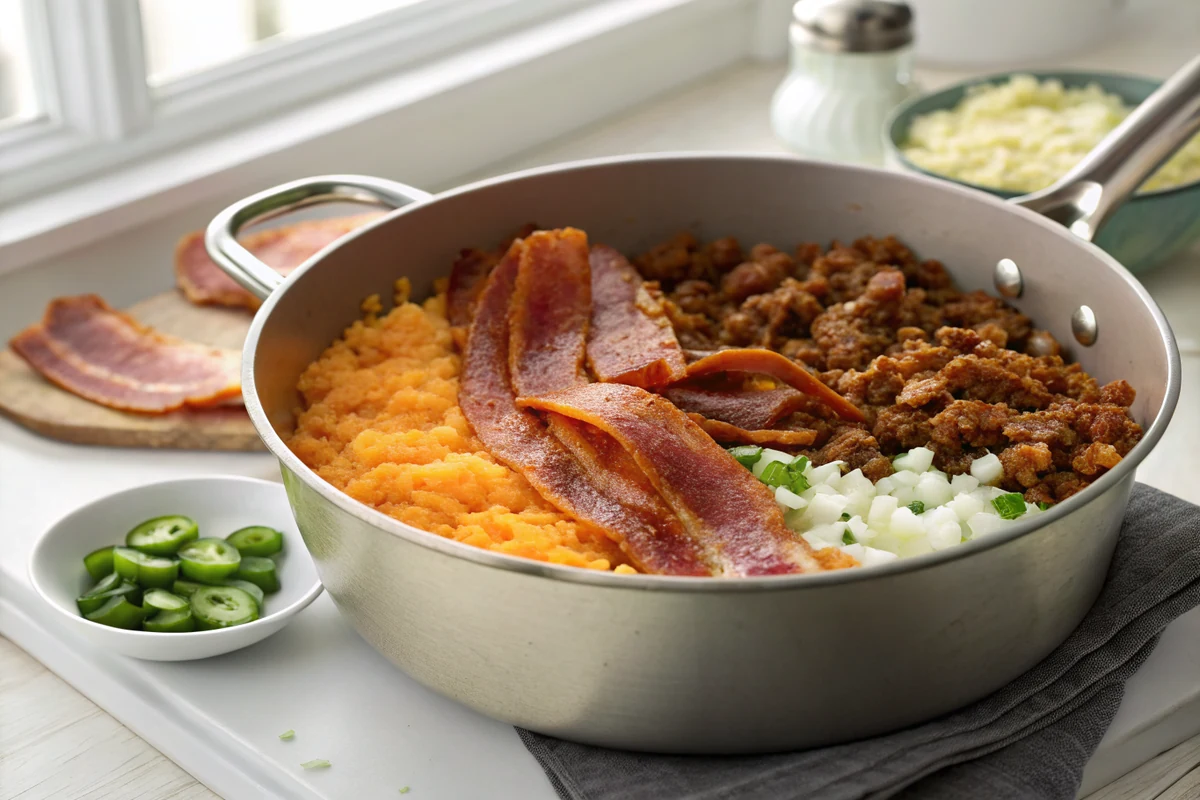
Bacon supplies smoke and a large volume of clean, neutral rendered fat. That fat is the cooking medium for everything that follows and it is what gives the broth its slick, satisfying mouthfeel without any thickening. Thick-cut is worth seeking out because it holds its texture through a two-hour simmer; thin supermarket bacon dissolves into unidentifiable soft threads by the end. Cut it crosswise into quarter-inch strips rather than dicing, so the pieces stay recognizable in the bowl.
Chorizo supplies color, acid, and paprika depth. Fresh Mexican chorizo, the soft raw kind sold in a plastic tube or loose at the meat counter, is what you want. It is not Spanish chorizo, which is a firm cured sausage that behaves completely differently and will not break down or release its fat the same way. If your grocery store only carries the Spanish kind, you are better off skipping chorizo entirely and adding a teaspoon of smoked paprika than substituting.
The order is bacon first, chorizo second, and it matters. Bacon renders slowly and needs a mostly empty pot and gentle heat to give up its fat without burning. Once that fat is pooled, the chorizo goes into it and browns fast and hard. Reverse the order and the chorizo scorches on a dry pot bottom while the bacon underneath refuses to render.
One more note on the chorizo: leave the fond alone. When you brown chorizo properly it welds a layer of orange-brown crust onto the pot bottom, and every instinct says scrape it off before it burns. Do not. Let it sit until the onions go in and release enough water to lift it on their own. That deglazing step is where the broth gets its color.
Charro vs Borracho: One Bottle of Beer
Borracho means drunk, and borracho beans are charro beans made with beer. That is the entire difference. There is no separate technique, no different meat, no distinct regional tradition worth a page of its own. It is this pot with twelve ounces of the stock swapped out for a bottle of Mexican lager.
I am telling you this plainly because a lot of recipe sites treat them as two dishes and that framing has caused a genuinely absurd amount of confusion. If you have seen borracho beans and charro beans described as different things and could not work out what the difference was supposed to be, that is because there mostly is not one.
When you do make the borracho version, the beer goes in with the stock at the start, not at the end. It needs the full simmer to cook off its raw alcohol edge and let the malt sweetness settle in. Beer added late tastes like beer added late. Use a light Mexican lager such as a Modelo, Tecate, or Pacifico. Something with body and bitterness, an IPA especially, will turn the pot genuinely bitter over two hours of reduction, because hop bitterness concentrates and does not cook out.
What the beer actually buys you is a faint malt sweetness and a slightly rounder finish. It is a real difference and worth trying once you have made the standard version, but if you were expecting a transformation, temper that. The pork base and the stock are still doing ninety percent of the work.
Tomato Goes In Late, and Here Is Why
Acid and dried beans are enemies until the beans are cooked. The acid in tomatoes reacts with the pectin in bean skins and holds them firm, which means a pot with canned tomatoes added at the start can simmer for three hours and still hand you beans with a chalky center. It is the single most common way a bean pot fails, and it is entirely avoidable.
So the tomatoes go in after the beans are already tender, and they get twenty minutes at a simmer to integrate. That is plenty. Canned tomatoes are already cooked; you are not developing them, you are just marrying them into the broth and letting the acid brighten a pot that has been going for two hours and has gotten a little heavy on itself.
I use fire-roasted diced tomatoes rather than plain, and it is a meaningful upgrade for the fifteen cents it costs. The char on fire-roasted tomatoes reinforces the smoke from the bacon and keeps the tomato from reading as bright and raw against a deeply savory broth. Undrained, always. That juice is seasoned liquid and you are making a brothy dish.
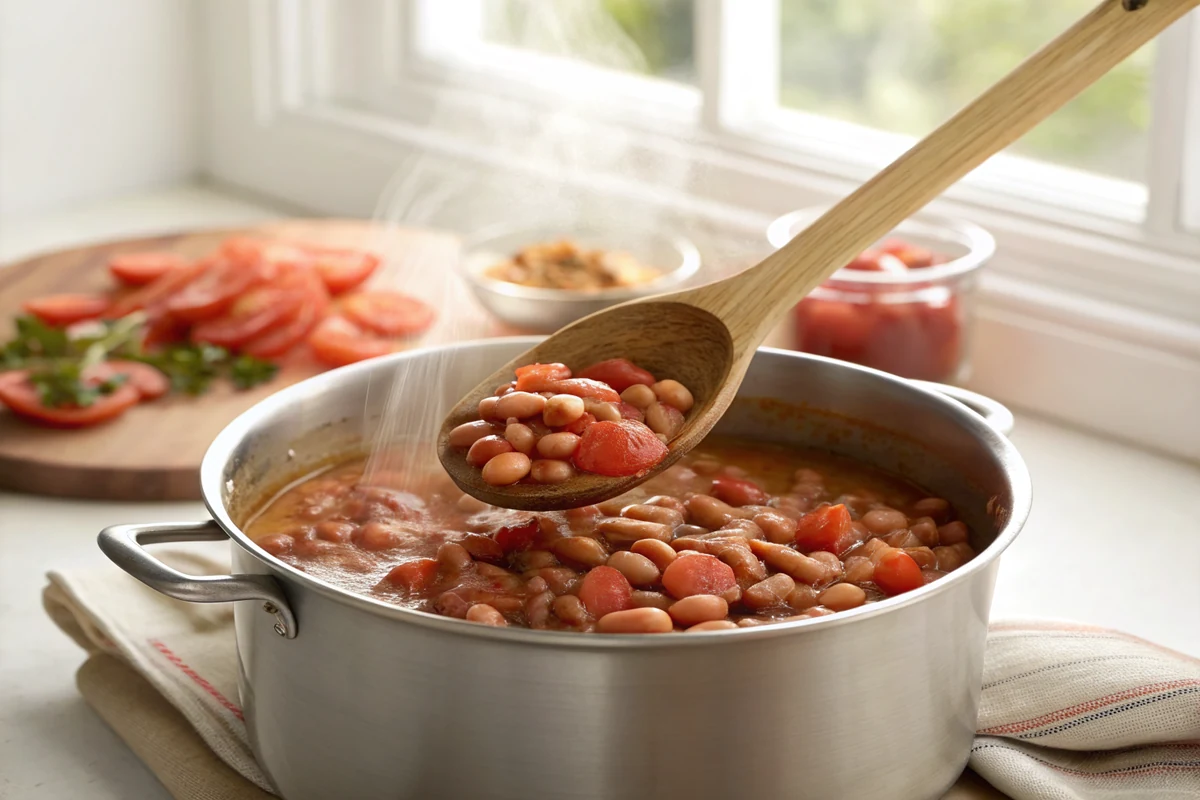
The same principle applies to lime. Lime wedges go on the table, never in the pot. A squeeze at the bowl hits the broth fresh and lifts it. Lime juice simmered into the pot goes flat and slightly bitter, and it does the same thing to the beans that the tomato would have.
Getting the Liquid Ratio Right
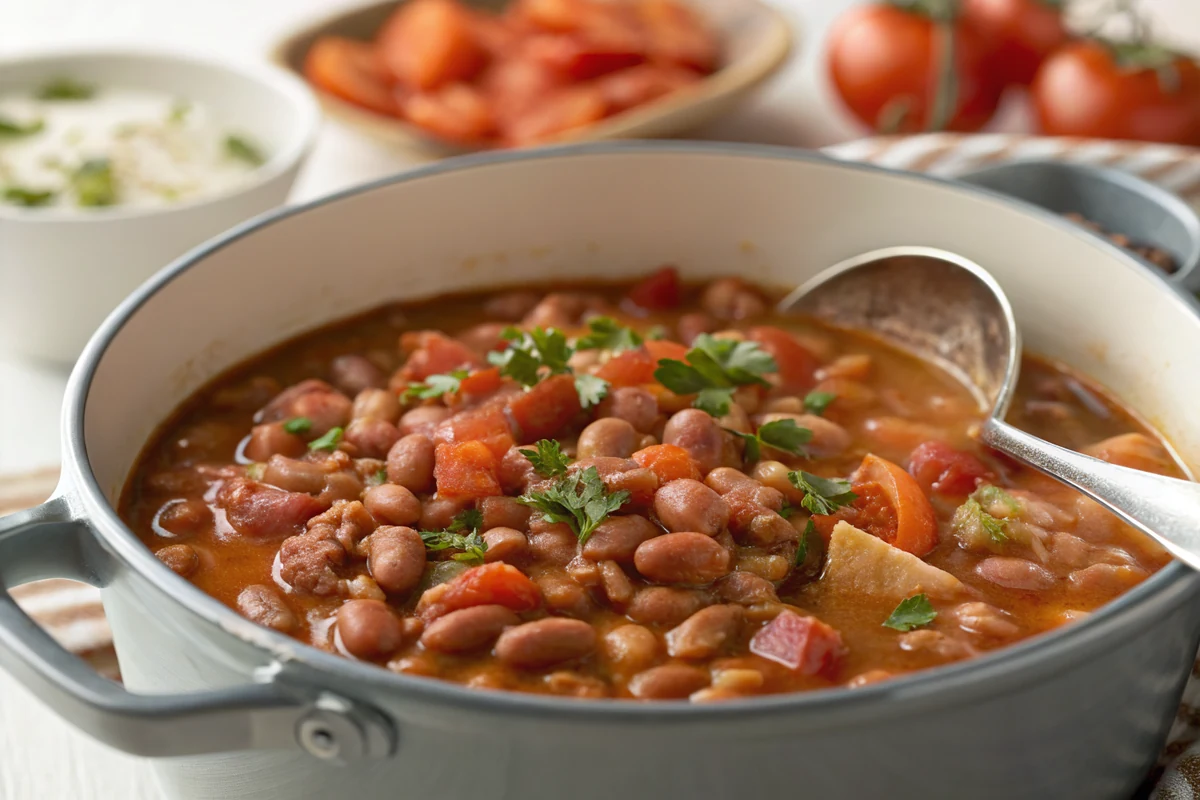
Two parts liquid to one part bean, roughly, at the moment it comes off the heat. That is the target and it is worth being deliberate about, because it is the one measurement that determines whether you made charro beans or made a slightly wet pot of pintos.
Practically, here is how to check it. Dip a ladle straight down and lift it. You should get mostly broth with beans suspended in it, and the beans should shift and settle when you tilt the ladle rather than sitting in a mound. If the ladle comes up looking like a scoop of beans with some liquid clinging to them, you are too thick.
Correcting thick is easy: add hot stock, half a cup at a time, and let it come back to a simmer for a couple of minutes before you judge again. Add it hot, not cold, so you do not shock the pot and stall the simmer. Correcting thin is also easy, just simmer uncovered and let it reduce, but check the salt again afterward because you have concentrated it.
The thing you must not do is mash beans against the side of the pot to thicken the broth. That is a legitimate technique in a thick pinto pot and it is exactly wrong here. It clouds the broth, turns it grainy, and moves the dish toward the texture of refried beans, which is a different dish with a different job entirely.
One warning about the day after. Beans keep drinking their liquid in the fridge, and a pot that was perfect at dinner will be noticeably tight the next morning. That is normal and not a failure. Loosen it with hot stock or water when you reheat, taste for salt, and it comes right back.
Cilantro: Off the Heat, and a Lot of It
A large bunch of cilantro sounds like too much until you have made this and realized that two thirds of it disappears into the broth and the remaining third is what you actually taste. Charro beans are a cilantro-forward dish. If you cook it with a timid hand you get something that tastes like generic seasoned beans.
The timing rule is absolute: cilantro goes in off the heat. Chlorophyll and the volatile oils that make cilantro taste like cilantro both break down fast in a boiling pot, and within about a minute you have gray flecks contributing nothing. Pull the pot off the burner, stir the cilantro in, and let the residual heat do the work for five minutes. That is enough to soften it and release the oil into the broth without cooking it out.
Use the stems. Cilantro stems carry more of the flavor compound than the leaves do and they have a clean crunch that survives being stirred into a hot pot. I chop the bottom inch off the bunch where it gets woody and use everything above it. Throwing away cilantro stems is a habit inherited from garnish-driven cooking and it makes no sense in a dish where the herb is a primary flavor.
Save a genuine handful for the bowls. Herb added at the pot and herb added at the table are doing different things; the first flavors the broth, the second gives you a fresh green hit on every few spoonfuls. Same reasoning as the raw onion, and both belong.
If you are one of the people for whom cilantro tastes like soap, this is a hard dish to adapt, because the herb is load-bearing. Flat-leaf parsley plus an extra squeeze of lime is the closest workable substitute. It will not taste like charro beans, but it will taste good.
Where Charro Beans Sit Among Texas Bean Pots
It is worth being explicit about how this pot differs from the other bean recipes on this site, because they get conflated constantly and the differences are real.
My Texas pinto beans is the thick, creamy Sunday pot: water or a small amount of stock, one pork element, cooked long enough that the pot liquor bodies up on its own. It goes next to brisket on a plate. Charro beans are the brothy Rio Grande Valley version with a double pork base and twice the liquid, and it goes in a bowl. Same bean, opposite finish. If you want the creamy one, start there.
My ranch style beans is a different animal again, a stovetop copycat of the tangy canned Texas classic built on a vinegar-and-chili-powder sauce rather than a pork broth. It is sharper and more assertive, and it clings to the beans instead of pooling around them.
On the sweet-and-baked end sit my Texas BBQ baked beans, which are pintos slow-baked with molasses and chopped brisket until a dark crust forms on top, and my cowboy beans, the ground beef and bacon skillet version that eats like a main course. Neither is brothy and neither is trying to be.
If you want a pot that goes further toward soup, my 15 bean soup in the slow cooker is genuinely a soup, built on a mixed bean blend and a ham hock over eight unattended hours. Charro sits between that and a side dish, which is exactly why it confuses people.
The quick pot of the family is my Southern black-eyed peas: cowpeas rather than true beans, thin-skinned, no soak, silky in ninety minutes with the same smoked-hock logic. When the craving is smoky and brothy but supper is two hours away, that pot beats every pinto in this list to the table.
Serving, Storing, and the Second Life
Serve charro beans in bowls with a spoon, with warm tortillas and lime on the table, and let people garnish. That is the format the dish was built for and it holds whether you are serving it as a course before carne asada or as the side that everyone actually finishes at a barbecue.
As a side, it belongs next to anything off a pit. Sliced brisket and a bowl of charro beans is a genuinely great plate, and the broth does the job a sauce would otherwise have to do. Texas hot links and charro beans is the same logic with more heat. At a Tex-Mex table it goes alongside Mexican rice as the standard two-side setup, and a wedge of cast iron cornbread for dredging the broth is a Texan liberty that no one in Monterrey would recognize and everyone at my table appreciates.
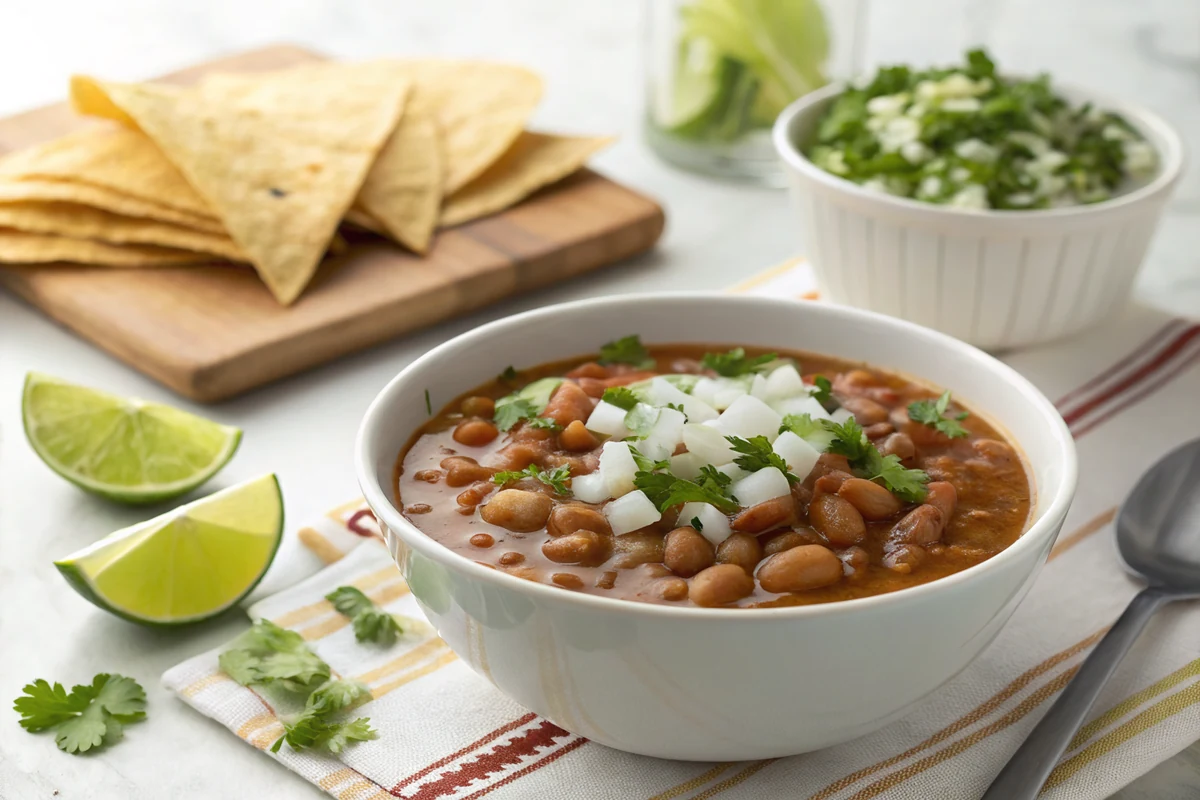
Refrigerated, they keep five days and improve for the first two. Reheat gently on the stove with a splash of stock to bring the broth back to where it was, and add fresh cilantro and onion at the bowl again; the first round has long since given up. Microwaving works for a single serving but the broth separates slightly, so stir it well.
They freeze for three months and freeze better than most bean dishes, because the loose broth means less texture to lose. Cool completely, portion into quart containers, leave an inch of headspace, and thaw overnight in the fridge. The one thing that does not survive is the cilantro, so plan on adding fresh.
For the second life: strain some of the broth off, mash the beans with a little of their fat, and you have a shortcut toward refried beans. Or drop leftover beans and broth into a pot with shredded leftover brisket and you have a soup that took ten minutes. Both are better uses than reheating the same bowl a fourth time.
Mistakes That Sink a Charro Pot
Cooking in water instead of stock. Covered above, but it is the number one failure and it is invisible until the end. You cannot fix it after the fact by stirring in bouillon; the beans have already absorbed two hours of flavorless liquid.
Salting at the start. Salt early and the beans firm up, take longer to cook, and by the time they are tender your reduced broth is a salt lick. Salt once, at the end, after the tomatoes.
Draining the bacon fat. I understand the instinct. Ignore it. That fat is the emulsifier that gives a loose broth any body at all, and without it you get a watery pot with grease spots on the surface instead of a broth that coats a spoon.
Adding tomatoes early. Covered above. It is the most common reason home cooks end up convinced their dried beans were old.
Cooking the cilantro. Also covered, also extremely common. If your finished pot has gray-green flecks in it, they went in too early.
Over-reducing. Charro beans that have simmered down to a thick paste are just pintos, and a slightly disappointing version of pintos at that. Watch the level in the last half hour and pull it while it is still loose. It tightens on standing anyway.
Using Spanish chorizo. The cured kind will not break down or render, so you end up with firm sausage discs in a broth that never got its color or its paprika. Fresh Mexican chorizo or nothing.
Scaling Up and the Slow Cooker Route
This recipe doubles cleanly for a crowd, with one adjustment: do not double the liquid proportionally at the start. Two pounds of beans want about fourteen cups of stock rather than sixteen, because a larger pot loses less to evaporation over the same period. Start lower and add hot stock at the end to hit your ratio, which is easier than trying to reduce eight extra cups.
You still need to build the pork base in a skillet even if the beans will finish elsewhere. There is no version of this where you skip rendering and browning; dumping raw bacon and raw chorizo into a pot of liquid gives you boiled pork and a greasy slick, not a broth.
For the slow cooker: build the base in a skillet as written, scrape everything including the fat into the crock, add the soaked beans and 7 cups of stock, and run it on LOW for 7 to 8 hours or HIGH for about 4. Add tomatoes, bacon, and salt in the last 30 minutes and the cilantro after you switch it off. A slow cooker evaporates almost nothing, which is why the liquid starts a cup lower.
For a pressure cooker with unsoaked beans: build the base on the saute function, add beans and 7 cups stock, and cook at high pressure for 35 minutes with a full natural release. Then saute mode for the tomato-and-bacon stage. This is the fastest route to a genuinely good pot, though the broth is marginally less developed than a slow simmer gives you.
Holding for a party: charro beans hold beautifully on a warm setting or over the lowest flame for two or three hours, which is why they show up at every backyard carne asada. Keep a kettle of stock nearby and loosen as needed, and hold the cilantro and onion back until people start eating.
Charro Beans Recipe
Ingredients
- For the beans:
- 1 lb (454 g) dried pinto beans, sorted and rinsed
- 8 cups (1.9 L) low-sodium chicken stock, plus more as needed
- 2 bay leaves
- For the pork base:
- 6 oz (170 g) thick-cut bacon, cut crosswise into 1/4-inch strips
- 8 oz (227 g) fresh Mexican chorizo, casings removed
- For the aromatics:
- 1 large white onion, diced, divided
- 6 garlic cloves, minced
- 2 jalapenos, seeded and finely diced (leave seeds in for real heat)
- 1 (14.5 oz / 411 g) can fire-roasted diced tomatoes, undrained
- 2 teaspoons ground cumin
- 1 teaspoon Mexican oregano, crushed between your palms
- To finish:
- 1 large bunch fresh cilantro, chopped, divided
- Kosher salt, to taste (start with 2 teaspoons, added late)
- Lime wedges, for serving
- Warm corn or flour tortillas, for serving
Instructions
- Soak the beans overnight. Cover the sorted pintos with three inches of cold water and leave them on the counter 8 to 12 hours. Drain and rinse. An overnight soak matters more here than in a thick pot of beans, because it produces beans that stay whole and distinct in a loose broth instead of blowing apart and clouding it. If you are short on time, quick-soak instead: boil 2 minutes, cover, rest 1 hour, drain.
- Render the bacon. Set a 6-quart Dutch oven over medium heat and add the bacon strips. Cook 8 to 10 minutes, stirring, until the fat has rendered out and the meat is browned but not brittle. Lift the bacon to a plate with a slotted spoon and leave every drop of fat in the pot. That fat is the foundation of the broth and you are not draining it.
- Brown the chorizo in the bacon fat. Add the chorizo to the hot bacon fat and break it up with a wooden spoon. Cook 6 to 8 minutes until it is deeply browned in spots and has given up its orange fat. Do not rush this and do not stir it constantly; the browned bits stuck to the pot bottom become the color and depth of the finished broth.
- Sweat the aromatics. Add three quarters of the diced onion, all the garlic, and the jalapeno to the pot. Reserve the remaining onion raw for serving. Cook 5 minutes over medium heat until the onion is translucent, scraping the pot bottom as the onion releases its water and lifts the browned fond.
- Bloom the spices. Stir in the cumin and crushed Mexican oregano and cook 45 seconds, just until they smell toasted. Ground spices need direct contact with hot fat to open up. Dumped into liquid later they stay dusty and flat, which is the difference between a charro pot that tastes seasoned and one that tastes merely spiced.
- Add beans and stock, then simmer. Add the drained beans, the chicken stock, and the bay leaves. Do not add salt and do not add the tomatoes. Bring to a boil, then drop to the lowest simmer that still shows movement. Cover partially, leaving a gap, and cook 90 minutes to 2 hours until the beans are tender all the way through with no chalky center.
- Add the tomatoes and the bacon back. Once the beans are fully tender, stir in the undrained fire-roasted tomatoes and the reserved cooked bacon. Simmer uncovered 20 minutes. Adding the acid now rather than at the start is the whole reason your beans got tender in the first place; tomato acid seizes bean skins and can add an hour to the cook.
- Salt and set the broth level. Now salt, starting with 2 teaspoons and tasting your way up. Check the liquid: you want the beans clearly swimming, roughly two parts broth to one part bean. If it has tightened past that, loosen it with hot stock a half cup at a time. If it is genuinely watery, simmer 10 more minutes uncovered. Do not mash any beans against the side.
- Finish with cilantro off the heat. Pull the pot off the burner and stir in about two thirds of the chopped cilantro. Let it sit 5 minutes. Cilantro added to a boiling pot turns gray and tastes like nothing within a minute, so it goes in at the end where the residual heat is enough to release its oil and nothing more.
- Serve in bowls with raw garnish. Ladle into bowls, making sure everyone gets broth. Top with the reserved raw diced onion and the rest of the cilantro, and put lime wedges and warm tortillas on the table. The raw onion crunch against the soft beans is not optional garnish, it is a texture the dish is built around.
Frequently Asked Questions
What is the difference between charro beans and borracho beans?
Borracho beans are charro beans made with beer. Borracho means drunk in Spanish, and the only change is swapping roughly 12 ounces of the cooking stock for a bottle of Mexican lager, added at the start so the alcohol cooks off and the malt sweetness settles in. The meat, aromatics, technique, and final texture are identical. They are not two separate dishes, despite being written up that way constantly.
What is the difference between charro beans and Texas pinto beans?
Liquid and pork. Charro beans are cooked in stock at roughly two parts liquid to one part bean, with a double pork base of bacon and chorizo, and are served brothy in a bowl with a spoon. Texas pinto beans use far less liquid, usually one pork element, and are simmered until the pot liquor thickens creamy so they sit on a plate next to brisket. Same bean, opposite finish.
Do you have to soak the beans for charro beans?
Soaking is more useful here than in a thick bean pot. An overnight soak produces beans that stay whole and distinct in a loose broth instead of blowing apart and clouding it, which matters when the broth is the point of the dish. If you skip it, add roughly an hour to the simmer and expect a cloudier result. A one-hour quick soak after a two-minute boil is a fair compromise.
Why are my charro beans still hard after hours of cooking?
Almost always acid added too early. Canned tomatoes, lime juice, or vinegar going in at the start reacts with the pectin in bean skins and holds them firm no matter how long you simmer. Add tomatoes only after the beans are already tender. The other two causes are salting at the start and genuinely old dried beans, which can be over a year off the harvest and never fully soften.
Can you make charro beans without chorizo?
Yes, though you lose the color and the paprika depth. Increase the bacon to 10 ounces and add 1 teaspoon of smoked paprika plus a pinch of cayenne with the cumin to compensate. Do not substitute Spanish cured chorizo, which will not break down or release its fat the way fresh Mexican chorizo does. Ham hock or leftover smoked brisket ends are better substitutions than the wrong chorizo.
What kind of chorizo do you use for charro beans?
Fresh Mexican chorizo, the soft raw kind sold loose or in a plastic tube at the meat counter. It cooks like ground meat, browns hard, and releases the orange paprika fat that gives the broth its color. Spanish chorizo is a firm cured sausage that stays in discs and never renders the same way, so it is not an equivalent swap in this dish.
How long do charro beans keep?
Five days refrigerated and three months frozen. They actually improve for the first two days as the broth deepens. Beans keep absorbing liquid in the fridge, so the pot will be noticeably tighter the next morning; loosen it with hot stock when reheating and check the salt. Add fresh cilantro and raw onion at the bowl each time, since the original round is long gone.
Are charro beans supposed to be soupy?
Yes. That is the defining trait. A proper pot comes off the heat at roughly two parts broth to one part bean, loose enough to eat with a spoon from a bowl. If your beans look like a thick side dish that holds its shape on a plate, you have made a good pot of pinto beans but not charro beans. Loosen it with hot stock and stop reducing earlier next time.