Tex-Mex Recipes
Refried Beans
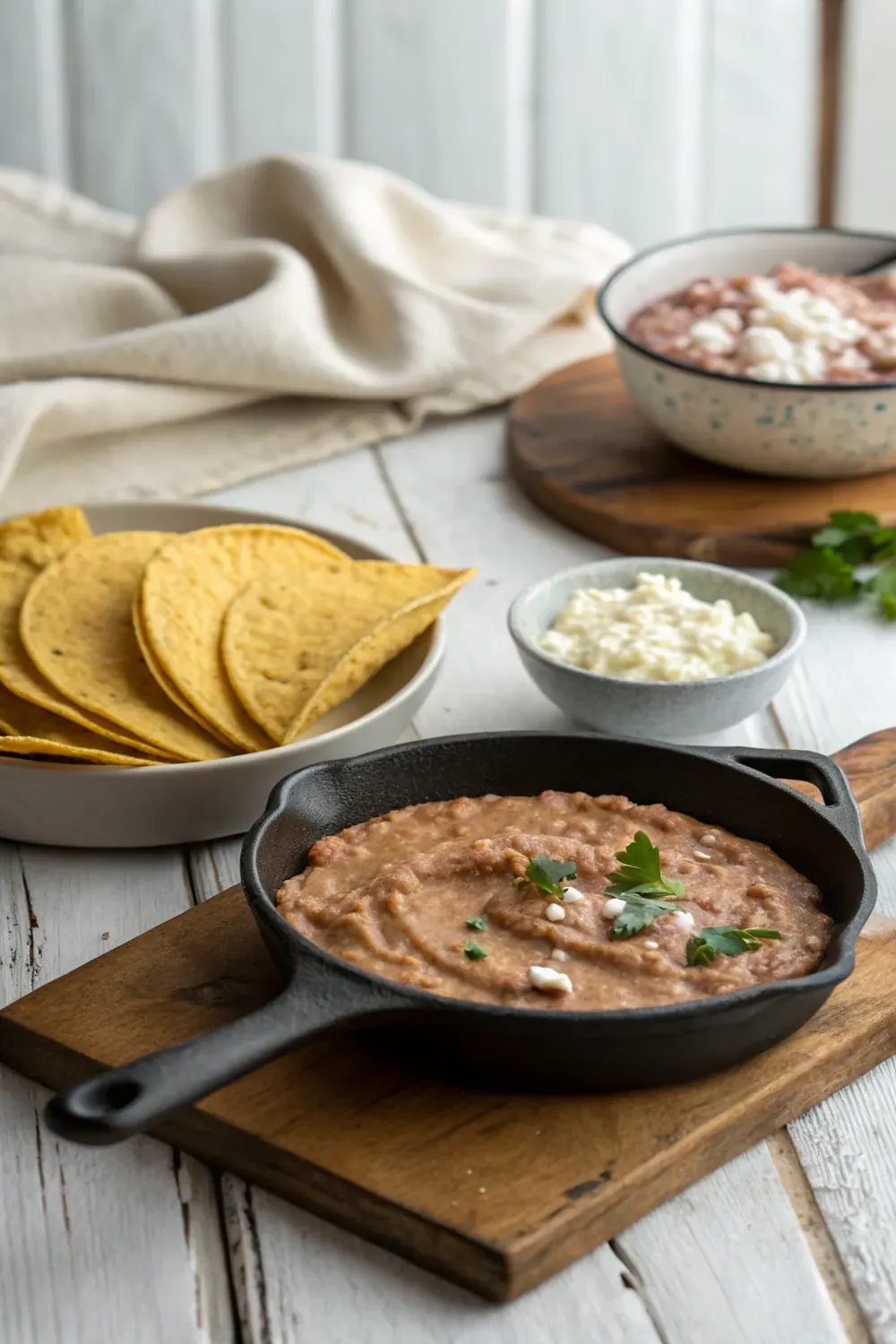
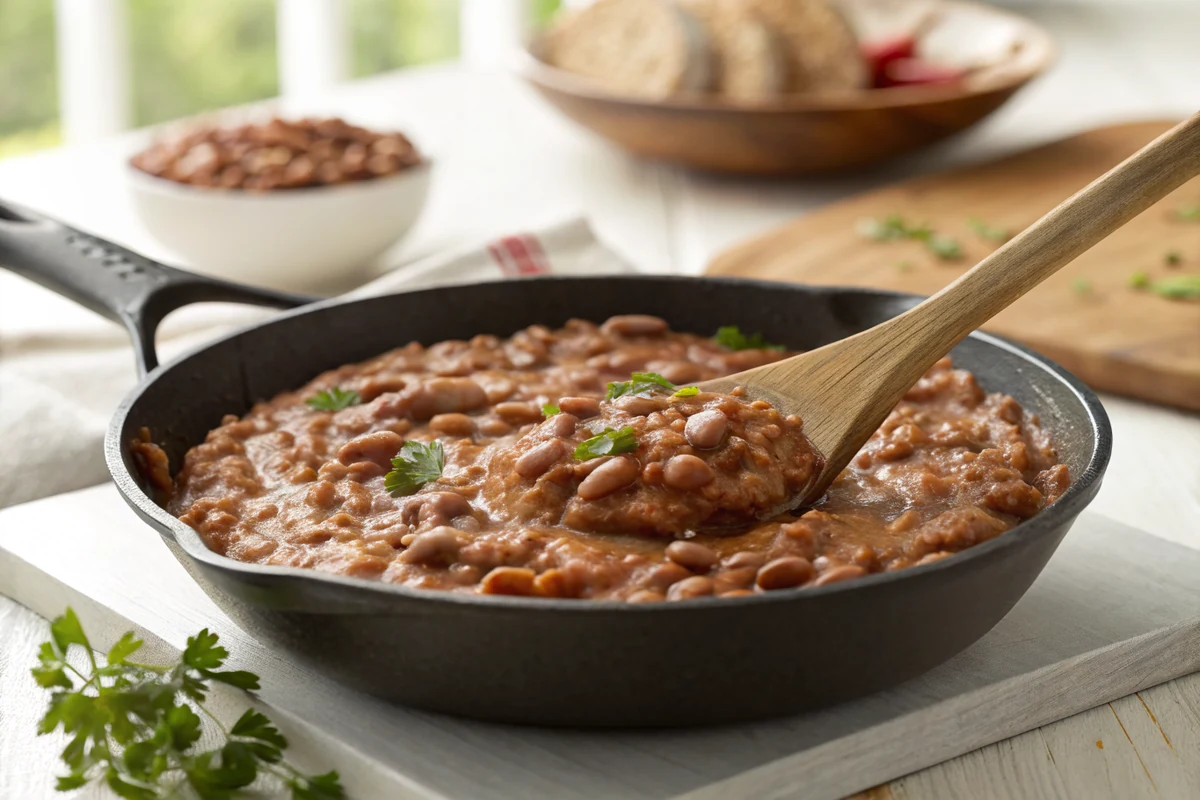
Chef Mia's refried beans: pintos fried in bacon fat and mashed with their own hot broth, not water. Restaurant texture at home in 25 minutes of frying.
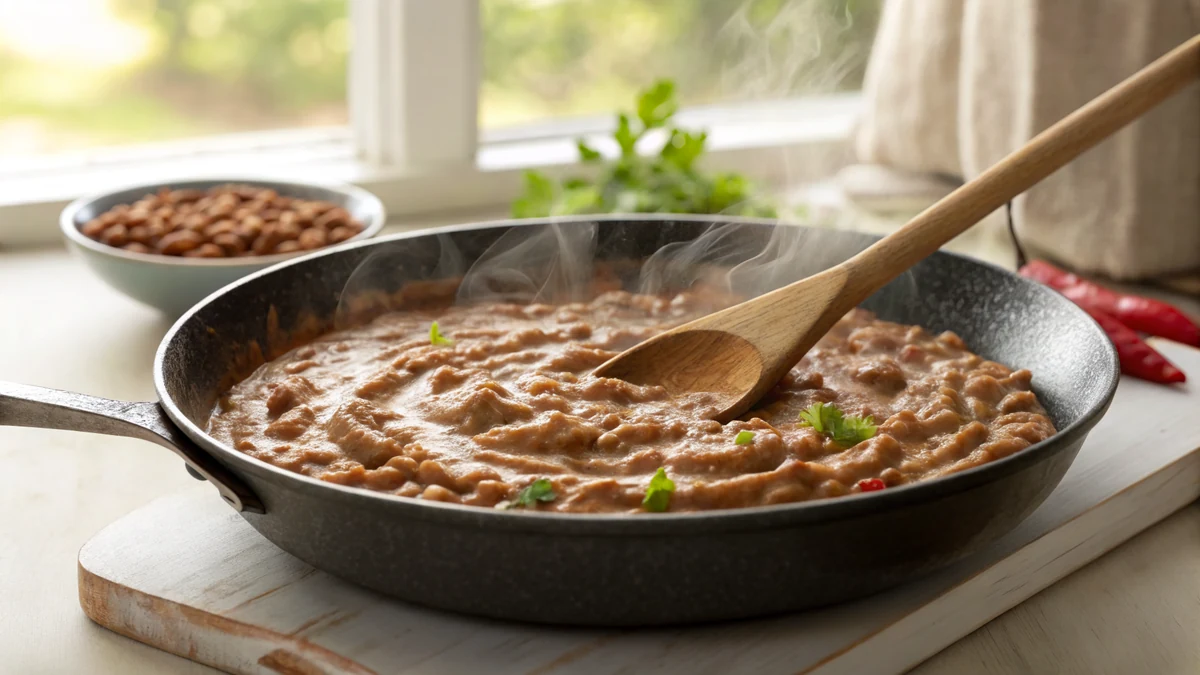
Quick answer: Refried beans are cooked pinto beans fried in fat and mashed until creamy, and the two things that decide whether they taste like a taqueria or like the can are the fat and the liquid. Use rendered bacon fat or lard, not oil, and mash the beans with their own hot cooking broth rather than water. The name is a mistranslation: frijoles refritos means well fried, not fried twice, and the technique is a genuine fry in a wide skillet over medium-high heat, not a gentle warm-through. Fry in stages, adding broth a half cup at a time and letting it cook off between additions, for about 25 minutes total. Stop while they are looser than you want, because they tighten dramatically as they cool. Use canned beans if you must; the method matters more than the starting bean.
Refried beans are the dish where I can taste, in one bite, whether somebody understood the assignment. The bad version is instantly recognizable: pale, pasty, slightly grainy, tasting mostly of salt and vaguely of bean. The good version is glossy, deeply savory, faintly smoky, loose enough to spread and rich enough that you notice the fat. The gap between them is not a matter of skill or expensive ingredients. It is two decisions.
Decision one is the fat. Refried beans are a fried dish and the fat is a primary flavor, not a lubricant. Lard or rendered bacon fat gives you the taste people are actually chasing when they order these at a restaurant and then cannot reproduce at home with vegetable oil. Decision two is what you mash them with. Bean cooking broth, hot, added in stages. Not water, not stock, and definitely not milk, which shows up in an alarming number of recipes.
The name itself has misled two generations of English speakers. Frijoles refritos does not mean fried twice. The re- prefix in Spanish here is an intensifier, so it means well fried or thoroughly fried. That matters practically, because people who think they are re-frying something already cooked tend to treat the step as a reheat. It is not a reheat. It is a real fry, in a hot wide pan, for twenty-five minutes, and it is where the entire dish happens.
The Fat Is a Flavor, Not a Lubricant
If you take one thing from this page, take this: the fat you fry these in is one of the two or three loudest flavors in the finished dish, and choosing it on health grounds rather than taste grounds is why home versions disappoint.
Lard is the traditional choice and the best one. Not the shelf-stable hydrogenated blocks in the baking aisle, which are deodorized and taste like nothing, but rendered leaf lard or, best of all, manteca from a Mexican grocery, which is often rendered with some of the pork flavor left in it. A third of a cup for a pound of dried beans sounds like a lot. It is the correct amount.
Rendered bacon fat is my everyday choice and I think it is arguably better for a Texas table, because it brings smoke that lard does not. If you cook bacon with any regularity, keep the fat in a jar in the fridge; it costs nothing and it is the single highest-leverage ingredient in this recipe. A third of a cup is about what six or seven strips of thick-cut bacon will give you.
Vegetable oil works mechanically and produces a dish that is fine and that nobody will describe as good. It contributes no flavor at all, which means the beans have to carry the entire load themselves. If oil is your only option, add a chipotle in adobo and an extra half teaspoon of smoked paprika to give the dish something to lean on.
For a vegetarian version, the honest answer is that you cannot fully replicate it, and the best available route is a neutral oil plus a tablespoon of toasted sesame oil or a knob of good butter added at the end for richness, plus more aggressive seasoning. It will be good beans. It will not taste like these.
Mash With Bean Broth, Never Water
The liquid you mash into the beans is the other half of the equation, and it is the mistake I see most often in home kitchens: draining the beans, throwing away the cooking water, and then adding tap water to loosen the mash.
That cooking broth has spent two hours absorbing everything. It is loaded with dissolved bean starch, which is what gives properly made refried beans their glossy, cohesive body rather than a grainy one. It carries the onion, garlic, and bay leaf you cooked with. And it is already at the right salinity relationship with the beans themselves.
Water does the opposite of all that. It dilutes flavor, contributes no starch, and produces a mash that separates slightly on standing because there is nothing binding it. If you have ever made refried beans that looked fine in the pan and then went watery on the plate, this is why.
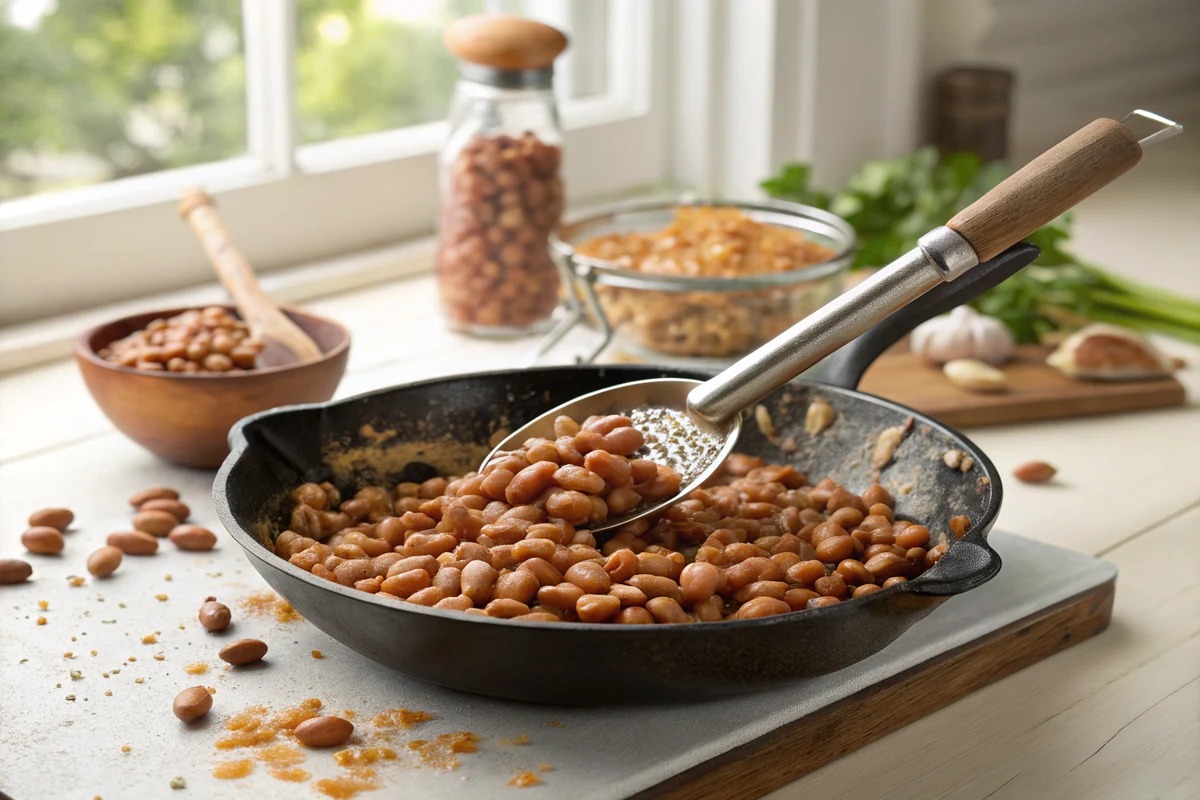
Keep the broth hot on a back burner. Cold liquid hitting a hot frying pan drops the temperature, stops the fry, and turns the process into a simmer for several minutes each time you add. Hot broth keeps the pan working. This is a small thing that costs one extra saucepan and noticeably improves the result.
Add it in stages, half a cup at a time, waiting for the pan to go from bubbling back to sizzling between additions. Each cycle of adding liquid and cooking it off deposits another layer of concentrated flavor. Dump it all in at once and you are boiling a bean purée down, which arrives at a superficially similar consistency with markedly less depth.
Refried Does Not Mean Fried Twice
The English name has caused real practical damage, so it is worth clearing up. Frijoles refritos translates literally to refried beans, but the Spanish prefix re- in this construction functions as an intensifier rather than a repetition marker. Refrito means well fried or thoroughly fried, in the same way that rebueno means really good rather than good again.
Why this matters at the stove: cooks who believe they are re-frying something already finished naturally treat the step as a brief reheat. Five minutes in a pan, mash, done. That produces the pale, pasty version. The fry is not a finishing touch on cooked beans; it is the step where the dish is actually made, and it wants twenty-five minutes and a hot wide pan.
You can hear the difference. A pan that is properly frying hisses and spits and occasionally pops. A pan that is stewing bubbles gently. If your pan is bubbling for most of the cook, your heat is too low or your pan is too small or you added too much liquid at once, and the beans will come out tasting boiled.
The corollary is that a narrow saucepan is the wrong vessel. Frying needs surface area for evaporation. A 12-inch skillet gives you roughly twice the evaporative surface of a 4-quart saucepan, which means you can add broth and cook it off in three minutes instead of eight, and you get more of those concentrating cycles in the same time.
Getting the Texture Right
Refried beans have a narrow texture window and it moves while you are looking at it, which makes it the trickiest part of the dish for people who have not made them a few times.
The target off the heat is looser than the target on the plate. Beans that look correct in the pan will be noticeably stiff by the time they reach the table, because the starch continues to set as the temperature drops. I pull them when a spoon dragged through leaves a track that closes back over within about two seconds, which looks slightly runny and is right.
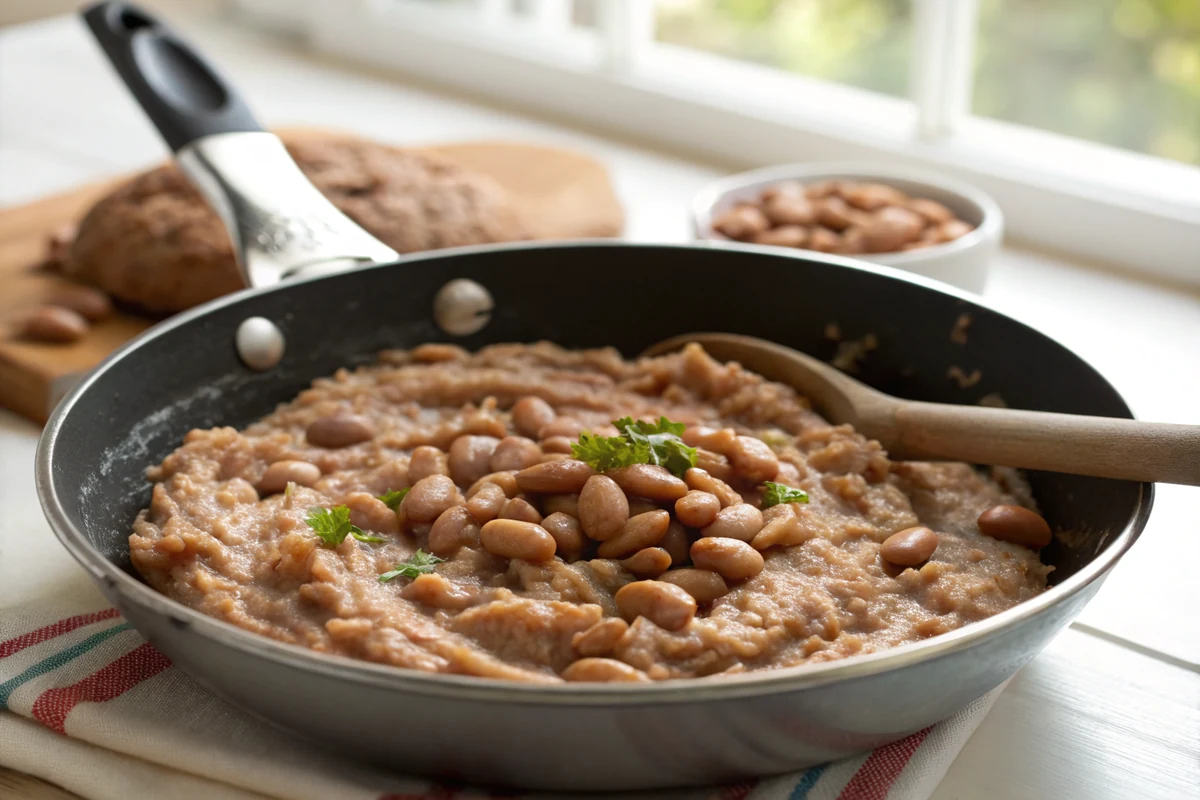
Leave roughly a fifth of the beans whole. This is a deliberate aesthetic and textural choice and it is what most taquerias do. A completely uniform smooth mash tastes flatter than it should, because texture variation registers to your palate as flavor complexity even when the flavor is identical.
If you want the ultra-smooth restaurant style, use an immersion blender for a few seconds at the end rather than mashing harder. Mashing harder makes them gluey; the starch gets overworked. Blending briefly gives you smooth without gummy. I still think the rustic version is better eating.
Fixing texture in either direction is easy and neither is a failure. Too thick: stir in hot broth a splash at a time off the heat. Too thin: back on medium heat and fry a few more minutes, stirring, until it tightens. The second is faster than you expect.
Reheating always requires loosening. Refrigerated refried beans set up nearly solid. Add a couple of tablespoons of broth or water per cup and warm them slowly, mashing as they soften. They come back completely, which is more than most bean dishes manage.
Dried Beans vs Canned
Dried beans give a better result and cost about a quarter as much, but the method matters far more than the starting bean, and a good cook with canned beans will beat a careless cook with dried every time.
With dried, the advantages are real: you control the cooking, you get two hours of aromatic infusion, and critically you get the cooking broth, which as covered above is not replaceable. The beans also cook to exactly the softness you want rather than whatever the cannery decided.
With canned, use three 15-ounce cans of pinto beans. Do not drain them; that liquid is the closest thing you have to bean broth and you need it. Add the contents of one can to the pan first including its liquid, mash, then add the others in stages the same way you would with broth. Supplement with hot water or a light chicken stock if you need more liquid.
Canned beans are already fully cooked and structurally soft, so the frying stage goes faster, roughly 15 minutes rather than 25. Watch for the pan pulling away and the sizzle rather than counting minutes. They also need more salt correction because canned bean liquid is salty in a flat way that does not season the beans themselves.
What I would not do is buy canned refried beans and try to improve them. They are pre-mashed with unknown fat in unknown quantity, and the frying stage that would develop flavor has already been done to them at a factory. Frying a pound of canned whole pintos properly takes fifteen minutes and produces something completely different.
Seasoning: Why Yours Taste Flat
The single most common complaint about homemade refried beans is that they taste flat, and in my experience the answer is salt about ninety percent of the time.
Beans absorb a genuinely surprising amount of salt before they cross from bland into savory, and there is a threshold effect. Below it they taste starchy and faintly sweet. Above it they taste like refried beans. There is not much middle ground, which is why people add a pinch, taste, decide it did not help much, and give up.
Two teaspoons of kosher salt for a pound of dried beans is my starting point and I frequently end up near three. Add half a teaspoon at a time, stir it fully in, wait thirty seconds, and taste. The transition is unmistakable when you hit it.
Salt at the end, not during the initial bean cook. Salt in the cooking water toughens bean skins and lengthens the cook, and more importantly you cannot judge the correct amount until the broth has reduced into the mash and the concentration has settled.
Beyond salt, the levers are cumin, which should be present but not identifiable, and acid. A squeeze of lime at the very end lifts a heavy pan of beans noticeably. And if they still need something, a minced chipotle in adobo adds smoke and heat and covers a multitude of sins.
How Refried Beans Fit the Tex-Mex Table
Refried beans and Mexican rice are the two halves of the standard Tex-Mex plate, the pair that arrives under everything else at every combination-plate restaurant in the state. Making both well is most of the distance between home Tex-Mex and restaurant Tex-Mex.
Under enchiladas they are structural, not decorative. A layer of refried beans on the plate under Tex-Mex beef enchiladas catches the chili gravy and gives you something to drag each bite through. The same goes for beef and cheese enchiladas.
In tacos they work as a binder. A smear of refried beans on the tortilla before the filling holds everything together and keeps a soft taco from falling apart, which is exactly why San Antonio puffy tacos and crispy chicken tacos both benefit from a thin layer inside the shell.
At breakfast they are the sleeper application. Refried beans with eggs is a complete breakfast, and a spoonful alongside migas or folded into Austin breakfast tacos turns both into something more substantial. Leftover refried beans reheated with an egg cracked into them is one of the best things I make with almost no effort.
As a dip, thin them slightly with broth, top with melted cheese, and serve with chips. This is essentially the base layer of every seven-layer dip and it is considerably better made fresh than from a can. Pair them with queso blanco and you have two thirds of a party spread.
Where This Sits Among the Bean Recipes
Refried beans are the only bean dish on this site where breaking the beans down is the goal, and it is worth saying plainly because every other bean recipe here treats mashing as a failure state.
Texas pinto beans is the whole-bean creamy pot, simmered until the pot liquor thickens on its own. It is the natural starting point for these, and honestly the best route to great refried beans is to cook a big pot of those on Sunday and fry the leftovers on Tuesday. The beans are already tender and the broth is already seasoned.
Charro beans go the opposite direction entirely, staying loose and brothy in a bowl with a spoon. Frying charro beans would be a waste of a good broth, though a cup of leftover charro beans strained and fried is genuinely excellent because of the chorizo fat already in them.
Ranch style beans are whole beans in a tangy sauce, and their vinegar edge does not survive a hard fry well. Cowboy beans and BBQ baked beans are both sweet and meat-loaded and belong in a different part of the meal entirely.
If you want the shortest possible path to good refried beans: make a pot of Texas pinto beans, eat half, and fry the rest with their broth. That is what happens in my kitchen most weeks and it is why I almost never cook beans specifically for this dish.
Storage and Reheating
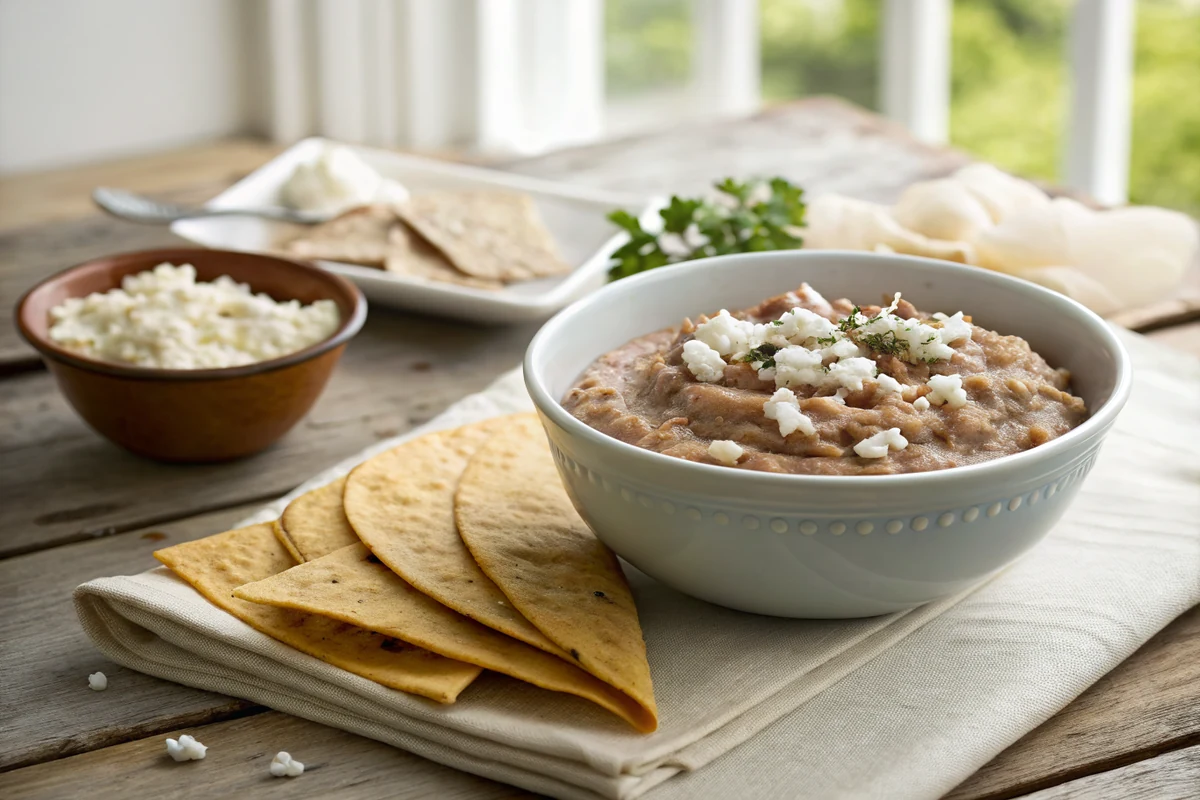
Refrigerated in a sealed container, refried beans keep five days. They set up firm, almost sliceable, which is normal and not a sign of anything wrong. The starch that makes them glossy when hot makes them dense when cold.
To reheat, add two to three tablespoons of liquid per cup of beans and warm them slowly over medium-low, mashing and stirring as they loosen. Hot bean broth is best if you saved extra, water is fine, and a knob of bacon fat or lard stirred in during reheating restores the gloss that fades in the fridge.
They freeze for four months and freeze better than most bean preparations because there is no delicate whole-bean texture to lose. Portion into flat freezer bags, press the air out, and lay them flat, which lets you break off exactly as much as you need. Thaw in the fridge or straight into a warm pan with a splash of water.
A trick worth knowing for meal prep: freeze them in a muffin tin in half-cup portions, then pop the pucks into a bag. One puck plus a splash of water in a small pan is a two-minute side dish, and it is the fastest way I know to make a weeknight plate feel finished.
If they have gone slightly sour or the surface has darkened past a light greying, throw them out. Cooked beans in the fridge past five days are one of the more reliable ways to make yourself unwell, and the smell test is not subtle here; a bad batch announces itself clearly.
Troubleshooting
They taste bland no matter what I add. Salt, almost certainly, and more than you think. Add half a teaspoon at a time and keep tasting. If they are properly salted and still flat, the fat was neutral oil and there is nothing carrying flavor; add a chipotle in adobo.
They are gluey and stretchy. Over-mashed, usually with a stick blender run too long. Bean starch overworks like gluten does. There is no fix for a batch that has gone gummy, so next time mash by hand and stop earlier.
They went watery on the plate. Mashed with water instead of bean broth, so there is no dissolved starch binding them. Fry the batch a few more minutes to drive off moisture, and next time save the broth.
They are grainy rather than creamy. The beans were undercooked. They need to be crushable against the roof of your mouth with zero resistance before frying. Simmer them longer; there is no amount of mashing that fixes an undercooked bean.
They set up like concrete in the fridge. That is normal and expected. Loosen with liquid and a little fat when reheating and they come back fully.
They stuck and burned on the bottom. Heat too high once the mash got thick, or you stopped stirring during the final fry. The last five minutes need attention. A little browning scraped back in is good; actual burning is bitter and cannot be stirred away.
Refried Beans Recipe
Ingredients
- For the beans:
- 1 lb (454 g) dried pinto beans, sorted and rinsed
- 1 white onion, halved
- 4 garlic cloves, smashed
- 1 bay leaf
- 10 cups (2.4 L) water
- For frying:
- 1/3 cup (75 g) rendered bacon fat or lard
- 1 small white onion, finely diced
- 3 garlic cloves, minced
- 1 teaspoon ground cumin
- 1/2 teaspoon Mexican oregano, crushed
- To finish:
- 1 1/2 to 2 cups (350 to 470 ml) reserved hot bean cooking broth
- 2 teaspoons kosher salt, plus more to taste
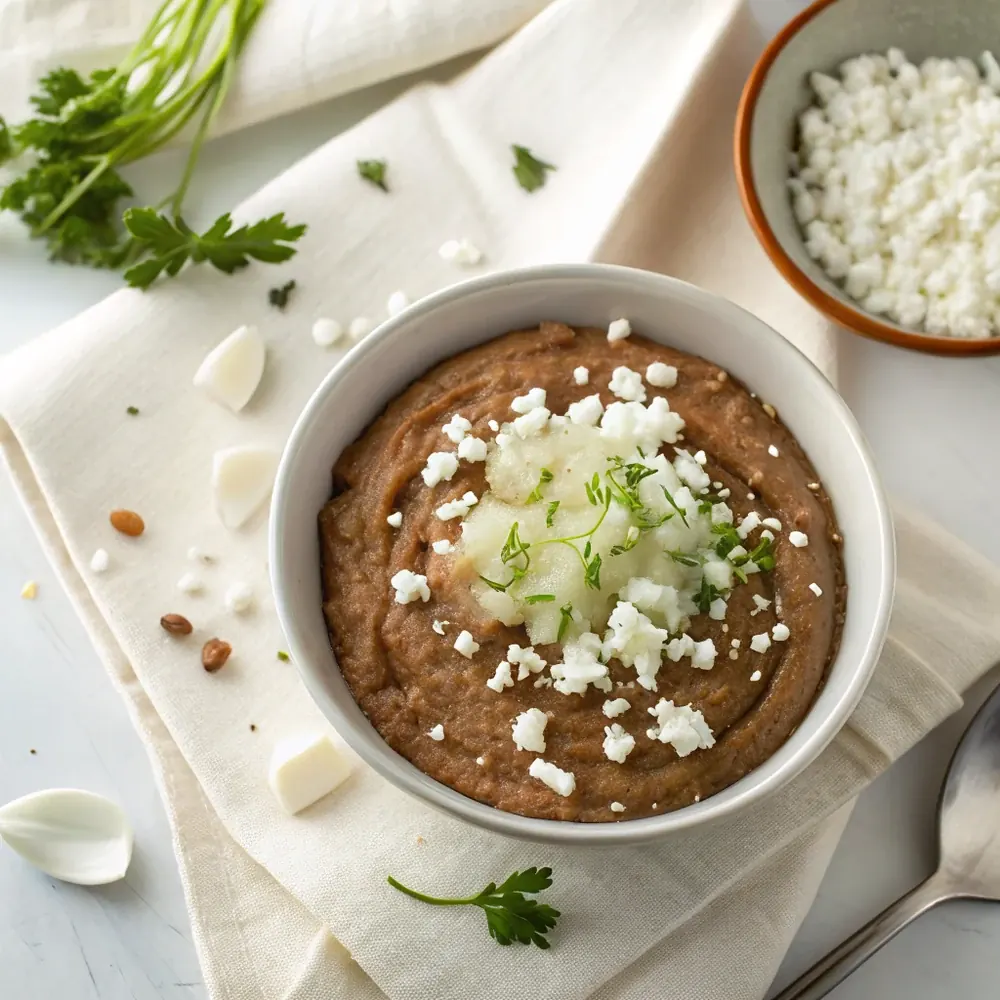
- Optional: crumbled cotija or queso fresco, for serving
- Optional: 1 chipotle in adobo, minced, for a smoky version
Instructions
- Cook the beans with aromatics. Cover the sorted pintos with 10 cups of water and add the halved onion, smashed garlic, and bay leaf. No salt. Bring to a boil, then simmer partially covered 90 minutes to 2 hours until the beans are soft enough to crush against the roof of your mouth with no resistance at all. Softer than you would want for a bean side dish; they need to mash.
- Reserve the broth, discard the aromatics. Fish out the onion halves, garlic, and bay leaf and discard them. Drain the beans over a bowl and keep every drop of the cooking liquid, then keep that liquid hot in a small saucepan on a back burner. This broth is your mashing liquid and there is no acceptable substitute for it.
- Heat the fat properly. Melt the bacon fat or lard in a 12-inch skillet over medium-high heat until it shimmers and a drop of water skitters. A wide skillet, not a saucepan; you need surface area for evaporation, which is what frying actually is. Too small a pan and you are stewing beans, not frying them.
- Fry the onion and bloom the spices. Add the diced onion and cook 5 minutes until softened and just starting to color at the edges. Add the minced garlic, cumin, and Mexican oregano and stir 45 seconds until fragrant. The spices need direct hot fat contact here, before any liquid arrives, or they stay dusty.
- Add the beans and start mashing. Add all the drained beans at once and let them sit undisturbed 2 minutes so the bottom layer starts to fry and stick slightly. Then start mashing with a potato masher, a bean masher, or the back of a sturdy wooden spoon, working in from the edges. The pan will hiss and spit; that noise is the fry doing its job.
- Add hot broth in stages. Add half a cup of the hot reserved broth and mash it in. Let it cook down until the pan is sizzling again rather than bubbling, which takes 3 to 4 minutes, then add another half cup and repeat. Continue for a total of about 25 minutes and 1 1/2 to 2 cups of broth. Adding all the liquid at once gives you bean soup that you then boil down, which is not the same thing and does not taste the same.
- Leave some beans whole. Stop mashing when roughly a fifth of the beans are still recognizably intact. Fully smooth refried beans read as a purée and lose the textural interest that makes them worth eating. If you want the restaurant-smooth version, this is the point where you would use an immersion blender, but I would encourage you not to.
- Fry the last stage hard. For the final 5 minutes, stop adding broth and let the beans fry, scraping the pan bottom and folding the browned bits back in. This is where the flavor concentrates and where the difference between good and excellent lives. You should see the beans pulling away from the pan sides as you drag the spoon through.
- Salt at the end. Add the salt now, starting with 2 teaspoons, and taste. Beans need considerably more salt than people expect, and they will taste flat and vaguely sweet until they cross the threshold. Add in half-teaspoon increments and keep tasting; the moment it goes from bland to savory is unmistakable.
- Serve immediately, looser than you want. Pull them off the heat while they still look slightly too loose to serve. Refried beans tighten dramatically in the five minutes between the pan and the table as the starch sets. If they do set up too firm, a splash of hot broth stirred in brings them straight back.
Frequently Asked Questions
Why are they called refried beans if you only fry them once?
The English name is a mistranslation. Frijoles refritos means well fried or thoroughly fried; the Spanish prefix re- works as an intensifier here, not as a repetition marker. The beans are cooked first and fried once. The confusion matters practically, because cooks who think they are reheating something already finished under-fry them, and the frying stage is where the dish is actually made.
What fat is best for refried beans?
Lard or rendered bacon fat, and the choice is a flavor decision rather than a technicality. Lard is traditional; bacon fat adds smoke and suits a Texas table. Vegetable oil works mechanically but contributes nothing, which is the main reason home versions taste flat compared to a taqueria. Use about a third of a cup per pound of dried beans.
Can you make refried beans from canned beans?
Yes, and the method matters more than the starting bean. Use three 15-ounce cans of whole pinto beans undrained, adding one can with its liquid first, then the others in stages. The frying takes about 15 minutes instead of 25 since canned beans are already soft. Do not start from canned refried beans; the flavor-developing fry has already been done at a factory.
Why are my refried beans not creamy?
Usually undercooked beans. They must be crushable against the roof of your mouth with no resistance before frying, which is softer than you would want for a whole-bean side dish. The other cause is mashing with water instead of the bean cooking broth, which contributes the dissolved starch that gives refried beans their glossy body.
Do you drain the beans before frying them?
Drain them, but keep every drop of the cooking liquid and hold it hot on a back burner. You then add that broth back a half cup at a time during the fry, letting it cook off between additions. Throwing away the bean broth and mashing with tap water is the single most common mistake in home refried beans.
How do you make refried beans without lard?
Rendered bacon fat is the closest substitute and arguably better. For a fully vegetarian version, use a neutral oil plus a tablespoon of butter or toasted sesame oil at the end for richness, and season more aggressively with cumin, smoked paprika, and a minced chipotle in adobo. It will be good, but the fat is a primary flavor here and the result is not identical.
How long do refried beans last?
Five days refrigerated and four months frozen. They set up firm in the fridge, which is normal; loosen with two to three tablespoons of liquid per cup and a little fat when reheating and they come back completely. Freezing in flat bags or half-cup muffin-tin pucks makes single portions easy.
Should refried beans be smooth or chunky?
Leave roughly a fifth of the beans whole. Texture variation registers to the palate as flavor complexity, and a completely uniform mash tastes flatter than it should. If you want the ultra-smooth restaurant style, use an immersion blender for a few seconds rather than mashing harder, since over-mashing by hand makes them gluey.