Texas BBQ
Beef Short Ribs in the Oven
Oven beef short ribs: sear hard, then braise covered at 300F for 3 to 3.5 hours until fork-tender around 205F. Plus the dry-rubbed slow-roast BBQ route.
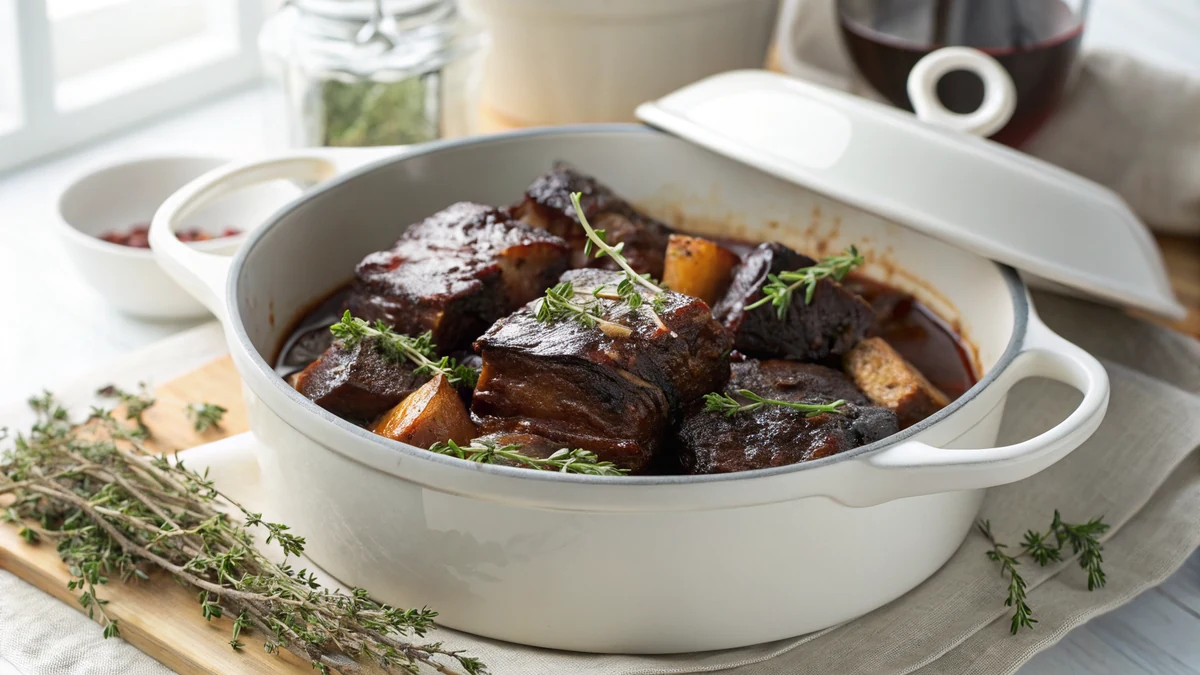
Quick answer: Beef short ribs in the oven take 3 to 3.5 hours at 300F (150C), covered, after a hard sear. Season 4 pounds of bone-in English-cut short ribs with salt and pepper, sear them deeply on all sides in a Dutch oven, then build the braise: onions, carrots, garlic, tomato paste, a cup of red wine or dark beer, and enough beef broth to come two-thirds up the ribs. Cover tight and braise at 300F until the meat is fork-tender and nearly falling off the bone, around 200 to 205F internal. Rest the ribs while you skim the fat and reduce the braising liquid into a glossy sauce. For a barbecue-style alternative, rub the ribs and slow-roast them uncovered at 275F for about 4 hours instead; no smoke ring, but real bark. Either way, the oven turns the toughest, richest cut in the beef case into the easiest special-occasion dinner in Texas.
Every cut of barbecue I love has an indoor life, and short ribs might live the best one. The same chuck-section ribs I baby through a long smoke or an all-day slow cooker turn out to be gloriously suited to the most ordinary appliance in the house. The oven holds temperature better than any pit I own, asks nothing while it works, and produces short ribs so tender and so deeply sauced that I have watched dedicated smoke snobs go quiet over a plate of them. This is the recipe I make when it is sleeting sideways in February, when the brisket budget went to the electric bill, or when I want the house to smell like Sunday for four straight hours.
There are two honest roads through an oven short rib, and this guide walks both. The main road is the braise: sear hard, nestle the ribs into wine, broth, and aromatics, cover, and let 300F do slow, wet work until the collagen surrenders. It is the French technique wearing a Texas hat, and it produces its own sauce, which no smoker can claim. The second road is the barbecue impression: dry-rubbed ribs slow-roasted uncovered on a rack at 275F, no liquid at all, which builds genuine bark and gets shockingly close to pit texture for a machine with no fire in it.
Short ribs forgive almost everything except impatience, and the oven removes every other excuse. If you can brown meat and set a timer, you can put restaurant-grade short ribs on a Tuesday table. Here is the whole method: choosing the cut, the sear that decides the sauce, the braising liquid mathematics, both temperature tracks, doneness, and what to do with the liquid gold left in the pot.
The Cut: English Bone-In Is the Oven's Favorite
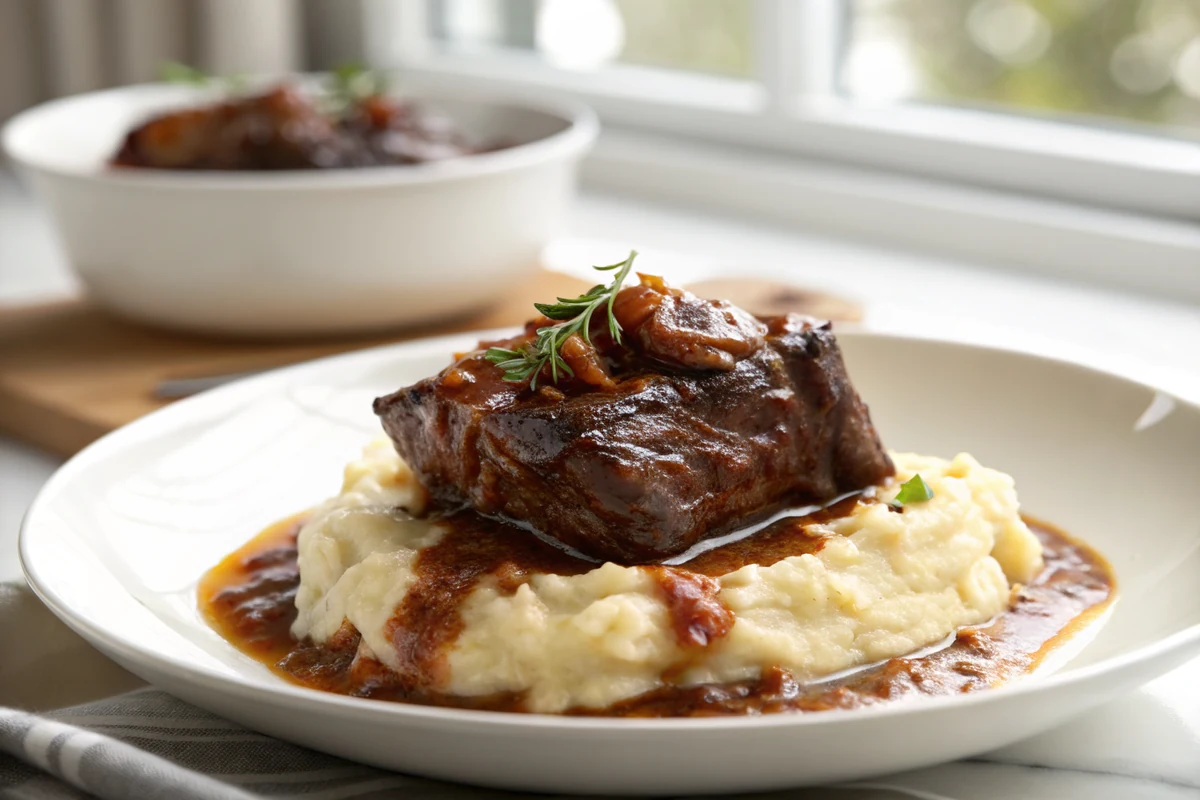
Walk past the case and you will meet the short rib family wearing four different haircuts, and the oven has a clear favorite. English cut, thick blocks of meat sitting on single 3 to 4 inch bone sections, is built for braising: the bone anchors the meat through hours of wet heat, enriches the liquid with marrow and collagen, and gives every serving that lamb-shank drama on the plate. That is the cut this recipe assumes, one meaty block per bone, 6 to 8 pieces for four pounds.
Boneless short ribs work nearly as well and are easier to portion; expect the braise to finish on the early side of the window and the sauce to run slightly less silky without the bones' contribution. If boneless strips are what the store had, they are also the exact cut my slow cooker boneless short ribs was built around, and that recipe and this one translate into each other freely: slow cooker LOW and a 300F covered oven are cousins doing the same slow, wet work.
The one cut to route elsewhere is flanken, the thin cross-cut strips sawed across several bones. Those are engineered for fast, hot fire, and hours of braising turns them stringy; give them the screaming grill they want via my flanken beef short ribs instead. And plan on roughly two-thirds of a pound to a pound of bone-in ribs per eater; short ribs shrink honestly as all that fat renders, and nobody at a short rib dinner has ever complained about extras.
The Sear Is the Sauce
A braise can only be as deep as its browning, because the crust you build in the first fifteen minutes dissolves into the liquid across the following three hours and becomes the sauce's entire backbone. So sear like you mean it: ribs patted bone-dry, oil genuinely shimmering, and every face of every rib held against the iron until it releases with a mahogany crust, three to four minutes a side, in batches with room between pieces. Crowd the pot and the meat steams gray instead of browning, and the sauce spends the rest of the evening apologizing for it.
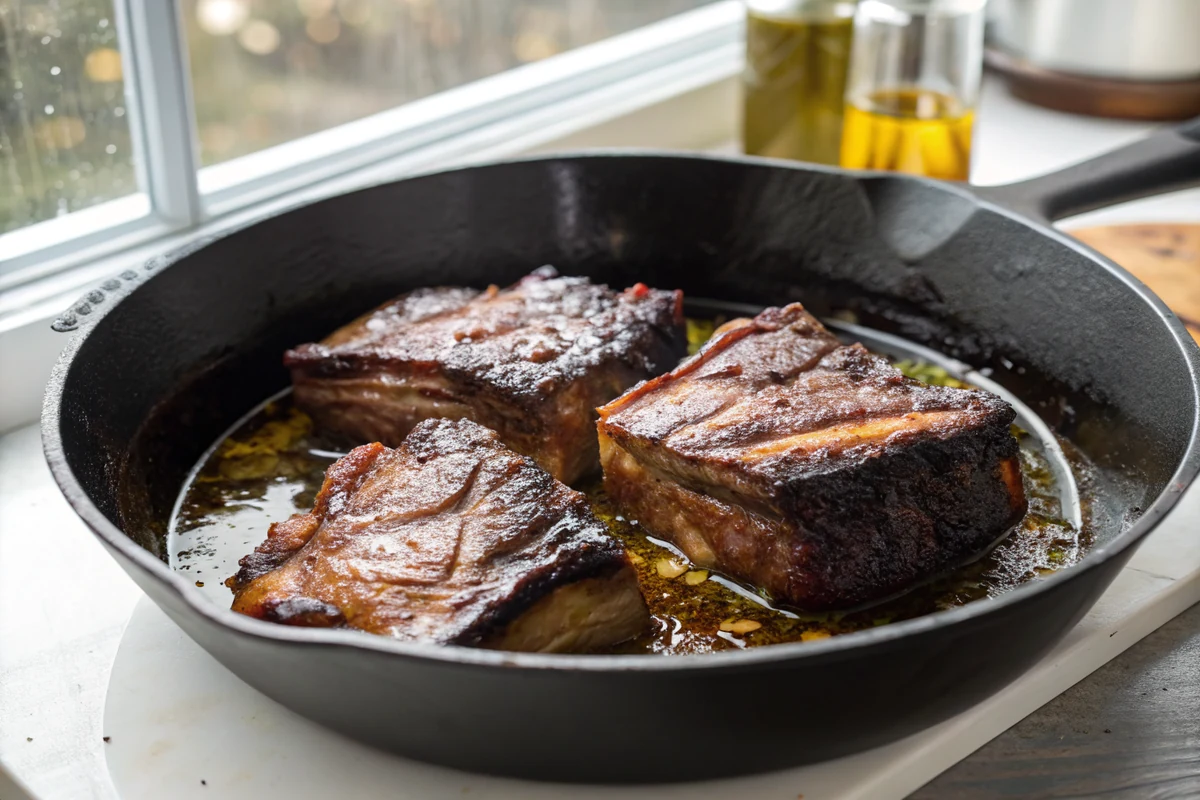
The pot matters here too. A heavy enameled Dutch oven is the classic one-vessel answer, sear, braise, and reduce in the same pot, and the fond never has to change addresses. Cast iron holds the recovery heat that back-to-back searing batches demand; my cast iron buying guide covers the workhorses if your kitchen is still assembling its arsenal. When the last rib comes out, pour off all but a couple of tablespoons of fat and look at the pot floor: that brown-black crust is not mess, it is currency, and the wine is about to spend it.
Braising Liquid: The Two-Thirds Rule
Braising liquid is a ratio and a restraint. The ratio: liquid comes two-thirds of the way up the ribs, never over their heads. Submerged ribs are boiled ribs, and boiled beef gives up its flavor to the pot instead of trading with it; the exposed top third braises in steam under the lid, which concentrates instead of dilutes. For four pounds in a snug Dutch oven, that lands near one cup of wine and two cups of broth, but trust the level, not the cups; pot geometry rules.
The liquid itself is an open cabinet. Dry red wine is the classic for depth and cut; a dark Shiner-style beer trades toward malt and reads more Texan at my table; straight beef broth with an extra spoon of tomato paste and Worcestershire works completely for an alcohol-free pot, and every drop of alcohol cooks off across three hours regardless. Onion, carrot, smashed garlic, browned tomato paste, thyme, and bay are the non-negotiable supporting cast. If your tastes run toward chile instead of thyme, a toasted ancho or two dropped into the pot pulls the whole dish toward the borderlands, and nobody files an objection in this house.
Two small technique flags: bring the pot to a bare simmer on the stovetop before it goes into the oven, so the braise starts working immediately instead of spending 40 minutes warming up, and set the lid a finger's width ajar. That slight vent lets the liquid reduce gently as it cooks, so the sauce is already halfway to itself when the ribs come out.
Why 300F Covered Is the Number
Three hundred degrees with a lid is the braising sweet spot because of what collagen wants: sustained time between roughly 180 and 205F internal, wet, without the violence of a boil. A covered pot at 300F settles its liquid at a bare, occasional-bubble simmer, right around 195 to 205F, which is exactly the zone where connective tissue melts into gelatin at a useful pace while the muscle fibers relax instead of seizing. Hotter ovens boil the pot and toughen the meat before it tenders; 275F works but stretches the job past four hours; 325F is the ceiling I would defend, with the window shifting 30 minutes earlier.
The turn at hour two, ribs flipped so the exposed tops take their turn in the liquid, is the only labor the middle of the cook asks. Otherwise the oven's great gift is stability: no stall, no fire to feed, no weather. It holds 300F with a fidelity my offset can only dream about, which is why braising is the one slow-cooking discipline where the timer is almost trustworthy.
Almost. Packer variation is real, and grass-fed or leaner ribs run ahead of schedule while huge, fat-armored ones lag. Start checking at the 3-hour mark and let the fork vote, not the clock. The window between tender and truly collapsed is wide and forgiving, a solid 30 to 45 minutes, which is one more reason short ribs are the braise to learn on.
The BBQ Track: Dry-Rubbed and Uncovered at 275F
Now the second road, for the day you want oven short ribs that eat like barbecue instead of Sunday roast. Skip the liquid entirely. Rub the ribs with a proper bark-builder, my Texas rub roundup has options, or run straight salt, coarse pepper, garlic, and a little smoked paprika, and set them fat side up on a wire rack over a foil-lined sheet pan. Into a 275F oven, uncovered, no cover ever, for about 4 hours, until the same 200 to 205F probe-tender finish as the braise.
The open, dry oven air does a modest impression of a pit: the surface dehydrates and browns into genuine bark, the fat renders and self-bastes down the sides, and the smoked paprika carries a rumor of fire. What you will not get is a smoke ring or real smoke depth, an oven has no combustion chemistry, and I will not pretend otherwise. What you get is ninety percent of the texture of my smoked beef short ribs with zero percent of the fire management, which on an iced-over January Saturday is a magnificent trade.
A half-and-half cheat lives between the roads: slow-roast uncovered for the first two hours to set a bark, then transfer the ribs to a baking dish with a cup of broth, cover tight, and finish the render braised. Bark plus guarantee. If that maneuver sounds familiar, it is because it is the oven translation of the wrapped smoke schedules in my 3-2-1 ribs method, the same two-act logic wearing an apron instead of an apron and gloves.
Doneness: The Fork Vote and the 205F Neighborhood
Short ribs announce doneness the same way in every appliance, and the announcement is textural. The fork test rules: a dinner fork twisted gently in the thickest rib should meet almost no resistance, and the meat should threaten to leave the bone under the fork's own weight without quite doing it. The thermometer corroborates around 200 to 205F, but on a cut this collagen-heavy the number is a suggestion and the feel is the law; ribs can read 203F and still need 30 more minutes if the fibers have not let go.
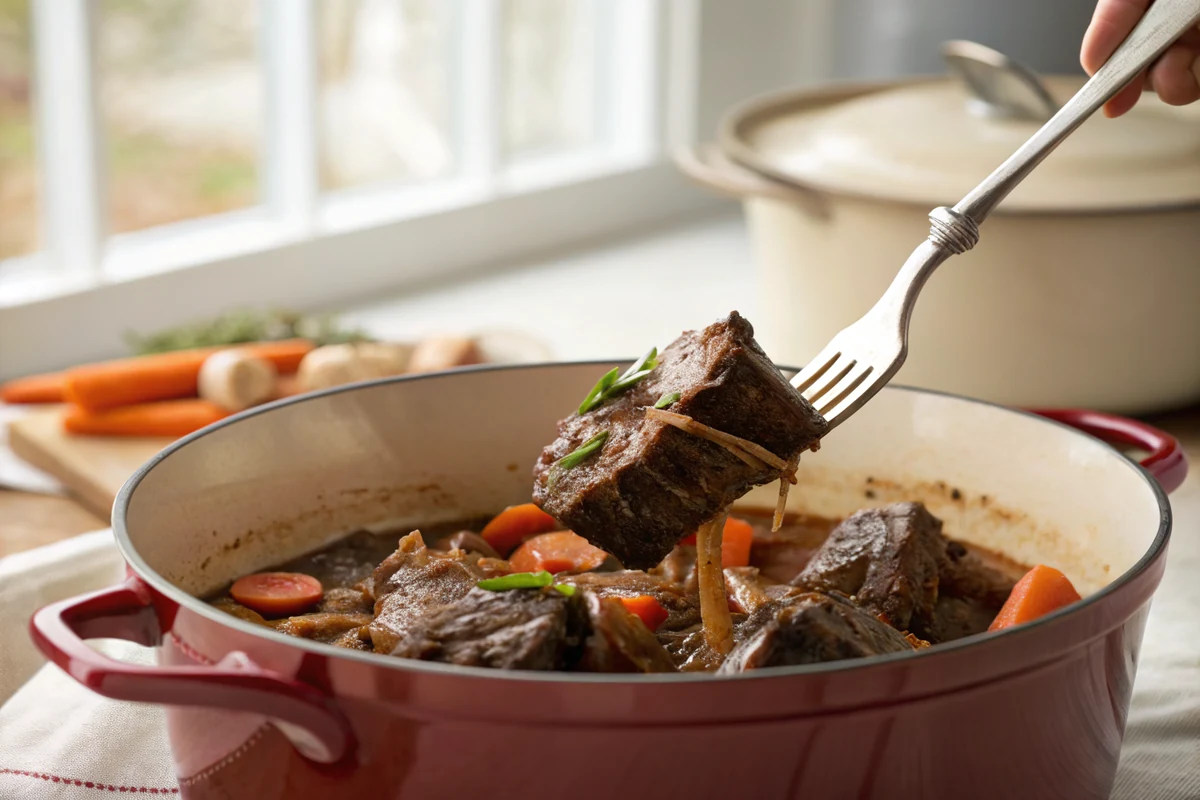
Undershoot and the meat is bouncy, gristly, and stingy with its flavor; there is no rescuing it at the table, only more time in the pot. Overshoot, and honestly, the penalty is mild: the meat slumps off its bones into the liquid and dinner quietly becomes the world's most luxurious shredded beef, destined for rice, mashed potatoes, or tomorrow's tacos. Between those poles sits a wide, patient plateau of perfect. When in doubt, another 20 minutes covered has never hurt a short rib in the history of the cut.
The Sauce: Skim, Reduce, Decide
When the ribs come out, the pot holds a murky, fat-slicked liquid that does not yet know it is a great sauce. Three moves get it there. Strain it, pressing the spent vegetables for their last contribution before discarding them. Skim it: short ribs throw a serious fat cap, and a ladle around the edges, or twenty minutes in the freezer to firm the cap for lifting, takes off the grease that would otherwise coat every bite. Then reduce it at a hard simmer, eight to twelve minutes, until it has dropped by half and coats the back of a spoon like thin syrup.
That is the whole classical answer, and most nights it needs nothing else. The Texas adjustments, should the pot want them: a masa harina slurry for body and a faint tamale-adjacent sweetness, the same thickener my venison chili leans on; a splash of cider vinegar if the richness needs a sharper edge; or a spoon of BBQ sauce whisked in, which nudges the whole plate toward the pit without embarrassing the wine.
Storage note that doubles as a serving suggestion: braised short ribs are one of the rare dinners that genuinely improves overnight. Chill the ribs in their liquid, lift the hardened fat off the top tomorrow, and rewarm gently; day two is deeper, cleaner, and pre-skimmed. I braise for Sunday on purpose and eat better on Monday, which feels like getting away with something.
Building the Plate
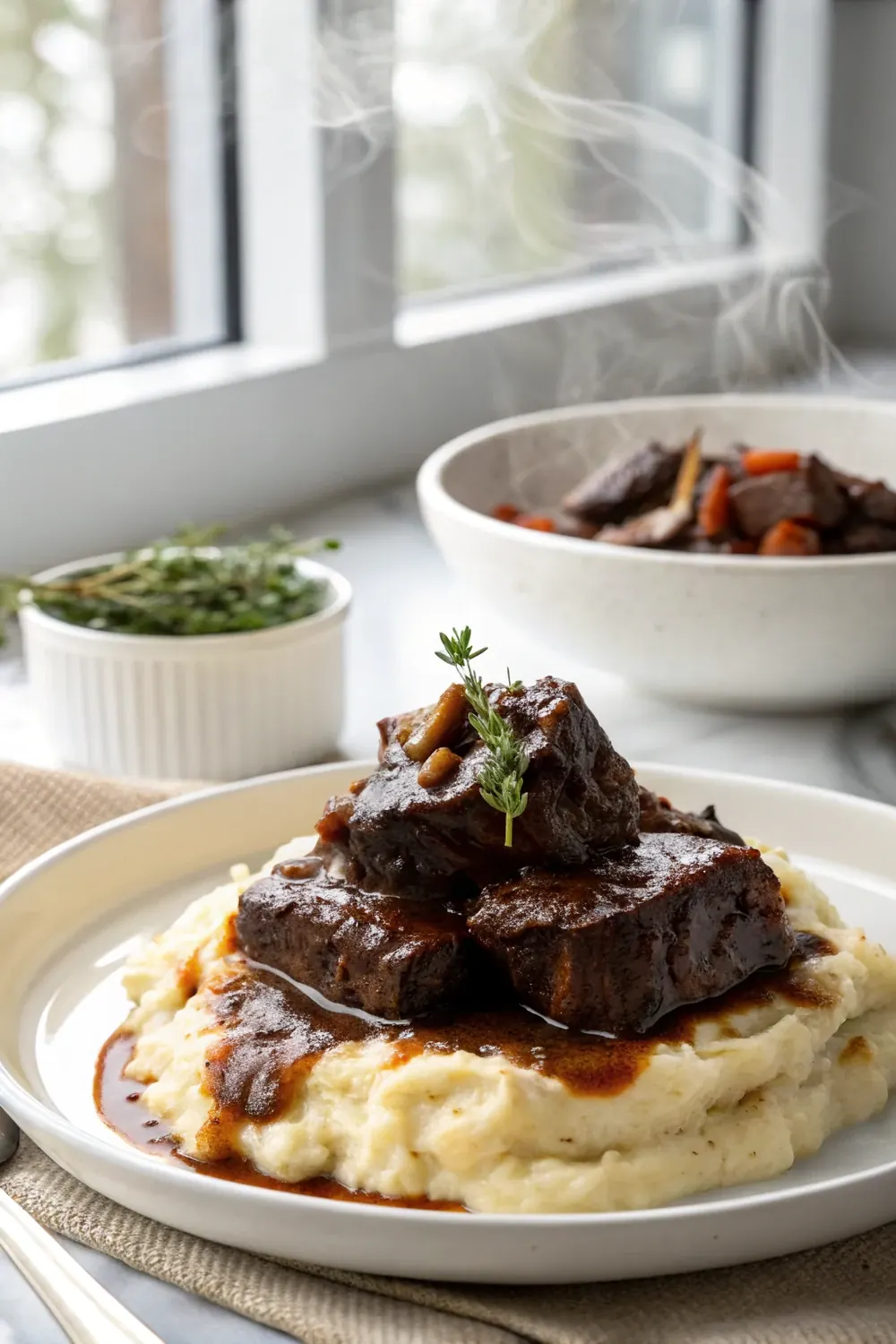
Short ribs over mashed potatoes is the canonical landing and it is canonical for hydraulic reasons: that reduced sauce needs somewhere soft to pool, and a cloud of buttery mashed potatoes is the correct floodplain. Cheese grits play the same role with more Texas in their accent; buttered egg noodles and polenta both audition well. Whatever the base, spoon sauce over the rib and the starch both, and put the rest in a pitcher on the table, because someone will ask.
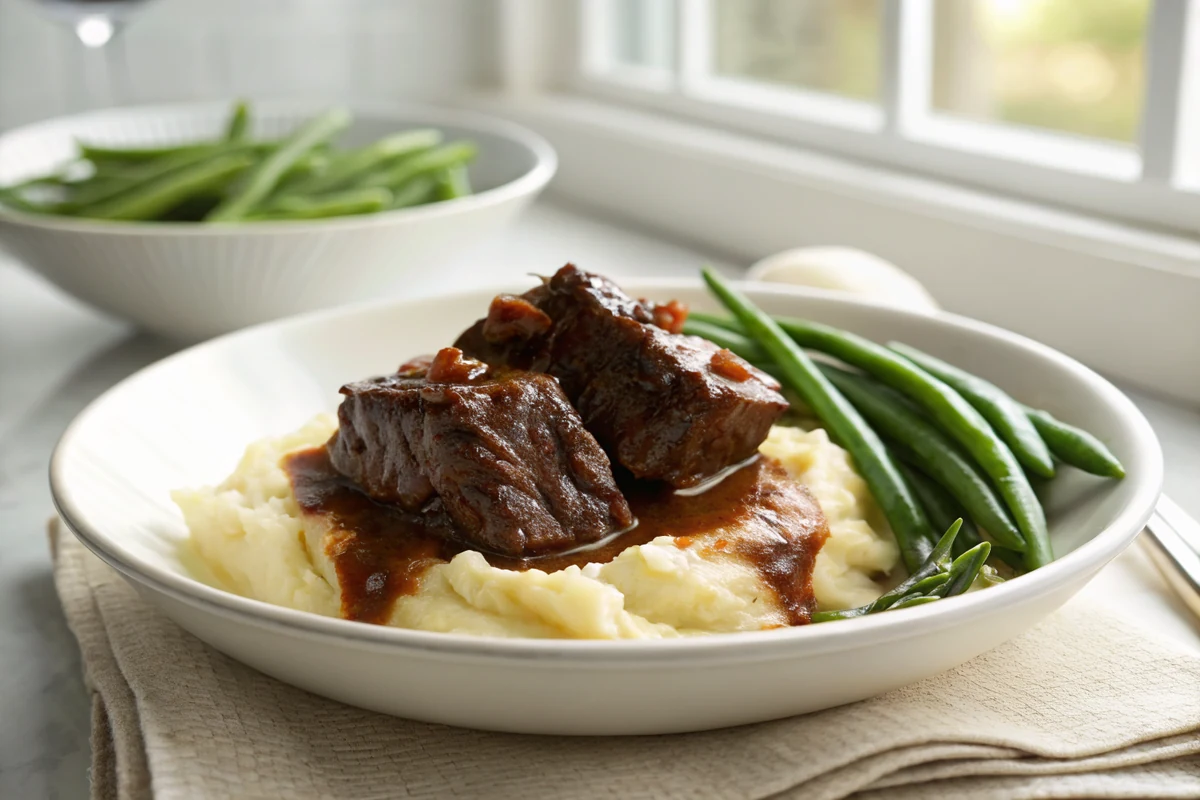
For the green conscience of the plate, skillet green beans with bacon keep the theme, and a sharp vinegar slaw cuts the richness even better. The BBQ-track ribs from the dry-rub road eat differently, more platter than plate: white bread, pickles, onion, and a side of pinto beans, exactly as if they had come off a smoker that never existed. Leftover braised meat, shredded into its own reduced sauce, becomes enchilada filling, cheesy-toast topping, or the best Sunday-gravy pasta of your month. The bones go to the dog, the broth-stained thyme stems to the compost, and the pot, ideally, straight back under the next four pounds.
The Short Rib Method Matrix
Short ribs might be the most method-flexible cut in the beef case, and this site has now walked every road with them, so here is the family map. The oven braise, this page, is the sauce-maker: wet, rich, self-contained, best in winter and for company. The slow cooker version is the same chemistry stretched across a workday, the hands-off champion. The smoker version trades sauce for smoke and bark, the outdoor centerpiece. Sous vide is the precision instrument, 24 to 48 hours to a texture no other method can print. The air fryer route is the sprint, boneless strips cooked hot and fast like steak. And flanken belongs to the grill, full stop.
Choosing between them is mostly a question of what the day looks like: weather, hours available, whether the reward should be sauce or bark. The meat forgives every one of these choices, which is the deep reason short ribs are worth learning across methods: one cut, one shopping trip, and a different dinner for every season of the calendar.
If today's answer is the oven, you now hold the whole playbook. Sear like the sauce depends on it, keep the liquid at two-thirds, let 300F be boring for three hours, and let the fork make the final call. The rest is mashed potatoes.
Beef Short Ribs in the Oven Recipe
Ingredients
- 4 lb (1.8 kg) bone-in English-cut beef short ribs, 6 to 8 pieces
- 1 tablespoon kosher salt
- 2 teaspoons coarse black pepper
- 2 tablespoons neutral oil
- 1 large yellow onion, thick-sliced
- 2 carrots, cut in chunks
- 6 garlic cloves, smashed
- 2 tablespoons tomato paste
- 1 cup dry red wine or dark beer (or extra broth)
- 2 cups beef broth, plus more as needed
- 2 sprigs fresh thyme and 1 bay leaf
- 1 tablespoon Worcestershire sauce
- 1 tablespoon masa harina, optional, for tightening the sauce
Instructions
- Season and rest the ribs. Pat the short ribs completely dry and season all sides with the salt and pepper. Let them sit at room temperature 30 minutes while the oven heats to 300F (150C); dry, seasoned meat sears deeper.
- Sear hard in the Dutch oven. Heat the oil in a heavy Dutch oven over medium-high until shimmering. Sear the ribs in batches, 3 to 4 minutes per side, until every face is deeply browned, never crowding the pot. Transfer to a plate. This crust is the backbone of the sauce; do not rush it.
- Build the braise base. Pour off all but 2 tablespoons of fat. Cook the onion and carrots 5 minutes until edges brown, add the garlic and tomato paste, and stir 1 minute until the paste darkens brick-red. Pour in the wine, scraping every browned bit off the pot floor, and simmer 2 minutes.
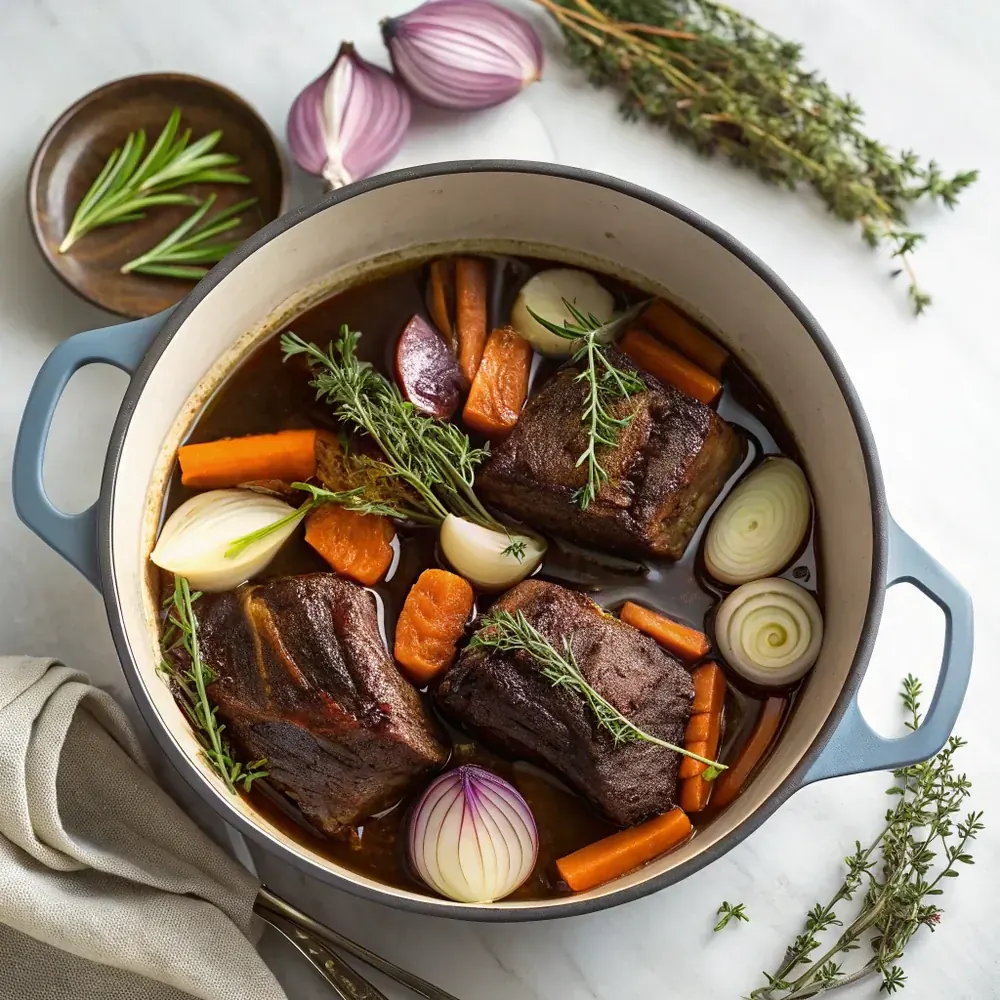
- Add ribs and liquid. Return the ribs bone side down, add the broth, Worcestershire, thyme, and bay leaf. The liquid should reach two-thirds up the sides of the ribs; top up with broth if needed, but never submerge them.
- Braise covered at 300F. Bring to a bare simmer on the stove, cover with the lid slightly ajar, and slide into the 300F oven. Braise 3 to 3.5 hours, turning the ribs once around hour 2, until the meat is fork-tender and pulls from the bone with no resistance, around 200 to 205F internal.
- Rest the ribs, finish the sauce. Transfer the ribs to a platter and tent with foil. Strain the braising liquid, skim or ladle off the fat cap, and boil the liquid down by half until it coats a spoon, 8 to 12 minutes. Whisk in the masa slurry if you want it thicker; taste for salt.
- Serve. Plate the ribs over mashed potatoes, grits, or buttered noodles and spoon the reduced sauce generously over the top. The bones slide out clean; leave them in for the table's sake or remove them in the kitchen.
Frequently Asked Questions
How long do beef short ribs take in the oven?
Covered and braised at 300F, bone-in English-cut short ribs take 3 to 3.5 hours to reach fork-tender, around 200 to 205F internal. Uncovered on the dry-rub BBQ track at 275F, plan about 4 hours. Size and fat drive the variation, so start fork-testing at the 3-hour mark either way. At 275F covered, stretch to 4 hours or more; at 325F, check from 2.5 hours. The fork always outranks the timer: done is meat that gives way with a gentle twist.
What temperature is best for short ribs in the oven?
300F covered is the braising sweet spot: it holds the pot at a bare simmer, right in the zone where collagen melts into gelatin without the muscle fibers seizing. Below 275F the cook stretches impractically; above 325F the liquid boils and the meat tightens before it tenders. For the uncovered barbecue-style track, 275F is the number, low enough to render fat and build bark before the surface overbrowns.
Do you cover short ribs in the oven?
Cover them for the braise: the lid, set a finger ajar, traps steam so the exposed top third of the ribs cooks moist while the liquid concentrates gently. Leave them uncovered only on the dry-rubbed BBQ track, where open air is the entire point, drying and browning the surface into bark. The failure modes run in both directions: an uncovered braise evaporates dry and scorches, and a covered dry-rub rack steams pale and barkless.
Why are my oven short ribs tough?
They are undercooked, almost every time. Short ribs are dense with collagen that only converts to gelatin after sustained hours in the 195 to 205F range; pull them at a merely safe-looking 170F and the connective tissue is still cable-stiff. The fix is always more time, another 30 to 60 minutes covered, then re-test with a fork. Rarely the cause is a too-hot oven boiling the liquid and seizing the meat; keep the braise at 300F and the pot at a lazy, occasional bubble.
Should short ribs be submerged in liquid?
No. Liquid should come about two-thirds of the way up the ribs, leaving the top third above the surface to braise in trapped steam. Fully submerged ribs are effectively boiled, and boiling leaches flavor into the pot instead of trading it; the meat comes out weaker and the sauce dull. Snug pot geometry matters more than cup measurements: choose a Dutch oven the ribs nearly fill, add wine and broth to the two-thirds line, and top up only if the level drops sharply during the cook.
Can I make BBQ-style short ribs in the oven without a smoker?
Yes, with honest expectations. Rub bone-in ribs with a low-sugar barbecue rub, set them on a wire rack over a lined sheet pan, and roast uncovered at 275F for about 4 hours to probe-tender. The dry heat builds real bark and the rendered fat self-bastes the meat; smoked paprika in the rub supplies a rumor of fire. You will not get a smoke ring or true smoke depth, but the texture lands remarkably close to pit short ribs, and the method needs nothing but an oven and patience.
What liquid is best for braising short ribs?
Dry red wine plus beef broth is the classic, deep, glossy, faintly sweet once reduced. A dark beer swaps in beautifully and reads more Texan, all malt and toast. Straight broth boosted with tomato paste and Worcestershire makes a fully alcohol-free braise with no apology needed. Whatever the pour, the supporting cast stays: browned onion and carrot, smashed garlic, darkened tomato paste, thyme, and bay, with the seared-on crust from the ribs doing the heaviest flavor lifting of all.
Can I make oven short ribs ahead?
You should, honestly. Braise them a day early, chill the ribs right in their strained liquid, and the flavors deepen overnight while the fat rises and hardens into a lid you can lift off in one satisfying sheet, the easiest degreasing there is. Rewarm gently, covered, at 300F for 30 to 40 minutes and reduce the liquid into sauce while the ribs heat. Braised short ribs hold three days refrigerated and freeze in their liquid for three months without losing a step.